



A cyclist who rode for an entire month with a giant poster attached to his bike – emblazoned with the slogan “Don’t drive so close to me” and reminding motorists to leave cyclists 1.5m of space while overtaking – says he was on the receiving end of only four close passes from drivers during that time period.
However, once the poster was removed, the cyclist says “everything went back to normal” and he received “lots of close passes” – which he describes as a “manifestation of driver entitlement” – once again.
Tim Devereux, a 75-year-old cyclist from Pudsey, West Yorkshire, fitted the poster to the back of his bike on 1 January after becoming fed up with the impatient and dangerous behaviour of some motorists on the road – and after one particularly hairy December day.
“In 2023 I rode over 1,800 km, mostly on Pudsey’s roads. All too often, I have been close passed by motorists, who may have been the recipient of my shout of ‘too close’! After three consecutive cars close passed me at the end of December I decided to act,” he tells road.cc.
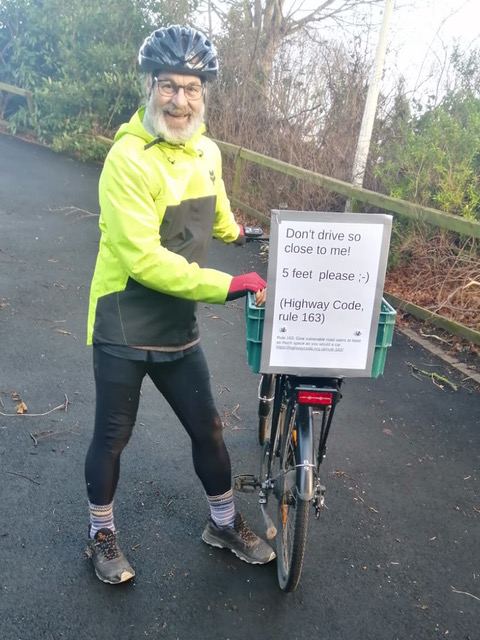
Throughout January, Tim cycled around, on mostly local errands to the shops, with a sign reading: “Don’t drive so close to me! 5 feet please (Highway Code, rule 163)” – a reference to the Highway Code’s advice to motorists to only overtake cyclists “when it is safe and legal to do so” and by leaving “at least as much room as you would when overtaking a car”.
And, much to the cyclist’s surprise, his visual safe driving experiment appeared to work.
“It had an effect – I received only about four close passes in the entire month, throughout 120km of riding,” the retired maths teacher says.
“I noticed more courtesy from motorists too – buses waiting for me when I was turning right, lorries hanging back until it was really safe to overtake.
“Only one of the close passes merited a blast of my very loud horn. These have been far outnumbered by instances of driver courtesy.”
However, once Tim removed the poster from his bike at the end of the month, the close passes and dangerous driving returned with a vengeance, he says.
“Unfortunately everything went back to normal when I took the posters off!” he tells road.cc. “I got lots of close passes again, so I ordered a hi-vis vest with the same message, which doesn’t seem to have as great an effect.
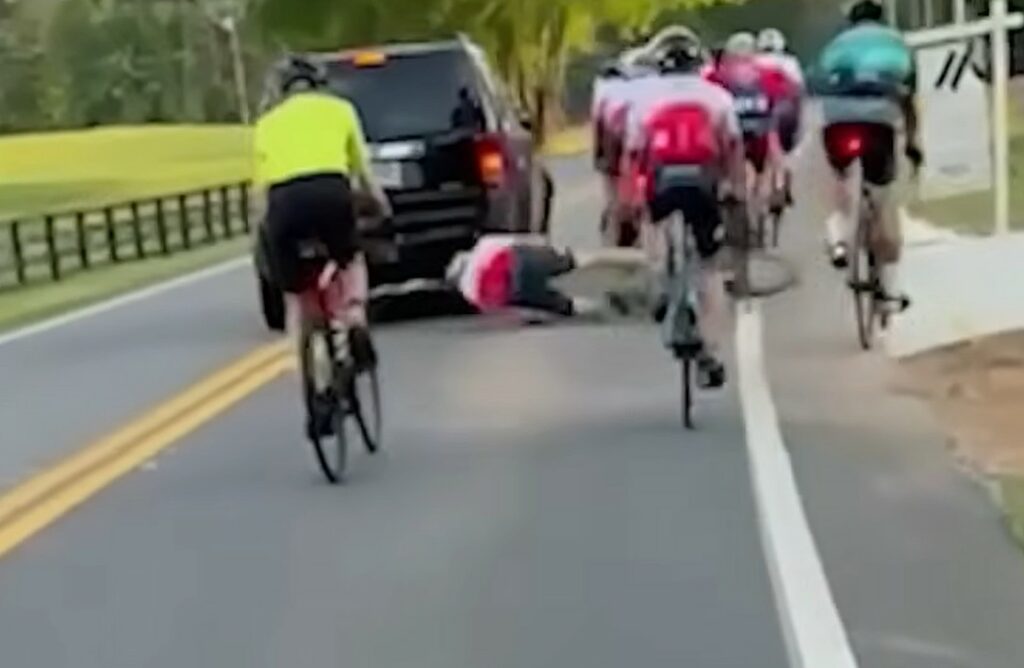
“Last week, while wearing the hi-vis, I had two close passes on the way home from Asda, a Jag and a BMW.
“It’s almost as if close passes are a manifestation of driver entitlement, because of course, most drivers don’t cut up riders. It’s a minority on the roads who are consciously or unconsciously vile to cyclists!”
> Cyclists wearing helmets seen as “less human” than those without, researchers find
Tim’s month-long campaign – and the local press coverage it attracted at the start of the year – also, unfortunately, brought out another, more modern, aspect of motorists’ “consciously vile” attitudes towards cyclists.
“On social media the picture is much worse – Facebook comments under local news outlets posts about my campaign ran the whole gamut of anti-cycling bingo,” he says. “If I paid too much attention to them, I’d hang up my Lycra!”
However, just as his eye-catching poster appeared to ward off impatient drivers from overtaking dangerously, Tim also notes – in a similar manner to academic studies examining the role of helmets, clothing, or gender when it comes to being on the receiving end of close passes – that a cyclist’s appearance, and the type of cycle they are riding, can have an impact on motorists’ attitudes.
“Not every ride is spoiled by close passes,” he says. “Last year I rode from Leeds to Glasgow over four days, and there were no close passes.
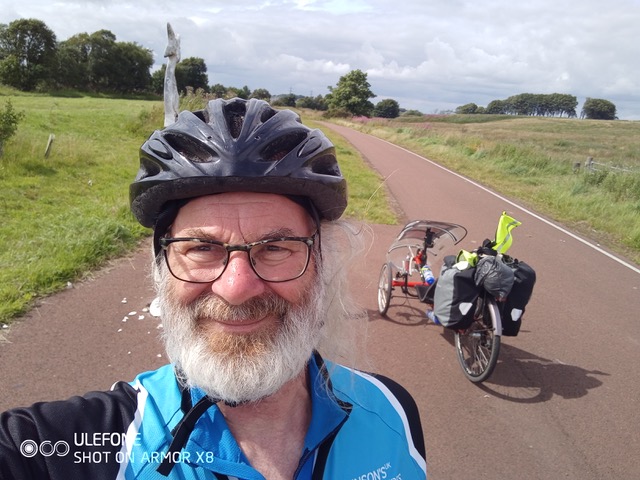
“I was riding a tricycle recumbent, and I suspect drivers assume either I am disabled or that the weird thing is unstable (it’s not) and either way, give a wide berth.”
The 75-year-old adds that he will be wearing his hi-vis close pass warning jacket – provided it’s not too warm – when he rides 300 miles from Leeds to Brighton in early June, an annual long-distance ride he completes for charities such as Parkinson’s UK, with funds this year going to Medical Aid for Palestinians.
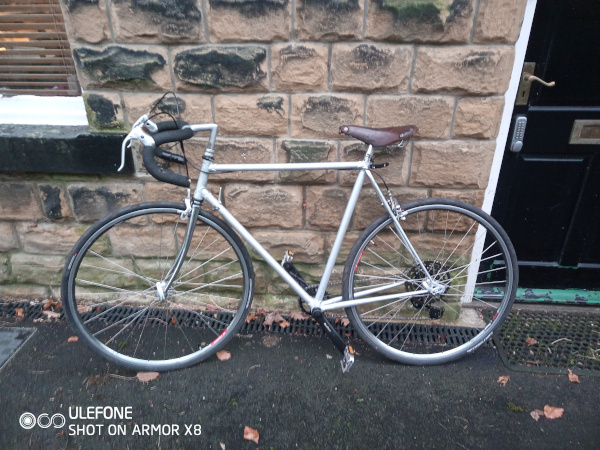
He will take on this year’s ride on an “ancient” hand-built frame donated to him by a clubmate in 1963, but now fitted with modern Campagnolo wheels.
Tim’s altogether colder poster-aided rides in January also came as part of the More Than a Cyclist campaign, launched by Birmingham-based Joanne Ness, following the death of a friend in a crash, to remind motorists that cyclists are also people and to show “the human face of the cyclist”.
In December, the campaign’s Rob Anderson spoke to the road.cc Podcast about the aims of his road safety organisation and their recent, quite visceral video.
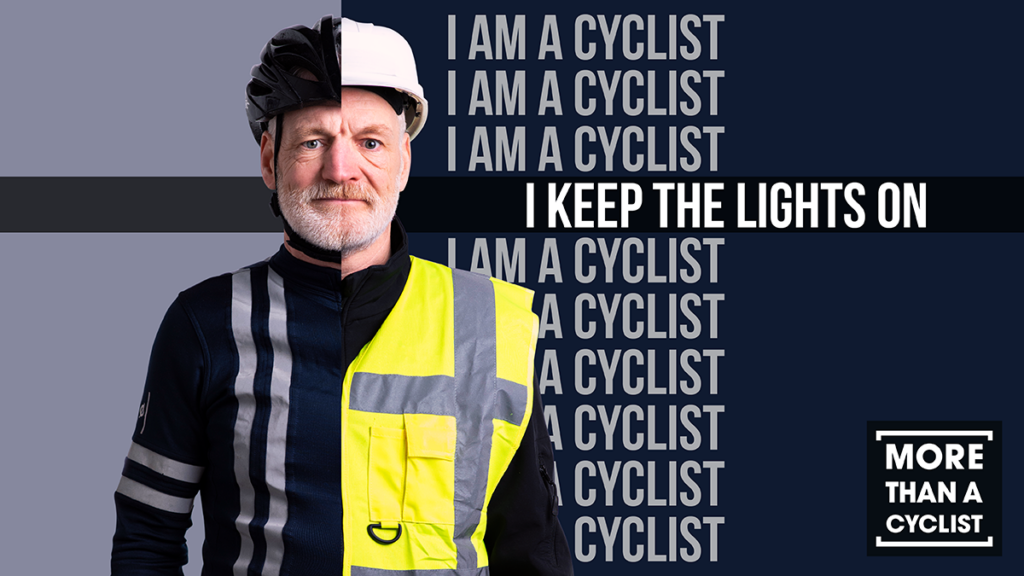
Rob said that, as part of the campaign, passionate activists are trying to get their message heard via hard-hitting social media posts and billboards, while speaking to politicians and other influential figures to reach those beyond the cycling community about the hazards of life on the road for people on bikes.
“In our busy, hurried lives, we need to make the effort to see other road users not as obstacles in our paths, but as human beings – mothers, fathers, daughters, sons,” Tim adds.
“How to change things? We need better infrastructure and more Highway Code knowledge. A Highway Code re-test every couple of years would weed out the ignorant and encourage everyone.
“In the meantime, I have fitted a very loud horn!”






20 thoughts on ““Close passes are a manifestation of driver entitlement”: Cyclist receives barely any close passes while riding with ‘Don’t drive so close to me’ poster on bike – but claims “everything went back to normal” once sign was removed”
I would love to know where to
I would love to know where to buy a horn that can penetrate a close passing driver’s sense of entitlement. Does it sound like a shotgun? That might work.
The AirZound II will at least
The AirZound II will at least penetrate the sound proofing and near double glazing of the windows.
A wanker sign will sometimes
A wanker sign will sometimes penetrate their ego.
Realistically I’d suggest a
Realistically I’d suggest a Hornit.
For coverage in the local paper, the Hornster.
https://www.youtube.com/watch?v=_9nonCqesLI
A flash gun might work well,
A flash gun might work well, if they think they’ve been caught they might modify their behaviour for a shoirt time.
Just like speeding, red light
Just like speeding, red light jumping, parking where they like, left hooks, drivers don’t close pass me because they’re ignorant of the highway code, they do it because they’re fundamentally only concerned about one thing, themselves.
The Jag…
The Jag…
Just thank goodness there aren’t that many of them.
And the mini cooper with the Union flag rear lights…
The upside of Jaguar
The upside of Jaguar/LandRover drivers is they are a/uninsurable b/stolen c/broken.
With C being the most common state.
Air Zound vs Hornit
Air Zound vs Hornit
https://www.youtube.com/watch?v=JN7R_nPajzg
I like that asking nicely
I like that asking nicely worked for Tim.
I ran cameras but drivers cant see them and still close pass me. I’d rather not get close passed than have it on film.
Now I wear a Pass Pixi so they know that if they choose to drive inconsiderately, its all on camera.
I find it’s the only thing that works.
It works so well that some drivers become almost paralysed by hesitancy and I have to wave them on to overtake when it’s safe.
Asking nicely << warning in advance that actions will have consequences
“It works so well that some
“It works so well that some drivers become almost paralysed by hesitancy and I have to wave them on to overtake when it’s safe.”
That speaks so much about the incompetence out there behind the wheel of 1,5 ton-150000J vehicles.
Which tells you everything
Which tells you everything you need to know about bad drivers. They do it because they have almost no fear that their bad driving will be punished.
Thats obviously ridiculous though because as we all know, law abiding drivers are constantly being watched and punished for the most minor infraction while those dangerous cyclists terrorise the roads with impunity.
I have started using a Pass
I have started using a Pass Pixi when cycling in London. I find it does work too.
BIRMINGHAMisaDUMP wrote:
Seconded (or is it thirded?), when I change jackets and forget to change over the PP sign it is really striking how many more close passes I receive.
This close pass was with a
This close pass was with a pass pixi displayed, so don’t for a minute ever think theyll always work.
stonojnr wrote:
Of course – 1% of idiots seem to see the sign as a challenge to get as close as they can, sometimes with passengers shouting abuse (collected a “grassing nonce!” just last week), but in my experience the positives far outweigh the negatives.
Joey Barton?
Joey Barton?
White Van Man. The epitome of
White Van Man. The epitome of luddite and machine.
Police inaction on reported
Police inaction on reported close passes, and soft penalties when they do take action are the reason why so many drivers will continue to be vile towards cyclists on the road. It is sponsored by the motor and oil industry. Imagine if you uploaded a video of a driver who used their car to intimidate a group of people because they were all black, or dressed in burhkas, or all had payos, and the police decided that it wasn’t intentional despite every other driver obviously giving wide clearance. How quickly do the police respond to FB posts that refer to race or a stereotype appearance that has been defined as illegal, yet even FB doesnt remove posts that show a similar attitude with ‘lycra-clad’ posts. The mail defended one of their columnists who stated they would string piano wire across a path for cyclists. These people who show vile prejudice towards cyclists probably also have racist, sexist, homophobic, etc. attitudes but feel that they are rewarded for their prejudices towards cyclists.
Not just The Daily Mail
Not just The Daily Mail condoning killing or maiming people using bikes, but The Times; Matthew Parris in 2007 and Rod Liddle in 2020. Both times the editors considered it OK to print comments about cutting off peoples’ heads with strung wire for amusement because they were
black/Jewish/gay/police/MPs/ cyclists. The not-independent press complaints commision did nothing.