



Major UK cycling retailer Sigma Sports posted a £925,000 loss in 2024 but called it a “positive year” for the business considering bike sales across the industry hit their lowest level this century amid the cost-of-living crisis, rising inflation, and inventory woes.
The industry-wide outlook was actually worse than Sigma Sports’ accounts make out, the Bicycle Association having earlier this year revealed that bike sales plummeted to early 1970s levels in 2024, but the point stands — as we’ve heard from numerous retailers, manufacturers and cycling-related businesses, it has been bleak out there in recent years.

Sigma Sports’ assessment of its most recent year of business blames many of the same factors which we’ve heard from across the industry — such as the cost-of-living crisis and inflation denting consumer confidence for expensive purchases such as new bikes — as well as the ongoing inventory woes that have plagued many brands since the Covid boom saw many overstock and then struggle to shift stock as things slowed down.
Director Oliver Paul Lawson notes that while competitors such as Wiggle Chain Reaction had entered administration, “Despite these challenges, Sigma Sports has proven to be resilient”.
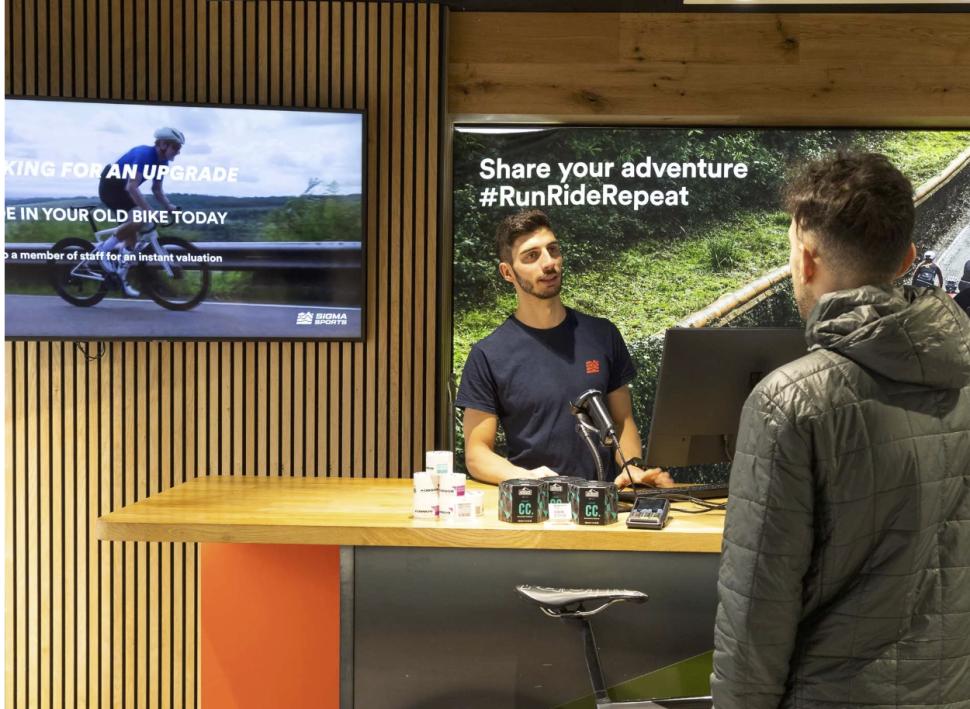
“The business has remained competitive throughout, maintaining its position as the leading premium retailer in the sector. In early 2024, sales slowed as the market was disrupted following the administration of a large player. However, from Q2 onwards, Sigma Sports saw an acceleration of performance, gaining market share.
“This momentum continued across the year, which saw the business exit 2024 in a significantly stronger trading position than in 2023. Furthermore, the business cleared its unsecured loan debt, ensuring a robust balance sheet going into 2025.”
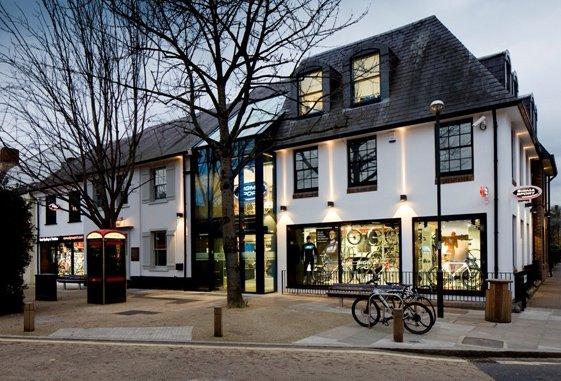
Sigma Sports notes the final payment for this was paid on 6 January and “will save the business c. £2m in cash flow commitments annually.”
While the retailer insists things were “positive”, all things considered in 2024, it did suggest there was an expectation “the backdrop of the UK’s economy [would] remain challenging in 2025”.
Sigma Sports’ revenue was up £3m in 2024 compared with 2023, rising to £46.4m from £43.1m. Once the cost of sales, distribution costs, administrative expenses and other incomes were factored in, Sigma Sports’ pre-tax loss was £1.06m down from £3.07m in 2023. After tax the loss was £925,767, down from £2.4m in 2023.
As 97% of Sigma Sports’ £46.4m revenue was from the UK market, the retailer said it is “not overly exposed to international trade”, meaning “the directors do not expect a significant impact” from tariffs set by the US.
British-based cycling businesses have faced major challenges in recent years, with widening losses and some brands disappearing entirely a familiar tale.
As mentioned earlier in this piece and alluded to in Sigma Sports’ accounts, online cycling retail giant Wiggle Chain Reaction entered administration before its brand and intellectual property were bought by Mike Ashley’s Frasers Group.
Talking of Ashley and Frasers Group, one of their other brands Evans Cycles reported losses of £22.8m for the financial year ending April 2024, losses which were cut to £3.3m a year later.
Over the weekend, we heard the news of York Cycleworks, a popular bike shop in the cathedral city which is set to close its doors after 45 years in business.
Director Andy Fraser told us they had offered “what the internet can’t” but it “is not enough”.
“We’re a shop that offers servicing; we’ve got the best workshop and mechanics round here,” he said. “We’re still bonkers busy with repairs but it just doesn’t bring us enough money.”
“We just wanted to look after our patch. But times have changed and others want a slice of our pie. We’ve packed it in now so we don’t cause any ripples rather than try and soldier on.”
Fraser blamed the undercutting of online retailers, coupled with the industry over-production during the pandemic, as a source of difficulty for many retailers, York Cycleworks included.
“We need to be selling carbon road bikes from £3,000 upwards to make a profit, that’s just where the margin is. There’s no margin in a £650 bike. But since Covid, and the overproduction of bikes, Trek [York Cycleworks’ main supplier] have pulled the rug from under our feet. They’re selling to larger retailers who are smashing the prices out of reach for us. We’ve got nothing to support the business.
“My time here has been a blast, we look at this and we’ve done our very best. It’s just the circumstances we’re facing that’s made it impossible.”

















9 thoughts on “Cycling retailer Sigma Sports halves losses to £925,000 and insists 2024 was “positive” despite cost-of-living crisis, inflation and inventory woes battering bike industry”
The cost of living crisis was
The cost of living crisis was caused by covid profiteering. You can’t have it both ways.
GravelIsNothingNew wrote:
Um no it wasn’t. What Koolaid have you been drinking?
Perhaps GravelIsNothingNew
Perhaps GravelIsNothingNew failed to define ‘profiteering’, however the cost of living crisis was indeed caused by the covid “lockdowns” and the resultant *massive* monetary expansion governments used to finance 2 years of these policies. Massive monetary expansion will, of itself, cause prices to sky rocket. Further, as the new money from such policies is *never* evenly distributed, there /always/ will be “winners” and “losers” – i.e. people and companies who “profit” from those policies. Downstream from those people, others who sell goods and services will increase prices, to try gather up some of that money AND to offset the increases in prices elsewhere (inc. into their inputs) the inflation of the money supply has caused.
So… yes, it was covid.
Paul J wrote:
I don’t think either Brexit or the Russian invasion of Ukraine were anything to do with covid. (Yes, covid is one of the causes of the cost of living crisis, but not the only one.)
During and post Covid, it was
During and post Covid, it was well documented by Shimano, and many of the bike brands who pretty much all have their frames made in the far east, supply chain disruptions were having a massive effect on bike availability. Hence prices skyrocketed. In the following years, Shimano and many of the bigger brands have posted profits and exclaimed that supply chains and product availability was returning to Pre-Covid levels. But have prices of bikes fallen as a result? Not a chance. If anything the 5 figure sums for top bikes has become the norm. £12000 for anything considered pro level is the starting point. Its price gouging at its worst.
My experiences of trying to
My experiences of trying to buy a bike from Sigma Sports:
Attempt 1 was in 2023. There were four members of staff standing around doing rather little. I asked about buying a bike; I was told I would have to go away and make an appointment, then come back. I went away all right.
Attempt 2 was in 2024. I knew the bike I wanted and found the listing at Sigma. It said ‘call us for stock information’. I’m very local so I thought I’d give them another shake – maybe I’d been unlucky before. So I rang up. The bloke on the other end said he had no stock information. When I asked for a rough idea he sarcastically told me that there were no ‘secret dates’ and there was nothing he could do for me.
Later that day I spoke to Pedal Heaven in Fleet who could not do enough for me – asking for my size, ringing the manufacturer, calling me back with some options. Guess where I bought my bike?
I know it’s tough out there for the bike industry but maybe Sigma would find things easier if they’d just get over themselves and try a bit harder to, you know, sell some bikes to people who want bikes – even if those people are only spending a couple of grand.
My experience with Sigma
My experience with Sigma Sports has been quite different. On one ocassion I damaged one of the yellow colour BOA dials, on my shoes, that were made exclusively for Mavic. I contacted Mavic and they told me to order through a retailer, so I contacted SS, who told me that they were happy to help, so I placed an order for the correct set. However, they mistakenly ordered and sent me black colour ones, so I contacted them to advise them of it and asked for a postage label so I could return the wrong ones. They replied telling me to keep the black ones and reordered and sent me the correct yellow colour ones free of charge as well. I am surprised to hear they fobbed off somebody after a new bike, which they must be earning quite a bit higher markup than on £20 a set of BOA dials costs.
It feels like a bit of a
It feels like a bit of a backhanded compliment if the highest praise you can give is that they successfully resolved their own mistake. Not asking for the wrong ones back is probably less to do with altrusim and more because it wouldn’t be worth their time and money to pay for the postage and then process the return.
I’ve had a mix of brilliant
I’ve had a mix of brilliant and terrible customer service from Sigma. Buying new shoes and other kit in the shop has been brilliant. When I bought a new bike that came with issues they were awful until I kicked up a stink but that took a lot of time and effort. Online is fine, although they’ve increased the delivery prices (they’re not alone in that). They’ve also cut opening hours – no extended hours once a week now – late night Thursday shopping is a Kingston-wide thing.