



The Tour cools down, finally
@LeTour, @Peyragudes, après la canicule, ce matin montage dans le brouillard et 12 degrés… pic.twitter.com/uJYROlQdZ1
— Stephane Boury (@StphaneBoury) July 20, 2022
After well over a week of sweltering, stifling conditions on the roads of France (and for those of us watching in the UK and Ireland), things have finally cooled down at the Tour.
This morning, those responsible for setting up the race infrastructure at the finish line at Peyragudes, the ski resort just beyond the Col de Peyresourde, were greeted by a healthy smattering of fog and a refreshing 12 degrees Celsius. Ahhh, bliss.
With temperatures unlikely to exceed the mid-20s, even in the foothills, the news bodes well for well-known lover of all things cold and damp, Tadej Pogačar. The Slovenian appeared to suffer in the oven-like heat of the Col du Granon last week, his yellow jersey flapping forlornly open as it was wrested from his shoulders by Jonas Vingegaard.
Perhaps today’s relative cool down will prove the catalyst for some red-hot action on the Peyresourde? (That’s the last of the temperature-based puns, I promise.)
New Highway Code going well… Turning driver takes out cyclist in the kind of situation changes were meant to make safer
Popcorn at the ready, as it’s Highway Code time again, folks!
With the revisions approaching their six-month anniversary – time flies when you’re a vulnerable road user, eh? – we felt it was only right to check in and see how they’re getting on.
Judging by this video, filmed last week in Fallowfield, Manchester, it’s not great…
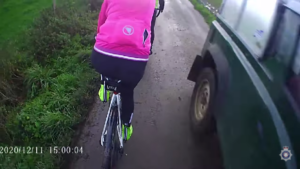
As you can see in the clip, the road.cc reader who sent us the footage was riding along in the cycle lane, when a van driver (rather belatedly) indicates to turn left, before driving straight into the path of the cyclist, knocking him off his bike.
According to Rule H3 of the Highway Code, drivers and motorcyclists “should not cut across cyclists, horse riders or horse drawn vehicles going ahead when you are turning into or out of a junction or changing direction or lane, just as you would not turn across the path of another motor vehicle.
“This applies whether they are using a cycle lane, a cycle track, or riding ahead on the road and you should give way to them.
“Do not turn at a junction if to do so would cause the cyclist, horse rider or horse drawn vehicle going straight ahead to stop or swerve.
“You should stop and wait for a safe gap in the flow of cyclists if necessary. This includes when cyclists are: approaching, passing or moving off from a junction, moving past or waiting alongside stationary or slow-moving traffic, or travelling around a roundabout.”
The cyclist, a paramedic who rides 15 miles to work every day, suffered cuts and bruises in the collision, as well as a buckled wheel and broken mirror.
The van driver also gave our reader a lift home after the incident, so he could then make it into work. The cyclist says that the motorist explained that “he was rushing to pick up his pregnant wife, so I feel bad for him.”
Tacks found near summit of Col d’Aubisque
🚨🚨🚨🚨CUIDADO!!!
En el comienzo de bajada desde Aubisque hacia Soulor, llena de clavos!!!Todos esos clavos recogidos desde la bici hasta mi posición @pedrodelgadoweb @teledeporte@amantes_cycling @lasgafasdesolda#TDF2022#TourRTVE20J pic.twitter.com/LNNY1Mvq8e
— Iban (@I_Sanmar) July 20, 2022
Carpet tacks have been discovered near the summit of the Col d’Aubisque, set to be climbed by the Tour de France peloton tomorrow, in what appears to be an attempt to sabotage the race.
The tacks were discovered by Spanish cycling fan Iban at the beginning of the descent from the Aubisque, one of the Tour’s legendary climbs, to the Col du Soulor.
A number of spectators, camping out on the climb before tomorrow’s stage, have since attempted to remove all of the tacks from the road.
This latest attempt to sabotage the race comes 10 years after tacks were strewn across the road on the descent of the Mur de Péguère, which was climbed during yesterday’s stage to Foix.
Bradley Wiggins, who went on to win the 2012 Tour a week later, and defending champion Cadel Evans were among the 30 riders from a GC group of 50 who suffered punctures thanks to the tacks.
Others came off much worse – Astana’s Robert Kiserloviski broke his collarbone after crashing during the confusion, while Levi Leipheimer was treated for road rash after hitting the deck at the same point.
Sky’s then-manager Dave Brailsford said at the time that the attempted sabotage “smacks of cowardice.”
He continued: “If you want to say something, fair enough. Hold your hand up, stick your head up and say what you want to say, no problem at all. Everybody’s entitled to an opinion. It’s a free world, isn’t it? If people want to speak their mind, that’s fine. But why put people’s lives at risk?”
The Tour is the Tour…
Could the @UCI_cycling please agree that every rider using the expressions “day by day” or “still a long way to Paris” should be handed a 20 points penalty? @LeTour #TDF2022
— Francois Thomazeau (@sauveurmerlan) July 20, 2022
If those were the rules, the Yates twins would never see Paris…
The real Tour begins tomorrow Francois because the Tour is the Tour
— William Fotheringham (@willfoth) July 20, 2022
Crytpo-Badgers: Peter Sagan and – checks notes – Bernard Hinault join the NFT game

Deep down, we all knew it wouldn’t be long until three-time world champion Peter Sagan joined the blockchain with his own personal NFT collection.
After all, this is a man who has spent years trying to flog ski goggles to cycling fans.
So it was no surprise when Project Fuerza – the brainchild of cycling coach Hunter Allen, currently selling non-fungible power files from the likes of Mark Cavendish and Geraint Thomas – announced earlier this week that the Slovakian star would be the latest pro cyclist to ignore the cycling community’s general antipathy towards the environmentally damaging effects of the blockchain by becoming the latest face of the group’s “power and biometric data-inspired NFT art programme”.
Apparently, these digital images will incorporate both Sagan’s power data from key moments in his career and a number of styles, including pop-art and modern impressionism, as well as Batman-style graphics (“Pow!”). I wouldn’t expect anything less, really.
“I love how my Fuerza NFTs have each been able to capture not only some of my passions outside of cycling, but also blow me away with the creativity of taking my power data and turning it into art,” says Sagan of the pieces, the originals of which start from around $5,000.
“So many of my pieces are just so beautiful and I am excited to share these with my fans.”
While Sagan’s foray into NFTs is a no-brainer, Bernard Hinault’s venture into the crypto world is more of a head scratcher.
Nevertheless, the Badger – undoubtedly an expert in all things blockchain – has launched his own NFT collection based on his five Tour de France victories, designed by his friend and mononym artist Greg (presumably not LeMond, though it would be interesting to imagine what the American – who famously defecated in a box of postcards featuring Hinault’s face at the 1986 Tour – could do with the Badger’s NFTs…).
But the famously taciturn Hinault isn’t just selling cool drawings of his younger self – the lucky/well-heeled/foolish [delete as appropriate] fan who forks out £10,000 for the 1982 edition NFT also gets to spend a day with the feisty Breton, including a spin on the bike with one of the greatest cyclists of all time (you’ll have to make it to his house yourself, but that’s another matter).
The 1978 NFT gets you 15 minutes of Le Blaireau’s valuable time on Zoom, while 1979 comes with an autograph, for the princely sum of £600. Bargain.
It’s almost enough to make you ride headfirst into a line of striking shipyard workers and start throwing wild punches…
Another blow for Pogačar as Rafał Majka drops out with injury following chain snap incident
Unfortunately @majkaformal will not start stage 17 of the #TDF2022 today.
👨⚕️ Dr. Adrian Rotunno (Medical Director): “Majka sustained a strain injury to his thigh after some mechanical trouble on stage 16 when his chain broke. pic.twitter.com/kiNomp9wUG
— @UAE-TeamEmirates (@TeamEmiratesUAE) July 20, 2022
Tadej Pogačar’s bid to win the Tour de France has been dealt a further blow after his key mountain lieutenant, Polish climber Rafał Majka, was forced to abandon the race after sustaining muscle damage on the final climb of yesterday’s stage.
As he set the pace for Pogačar on the Mur de Péguère, Majka’s chain snapped, lurching his sideways and tearing his right quadricep.
“Majka sustained a strain injury to his thigh after some mechanical trouble on stage 16 when his chain broke,” said UAE Team Emirates’ doctor Adrian Rotunno.
“This resulted in a high-grade partial thickness tear of his right quadriceps muscle, and unfortunately due to the muscle damage is unable to ride.”
Majka’s withdrawal compounds UAE’s misery at this year’s Tour and leaves Pogačar with only three teammates – Mikkel Bjerg, Brandon McNulty and Marc Hirschi – ahead of two decisive days in the Pyrenees.
Vegard Stake Laengen and George Bennett were forced to abandon after testing positive for Covid earlier in the race, while an ill Marc Soler finished outside the time limit yesterday after vomiting and riding just ahead of the broom wagon for most of the stage to Foix.
‘If you’re going to install cycling infrastructure, at least make it easy to spot’
This video, filmed in Hyde Park last week, manages to cover a few of road.cc’s favourite issues in one handy 50 second clip: the need for accessible and clearly marked cycling infrastructure, the (paradoxical, in some eyes) view that cyclists are not obliged to ride in available bike lanes, and the urge to always avoid angry taxi drivers.
In the clip, sent to us by road.cc reader Tim, a cyclist attempts to ride past a queue of vehicles as a taxi driver approaches in the other lane. The motorist, unhappy that the bike rider briefly nipped over the white line, then berates Tim, pointing out “the cycle lane over there. They spent millions of pounds on that. That takes you anywhere you want.”
“I should have [BLEEP] knocked him down,” the sweary driver continued. Classy.
“Not quite a close pass of the day, but [the incident] highlights that cyclists have no obligation to use cycle paths or lanes,” Tim told us.
“In this case, as I’d not been down that road on a bike before, it wasn’t immediately obvious that there was a cycle path there, as there were no signs, no road markings, and no safe way to actually get onto it due to the raised kerb and oncoming traffic.
“If TfL or the Royal Parks are going to install cycling infrastructure, at least make it easy to spot, and easy to get on and off.
“Either way, never flip off a taxi driver.”
The Bjerg-inator
While his team may be cut in half due to illness and injury, UAE Team Emirates’ Mikkel Bjerg is certainly stepping up for his leader Tadej Pogačar.
The Danish time trial specialist is currently pulling his best Fabian Cancellara impersonation, laying down a ferocious pace on the second climb of the day, the Hourquette d’Ancizan. His heroic turn on the front has thinned out the group of GC favourites, dropping – with 50km to go – Adam Yates and Tom Pidcock, while putting David Gaudu in serious difficulty.
And he’s made a few fans along the way:
Mikkel freaking Bjerg, forever legend of Hourquette d’Ancizan! Absolutely incredible what he did today, I will never forget. #TDF2022 pic.twitter.com/fks32Tq4EE
— Mihai Simion (@faustocoppi60) July 20, 2022
THIS MIKKEL BJERG MASTERCLASS IS HISTORIC #TDF2022
— Nairo en maillot vert (@NairoInGreen) July 20, 2022
The silent scream of Bjerg pic.twitter.com/HfMcGl7Phn
— VeloVoices (@VeloVoices) July 20, 2022
“Bjerg” literally translates into mountain, it’s not often Mikkel Bjerg lives up to his name, but today is one of those days. Impressive! #TDF2022
— Claus Jensen (@cj_42_) July 20, 2022
Pinot GP
Fresh from stealing his teammate Sébastien Reichenbach’s Strava KOM on the Hourquette d’Ancizan, a rejuvenated Thibaut Pinot reminded us all about his occasionally less-than-confident descending skills with this Valentino Rossi-esque manoeuvre:
Pinot better at going downhill these days, but still struggles on occasion.#TDF2022 pic.twitter.com/YCuzG3A1zR
— daniel mcmahon (@cyclingreporter) July 20, 2022
PS. Bjerg’s still going…
Councillor’s claim that cars are treated “as the enemy” dismissed as “gibberish”
A Conservative councillor who called on Bradford Council to “stop seeing cars as the enemy” and to adopt a car-centric approach when planning new road schemes has been criticised for speaking “incomprehensible gibberish” by an opponent.
The Telegraph and Argus reports that, at a council meeting last week, Debbie Davies claimed that plans to reduce traffic in the city, including pedestrianisation, cycle lane and public transport schemes, were being made at the expense of motorists.
“For many people, car ownership is an aspiration or a necessity,” Davies said.
“However good public transport can be, it will never take you from door to door and you cannot use it to transport more equipment, shopping etc. than you can carry.
“People can’t rely on trains and buses due to strike action, unreliable services or cuts to services. Not everybody is confident about riding a bike on the roads or in all weathers and it’s difficult or impossible to carry children and pets.”
She then urged the council to “stop seeing cars as the enemy” and “instead think of all road users”.
“Car ownership is not going to go away,” she added. “People like the flexibility it provides. Cycling isn’t going to suit everyone.
“I propose we look at the way funding is allocated.”
Davies’ motion was – unsurprisingly – heavily criticised by her political opponents.
“The main problem motorists face is other motorists,” said Green Party councillor Kevin Warnes.
“We try and cram too many vehicles onto our roads. I’d also point out that a lot of car owners are also cyclists, and use public transport.”
The council’s executive for Regeneration, Planning and Transport, Alex Ross Shaw was even more scathing.
“When I saw the Conservative motion I thought it was a lot of gibberish,” he said. “After that presentation I’ll now update that to incomprehensible gibberish.
“This way of thinking is not even supported by your Conservative government. The Highway Code, hardly a leftist political document, gives pedestrians and cyclists top priority because they are the most vulnerable road users.
“You can’t talk about the highway network without acknowledging the huge impact of road safety.
“If you give all road space to cars you push off other users, and this flies in the face of what your own Government are looking for.”
Tour de France: Pogačar takes third stage win – but fails to dislodge yellow shadow Vingegaard
On the long, steep runway in Peyragudes, Tadej Pogačar did what Tadej Pogačar does best.
At the top of the kind of final kilometre tailor made for the Slovenian superstar, Pogačar took his third stage win of the 2022 Tour, and in doing so continued a remarkable run of securing a hattrick of stages in every grand tour he’s ever entered, stretching back to his debut Vuelta a España in 2019.
However, as Pogačar stretched his arms aloft at the summit this afternoon, a quick glance at his back wheel would have revealed the yellow shadow that has calmly followed him around France since spectacularly disappearing out of sight on the Col du Granon last week.
For all of the defending champion’s ferocity in those final few hundred metres, Jonas Vingegaard continues to barely flinch.

A.S.O., Charly Lopez
Not that UAE Team Emirates didn’t try. Reduced to just three domestiques following the disastrous loss of key lieutenants Marc Soler and Rafa Majka during the last 24 hours, and carrying a passenger in the under-par Marc Hirschi, Pogačar’s team – namely Mikkel Bjerg and Brandon McNulty – put in their finest performance of the Tour, blowing the race apart.
Bjerg, a time triallist formerly susceptible to nose bleeds on the high altitude passes of the Pyrenees, put in a revelatory ride on the Hourquette d’Ancizan, distancing the Ineos Grenadiers duo of Tom Pidcock and Adam Yates, while firmly putting Jumbo-Visma – the restored superpower of the 2022 Tour – firmly on the back foot.
McNulty, a confirmed climber compared to flat lander Bjerg, continued his teammate’s good work on the Cat One Val Louron-Azet, and in the process tore the Tour de France field to shreds. Gaudu, Quintana, and then Thomas – all dropped under the unflustered American’s relentless pressure.
Even more importantly, Wout van Aert and Sepp Kuss, Vingegaard’s hitherto machine-like domestiques, also slid out the back door.
By the top of the penultimate climb, the tables had turned at the Tour de France. And when Pogačar accelerated over the top of the Azet, the writing looked on the wall for a frantic showdown on the Peyresourde.

A.S.O., Charly Lopez
The expected attacks, however, never came.
Instead, Pogačar, mouth agape, his trademark tuft somehow more a symbol of ragged desperation than youthful exuberance on this occasion, appeared content to let McNulty maintain his steady, brutal pace. Or maybe that was all he could manage.
Vingegaard, on the other hand, looked completely unmoved by UAE’s 60 kilometres of aggression and sat serenely, as ever, on his closest rival’s wheel.
On that final, savage 16 percent slope up to the runway at Peyragudes, Pogačar made his move.
But it wasn’t the usual, violent acceleration we’ve come to expect from the Slovenian during the last three years, but a slow, almost lethargic upping of the pace.
Vingegaard, smelling blood, kicked hard. But Tadej Pogačar doesn’t go down that easily – the 23-year-old clawed his way back up to and past his Danish rival who, it seems, remains happy to play the Slovenian’s yellow shadow.
🥵 A summit battle between 👶 and 💛 saw Slovenian 🇸🇮 @TamauPogi come out on top!
🍿 Watch the final KM!
🥵 Un duel au sommet pour la victoire d’étape entre le maillot blanc et le Maillot Jaune qui tourne à l’avantage de 🇸🇮 @TamauPogi !
🍿Revivez le dernier KM !#TDF2022 pic.twitter.com/uvrqP87SIY
— Tour de France™ (@LeTour) July 20, 2022
As ever with cycling, a sport where minute details are scrutinised for days, there are two schools of thought already circulating around that last 500 metres. First, David Millar, commentating for ITV4, argued that Pogačar’s sluggish acceleration at the foot of the final slope was a bluff – the UAE Team Emirates rider, claimed Millar, was all in for the stage and tactically outwitted Vingegaard to win it.
GCN’s Dan Lloyd on the other hand argued that Pogačar was indeed on the edge – which would explain his unwillingness to attack for time up to Peyragudes – but his racing instinct and finishing kick enabled him to overhaul the Dane at the line.

A.S.O., Pauline Ballet
It’s hard to believe that Pogačar has already given up hope in the yellow jersey race and is instead targeting stages, though it’s equally difficult to understand why he didn’t even give Vingegaard – who could have been on the brink of collapsing for all we know – even the slightest nudge before the final sprint.
Or maybe he’s just supremely confident of turning the race on its head tomorrow, after Bjerg and McNulty softened up Jumbo-Visma today.
Sure, it’s not like Pogačar to leave anything to the last minute, is it?
The other side of the Tour
While Jonas and Tadej continue to awe us, half an hour behind the battle for yellow another race rages on.
Let’s face it, this year’s race hasn’t been a great Tour for the sprinters.
Left with little to fight for except the promise of a cobbled road to sprint immortality on Sunday, the last thing the fast men needed today, after climbing four Pyrenean mountains, was a whacking great 16 percent ramp to the finish.
Fabio Jakobsen, cheered on by his teammates, summed up the pain and misery of life as a Tour sprinter in the early 2020s as he winched his way to the finish, just 17 seconds inside the time limit.
#Replay 🎥 / #TDF2022
🇳🇱 Fabio Jakobsen (QST) qui se bat pour ne pas finir hors-délai, la belle image du jour.pic.twitter.com/y2T7aUDwS4— Renaud Breban (@RenaudB31) July 20, 2022
Same again tomorrow, eh Fabio?
LEJOG on a Brompton
Watch out Mikkel Bjerg, your ‘ride of the day’ crown may be slipping…
“The infrastructure almost guaranteed such an incident”: Left turn driver reaction
There have been a few interesting takes (that’s what we’re here for!) on this morning’s clip, which showed a left turning van driver colliding with a cyclist who had been riding in the adjacent bike lane.
Not everyone, for instance, believed that the motorist was entirely to blame for the incident.
ShutTheFrontDawes wrote: “I realise this will come across as victim blaming, and of course the van driver was predominantly at fault in that clip, but did the cyclist have their eyes shut or something? Reacting to the indicator on and slowing down a bit would have prevented that collision. We can’t go around expecting other humans to be infallible superheroes and must all take responsibility for our own safety.”
Though not everybody was as generous to the van driver.
“So, looking in mirrors etc and obeying the Highway Code is being an infallible superhero?” brooksby asked. “That is a really low bar you’ve set…”
AidanR agreed: “I think that it’s obvious to us, as we are viewing the video knowing what’s going to happen. But the van only indicated for about two seconds before turning. I’d like to think I’d have avoided that collision, but if I’d been looking anywhere other than the van’s indicators then maybe I’d have been knocked off too.”
road.cc’s Simon, meanwhile, noted that drivers around his neck of the woods in west London “seem to have gone from ‘mirror-signal-manoeuvre’ to ‘mirror-start manoeuvre-and oh, better signal while I’m at it’” – though some even thought that was being too kind!
Others pointed out that while the van driver may have been “going through the motions”, and questioned how the cyclist could have ridden defensively to prevent the incident, the rider could also have been in the motorist’s blind spot for an extended period of time – and therefore could have been more aware of this situation and dealt with it earlier by either speeding up or slowing down.
While most of our readers spent the day debating the driver’s actions and the cyclist’s positioning, IanMSpencer agued that the collision was a result of poor infrastructure rather than mere human error.
“The reality is that the infrastructure almost guaranteed such an incident,” they wrote. “A cyclist is in a protected zone, which actually is not protecting them much because cycling in a straight line on a straight road is pretty low risk, it is not just a lane but separated by large chunks of kerbs which encourages riding in a way where traffic can be ignored and then at the point where the risk increases massively the infrastructure disappears – vanishes, no road markings at all. There is no give way marking, no continued unprotected cycle lane, just an implicit merge.
“The cycle lane makes it worse, because the ideal cycling position though that junction is primary, inserted within the line of traffic, which you would do well before the junction, where there is a veritable brick wall.
“So, the designer of that cycling infrastructure has caused that incident, rather than protected the cyclist.”
Owd Bid ‘Ead was even blunter, writing: “Let’s not beat around the bush. Another example of shite infrastructure.
“White lines along with the odd central refuge or two and according to whichever politician you listen to is world leading infrastructure.
“Utter horseshit!
“It’s not difficult, our European neighbours manage it, build proper, segregated infrastructure that anyone, from a lycra-clad Bradley Wiggins wannabe through to octogenarian Doris on her sit up and beg bike can use.”
20 July 2022, 08:25

20 July 2022, 08:25

20 July 2022, 08:25









61 thoughts on “Tack attack on Tour de France climb; Pogačar takes third Tour stage win – but can’t shake Vingegaard; New Highway Code going well… Turning driver takes out cyclist at junction; Crypto-badgers: Bernard Hinault joins the NFT game + more on the live blog”
Re the tack attack, am I
Re the tack attack, am I alone in suspecting a grumpy British expat?
(Deliberately used the word expat and not immigrant as I did not want to upset grumpy expats).
Why?
Why?
Because we have world-beating
Because we have world-beating gammons 😀
Nigel on Holiday, letting his
Nigel on Holiday, letting his hair down?
Let’s not beat around the
Let’s not beat around the bush.
Another example of shite infrastructure.
White lines along with the odd central refuge or two and according to whichever politician you listen to is world leading infrastructure.
Utter horseshit!
It’s not difficult, our European neighbours manage it, build proper, segragated infrastructure that anyone, from a lycra clad Bradley Wiggins wannabe through to octogenarian Doris on her sit up and beg bike can use.
So, the Taxi driver’s so
So, the Taxi driver’s so angry about being flipped off by a cyclist that he opens his door into the path of another one.
Riiiiiiiight.
Very very sly flip off as
Very very sly flip off as well. I couldn’t see anything and cyclist seemed to have both hands on the bars at all times. I suspect him having to slow down for the cyclist was the main reason for the moan, although it did seem to be a dangerous place to filter on the outside with how close the traffic on the other side is.
Someone will probably say
Someone will probably say this is normal for London, but squeezing through that gap on a bend with poor visibility and an oncoming people carrier is pretty inconsiderate cycling. If I had been driving I would have come to a complete stop too when faced with that, though wouldn’t have had a rant.
I wonder if the lanes for traffic there are narrower since the adjacent cycle track was installed?
I realise this will come
I realise this will come across as victim blaming, and of course the van driver was predominantly at fault in that clip, but did the cyclist have their eyes shut or something? Reacting to the indicator on and slowing down a bit would have prevented that collision. We can’t go around expecting other humans to be infallible superheroes and must all take responsibility for our own safety.
*Edited to change ‘accident’ to ‘collision’. As another poster pointed out this may not have been an accident and I should have been more clearer with my language.
Did seem a bit slo-mo. No one
Did seem a bit slo-mo. No one was going at any speed and there seems more than enough time to react.
I generally don’t go up the left but if I have to, I slot in behind or in front depending on relative speeds.
ShutTheFrontDawes wrote:
While I largely agree with your point, expecting a van driver to show some consideration and care of other road users and use their mirrors etc. before turning is hardly superhero-esque.
ShutTheFrontDawes wrote:
So, looking in mirrors etc and obeying the HC is being an infallible superhero? That is a really low bar you’ve set…
It is a low bar, yes. If I
It is a low bar, yes. If I were in that same situation, having approached a vehicle at a junction from behind, where there’s little chance they would be aware of my existence, the main hazard I would be considering is a left-hook. Honestly, I have numerous junctions just like this (though with unprotected cycle lanes, we don’t have much of the protected cycle lane luxury in Bristol) on my commute, and I know that I would have prevented this collision even without the indicator. This sort of thing happens every day. We should expect other road users to do things like this and we should act accordingly. Continuing to cycle on, inconsiderate of the hazard emerging (which was clear long before the indicator went on by the way, being alongside the vehicle is already a hazard) did not prevent the collision and it should have. The cyclists inaction didn’t cause the collision, but their action could have – and I’m my opinion should have – prevented it.
PS the highway code actually requires cyclists in this situation to be considerate of exactly this. See rules 67 and 76. So in reality, both parties contravened the highway code.
ShutTheFrontDawes wrote:
I think that it’s obvious to us, as we are viewing the video knowing what’s going to happen. But the van only indicated for about 2 seconds before turning. I’d like to think I’d have avoided that collision, but if I’d been looking anywhere other than the van’s indicators then maybe I’d have been knocked off too.
AidanR wrote:
In my experience riding around west London, many drivers seem to have gone from ‘mirror-signal-manoeuvere’ to ‘mirror-start manoeuvere-and oh, better signal while I’m at it’
Simon_MacMichael wrote:
I think you may be a bit generous with the whole ‘mirror’ part of that!
AidanR wrote:
In my experience riding around west London, many drivers seem to have gone from ‘mirror-signal-manoeuvere’ to ‘mirror-start manoeuvere-and oh, better signal while I’m at it’
— AidanR I think you may be a bit generous with the whole ‘mirror’ part of that!— Simon_MacMichael
And the signal!
As others have said, I too like to think I would have avoided that; the protected lane ending on the junction should have made me take enough care to check what the van was doing. The camera does make it look like the van is ahead, whereas maybe it wasn’t in real life.
This. The one time I’ve been
This. The one time I’ve been hit was very similar – last minute indication, driver left hooked me. On viewing the video back (and knowing what was about to happen), yes, there were a few flashes of indicator. But in real-time, I was looking for all sorts of hazards – slowing traffic ahead, possibility of car emerging from side road, pedestrians crossing, manhole covers etc. By the time I realised he was turning, all I could do was reduce the speed of the impact – and I wasn’t going fast at the time.
AidanR wrote:
Indeed – and as we all know, the steel shutter of a left hook comes down really fast.
At that location, the infrastructure protected the rider right up to the point where it didn’t, but prevented them taking a primary position, whilst also giving an illusion of relative safety. There’s a protected cycle lane with bollards, an unprotecetd bike lane (which suddenly disappears), an advanced stop line with lots of green paint and a very worn bicycle marking, and red pedestrian markings – none of which induced the driver to pay a little bit of attention
I see this as a classic case
I see this as a classic case of poorly thought out infrastructure increasing the risk of conflict. The “protected” cycle lane suddenly stops and brings two traffic flows at different speeds together. Without the “protected” cycle lane, at these traffic speeds the cyclist could protect themselves from this by taking primary position. The other classic in this scenario is the van driver being a kind, thoughtful soul flashes a car waiting in the side road to pull out.
That’s why I make sure to
That’s why I make sure to slot in behind or in front.
Although if they decide to floor it… (3 points or a course for this one)
It’s a tricky one isn’t it.
It’s a tricky one isn’t it. The cyclist was effectively undertaking the van past a junction… But the infrastructure puts the cyclist on a nearly separate road.
The van driver is clearly a bit “mirrorsignalmanouver”, i.e. going through the motions in a careless unthought out way in a bit of a hurry.
The wide camera angles from go pros mean that it looks like the van was ahead when indicating but in effect it was probably alongside, so the rider didn’t have long to react, and even if they did what could they do? And even if you keep pace with traffic rather than undertaking how do you ride defensively to prevent this? I suppose go through the junction slightly ahead of a vehicle so they can see you through the windscreen, easier said than done.
I suspect the rider wasn’t totally focussed
Without being an apologist
Without being an apologist for the Van driver I also have a suspicion the cyclist was in his blind spot for some of the time too.
Did require a bit more awareness from the Cyclist imo, either brake or speed up but dont stay level with the van.
Considering the number of
Considering the number of times on the motorway drivers just stick their indicator on and move out without seemingly looking (because if they did they might notice there was a car that would hit them without slamming on the brakes) I simply don’t think a huge number of people check their mirrors. Why would they? If they don’t do it on a motorway going at 70 mph when there is heavy traffic, why on earth would they do it on a single lane road where others cars can’t be coming up their inside.
Most drivers don’t check for cyclists. Its as simple as that.
Thats why in these situations I am very aware of where I am relative to any vehicles. Driver was at fault but cyclist paid the price. I don’t care about being in the right.
ShutTheFrontDawes wrote:
The indicator didn’t look particularly obvious from the clip and it’d be easy to miss if you weren’t looking out for it. From experience, I would be watching for what the traffic does when approaching a junction as left-hooks like that are quite common, but not everyone is observant all of the time, so i certainly don’t think the cyclist deserves any criticism.
hawkinspeter wrote:
I’ve watched it three times and still can’t see any indicator flash.
It is on the wing door mirror
It is on the
wingdoor mirror. Flashes about 5 times so 3-4 seconds but as others have mentioned, there is s much the cyclist has to look out for and as van driver started moving without signalling , cyclist might have checked first and took it as a straight movement as well.Just out of interest, what
Just out of interest, what else do you think the cyclist should be looking out for? With the green light and proceeding traffic, they don’t need to worry about emerging traffic. With the van alongside (and the assumption is traveling straight on) they don’t need to worry about oncoming traffic turning across their path. The only thing I would be looking at is an occasional glance at the lights but otherwise my eyes would be glued on the white van. There are two ways I would expect a hazard to develop: 1. The van slows down to give way to oncoming turning traffic, or 2. The van turns across my path.
What else should I be looking out for?
ShutTheFrontDawes wrote:
Of course you can always preach defensive riding, make allowance for other road users’ mistakes, let them get away with it, concede the road – I mean, it’s just self preservation, so get off and walk?
To be fair, I’d like to think I’d have seen this coming, even without thinking I’d have conceded to the van driver pre-emptively and slowed to hold position behind the van but within the view of the following driver, covering the brakes etc.
But I see that much like telling your daughter not to go out “dressed like that”, so as to make allowance for the perpetrators.
Of course you should be using
Of course you should be using good defensive roadcraft whatever mode of transport you are using – even shank’s pony.
No point having a nmotd if no one asks ‘what could I have done better?’
I think it was mungecrundle who said something along the lines “Collisions: if you are moving, there is almost certainly something you could have done. If you are stationary there is something you might have done.”
Look, my point is that if
Look, my point is that if that person went to their driving theory test and displayed that level of attention to emerging and developing hazards, they wouldn’t even make it to the practical. The road is a hazardous place. One should take some responsibility for one’s own safety.
Also I was wondering how long it would take sometime to make the rape analogy. The issue with that false equivalence is that it is not possible to rape someone without meaning to, but it is perfectly possible to collide with someone without meaning to.
You only have to watch a few
You only have to watch a few episodes of dash cam uk (often mentioned on a monday here) to see how people react to hazards. A lot of them seem to speed towards the hazard or do nothing. Often the comments on the episode are how poor the dashcam submitter is !
Whereas with good roadcraft you will take control of the situation – it’s not passive or submissive to reduce the risk of a developing hazard.
None of this is mitigation for the driver who should get 3 points. But I won’t hold my breath.
But you’d tell them to avoid
But you’d tell them to avoid certain areas or troublespots.
Green lights don’t just mean
Green lights don’t just mean go, proceed with caution.
Many drivers ignore red lights.
Please don’t call this an
Please don’t call this an accident.
Did I call it an accident?
Did I call it an accident?
Edit: yes I did, in my very first post (facepalm). Corrected.
Yes.
Yes.
I realise this will come across as victim blaming, and of course the van driver was predominantly at fault in that clip, but did the cyclist have their eyes shut or something? Reacting to the indicator on and slowing down a bit would have prevented that accident. We can’t go around expecting other humans to be infallible superheroes and must all take responsibility for our own safety.
My apologies. I have edited
My apologies. I have edited my original post. In my other posts I’m sure you will see that I try to stick to the word ‘collision’ as is right and proper. Thank you for pulling me up on my language.
Do you suppose the van driver
Do you suppose the van driver would have acted differently had he been turning right? Or would the expectation still be for other road users to anticipate and make allowance for his turn?
Or if it was a dual
Or if it was a dual carriageway and he was turning left across a lane of cars…
BalladOfStruth wrote:
The one that springs to my mind: what if it was a bus lane, rather than a bike lane, on the left? I’m fairly sure the van driver wouldn’t have crossed a bus lane without checking
Seen plenty where they turn
Seen plenty where they turn right across a bus lane to get to a minor road. They may have been more likely to check is all I’d say.
My commute involves about
My commute involves about 500m of bus lane with regular tee-junctions on the left. I get cut off on it all the time. I used to do the same commute by motorbike and it was just as bad. I think many drivers are just terrible.
If the van driver was turning
If the van driver was turning right and turned into the path of an overtaking cyclist (with the overtaking cyclist continuing to overtake despite the van driver indicating), would we even be having this conversion? I don’t think so. Was that the point you were trying to make?
ShutTheFrontDawes wrote:
Not that one. That’s what we call a strawman argument – put up a situation I never suggested in order to refute it as if it were the point I was making.
It’s it a strawman argument
It’s it a strawman argument though? You said “Do you suppose the van driver would have acted differently had he been turning right?”. If he was turning right and was turning into the path of an overtaking cyclist (as opposed to an undertaking one as in this clip), I don’t think there would be the same reaction to the video somehow
ShutTheFrontDawes wrote:
Overtaking is definitely a maneouvre, so the person doing it has to ensure it is safe to do so – that would put the onus of responsibility onto the cyclist overtaking (and it would not be advisable to overtake a vehicle that’s indicating right). However, that’s a different scenario to the one here where the cyclist isn’t ‘undertaking’ but is continuing straight in their lane which usually means that they have priority over traffic turning left. If there wasn’t a lane and they were filtering, then that would likely shift the blame 50-50 as filtering/undertaking carries the same risks as overtaking, but similarly, a driver must check their inside before turning left.
ShutTheFrontDawes wrote:
There is every chance they might be aware – if they choose to anticipate the possibility of cyclists in the cycle lane, and to take the effective observation required of them. Notwithstanding that I agree with actions a cyclist could take to improve their chances, let’s not make any allowance for somebody who fails to meet their overriding duty in the situation.
It is clearly in our interests to do so, and I would coach somebody to anticipate. But “should” here is not a Highway Code “should”, that implies liability.
Nevertheless, while I would teach my kids not to assume safe passage and to anticipate poor driving, the overwhelming liability sits with the van driver.
It depends what you mean by “expectation”. If I am passing a car to the left – in a car or on a bike, overtaking or passing in a separate lane – I am anticipating the possibility that the driver I’m passing is a dolt.
This is a situation where the van driver was purely at fault. Even the action of signalling before setting off wouldn’t make it OK to turn as he did.
However, there is more the cyclist could have done to anticipate selfish stupidity and to make himself safe.
No indeed, when I say ‘should
No indeed, when I say ‘should’ I do not mean to imply that the cyclist in any way caused the accident and I hope that my previous posts were clear enough in that regard.
I’m confident I would have
I’m confident I would have avoided that accident – is the cyclist a new cyclist?. There were 3 major errors that I’ve learned to avoid through experience.
1. Being alongside a vehicle while going through a junction, especially when approaching from behind. Slot in behind!
2. Maintaining speed with the van while in their blind spot. The driver could have checked their mirrors twice within 2 seconds and not seen the cyclist at all.
3. Continuing alongside the van while their indicators are on, and you’re travelling at similar speed. This appears to be a lapse in observation – you should be hyper aware for any indication that a vehicle alongside you intends to turn left when approaching a junction. The highway code is only a piece of paper (or worse, digital copy!) and gives you no physical protection.
— Of course drivers should adjust their position in the seat forwards to scan a wider angle through the mirror and eliminate the blind spot, but you cannot expect it. —
The cyclist was never in the
The cyclist was never in the van driver’s blind spot, not unless the nearside mirror was out of position. The nearside mirror should give a view down the nearside flank of the van. The blind spot would be behind the van’s rear doors
The nearside mirror does give
The nearside mirror does give a view down the nearside flank, but not further out than that. There are blind spots to either side of the vehicle, not just behind the rear doors.
Due to the lateral separation because of the kerb, the cyclist is in the blind spot for some time. If they had been closer to the van (not possible due to infra) they may not have been.
Watch again and have a close look at what you can see in the mirror. For a decent duration you can see mostly the view out of the driver’s window, and not see the head of the driver. This means you have moved in front of the view from the driver through the mirror (a driver should lean forward to scan this area, but they didn’t). If you can’t see the driver’s head in their mirror, you are in their blind spot.
Try it in your car next time you get a chance, have a friend walk around the vehicle a width of 1m away, and see how much of the perimeter you can’t see.
Out of interest, have you
Out of interest, have you taken a cycling proficiency test or done any sort of training? If you have I would like to know what it was because I would very much like to do the same. It sounds like I would learn a thing or two!
I’m afraid I haven’t – I
I’m afraid I haven’t – I cycled to work every day for 10 years through zones 1-2 in London. I must admit I was terrible when I started, I made a lot of mistakes such as those in the video. It’s a shame it has to be learned but you do develop a ‘spidey sense’ for this sort of thing.
There is an interesting side
There is an interesting side-effect of that separated lane, the cyclist is just doing the speed he is doing, he is the one doing the steady speed, while the traffic speed is varying. At the start of the clip, he is riding into an empty lane and passes one queuing car and nearly passes the white van that is accelerating as the lights change.
Now, we can say it is for the cyclist to synchronise with the van, but the cyclist has a clear track, is riding steadily, not racing, while the van’s maximum pace is governed by the traffic ahead. At what point does the cyclist know that they are going to be retaken by the van? The point being that if you drop back too soon, you then might get repassed by the car, which also might be turning left.
So although I agree that riding alongside a vehicle into a junction is unwise, the solution is actually a difficult one, because drop back too soon, you just create another problem, and without a crystal ball, we don’t know whether the main traffic flow is about to stall and then we’ve dropped back and stayed in conflict rather than getting ahead.
If the motorist had checked
If the motorist had checked their mirror approaching the turn they’d have seen the cyclist getting close to and eventually possibly being in their blindspot. He didn’t because he was “rushing to pick up his pregnant wife”.
If you’re rushing to the point that you’re not driving safely then you should have left the house earlier so you have time to drive safely. Bad driving, but it sounds like the victim is okay with the end result and the lift home.
Quote:
Yeah, because no council has tried that before, have they…?
There is a long debate below
There is a long debate below on the merits of the cyclist’s positioning, but the reality is that the infrastructure almost guaranteed such an incident: a cyclist is in a protected zone, which actually is not protecting them much because cycling in a straight line on a straight road is pretty low risk, it is not just a lane but separated by large chunks of kerbs which encourages riding in a way where traffic can be ignored and then at the point where the risk increases massively the infrastructure disappears – vanishes, no road markings at sll. There is no giveway marking, no continued unprotected cycle lane, just an implicit merge.
The cycle lane makes it worse, because the ideal cycling position though that junction is primary, inserted within the line of traffic, which you would do well before the junction, where there is a veritable brick wall.
So, the designer of that cycling infrastructure has caused that incident, rather than protected the cyclist. Negligence (and council officers take great exception to being accused of being negligent).
That junction should have a
That junction should have a separate light sequence for cyclists. No traffic should be given a green light to turn left across cyclists going ahead.
The clip showed another
The clip showed another potential hazard. The blue car in front was turning right. In this case it cleared the junction, but what if it had to wait and WVM was going straight on – what line would a typical motorist have taken given the obstruction alongside a nice bare bit of tarmac?
So good to read the comments
So good to read the comments of the other councillors about the gibberish being spouted by the stereotypical, nonsensical, petrolhead tory.