


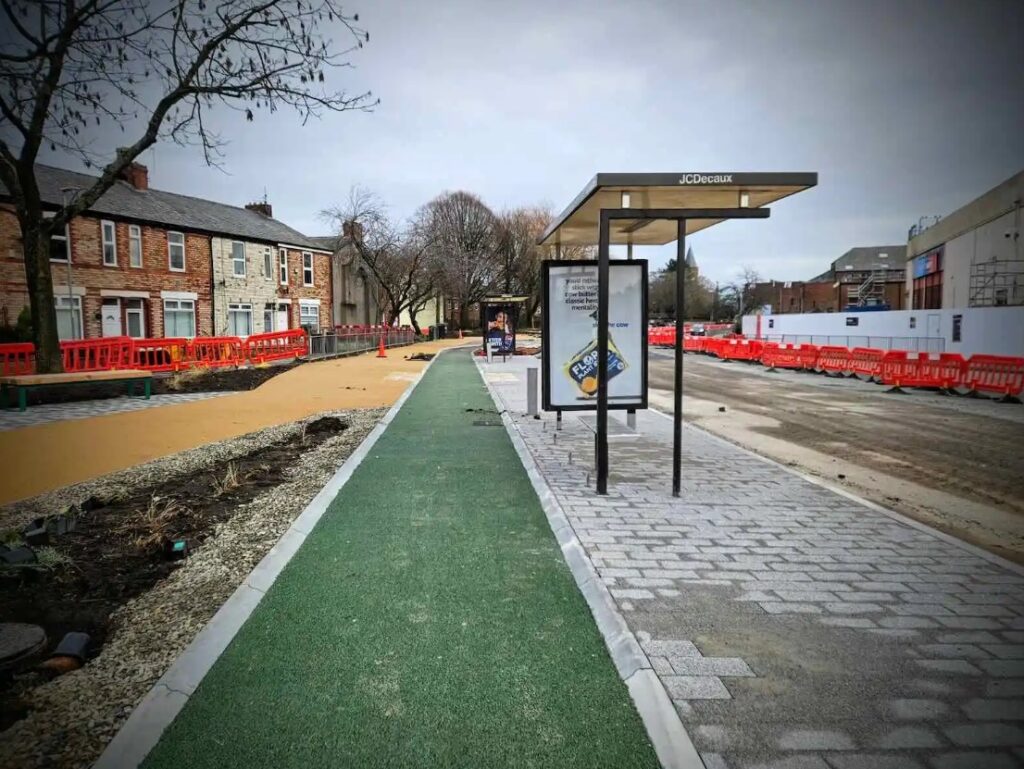

A common theme that emerges any time a new cycling infrastructure project is mooted in or near a residential area is the opposition of some local homeowners, furious that the proposed bike lane will replace some of their on-street car parking spaces, or narrow the road, lead to the loss of trees, or even require them to look both ways before exiting their drive.
For example, in October a new cycle lane scheme in Stretford was branded the “biggest, most expensive cat litter tray in history” by one disgruntled resident, who claimed that he was “planning to move out” of the area he was so “fed up” with the project.
However, while many locals were quick to deride that Stretford scheme as a “complete waste of money”, new research has instead found that, if our “fed-up” resident did indeed put his house up for sale in protest, the cycle lane would have actually made him some extra cash.
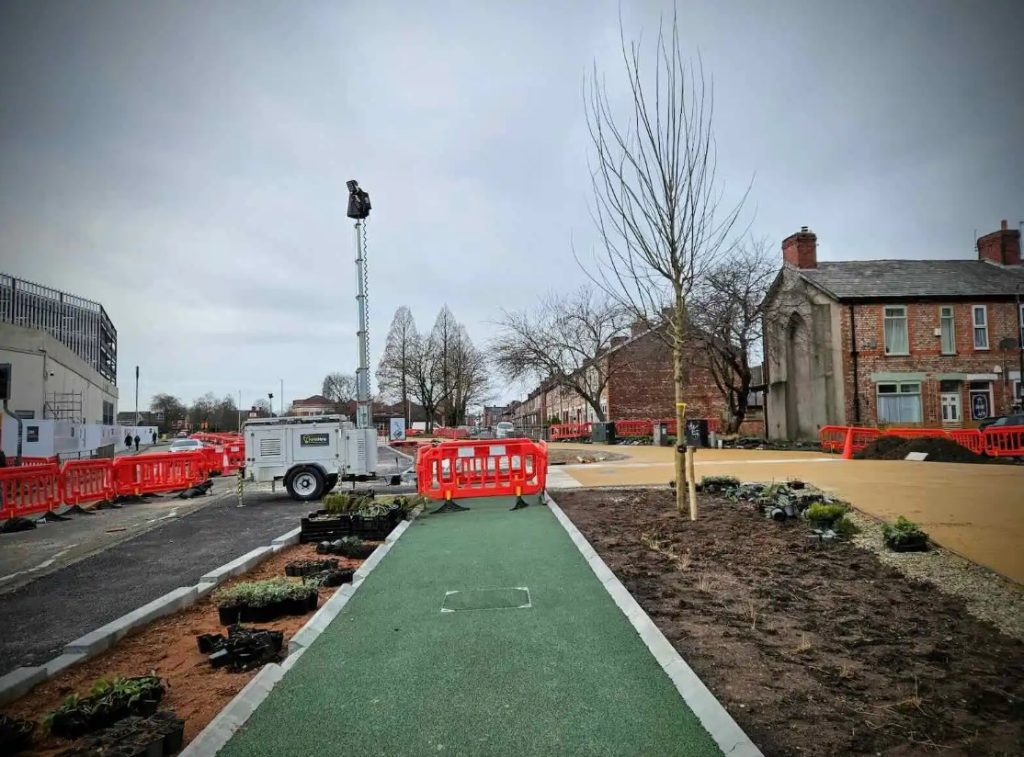
According to a new study conducted by Erez Yerushalmi and David Hearne, researchers in business and economics at the Birmingham City University and the University of Birmingham respectively, the proliferation of cycle lanes in Greater Manchester in recent years has caused the value of houses in those areas to jump by up to eight per cent.
The study, titled ‘The Amenity Value of Bicycle Infrastructure: A Hedonic Application to Greater Manchester, UK’, assessed a dataset of around 253,000 property sales in the area over a nine-year period using hedonic pricing, a method of identifying internal and external factors which affect an item’s value in the market.
Taking into account a wide range of characteristics related to the homes themselves and the local community, such as floor area, school achievements, and crime levels, the researchers concluded that house buyers are willing to pay more to live in areas that are closer to cycle networks.
They found that, by reducing the distance to the nearest bike lane by one kilometre, there was an average 2.85 per cent increase in property values across Greater Manchester.
Based on those figures, a property worth £163,000 in Greater Manchester (in 2019, when the study’s dataset concluded) would be worth an additional £4,640 if it were located a kilometre closer to the area’s cycle network.
The researchers also pointed out that this increase is equivalent to approximately £312 per year, based on an annuity calculation with a three per cent interest rate over 20 years. By comparison, commuters travelling similar distances spend more than £900 annually on fuel and car parking, or more than £500 on bus fares.
The closer you got to the centre of the city, meanwhile, the value in being close to a cycleway grows. In the central borough of Manchester, homes located close to a cycle lane were worth 7.7 per cent more than those located a kilometre away.
According to the academics, these findings suggest an “unmet demand for bicycling infrastructure, one that property developers and policymakers are not yet aware of”.
Yerushalmi and Hearne also argued that this relationship between the value of homes and their proximity to cycle lanes in Greater Manchester – which, they note, is higher than that found in previous studies, mostly focused on the US – offers “planners a powerful tool to prioritise new cycling route investments”.
They say that, based on their approach, the Manchester Victoria Northern Eastern Gateway off-road cycle route could boost property values in nearby neighbourhoods by £16.6 million and deliver a benefit-to-cost ratio of 1.9.
In their paper, the researchers concluded that their findings “unequivocally demonstrate the link between bicycling infrastructure and its amenity value internalised by property prices.
“We therefore strongly urge local and central level policymakers and property developers to integrate bicycling infrastructure from the initial stages of design. Doing so will address unmet demands, foster better quality neighbourhoods, and yield improved sustainable environmental outcomes.”
However, with funding for cycling infrastructure in the UK reliant on the central government, they pointed out that “it is likely that local assets like bicycle networks will continue to be underfunded – a missed opportunity for health, happiness, and economic development.”
In any case, it’s hard to argue that cycle lane schemes in Greater Manchester are a “waste of money” now.





















12 thoughts on “Cycle lanes boosting house prices by up to eight per cent, new study finds”
I can see the heads spinning
I can see the heads spinning at the Daily Mail – they hate cyclists, but also love increases in house prices. What to think? Now, all we need to know is whether it is linked to curing/causing cancer, migration, and whether you can flaunt your curves.
But “Cyclists prevent young
But “Cyclists prevent young from getting onto housing ladder…”
That’s nothing! Just found
That’s nothing! Just found the comments on some Council videos of the “Roseburn to the canal” new Edinburgh cycle link *. One comment: “Feel for those who’s flats are now overlooked by this, hardly something you want to see out your window when three or floors up!
… this is apparently referring to where the cycle path is running at the same or lower level as an “urban motorway” (a slip road of the Western Approach Road), which also carries buses. IIRC those tend to be a bit taller than cyclists…
* The comments you can
* The comments you can imagine. “why are you spending millions when you can’t mow the grass / fix the potholes and pavements?” “More concrete – how is this helping the environment?”. Complaints that you never see any cyclists AND also that it’ll be a rat-run for Deliveroo types.
I’d say there are some principled questions that could be asked about this particular infra. It’s far from the most pressing thing to do for cycling. While it “aims” to connects “routes” in fact it’s hardly convenient. From the end of one network you have to descend some hairpins, go under a railway, then climb back up again to get to this. The other end “connects” to the canal path – which is hardly a good ‘route’ for cycling – but that’s moot; the project doesn’t even get you all the way there!
In fact this familiar UK “build infra which also permits cycling – BUT only where it’s easy”. In this case through unused former “waste ground”. So fewer worries about “disruption” to people while making it. And no traffic “inconvenience” when done.
Then there’s the fact that the council were planning to cut off one end anyway by reclaiming it for a tram line!
And in fact it’s not “just for bikes” – cyclists will probably be in a minority, as usual in the UK. The project involves rejuvenating an existing run-down park / playground and creating another couple / a bit more accessible green(ish) space. Plus they’re doing some essential maintenance on the several bridges this passes.
Of course none of that helps those commentors one bit! One person complained the playgrounds were putting kids near exhaust fumes (which in fact represents no change from the current situation), another was saying the money should have gone on play schemes for disabled kids…
the little onion wrote:
This is the DM: thinking doesn’t come into it.
The Hyper-Junk press is
The Hyper-Junk press is accustomed to doublethink- several years ago they were simultaneously castigating the health services for both not giving (must have been before the 14 years of Tory misrule) the HPV vaccine (anti-cervical cancer) to some age-group of young girls and for giving it to the same age group (Irish edition, which I think still exists- there are stupid people everywhere!)
Cycle lanes also tend to
Cycle lanes also tend to ‘calm’ areas and therefore make them more attractive for people to visit. If I may cite some anecdotal evidence – close to where I used to work in Kings Cross (London) there was a road that was essentially a rat run for taxis to access Euston and St Pancras stations without using the Euston Road. This road was narrow, but relatively long and full of traffic and nothing else. Then Camden made the road one way, stopped the right turns and put a cycle lane on each side of the road. Now the road is full – and I mean full of people and cafes, and small shops and eateries and even a bookshop! The value of the retail properties and the flats must have gone up significantly. The opposition at the time was phenomenal – mostly from the taxi drivers (think of the disabled etc) and there was even a court injunction but Camden held its ground.
Tavistock Place?
Tavistock Place?
The link to The Amenity Value
The link to The Amenity Value of Bicycle Infrastructure: A Hedonic Application to Greater Manchester, UK’(link is external) doesnt work
Try here:
Try here:
https://www.open-access.bcu.ac.uk/15927/1/20241014_Hearne_and_Yerushalmi_FINAL_ERE_accepted.pdf
how the stretford Kingsway
how the stretford Kingsway rework took best part of 18 months I have no idea but it was always going to be better afterwards, prior was a dual carriageway metal barriers etc, now it’s a encourage cars to go round rather than through the centre.
Its also finished so scrape twitter for some after photos 😉
We’re going to get blamed for
We’re going to get blamed for high house prices now are we?