



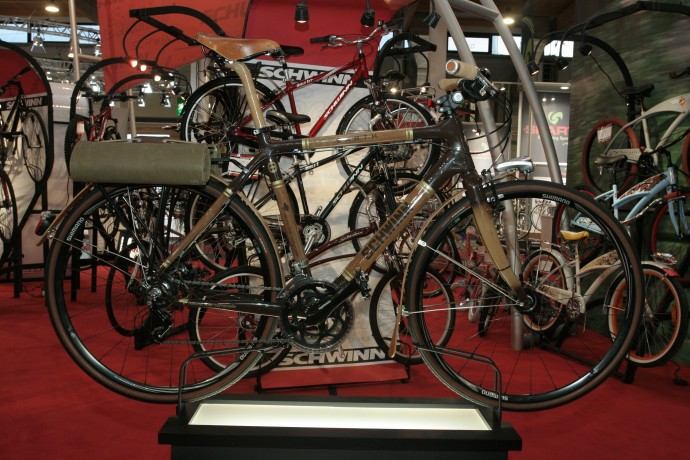
Schwinn’s Earth bike is a concept touring bike made from flax rather than carbon fibre. So it’s greener than your ‘traditional’ carbon fibre, see. Not sure how much greener it is than your even more traditional steel or aluminium – both highly recyclable – but let’s not let that get in the way of an interesting concept… Flax has been used in the motor industry for a few years now as a reinforcing material for plastics. Its avantages are that it is organic, eco friendly, hygienic to work with, oh, and cheap. What makes it particularly attractive from a bike manufacturer’s point of view it has a good strength to weight ratio. It has made an appearance in Formula 1 – outside of the aerospace industry probably the biggest testbed for new composite materials. So far the only bike company to really latch on to flax are Museuw – their MF-1 flax bike uses a combination of 100 per cent carbon tubes with 50 per cent flax tubes. The big claim made for it is that the flax adds vibration damping properties to the ride making it more comfortable to the rider. Maybe, though if it does that would suggest that it would be an ideal material for a touring bike. The Schwinn Earth concept bike takes this a step further using tubes made from 90 per cent flax and 10 per cent glass fibre (one of the claimed advantages of flax is that you can mix it with synthetic materials to tune the performance of the final tube). It’s certainly an interesting bike, and we would really like to find out more about it, and what the likelihood is of it making it onto the streets – the model on show at Eurobike was strictly of the ‘look don’t touch’ variety. 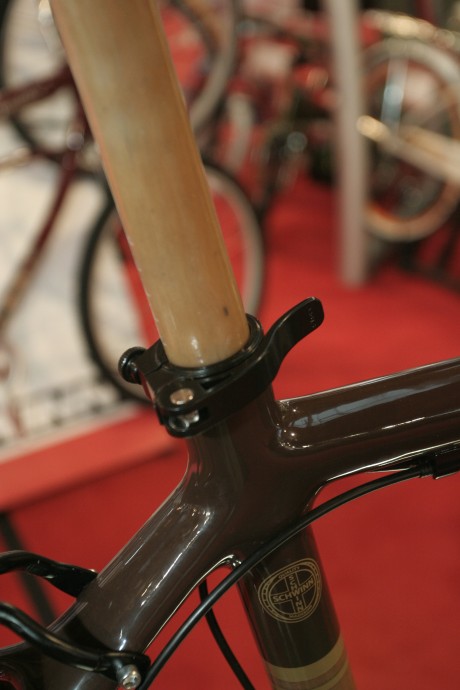
While the claimed ride characteristics of flax would seem to make it an ideal material for tourers, you would probably want to limit your trips to the first world, because if one of these breaks the village blacksmith is not going to be able to help – unless he knows the way to the bus station. Another disadvantage of flax bikes is that so far they haven’t proved particularly cheap. Sceptics also point out that there are many materials that can be incorporated into an epoxy matrix and considered fibre – carrot fibre is ‘the next big thing’, but that none has yet been shown to out-perform carbon particularly when it comes to strength to weight ratios. Carbon is cheaper too. 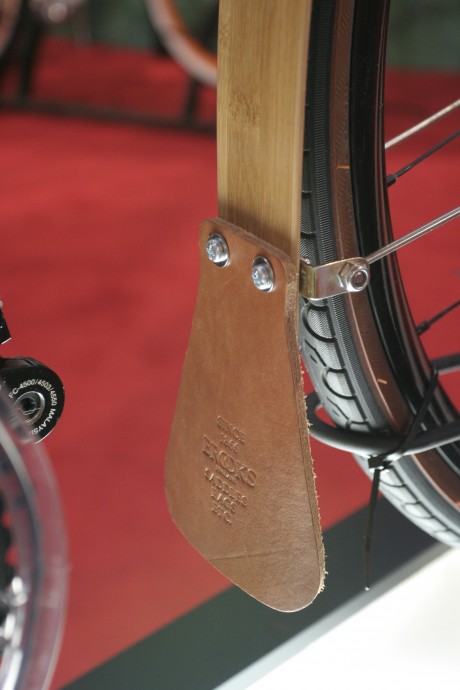
One advantage something like the Schwinn Earth might have is that in countries with strict policies on the disposal of hazardous substances (that’s all of the EU) an end user certificate won’t be required to prove that the bike has been disposed of responsibly – something that is required for carbon fibre machines. Schwinn Earth gallery
More Schwinn Earth pics








3 thoughts on “Schwinn Earth: It’s a ‘green’ flax touring concept bike…”
whats wrong with steel?
Flax or no flax, who’d ride a carbon touring bike? I’ve known a carbon MTB with a dirty big hole worn in the chainstay after one wet day in muddy conditions. What are they thinking? Steel is where it’s at for touring bikes, pure and simple.
Well it is a concept bike…
Agreed, probably not very fixable, once you got off the beaten track. On the other hand maybe there are plenty of plenty of local composite factories out there that’d run you off a quick tube, but where are you going to get the flax?
Now a bike made from carrot cellulose…
some oriental pedantry for you….
aluminium is indeed recyclable, and when all or even most alu bikes are recycled you could just about call it a green material. for the time being, it’s a material whose production generates more carbon emissions weight for weight than it does aluminium.
anyone got CO emissions stats for flax…? 😛
or recycling stats for bikes in general? it can’t be worth the hassle of disassembly….