



According to provisional estimates from the Department for Transport (DfT), traffic on Britain’s roads reached an all-time high for the year ending September 2016. Motor vehicle traffic was 320bn miles during this period, 1.4 per cent up on the previous year and 1.8 per cent above the 2007 pre-recession peak.
Although car traffic was up by 0.9 per cent compared to the preceding 12-month period, much of the growth was accounted for by vans and HGVs.
Van traffic was up 3.8 per cent to 48.2bn miles, while HGV traffic was up 3.4 per cent to 17.1bn miles.
HGV traffic fell until 2013 but has risen since then. Van traffic, by contrast, remained stable until 2013 but has also risen steadily since then.
Earlier in the year, The Institute of Advanced Motorists (IAM) responded to the rise in van traffic by urging employers to carry out appropriate risk assessments on drivers.
The organisation has expressed concern that with no additional test or qualification required to drive a van, there could be a rise in road traffic collisions.
IAM cited figures from the Department for Transport which state that van drivers are almost twice as likely as car drivers to use hand-held mobile phones at the wheel – 2.7 per cent compared to 1.4 per cent of car drivers.
Bicycles could replace vans and lorries for two thirds of logistic trips
The figures indicate that much of the traffic growth has come on rural A-roads and motorways, with the former up 2.8 per cent and the latter 2.5 per cent. Traffic on urban minor roads has remained stable. Urban A-road traffic has risen by 0.9 per cent and rural minor road traffic has fallen by 0.3 per cent.
The average speed on local A-roads in England for the year ending June 2016 was 25.4mph, down 1.7 per cent on the previous year.
In June 2016 there were 37.1m vehicles licensed for use, a rise of 2.4 per cent on a year before.

















7 thoughts on “Britain’s traffic reaches record high with van and HGV traffic rising rapidly”
It’s a sickness we all need
It’s a sickness we all need to reduce
It’s a sickness we all need
[quote=richiewormiling]
It’s a sickness we all need to reduce
Couldn’t agree more, some folks I know get in the car for a journey of a 1/4 of a mile! How about walking? It’s like some sort of habit, as well as being bone idle. Leave the house, in the car, in the shop, in the car, back in the house……
Fell some air on your face and use your legs you lazy f…..s!
This doesn’t surprise me
This doesn’t surprise me because my subjective observation is that there’s more traffic than ever.
When the news came out that traffic was at an all-time high in 2015, my local MP Andrew Jones, in his role as minister in the DfT, said that it was something to celebrate. I sort of understand what he means, in that it shows the economy is going ok, but I think it’s a total nightmare overall.
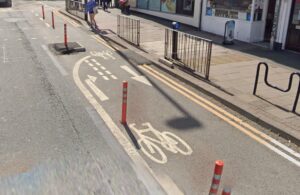
It’s time more than ever before to build proper cycle infrastructure, to give people (including those who don’t want to cycle in traffic) a choice – an option which doesn’t involved endless traffic queues.
Only 1.4% of car drivers use
Only 1.4% of car drivers use a handheld phone while driving? Yeah, right.
The reason for the growth in van mileage is obvious: home deliveries, the move from physical to remote shopping. Yes, it’s the Wiggle factor! And Tesco etc…
Bmblbzzz wrote:
Shirley that’s 1.4% of car drivers NOT using phone …. IGMC 🙂
Hardly a surprise that more
Hardly a surprise that more people are driving more: it’s been government policy since about 1960, and despite all the rhetoric about reducing traffic, pollution, global warming and things like the Road Traffic Reduction Act, it is still government policy.
Just as well we’ve got another planet to go to when this one burns up.
The bigger problem is the
The bigger problem is the ever increasing number of people driving for a living on contracts that encourage them to drive as fast as possible and take risks.