



Let’s face it: the standard of driving in the UK is NOT the best. Anyone who’s spent any time on a bike on British roads will have some tales to tell about close passes, and worse. Our long-running Near Miss of the Day series is up to nearly a thousand videos now, and if we published every one we get sent we’d be into five figures.
More and more people are recording their rides, and most police forces run web portals for you to submit your footage of poor driving and bad behaviour. It was recently revealed that cyclists submitted a record number of close pass videos in 2024, last year’s figure more than double the amount reported in 2021, suggesting an ever-increasing number of people are using cameras on their rides. It’s not just cyclists of course, and it’s estimated that, in total, upwards of 150,000 pieces of what the police call ‘journeycam’ footage are currently submitted to police each year.
If you want to join them in helping to make the roads safer for everyone by reporting bad driving, here’s our handy guide to the types of cameras you can get, how and where to fit them, and what to do with your footage. We’ve also spoken with the National Police Chiefs’ Council to make sure you know exactly how to report an incident to give it the best chance of being taken seriously by the relevant police force.
Types of cameras
We’re not worried about making cinematic epics here: an on-bike camera’s job is to provide evidence of a close pass or other incident, and to capture the number plates of the vehicles involved. There are many different cameras that can achieve that. We’ve reviewed a stack of them.
Action cameras
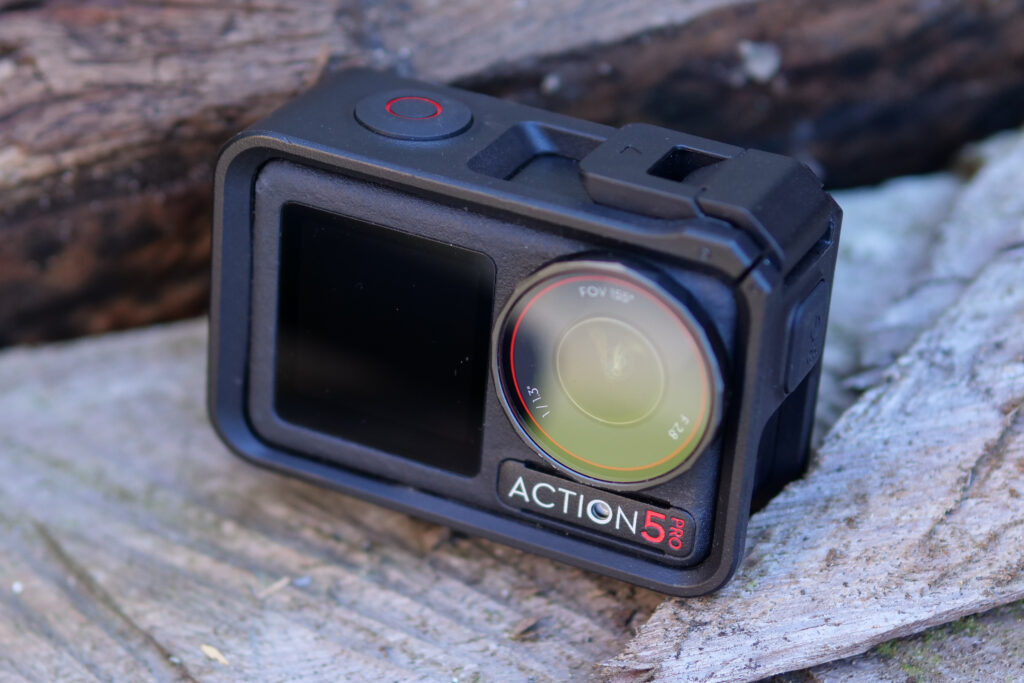
The first type of camera you could consider is an action camera, of which the GoPro is the most well-known. Cameras like the GoPro and DJI Osmo Action are expensive, and useful for much more than dashcam duties. But the internet is full of cheap action cameras and a lot of them are pretty good: fifty quid will buy you one that’ll shoot a decent picture in 4K resolution; check the usual online outlets. You can get an absolutely enormous array of mounts for them too, and many of them are either waterproof out of the box or come with a waterproof enclosure, which is good news for UK commuting conditions. Any camera that you’re buying for this kind of purpose needs to support loop recording: this chops up the footage into shorter clips, and automatically deletes the oldest ones when you start running out of space on your SD card, so you don’t have to worry about file management.
The main downside of action cameras is battery life. Even a cheap one will last a normal town commute, but if you want to regularly record rides over an hour, they don’t really work as a solution.
360 cameras
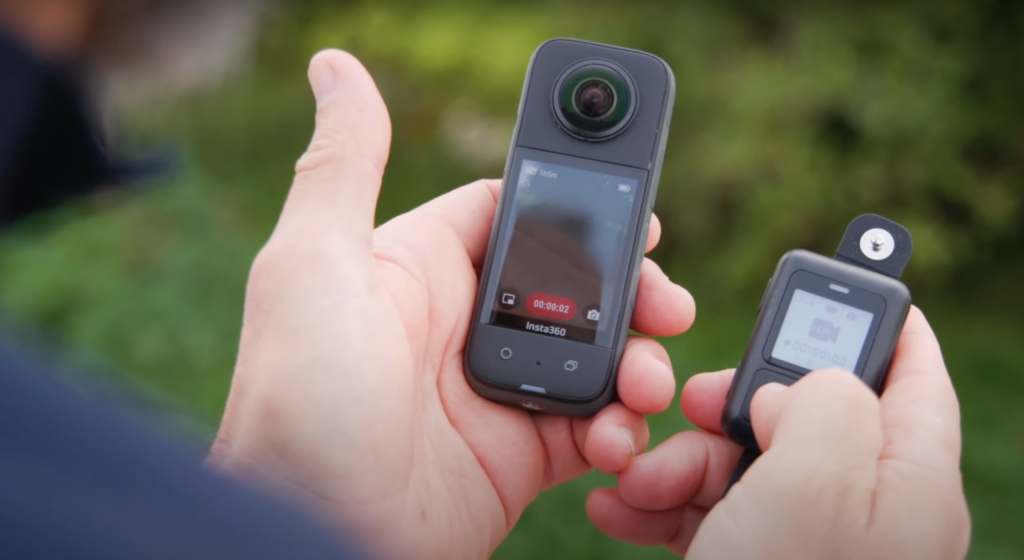
Also in the action camera family are 360 cameras, Of which the Insta360 family are the best known; that’s what you’ll find on Jeremy Vine’s head. 360 cameras have a lens on both sides, and they can record everything that’s going on, all at once. You can frame the footage however you want after the fact, and that’s great for capturing incidents that a single-lens camera doesn’t pick up. The main downsides are that 360 cameras are pretty expensive, and battery life is, again, quite short. There’s also a fair bit of processing to be done to the video if you want to use it, you can’t just pull the files off and upload them
Dedicated bike cameras
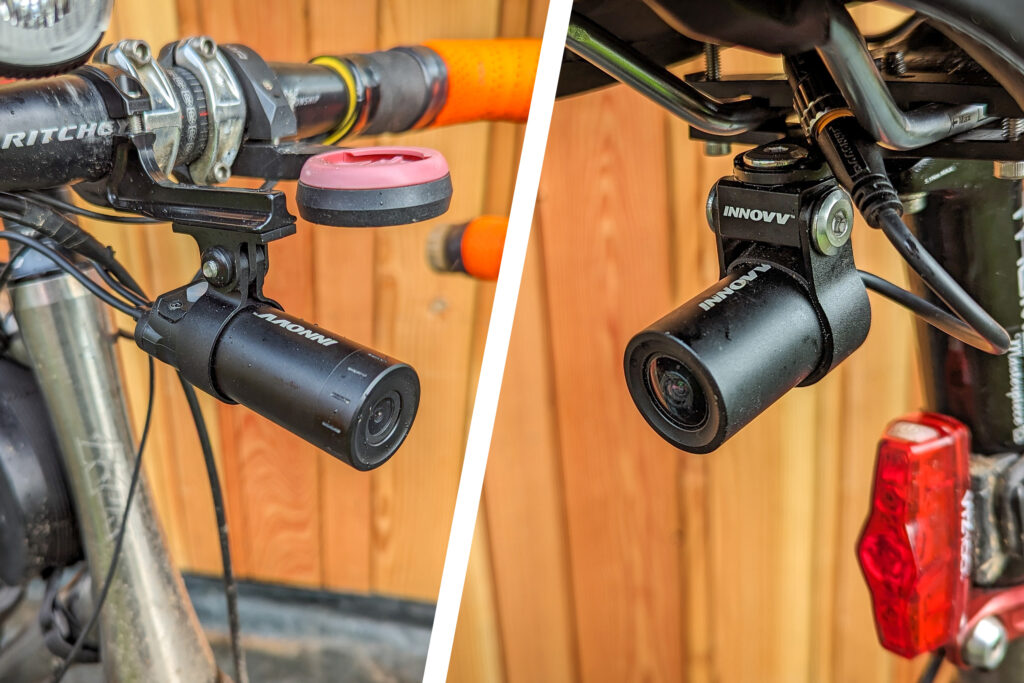
Lastly, you can get a dedicated bike camera. You can get front-facing ones, like the Rider Recall one we recently reviewed, and rear-facing ones that are usually built into some kind of rear light, like the Cycliq Fly 6 Pro. You can get front light ones too. There are twin-camera systems as well, either with two separate cameras like the Innovv K6, or with both cameras built into the same unit, like the Techalogic DC-2.
Cameras like this tend to record by default in a loop format with the date and time overlaid on the footage, which is useful if you’re submitting it to the police. They often have sensors to detect an impact too, and they can protect any footage they think is associated with an incident by locking the file and putting it in a different folder on the SD card. Many of them, the Rider Recall included, can also run from an external battery for much longer run times. The footage isn’t generally as good as a posh action camera, but for recording incidents out on your rides, it’s good enough.
Where to mount your camera
You can either have your camera on your bike or on yourself, normally on your helmet. Some cameras will only work in one place: a rear light camera goes on your seatpost, a 360 camera or a dual lens camera needs a clear view all round and so it really needs to be on your head. With others you get a choice. An action cam can go anywhere: bars, seatpost, helmet, even on a chest mount. But which approach is best? Well, there are advantages to both.
On your bike the camera is out of the way, and it’s less obvious to drivers, some of whom can get a bit worked up if they think they’ve been filmed doing something daft. If you’re using an external battery for long rides then a bike mounted camera is much easier to set up that way, you can just run the wires along the frame to whatever bag you’re using.
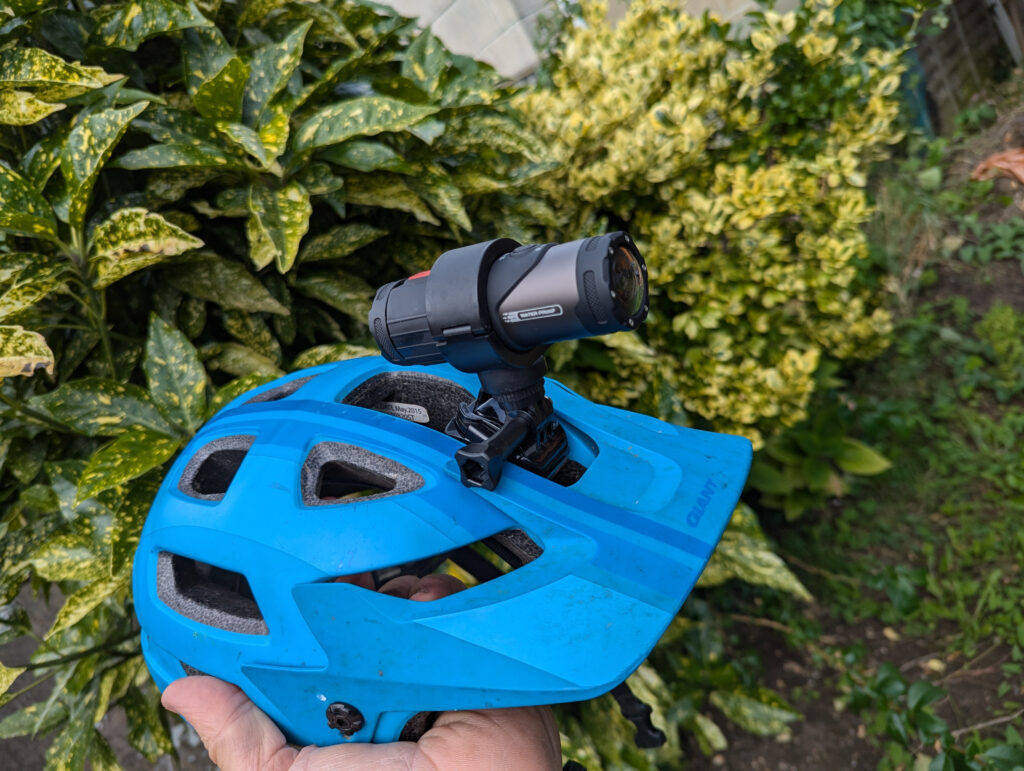
One of the main downsides of mounting your camera on the bike is camera shake. A good action camera will have excellent image stabilisation, but many bike cams have basic stabilisation, or none at all. Without it your bike will do a great job of transferring all the bumps and lumps of crappy UK road surfaces into your footage, which might make number plates hard to read. Having the camera on your head mitigates that quite a bit, and it also means you’re free to point the camera at anything you want, which can be useful. Say some idiot is nudging your bike at the lights: you can just turn round and film it. That doesn’t really work with a bar cam.
On the other hand, the ‘camera hat’ look might not be one you’re comfortable with, and it adds weight to your helmet which can make it less comfortable. There’s been plenty of time and column inches dedicated to discussing whether having a helmet-mounted camera is a safety concern; Michael Schumacher’s skiing crash in 2013 is the highest-profile case in which a camera has been implicated as a factor in a head injury. Independent testing suggests that it’s not really an issue though.
How can you submit video footage to your police force?
In short, it depends where the incident happened. There are 45 territorial police forces operating across the United Kingdom, and their approaches to video evidence gathered by members of the public vary.
Late in 2017, the four police forces operating in Wales launched Operation Snap, unveiling a website that allows people to submit photographic and video evidence and providing a national standard.
And while many English forces — including Gloucestershire as of December — accept Operation Snap submissions, there is no standard operating across the United Kingdom as a whole. Other English forces accept submissions directly via their website or through Nextbase who have a handy interactive map showing how to report to your force.
Police Scotland announced funding for a new National Dashcam Safety Portal in 2022, but the yet to be rolled-out scheme has since been under review and could be axed, prompting a campaign from Cycling UK to save it. Submissions from Scotland presently should go through the Police Scotland Online Reporting Form, similarly in Northern Ireland you can go through the non-emergency online incident reporting.
So, in short, wherever you live, if you are using a camera to film your ride, familiarise yourself with your local police force’s policy regarding photographic and video evidence provided by the public. Also bear in mind, too, that the roads you ride on may be part of another force’s territory.
Our top tips for capturing and submitting footage + a chat with the National Police Chiefs’ Council for the inside track on third-party reporting tips
You’ll need good enough footage.
Police don’t specify video quality for submission but in any incident the vehicle number plate needs to be clear. Check your camera can pick up moving number plates. In the case of close passes, the most effective set-up is one camera on the front, one on the rear of the bike. It’s important to note, as the National Police Chiefs’ Council (NPCC) explained to us, that a close pass isn’t a specific offence (and hasn’t ever been) but it is a driving behaviour which could constitute careless/inconsiderate or dangerous driving.
“If a road user’s behaviour is determined to constitute careless/inconsiderate or dangerous driving then action can still be taken,” our NPCC source elaborated. “The important differentiation is that close pass itself isn’t an offence, and hasn’t ever been. The behaviour of driving too close could constitute careless/inconsiderate or dangerous driving – in the same way that driving at speed past a vulnerable road user, revving an engine and frightening a horse, etc could also constitute either of those offences.”
While officers assessing footage “do not have the capability to measure speed and distance from digital media submissions”, if driving is obviously close or fast it could contribute to the overall picture of careless/inconsiderate or dangerous driving.
Ensure the time and date are correct on your camera.
Footage with the date and time overlaid is very helpful, as long as they’re correct! This can be resolved later, usually with a statement from the user, but it’s easier for police if it’s right in the first place.
Capture video footage of the incident and the vehicle as best you can.
Capturing not only the incident and the vehicle, but images of the driver, too will help police identify them later on. More tips on mobile phones, below.
Record, Retreat, Report
Keep cool during the incident, and above all, don’t put yourself in danger. Don’t enter into discussions or engage with the offending driver to point out what they have done and what you intend to do; obtain the footage and carry on your journey. Remember, it’s up to police to deal with bad driving, and camera evidence helps them do that. Police will assess both your riding and a driver’s driving later. we’ve seen cases where riders have been assaulted by motorists after remonstrating with them, which can also in rare cases lead to police rejecting footage, or even referring the cyclist for prosecution for a public order offence.
If there are witnesses, get details
As with any road traffic incident, whether caught on film or not, having independent witnesses is very helpful, and is even required by some forces. Get the full name and contact details for anyone who witnessed the incident.
Submit footage early – worry about details later.
Police need to send a notice of intended prosecution to vehicle owners within 14 days of the incident, so if you’ve caught something on camera there isn’t a day to waste. Make sure to keep the full footage in case it’s needed later.
The really important bit! Write a good statement with your camera footage
This part of your submission is absolutely crucial, the NPCC tells us. You know how earlier we explained that officers can’t measure distance or speed from camera footage? Well, the NPCC says: “This is where the impact statement is really important, the submitter needs to explain the circumstances and effect the road user’s behaviour had on them, which is what significantly strengthens the evidential picture.
“Viewing and triaging journeycam is always going to be a little subjective because you cannot measure the speed or distance but the statement plays a big role in demonstrating the severity of what happened.”
Your statement is submitted at the same time as the footage. Keep to the facts, rather than opinion, but clearly explain why the incident constituted careless/inconsiderate or dangerous driving. Your statement needs to cover the following:
a. What the driver did
b. Whether they were moving/stationary at the time
c. If they were in traffic
d. Whether it was at a junction
e. What the road conditions were
Mobile phone offences need more detail of the driver and what they’re doing
For mobile phone offences try to capture:
a. The device screen, if it is illuminated
b. If the device is being held to the driver’s face and they can be seen talking
c. Texting/fingers or thumb moving across the screen
d. Looking down at the device, rather than the road ahead – whether stationary or moving
e. The length of time the driver is using the device
Keep all of the footage you have of the incident.
Once submitted, police will consider the manner of driving and cycling of ALL involved in the incident, and may ask you for the full footage, should the matter proceed to court. They usually need the incident itself, and a minute of footage either side.
Is it worth the time and faff to actually report bad driving? Well, the numbers say yes: rates vary from force to force, but for all the forces that have published stats, over half of reported incidents (and sometimes a lot more) result in action of some kind. That can be a letter, a notice of intended prosecution, a fine, or a requirement to attend a course. The worst passes certainly do get prosecuted, so if you capture bad driving it *is* worth your time to report it. If you’re thinking of getting a camera, check out the road.cc camera reviews on the site.
Don’t forget: Enjoy the ride!
We take up cycling because it’s convenient, fun, healthy and saves us money. Most drivers want to do the right thing and drive safely. Don’t let a few bad eggs ruin your rides.









35 thoughts on “Everything you need to know about bike cameras — how to choose, tips for recording quality footage and what to do if you capture a near miss, close pass or collision”
On this subject see my Review
On this subject see my Review of “Record, Retreat, Report” here https://rdrf.org.uk/2024/08/26/review-record-retreat-report-by-lukasz-marek-sielski/
Thanks for this Robert.
Thanks for this Robert.
I’ve made a comment on the review.
Operation Snap in Wales is
Operation Snap in Wales is very good, at least in the south Wales and Gwent Police areas that I have submitted close pass reports to and as far as I am aware the rest of Wales is also good to report incidents through the portal.
Any queries I have asked have been responded to very promptly and I usually supply a minute either side of the incident after asking what would size video be best to submit.
In Wales you also have a useful map where all such incidents can be viewed. It does take a few months for any submissions to appear. A small portion of the map can be seen below.
Can you post a link, please?
Can you post a link, please?
Found it – the Op SNAP tab here:
https://www.gosafe.org/camera-map/
Yes that’s it. It is a few
Yes that’s it. It is a few months out of date at the moment as I have 5 close passes from August not on there yet.
In my experience, they will catch up eventually.
You say keep it factual, but
You say keep it factual, but it is important I believe to include how the actions of the driver made you feel and affected you. As has been said by a police officer recently a close pass is not a specific offence so you need to provide additional evidence that the driving was inconsiderate. They will not assume how you felt, you have to tell them.
SimoninSpalding wrote:
Good advice. I always report how frightened or shocked I was by the dangerous driving. I always try to swerve away from the vehicle if it’s safe to do so and then report that I had to because of my fear of being hit.
I also list all the dangerous actions of the driver like undertaking or cutting up other vehicles, speeding past pedestrians waiting to cross or past a school and if the vehicle is not taxed or MOT’d. You can also check if it is insured but technically you’re not allowed to unless you own the vehicle so it’s best just to hint at this in the report and leave the police to check for themselves.
Yes I agree, I always put in
Yes I agree, I always put in the statement things like ‘I feared for my life’ and:
‘The incident left me quite shaken up and the drivers impatience and manner of driving shocked me greatly.’
‘That afternoon/evening when I returned home I still felt shocked and shaken and extremely frustrated by the dangerous manner of driving exhibited by the offending vehicle.’
‘I did not sleep very well that night because of anxiety that this close pass induced and I kept going over the incident in my mind, trying to understand why anyone would drive in such a dangerous manner around a vulnerable road user.’
‘This manoeuvre startled me because I was not expecting anyone to pass like this at this point and made me extremely tense and fearful for my safety.’
‘The offending vehicle approached from behind and passed me extremely closely at speed on my right hand side, which I felt was very dangerous and put me at unnecessary risk and was so close, I could easily have touched the vehicle with my right hand.’
‘Further down the road I had to stop and get of my bike for a while, because I was so distressed by the nature of the incident and the great danger I had experienced.’
‘The unexpected manoeuvre with the vehicle passing me so closely at a much higher speed than me, made me jump and shout out in surprise and fear.’
I have used all of the above and variations of these, because this is genuinly how I have felt after some crazy close passes, don’t be afraid to go into great detail, you don’t want drivers taking it to court and getting off because it appears to the Magistrate it was a non event.
I have a few templates that i use depending on the nature of the incident, just changing details to suit what actually occured.
.
.
All good – many thanks. Going to copy and save those, for use in the future.
.
Ta.
.
Quote:
Really? I know the Met ask if there were any witnesses but I’ve never been told they wouldn’t go ahead without one and I’ve never heard of any other force doing that either. “Required” implies that some forces will not proceed unless there is a witness independent of the cyclist and the camera, that surely can’t be right?
Police Scotland have given me
Police Scotland have given me this as a reason for not proceeding with a report before.
That’s bonkers. Was there
That’s bonkers. Was there anything special about that submission that could justify such a demand, e.g. you alleged something about the driver’s behaviour that couldn’t be seen or heard on your video, or was it just a flat “no witness no investigation” refusal?
FWIW, as I understand it
FWIW, as I understand it Scots Law has some slightly different rules around “corroboration” of evidence, which does complicate matters when comparing across the border.
But even so, I don’t think it’s actually a valid argument for not proceeding with a report (see e.g. https://www.scottishlegal.com/articles/criminal-appeal-court-clarifies-corroborative-status-of-cctv-evidence)
Per new Met guidelines, it’s
Per new Met guidelines, it’s best in London to turn off the date stamp, as if for any reason it’s incorrect (which can happen if you run the camera battery completely flat, for example) then they won’t process the report.
Time/date stamp is not necessary to file a report – every police force accepts reports without it, you just have to state the time/date and location.
Also – as a point of info – GoPros don’t actually support loop recording of the type needed for reporting. Their ‘loop recording’ overwrites the most recent file – great for repeated attempts to e.g. pull off a perfect stunt, but the opposite of what you need for reporting.
Velo-drone wrote:
So you just click the shutter to save the current loop at the time of an incident. I don’t bother with looping anyway, with a 32GB SD card and 2h20m battery life the battery runs out long before card space does.
A 32gb card? You’re not
A 32gb card? You’re not recording in 4k then?
bensynnock wrote:
No, I run an old (2019) GoPro Hero 7 which doesn’t do 4K, I find the 1080 footage more than adequate, excellent in fact.
https://upride.cc/incident
https://upride.cc/incident/lc64tge_bmw_closepass/
If only my non-4K video had been good enough to convince the not-at-all cyclist – hostile brave lads of Lancashire Constabulary to take action against this BMW driver. As far as FoI request is able to reveal, Lancashire police has NEVER prosecuted ANY motorist for close-passing a cyclist
But he HAD to close pass you
But he HAD to close pass you because there was a car in the oncoming lane. Literally the only alternative was to wait 0.75 seconds until it was clear. Is that what you want? What are ya, some kind of liberal commie bunny hugger?
Your hidden message is
Your hidden message is correct- a large proportion of the close passing attacks on me occur in both directions at that very corner, which is almost 90 degrees at the brow of a hill. They can’t see the oncoming traffic on this busy road but proceed on the incorrect assumption that there can’t possibly be any, and the correct assumptions that they can always swerve into me and that the police motorophiles couldn’t care less what offences are committed against cyclists, except that they privately encourage them in order to show who’s boss. The ‘excuse’ you mention was actually used in defence of the driver by Stagecoach, several years ago
https://upride.cc/incident/sk19evw_stagecoach42_closepass/
https://upride.cc/incident/px12dnd_stagecoach42_closepass/
https://upride.cc/incident/px12eez_stagecoach41_closepass/
https://upride.cc/incident/px12dnu_stagecoach40bus_closepass/
Unfortunately for cyclists,
Unfortunately for cyclists, pedestrians, and even drivers, the first sentence is auto-blurt wrong! I worked in an intensive experiential cross-culture training centre in East London. We had trainees from all over Europe (mostly Finland, Germany, Netherlands, Switzerland) and some from USA. All were astonished at the standard and patience and consideration of UK drivers compared with their home countries. We Brits were very surprised to hear this over and over again and, as cyclist, I was astonished.
We do have psychopathic nutter drivers, but so do other countries.
Probably true to say we have among the least worst drivers.
All were astonished at the
All were astonished at the standard and patience and consideration of UK drivers compared with their home countries
I don’t agree with this eulogy to UK drivers, but one minor advantage we have is that the selfish, inconsiderate, dangerous UK psycho-nutter drivers voluntarily self identify and segregate by the weapons they choose, which just happen to be the same as chosen by Lancashire Constabulary
https://upride.cc/incident/lc64tge_bmw_closepass/
https://upride.cc/incident/a15tjv_bmwm4_redlightpass/
https://upride.cc/incident/au06ynx_bmw3_closepass/
The usual explanation for BMWs with long term absence of MOT yet still with VED around here is unmarked police vehicle- but this one spends a lot of its time outside this house in Garstang.
That doesn’t necessarily make
That doesn’t necessarily make the statement wrong. It could be that the standard of driving everywhere, including the UK, is not the best, if by ‘the best’ it means ‘the best it could be’.
Think it’s also we judge our
Think it’s also we judge our by our own standards. Given UK infra so clearly signals “drivers, this space is for you” people maybe don’t expect much! I’d guess the Dutch are more critical of poor behaviour towards cyclists by Dutch drivers, but in the UK they’d probably be grateful to be alive after having been directed down one of the UK’s “urban motorways”…
E6toSE3 wrote:
You may have a point but its also kind of irrelevant. Every KSI on the road is a whole web of people put through extreme distress, and in many cases a significant cost to the economy via time lost at work and burden on the NHS and emergency services.
The only good number is zero.
Don’t waste your money, if
Don’t waste your money, if you ride in Surrey at least.
The DJI osmo 4 will record
The DJI osmo 4 will record for about 1hr 15, and the osmo 5 for about 1hr 30 on a full standard battery. I mount mine on the out front mount and have no problem with camera shake present in videos.
I get ~1h40+ in the summer
I get ~1h40+ in the summer with my DJI Osmo Action 4, but I run it in 1080p30 with the stabilision off.
Unless you are going to do
Unless you are going to do additional action cam things I wouldnt spend more money on an action cam (particularly the high end models like GoPro’s) than the price for which you can get a bike, helmet or dash cam for.
GoPro’s in particular are a nightmare to set up for bike cam duties whereas a proper bike cam will work out of the box.
( I run a GoPro for MTB’ing and cycliq for road cycling).
Also if you’re a long distance (150+ km) cyclist/audaxer type consider a camera which can run from a powerbank to banish, if you are careful with the cabling and use lots of electrical tape in the right places you can run both Garmin and Cyliq camera’s from a powerbank.
Its unfortunate that gopro no
Its unfortunate that gopro no longer do the Hero Session. I have one and its perfect for road cycling. Because its only a cube its not too bulky and I can put it under the bars or saddle rail easily and its 1 button to start and finish recording. GoPro decided to discontinue this model and its a shame cos it was great at what it did.
Why are you reporting on this
Why are you reporting on this now that the Police have stopped processing close pass submissions.
When I saw the article I thought you might have some news of the debacle.
randonneur wrote:
That’s only in Wales. Well, only Wales has officially said they’ve stopped.
They have, my last submission
They have, my last submission was greeted by this comment
Decision: No Further Action Taken
Further Comments:
“Thank you for your submission to Operation Snap. A decision has been made to temporarily suspend taking action on evidence submitted to Operation Snap whereby pedal cyclists, horse riders and pedestrians feel that the subject vehicle has passed them too closely. This decision has been made following national guidance from the Forensic Science Regulator. Operation Snap remains in service for witnesses of driving offences and will evaluate each incident on a case-by-case basis taking into consideration aggravating factors present. Regrettably, we’re unable to discuss this outcome further, we thank you for your patience and understanding during this time. We will communicate any updates as appropriate via official GoSafe and/or police channels.”
Which police force was this?
Which police force was this? Each one has control of its own policies, OpSnap is just the portal whereby the report is sent to the appropriate force, not an overarching policy maker. Quite prepared to stand corrected but I’ve only seen that police in Wales have said they won’t action close passes received via OpSnap, no other force as far as I’m aware.
The reference to GoSafe
The reference to GoSafe strongly implies this is a/ the combination of…Welsh force(s)