



The 2023 Cycling World Championships in Scotland have concluded, presenting us with an array of new bikes and components as nations showcased cutting-edge technology ahead of the 2024 Olympics in Paris. Nowhere was this more apparent than on the track in the Sir Chris Hoy Velodrome with some radical-looking design – but are these space-age new track bikes fair, and aren’t the UCI supposed to stop this kind of thing?
In all types of races, especially track events, a win or a loss often comes down to mere milliseconds, so it’s understandable that nations are seeking every advantage possible in search of that top step.
Therefore, we saw lots of new equipment making its competitive debut during the 2023 UCI Cycling World Championships. This is because nations are required to use the equipment they intend to use at the Olympics, in competition, in the year preceding the Games.
> 10 tech highlights from the 2023 Cycling World Championships
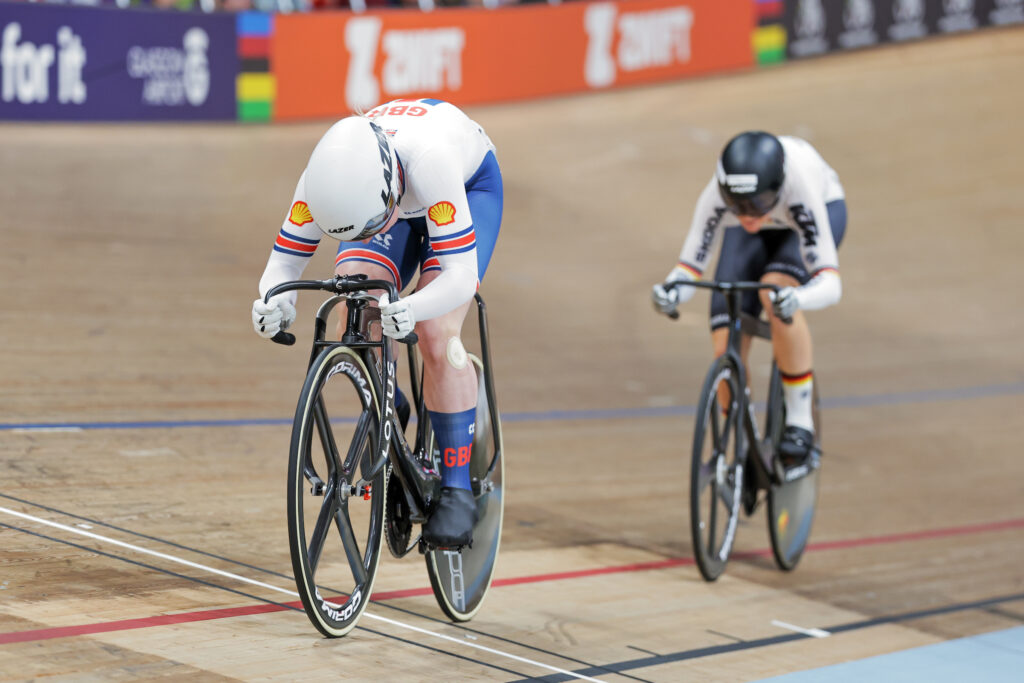
In 2019, Hope and Lotus collaborated to create the HB.T track bike, which was unlike anything we’d ever seen. It was ridden by Team GB at the 2020 Tokyo Olympics, taking them to the top of the event medal table with seven Olympic medals.
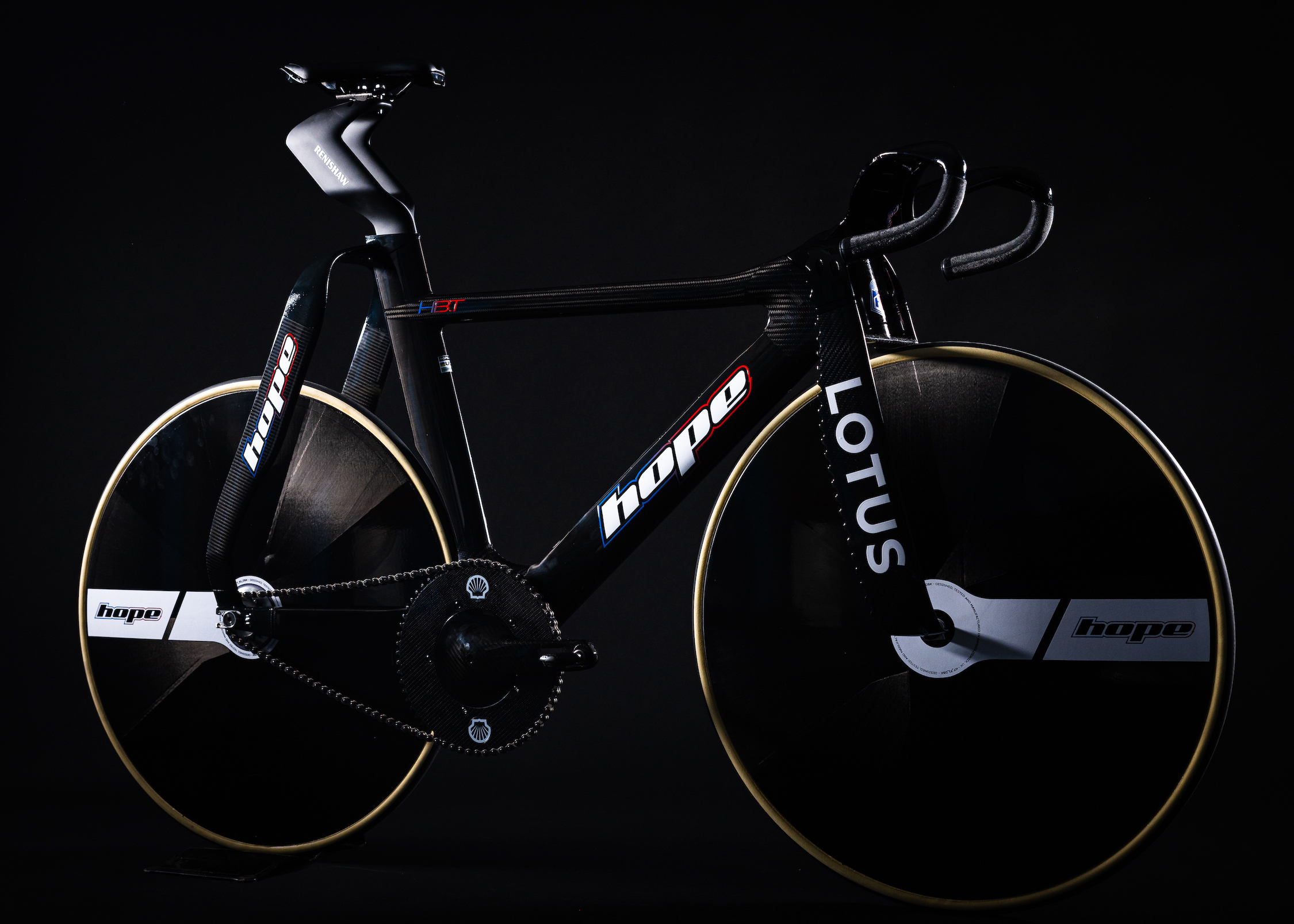
Hope and Lotus have joined forces again ahead of the 2024 Games, creating the second-generation Hope-Lotus track bike which features the same distinct forks, but now with serrated rear edges “that allow for smoother airflow around the rider.”
A new, eye-catching feature is the seatpost which kinks backwards and then forwards with a large gap down the centre. This makes us think of the seat tube design of the Trek Madone SLR – which the US brand calls its IsoFlow design.
> Weird, wonderful bikes & kit of the Tour de France
It’s fairly unanimous that wider seat stays that start as high up the bike as possible are faster, and the French Track Cycling Federation and Japanese Track Cycling Federation have followed suit.
However, there are claims that British Cycling is considering taking legal action against these two nations due to potential violations of patents, granted in 2022, which protect the alignment of the fork blades and seat stays with a rider’s legs.
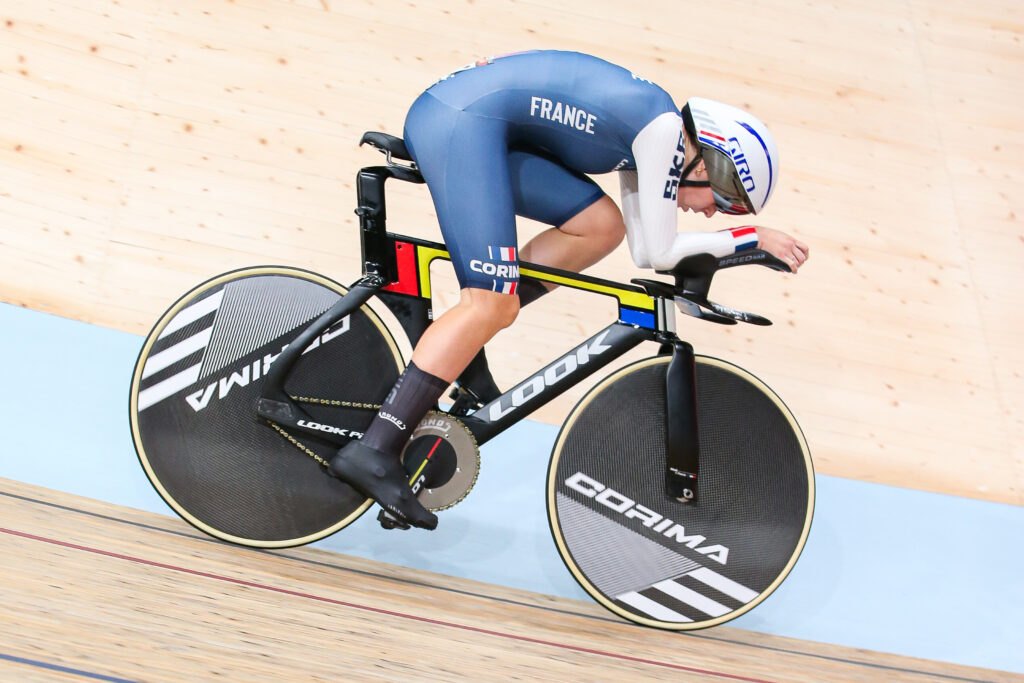
The French riders were seen riding an unreleased Look P24 track bike, which Look says, “will be ridden by many world-class athletes and national cycling federations in 2024.”
It has a wide-stance fork similar to the Hope-Lotus track bike, but it finishes beneath the head tube instead of extending upwards around the head tube as seen on the Hope-Lotus bike.
One of the most distinct features is the two seat posts, which are presumably intended to minimise aerodynamic drag. Full technical details will be provided later in the year.
As with any equipment used at the Olympic Games, it must be commercially available – and the Look P24 frameset (perhaps standing for Paris 2024) is available to pre-order for €11,999 (~£10,325).
Initially, the Japanese V-IZU TCM track bike appears to bear the closest resemblance to the Hope-Lotus track bike, with similar width forks that extend up and around the head tube, and two seat stays at the rear that are much wider than that of a conventional frame.
Little comes up when you search for the Japanese brand V-IZU online, but we do know that the V-IZU TCM track bike is on the UCI’s list of approved frames and forks showing two models: the TCM1 and TCM2.
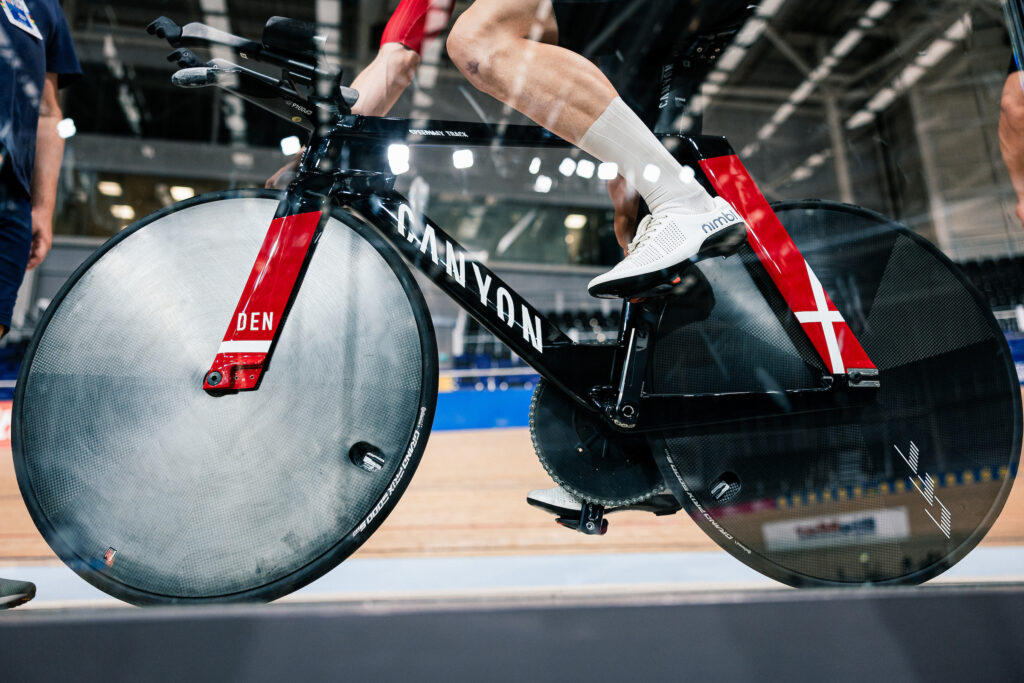
Another nation mindful of not falling behind is Denmark, and riders were seen making the switch from Argon 18 track bikes to the Canyon Speedmax CFR Track bike. This bike costs an astonishing £18,999, and Canyon claims it’s the “fastest bike on the track”.
“In a discipline like track cycling, where bike design has widely matured to a level bordering on perfection, there comes a time when striving for the next level of excellence demands a complete re-imagining of the rules,” Canyon says.
Moving away from a wide-stance design and in contrast with the Hope-Lotus track bike, the Speedmax CFR Track has an exceptionally narrow profile, perhaps to combine aerodynamics with stiffness.
The fork and cockpit are replaceable so the bike can be used for pursuiting and bunch races. At the rear, the bike features deep, yet narrow seat stays keeping the overall profile of the bike thin.
So, what about the rules?
The UCI has a thick rulebook governing the design of bikes, with strict parameters that all aspects of the bike must fall within and the approval process being a key element of designing a bike.
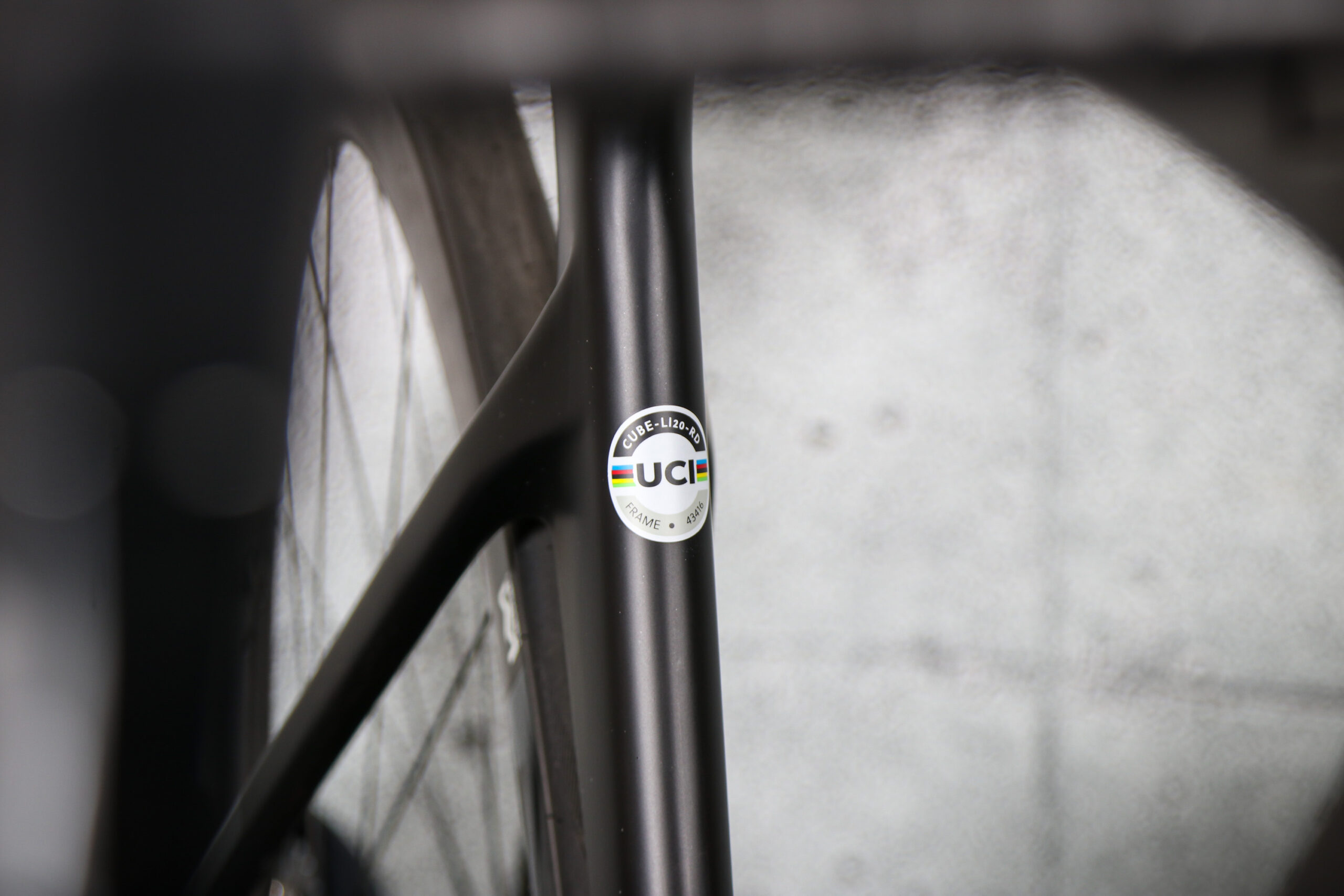
The widths of the Hope-Lotus, Look and V-IZU TCM track bikes are the main difference from conventional frame designs, but they fit in the overall regulations specified by the UCI which is confirmed by the small UCI sticker on the seat tubes. This means they all feature on the UCI’s list of approved frames and forks.
> Get to grips with the UCI rules
For the UCI, the main targets should be to take care of the safety of the rider and to prevent any unfair advantage coming from the material. The UCI states that the purpose of equipment registration is to allow for “fair and equitable access to equipment in cycling events and providing a level playing field for all competitors.”
But, are all of these new bikes fair?
Canyon says that the Speedmax CFR Track took “2 years of development. 442 supercomputer runs. 312 wind tunnel analyses. 155 hours of track testing”, while the second-generation Hope-Lotus track bike took “more than 150 hours of wind tunnel testing and advanced computational fluid dynamics (CFD) simulation”, says Hope.
How can less economically developed countries and those with limited access to resources compete with the advancements in equipment that are being made?
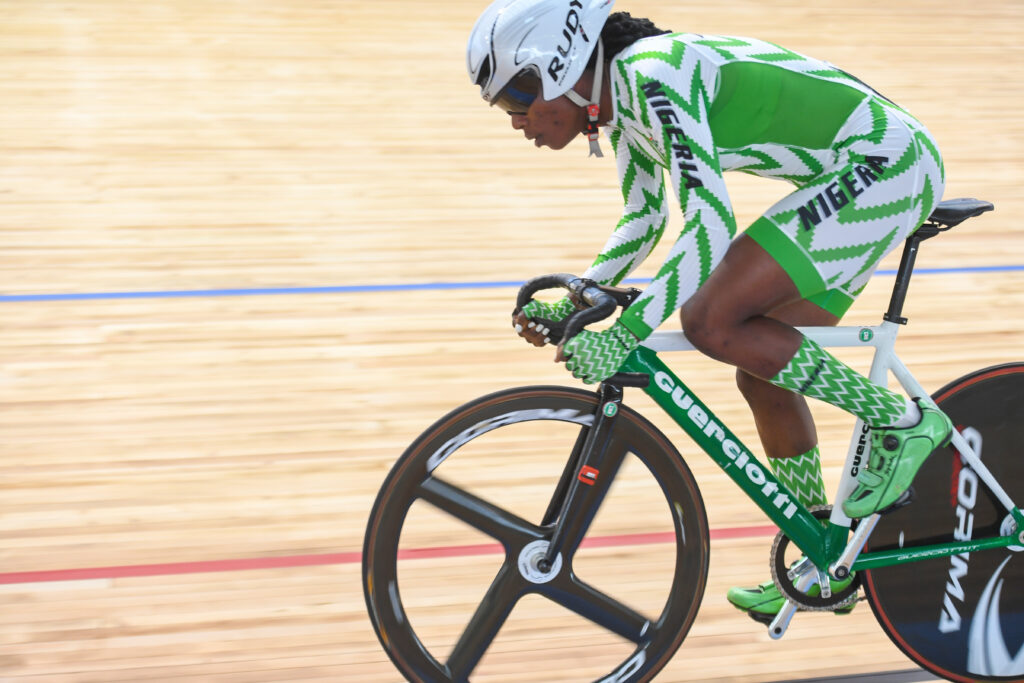
Track cycling appears to be becoming an arms race when really it should be about the athletes, regardless of the size and/or affluence of the nation they come from. While it’s hard to imagine that the UCI wouldn’t take a similar view, it allso states:
“The rules governing the use of equipment aim to ensure both the safety of riders and the fairness of competition while at the same time making the most of the advantages that technological evolution can bring to cycling.”
We are still awaiting further comment from the UCI, but could these be the fastest bikes that we’ll see for some time if a crackdown does indeed happen?
How much faster are these new track bikes?
In short we don’t know for sure, and marketing departments are always going to claim their latest bike is faster than the rest. Canyon claims its Speedmax CFR Track is “fastest bike on the track” while the Hope-Lotus has seen much success, but the exact figures are unknown.
Also, Lotus Engineering claims “significant aerodynamic gains” of the Hope-Lotus track bike over the previous model, and we know that the first-generation claimed to reduce drag by up to 3%. Details for these new track bikes are thin on the ground and we could expect to find out more towards the end of the year, but the amount of investment and R+D that goes into these bikes would suggest teams that can afford them are confident they give their athletes an advantage.
Do you think these new track bikes are fair? Let us know in the comments section below…

-300x199.jpg "“He wants bikes in traffic lanes. Give him what he wants”: Cyclists urged to “slow every street down to bicycle speed” and ride in middle of lane amid premier’s war on cycle paths + more on the live blog")








17 thoughts on “Do the latest track bikes favour wealthier nations, and how will the UCI respond?”
I watched a fair bit of the
I watched a fair bit of the track racing on tv and in the velodrome. I noticed that, even though British Cycling have the Hope/Lotus bike, many of the British riders were on Cervelos and the occasional unbranded bike that was certainly not a Hope bike. So all that expense into R&D on a bike that wasn’t univerally liked.
They were all riding models
They were all riding models that Team GB have used in the past. I suspect they still have limited numbers of the two Hope/ Lotus bikes. Makes sense to give them to the full-time GB squad members and let pro roadies like Vernon use the older machines (which are still amazing).
Off the back wrote:
The only thing that matters for British Cycling is the Olympics – they simply don’t bother making bikes for riders who are ‘only’ going to be at the World Championships but might not be in the Olympic squad. In Paris you’re pretty much guaranteed to see Hope bikes for everyone, with the only exception being man one of the men’s team sprint, they still use the very old UK Sport bike that’s so strong it probably isn’t even hollow.
That wouldn’t explain why the
That wouldn’t explain why the elite men’s pursuit team were not all on tbe same bike.
There may be the odd
There may be the odd exception as any rider that is on a trade team on the road may also have a contract to ride their sponsors bike as opposed to their federation’s choice of bike. Dan Bigham used his Pinarello Bolide on the track.
Some equipment, like the Cervelos, are likely older stock from previous championsips that has been given to the upcoming and younger riders who have yet to establish themselves, and not yet been given the opportunity to get their hands on the newer equipment.
As for development phase, only a select few athletes have worked with the R&D team to produce the working advanced prototypes ahead of launch, and there is no production scale-up, so each one is pretty much built individually and not alongside each other. Having just been launched, there are probably not enough frames to go around, and the same can probably be said for the previous iteration. Even though it’s listed for sale on Hope’s website to satisfy UCI regulations, I seriously doubt anyone has actually purchased one as a private purchase of one makes no sense for any party, including Hope.
Still, the point of the team
Still, the point of the team bike not been ridden by all is what I’m getting at. So what if they are all old stock etc etc. fact is after all that, the elite riders are still for one reason or another on different bikes. Kind of defeats the purpose of all that r&d etc if riders have reasons not to use it.
If given the choice, I bet
If given the choice, I bet nearly all riders would. My point is that those that don’t have it, most likely don’t have that choice via availability or contract.
To which I posted a pic of
To which I posted a pic of the ELITE men’s pursuit team. They were very much one of the pre event favourites for a medal. So would have been given priority on equipment and funding. Yet one rider picks a different bike over the Hope one. So it can’t be down to contracts etc.
Team Sprint, but a Hope, a
That’s the Team Sprint, but a Hope, a green-painted Hope, and something else, maybe one of the UKSI bikes?
Funny how one of the Hope frames got painted as well.
Edit: Ah Wingguy said it above “exception being man one of the men’s team sprint, they still use the very old UK Sport bike that’s so strong”. See at 1:01 in the iPlayer coverage if you want to 🙂
Many equipment-heavy so
Many equipment-heavy so-called sports have become a marketing exercise using a competition between technologies rather than between humans. The hegemony of the producer-consumer economy and culture, that, polluting everything.
Personally I feel that a better model for such sport is the Japanese Keirin mode, in which the bikes are identical apart from the sizing needed to fit individual riders. The competition is between the humans not the technology. The thing being sold is a spectator sport with added gambling opportunities, rather than some bling tech costing ever more and unavailable to the hoi-polloi because it costs 6 months of their wages.
Amen.
Amen.
Spec bikes please. Standard design, standard materials. An equipment war doesn’t benefit anyone, except the richer nations’ equipment suppliers.
I’d suggest the same for road cycling too. In addition to banning road TT bikes.
Interesting take on the
Interesting take on the standardising road bikes. I think that road cycling should still keep different brands with a maybe slightly more liberal framework to work within. But, for pro racing, a rider must pick a particular model from the range for all stages. So whearas Ineos or UAE will have their one bike of a Dogma or V4RS respectively, teams who can pick one of aero or lightweight must choose one. So Roglic or Vingegaard would have to ride an S5 OR R5 on ALL stages. Flat, mountainous and TT. You can clip on aero bars but its still the regular frame. No TT bikes, no disc wheels, no skin suites. Tech shouldn’t be ahead of human ability in cycling.
One model of bike nominated
One model of bike nominated by the team for the entirety of any given stage race should be an easy change to make. +1 to that idea!
The recent Grand Tours have started to turn into Formula 1 with some of their stages, with pit boxes for bike changes. It’s just daft.
It’s when you see riders
It’s when you see riders swapping out their bike in a TT for a climb. It’s a mockery of the rules imo.
We could probably do with
We could probably do with some events on standardised bikes rather than all events to keep some tech/innovation elements.
For me it was the Elite TT showing the big differences though with some riders using road bikes not even using aero bars and with relatively shallow wheels vs full on aero TT bikes. Even some of the riders using aero bars though did not look like they were being used properly, but then we’re into the training regimes of richer nations…
This was exactly my thoughts
This was exactly my thoughts reading the article – give them all the same bike – let the manufacturers bid to produce it to a given budget that’s not exclusionary for less well off competitors. over £18k for any bike never mind a a bike that can only be used to go round in circles (ovals?) very fast is madness. God only knows what that Lotus yoke would cost were you wanting to buy one (they do have to be commercially available for some definition of “commercial”, isn’t that right?)
I went to Stirling to watch
I went to Stirling to watch the TT events.
Some of the riders from minor nations were riding on ordinary road bikes. They weren’t really taking part in the same race as the kikes of Ganna and Evenepoel.