


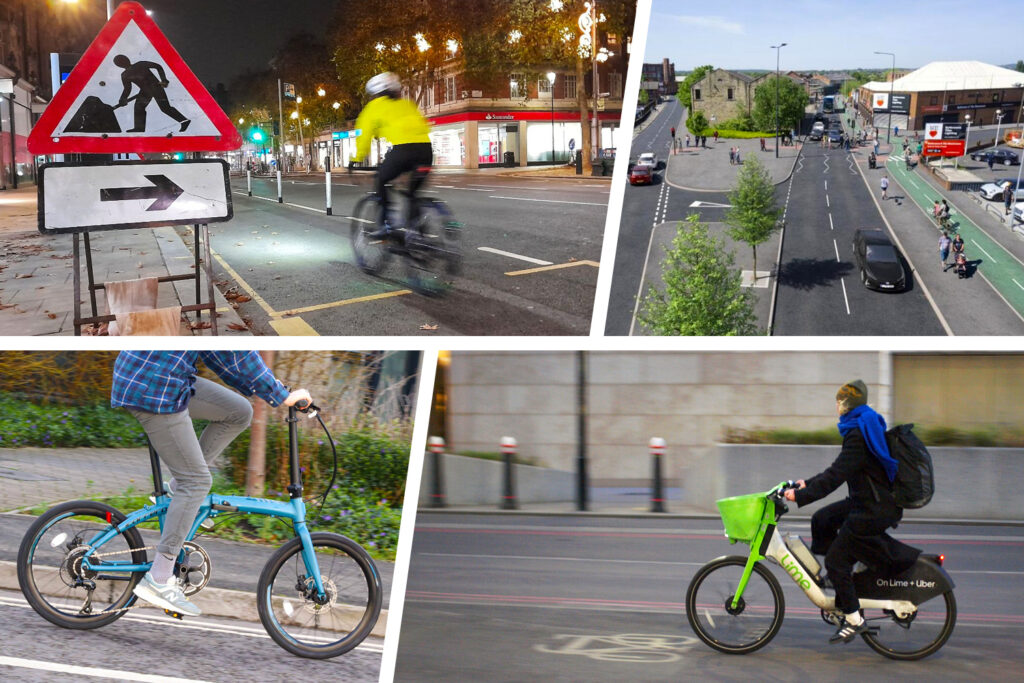

If you’re considering cycling to work for the first time but don’t currently ride a bike regularly, we’re here to guide you through everything you need to consider before setting out on your first two-wheeled commute. Cycling to work can save you a lot of money compared to driving or using public transport, and it’s great for your health too. Let’s get into it.

It’s worth stressing that the benefits of cycling to work aren’t just financial (although the latter is of course significant).
For instance, it’s well-documented in studies that people who travel to work by bike are less stressed and more productive while they are there, and are generally happier all-round, even when away from the workplace.
That will partly be due to those endorphins your body has released while you’ve been pedalling, and also because unlike some of your colleagues you will not have spent the first part of the morning stuck in a frustratingly slow queue of motor traffic, or pressed up against a stranger’s armpit on a packed train.
Then there are the health benefits, too, with research showing that people who undertake regular aerobic exercise such as cycling to work enjoy better cardiovascular health and greater longevity. And one study suggested that an hour spent cycling adds up to another hour added to life expectancy.

Your two-wheeled commute will therefore not just save you money – it will also make you healthier, and depending on how long your commute is, it will likely save you a chunk of time, too. What’s not to love about that?
First things first, let’s dispel one myth – there is no ‘right’ way of commuting by bike, and you don’t have to splash out a fortune on kit to get started.
While we will be pointing you towards some of our buyer’s guides and other features related to commuting, with the choice of bikes and other bits of kit often daunting to newcomers, the prime focus here is getting you started.
Admittedly, cycling can be very confusing for anyone who is new to it. There’s a whole new terminology to master, and you might also be forgiven for thinking some kind of uniform is needed – Lycra jersey, padded shorts, and a cycle helmet, and so on. But here’s a secret; to begin with at least, none of that matters.
What to ride
Since you’re thinking about commuting to work by bike, arguably the most important thing to consider is what you’re going to ride.

If you already have a bike, you may want to get it serviced at your local bike shop before hitting the road on it again, especially if you haven’t used it for a while. It may also be worth checking that it’s adjusted to your height as this is crucial for comfort and preventing injuries during your commute.
You may have already decided that yes, you are 100 per cent going to switch to a bike for your commute and are going to buy a new one for it. If this is the case, check with your employer whether they are signed up to the long-running Cycle To Work Scheme.
Based on salary sacrifice, this initiative, launched in 1999, has over the past quarter century or so enabled tens of thousands of people to buy a bicycle and other equipment – lights, locks, even clothing – while spreading the cost and enjoying tax breaks and thereby a significant saving compared to purchasing upfront.
And while it has always been attractive to people planning to get a new bike, it is likely to be doubly attractive given the income squeeze.
If you have decided to buy your own bike, the next decision you need to make is what kind of bike you want; just as there are horses for courses, there are definitely different bikes for different tasks.

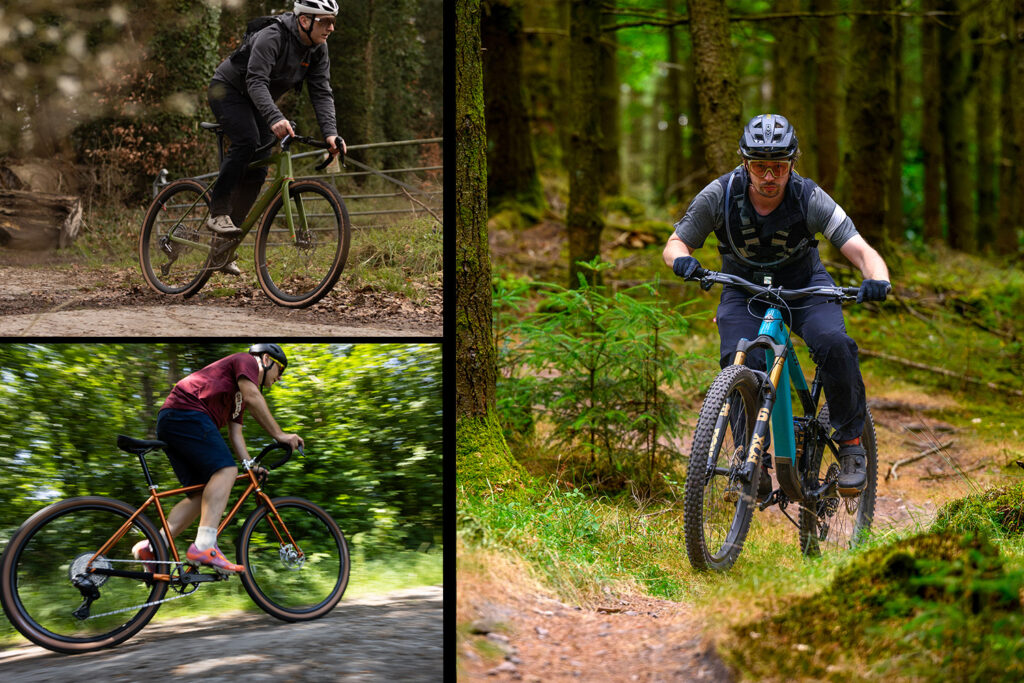
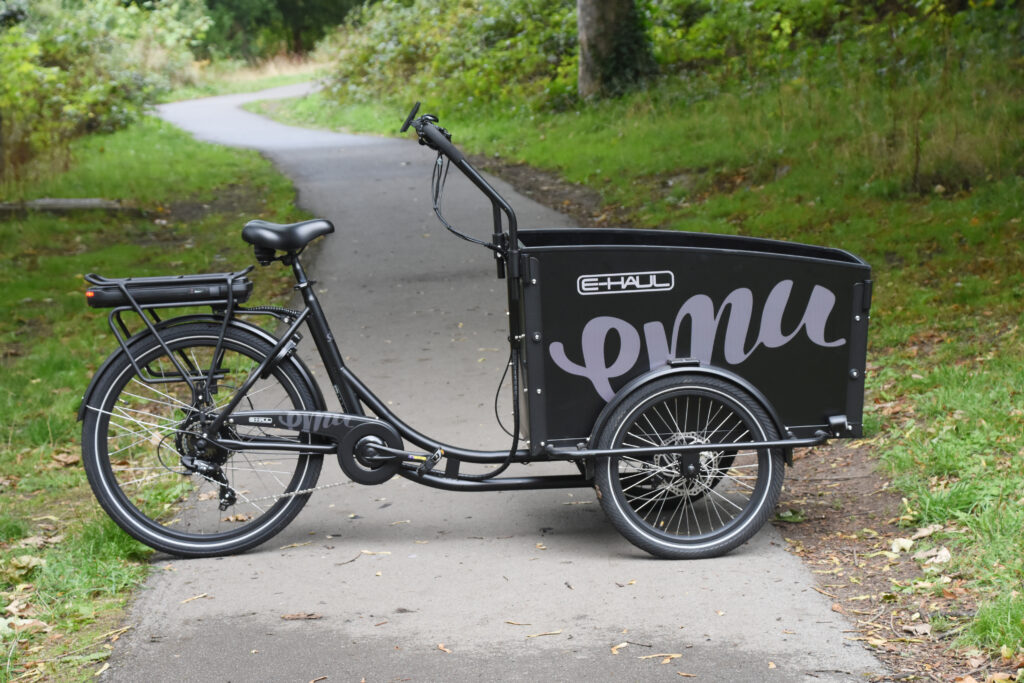
Fast, sometimes twitchy road bikes with drop bars and narrow tyres, gravel bikes that may look similar to those at a casual glance but which can handle much tougher terrain, sit-up-and-beg Dutch-style bikes, perhaps with a basket on front, folding bikes that have the advantage of being easy to store at home or at work (and which can also be taken on rush-hour trains if need be), flat-bar hybrid bikes that perform a variety of roles are just some of the options open to you.
Here, your local bike shop can help you, with staff listening to what you need the bike for (you may be buying it primarily to commute but trust us, once you have the bug you will use it for a whole host of other reasons) and making recommendations accordingly.
Some people do find bike shops intimidating but on the whole you will find people there friendly, helpful and full of good advice – including on other essentials you’ll need to buy besides the bike such as lights, which are a legal requirement in hours of darkness, or a lock to protect your new pride and joy from thieves. More on that later.
You don’t even need to have your own bike nowadays though, given the wide range of hiring options that are available in many towns and cities, and which may be of interest given you’re looking at changing to a bike for your commute to save money.

Those include local authority-run schemes, such as Santander Cycle Hire in London, with similar initiatives available elsewhere across the country as well as e-bike schemes from the likes of Lime Bikes, each of which enable you to hire a bike for a few quid to try out your commute and perhaps deciding to splash out on your own bike.
Other options include the Brompton Dock scheme which enables you to hire the iconic folding bikes from lockers in locations typically found close to transport hubs, or subscription models such as Swapfiets, which originated in the Netherlands and under which bikes can be hired on an ongoing basis at prices starting from less than £20 a month.
What to wear

> Best windproof cycling jackets 2024
Despite what some people seem to think, neither hi-vis clothing nor cycle helmets are compulsory within the UK, although the Highway Code does recommend the latter, and also says that “light-coloured or fluorescent clothing can help other road users to see you in daylight and poor light, while reflective clothing and/or accessories (belt, arm or ankle bands) can increase your visibility in the dark.”
In both cases, it’s a matter of personal choice. If you do decide to wear a helmet, ensure it is the correct size and the straps are adjusted properly for a secure fit.
Beyond hi-vis and helmets, you could go out on day one dressed like you are about to take to the start line of the Tour de France – or you could just wear something that makes you feel comfortable in the saddle and which is also practical for riding a bike.

It’s early days in your cycling journey, so our advice would be to go for the latter, and avoid garments that may flap around in the wind, get caught in your chain or wheels, or cover your rear light when riding at night.
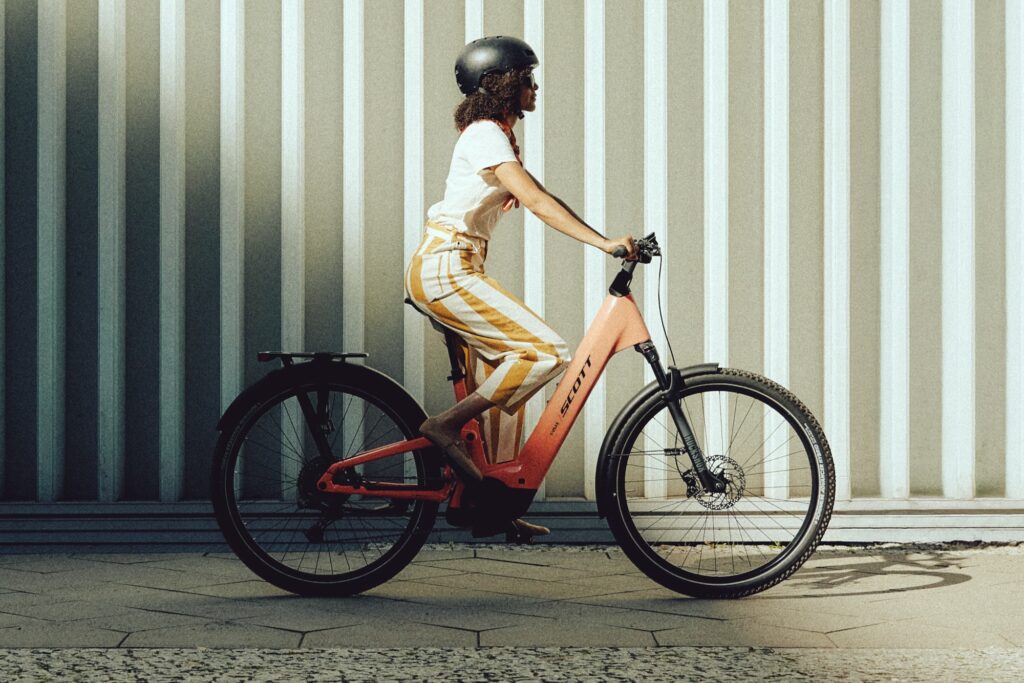
Increasingly, you’ll see more and more cyclists wearing ‘normal’ clothes – so, no tight-fitting, brightly-coloured jerseys, or figure-hugging Lycra shorts, but rather jeans, trousers, shirts and jackets that are equally suitable for riding to work and for wearing once there.
In many cases, what appears to be ‘normal’ clothes will be designed specifically for cycling, with brands such as Rapha having a long history of producing garments suitable for commuting or everyday cycling, as well as the more sporty clothes they are also know for, with cycling-specific touches such as hi-vis tabs and zips on pockets to keep your valuables safe.

We’re also seeing high street brands such as H&M and Zara developing cycling ranges that also look equally good off the bike.
Those with longer commutes may wear what is generally thought of as cycling specific clothing, for comfort and practicality, but for shorter journeys especially, everyday clothes aren’t a problem, and you can always build up more of a bike-specific wardrobe as you go along.
One early purchase we highly recommend is waterproof gear – specifically, a rain jacket. You may also considering keeping a dry change of clothes at work for days when it does hose it down. It’s never a bad idea to keep an extra pair of underwear and socks on hand – just in case you forget in the morning rush.
Where to ride

Next, consider how you’ll get to work and the route you’ll take, which will depend on where you live and your destination. Increasingly, Britain’s towns and cities have dedicated cycle infrastructure, with some of the kerbed lanes, physically separated from motor traffic, being as good as anything you might find in countries such as the Netherlands.
One of the great things about commuting by bike is that you’re not at the mercy of traffic jams like you are in a car, so your commute time is likely to be consistent. With that in mind, it’s worth calculating how long your ride will take and even riding it on the weekend or after work ahead of your first commute to get comfortable with your route.
Depending on where you live, your local council’s website may have details of local cycle routes, and you should also check out the site of your local cycle campaign group as well as sites such as Cycle Streets to help plan your route.

Campaign groups may also run ‘ride buddy’ programmes where you get paired with someone who rides a similar route to you and who can share their knowledge with you while you get familiar with it. It may also be worth investigating the availability of cycle training in your area – which in many places is provided free by the local authority as they seek to encourage more people to switch to active travel to get to work.
One of the joys of cycle commuting is the flexibility to change up your route based on your mood, the weather, or whatever else comes up. If the sun is shining after work, you might fancy extending your ride to explore a scenic path, or if you’re pressed for time, you can opt for a quicker, more direct route.
What to carry

> A beginner’s guide to building your first bike tool set
When commuting by bike, it’s important to be prepared for various situations and these are some things that you should consider carrying. For example, if you get a flat tyre, having tyre levers, a spare tube, and a mini pump or CO2 inflator can help you quickly change the tyre and get back on the road so you won’t miss that 9am meeting. These items are small enough to fit in your pockets or rucksack.
It’s also a good idea to have a good quality front and rear light, as you never know when you might get caught out by fading daylight.
Another thing to carry is a sturdy bike lock to secure your bike when you arrive at work. Even if your workplace has secure cycle parking, make sure you familiarise yourself with how to lock your bike up properly.
How to carry stuff

Another thing to think about is how to carry stuff that you may need to take to work on your bike – laptops and the like (complete with charger), toiletries, a rain jacket, and perhaps some fresh clothes to change into at work.
Many people will opt for a backpack or rucksack, and while there are plenty of cycling specific options available they can have the disadvantage of leaving your back damp and sweaty once you arrive at your destination.
Alternatives include panniers, which can be used singly or in pairs and attach to the bike via a rear rack, which may need to be bought separately, or a basket or some other kind of carrying tray on the front of the bike (in which case it is also worth having a bungee cord or something similar to help secure any bag you are carrying).
Happy riding!

Hopefully all that talk of rain and locking your bike won’t have put you off – there really is nothing better than getting to work under your own steam, and once you’ve done it a few times you will wonder why you never thought of doing it before, and will also likely need to be dragged kicking and screaming back into undertaking the trip the way you did before.
And not only will you be feeling happier and more healthy, but you’ll see the benefits in your bank account too as the pounds begin to add up. However, we should mention that some of those savings might be spent on new bike accessories or building up your cycling wardrobe.
What are your top cycle commuting tips? Let us know in the comments section below.





21 thoughts on “A beginner’s guide to cycling to work — save money and feel healthier and happier commuting by bike”
Executive summary:
Executive summary (or TL:DR):
1. Buy bike
2. Ride to work
3. Work
4. Ride home
5. Repeat from 2.
I’m not keen on number 3.
I’m not keen on number 3.
perce wrote:
Quite. Best replaced with: hang about feeling exercised-smug but performing pleasurable playful actions of merit in achieving something useful, unlike most work.
I vaguely recall an article about a-one o’ them city cycle couriers (do they still have ’em?) going about on a fixie delivering “packages”. The courier greatly enjoyed the cycling and all its associated benefits that are familiar to us all here …. but detested many of those he delivered to, delivered from and sometimes what was delivered. He even enjoyed jousting with the traffic.
Perhaps the ideal job is one in which the cycling takes up 95% of the time and the “work” is hardly noticeable. We used to have a village bobby-on-a-bike who had that job but the powers-that-be found out and scrapped it.
You missed “Actually enjoy
You missed “Actually enjoy the journey”
I prefer the journey when
I prefer the journey when everybody else is already at work/home/school
Quite wonderfully, mine is
Quite wonderfully, mine is mostly off road.
n+1 wrote:
5. Repeat from 1.
FrankH wrote:
2.5) Get rained on.
4.5) Get rained on again.
4.6) Buy mudguards because a soggy ass isn’t fun.
Another benefit, albeit an
Another benefit, albeit an unusual one, is consistency. While my driven commute was very much at the mercy of traffic jams caused by collisions, my cycling commute takes me the same time every time.
In my case I still kept
In my case I still kept spending.. 5-8 different sizes and styles of bags to carry things in. 20-30 odd different front and rear lights for every day of the month. 10 pairs of mitts for every day of the week and spares if those get shredded. 20-30 pairs of autumn/winter or waterproof gloves because I was trying to find the right ones for the right temperature that suited me and worked…
multiple Jerseys (for every season) ….Gilets, Jackets, hats, padded shorts, helmets…
You end up getting so many of these on a whim or impulse because they look fancy or shiney which eventually does lead to an N+1 and then another….
And eating more. You’ll be plagued by the feeling of hunger for food.
Its a disease.
Seconded on food: I eat so
Seconded on food: I eat so much more food than I ever did when I was commuting on the bus.
RoubaixCube wrote:
A disease transmitted by websites like this ‘un!
Innoculation with poverty is the cure recommended by society at large, these days; but if you still have dosh to be extracted an alternative cure is the adoption of a scepticism bordering on cynicism for all things-advertised (including the adverts labelled “review”, “test” or “news”).
As to the excessive grub-snortling …. the trick is to get quite skinny by cycling and not eating more than you used to, as eventually an equilibrium is reached where what you eat is enough to power your legs from A to B as you need less energy because your lower weight means the hillocks are easier.
Of course, some will need to go down to just 6st 3llbs, so a sidewind will blow them over as they pass the gap in the hedge. ……..
Get one of these models !
Get one of these models !
https://davewalker.com/category/diagrams/odd-bikes/
Quote:
I test rode a drop-handlebar bike the other day. That was the first time I have ever ridden a bike with dropped handlebars, and all I did was a quick ride around a trading estate. Horrible, horrible experience, and I honestly don’t know how you all do it I was so disappointed, TBH, but give me flat (or flattish) handlebars any day…
“and I honestly don’t know
“and I honestly don’t know how you all do it”
Hours and hours of training, and years of fiddling around with the position (and possibly ending up with a frame three sizes smaller than the one you started off with)?
john_smith wrote:
I never use the drops, 95% on the hoods, 5% on the tops. Plausibly why I’m so slow!
Sriracha wrote:
“and I honestly don’t know how you all do it”
Hours and hours of training, and years of fiddling around with the position (and possibly ending up with a frame three sizes smaller than the one you started off with)?
— SrirachaI never use the drops, 95% on the hoods, 5% on the tops. Plausibly why I’m so slow!— john_smith
I’m on the drops a lot when i’m on more open roads. In traffic it’s the hoods all the way. Lifting your bars makes the drops more accessible.
brooksby wrote:
You soon get used to the difference. It’s easier to use the tops/hoods rather than the drops themselves until you’ve adapted to the change in handling.
You do very much get used to
You do very much get used to the road bike position but I can appreciate it feels alarmingly forward if you’re used to bolt upright positions. It’s not by accident that all the new ebikes offer a very upright stance that is reassuring to people not used to cycling.
It doesn’t take long to acclimatise and build confidence though and then you get to enjoy the speed and responsive handling.
Good brakes are also kinda
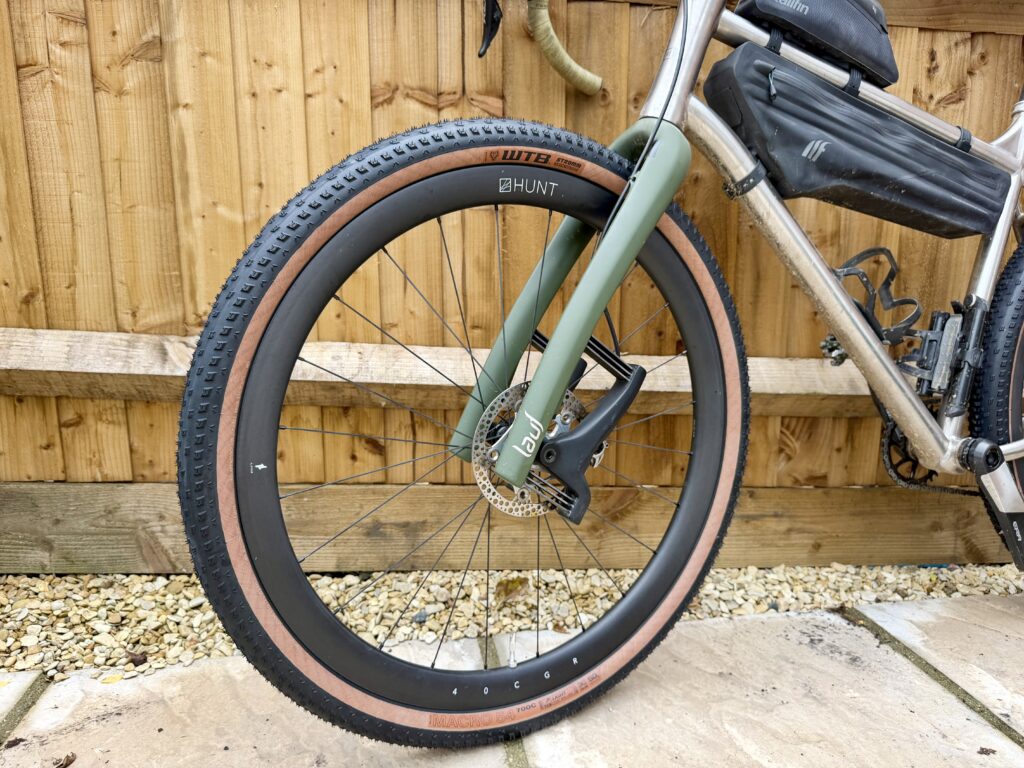
Good brakes are also kinda useful. I wouldn’t want to commute without discs.
Worth pointing out that yes
Worth pointing out that yes bike lights are a very good idea…partly to be seen and not pancaked by a turning HGV and also…PC plod will take a dim view of you cycling at night without them given they have been a legal requirement since 1989. Ref: https://www.cyclinguk.org/lighting-regulations