


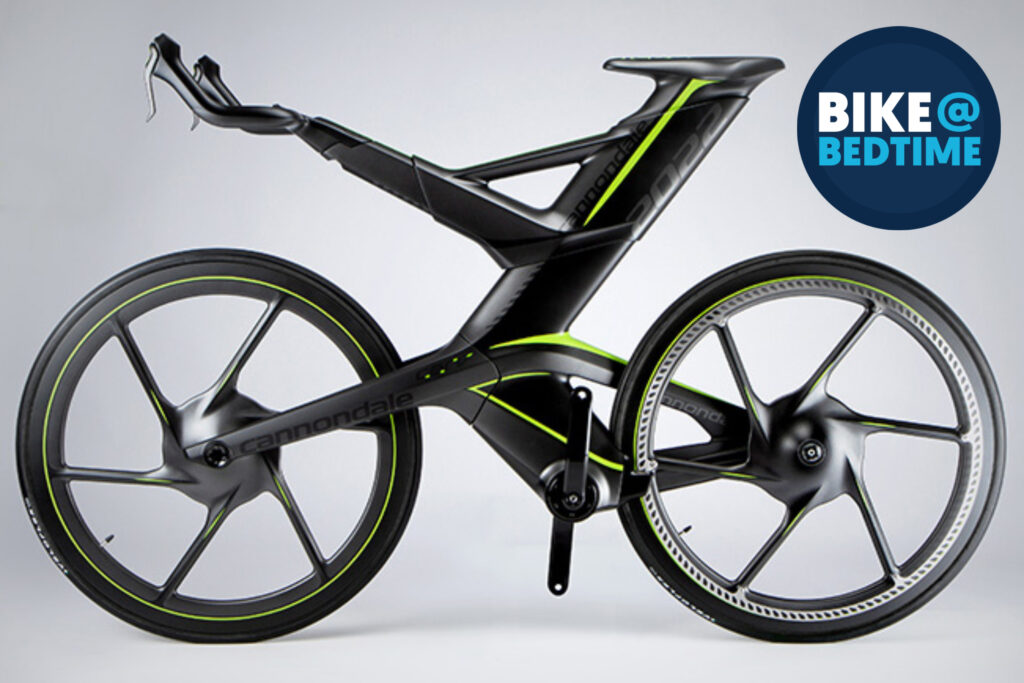

Cannondale has dreamed up some innovative designs over the years – including the one-legged Lefty suspension fork and the SmartSense integrated electronic system on some of its Synapse road bikes, with a rear-facing radar, automatic lights, and wireless electronic shifting – but one of its wildest ideas came back in 2012. That’s when the US brand joined forces with Priority Designs to create the CERV concept bike featuring on-the-fly adjustable geometry.
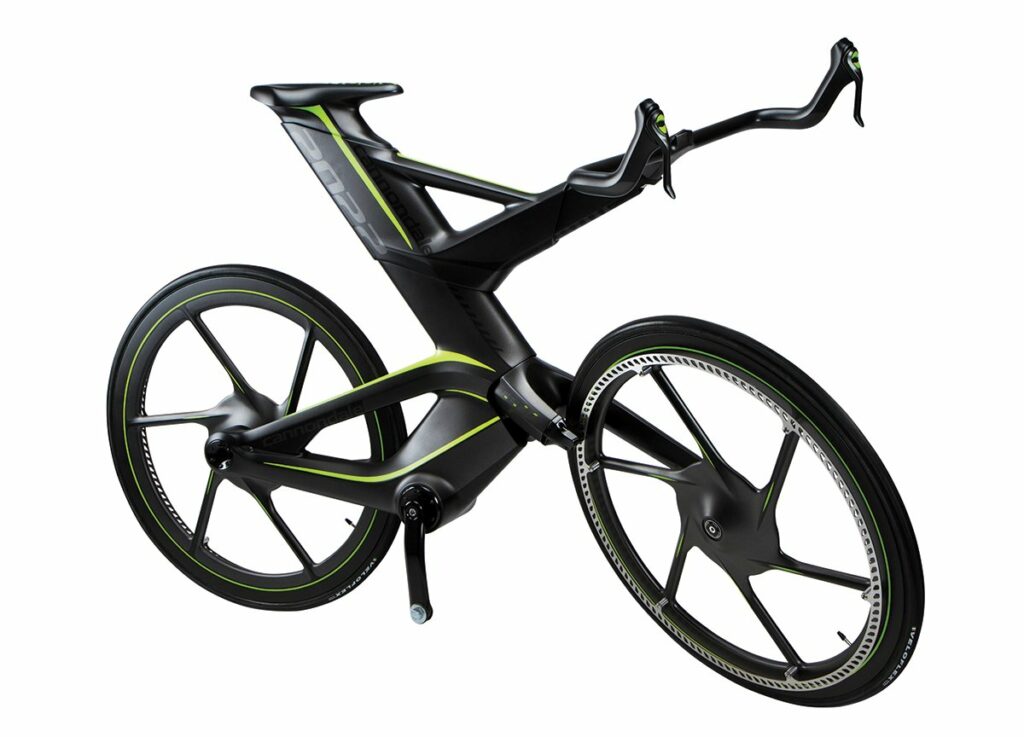
CERV – the Continuously Ergonomic Race Vehicle – was a wild-looking chainless and Transformer-like design that pointed to a possible future road bike concept. It would allow you to change your position from relaxed and ploddy to super aggressive with a few simple adjustments.
If it ever came to fruition, CERV would be capable of being both an aggressive race bike and a comfortable endurance bike, thanks to its dynamically adjustable geometry.
> The maddest, baddest and best concept bikes
Cannondale wanted riders a variety of positions available on the same bike. This meant the cockpit could be adjusted without altering the seat-to-crank height.
On a typical road bike, you can choose between the tops of the handlebar, the hoods, and the drops, of course. Moving your hands around can alter the position of your upper body.
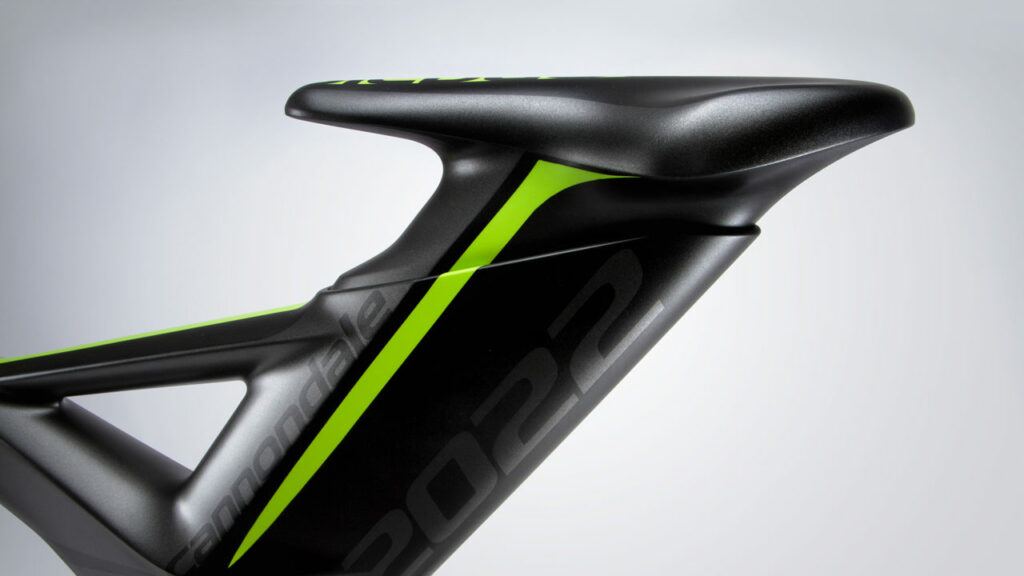
The CERV took things a step further, allowing you to move the handlebars up and down, and longitudinally to provide different reach and stack positions to suit different road conditions and personal preferences.
> Bike geometry 101: Find out why stack & reach are important
Priority Designs said: “Doing all of this with a traditional fork in place wasn’t going to cut it.”
Instead, the CERV featured a single-sided fork – but not at all like the Lefty design we mentioned earlier – as well as front and rear suspension.
Priority Designs built a mechanism that translated steering movement from the handlebars to the front wheel through the bike’s frame rather than the fork.
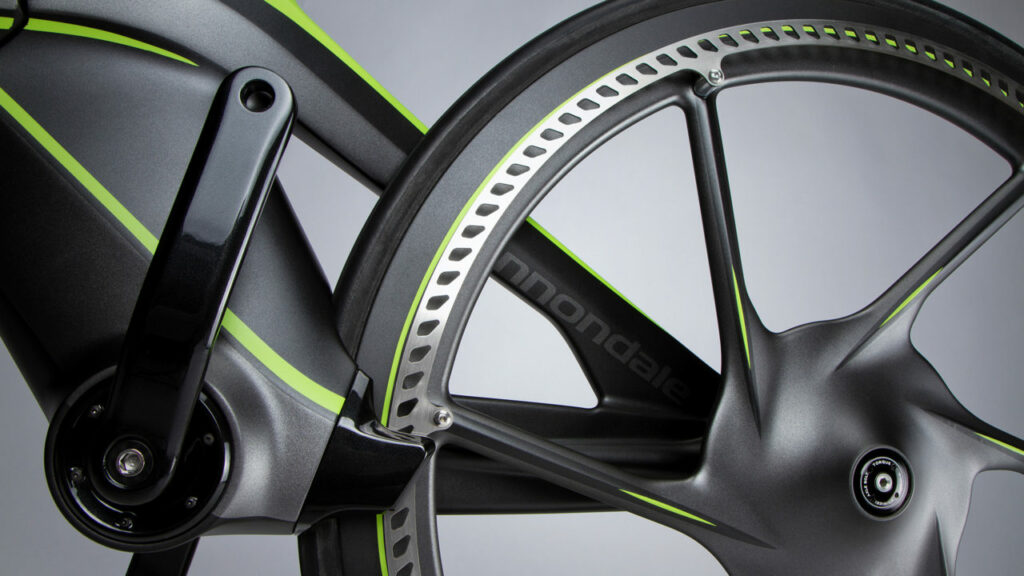
The carbon fibre bike would also feature electronic shifting, a completely enclosed shaft-driven transmission and a built-in computer display.
The wheels were one-piece carbon fibre, featuring six-bladed spokes. The CERV was also designed to have hydraulic brakes, using a combination of rim and disc brake technology. That was a more unusual idea in 2012 than it is now.
Also, the CERV bike was chainless, the movement of the crank being transferred to the rear wheel through a transmission that ran along the shaft of the single chainstay.
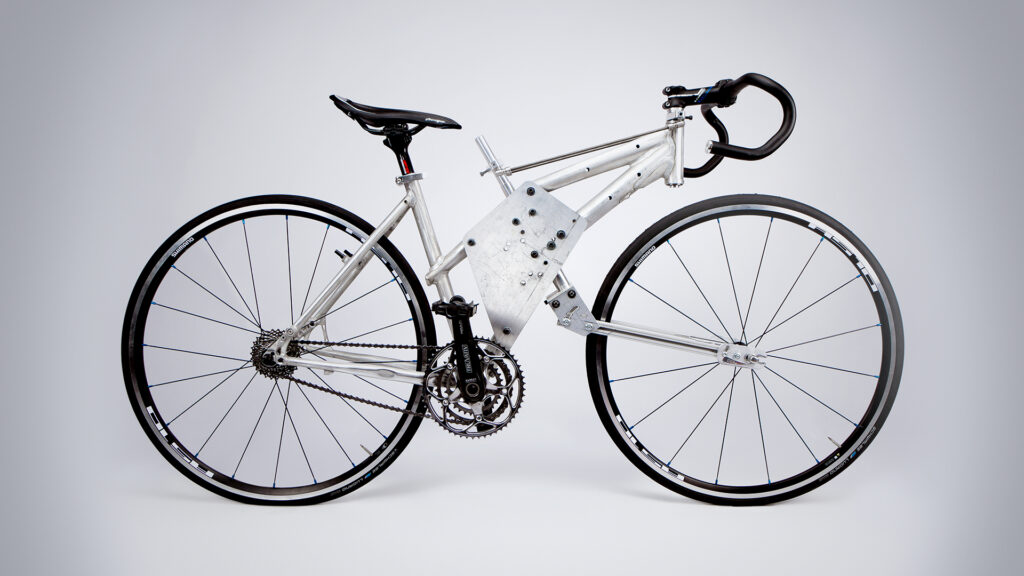
Above is a prototype bike Priority Designs constructed to verify the engineering principles underlying the CERV before they got to work fitting, finishing, painting and assembling the CERV concept bike all on-site.
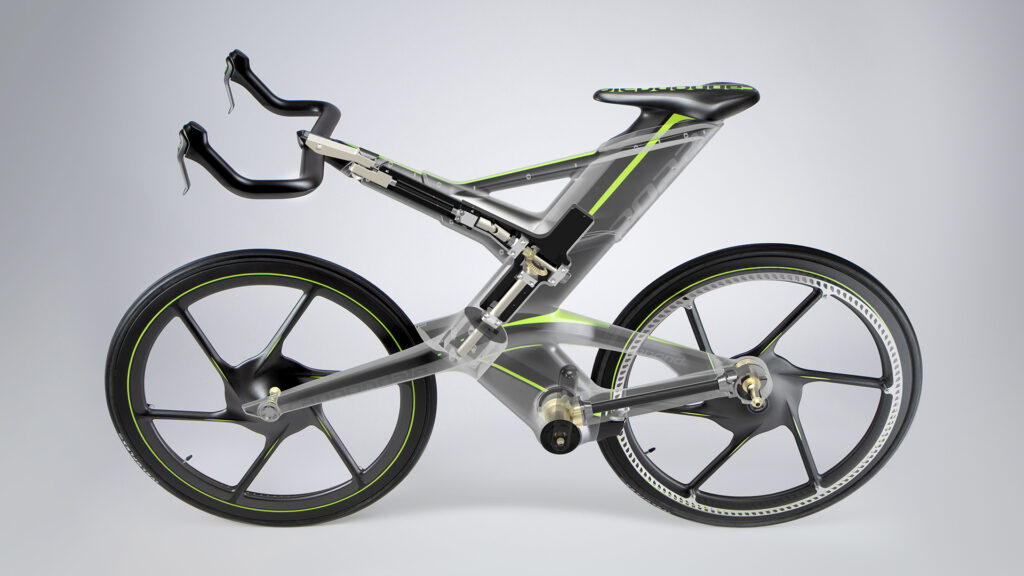
The Cannondale CERV made its debut at Eurobike in 2012 and it turned a lot of heads but, not surprisingly, it has never made it into production. What do you reckon to the concept, though? Let us know in the comments section below.



















5 thoughts on “Check out the crazy Cannondale CERV concept bike with “dynamically adjustable geometry””
forkless front is an idea
forkless front is an idea from motorbikes – a.k.a “hub centre steering”. The motivation for this was to improve suspension of the front, by separating suspension and steering forces and the change in steering geometry that occurs with forks.
Not sure these concerns apply much to road bikes.
The steering could have been
The steering could have been made simpler and lighter using a hydraulic system.
I don’t think I could trust a
I don’t think I could trust a hydraulic steering system, the consequences of a faiure don’t bear thinking about. I know I trust hydraulic brakes but there are two independent systems there.
I’d be curious to try riding
I’d be curious to try riding it. But I wouldn’t want to buy one. The shaft drive will be less efficient mechanically than a chain drive. It strikes me that this configuration would be well-suited to featuring front suspension.
Did anyone ever ride it? I
Did anyone ever ride it? I always thought it looked great.
Based on that cut though view and the steering / fork pivot orientation it looks like it has 60mm or so negative trail (Vs ~60mm of regular trail on a road bike bike) as well as a lot of offset that swings the wheel quite far off the centre line as it steers. I know it’s a concept bike but still, can’t help but expect it’d be an unusual thing to ride – it has the opposite of caster effect, it wouldn’t want to go straight and the destabilising force would increase with speed.