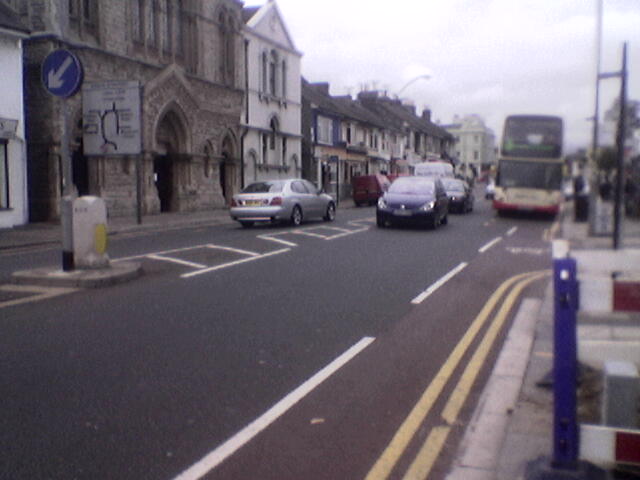
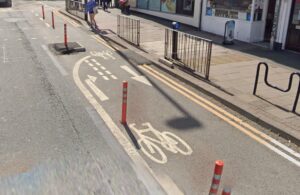
Brighton and Hove, which has been a Cycling Demonstration Town* since 2005 been criticised for plans to tear up a section of cycle lane on one of the busiest routes in to the city. Brighton and Hove Friends of the Earth (BHFOE) are objecting to the plan to remove part of a southbound cycle lane in Lewes Road, Brighton. The cycle lane would be replaced with pavement, extending out into the road with a pelican crossing as part of a council Safer Routes to School scheme. The crossing would be added to Lewes Road just before the junction to Hartington Road. “The new proposals are totally unacceptable and I don’t think we can take the loss of these cycle facilities lying down,” said Chris Todd of BHFOE. “This will force cyclists out of what was the cycle lane into the main stream of traffic with little warning and then squeeze them through an inadequate road width. I believe that this is unacceptable and should be strongly resisted. 
“The proposed traffic orders go against local, regional and national transport, health and sustainability policies,” said Chris Todd. “They go against strategies to increase cycling and physical activity, and to reduce reliance on cars and to reduce air pollution and carbon emissions. 
“Brighton has to do a lot to prove to its commitment to cyclists. I hope that common sense will prevail but to have even submitted these plans is outrageous and unbelievable.” 
Local cycle commuter Gregg Virostek who uses the Lewes Road cycle lane was even more vocal. “The Lewes Road cycle path is a disaster! There is absolutely no continuity of design from the Seafront to the Universities. The council should put everything they have earmarked for cycling in Brighton into designing and building a dedicated and segregated cycle path from the Universities to the Seafront. "I understand why some cyclists feel the need to ride agressively along this route, it is a dangerous and disorganised cycle path with little or no signage and only about 80cm wide. The uneven road surface is littered with grates, cracks and slicks of oil and chemicals. Buses are constantly having to pull out infront of cyclists or waiting for them to clear the slip into the bus stop. 
"It’s almost as if the council is trying to discourage cycling to the nearly 50,000 students in this area (not to mention all the support staff at the many locations).” he told road.cc. And the criticism doesn’t end there. National transport charity Sustrans is also not impressed with the council’s plan. Speaking to road.cc a Sustrans spokesman said: “We do support FOE on this and we objected to the Traffic Regulation Order because we believe it is a poorly designed scheme and the public consultation has been inadequate. Lewes Road is an important route for Brighton which should have a continuous cycle lane. This could be put in place alongside a safe route to school for children.” (Sustrans has its own Safe Routes to School initiative not to be confused with Brighton’s Safer Routes to Schools). The City Council is currently looking again at the scheme with the aim of finding a solution that balances the interests of cyclists and users of the local school. Brighton and Hove, which share a single city council, have had government-conferred Cycling Demonstration Town status since 2005, allowing them to develop cycle freeways and amenities. Now they have been selected (together) as one of 12 English cycling towns and cities to receive increased funding for the promotion of cycling from 2009 to 2011. The total amount available is projected to be £100m with £47m coming from Cycling England and the rest made up in matched funding. Brighton and Hove will be in line for a sizeable chunk. Brighton and Hove Council is also seeking to be the first city to be designated as a Biosphere Reserve by Unesco and later this week hosts a conference on sustainability. * Yes, we know Brighton and Hove is a city, but for Cycling England funding purposes it’s a town.