



The public acceptance of cycle lanes and other active travel infrastructure tends to grow once they’re installed, a new study examining the success of cycling and walking schemes from a behavioural science perspective has found. However, government officials and policymakers have been warned that informing the public and anti-active travel opponents that they will grow to like cycling and walking schemes runs the risk of them sounding “paternalistic” or even “deluded”.
The report, published by the Economic and Social Research Institute in Ireland and titled ‘Active travel infrastructure design and implementation: Insights from behavioural science’, reviews the local and international research on the effects of and reaction to installing cycle lanes and similar schemes throughout Europe, and their positive impact on cycling and walking rates, food and retail businesses, and traffic congestion.
However, with this positive impact apparently only becoming clear after the infrastructure has been implemented, the researchers have advised active travel planners to challenge the status quo to increase support for new initiatives.
Status-quo bias key to bike lane opposition
“Replacing car travel with walking and cycling is at the core of the shift to healthier and more sustainable societies,” the report says.
“Implementing dedicated infrastructure is a common measure to achieve this aim. But policymakers in multiple countries regularly contend with two obstacles: designing infrastructure that people will make use of and securing public support for implementation.”
Chief among the psychological obstacles to securing public support, the study says, is the public’s “status quo bias”, described as “the preference for things to remain the same even if change is beneficial”, an opposition to change – a variant of which includes ‘Not in my back yard’, or NIMBY, attitudes – that “can be particularly influential for opinion formation”.
The report also acknowledges that once these opinions have been formed regarding certain infrastructure projects, they can be difficult to shift, with members of the public likely to attach too much weight to the first piece of information they encounter about the scheme, known as a “primacy effect”, or judge it based on who it comes from (the “messenger effect”).
Therefore, under this “collective illusion”, supporters of cycling schemes believe they are in the minority.
Opponents of cycle lanes, meanwhile, often report feeling that they have no voice or control over the changes being made to their area to facilitate active travel, and complain of a lack of meaningful consultation, something the researchers say is key to garnering public support for initiatives.
While the report notes that cyclists can be seen to belong to a “stigmatised social identity, with characteristics that manifest themselves in ways similar to other minority groups”, much of the opposition to cycle lanes is based on doubts about their lack of effectiveness.
Joining the dots
The researchers highlighted that, despite evidence of reduced emissions, better air quality, and improved public health, a “disconnect” between active travel projects and environmental schemes means people don’t “join the dots” and view cycling infrastructure as part of a wider climate action, instead viewing these changes as a “a mere redistribution of resources between transport users”.
“There is a disconnect between public attitudes to climate action and public adoption of climate action initiatives,” David Storey of Fingal County Council, one of the local authorities who commissioned the research, said this week.
“Mass modal shift to active travel is necessary to achieve meaningful climate action and we are already using this research to help us make design and communication choices that will close that gap between understanding and behaviour.”
The researchers noted that “while negative attitudes toward cyclists may play a role, the perceived effectiveness of active travel schemes remains a primary factor” in determining public support for the schemes.
“People are more willing to support something that they think will work,” the report says. “This finding arises in a context where the overwhelming conclusion from international research into active travel initiatives is that they are, in fact, effective.
“Multiple individual studies and systematic reviews show strong evidence that implementing active travel infrastructure is likely to increase rates of active travel. Planning and design decisions determine the scale of effectiveness. There is strong evidence that connectivity, proximity, and safety should be prioritised over other design elements.
“Improving perceived safety is likely to increase uptake by all sociodemographic groups, but especially women, older adults and children,” the report continues, placing emphasis on the safety of junctions and the accessibility of cycle lanes for residents, while noting that protected infrastructure is key to boosting real and perceived safety for cyclists and pedestrians.
“These benefits are greater when initiatives are accompanied by traffic-calming measures, such as reduced speed limits and raised crossings at intersections,” the report added.
> Cycling infrastructure needs to be built with women in mind, study suggests
It continued: “The implications of this research suggest a need for continued efforts to communicate the supportive evidence and specific measured benefits of active travel schemes. Where initiatives are successful these can be used as demonstration projects in order to reduce uncertainty about effects of future plans.”
The report also noted that the knock-on effects of cycle lane schemes on local food and retail businesses tend to be positive or neutral, while they can also reduce traffic congestion.
Pre-bunking cycle lane misconceptions
However, the researchers argued that, despite the success of these schemes once they’re installed, policymakers and officials still face a minefield when it comes to communicating about the future benefits of new projects, and the public’s perception of them.
“This is tricky territory for policymakers, as asserting to the public that they will grow to like a scheme that they presently dislike may come across as paternalistic, or even deluded,” the report says.
“A commitment to a trial period, where this is feasible, may be a useful solution. Stakeholders and planners would also benefit from gathering data on public perceptions and expectations of active travel plans in order to pre-bunk common misconceptions before they have cemented.
“Once opinions have formed, they can be resistant to new information that challenges them. Early, clear communication from trusted sources is likely to be the best way to inoculate against misperceptions.”
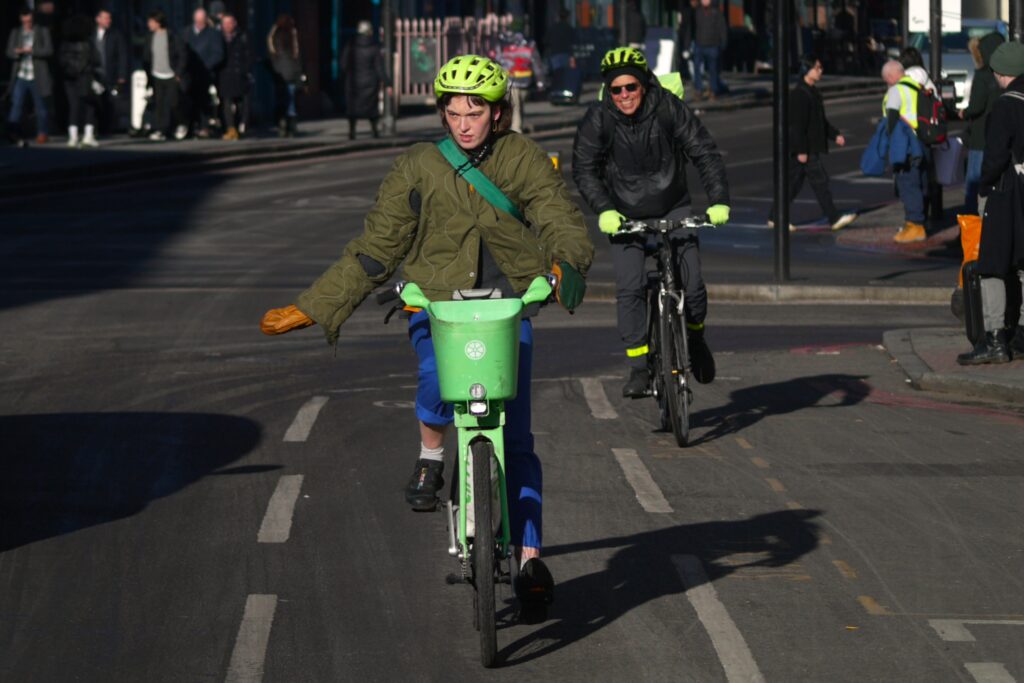
“Opposition to traffic policy changes is not unique to Ireland,” Dr Shane Timmons, senior research officer with the ESRI’s Behavioural Research Unit, said in a statement.
“However, in multiple countries, research finds that people become more positive about changes once they are implemented. Open and fair consultations with communities to address concerns about traffic, local businesses and safety are helpful. Policy can benefit from more targeted research on how communities anticipate and respond to change.”











12 thoughts on “Cycle lanes grow in popularity once they are installed, study finds – but policymakers warned that “paternalistic” promotion of active travel schemes heightens opposition”
Unfortunately for most its a
Unfortunately for most its a kind of redistribution rather than a welfare or social service. Paternalistic or not people have good reasons to look at them solely in terms of lanes subtracted and parking spaces removed, and unlike buses they have some permanent use of space.
Age 69, I’ve started to use
Age 69, I’ve started to use them. I hate them. Have to use them sometimes because ‘car’ section narrowed to point that cars can barely use their lane. Having cycled in, round through, over, under London for nearly 50 years, I knew where I was, could control my space, was usually fastest vehicle on the road. Now, people on bikes (human and battery powered) clog up lanes with no sense of holding a line, wobbling, unaware that other cyclists or pedestrians exist, loose bags flapping, can’t signal, ignorant of Highway Code, badly maintained. On a philosophy of democratics, I’d argue for total rethink on transport infrastructure with as great a ban on cars etc as imaginable but, as it is now, I’d scrap almost every bike lane I’ve ever seen and replace with better road surfaces and bike training.
E6toSE3 wrote:
I can understand this. Certainly almost all UK cycle infra is less than great (it’s not even up to the standards of ubiquitous mundane, exciting-as-a-municiple-car-park Dutch infra). Also if you’ve been doing something for ages regardless (and perhaps advocating for “more of this sort of thing”) and then everyone suddenly starts doing so too (without any notice of you, or “the way we do this”) it can be awkward. Not to mention all those extra people get in the way.
However if you take your first sentence I’ve quoted above and put it with the second sentence, what you appear to be saying in the 3rd is “I want to go back to when cycling was basically just for me and a few others”.
All those “less competent cyclists” just weren’t there before, were they? Unfortunately without convenient and sufficiently safe routes (often but not always involving a cycle path separate from motor traffic) most people won’t cycle. Infra is not sufficient, but it appears to be necessary [1] [2] [3] [4].
Without many more people choosing not to drive some trips the idea of a total rethink on transport infrastructure is a pipe dream. Since driving is a private, flexible transport mode moving away from that requires addressing those needs – cycling fits that well*.
As for better road surfaces, where they are shared with motor vehicles that is literally pouring money into holes in the road. Better to let motor vehicles cope with quality of surfaces they’re designed to handle and have a separate high-quality cycle-only surface which will then last much longer.
You are right though – where this succeeds in the words of Chris Boardman “I haven’t seen a single cyclist“ – just regular people making journeys from A to B by cycling.
* I certainly agree transport infra does need a radical rethink, and obviously it’s about far more than cycling. However cycling (and wheeling generally) combine very well with public transport to boost its ability to replace many car journeys (e.g. multi-modal trips).
Perfectly fair comment about
Perfectly fair comment about looking back ro when “I was the only bike eider in the city”. It’s an instinct I criticise myself for. But… nowadays I’m often walking or trundling on bikes with other people who are often frail, unfit, dodgy joints, little experience on bikes or with cars, slow moving. They are terrified of bicycle riders (e & muscle) more than cars because cars are limited to lanes and 20mph helps. For myself, the days of beating tube from Earls Court to East Ham in 1983 or cars from Horsham to Belsize Park are long gone, not so much from my legs as from road and traffic conditions. I gave away several drop bar bikes in 2020 after massive heart attack and in Covid lockdown. Replaced Tricross with straight bar urban bike – good decision: it makes me less urgent in traffic. I always did stop at crossings. Now, I’m the only one who does, almost everyone else, of all demographics, rides recklessly
E6toSE3 wrote:
Don’t worry about it – like water off a ducks back. ;->
E6toSE3 wrote:
I hear you. Unfortunately
I hear you. Unfortunately change (for cycling) is so slow that decades can pass and you realise you’ve aged. There’s also a part of me that wonders if the kind of change that will get most others cycling will be bad for me – because they’re all the drivers now… on balance it would clearly make my city a better place though regardless of what it does for*me* on a bike.
The first sentence – that sounds good, if you think about it.
People being frightened of bikes? It’s new to them. Like the big kids in primary school now moved to “big school” maybe? They’re not “protected” from those cyclists by their cars now!
Glad to hear you’ve found a way to keep cycling still. I find I’m doing less cycling bent over and more sitting upright – and enjoying it (not quite Dutch bike but tall flat bar bike). Or laid back – I do have a recumbent for going further.
Ride on!
I’m 62 and I use the cycle
I’m 62 and I use the cycle lanes a lot. I’ve only been cycling round London for 3 1/2 decades as I’m from Edinburgh originally. But I hear what you’re saying about them. And I agree with you about those riders with poor control who can’t hold a straight line or those who veer off at angles without bothering to look. While cycling was certainly more dangerous in the bad old days than now, there wasn’t the hatred you get from so many motorists now.
In my town they have
In my town they have installed 2 bike lanes, the first about 20 feet and the second in a totally different direction about 100 feet. Really can’t understand what the planners were thinking. The blanket 20 mph speed limit feels of greater benefit.
Not really news, that people
Not really news, that people cling to the situation they know, but a year or so after a positive change the drama is forgotten. (Indeed people will not infrequently deny they decried the proposed change…)
I know it’s partly just “words” but what do we want? Not “bike lanes” … but networks of cycle *routes*. Those can (indeed must) be comprised of a) separate cycle *paths* / tracks (not “shared space” with pedestrians) where speeds or traffic volumes are high and b) low-speed low-traffic streets – ideally no through-route to cars. (Most of our road network is “streets” but in the UK too many of these are also carrying through-traffic.)
Why? Because outside of some demographic / planning oddities (mostly small historic university towns like Cambridge) wherever people are cycling in significant numbers this is how the environment is.
It’s not “culture” or “training” or “weather” or “better drivers”… (As we saw in the covid era though a great reduction in driving helps…)
It’s a hen-egg question. Or
It’s a hen-egg question. Or one of vicious circles that need to be changed into virtous ones. By whom? Politicians. And thus everyone.
How do we get there? If only I knew….
marmotte27 wrote:
By cycling, obviously! Turns out that is very, very slow however…
This is exactly the question we should be asking (and noting that it’s about accessing a virtuous circle / a self-reinforcing system). Or perhaps “What kind of places do we want to want to live in? What kind of journeys / transport will sustain that? How do we want to provide for that mobility?”
There are examples – but the path to change is very place / culture / political-landscape specific [1] [2] [3] (even if this ends up in a similar place e.g. “build a network of cycle infra where needed and start taming the private motor vehicle”).