


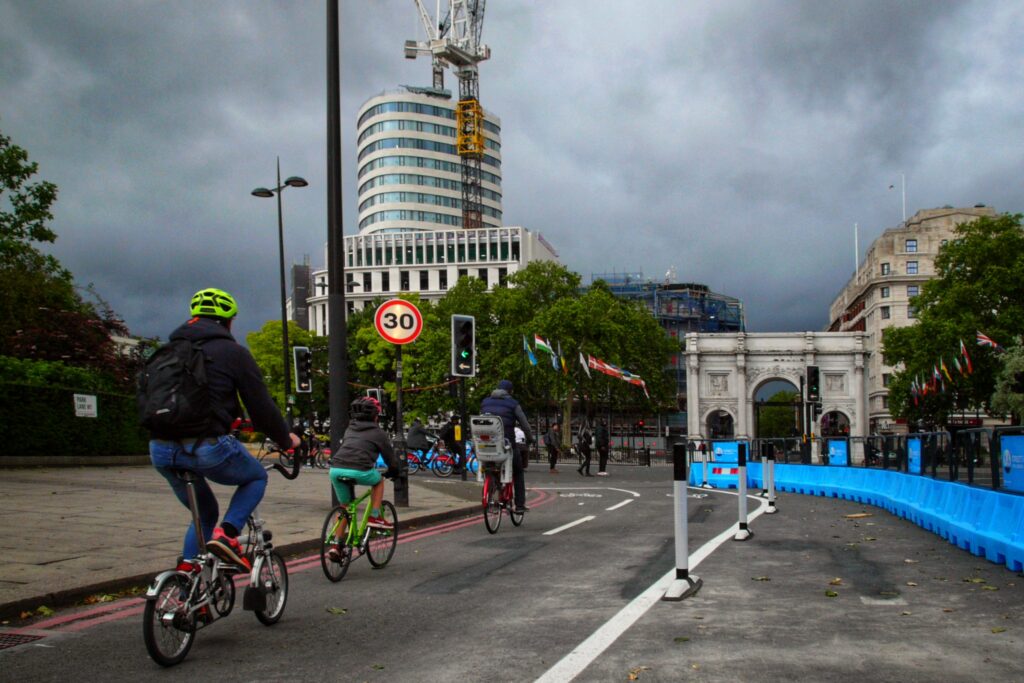

Research from Australia has taken a deep dive into the factors that prevent women from cycling in urban areas, creating a list of suggestions for boosting active travel in a more inclusive way.
Reported by Government News, the research was undertaken by Monash University’s Sustainable Mobility and Safety Research Group, Dr Lauren Pearson noting that in Melbourne’s most built-up areas there are two men cycling for every woman.
“Gender differences were stark in terms of the barriers,” she said. “We were really surprised at just how substantial these differences were, and how many women were reporting these concerns.”
Having surveyed 717 women across 10 Melbourne areas, Dr Pearson was able to assess the factors preventing more women from cycling, research that showed 77 per cent of women are interested in riding a bike, suggesting “massive potential” for enabling active travel further.
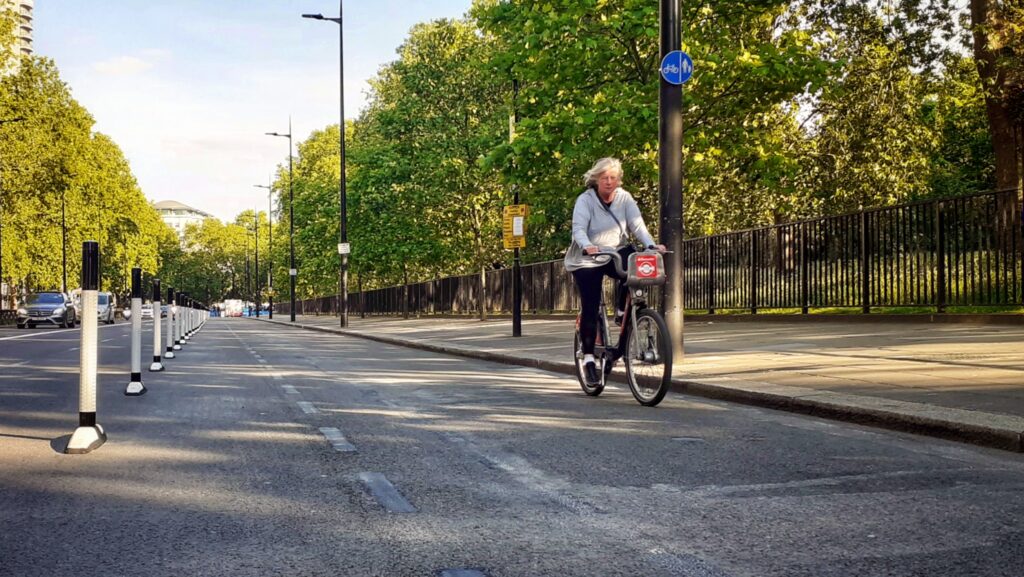
One such suggestion that came from the survey was segregation, the study noting that physical separation from motor traffic “may support more women to ride a bike through reducing motor vehicle interactions”, something many said they lacked confidence with.
Compared to men the survey showed that the women were less comfortable with the idea of cycling near traffic, and would be encouraged by segregated cycle lanes. Nearly half of the women surveyed said well-lit areas are an enabler of them cycling.
> Six in ten users of pop-up bike lanes in Paris are new to cycling, says city’s government
“It’s about planning for the trips that aren’t taken as well as those that are,” Dr Pearson said. “Women want to make local trips and we need to make sure we’re building the infrastructure to support this, not just thinking about the people that are already riding, and having that gender lens on all design decisions.”
She went on to explain how in Australian cities councils have built infrastructure based on where the highest cycling volumes are, something that does not necessarily reflect women’s needs, and suggested more separated infrastructure for local routes.
Dr Pearson also suggested council-run maintenance courses and better mechanical support could help, the survey finding that women were less confident than men with buying and maintaining a bicycle.
“We found of all the women who were asked about what would happen if they had a flat tyre, they said they had no idea, in contrast to men,” she continued. “That came back to this entrenched discourse around mechanics and bikes being a male-based thing.
“Some women tried to reach out to councils for bike mechanics courses, but what was available was very specialist or run by men for men.”
While physical fitness was identified as a barrier, a higher proportion of women said not having enough storage on a bike was a barrier and Dr Pearson pointed to e-bikes and cargo bikes as possible enablers for people to access active travel.












25 thoughts on “Cycling infrastructure needs to be built with women in mind, study suggests”
They don’t even build it with
They don’t even build it with cyclists in mind so that’s maybe asking a bit much, isn’t it?
Yup! That’s before you
Yup! That’s before you consider that most road infrastructure (including cycle infra) is for the benefit of drivers, or “because drivers”.
I guess most people see it from the other side – “pedestrians / others should be grateful they’ve got special infra to help them cross the road / cycle in”…
Another complication is that while “roads weren’t built for cars” they now are most suited to motor vehicle use. A huge wide strip of tarmac with high kerbs, long sweeping turns and traffic lights is sub-optimal for other modes even without cars on it. Without all the motor vehicles we’d need much less paved space so it wouldn’t make sense to maintain it all. And that’s before you add in the actual condition of many roads – messy chipseal, existing craters and generations of patching.
I cycle 10km to work every
I cycle 10km to work every day, though my wife drives the car to work 17km, does the shopping, gets the kids to swimming lessons etc.
We live in the sticks somewhere and could not do without the car..
You forgot that your car
You forgot that your car there are also in permanence an oak wardrobe, a fridge, the weekly shop and the ailing grandmother, going up and down the ten per cent hill on which you live, where it rains all the time.
Make cyclists pay road tax!
Make cyclists pay road tax!
Most of those requirements
Most of those requirements would benefit all cyclists, so I’m not convinced that they’re gender specific. But yes, when building/changing infrastructure, it would be foolish to not consider females and minorities (e.g. disabled usage).
I have seen arguments that
I have seen arguments that rather than trying to measure how ‘good’ infra is by counting number of riders, instead count sex breakdown.
Because uncontrollable factors on number of riders (e.g. weather) appear to affect both men and women equally, while the things you are changing (interactions with cars, safety, perception of safety) have far stronger effect on women; So you can with fairly decent accuracy predict how much usage has increased by from relatively limited data on change in rate of male vs female usage, so it requires less data than raw counts where you have to get enough data to rule out weather etc…
Seems like blokes are
Seems like blokes are prepared to run the gauntlet cycling alongside motor vehicles when that’s the only option, whereas women actually insist on proper segregated cycling infrastructure. In that sense they speak for us all.
Bollocks
Bollocks
Hmm… cycling research from
Hmm… cycling research from Australia, you say?
It may be all good stuff of course and I’m not up to date on Australia either – for all I know they may now have more cyclists than Saudi Arabia has drinkers.
.
.
LOTS of drinkers in KSA!!!
.
The Saudis weekend is to
The Saudis weekend is to drive 100 miles or more to Bahrain, sit (very lonely) at a hotel bar, get very drunk, and then drive home. I’ve seen it!
Some might suggest that the
Some might suggest that the principles here apply across societies globally.
After reading this study and
After reading this study and since I want better infrastructure, as segregated as possible from cars, should I start identifying as a woman?
.
.
Yup. Join me. I already have.
.
Being dutch.. but a man,
Being dutch.. but a man, however ;
Cycling infrastrucrure with woman in mind, is more about feeling safe, a cycle path that is well lit could help but when lined with misbehaving men is not going to make woman feel safe is it ?
The recent study by the fietsers bond shows this..
Segregated traffic bennefits all but the issue there is space.
In the netherlands all roads are designed with cyclists in mind, and have been for decades !
I just visited the uk (kent and essexs) by car ad was amazed by the road conditions. Cyclists ON roads with a 70 mile speed limit ? Really ?
Putting in cycle lanes requires complete road re-design everywhere in the uk.
This will not happen over night, lots of work to do for the cycle lobby.
Keesvant wrote:
Glad you enjoyed a UK “infrastructure safari”! For much of the countryside it is very difficult to imagine change as our public transport has also lost out to the private car / on-road freight industry.
Urban areas have a wide range of provision and ambition. However i don’t think anywhere in the UK currently even has the level of “goes everywhere” provision that the Danish have, never mind the Dutch.
Building infra is the quick and easy part! The hard bit is changing several generations of attitudes that the way to travel more than a few hundred metres *is* the car, that having a car is the mark of being an adult, one is needed to be independent, required if you have children, to live in the countryside…
In The Netherlands there is “Sustainable Safety”, the principle of the safe and efficient movement of *people*. In the UK we move pedestrians and cyclists out of the way of cars (to keep them safe) because the goal is maximum capacity for *motor vehicles*.
Horses for courses as they
Horses for courses as they say. Cycling around Amsterdam, compared with motorways or autobahns? Men, women, chimpanzees, or whatever? I wonder what Donald Trump would say? They don’t go anywhere in the USA that doesn’t involve mechanised transport. The world has become silly, thanks mainly to the Internet!
How many more ‘us poor
How many more ‘us poor girlies’ articles do we have to read? It’s about time the sensible girls stood up to their trouble making gender. Being equal means being equal, not cherry picking the bits that suit.
Have we had another one in
Have we had another one in the past two years?…
This story is over two years
This story is over two years old. How long did you google to find an article that riled you up enough so you could vent your spleen on it?
They have a history of
They have a history of trolling as I found them in my filter list. Only saw what was going on due to ktache’s reply.
Makes sense. When you sort
Makes sense. When you sort these comments by ‘newest first’ then they appear to have just gone along and replied in a trollish manner to pretty much every comment
2 year old comments? No
2 year old comments? No wonder you non tax paying ,road inhibiting idiots are treated with so much contempt
The only idiot is the person
The only idiot is the person who bumped a 2 year old thread just to troll.