



A cyclist left paralysed following a crash during a beginners’ mountain bike course he was participating in is set to win major damages from the instructor leading the training following a High Court ruling.
Solicitor Asif Ahmed, aged 47 and from Greenwich, had paid £79 to take part in the course in the Surrey Hills, led by instructor Leon MacLean from Norwich in March 2012.
Last month, the court heard that Mr Ahmed had landed on his head after hitting what his counsel Frank Burton told the court ” looked like a clumpy, grassy piece of ground.”
> Man left paralysed by cycling accident sues mountain bike instructor for £4m
The cyclist, described by Mr Burton as “not a thrill seeker,” will spend the rest of his life in a wheelchair and had claimed £4 million in damages from Mr MacLean.
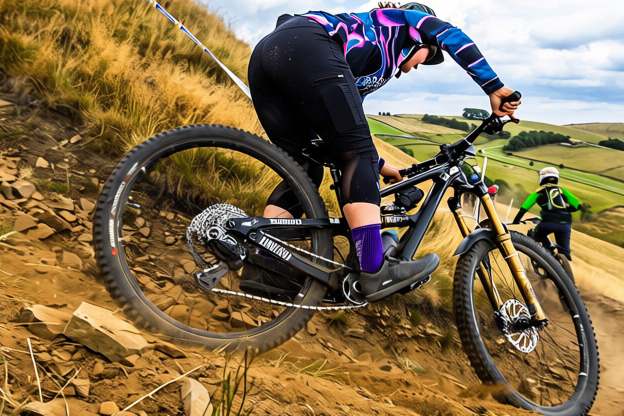
Mr Justice Jeremy Baker found that the qualified instructor was 80 per cent at fault for the incident, which happened on a steep descent of Holmbury Hill known as “Barry Knows Best,” reports the Eastern Daily Press.
He said that “novice rider” Mr Ahmed “should have been warned” not to attempt the route, which was “beyond his capacity to ride down safely.”
As a result, the judge said that Mr MacLean had put Mr Ahmed at “a serious risk of harm” and that he had “failed to carry out his tuition with reasonable skill and care.”
He acknowledged that Mr MacLean was an “enthusiastic, easy-going” instructor but had “a tendency to be over-optimistic” about the ability of some of those he taught, and that he had not sought to assess the skill levels of members of the group beforehand.
Mr Ahmed had already ridden the route slowly before tackling it a second time, with Mr MacLean having “encouraged him to do so at speed,” the judge said.
But he also found Mr Ahmed 20 per cent liable for contributory negligence, since he had not raised concerns about his ability, possibly because of “peer pressure” from others present to tackle the more difficult route, rather than an easier option.
Damages are yet to be assessed, but are reported to be likely to be upwards of £3 million.










63 thoughts on “Paralysed cyclist set for £3m+ damages from mountain biking instructor after winning High Court case”
I hope the instructor has
I hope the instructor has insurance for this…
Otherwise it will just be another solicitor screwing over someone else.
If you aren’t happy riding down a steep slope, either suck it up and walk it, or go down it at your own risk. Nobody forced him to cycle down that slope.
WillRod wrote:
The judge didn’t absolve him of responsibility, he found he was 20% contributory negligent. “As an adult with some biking experience, he had not “abdicated complete responsibility for his own safety” to Mr MacLean.”
quiff wrote:
IIRC in road.cc’s original story about this case, Mr Ahmed had been described as “an experienced cyclist”.
Ok, so we know that road.cc
Ok, so we know that road.cc commentators hate the criminal courts, cos of bad sentencing and all that, but this is the civil court giving a newbie cyclist a big payout. But hate for that as well. It’s a quandary for sure.
bendertherobot wrote:
Many people have a poor understanding of the difference between civil and criminal cases, as demonstrated by the very next post making a comparison with a criminal fine.
Yes, as an instructor he will be insured. Even the personal liability cover on basic third party cycling insurance will cover you for a claim of a million or more. This is why.
As a lawyer (?), did Mr.
As a lawyer (?), did Mr. Ahmed not have the common sense to assess the part of the course where the accident occured and adapt to his (known) riding skill level?
Or perhaps, maybe that is the reason why he had the accident.
Being a lawyer he ‘took a risk’ and unfortunately exceeded his own self-perceived skills…when the outcome is as bad as this, there’s always someone else to point the finger of blame at (usually/occasionally not always correct mind you…)!!!
I hope Mr Ahmed can adjust to his new life.
I hope the instructor, despite the settlement/amount being >£3m has insurance to cover such a mishap and that this does not create financial hardship…it’s not as though he has a spare few million lying about (I know if covered by insurance then he won’t directly pay that sum..)
That will be the next big thing, when a ‘road’ cyclist is injured/incapacitated/killed by a driver and they/their family try to claim from the motorist…oh wait…I’m, of course, being silly here…the driver will probably pay £50 victim surcharge and walk out the court with 250 hours community service…after all the cyclist is most likely at least partially, if not 100% to blame for getting in the way of the motorist…
The _Kaner wrote:
Doesn’t matter what the student believes, it’s the instructor job to assess their ability.
The _Kaner wrote:
Please define this laze cliche “common sense” What does it mean? There is no such thing as sense which is common to everyone, as our knowledge, skill and experiences change our perception of your meaningless phrase changes. A pupil should reasonably expect their instructor to only put them in a situation they can handle, would you expect a driving instructor to put someone on their first lesson on the motorway during peak traffic flow? Of course not. Similarly, a novice off road pupil shouldnt expect his instructor to put him on something he cant reasonably be expected to handle. Oh, I forgot, “common sense” would tell this complete novice that he was out of his depth.
The _Kaner wrote:
Godammit Kaner, he’s a lawyer, not a mountain bike instructor 😉
The _Kaner wrote:
So we like instructors and we don’t like lawyers, even when they ride bikes. But we also hate motorists, especially when they injure/incapacitate/kill cyclists. Which I think means the pecking order goes: instructors; other people on bikes, except lawyers; [big gap]; lawyers; motorists.
Its stupid to suggest that the reason Ahmed was injured is because he was a lawyer.
I’m trying to work out if you would prefer it if the tort of negligence wasn’t a feature of English law (“there’s always someone else to point the finger of blame at (usually/occasionally not always correct mind you…)”). In Ahmed’s case the court concluded that there was someone who (at least as to 80%) was responsible for his injuries. Or put another way, he was perfectly entitled to “point the finger of blame” because the instructor was in fact to blame (at least as to 80%). You realise this is exactly the same body of law that protects you when the hospital confuses a syringe containing glue with a harmless dye with the result that your ten year old suffers catastrophic brain damage? Or when your father in law receives a kidney transplant from a donor with an aggressive form of cancer, caused by “human error” by a specialist nurse who had not completed the required training? Or when your wife is misdiagnosed with terminal liver cancer and is given an aggressive form of wholly unnecessary chemotherapy? Whatever you think of the merits of an individual case, I prefer living in a jurisdiction where I have some recourse if people who are supposed to be looking after me fail to do so.
This is an appalling decision
This is an appalling decision
bendertherobot wrote:
Possibly because RoadCC users have a brain to establish [B]self-will[/B]. You are ultimately responsible for your actions and how much to go outside your comfort zone.
Jamminatrix wrote:
Ok, so we know that road.cc commentators hate the criminal courts, cos of bad sentencing and all that, but this is the civil court giving a newbie cyclist a big payout. But hate for that as well. It’s a quandary for sure.
— Jamminatrix Possibly because RoadCC users have a brain to establish [B]self-will[/B]. You are ultimately responsible for your actions and how much to go outside your comfort zone.— bendertherobot
No. If you’re in an environment of supervised training, it’s the instructor who is ultimately liable for safety. Because by defintion the instructor is trained, and the pupil isn’t.
Jamminatrix wrote:
Ok, so we know that road.cc commentators hate the criminal courts, cos of bad sentencing and all that, but this is the civil court giving a newbie cyclist a big payout. But hate for that as well. It’s a quandary for sure.
— Jamminatrix Possibly because RoadCC users have a brain to establish [B]self-will[/B]. You are ultimately responsible for your actions and how much to go outside your comfort zone.— bendertherobot
And yet, a Court, taking every established legal principle of duty of care, breach of duty and negligence, disagreed. Having heard all the evidence and come to a reasoned conclusion.
I’m not a lawyer and make no
I’m not a lawyer and make no special claim to legal knowledge.
The people in court were and made a decision and I expect that it was actually reasonable.
Why?
Whilst not a lawyer I have been an instructor (MTB and road) and as such am very well aware any instructor has a duty of care to those they are instructing. That’s why as well as being properly trained instructors have appropriate insurance.
The injured party here has suffered, and in spite of any payout will continue to suffer greviously. It is good that he is being compensated in a way that will help him live with his injuries in the future.
Bender the robot I think the
Bender the robot I think the reason cyclists hate both criminal and civil courts in your example is because they both let the person with the huge majority of responsibility off the hook with a bit of legal chicanery. ‘Oh I just didn’t see him till he hit the windscreen, oh and then I was so scared that this had all happened so fast I just drove off ( and left him to die ffs!). It’s pure bull*hit justice. ‘Oh I had already completed this section of downhill once and was so s@it scared of it that I thought I better do it again only a little bit faster, then I totally f@cked it up and fell off. This is a 40 year old grown man we are talking about not a 8 year old ( oh daddy he told me to go fast so I did) . These rulings totally undermine the fabric of society. Now every time someone thinks of being an instructor they will probably not bother cos of bullshit cases like this will cause the insurance to be so astronomical. Or if they do run the course it will be so nanny state as to be pointless cos of one stupid t@at f@cked it up for everyone else.Last time I checked anything involving a mountain and a bike usually carries a relatively high degree of risk. Why can’t he accept that it’s not anyone else’s fault but his own. I could actually even be brought round to thinking 80:20 responsibility him and the instructor but never the other way round ( interesting that he is a lawyer by trade, having several months to convalesce obviously got him thinking) . Meanwhile the insurance industry and lawyers are laughing all the way to the bank
the nutcracker wrote:
Which legal chicanery did the Court use here?
It bothers me that few posts
It bothers me that few posts here mention that as adult human beings, we should take responsibility for our actions. I spent quite a lot of time climbing and it’s a central tenet that as a climber you recognise that climbing is risky and that you accept personal responsibility for these risks and for your own level of ability and experience.
For me, this is not just how climbers should approach their sport, it’s about how human beings should approach their lives. And as tragic as the outcome for Mr. Ahmed is, he was an adult and he cycled down that route. Nowhere does it sat that the instructor forced him to do so, so I still believe that responsibility lies with Mr. Ahmed.
And on that basis, this is a poor decision as it encourages an attitude that says “someone else gets to pay when I f*ck up”
Generally I hate these kind
Generally I hate these kind of claim cases but; it’s the instructors job to gauge the level of skill in the student and set the teaching effectively. This was therefore an error of judgement.
What I hate more is people who ride trail centres (solo) and try and sue for crashing into a tree or rock stating that the trail is dangerous. Those are the people who don’t takes responsibility for their own actions.
A lot of talk about being
A lot of talk about being responsible for your own actions, but part of the process of being instructed is putting your trust in someone else.
And being an instructor means taking responsibility for the safety of others, using your knowledge, skill and judgement to stop them getting hurt.
fluffy_mike wrote:
“Putting your trust” in someone else is still not the same as giving up thinking. Nor is it the business of an instructor to somehow remove all risk. Because that probably isn’t achievable, and if it were the course probably would not be worth doing.
can I suggest the headline be
can I suggest the headline be changed to “paralysed non-cyclist”
He could of been an
He could of been an experinced road cyclist but had no clue when it comes to riding off road
The guy completed Barry Knows Best slowly and on the 2nd run the instructor encouraged him to go a bit faster, seems to me he misjudged his speed and managed not to stop/fly off the run and hit his head
I think the instructor is at fault to a degree as if he knew the guy wasnt confident he should of rode behind him and shouted instructions to help him along (slow down here, go to the left etc…) but also the guy should of known his limits and rode within his comfort zone
Having rode Barry Knows Best many times its not a difficult/steep trail in my eyes, in fact its one of the more tamer ones on Holmebury and Pitch hill and it just winds it self down the hill
Ive friends who weigh 23+ stone and they make it down it relativley quickly but are cautious due to their weight (23 stone hitting the ground is gonna hurt!)
For me the bottom line is if
For me the bottom line is if you want to remain free from the risk of injury, then stay away from activities that certainly carry a very real risk of injury. He didn’t go to have a piano lesson and a loose fitting from the teacher’s house dropped on his head or something, he decided with free will that he wanted to ride a bike down a steep hill.
Having spent my life skateboarding, bmxing , MTBing and driving/riding fast, maybe I’m a bit harsh in my views as I know from experience that thrills come with a very real risk of injury. You want to slide down a handrail on a skateboard? Get prepared to take a hit in balls. Want to get your knee down on a motorbike, prepare to wash the front end out. Want to go for a KOM descent on Strava, prepare to appear in a Road.cc article and discussion about whether you had a helmet on or not.
At the end of the day it’s a terrible state for him to be left in and high price to a pay. Look at Michael Schumacher to see what life can throw at you being in a wrong place at the wrong time.
Yorkshire wallet wrote:
On that basis, no one would ever learn to swim.
The swimming pool is a highly
The swimming pool is a highly controlled environment, with a lot more control over the risk variables, especially when it comes to learners. There is a greater return in swimming in risk reduction, it may save your life one day. You won’t find yourself falling onto a bike rolling down a steep hill.
Yorkshire wallet wrote:
Because it’s supervised. Remove the instructors, there’s precisely zero control. The instructor is responsible for ensuring that learners know where the deep water is, whether they should use flotation aids and for monitoring them. Neglect those duties, and they will share a degree of liability or possibly be found wholly responsible.
These are the absolute basics of duty of care. If you are running a business dealing with the public you have to follow basic rules to protect them, it’s the law. Although it doesn’t seem very fashionable to say so in a world of “health and safety gone mad” nonsense, it’s an almost entirely sensible and beneficial principle that exists in some form in almost every developed country.
The only question I can see regarding this case is the degree of liability, but the details as reported don’t look good.
bikebot wrote:
Yes, once more I think road.cc users are guilty (!) of not really reading through why the decision was made and is sound in law. That the law might be different in a perfect/different world is another issue. In this case there doesn’t sound to be much other than encouragment to try stuff out and then do it a bit quicker. No assessment, quite a bit of risk. The outcome is always chance but that doesn’t figure in the equation.
And, of course, this guy needs to find around £800k of his own money in respect of his own future care.
bendertherobot]
Leaving aside the law briefly, can you at least agree that there is a mismatch between the consequences suffered by this instructor for, at worst, negligence and those suffered by drivers who kill as a result of deliberately breaking the law?
If you really believe that, why didn’t the judge describe MacLean as an incompetent clown, rather than as an apparently competent instructor? Not even an instruction to get his arse off the back? I find that difficult to credit. I also suspect that ‘do it faster’ actually is a crude translation of ‘leave the front brake alone’, standard advice, not always easy to follow.
Which is a shame for him, but seems fairly irrelevant for the rest of us.
oldstrath wrote:
Leaving aside the law briefly, can you at least agree that there is a mismatch between the consequences suffered by this instructor for, at worst, negligence and those suffered by drivers who kill as a result of deliberately breaking the law?
Yes, but what’s your point? Are you suggesting that because the law seems incapable of prosecuting reckless drivers, people like Mr Ahmed – who placed himself in the care of another – shouldn’t have recompense if that duty of care is not fulfilled?
It is open to anyone who suffers loss to bring a claim for negligence provided they can demonstrate a duty of care. But that’s why negligence isn’t (without legislation) particularly useful if you’ve been hit by a car while on the road because drivers don’t owe one another or any other road user a duty of care. I say “without legislation” because you could always pass a law that reverses this presumption (i.e., provides that drivers owe more vulnerable road users a duty of care) but the days of the courts making this kind of jurisprudential leap are long behind us so it is down to the legislature and the car lobby would kill any law to this effect stone dead.
This wouldn’t be the greatest solution anyway because you can’t recover in negligence if you are dead – so motorists would be incentivised to finish you off once they’d begun. You really want a law that imposes strict liability on motorists. But just because you don’t have a law to this effect doesn’t mean you should deny Ahmed his compensation.
Also, it’s wrong to blame the court. This is a legislative failing that is very simple to fix. Courts make law but very rarely in a dramatic way so if you want major change then you need to petition your MP.
oldstrath wrote:
No there isn’t.
You are clearly lucky enough not to know people who have been involved in criminal and civil court actions.
If someone is found guilty in a criminal court of causing injury to someone and they have assets or insurance, then the victim can sue either the person for their assets or the insurers for compensation for that injury in a civil court.
So while the driver may be fined a £50 victim surcharge in a criminal court it doesn’t stop the victim (or their family) suing the drivers insurer in a civil court.
If there is not a criminal case and there is an insurer, like in this case, you can still sue the person who injured you in a civil court.
If there is a criminal case and the person is found guilty but there no insurer than you can ask the Criminal Injuries Compensation Authority to give you compensation.
On these occassions using lights as per the law , wearing reflective/light coloured/bright coloured clothing and in some cases wearing a cycle helmet helps as the insurer will try, and are in some cases are successful, in arguing that it is partially the victims fault so their compensation should be decreased.
Loads of these cases don’t actually go to court as the insurer just agrees to make a pay out as it is cheaper for all concerned and there is legal precedence of the amount that should be paid out.
Bluebug wrote:
While we’re all handing out free advice …. Bluebug makes perhaps the most important point of all, there’s no point suing someone who isn’t worth anything.
surly_by_name wrote:
Anyone self employed, who has a professional duty of care has indemnity insurance, or they’re colossally stupid and have managed to ignore an awful lot of advice and warnings. It’s probably a legal requirement, I know for personal trainers it’s mandatory.
surly_by_name wrote:
Or, at least in part, http://www.bbc.co.uk/news/uk-wales-south-east-wales-37875194
bendertherobot wrote:
Worth reading my whole post not just the part that was quoted.
You can sue anyone in a civil court who has assets or insurance even if there was no criminal case, however you have a better chance of securing compensation if there was a criminal case and that person was found guilty.
bike bot, i agree that
bike bot, i agree that learning to swim carries a very real risk of injury. That is why you learn to swim (at least generally speaking in the uk) under very strict adult supervision, in a highly regulated environment. You will literally be at arms length from an adult on a one to one instructional basis (at least if mum or dad is trying). You will generally be taught in structured manner over several weeks/months in the shallow end of a heated pool where should you lose your confidence you can probably stand up. Even taking aside those points should anyone fail in such conditons to safely instruct a young child and the child ends up in difficulty, 2 or more life guards (employed at great expense by the pool owners to CONSTANTLY MONITOR all pool users) can dive in in an instant and administer assistance. So i think the analogy with swimming is flawed because the risks in learning to swimming are well mitigated. When you volunteer to travel to a remote part of the countryside as a fully grown adult with such self confidence in your own biking ability that you believe you can ride down a mountain path safely (on what is an inherantly unstable machine ) its a slightly different situation. And in response to bender the bot, the guys lawer said he was not a ‘thrill seeker’….well why on gods earth was he chucking himself off a mountain whilst riding a bike????….its not the most sedate, boring pastime i can think of. Maybe he should take up knitting….although you should be very careful to get him to sign a disclaimer in case he stabs himself ….after all those needles are very sharp….or didnt he know that?
the nutcracker wrote:
No, volunteering doesn’t change it in the slightest. The instructor is responbile for assessing and instructing the student approproiately for their safety. If the student ignores the instructions and advice given, then they would be responsible for their own actions.
If the reported details are accurate, and the instructor instead encourage him to attempt a course at speed without having assessed his ability, that’s a failure of his first responsibility.
I’m assuming everyone is happy that this principle also applies to every professional driving instructor. They have a responsibility for the safety of the learner driver AND the public, regardless of what their student feels comfortable attempting.
I am far from a legal expert
I am far from a legal expert but there have issues in the past with people merely organising social rides who have been viewed as assuming responsibility for what goes on.
If you are charging people as an instructor I think it is clear that you are legally responsible for ensuring their safety while they are in your care.
Hopefully the instructor will have insurance. If he is BC licensed (e.g. Level 2 Mountain Bike Award) and is a BC member then he will be backed by professional indemnity insurance of £5 million and public liability insurance of £10 million as long as he was delivering sessions within the remit of his qualification.
Cycling is not risk free. We do get occasional crashes during our Go Ride sessions. The coach has a responsibility to risk assess the environment beforehand and also to only ask people to do tasks that are within their capability.
The accused is still
The accused is still gainfully employed as a mountain bike instructor according to newspaper report and the judge claimed there is ‘no reason to believe’ he is not a competant one. I’m guessing he is teaching in exactly the same manner as before only now he gets everyone to sign a disclaimer at the start saying , if its a little bit steep for you or you are not sure if you can do it safely PLEASE DISMOUNT FROM YOUR BIKE AND WALK………£3 million quid saved.
the nutcracker wrote:
Save that he can’t, cos you can’t really disclaim liabilty for personal injury under the Unfair Contract Terms Act where the act is caused by their negligence.
OK, let us assume, just for
OK, let us assume, just for the moment, that our combined armchair wisdom as legal experts is inferior to the judges and solicitors with their fancy qualifications and decades of experience in testing the law in real courts. So without comment on this particular case or the tragedy of a fellow rider being injured and left with a permanent disability.
What would be considered a fair definition of ‘basic duty of care’ or whatever the legal terminology is?
Should an instructor perform a detailed survey of the course before using it? Should he have to strip down and validate the trainee’s bicycles before allowing them to be used (ensuring first of course that his bicycle mechanic and safety inspection testing qualifications are up to date and valid for the models of cycle being used), should he record the BSI kite marks on their safety equipment? Just what in heck must he do to test the riders abilities before setting them off. In other circumstances could he have been succesfully sued by a novice falling off whilst riding round the flat car park, on the grounds that he had not checked their ability to ride around a car park before asking them to ride around the car park?
My concern about setting the bar too low before apportioning blame to a third party is that by doing so we all end up either paying higher charges to cover increased insurance liability costs, training of any sort becomes so dumbed down that it offers no challenge or chance to improve skills or we lose access to facilities as the owners are justifiably anxious about the possibility of being sued. What precedent does this case set for the average cylce club offering ‘intro’ rides for newbies? Just because no money has changed hands does not mean that the ride leader is not responsible for the safety of the riders in the group. Lead them along a road with a few damp leaves, someone goes down, falls unfortunately and bingo! £4 million lawsuit in the post, because they didn’t pre ride the route, do a 5 hour pre ride safety briefing, conduct a thorough riding ability assessment and complete all the associated paperwork properly.
I don’t know how a mountain
I don’t know how a mountain bike ‘instructor’ qualification works – is thsi teh same as mountain bike leader?
I’m a BC qualified level 2 and level 2 road coach. We have to do a basic safety check on the bike and equipment (‘M’ check – plus stuff like whether their helmets are correctly adjusted).
If a problem is identified then you are not allowed to fix it for them. There are certain minimum requirements, e.g. two working brakes. you should also consider whether the sesion you have planned is suitable – e.g. high speed cornering sessions on an closed circuit would not be suitable for people turning up on a bikes with cyclocross tyres.
You need to do a documented risk assessement of the venue, highlighting the risk severities and what you will do to mitigate the risk. If it is a regular venue then you need to periodically review that asessment to make sure it is still correct. You should make riders aware of risks that you have been unable to remove. As part of risk management you should consider the abilities and experience of the group yo u are coaching to make sure that teh session is suitable, and you should monitor it during the session (i.e. if they are struggling then simplify it).
The guidelines are continuously updated and it is up to the coach to esnure that they are up to date.
https://www.britishcycling.org.uk/coaching/article/20141022-coaching-news-Update-to-Guidelines-for-Coaching-Cycling-0?c=EN
Your level of coaching qualification will allow different remits (locations, minimum and maxim numbers of riders you can coach, tecnhiques that you can coach) and you have to stay within this remit – e.g. a level 1 coach is not allowed to coach team time trialing, and if they did and there was an accident then they wouldn’t be insured. You also need a current first aid qualification, training in safeguarding and DBS (all of which only last 3 years) and to maintain at least silver level of BC membershipto access the insurance.
At this is all required for people who are volunteers. I would expect anyone doing it as a job to have all of the above as a minimum.
So first, it depends on the
So first, it depends on the profession. Some things will be covered by specific H&S guidance, other aspects are estabalished and refined through case law. Each new ruling can potentially build on what is considered fair and reasonable if there is a unique precedent.
If there’s an instructor who reads this, hopefully they can comment on what specific things they will check. I know the instructor training courses that are run for bikeability are very heavy on safety training.
I’ve done some training for marshalling on managed rides. For that, yes I would need to survey the route if I was leading it. I would also inspect the bikes of everyone taking part. That’s all fairly simple stuff, the bike check is the common ABC which takes a few seconds. But it’s my responsibility, because on a managed ride I may share liablity if someone sets off without a front brake or a split tyre. If the person is known to me, and I know they are competent, I can reasonably skip that. For the most part, the law is actually quite sensible on these matters.
Another thing, is the much mocked expression the “risk asssessment”. Uusually mocked because it often ends up being some stupid workplace form . All it means is that at some point someone should spend a moment considering what risks may occur and if there is a way to mitigate them. If someone is injured, and it happened due to something that could reasonably have been foreseen and prevented, then liability is an issue.
End result, people have to think about safety when they are responsible for others, which is a good thing.
Yes, oddly enough there’s a
@oldstrath
Yes, oddly enough there’s a mismatch. Because the civil law aims to compensate and the criminal law to punish. But they do work in tandem, so, in those cases where a criminal act has led to an injury then the civil law outcome will be damages. That there may also be a sentence that includes a fine is irrelevant. So saying there’s a mismatch fails to recognise two systems working in tandem. You can’t ignore the law for a moment. This is about law. There’s no mismatch even if you don’t because, if you don’t, well what on earth are you comparing?
Judges will assess the evidence on the balance of probabilities in a civil case. An incompetent clown will lose because they’ve gone way beyond the duty of care required. But you can go just beyond it and still lose because that’s how our system works. In this case an experience judge listening to all the evidence, rather than supposition, assessed it in line with very clear legal principles and found him negligent.
On the last point, it’s very relevant. It’s a demonstration that the Court will assess contributory fault where there’s evidence of it.
I find it interesting that we clamour for justice on this site for every cyclist. But when faced with a cyclist and a neo cyclist, it doesn’t seem to apply.
bendertherobot wrote:
The arguments for presumed liability are a better comparison. The law is very good at defining responsibility for businesses and employers, and absolutely hopeless on the road. <Insert the common argument about construction vehicles on and off site here>
Unforunately the misunderstandings are just as common, overstating its ability to deter bad driving on one side of the argument and journalists writing nonsense about presumed guilt on the other.
In this context, civil law is mostly about insurance companies throwing lawyers at one another to decide who is signing the cheques. That’s all.
bikebot wrote:
But presumed liability is still a civil concept. And we do no need people to understand the difference and a system of deterrence that works better. But there’s still no real mismatch in terms of money, as alluded to by other posters, because one system is about one thing, the other about something else.
bendertherobot wrote:
I think some of us struggle with the idea that this is ‘justice’ because we are all too well aware that, however good the instruction, and indeed however experienced the cyclist, offs can happen. Usually they are harmless and funny, occasionally injurious, and very infrequently severely damaging, as in this case.
No, we don’t want to do away with the very idea of negligence, but mountain biking is, and ought to be, a risky activity, and the apparent refusal to accept that occasionally the real shit will happen seems foolish, and likely to make useful instruction harder.
oldstrath wrote:
But you’re extrapolating a different case into this one. In this one the judge felt that this wasn’t one of those cases where nothing else could have been done.
Oh, and @surly, superbly put.
Oh, and @surly, superbly put.
I think the legal upshot is
I think the legal upshot is that if one of your clients has an accident then you are liable. This seems a little unfair – as we know, and I’m not trying to insinuate anything about the gentleman in this case, it’s perfectly easy for a client to be disingenuous about who is to blame for an accident, especially if it is in your interest to win big money.
That seems to be patently unfair considering there is a good degree of risk involved. In a fair society you should be compensated if you suffer injury through no fault of your own. But not if you imperil yourself and get injured. Seems like the answer is for the instructor to say that he guidance is limited to verbal instruction – it then becomes his clients choice if there after they wish to put themselves at risk – a good example where the law is an ass. The tuition is supposed to help mitigate the risk of the activity not remove it.
Colin Peyresourde wrote:
No. Only if the intructor has failed his obligations towards duty of care.
Colin Peyresourde wrote:
No. If your client has an accident then you are liable if the damage suffered as a result of that accident was a consequence of your failure to discharge your duty of care. It’s not “a little unfair”, nor is it “patently unfair”, including because the law recognises that sometimes people who suffered damage should have taken a bit more care of themselves (contributory negligence – this is why Mr Ahmed got only 80%). And it’s not at all “easy to be disingenuous about who is to blame for an acicdent” in court. Honestly the judge has seen it all before and counsel for the respondent will have you whimpering in the corner even if you are faultless.
And if you believe that “In a fair society you should be compensated if you suffer injury through no fault of your own”, then we don’t live in a fair society. You get compensated by someone. So if you suffer injury through no fault of your own – or through no fault of any other person – you don’t get compensated. You’d be more correct to say “In a fair society you should be compensated if you suffer injury through the fault of another” – which is what negligence is about.
And your answer (“for the instructor to say that he guidance is limited to verbal instruction – it then becomes his clients choice if there after they wish to put themselves at risk”) might work or it might not. If his/her verbal instructions include “close your eyes and send it”, I’d imagine the court would likely find for the applicant.
I am pretty comfortable that the court got it right because everyone involved in that decision was a PRO. Insurers don’t sue – they settle. So for this to get all the way to trial meant that an insurer felt it was worth fighting which meant it got a lot of legal intellect focused on it.
Quite a few skiiing accident
Quite a few skiiing accident claims have been dealt with in pretty much the same manner as well.
Having read all the previous
Having read all the previous posts, I’m still somewhat confused.
The injured party had already ridden down the track once, and was therefore familiar with it, but blames the instructor for falling off and injuring themselves? Why? The cyclist clearly knew the track and the hazards it presented, but still agreed to ride it again, apparently agreeing with the instructor to ride it faster. If the rider had had reservations, then why did they continue to ride the route? Perhaps the rider and the instructor overestimated their skills, but they had ridden it once without mishap, so perhaps there wasn’t any overestimation, and if there was any overestimation, it was the rider’s not the instructor’s.
That this was a tragic accident is beyond dispute, but I can’t see what else the instructor could have done, and if that is true, then he can bear no responsibility.
Given the number of cases of cyclists being killed by drivers quite clearly to blame, yet exonerated by our justice system, it is clear that the law is an ass, and civil law even more so.
I think it says a lot about
I think it says a lot about the capitalist system that increasingly brings about all this blame culture ( for obvious financial gain) that if this guy who was instructing didn’t have any insurance or had forgotten to renew it for whatever reason then the whole case probs would not have been brought cos the instructor was a youngish guy I’m guessing with no savings. Or if this guy had fallen off and broke his finger non of this would have happened. Could you argue that he hadn’t been taught how to fall properly? Even more negligence. A lot of this bullshit risk assessment stuff u can’t even measure, a rabbit could have run out and put him off, if nobody else saw it ure not gonna get £3M off thumper. and as someone alluded to people really start clutching at straws when £3M is involved. It’s just some greedy toads trying to make someone else pay for there own total f@ck up. The insurance industry wants u to take out insurance cos they make money and scares the s@it out of u for perhaps not getting it. the lawyers want to accuse you and prove you liable cos they make money out of it and all the extra court cases keep the judges in gainful employment…. oh and that’s before the appeal. Not a lot we can do about it I know but It’s all one massive self perpetuating cash making scheme and guess who wins.Am not a lawyer as u may have guessed haha , but would love 2C the detail of this judgement, is there any way of getting my hands on a copy?
the nutcracker wrote:
What has he gained financially?
the nutcracker wrote:
Yes. I’ve had a look on the handed down judgments and it’s not there, they only tend to publish the big ones. It’s not private as it would have been read in open court but the courts are often funny about requests (without good reason). Give the Court a ring and ask if it’s possible to obtain a copy. It’s a reserved judgment so probably written and probably available.
The rule that you need to cite is CPR 5.4c, you may have to pay.
5.4C
(1) The general rule is that a person who is not a party to proceedings may obtain from the court records a copy of –
(a) a statement of case, but not any documents filed with or attached to the statement of case, or intended by the party whose statement it is to be served with it;
(b) a judgment or order given or made in public (whether made at a hearing or without a hearing), subject to paragraph (1B).
Of course we’re guessing, but
Of course we’re guessing, but plenty of comments from “lawyerly types” suggesting that Maclean’s instruction consisted essentially of saying “go for it” to a guy he’d never met, which are indeed guesswork, incompatible with the published comment that the judge doesn’t question his competence, and suggestive that some people aren’t really clear about how to ride bomb holes.
oldstrath wrote:
You need to read around the story, in the original piece Ahmed gave evidence that he believed he had been instructed to go down the hill as quick as possible without braking (on the second go). That appears to have been accepted by the Judge. The thing is, do you honestly think the facts of this case can be condensed into the road.cc report above? There will be a huge amount of evidence given not just from these two but others as well. The comment isn’t incompatible, people can be usually excellent but sometimes not. It’s those cases where either they get away with it through chance or, as in this case, something else happens.
There’s a comment above about professionals. This isn’t about what witnesses say, it’s how they say it, how it comes across etc. Then, at the end of the case, there’s a legal summing up by both sides and a reasoned decision from the judge, days worth of it. So whilst lawyerly types (or, perhaps actual lawyers) on here are commenting on evidence they do so at least with some semblance of seeing how the decision has been reached on the limited evidence reported. It shouldn’t be surprising therefore that there’s a huge amount of detail not reported as well. Not additional stuff perhaps, but detail.
It’s still odd. Road.cc is a place where we simply cannot understand how cases with a lack of evidence aren’t prosectuted in criminal cases. Here, accepting that the systems are slightly different, a case in which someone wins having presented the Court with clear evidence which meets all legal tests, causes uproar. We see people decrying his massive payout. Well, guess what, he’s in a wheelchair now. All very odd.
on a more positive note – at
on a more positive note – at least there is no longer any doubt surrounding Mr Ahmed’s mountain biking capabilities.
Maybe there was some heavy
Maybe there was some heavy drinking last night…
Too much dumb in this thread, I’m out. Blaming capitalism was quite funny though.
I’m intrigued that people
I’m intrigued that people hold such strong opinions about this case, either way, to be honest.
Personally, if it doesn’t involve traffic on the public highway, I don’t really have a view on it.
The whole issue of liability, duty-of-care, and suing people in the context of private contractual arrangements seems to me to be an entirely different topic that isn’t really about cycling at all.
I mean, this situation could arise in any kind of sporting/coaching context (horse-riding, orienteering, rock-climbing, rugby, American football…). Surely its not specific to cycling, unless someone can demontrate the legal response differs from injuries in those other cases?
What about rugby games where
What about rugby games where the rules have been broken? How would you deal with the risk in those?
Oh, and, you might want to read up on the Unfair Contract Terms Act and waivers.