



For those at the back who might not have heard the first time, I’ll say it again…
No one cares how far you rode your bike.
Let’s just get that straight out there in the open.
Distance is the most superficial metric with which to measure your cycling ability. It’s a basic and effortless means with which to impress the layman with their “That’s a long ways” as anything beyond riding to the shops is an impossible length for the person in the street to imagine on a bicycle.
For fellow cyclists, it’s a straightforward, shorthand method of letting someone know where you lie on the riding league table, and a handy passive-aggressive “I’m better than you” boast if that’s the way you like to deal with things.
> Going the distance — learn how to build up to an epic ride
It’s easy to obsess about miles ridden per ride/week/month/year and confuse distance cycled with prowess, experience, training, aptitude, divinity and kudos; and I’ve been pedalling around long enough to witness plenty of people do at least one of these at some time in their cycling biography – myself included – when I thought piling on the miles meant something.
By the way, I’m going to be using miles for the rest of the article; but any fool knows that if you want to make your ride quantity seem more impressive, you’ll prefer kilometres as your measure of distance. It instantly makes you about one-and-half-times ‘better’.
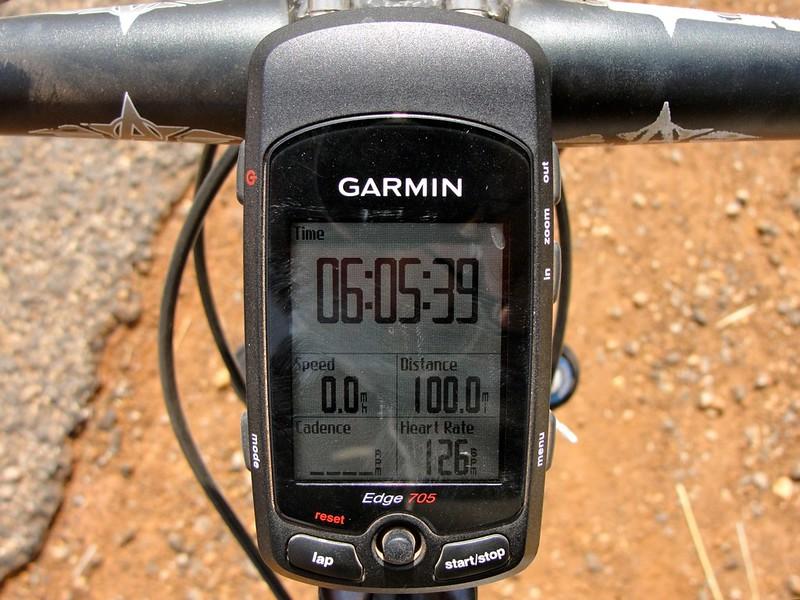
The cycling world is full of mileage challenges. Those led by marketing campaigns, charity-based goals, well-intentioned motivational incentives, and entirely arbitrary figures that individuals like to conjure up as annual distance goals. The latter are usually nice round numbers, as no one seems to want to finish on an odd figure, which is weird as it would make just as much sense as a randomly generated figure. But, I digress.
When it’s not distance, it’s frequency. Every day for a month, or a significantly large ride a month for the year… the list of mileage bait is endless. The proliferation of social media has exploded the culture of racking up the miles and displaying it on a pretty graph, chasing the dopamine high compared to when you might just scribble the total in a little book for your own amusement and analysis. Press send on any distance-related post (include altitude gain if you want to increase the wow factor) and smugly watch the likes and comments and status massaging accumulate. It makes it all worthwhile, and it’s great for the fragile self-worth.
I’m no stranger to putting the miles in (quite a lot of them sometimes if it matters) so I’m keenly aware of the difference between wanting to do something and having to do something. I’ve dragged myself through the latter enough to decidedly favour the former whenever possible. Committing to any distance-related challenge or goal will at some point steer your bike to riding down the sunken road of loathed drudgery by having to go out when you might not necessarily have much desire to. I’ve done too much mandatory misery in the name of completion, and witnessed too many others reluctantly shuffle onto a saddle to finish some mile-related chore to only know this as an inescapable truth.
While the motivational aspect is often cheerfully waved about as a positive, nothing sucks the enjoyment out of an activity like making it compulsory, or submitting it to a deadline, and cycling becomes the sucky feeling of homework you’ve left to the last minute on a Sunday night.
Proponents of such things will point to the incentive and ‘we’re in this together’ group encouragement that the cycling community can offer, and the camaraderie of a virtual peloton, ignoring the fact that a whole lot of them are sat in front of the fire just waiting for the schadenfreude to unroll.
We’re nearing the end of another edition of a certain festive cycling distance challenge, that on the face of it is not an entirely impossible task; but when you have to squeeze it around the social and family commitments that crowd this time of year, it gets harder. If you live in the northern hemisphere, the lack of daylight hours, the not inconsiderable and predictably harsh realities of winter weather and debatable road conditions conspire to make the competition a proper mournful ordeal.
While the motivational reasons behind it are a laudable way to get people out the door while they might otherwise be festering on the sofa, the downsides can more than cancel all of this out. I’ve watched enough cycling friends put themselves through this challenge over its history, and they’ve all hated it at some point. The combination of wind, weather and having to ride when they ordinarily wouldn’t makes them complete the trial with a bitter and bile-ridden dislike of their bike that takes a while to get over… at least until the next dry, sunny day with double-digit temperatures.
It’s also now become a bit of a Christmas tradition that someone within my extended riding family breaks a bone falling on ice while partaking in this jolly festive challenge, so that all adds to the fun.
A number of years after its inception, this particular winter challenge started to allow indoor miles to count towards a valid completion stamp. I’m not sure if that just confirms that trying to do this outside is a silly idea, or if you hate yourself and your family more than the outdoor riders do to go bore yourself into a garage-based stupor. Could you get some prawn vol-au-vents out the freezer whilst you’re there?
If you do have to ride insane distances, Be More Bill
Ask yourself if you’re getting paid to do this. Is there the chance of a worthwhile prize? What have you proved? Do you care? Does anyone really care? If the answer to any of these is ‘No’, then you’re allowed to stay at home in the warm. It’s quite telling that over the years, the number of riders within my shaded bit of the two-wheeled Venn diagram considering dipping their overshoed toe into the bleak midwinter task has been ever trending towards zero.
There’s no doubt that hitting an arbitrary annual mileage target is a popular pastime, if you’re the kind of person that likes to imagine a random figure large enough to impress your friends. Every person that manages to hit their made-up goal is equalled by at least one other that doesn’t fulfil their total, and is a little disappointed in themselves. Luckily it’s easy enough to rectify any shortfall by simply ignoring that random figure, or just retrospectively making up a new annual mileage goal to fit, as it’s unlikely anyone has paid any attention whatsoever to the distance you said you were going to reach 12 months ago anyway.
Simply make up a new one that’s lower than your final annual mileage, so you can say you beat it by a significant amount, and everyone will be pleased for you for a brief heartbeat (hurrah) before returning to whatever they were doing.
> What can we learn from ultra-distance cyclists?
I don’t care about how far you’ve been. I don’t believe anyone aside from you does really. It’s the most simplistic and tedious way to measure your cycling, especially if you use it as a stick with which to beat your worth over other riders.
The only thing that it really genuinely proves is that you have more spare time to ride a bike. If you can only value yourself by how far you’ve been, then you need to stop more often, and have a long hard look at where you are. Ride your bike as much as you like, as far as you like, but don’t judge yourself or your riding success by volume of miles. And don’t judge yourself against other people by how far you’ve ridden, or others by how far they may or may have not. Measure all of this by what happened along the way, the places you visited, the views you paused in front of, the people and characters you met, the amazing meal you had, that kindness of a stranger, the next view you paused in front of, the sunset/sunrise you saw, that moment on the road that made you laugh out loud. And the one that made you cry. Tell me the tales instead. Tell me about the hundreds of things that happened that weren’t the miles.
Any and all of these reasons above are far more interesting (if only to listen to) and far more important than how far you rode, or how you managed to complete a tick list or fill a spreadsheet; each of which I think are so far down the bottom of reasons to ride a bike that they’re not even on the same page.
Don’t make your New Year’s resolution about how far you’re aiming to ride this year. Make it about how and where you’re going, and then tell me the story.
This article was first published in 2021, and was last updated in December 2025















55 thoughts on “No one cares how far you rode your bike: “Keep your distance””
If people want to set
If people want to set distance/frequency targets, and then let others know how they did – it really doesn’t bother me at all. Each to their own, sometimes it can inspire others to ride more – wherever they choose. Similarly, I acknowledge most cyclists I see out on the roads, but don’t expect any reciprocation. Just do what you’ve gotta do, be considerate, and ride. HNY.
Yes! I agree with all of this
Yes! I agree with all of this!
Another great blog, keep ’em coming
Excellent piece!
Excellent piece!
The thing with modern cycling (or at least for me) is that we’ve got loads of different metrics we can obsess over and they’re all useful in different ways, but it’s so easy to let performance anxiety to get in the way of just getting on your bike and enjoying a simple ride.
The solution for me is to
The solution for me is to take the coastal route. Then the distance is whatever I choose it to be.
https://en.m.wikipedia.org/wiki/Coastline_paradox
Sriracha wrote:
Do you need to swap to really small wheels to get the really long distances?
Oh! Thank you. I hadn’t met
Oh! Thank you. I hadn’t met this one before. It’s beautiful!
I’ve missed my annual
I’ve missed my annual distance goal for the first time in years, despite riding more than ever in lockdown #1
Why?
Because since July I’ve swapped to MTB riding, where distance simply isn’t a reliable or indeed useful measure of “performance”. It’s noticeable that around here MTB riders also seem far less focused on Strava, recording every ride, and so on. I’ve got the “Local Legend” badge on quite a few trails near me which has to be down to not many MTB riders using Strava, rather than any particular achievement on my part.
For the time-poor MTB riding means that you simply won’t cover as many miles as if you were road cycling, because average speeds are slower. Measuring vertical ascent doesn’t really apply either because there aren’t the long easy drags you get with road riding in the UK. My regular MTB trail has plenty of elevation changes – in fact there’s almost no flat to speak of – but my climbing stats are lower.
I guess if I was using a HR monitor or power meter that would be a reliable stat for off-road riding but none of these things capture the real benefits – being away from people, in nature, with the only safety worries being squirrels and my own limited bike handling skills.
You need one of those Garmins
You need one of those Garmins that measures your skid marks. That’s what all MTB’ers are doing.
Agreed, off road riding
Agreed, off road riding reminds me of why I got into cycling in the first place, because it’s fun! Not because of how far/fast I can go.
kil0ran is wise. Off-road
kil0ran is wise. Off-road riding doesn’t score well on the kind of metrics that are currently popular among road-riders – fewer km, fewer km/h, power meters are rare, and it’s not very Strava – but it’s a lot of fun, there’s more scenery than tarmac, and it can be really high-quality training.
“Gravel” and “CX” bikes are gateway drugs. I started out as a road rider but have found myself shifting offroad, and now I’m training more and getting fitter because I enjoy it more. Of course I refuse to wear a Camelbak or baggy shorts – you’ve got to have some standards.
During the plague, getting away from roads / towns / people has other advantages, too.
Quote:
One and a half times as good. Only half a time better.
I quite enjoyed doing the 500 for the first time this year, but I was doing it for my own amusement, not as some public performance. Plus it provided a good excuse for disappearing off for a couple of long days to myself – “Well I have to – I’ve got this challenge to complete…”
The other half always prefers
The other half always prefers the continental leg of our European migrations, because “kilometers go by so much quicker than miles” 🙂
Spot on with that one. My
Spot on with that one. My wife is just the same. So much nicer knowing that the 100 on the road sign will only take an hour instead of a hour and half. Daft really.
The increased use of
The increased use of <insert your favourite virtual cycling app here> has made distance goal achievements a bit of a con anyway. Aside from the philosophical discussion as to whether distance ridden and climbed virtually actually counts, the variability between platforms and ‘real life’ makes it less meaningful.
I’ll make an exception for
I’ll make an exception for the festive period based cycling challenge this year; with absolutely nothing to do in the world over Christmas it got me outside and stopped me from spiralling into being drunk or hungover for a week straight. Yes it’s utterly arbitrary and I could have gone outside without it, but realistically I wouldn’t have. Having said that, I’ll almost certainly never do it again and I agree with your general sentiment entirely.
Same for me. I’ve ignored the
Same for me. I’ve ignored the F500 in previous years but this time with nothing open and no visits to family possible I was like, what the hell, let’s give it a go. It forced a bit of routine for me, kept weight gain at bay, made me feel a touch pro, even. So, box ticked. All outside btw, not virtual. Probably won’t do it next time though.
I spent Christmas self
I spent Christmas self-isolating after working abroad and it was good to have a challenge to get me on my turbo every day – otherwise I suspect I’d have done a few short rides and maybe a couple of YouTube circuit sessions and told myself it didn’t matter because it was Christmas. I included a couple of virtually hilly Zwift routes (even though my trainer doesn’t do resistance adjustment, they just take longer) and I did feel like I’d accomplished something by the end of the 500km. And it just ate up the time indoors. So while I do think quality should be prioritised over quantity, sometimes a distance goal can be a good thing.
personally I dont see
personally I dont see anything wrong with setting mileage goals or targets to achieve over any period of time in cycling, I dont do it to compare against others, or brag about it with them, its my goal, my target and only for my own satisfaction of personal achievement if I reach it.
its as much to show me, that its always possible to achieve things you didnt think you were physically capable of doing, if you focus on them and try to improve & push yourself out of your comfort zone occasionally, and Id far rather learn from failing to hit those targets, than having never tried.
yes theres the risk that you obsess about mileage, rides become a means to an end and forced, which are never enjoyable, Ive been in that position, but Im also of the view, and is something you hear cyclists say alot there maybe many times Ive not wanted to ride a bike on a particular day, but its exceedingly rare that I ever finish a ride regretting having gone out, whether it became cold, wet or windy along the way, and I do get to experience all the same emotions and joy, wonder of the natural world around us and stories to tell.
but Id never insist to anyone thats how you should ride your bike, your bike is for you to make your own adventures on ultimately, how you approach doing that is your choice
Exactly this. I’ve often
Exactly this. I’ve often pushed myself out on a ride and never regretted it, even when I’ve crashed. But sadly more often I’ve slobbed out in an armchair and regretted that.
If it helps you, set a target. If not, don’t.
The old man in charge of
The old man in charge of Audax UK will be furiously writing a response once he’s finished riding a 800km DIY on his steel bike and sewn another badge onto his Carradice bag.
Depends what you use it for .
Depends what you use it for … I set myself monthly and annual mileage targets, not to boast (usually only my wife has any idea what they are) but because I hate not hitting them and it encourages me to get on the bike when I might have otherwise chosen not to, which is a good thing.
This year, that will be allied with other, more meaningful/fun targets, such as completing specific fitness goals, and committing to more regular racing on Zwift.
That said … I get a kick out of increasing my overall mileage year on year (5000 in 2020 for the first time) so, for me, that in itself is fun.
Each to their own.
I see where you’re coming
I see where you’re coming from but, and it’s a big but, I reserve the right to judge the young men who would father my daughter’s children by the distance they can ride. It’s basic and it’s crude but I’m a man who makes quick decisions and I need a simple measure.
In the case of a chap with balance difficulties, and let’s be honest, most of my daughter’s admirers are somewhat unsteady, I fall back on the Proclaimers Principle and disqualify anyone who can’t walk 500 miles.
500 miles? Surely you expect
500 miles? Surely you expect them to walk 500 more ?
I’ve always set distance and
I’ve always set distance and climbing targets since I joined Strava 7 years ago. I hit 5000+ miles a year until 2018 when I had a bad crash in the summer and broke my scapula; the mileage tailed off dramatically that year. The following year took me until the summer to get back to my normal weekly riding, so was comparable to the year of the crash.
So last year I wanted to push myself and set the target of 10k km, or 6200 miles which was always going to be a stretch and over a thousand km more than I had ever ridden. I like the way Strava breaks your annual target down to a weekly number, I know from years gone by the first and last 2 months I would be behind the curve but as spring comes on I start to get nearer if not catch up.
I gave up in August, April til then had been good, regularly hitting 200k a week or slightly over…but I was still over a thousand behind the target. I was lucky to get away to Italy for a fortnight’s holiday, but no riding sadly. Plus I realised that the challenge was making me do strange things; every ride I would try and grab a few km here or there, I was getting up silly early to do a double commute to work. I was also not riding the same, the intensity dropped so I could ride again the next day, or I was doing less mtb because sub 15 kmh doesn’t stack up to nearer 28-30 kmh when on the road bike.
One good thing though, I found some new mtb routes, partly because I had more time for some rides so if I got lost or went wrong I had the chance to get back on track.
I’ve still set distance and climbing goals, but not so much of a stretch. I’d like to ride further than I ever have, but it won’t be the main goal.
“For fellow cyclists, it’s a
“For fellow cyclists, it’s a straightforward shorthand method of letting someone know where you lie on the riding league table, and a handy passive-aggressive “I’m better than you” boast if you want.”
“To summarise: I don’t care about how far you’ve been, and I don’t believe anyone does really”
I couldn’t disagree with this article more and it seems to completely misunderstand why people do distance challenges as these two quotes are completely wrong for me and I’m sure many others. I don’t do distance challenges to impress anyone or to show off or anything like that and I don’t care at all what people think of my distances. I have many friends who are incredible cyclists who have always been able to do vastly longer cycles than me so there would be no point in trying to impress them with my efforts.
Some of my favourite rides have come from distance challenges because they force me to do something more than I normally do which is exactly why I do the challenges. After medical problems in 2019 I lost all my fitness but was getting better towards the end of the year so decided I wanted to get a 100 miles done just before Christmas and had a fantastic ride in conditions I wouldn’t normally have ridden in.
Last year I wanted to complete a virutal LEJOG during lockdown to give me an incentive to get out cycling since I couldn’t go with friends as normal, I had a lot of fun rides and in particular a night time ride round Loch Ness which again I’d never have done normally but was wanting to get my miles up and loved it. Coming into winter I decided to go for an indoor trainer (smart rollers) which I’d always been against but was still missing group riding. The rollers had a steep learning curve but I’d been getting on ok however the festive 500 made a huge difference, I’d kept to short intense sessions before as I found them uncomfortable but during the festive 500 I found I was balancing better and in turn was more relaxed and comfortable on them. There’s numerous nay sayers with negative comments about doing the challenge indoors but I really don’t care, I did it for me and very glad I did.
If someone believes setting mileage challenges is all about showing off and beating other people then I think that says more about their own negative attitudes.
JohnMcL7 wrote:
Fair enough. Do you not post your times/distances on any sort of social media, then (Strava)?
Why does posting to Strava
Why does posting to Strava have to equal ‘showing off and beating other people’?
I have my rides on Strava, but I don’t imagine anyone’s particularly impressed by them. If other people are interested, that’s up to them, but that’s not the purpose of having them there. It
I’ve only once used it specifically to show other people how much I’d done, and that was when doing a virtual RideLondon-based charity challenge in August, when that was rather the point of the whole exercise.
The overall impression I got
The overall impression I got was more about doing distance challenges and so on for the right reasons, not don’t do them at all.
So yeah, there are some needy people in my club who love to use their strava titles to boast about their exploits…and some who just get on with it without making a fuss. The second type get more kudos 😉
> Ride your bike as much as
> Ride your bike as much as you like, as far as you like, but don’t judge yourself or your riding success by volume of miles. Measure all of this by what happened along the way, the stories you can tell, the places you visited, the views you paused in front of, and the people and characters you met.
I think this applies to more than just cycling. Don’t define your worth by how many hours you put in at work, etc etc
I do track my miles, and set
I do track my miles, and set myself a stretch but achievable goal of 5500 miles in 2020. I ended up being very close with just a few days to go, resulting in me riding 32 miles on December 30th, and 42 miles on the 31st, to meet it. Both days were well below freezing, with icy roads (I put the studded tyres on) and it was great! I was sore for days.
Without the goal, I’d just have been sitting home having beers and eating holiday candy. Which would also have been great, but not quite as good for me.
“For fellow cyclists, it’s ..
“For fellow cyclists, it’s … a handy passive-aggressive “I’m better than you” boast if you want.”
Whereas this article is in no way a passive-aggressive “I’m better than you” boast either…
He comes across like this irl
He comes across like this irl as well as in print, for what it’s worth
I do fine it amusing that
I do fine it amusing that plenty of the comments dont get the crux of the article.
“I read it but regardless….This is me impressing you with my bicycling amazballs rides. I shall now list them…”
Actually, I think people do
Actually, I think people do care, well maybe not care, but are certainly interested. The first thing that people generally ask me when I pull up on my bike if we strike up a conversation is how far I’ve been.
Anything over 20 miles just confirms in their mind that cyclists are plainly as mad as they always suspected.
I was thinking what a fun
I was thinking what a fun sponge then remembered I have a picture of me in the same MTB race as this journo and in it he’s wearing multi coloured leopard skin full length lycra tights.
Jo, different strokes for
Jo, different strokes for different folks. No one cares that your socks, cycling cap, and bar-tape are coordinated. But if that is one of the things that you enjoy about cycling then go for it. Some people are motivated by the number or miles, others by the experiences during the ride, some by scenery, etc. I can appreciate the underlying message of your post, but you communicated it in a very judgmental way and you generalized the way in which the entire cycling world should enjoy cycling. If it was for effect (and clicks) then mission accomplished. Otherwise, leave the mile counters alone and tell us why YOU enjoy cycling. Let’s celebrate the diversity of our community instead of telling people how a cyclist is supposed to be.
But very few of us have our
But very few of us have our own signature bar tape…
100% this
100% this
This article is nothing but
This article is nothing but two pages of douchebag sookery…
Whatever metric makes you feel like you’re progressing as a cyclist; minutes, miles, hours, meters, ftp, etc… track it and be proud of your progress. Don’t less assholes like this author belittle your goals because their days of self improvement are far behind in the rear view mirror. Track it, achieve it, brag about it if you want to… and good on you for every achievement you accomplish.
Rather unnecessary. Are you
Rather unnecessary. Are you really not capable of disagreeing with their opinion without immediately reaching for insults and abuse?
I didn’t think
I didn’t think badbadleroybrown was materially more insulting or abusive than the original author was about anyone who had a different opinion to his own – it was just expressed in a less subtle manner.
We’ll have to agree to
We’ll have to agree to disagree on that. I don’t agree with the thrust of the article, and it does read a bit “I’m right and anyone who feels differently is wrong”, but then it is an opinion piece. I certainly don’t see anywhere where it’s outright abusive to any individual, or even a specific group.
This has the same sour grapes
This has the same sour grapes feeling as the “think how many calories your eating ” thanksgiving message my miserable self obsessed boss gave one year at the holidays. Off base. A long way.
I remember thinking to post
I remember thinking to post when this came out the year ago. But since we’re rehashing on the front page!
Personal arbitrary goals are typically inconsequential to anyone else. it’s good to recognise that before boring others sometimes. However it can help make the person attempting feel a sense of achievement!
Validation of achievement’s can take so many forms be it personal or within a group These kind of metrics can help some people feel satisfied. So good luck to them!
I think strava is essentially
I think strava is essentially built on the principle of sharing your achievements.
Speaking for myself the achievements of friends and colleagues encourage me to achieve more, whether that’s faster, further more frequent etc.
Rather curmudgeonly! When I
Rather curmudgeonly! When I played cricket and rugby we would discuss our achievements and those of others in terms of runs or tries scored and wickets taken, golfers discuss each other’s handicaps etc. Most keen cyclists don’t actually race so distance and/or elevation gain is a good metric for measuring achievement and ability. It should always remain an interesting by-product of a love for riding rather than a target (I do know a couple of target-fixated people who will go out in atrocious conditions or when they’re feeling bad because they’re obsessed with hitting their quota) but with that caveat I can’t see what’s wrong with talking about it.
The way it (might) work for
The way it (might) work for me over the next few days is that I have 180 km still to do to hit my arbitrary annual target. This will push me to go out on rides that I will enjoy and benefit from, but actually getting out of a warmish house into the December weather is a bit of a challenge.
Having said that, the most important thing is to enjoy the ride – if I get too cold or sore or bored, I’ll turn for home and I won’t care if the target is missed.
Everyone has different motivators and one of the keys to life is to understand what they are.
TheBillder wrote:
Agreed with one tweak. You don’t need to understand them, just respect them.
This was my first year of achieving 200km in a single ride. I didn’t do it for bragging rights, I did it for me and the sense of achievement I get knowing I did it. Ironically it’s left some of my other cycling “scores” such as ftp well down on my peak – but that’s ok, it’s the journey that counts – not the destination. Which I think is what Jo really meant.
If targets and goals motivate
If targets and goals motivate you or enhance your enjoyment, then go for it. And if they don’t, then don’t.
My only real goal in recent years has been to do some exercise (cycling or running) at least 3 days per week. I mange that most weeks.
I thought it was only the
I thought it was only the turkey we re-warmed up and had repeats on the television at this time of year 😉
my view hasnt altered on this in the past 11 months.
Those are a lot of words to
Those are a lot of words to express one’s indifference.
Being more of a runner than
Being more of a runner than cyclist, I find the emphasis on distance a bit surprising. The only reason for running a 50 or 60 mile week is so that you can do that 10k a bit faster. And when looking at rides on Strava I want to see pace and height gain to be impressed.
Here’s a tip Road CC. Instead
Here’s a tip Road CC. Instead of regurgitating the same story that everyone is bored with and doesn’t care about, try writing something new that is interesting and relevant.
Surreyrider wrote:
God yeah, it’s almost as bad as those people who post under every gravel bike review, “This should not be on road.cc.”
I switched to kilometers
I switched to kilometers because the first, cheap, bike computer I bought had a choice of either metric or imperial and the setting applied to both distance/speed and temperature – so it was either miles and farenheit or kilometres and centigrade…. and given that farenheit is essentially meaningless to me I had to go with the kilometres.