


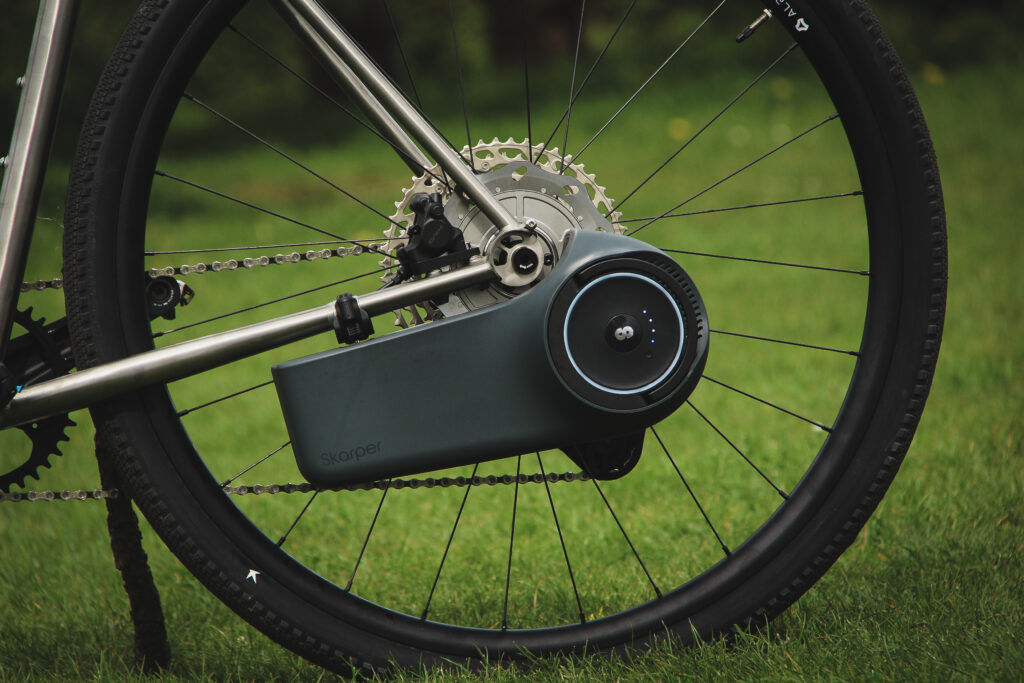
New e-bike conversion kit guidance issued by the government fails to properly inform consumers of the safety risks and responsibilities associated with the kits, while potentially legitimising the sale of non-road legal e-motorbike conversion kits, two of the UK’s largest cycling trade bodies have warned.
Last week, the Office for Product Safety and Standards (OPSS), the UK’s national product regulator, published its updated e-bike conversion kit guidance, which the government department described as the “latest step in addressing the risks of fire linked to unsafe e-bikes and associated products”.
The OPSS says its guidance aims to give greater certainty to businesses manufacturing and supplying e-bike conversion kits – which, as the name suggests, enable cyclists to fit an electric motor on their standard bike – by setting out the key safety issues that “responsible” companies should consider, in order to demonstrate that conversion kits can be used safely by their customers.
The guidance also reminds businesses of the “essential requirements” that must be met to supply a safe product, including having necessary product information and instructions for users and affixing product marking.
Though the OPSS has not created any new legal obligations concerning conversion kits, the guidance will support companies to comply with the requirements set out in the Supply of Machinery (Safety) Regulations 2008, while supporting enforcing authorities to identify and take action regarding any kits which don’t meet the existing regulations.
Conversion kits which adapt a bike so that its electrical assistance exceeds the legal cut-off speed of 15.5mph are also within the scope of the new guidance, despite such bikes being illegal to ride on the road.
The OPSS says it is sending a “clear message that such kits, combined with a pedal bike, are illegal to use on the road, even if they are safely manufactured products”.
> UK government could crack down on non-compliant bikes and high-powered conversion kits
However, in a joint statement issued by the Bicycle Association (BA) and the Association of Cycle Traders (ACT), the UK’s largest bike trade associations, the guidance was criticised for “falling short” of enabling consumers to “make a proper informed choice when it comes to e-bike conversion kits”.
In their statement, the BA and ACT emphasised that they are not opposed to e-bike conversion kits and are not calling for a ban on the sale of road legal kits. Both organisations contributed to the development of the new guidance, with some of their suggestions take on board and others, it appears, discarded or yet to be implemented.
According to the trade bodies, the shortcomings in the guidance mean that it “fails to ensure that consumers and retailers are properly informed of the safety risks, responsibilities, potential liabilities, and legal consequences they incur when fitting a conversion kit to a pedal cycle to create an e-bike”.
They also argued that it “risks legitimising the sale of non-road legal e-motorbike conversion kits, when these should have been declared as intrinsically unsafe”.
“It is surprising that OPSS takes this approach at a time when illegal use of non-road legal e-motorbikes, many created via conversion kits, is a major concern for communities and police forces UK-wide,” the organisations said.
By adopting “a regulatory view contrary to long established international understanding”, the guidance also had the potential to legitimise “without proper customer safeguards a ‘short cut’ route to the creation of less safe e-bikes based on pedal cycle frames, forks, and braking systems which were never designed or tested for e-bike use”.
“This in turn undermines the investments made in testing, product safety, and regulatory compliance by reputable suppliers of complete e-bikes, who thoroughly test complete e-bikes, as e-bikes, to demanding international standards,” the statement said.
It continued: “The published guidance covers only the duties of conversion kit suppliers, without consideration of the risks, responsibilities, and potential liabilities of people, businesses, or organisations who fit kits and thereby manufacture e-bikes.
“A person or business fitting a conversion kit becomes the manufacturer of the resulting e-bike in law but will normally be unable to satisfy the legal responsibilities this involves. We believe customers should be made aware of this pre-sale.”
The trade bodies also raised concerns that the guidance offers no new clarity for retailers who fit kits, pointing out that, according to their own shared advice, “if you supply parts and convert a bike or a scooter into an e-bike or e-scooter, you are legally responsible for its safety, and may be liable for any damage caused by any defect”.
“It is also a material consideration for purchasers that fitting an e-bike conversion kit will normally void any manufacturer’s warranty on the pedal cycle to which it is fitted,” the BA and ACT added. “The guidance fails to require kit suppliers to state this clearly pre-transaction.”
The statement continued: “The guidance assumes that it is generally possible for an e-bike created by adding a drive system to a pedal cycle to be ‘safe’ (as defined in product safety regulation), and that it is sufficient for the kit supplier to specify which type and condition of pedal cycle may be used.
“But no pedal cycle’s frame, fork and brakes were designed or tested for use as an e-bike, and certainly not for use as an e-motorbike. So safety when any pedal cycle is used as an e-bike after conversion can never be assumed. Nor should safety rely on consumers (even if guided by supplier instructions) making difficult or impossible evaluations of a particular pedal cycle’s suitability for safe conversion.
“We believe that it should as a minimum be mandatory to inform the customer pre-sale that fitting an e-bike kit to any pedal cycle means exceeding its original structural design and safety capabilities, and that structural and performance safety margins will be reduced in e-bike use. This would ensure that any potential conversion kit purchase is made in full awareness of these risks.”
When it comes to conversion kits which enable a bike to exceed the laws governing EAPCs, the bodies warned that the “structural safety and braking questions are even more concerning”.
“Such kits effectively add an e-motorbike drive system to a pedal cycle frame, fork and braking system which were never designed for use as an e-motorbike,” they said. “It should at the very least be mandatory for sellers to inform customers prominently pre-sale if an e-bike created via one of these kits will not be road legal.”
According to the two organisations, the guidance as it stands represents a missed opportunity “to go further by declaring such kits intrinsically unsafe”, referencing a recent case in Tower Hamlets where a retailer was fined for selling an ‘unsafe’ conversion kit.
Instead, the bodies warned that the current guidance risks “legitimising their sale by including non-road-legal kits in the scope of this guidance but omitting any safety warning about structural and braking risks”.
While reiterating that it is not calling for a ban on conversion kits, the BA and ACT argued that “by covering only supplier responsibilities in this guidance, OPSS in our view risks creating a strong and misleading impression that there are no extra risks or responsibilities worth considering as a result of fitting and using e-bike conversion kits to vehicles originally designed and tested only as pedal cycles”.
“We urged OPSS to also address in this guidance the regulatory position of complete e-bikes created from kits, and to clarify for example how it is possible (if it is possible at all) for the creator of a converted e-bike to comply with legal requirements for e-bikes which OPSS itself enforces (and which responsible suppliers of complete e-bikes invest heavily in satisfying, for their users’ safety).”
If it had addressed these issues, the groups said, the guidance could have ensured that potential customers are able to make a fully informed choice, based on mandatory pre-purchase information, between a safety-tested complete e-bike and a conversion kit, with its recognised “intrinsic risks”.