The 2026 UCI Gravel World Championships mark a significant moment for the discipline. For the first time, the champs leave Europe, having previously been held in Italy in 2022 and 2023, Belgium in 2024, and the Netherlands in 2025.
The move to Western Australia also feels significant for another reason. After several years of increasingly established European venues, Nannup offers something much closer to the type of terrain and riding that helped gravel become so popular in the first place: remote roads, natural surfaces, big distances, and a course that looks considerably less like a road race on gravel and much more like a genuine gravel event.
Nannup is a small town around 60km inland from the host city of Busselton and approximately 250km south of Perth. The championships are centred around the established Seven Gravel event, which has been held in the region for several years and has also served as an Australian qualifying event for the world championships.
It’s a very different setting from the previous editions, and that’s one of the things that makes this year’s race particularly interesting.
The course: bring on the climbing
Three courses have been set according to age and category, with the longest covering 144km and a huge 3,770m of elevation gain. That course is used by the elite men and male age-group riders from 19 to 49, with around 85% of the route on unsealed roads.
The middle-distance course covers 125km and 3,180m of climbing, with 84% off-road. It will be used by elite women, female riders aged 19 to 49 and male riders aged 50 to 64.
Even the shortest course, for the older age groups, is far from easy. At 90km and 2,050m of climbing, with 76% of the route unsealed, there is little opportunity for anyone to take the easy option.
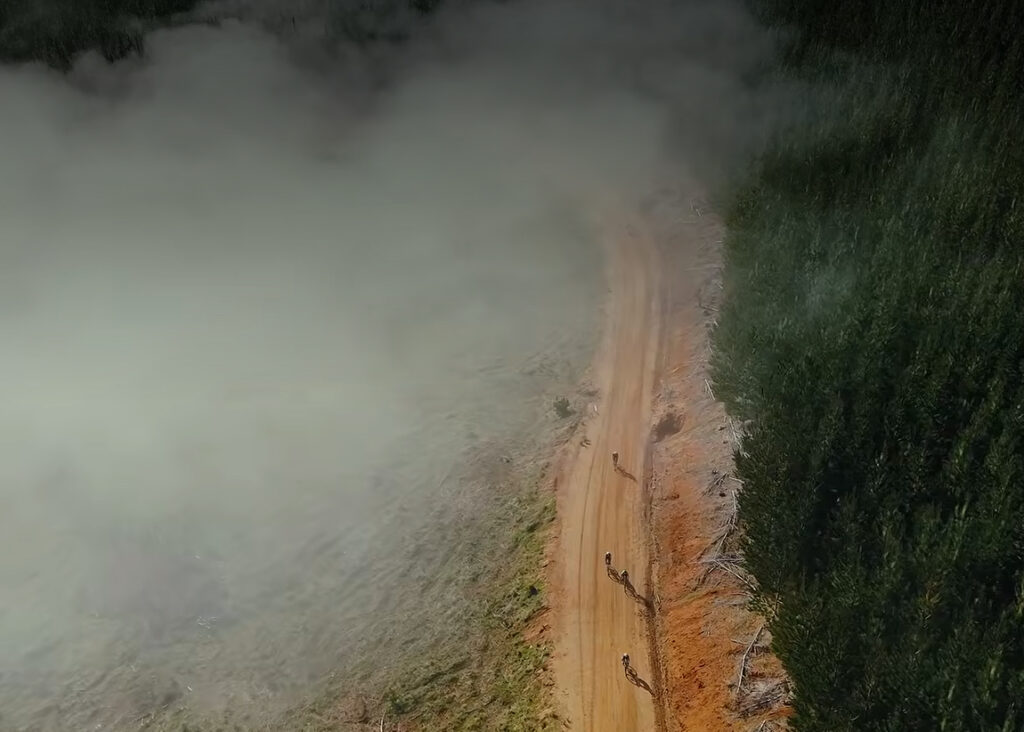
The routes look vastly different from those used for the previous world championships, with considerably more climbing and terrain that is much closer to what many riders would describe as ‘proper’ gravel. The roads are generally well formed, but the surface varies considerably, from dirt and red gravel to hard-packed clay, quartz, mica, and the infamous ‘pea gravel’. The routes wind through pine plantations, forests and farmland, with regular switchbacks, descents and climbs.
The climbing is particularly interesting. Rather than one or two major ascents to potentially decide the race, the elevation gain is built from a succession of climbs, generally between 1 and 3.5km in length, at relatively steady gradients. They are spread consistently throughout the routes, meaning there is little opportunity to settle into an easy rhythm for long.
Between the climbs, broad and well-surfaced gravel roads and flatter sections should give riders the chance to regroup, eat and drink before the next block of climbing begins.
This could make for a very different world championship race, with riders who can repeatedly climb hard potentially gaining an advantage over those who have traditionally excelled on flatter, faster gravel courses. And despite being in Australia, the weather may not provide the heat that some European riders might expect. Forecasts are currently looking relatively cool, with some rainfall expected before the event and temperatures in the mid-teens.
Could that play into the hands of European riders, and particularly the British contingent, who are perhaps more accustomed to cold, damp racing?
Who will be racing?
Reigning elite men’s champion Florian Vermeersch returns to defend his title, although Lorena Wiebes, the women’s champion from 2025, is not on the start list.
There is certainly no shortage of quality in the women’s field, however. Marianna Vos, Sofia Gomez Villafañe, 2025 European champion Erica Magnaldi, current Australian national champion Tiffany Cromwell, and Carolin Schiff are among the riders to watch.
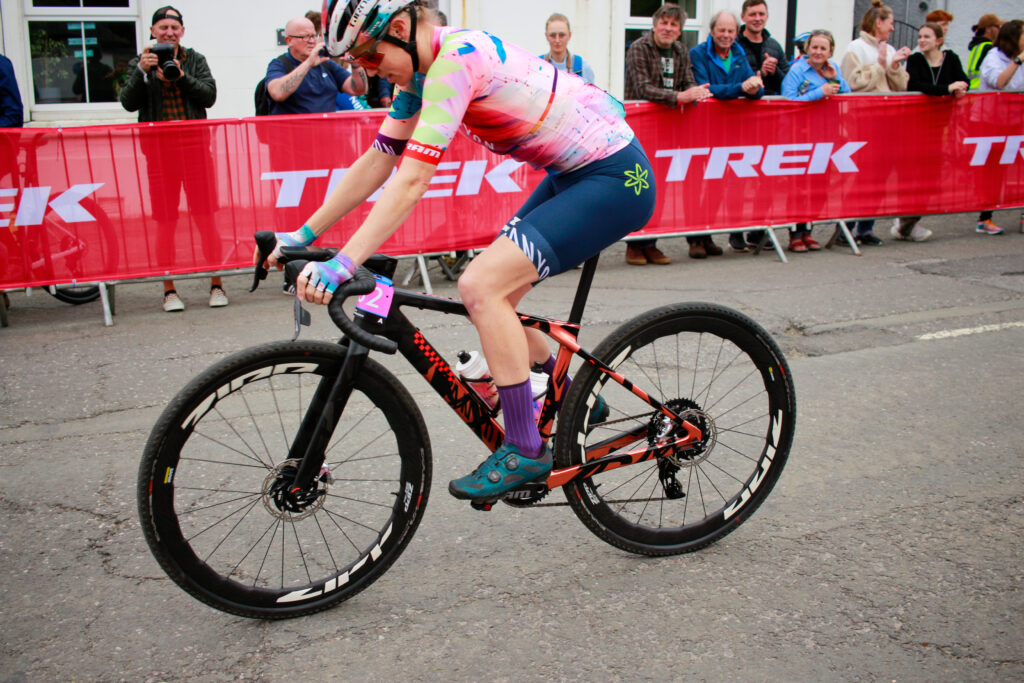
For Britain, current national champion Sophie Wright will be one of the strongest contenders, alongside Maddie Nutt, winner of the Traka 560, and Elizabeth Hermolle.
The men’s race looks equally stacked. Vermeersch will face some serious competition from riders including Matt Beers, Mads Würtz, Petr Vakoč and Henrique Avancini, the latter bringing considerable experience from the mountain bike world. There will also be plenty of home interest, with Mark O’Brian and Cameron Scott among the Australian riders to watch, two of 11 Australian riders lining up in the men’s elite field.
For Britain, current national champion Jenson Young, joined by Conor Swift and Travis Bramley, will be among the riders worth following.
The British challenge
It is particularly encouraging to see both current senior British gravel champions, Sophie Wright and Jenson Young, travel to Australia to test themselves against some of the best gravel riders in the world. Both race for Ribble Outliers, and they have demonstrated their ability on the international gravel scene. There is a genuine opportunity for British success here, particularly on a course that puts such a premium on climbing.
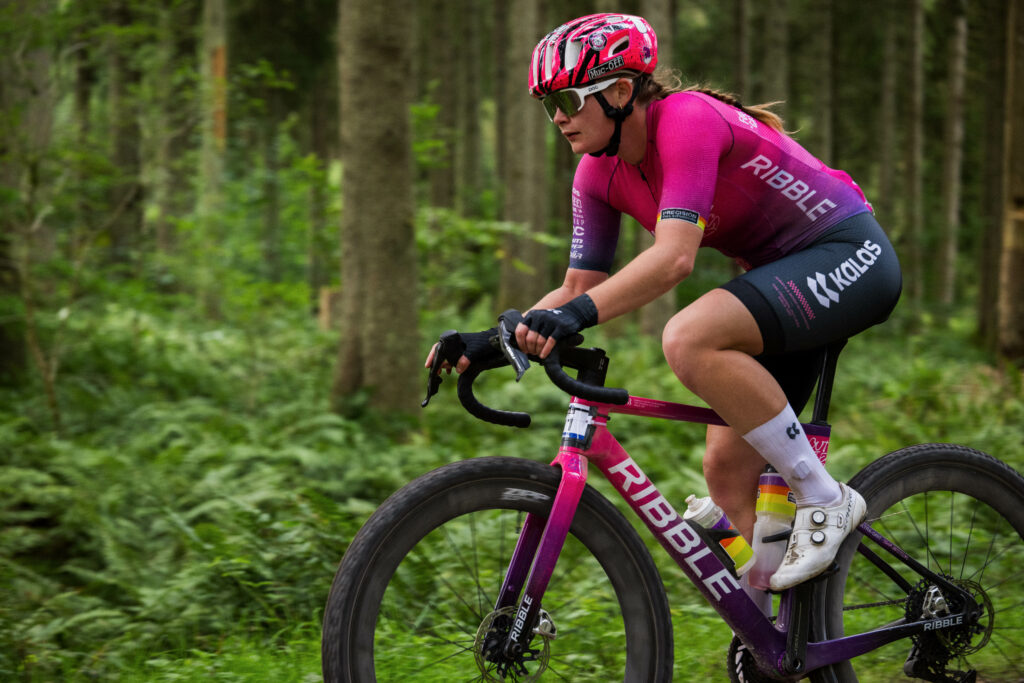
There is, however, an uncomfortable side to their participation. Despite Britain now having a recognised National Gravel Championships, and gravel having become one of the most popular disciplines in cycling, there is no support from British Cycling for the current champions travelling to represent Great Britain at these world championships. That feels like a missed opportunity.
The quality of British gravel racing has developed considerably, and riders such as Wright and Young have already demonstrated that they can compete internationally. A world championships held on the other side of the world is never going to be straightforward to attend, but greater recognition and support from the national governing body would surely help strengthen the position of British gravel racing.
With such a hilly course, both Wright and Young should be well suited to the terrain. After her extraordinary ride at the Traka 560, I suspect Maddie Nutt may also have been hoping to race the longest course and take on the same distance as the elite men, and who can rule out Netcompany-Ineos professional rider Conor Swift, who won bronze at the 2023 UCI World Gravel Championships.
The missing Australian
There is one particularly notable omission from the start list: Brendon Johnston.
The professional Australian gravel racer won Seven Gravel here in May, making him one of the obvious local favourites. Instead, Johnston has chosen to race Little Sugar in the USA, the penultimate event of the Lifetime Grand Prix, where he has the opportunity to compete for the overall series victory (with a $50,000 1st prize).
It is an understandable decision. The Lifetime Grand Prix offers significant financial incentives and career opportunities, while the UCI Gravel World Championships do not carry the same financial weight. But his absence is also revealing.
A rider choosing a US series finale over a world championship taking place in his own country perhaps highlights the growing divide between the UCI’s version of professional gravel racing and the established American gravel scene.
For riders trying to make a living from gravel, the financial incentives are inevitably going to matter.
A truly global world championships
Given the location in Australia, it is perhaps unsurprising that overall participation is down compared with last year. Even so, the size and international spread of the field remains impressive. A total of 48 countries are represented, with Australia understandably providing the largest contingent at 367 riders.
Great Britain has the second-largest representation, with 63 riders, followed by the USA with 58. That is notable given that the UCI has yet to take the worlds to the USA, where modern gravel racing arguably developed its strongest following.
The Netherlands has 50 riders and Germany 49, making them the next best represented European nations. There is also a strong presence from elsewhere in Asia and Oceania, with 30 riders from Japan and 21 from New Zealand, while China has a single representative.
For an event taking place in a relatively remote part of Western Australia, that is a genuinely global field.
Nannup and the South West: putting WA on the gravel map
Nannup and Busselton already have a strong connection with Australian gravel racing through Seven Gravel, but hosting the first UCI Gravel World Championships outside Europe is a significant profile boost for the entire region. From my own experience riding here before the event, it is easy to understand why.
The South West of Western Australia feels almost purpose-built for cycling. There are miles of superb gravel roads winding through an extraordinary landscape, while the nearby Indian Ocean provides white sandy beaches and a completely different backdrop.
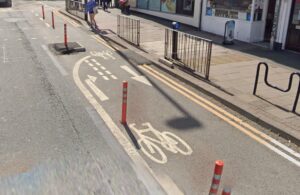
Cycling also appears to be well accepted locally. Cycle lanes are common on the roads, while waymarked mountain bike and gravel routes are spread throughout the region. There is a feeling that bikes belong here.
That combination of infrastructure, terrain and scenery makes it easy to understand why the UCI and Australian authorities have chosen the region for the championships. It also feels like the sort of place where gravel racing can continue to grow long after the world championships have moved on.
My own world championship race
For me, simply getting to Nannup has been something of an achievement. Following a turbulent race at the Gralloch, where I only just secured qualification, I find myself on the other side of the world with the opportunity to line up in a world championship event, albeit in an age-group category.
What I really want this time is a clean, uncomplicated race!

I’ve trained well and made this the second-biggest focus of my year, but I’m also realistic about what lies ahead.
The 40-44 age group is particularly intimidating. There are some big names on the start list, including former professional road riders who have moved into full-time gravel racing. Nico Roche, Johnny Hoogerland and Simon Richardson from the UK, with Richardson having already won the Seven Gravel in this age category. That’s a pretty serious level of competition for an age-group race!
My main goal is therefore simple: finish, enjoy the experience, and ride as hard as I can. If I can have a clean race, avoid mechanical problems and ride to my potential, a finish inside the top half of the field would feel like a realistic and satisfying result. And while the landscape is spectacular, I suspect few riders will be standing on the start line hoping for rain.
I will actually be one of the few, though. A wet and muddy world championship in the forests of Western Australia could just make this race a little more suited to me…