



One thing that distinguishes truly iconic brands is when their name becomes synonymous with their product type. Think Hoover for vacuum cleaner (at least before Dyson came along), or Tarmac for asphalt, or Biro for ballpoint pen.
In cycling, we have a similar phenomenon. For some people, Brompton can simply mean ‘folding bike’, a ‘Garmin’ could be any cycling computer and – when it comes to convenient hands-free hydration solutions – there really is only one name that comes to mind: CamelBak.
Born in 1989 with the Thermobak – an innovative backpack-style product with an integrated reservoir for on-ride liquid refreshment – CamelBak established itself as the leading light in hands-free hydration.
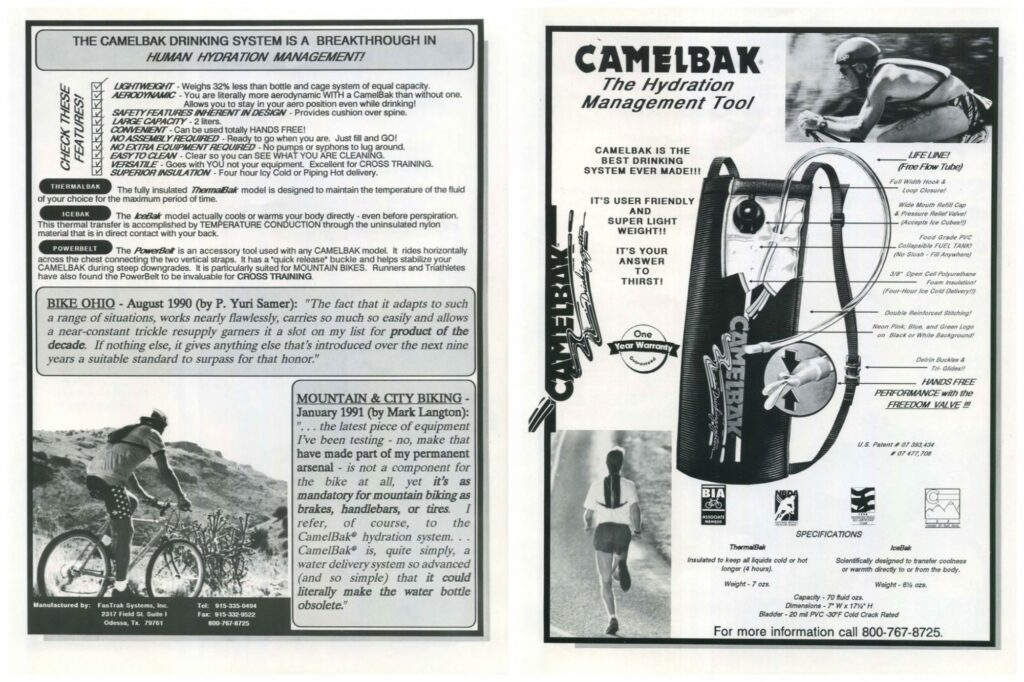
The original CamelBak products were primarily aimed at off-road riders, with the first dedicated MTB pack – the M.U.L.E – being launched in 1996 – and while CamelBak’s MTB provenance is famously strong, it’s a little-known fact that CamelBak’s founder was actually competing in road races and the 100-mile race Hotter‘N Hell – which still exists until today – when he first attempted hands-free hydration by using an IV bag in the back of his jersey, tube thrown over his shoulder, fixing it with a clothespin. So the brand’s real origin was in road cycling!
M.U.L.E users benefitted from three key details. First, they could keep their hands on the bars without needing to reach for a bottle to drink; second, the hose delivering the fluid to their mouth was unlikely to get as covered in mud as the cap of a frame-mounted bottle; and third, a hydration pack would never fall off when the bike took a big hit, as a bottle might.
However, even hydration packs had some downsides. As they grew ever larger with more features and greater carrying capacity, stability became an issue. So CamelBak simply revolutionised the market again, creating an entirely new category with the landmark Chase hydration vest.
Drinks for drop-bar riders
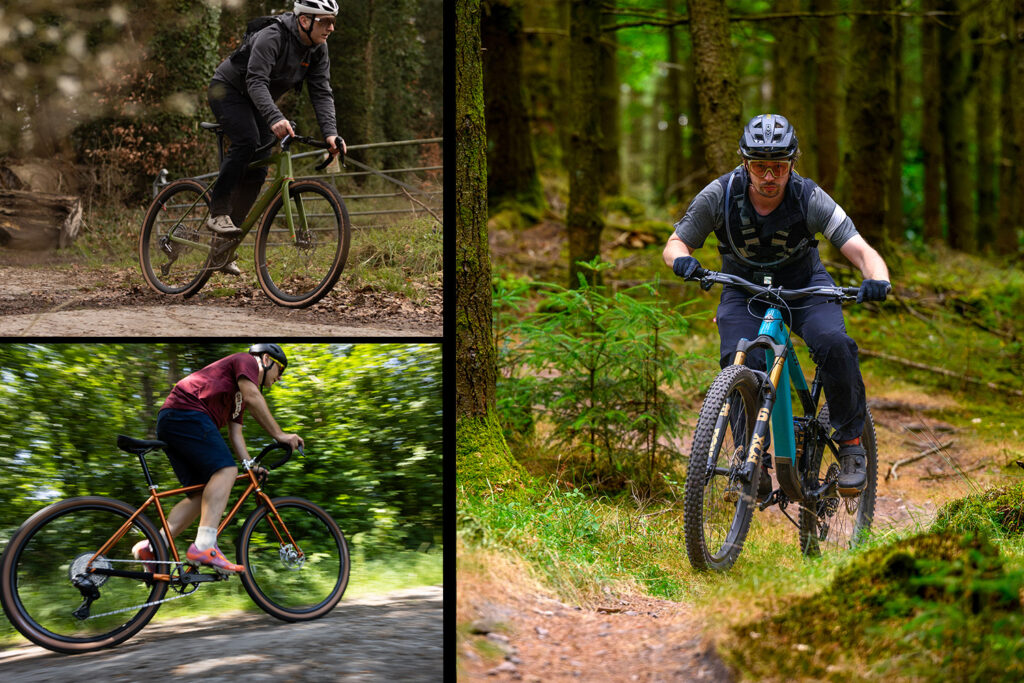
The proliferation of gravel cycling has seen drop-bar riders also enjoy trail adventures and appreciate the benefits of having a hydration pack or hydration vest rather than a bottle. But CamelBak has actually been a committed friend to traditional road cyclists since 2007, when it launched the now legendary Podium bottle range.
Over the years, the Podium name has incorporated some breakthrough bottle technology. From the classic standard Podium, there’s the Podium Chill with its double-wall insulation, and the even more cold-drink-friendly Podium Ice with its Aerogel Insulation keeping water cold four times longer than other bicycle water bottles.
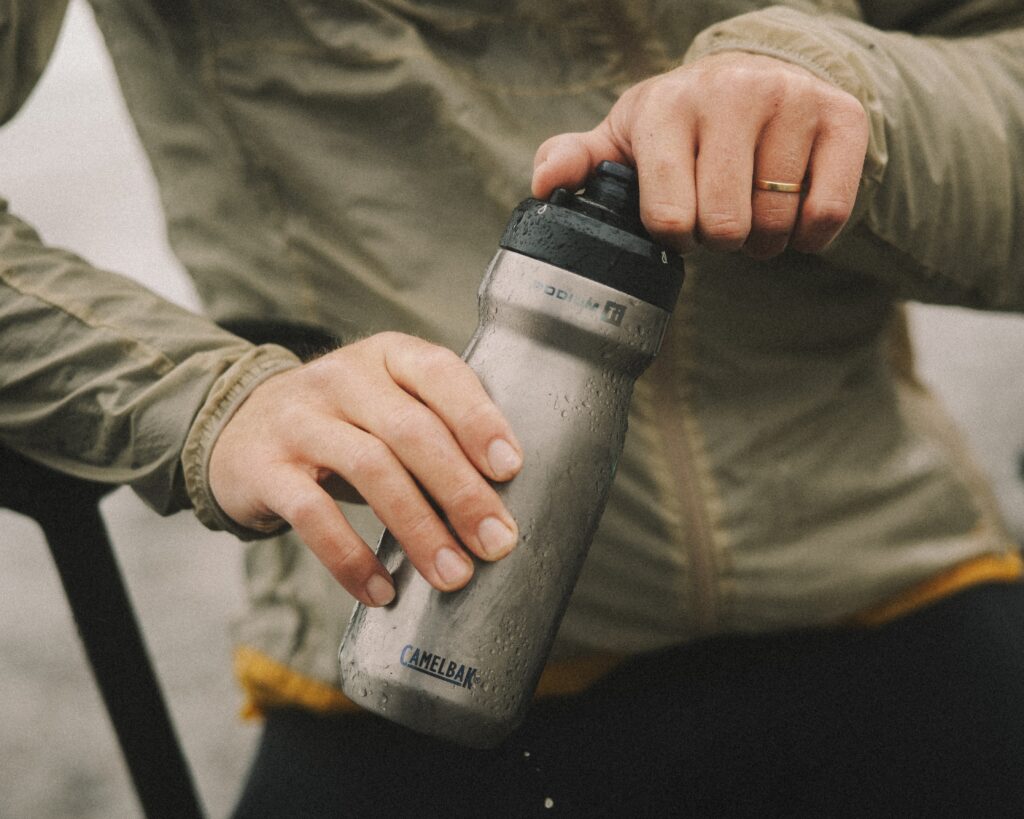
There’s also the no-nonsense Podium Steel – a double-walled, vacuum-insulated, ultra-tough dependable drinks bottle. And, if you want a truly premium option to match your premium bike, in 2024 CamelBak launched the Podium Titanium, weighing in at just 240g, made from ultra-lightweight and nearly-indestructible titanium, and able to keep a drink cold for much longer than you will sit on your bike.
Topping off of these incredible options is CamelBak’s exclusive self-sealing cap, with its full lock-out option. Riders can leave the valve open when on the bike – meaning it is spill-proof with liquid only flowing when the bottle is squeezed – but turn the valve to closed when storing the bottle in, say, a rucksack, making it entirely leak proof.
Professional influence
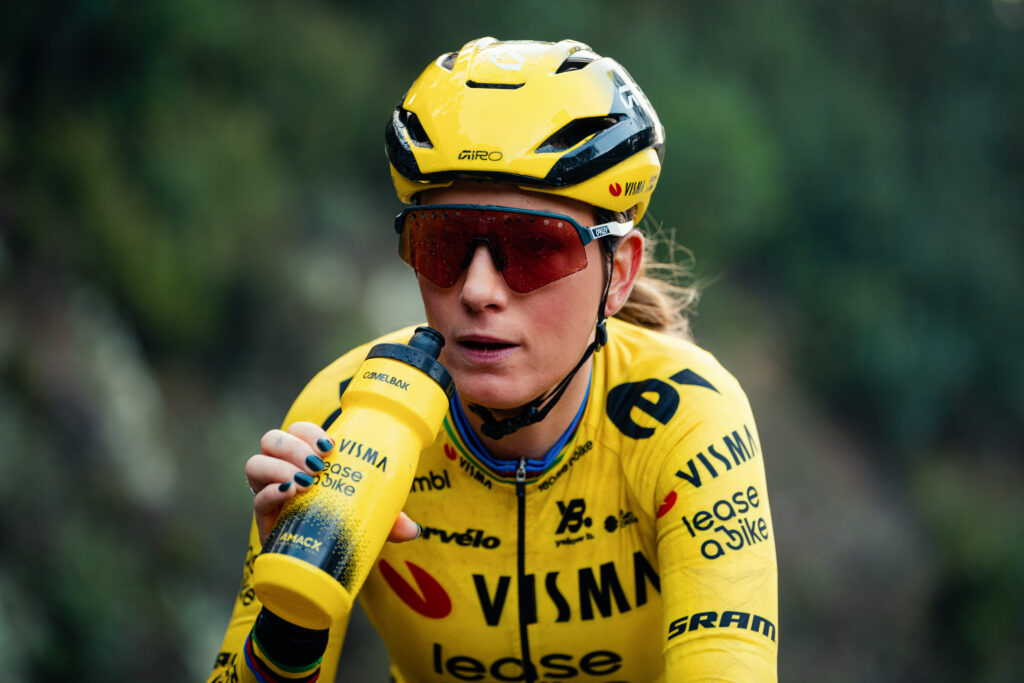
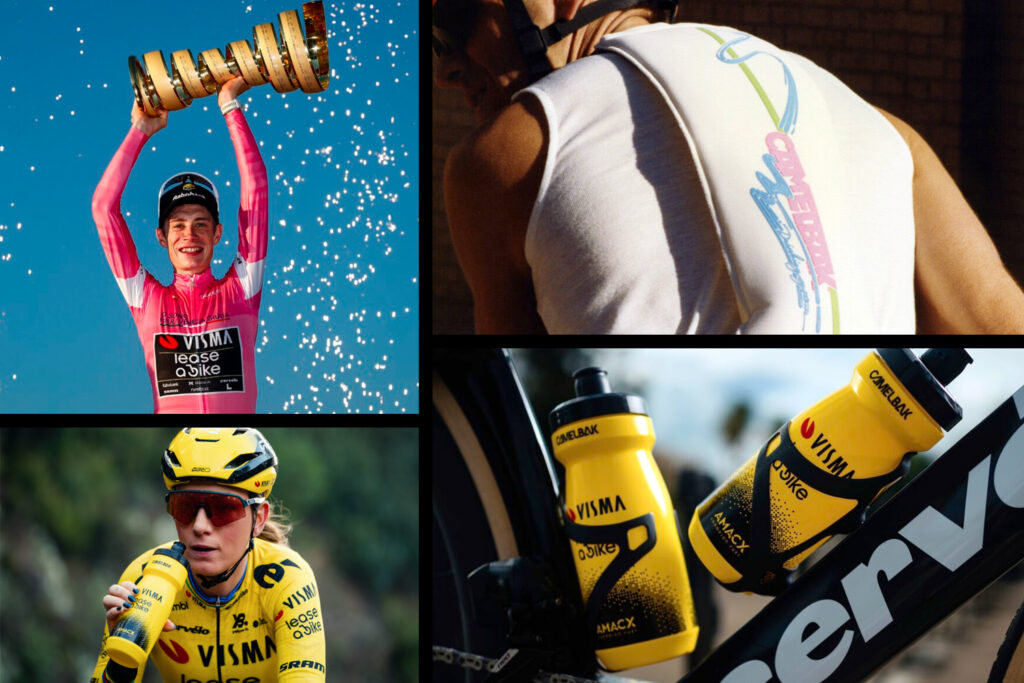
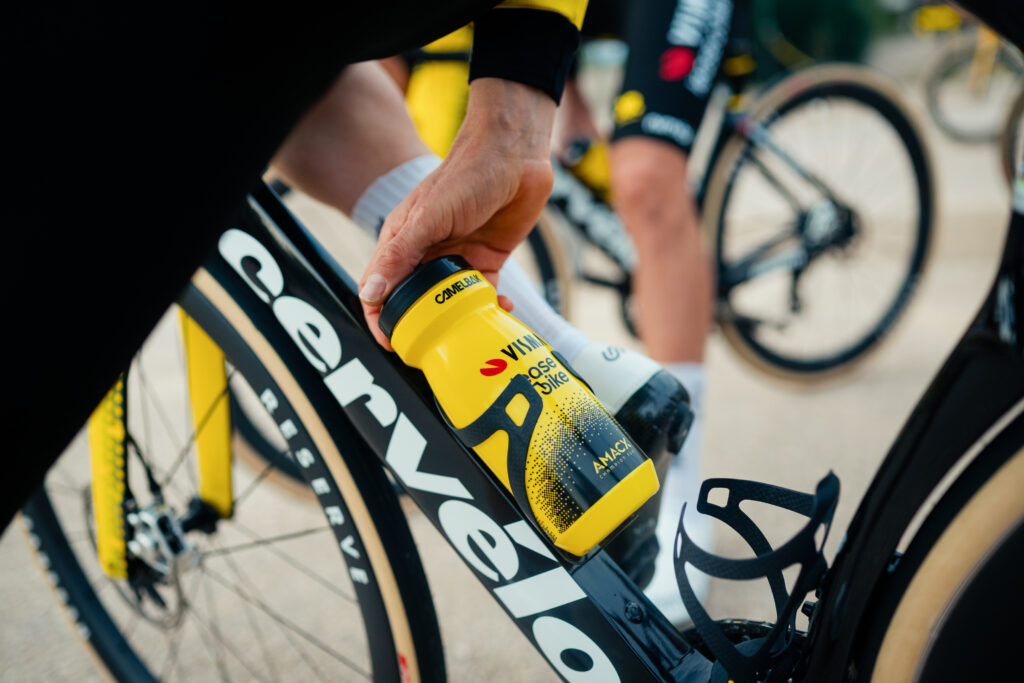
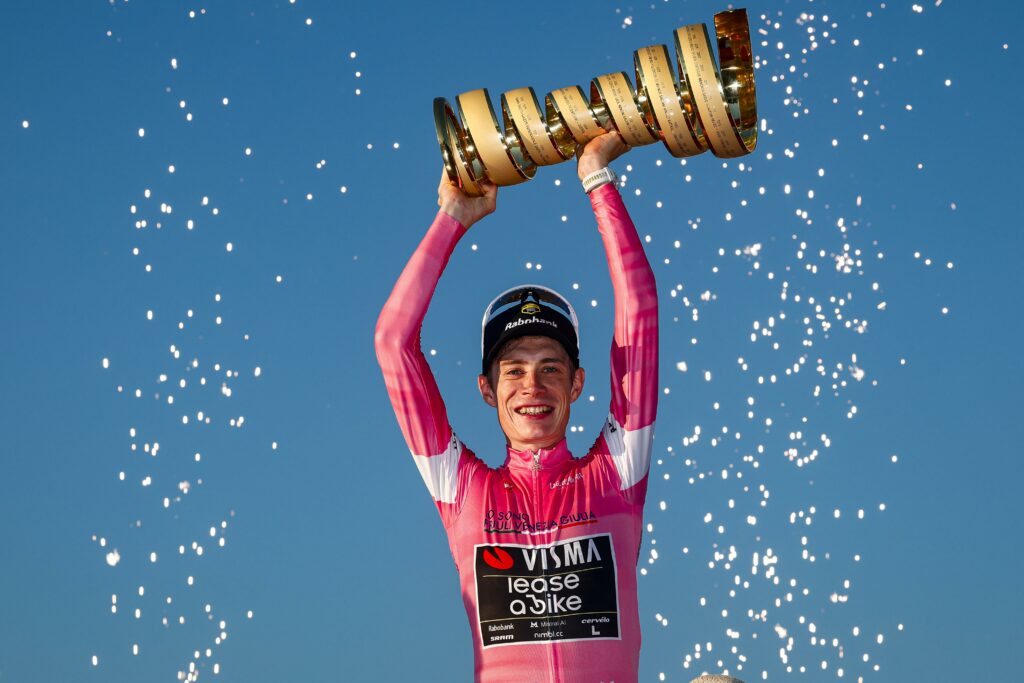
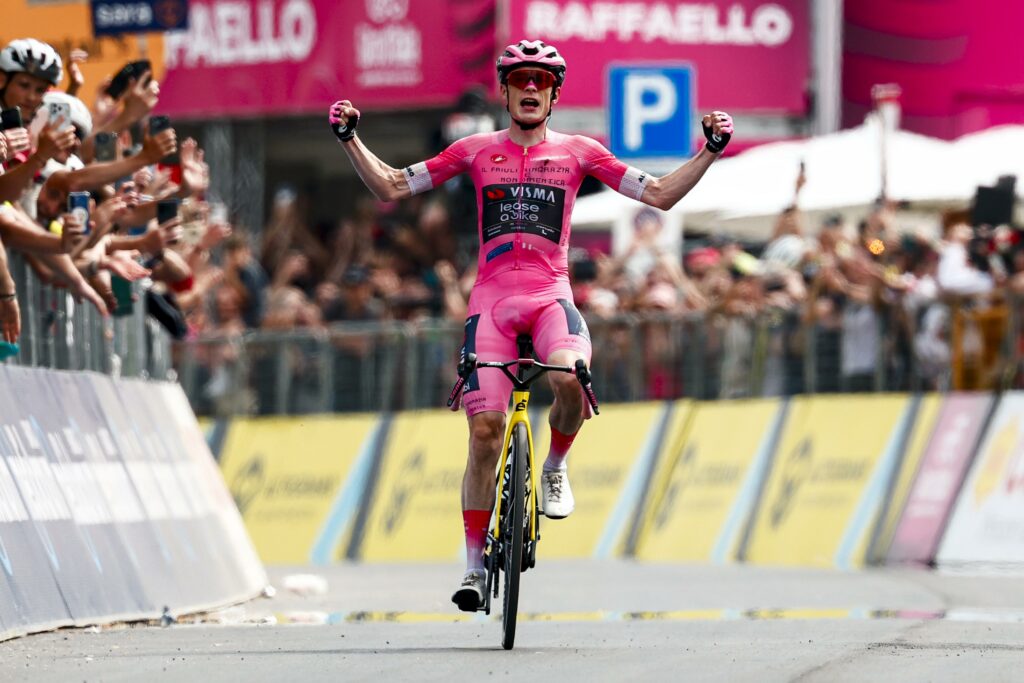
Such innovation isn’t created in a vacuum: CamelBak works alongside and serves some of the most demanding athletes on two-wheels. As well as sponsoring the Scott-SRAM MTB Racing Team, it also the official hydration solution provider for Jonas Vingegaard’s Visma-Lease a Bike team, helping hydrate the Dane to his Giro d’Italia victory earlier this year.
In fact, there’s even a Visma team replica Podium bottle and a limited edition Team Visma Tour de France bottle available. And CamelBak is currently deep in development, working with the Visma team to create a new Podium Race bottle, due for release in 2027.
“We work with the best athletes to really create the best products for the market. The Podium Race is going to be the lightest bottle in our range, but it’ll also be at the lower price point of the range, too,” CamelBak’s European Marketing Manager Jakob Ludwig says.
That leads us on nicely to the future. Ironically for a brand whose main purpose is to make a cyclist’s ride experience as comfortable as possible, and despite the fact CamelBak is comfortably at the top of the hydration solution market, CamelBak has recently made a determined decision to directly attack any idea of comfortable complacency.
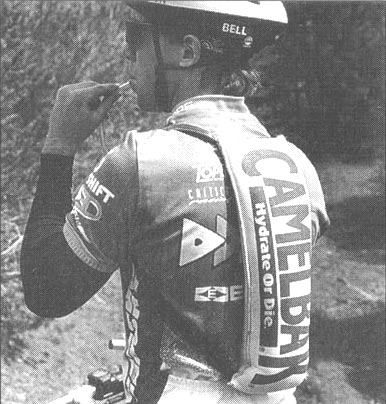
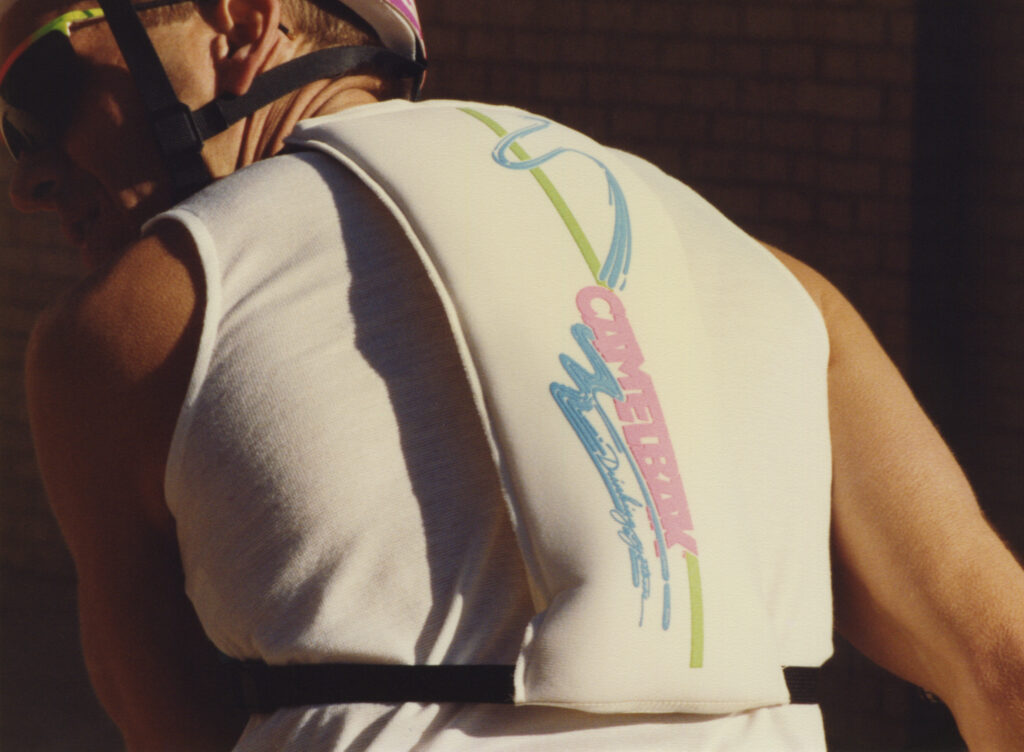
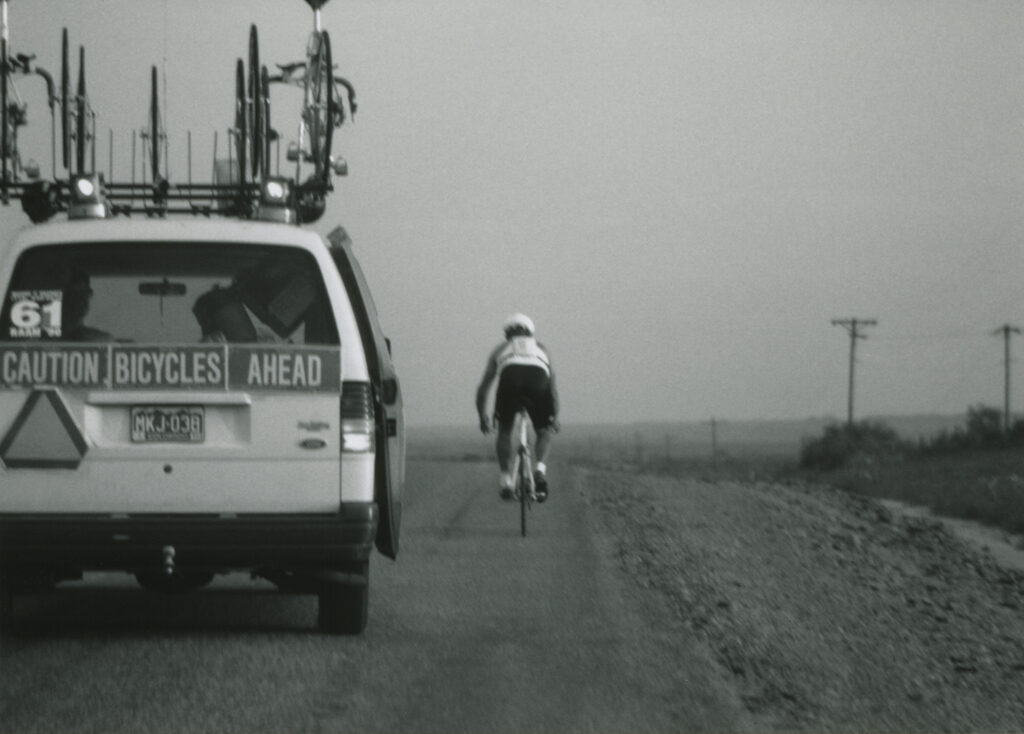
As well as rebranding with a new CamelBak logo; changing its retail model in the UK to include direct-to-customer sales via its website (camelbak.com); and a renewed focus on high-performance sport; for 2027 CamelBak is planning a complete overhaul of its hydration pack range.
“When it comes to design, shape, features, materials, all packs will be fully redesigned for 2027. And not only in cycling, also in trail running and hiking,” Jakob says.
“CamelBak is really going back to where it started, in terms of the performance focus. We’re removing entrance-level products and really focusing on better and best when it comes to materials, weight and performance of our products. We’re bringing back the tagline ‘Hydrate or die’, which we had in 1990s. That’s not to glorify risk; it defines the stakes in progression. CamelBak stands with athletes who push harder, go longer, and perform at their best – in competition and in the quiet work no one sees.”
Tomorrow’s options now
But you don’t have to wait until 2027 to take advantage of some of CamelBak’s exciting changes. In October, the brand is launching bottle customisation via its website, meaning customers can personalise their bottles through engraving or printing. So it’s not so much a case of get a CamelBak on your back, but get your name on your CamelBak bottle.
And for gravel riders, the future looks particularly enticing.
“Combined with our Podium bottle range, we think our 2027 vest and pack redesigns will mean CamelBak has the perfect option for any kind of rider,” Jakob says.
“Our mission is to be the essential hydration system behind human progress, removing barriers between the body and peak performance.”
To find out more about CamelBak’s full range of hydration solutions, visit camelbak.com.










14 thoughts on “CamelBak is completely overhauling its range for 2027 – here’s why the legendary hydration solution specialist is returning to its performance roots”
“We’re removing entrance-level products and really focusing on better and best”
…Oh they want USWE’s spot in the market. Shame I rather like my ~£50 rogue light. I wouldn’t pay 2x as much.
As we all know, proper hydration is crucial.
And this article is particularly hypertonic with BS.
Can we please keep it real?
I know (cycling) media has it rough, and I fully understand money needs to come in. But can we please skip the ‘Sponsored’ label, and the ‘by ROAD.CC TECH’ mention, pretending that this is somehow an editorial piece that is paid for? It’s an ad.
Just call it what it is. An ad.
Anyway, on topic; Camelback is making it sound as if cycling is their core market, which I highly doubt. They are huge in hiking, much used in (trail) running too, and also military use is big. Cycling is just one of their markets. So the same goes here: keep it honest.
Skip the hyperbole. That would be so refreshing.
@Sredlums The article was written by one of our writers, and we call that sponsored content. We’d call it a straight ad if Camelbak supplied the copy, but we don’t offer that for paid articles.
@Jack Sexty Well, gotta be honest, to me, it really doesn’t feel that way. Big parts of it are of course direct quotes from that guy from Camelbak (I quite like their products by the way, I’m not dissing on them), so that doesn’t help.
Anyway, just my 2 cents of course.
@Sredlums It says quite clearly that the article contains “paid promotion” for the product. That’s more than enough to let the reader know what they’re getting, in my opinion.
@Rendel Harris Yes, it does say that, and even if it didn’t, the whole vibe of the context makes that abundantly clear.
My point is, if it is so clear, then also just label it as such. But apparently an editor wrote this (could have fooled me), so technically it is indeed ‘By by ROAD.CC TECH’, I guess.
So, CamelBak are still owned by Vista Outdoors – the ammunition company that funds the NRA and school shootings?
I’d like to be corrected but I believe so. The firearm link was why I stopped buying any of their products.
@hawkinspeter Actually no, I looked this up when this question arose before: in 2023 Vista split its outdoor products arm and its firearms and ammunition arm into two separate entities, respectively Revelyst and The Kinetic Group, and the latter was purchased by a Czech defence manufacturer in 2024. Revelyst was purchased by a private equity firm in 2025, and so Camelbak are now completely free of any ties with Vista Outdoors or any arms manufacturer.
Yay!
Apparently they spun off the outdoor division and it was purchased by someone else. Only reason I got another one of their excellent chill bottles.
@ktache rendel beat me by two minutes. Grrr…
@Sredlums It says quite clearly that the article contains “paid promotion” for the product. That’s more than enough to let the reader know what they’re getting, in my opinion.