


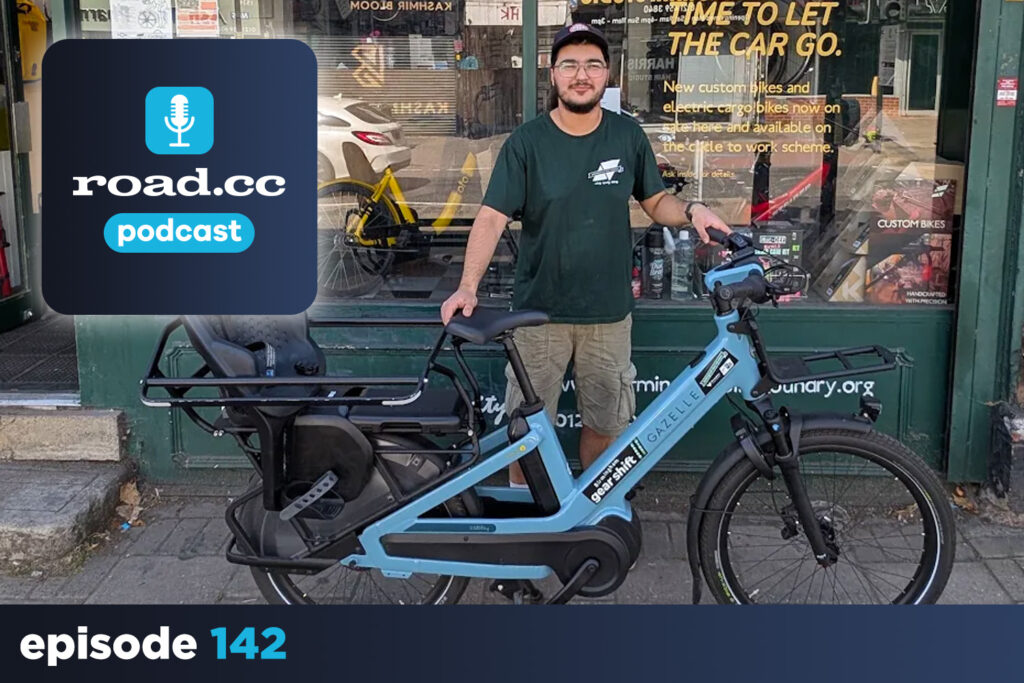

All it took was some absent-minded scrolling on the BBC’s website to crack the biggest e-bike mystery of 2026.
Listen to the road.cc Podcast on Apple Podcasts
Listen to the road.cc Podcast on Spotify
Listen to the road.cc Podcast on Amazon Music
For weeks, the staff at the Birmingham Bike Foundry had tried in vain to track down their Tern HSD S00 e-cargo bike, after it was seized from a delivery rider – and later destroyed – by the city’s police officers, who erroneously believed it to be a high-powered, illegal electric motorbike. And who carried out a bizarre, extremely flawed ‘test’ to prove that point.
The cyclist had been riding the e-cargo bike for a few months after renting it as part of Birmingham Bike Foundry’s Gear Shift scheme, funded by the city council in a bid to encourage more people out of their cars and onto bikes in Birmingham, when he was stopped by officers at the end of April.
The Tern e-cargo bike was seized as part of the force’s Operation FRISLEN, a “targeted initiative” aimed at “addressing the growing concerns surround the misuse of e-bikes and electric scooters in Birmingham city centre”.
After the rider informed the Birmingham Bike Foundry that their e-cargo bike had been taken, weeks of fruitless emails, 101 calls, and general chasing up resulted in a blank for the co-operative bike shop.
Until, that is, they stumbled upon a BBC article hailing the success of Operation FRISLEN – and spotted an image of their bike sitting amid a pile of illegal, super-charged machines.
“A big problem with the whole incident is that the rider wasn’t given any follow up, he wasn’t given a crime reference number,” Allama Munir, a co-director and mechanic at the Birmingham Bike Foundry, told this week’s episode of the road.cc Podcast, in which he gives a detailed account of the most bizarre cycling story of the summer.
“He wasn’t given details of the officer who seized the bike and he wasn’t informed which station it would be taken to, or how to get it back or anything like that.
“So it now became our job to try to track it down. That involved multiple calls to 101, emails to the police as well. We emailed several departments such as their partner agency’s department, or their lost property department, or even the West Midlands Police and Crime Commissioner.
“All of these turned up fairly fruitless for several reasons. One, because I don’t think there was a clear log of it on the police’s systems.
“And two, all of their systems are set up to deal with cars. So even the most well-meaning 101 call handler couldn’t proceed without having a vehicle registration number – it’s a bicycle, it doesn’t have a registration number. There was just so much back and forth.
“But the way that we actually ended up finding the bike is the BBC published an article about this Operation FRISLEN and we saw it. And there’s an image with a tow truck and just a pile of bikes on it. And what looked like our bike in the middle of the pile.
“So one of my colleagues looked on the side of the tow truck on the image to find out the name of the recovery agent and then managed to find their contact details and they were able to tell us who the officer was, or one of the officers involved was.
“It was just a ridiculously long-winded way to get in touch with them.”
By then, however, it was too late. The e-cargo bike – a legal machine rented out as part of a council-funded scheme – had been destroyed by the police. All because a group of officers turned the cranks around and recorded a speed above 15.5mph (the legal cut-off point for pedal assist bikes) and deemed it to be illegal.
“The rider was just told at the time that he can challenge it in court and that was it,” Allama says. “There was no other sort of possibility to convince them. And he really did try, you know, we could hear him pleading with them in the footage that there’s a mistake.
“He told them that it was part of a council funded scheme. He told them at one point that the motor wasn’t even on and they just did not care. They did not listen.”
Although the force initially stood by the decision to seize the bike and charge the cyclist (for riding without insurance, bizarrely), after the shop launched an appeal against the decision – and attracted quite a lot of media attention in the process – West Midlands Police finally relented.
The force apologised to the Birmingham Bike Foundry in July and said that is now exploring alternative methods of spotting illegal e-motorbike use.
The charges against the cyclist, which West Midlands Police initially claimed related to him riding without insurance, have also been dropped, with the force agreeing to reimburse the Birmingham Bike Foundry, a co-operative bike shop in the city, for the loss of the bike.
The force also said it would stop using the test carried out by its officers when the bike was seized, admitting that, while there was “no malice” in the officer’s actions, it was inaccurate.
But the fact that the test was used at all sits uneasily with Allama.
“It rings a few alarm bells just because the individual officers who conducted the test obviously did not create that test,” he says.
“So it leads us to wonder who created that test, how it got signed off. You don’t need to be a mechanic to recognise the invalidity of that test. I’m not sure how it got passed in the first place.
“The officers said there was no malice behind their intentions. And there probably wasn’t, they were just doing what they were told. But why design a test that’s fundamentally flawed?
“It just makes people question the intentions of the police as a whole, when people should be able to feel confident that they’re not going to be targeted wrongfully.”
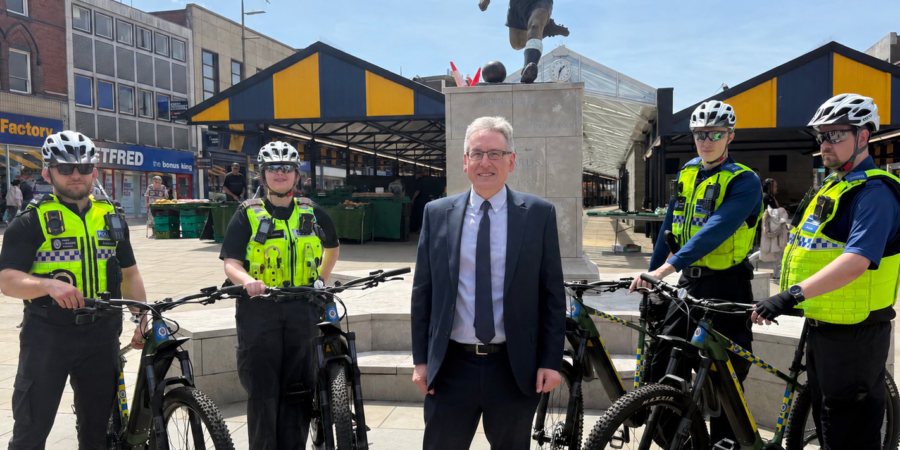
In any case, Allama believes the current crackdown on illegal electric bikes in general is misguided.
“There are a lot of misconceptions. There are a lot of grey areas around the law,” he notes. “I think the average person doesn’t necessarily know what the law says around e-bikes. There are a lot of these cheaper, imported, lower quality e-bikes that we’re seeing popping up more and more.
“But I just think there are perhaps bigger issues to tackle in Birmingham rather than people on e-bikes. It’s a big city, there’s lots going on. There are much more severe crimes that I think would probably be a better use of the police’s resources rather than tackling people who are looking to get around.
“Because nine times out of ten, if people are on an e-bike, whether it’s illegal or not, they’re usually not doing any harm. They’re just looking to get from A to B.
“It’s a car-centric city. The more people we have cycling, ultimately, the better. That doesn’t mean that there aren’t issues with certain e-bikes or people can ride in inconsiderate ways.
“Those things are definitely true. I just don’t think, in the grand scale of things, it’s high up on the list of priorities to tackle.”
The road.cc Podcast is available on Apple Podcasts, Spotify, and Amazon Music, and if you have an Alexa you can tell it to play the road.cc Podcast. It’s also embedded above, so you can just press play.
















8 thoughts on ““There are bigger issues to tackle than people on e-bikes”: How a bike shop turned detectives to track down a cargo bike wrongly seized and destroyed by the police”
Institutional incompetence leading here to institutional anti-cyclist bias.
Leading to us (the general tax paying population) paying up for their mistakes. £6,000 = 3 households annual council tax bills.
This is not only about the bike and the test – even basic Police procedure has been ignored
The “accused” was not given a crime number and was not told the Police Officer’s identity
and if he “would have an opportunity to challenge it in court” then the bike is evidence – but they sent it off to be crushed.
So if he did say he was going to challenge it and wanted an independent test on the “vehicle” then they are stuffed
it is like a murder scene destroying a gun before the trial – it is just against the whole concept of justice to destroy evidence before the “accused” has a chance to challenge it
Any Police Officer should have seen this – I reckon the “it was a standard procedure” is just there to protect this officer who conducted a dumb test to confirm what he thought rather than check what he thought was right
In my professional and personal life, I’ve had quite some experience with police accountability and complaints procedures. Which all seem designed to obfuscate, obscure, delay and generally avoid actually improving the standard of policing. That’s why I’m never surprised at a Wayne Cousins case, and the myriad more local issues that never reach national headlines. There is an amazing amount of stupidity, arrogance, prejudice and much else in local policing, and a corresponding amount of “fobbing off” rather than addressing issues in the local and national complaints system.
Not that bizarrely, given that they thought it was, in effect, a motorbike.
This is the bit that doesn’t add up for me. Council scheme, so surely he was insured? And also, if he was told he was going to be prosecuted, surely he must have been given paperwork by the police? And that paperwork must have some trackable reference?
Total mess all around.
I once had similar with insurance on my van. Luckily, I had a photo of the policy document on me. Then realised later it was the previous year’s! Tried to contact the officer, and she didn’t exist!? The other 3 officers denied her presence, though she was clearly in charge… Very, very odd. And nothing ever came of it. (Yes, real police, etc in 2 marked cars, hard stopped in broad daylight!)
As I said in my comments at the time:
-“the force has continued to provide little information about their testing procedures and the reasons behind them”
Either there is proper guidance/training in place or there isn’t.
So if there is then the officers in question ignored it or, as seen in the clip, the guidance and test is flawed.
The police force should be sued for this (alongside other similar cases) and if it is the first option (proper guidance in place) then the officers in question should face serious disciplinary procedures.-
and
-“West Midlands Police is exploring alternative methods of spotting illegal e-motorbike use”
So, per my comment on the original story yesterday, they had no formal guidance/training/policy in place.
This is such a waste of taxpayer money due to the cost of having police in a role they aren’t adequately trained for and the cost of compensating for the destroyed legal bike.
How many others have faced this and will also be able to claim the cost?
The only thing missing here is the user suing the police for distress and loss of income.
But given all these costs are bared by the taxpayer, there should be actual consequences for the police force staff that let themselves get in this situation in the first place.-
The police attitude is destroy the bike as quickly as possible to block anyone from challenging them. I bet a lot of perfectly legal ebikes have been destroyed.
The police should let people on ebikes alone and only stop and check them if the riders are behaving badly or wearing clothes with the intention of hiding their identity. Those are the one’s either running round dropping off drugs or snatching people’s phones and bags.