


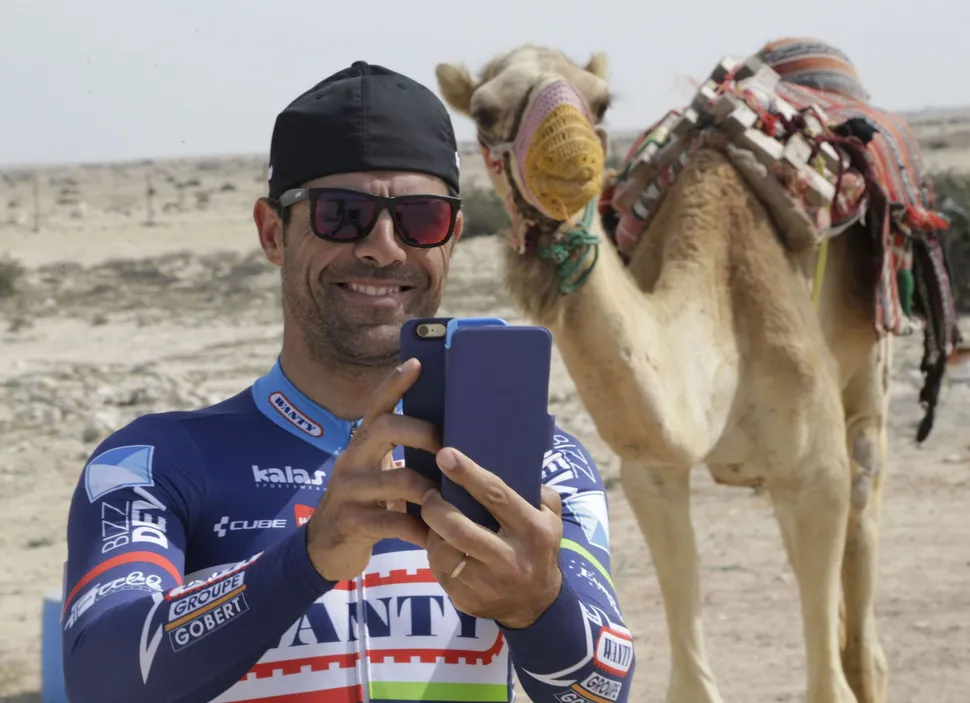

UAE Team L’Imad says it was unaware of freelance staff member Danilo Napolitano’s doping links, after the retired sprinter was handed a 20-year suspension this week for possessing and administering performance enhancing drugs to one of Italy’s leading junior teams.
Napolitano raced professionally between 2004 and 2017, winning a stage of the Giro d’Italia in 2007 and three editions of the Coppa Bernocchi. The Italian sprinter’s best results came during his three seasons at Lampre, the squad that would later morph into UAE Team Emirates, from 2006 to 2008.
Following his retirement, Napolitano became a sports director at Salus Ciclistica Seregno ASD, one of the leading development squads for junior riders in northern Italy.
In April, the 45-year-old, along with the club’s president Marco Moretto, was provisionally suspended by Italy’s National Anti-Doping Tribunal for their involvement in doping at the under-18 team.
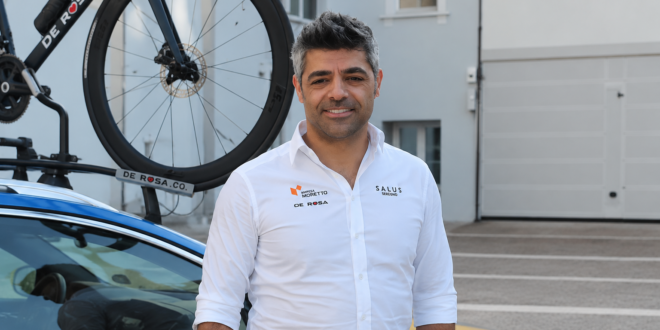
Napolitano was charged with violating articles 2.6 and 2.8 of the WADA code, involving the possession of a prohibited substance and the administration, or attempted administration, of a prohibited substance to an athlete.
Moretto, meanwhile, was alleged to have breached articles 2.9 and 3.1, related to complicity in a doping violation and the applicable standard of proof.
Following the provisional suspensions, a legal representative for Salus Ciclistica Seregno ASD said the club had already taken legal action against Napolitano “in the relevant venues, for the protection of the ASD and its members”.
The representative also claimed that documents obtained by the club and related to the anti-doping investigation “clearly establish Mr Moretto’s complete non-involvement in the contested practices”.
> Is the Tour de France becoming too fast?
However, NADO Italia revealed this week that both Napolitano and Moretto have been banned from the sport. While Moretto has received an eight-year suspension, banning him until 7 April 2034, Napolitano has been handed a 20-year ban, ruling him out of cycling until April 2046, when he’ll be 65.
The sanctions were simply published on the Italian Cycling Federation’s list of anti-doping bans, while NADO Italia are yet to release any details about the bans. The WADA code states that anyone involved in doping a minor should receive a lifetime suspension.
road.cc understands that Napolitano began working at UAE Team L’Imad’s service course late last year in a freelance, self-employed role.
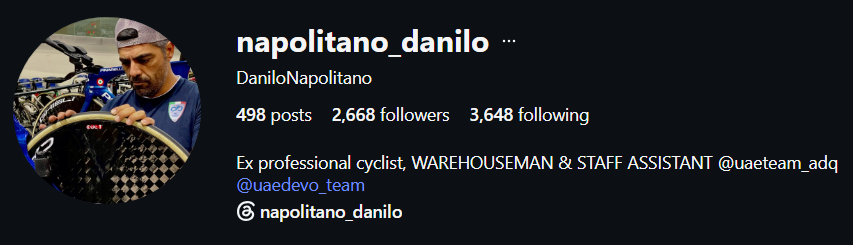
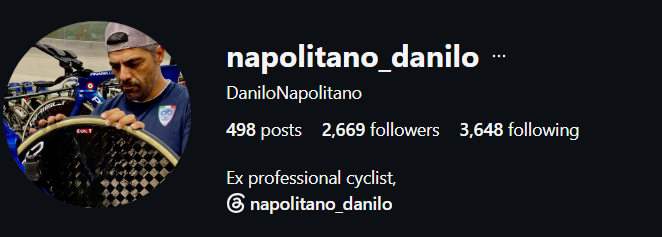
According to his Instagram profile, Napolitano described himself as a “warehouseman and staff assistant” at the leading women’s squad (formerly known as UAE Team ADQ), which includes Italian star Elisa Longo Borghini, Irish sprinter Lara Gillespie, and Britain’s Elynor Bäckstedt, and its related junior development team.
However, since road.cc contacted UAE Team L’Imad about Napolitano’s role in the team, the 45-year-old has removed all reference to the squads from his social media page.
road.cc understands that the squad’s management was unaware of Napolitano’s connection to the anti-doping investigation taking place in recent months, with one source emphasising that the case in question predated his involvement with the team.
We were also told that he has not been in contact with the team at any races this season, though it is believed that he continued to work for the squad while the case was ongoing.
The source claimed that the squad only found out about the case as they travelled to Switzerland for the start of the Tour de France Femmes on Wednesday. There is no indication of any wrongdoing on UAE Team L’Imad’s part.
Napolitano’s brother Massimiliano works for the men’s UAE Team Emirates squad, where he has served as a soigneur for over 20 years, since the team’s Lampre days in the mid-2000s.
A spokesperson for UAE Team Emirates, fresh from their fifth Tour de France victory courtesy of Tadej Pogačar, told road.cc today that the younger Napolitano has never worked for the men’s team, which operates as a separate structure to the women’s squad.








2 thoughts on “UAE squads ‘unaware’ of ex-pro cyclist’s drug links after 20-year ban for doping Italian junior team”
My personal theory is that this is how modern doping happens; do all of the performance enhancement early on and train hard on top of that – the boost will allow you to reach heights that would otherwise not have been attainable. After that it is all about maintenance and minor improvements, likely achievable after the pharmacological crutch has been removed.
From this story it seems the spectre of doping will continue to hover over professional cycling that little bit longer. No other sport seems to have been affected in quite this way.
@C3a Sadly, you are not far off the mark. I know of two instances where promising junior riders “stopped” racing; they didn’t disappear, just did not attend races, were still doing all the training and then came back a couple of years later at 18/19 year olds and were starting to destroy races. You don’t find them racing anymore, and the “bans” are not listed anywhere. I guess the same as any individual riders in this case would not be listed anywhere because of their age.