



Two police forces in Wales have continued not to take action on video footage of close passes submitted through Operation SNAP.
Last July, GoSafe, the country’s road casualty reduction partnership, announced it was not taking action on submitted close passes due to guidance issued by the National Police Chiefs’ Council.
GoSafe interpreted the guidance as suggesting that distance measurements in Operation SNAP videos must be investigated by trained forensic specialists, in line with standards set by the Forensic Science Regulator.
However, the regulator told road.cc it “has not issued any national guidance on the topic, and certainly nothing that would suggest forces suspend taking action on evidence submitted to Operation Snap for the purposes you outline.”
The net result of this confusion was police forces in Wales no longer issuing warning letters to drivers who dangerously overtake cyclists, pedestrians and horse riders, despite there being no formal policy change.
Last week, two road.cc readers got in touch with their own submissions to Operation Snap detailing the responses they received from different forces in Wales a year on from the guidance being introduced “for the foreseeable future.”
One reader shared a generic response received from South Wales Police,
“As we are unable to measure the distance of the pass to meet the evidential threshold required to prove the offence at Court and there are no other factors such as vehicles oncoming or exiting junctions we are unable to prove the offence of driving without due care and attention beyond all reasonable doubt.
“Operation SNAP has become so successful that the team is no longer able to manage the demand submitted by the public. We are in the process of reviewing the operation to ensure that it remains efficient and effective. Therefore, until further notice, we will not be able to take any further action in cases that would previously have been dealt with by an advisory notice (warning letter), such as this case.”
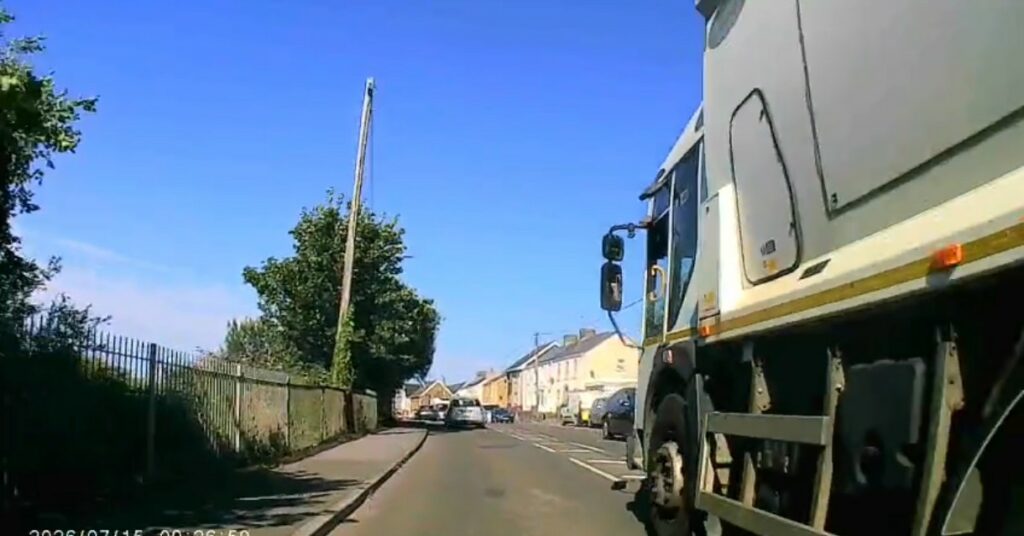
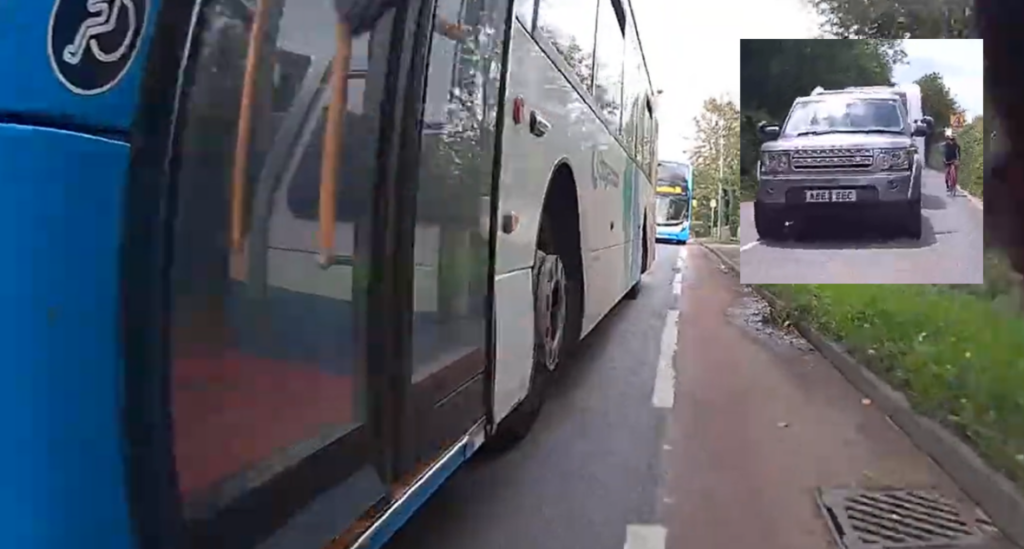
Meanwhile another reader who submitted a report to Dyfed-Powys Police, covering mid and south-west Wales, received a strangely curt response to footage of her being close passed by a driver of a bin lorry:
“CANNOT SEE ANY PART OF BIKE IN VIDEO TO GAUGE AND RECENT FORENSIC GUIDELINES INSTRUCT NO CLOSE PASS AS CANNOT SAY DISTANCE”
In response, our reader writes, “This seems so strange to me – not least because most videos I’ve submitted before haven’t had any parts of my bike in or any other bikes and they’ve had action taken. Most cameras won’t get part of the bike in either,” before adding that this was her first submission to Dyfed-Powys Police having previously submitted footage to other forces.
“It wasn’t as close as some that I’ve had (although it WAS a bin lorry passing me uncomfortably close while there was oncoming traffic) and I half expected them to say sorry that’s not close enough, but I’m really perplexed by this response.”
On their website, GoSafe say Operation Snap “will investigate offences of Dangerous Driving, Driving without Due Care and Attention, Careless Driving, using a mobile phone, not wearing a seat belt, contravening a red traffic light, contravening solid white lines, and other offences where the driver is clearly not in proper control of the vehicle.”
Among the listed frequently asked questions is whether Operation Snap can deal with growing demands, to which GoSafe say, “It’s easy for people to engage in Operation SNAP and processes have been designed to run smoothly. Operation SNAP has one desired outcome. That is making our roads safer.”
> Police receive record number of camera submissions in 2025… most of them from cyclists (again)
However in a press release issued following last year’s controversial guidance, the partnership also confirmed that GoSafe staff do not hold the “specialist forensic accreditation” required to investigate close passes.
“For this reason, we temporarily suspended acting on evidence submitted whereby pedal cyclists, horse riders and pedestrians felt that a vehicle had passed them too closely, without any other aggravating factors present or corroborating evidence present.
“Whilst we cannot forensically analyse speed or distance, we did not discourage people from submitting possible offences. This remains true and Operation Snap continues to review these submissions.”
However, with fewer investigations carried out and drivers in Wales no longer receiving warning letters, the outcome of these investigations are unlikely to result in action being taken.










55 thoughts on “Police say “Operation SNAP has become so successful” as they continue not to investigate close passes without being able to measure passing distances”
Someone needs to tell these police forces that “beyond reasonable doubt” does not mean “with absolute certainty”, especially when the penalty is a minor fine or, more likely, an education course.
@HoarseMann Oh I can assure you that plenty of passes can be proved with absolute certainty to have been illegal purely from generous guesses on the size of cars and the size of lanes. Lets say you drive a 2m wide car that takes up 2/3rd of a lane in a video. Someone with a basic grasp of maths would be able to tell you that you couldn’t overtake a cyclist without moving into the opposite lane even if the cyclist was 0cm wide and somehow riding on the very edge of the road where it meets the pavement.
Someone with a basic understanding of maths would be able to tell you that unless the car was 1.5m or less wide on a 3m wide road, its impossible to overtake by staying on your side of the road with 1.5m space even if the cyclist took up 0 space.
They simply don’t want to do anything about it. Its got absolutely nothing to do with holding up in court because that wouldn’t be an issue in a huge number of cases and they know it. No one in their right mind would go to court to contest it.
@mctrials23 totally agree, I think the problem is perhaps finding a police officer these days with a basic grasp of maths – or at least the authority to deploy it without being bestowed with the title of “trained forensic specialist”.
@HoarseMann Beyond a reasonable doubt doesn’t mean absolute certainty, but it is a very high bar and the likely sentence doesn’t change that. The reason the videos have to be reviewed by a trained forensic specialist is that they need to be able to testify as an expert witness in court should the ticket be challenged. If it only requires very basic maths that even a magistrate can be expected to do, the video might be enough on its own, but if there is any significant analysis needed then you need an expert witness with the necessary credentials to prove their expertise.
@mctrials23
Agreed.
I was requested to attend court as a witness for a close pass, given the driver refused to accept the FPN and that his driving was dangerous.
The prosecutor went through the video evidence bit by bit which showed my helmet, handlebars etc in relation to my and my bike’s position on the road compared to where the vehicle was at the point of the close pass and along with asking the driver about the relevant highway code rules.
Without having a measure tape, he was clearly closer than he should have been and the magistrates took only a few minutes to deliberate and find the driver guilty.
@HoarseMann It’s not even the correct test, the test should be that there is a realistic prospect of conviction. Specifically:
“that an objective, impartial and reasonable jury or bench of magistrates or judge hearing a case alone, properly directed and acting in accordance with the law, is more likely than not to convict the defendant of the charge alleged”
https://www.cps.gov.uk/publication/code-crown-prosecutors
Yes, but the two interact – to prosecute, the CPS must be satisfied it is more likely than not that a magistrate / jury will convict; but to convict, the magistrate / jury must be satisfied beyond reasonable doubt that the offence was committed. So CPS needs to be 51% sure that a jury will be 99% sure.
A while ago I spoke to a team leader for the Met police’s unit that deals with dangerous driving reports.
They said that the Met police seniors spoke to court/prosecution staff to find out which cases were most successfull, to work out which reports to prioritise/NFA as they are now getting too many to handle in a timely manner.
I think this might have been after the 2022 highway code update and the answer was phone use given it is pretty much a slam dunk with good evidence.
So I guess Wales police are basically taking this approach to the nth degree.
I spoke to a TVP prosecutor many years ago. He said, he played my footage to the court and heard a gasp from those present. He knew then that he had won.
@mitsky the answer was phone use given it is pretty much a slam dunk with good evidence
Not in Lancashire it isn’t- HHMP offences are routinely ignored
ttps://upride.cc/incident/ld71uom_amazonprime_handheldmobilephone/
HoarseMann, Beyond reasonable doubt means precisely that. If a witness statement mentions a distance “he was less than a metre from me” then the prosecution needs to be able to prove beyond reasonable doubt that the distance was less than a metre. Can’t do that, then no conviction. It’s a function of us not having a minimum passing distance law in the UK, the highway code gives a guide figure but certain cycling accounts push for this as an absolute figure which it isn’t. This mena that the more precise people try to be in statements the less chance they have of a successful prosecution. It’s a case of being careful what you wish for.
That’s… not right. The prosecution has to* prove beyond reasonable doubt that the offence was committed, but not that every single detail of statements made by their witnesses is accurate. And HoarseMann is correct that it doesn’t mean the same as “with absolute certainty”, otherwise it would be “beyond *all* doubt”.
[* More accurately, should have to. In practice, when it comes to offences against cyclists, the system often does seem to demand that it’s proven beyond unreasonable doubt as well, but that’s not what the standard is supposed to be, or what’s applied to other offences. ]
@mdavidford Exactly this.
TWW didn’t claim there was a need to prove every detail of the statement, just that it was necessary to prove the passing distance beyond reasonable doubt
I prepare evidence for prosecutions and BRD is effectively ‘without doubt’. This arose because judges used to send people to the gallows for stealing loaves of bread. They wanted to be certain that they were right.
@RayG “TWW didn’t claim there was a need to prove every detail of the statement, just that it was necessary to prove the passing distance beyond reasonable doubt”.
But is that correct? Or would it suffice if the prosecution can prove beyond reasonable doubt that it was some other distance that nonetheless fell short of the required standard of driving?
Poorly written. They have to prove it was less than 1m. It’s 5 am here
Um, they literally did claim that there was a need to prove it *if it was in the statement*:
In any case, they don’t need to prove that it was less than 1 m (or 1.5 m, or any other specific distance), since that’s not an offence; they need to prove that it was driving below the standard of a careful and competent driver.
As I said, *in practice* it often seems that a higher standard of ‘beyond all doubt’ seems to be being demanded, but that just backs up HM’s original point: that’s not *supposed* to be the standard, so where it’s happening, something should be done to correct it.
“The net result of this confusion was police forces in Wales no longer issuing warning letters to drivers who dangerously overtake cyclists, pedestrians and horse riders, despite there being no formal policy change.”
That is one result, but my understanding is that it’s wider than this – they were getting so many submissions that they are no longer taking action on *any* offence where the action would be a warning letter. So, for example, zig-zag line offences, where South Wales Police previously acted on OpSnap reports, are now NFAd. That begs a further question though – if you’ve already had a warning letter for an offence, a repeat offence should potentially result in a fine or prosecution. Are they checking each report to see if the reported driver has previously had a warning, or just NFA-ing all offences of a particular type? Any thoughts, wjts?!
@quiff Surely their system will have any action that has been taken against them with regards to the law.
@mctrials23 You’d hope that there’s a record of warnings. But my point is, how are they implementing this new policy – are they even checking their records to see if someone has already had a warning letter – or do they look at the report, and say “ah, this is a [zig-zag line] offence – normally that would just get a warning letter, so new policy says I should NFA it.” Of course the result is that most people just stop reporting them, giving a false impression of incident rates. I wouldn’t be at all surprised to see them hail the success of OpSnap because it was getting so many reports they couldn’t cope, and then also champion their success when the crime report rates go down…
@quiff Any thoughts, wjts?!
There is no possibility that the average police/ traffic officer would possess either the wit or the willingness to check back for previous offences reported to OpSnap. Lancashire is likely more idle, useless, anti-cyclist and totally inept than the average, but it’s difficult to be sure. As for the impossibility of measurement or prosecution or penalty:
ttps://upride.cc/incident/kn21axh_lancspolice_closepass/
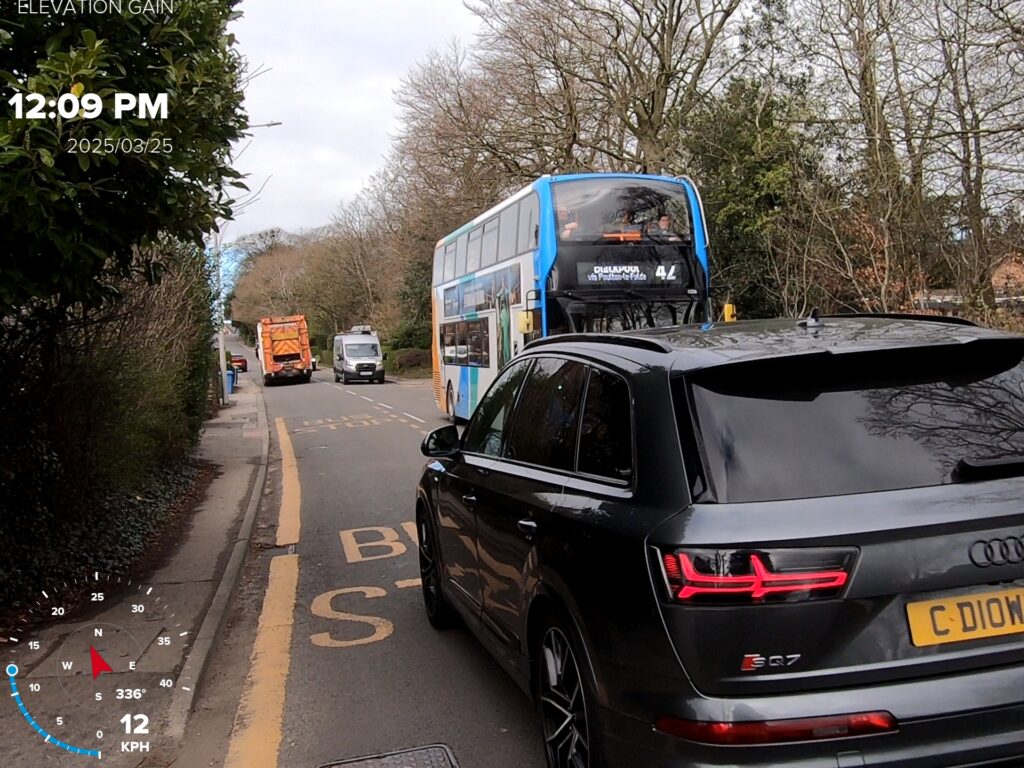
PS Audi close-passing offence (ignored by LancsFilth as well as their own offence, of course) pictured in the text above is this one:
ttps://upride.cc/incident/cd10wer_audiq7_closerpass/
@wtjs A year and a quarter later, a very similar offence at the same location by the driver of an 18 tonne double-decker
ttps://upride.cc/incident/px12dnv_stagecoach41_closepass/
@wtjs
Guys we can deal with this. It would require some sort of ‘community come together’ to raise funds, but all this needs is 20 or so of the most affected riders equipped with one of those new 360° cams (proof).
At least West Yorkshire police are taking robust action on video submissions!
https://www.bbc.co.uk/news/videos/cd9w2l2wqvdo
£1200.00 ?!?
Obviously, avoid the deranged comments in the local rag.
@pockstone I would guess the cyclist had a very high income. Fines in court are determined as a multiple of relevant weekly income (RWI). The maximum sentence for careless cycling is £1,000, so I would guess it was a fine of £1,000 plus £200 in costs. I don’t think there is a sentencing guideline for careless cycling, but for careless driving brief incidents like this that cause no actual harm get a Band A (25% – 75% of RWI) or Band B (75% – 125%) fine. Careless cycling is a lesser offence than careless driving, so it would probably be Band A. He probably had an income over £2,000 a week, so ended up with the maximum fine even at Band A.
I expect the cyclist was offered a Fixed Penalty Notice of £50 and decided to challenge it. A very bad decision…
@pockstone I mean, I’m astonished the cyclist thought to submit that. Car had priority there and he decided that he was going to squeeze through that gap for no reason instead of waiting.
The reason it was £1200 will be due to the cyclist not accepting the initial fine for their bad riding and taking it to court. Thats exactly the same thing that happens if a driver does the same.
I’m sure the local rags were indeed using it as a good touchpaper to start a good old anti-cycling bingo bashing fest.
@mctrials23 The rider didn’t submit that for prosecution, he submitted the video of another incident and that was included in the video either prior to or after the incident he was submitting and the police, one assumes somewhat gleefully, jumped on it and prosecuted the rider saying he had given less space to the car than the car he was complaining about gave him. Whether it was justifiable or serious enough to be prosecuted may be debated (I’d say no as there is no legal minimum passing distance for bikes on cars and as far as I can see the rider is at all times on his side of the road, but Nigel disagrees) but it says something about the police attitude that they went looking for it.
The police are primarily trying to predict how the magistrates will view it. They clearly predicted correctly here.
@Rendel Harris it says something about the police attitude that they went looking for it
If it doesn’t say something, I’ll say it instead: the police are largely slow-witted, malevolent b******s who view their main enemy as people, mainly cyclists, who annoy them by submitting indisputable evidence of road traffic offences that they would rather not know about. They will take any opportunity to punish them, as is shown by this ‘£1200 fine’ case and little onion’s swearing case which the Filth were forced to abandon after many months of stupidity. Speaking of stupidity, how far back into the depths of hominin history did the police have to go to find the officers for ‘ hold that EAPC rear wheel off the ground, spin the pedal and I’ll take a picture of the speedo to prove it’s an illegal electric motorbike and get it destroyed’- a quotation which ‘will live in infamy’, although many police officers will still not have understood what was wrong with it. The police, unlike Skynet, have not yet become self-aware!
I have vague recollections of cases not being brought against careless/dangerous road users because…”we haven’t received a complaint from the injured/aggrieved/close passed victim…” The police’s zeal in seizing upon this minor infraction suggests one thing and one thing only…(over to you, little onion.)
@mctrials23 I mean, I am astonished how you bring priorities into this as the cyclist was entirely within the left hand side lane therefore never needed to give priority to the wankpanzer.
@whosatthewheel because as I have said, would you be happy for a car to pass you this closely as long as they were in their lane? Just because you are in your lane doesn’t make it OK.
Get some road tax and a number plate so you’re as accountable as motor vehiclal and then you can cry as much as you want cyclist was in the wrong shame he got a fine I’m crying for him.
@karimsadouk60@gmail.com Get some road tax and a number plate so you’re as accountable as motor vehiclal and then you can cry as much as you want
The quality and intelligence of the road.cc trolls, like the quality and intelligence of police officers, is declining
@wtjs
The absence of MOT was reported to the police almost a year ago, and has since been reported multiple times to the Neighbourhood ‘We’re Too Busy To Do Any Of This Policing Stuff’ Policing Team. It was illegally parked for 2 days continuously in January 150 yards from Garstang Police Station where the NPT is based. It was present for 3 working days at the Old Garstang Police Station just up the road in May, and the newest photo above is 20 yards from there. PC Duff (genuinely!) really, really doesn’t want to apprehend this criminal driver.
@wtjs yep
My dad had an experience of operation snap driving up the hill in great Malvern, he patiently waited behind two weaving bikes going up the hill, single file but all over the place, when he cleared the part where there were parked cars on the left hand side he deemed it safe to overtake and the rear cyclist decided he wanted to ride two abreast forcing my dad virtually off the road.
The cyclist and his wife shouting at him when he was overtaking, repeating his reg plate.
Sure enough West Mercia police sent a letter of intended prosecution as the footage from his go pro showed him passing close.
I intervened and asked for the footage they had to be Forensically investigated for digital manipulation and told them my dad had the dash cam footage of the incident.
I told them I wouldn’t provide the dash cam footage as I was relying on that for a civil claim against the malicious allegations by the cyclists.
Needless to say they didn’t give me details of the cyclist or pursued the £60 fine.
Didn’t have any reply at all….
It was an ex copper that told me to ask about having the footage investigated, the cops won’t spend ££ on something minor like this as forensic investigation is expensive
@FragileBoris Sounds like your dad is a crap driver and you’re a crap person by helping him get away with it by exploiting the cops’ laziness. Then again if you pal about with ex-coppers that tells anyone decent everything they need to know about you. There’s a reason they’re called Filth.
@FragileBoris So to precis, your father close passed two cyclists riding two abreast, as they are permitted to do by law, and you managed to get him off any punishment by abusing a technicality to which you were tipped off by an insider. Well done, you must be very proud of yourself. I love the way that apparently 90-odd kgs of cyclist and machine managed to “almost force” your father and his half a tonne plus of metal off the road. What you mean is he tried an inappropriate overtake in a dangerous position and almost went off the road as a result, the only person”forcing” him there was himself.
They were riding single file when he started the manoeuvre in an electric van, the man cyclist pulled out without looking to see if anyone was overtaking him, reducing the 2m width my dad was giving them, the cyclist moved into his safety gap and reported it as a close pass.
I hope that makes it a little clearer.
@FragileBoris So you allegedly had video evidence that proved your father’s innocence in the case, but rather than submit that you decided to try and use a loophole to which you’d been alerted of vexatiously demanding analysis of the cyclists’ video. Why? Your excuse of withholding the video to use in a civil case against the cyclists is of course transparent nonsense, there is no reason you could not have used the video twice and furthermore had you attempted to bring such a case you would have been laughed out of court at the first opportunity, given that the police and CPS decided that there was sufficient evidence from the cyclists’ camera submission to issue an FPN. Your story is as full of holes as a Swiss cheese in a mouse sanctuary.
@Rendel Harris I don’t know what stage the police got to, they didn’t reply…
@FragileBoris You said they had sent an NIP, which means that they are planning to impose an FPN or take the driver to court. It’s not uncommon for the police to mess up the paperwork so that these don’t get followed up, I’ve had cases fall through several times because of this. It in no way indicates that your or your father’s version of events is true.
@FragileBoris The hill? If you’d ever been to Malvern you’d know there is more than one hill.
I live there, I mean the hill that goes from Barnard’s green to Great Malvern where the cars park on the RHS side of the road just before the road widens by Phillip serrels auction house
Barnards Green Road
@FragileBoris I told them I wouldn’t provide the dash cam footage as I was relying on that for a civil claim against the malicious allegations by the cyclists
After exposing courteousdriver and headingley as trolls fabricating anti-cyclist stories in the other topic, I’ll give this one a go!
I think your story is made up- you can prove me wrong by posting ‘your father’s dashcam footage’- you have no need to keep that secret now that the Big Civil Claim against the Malicious Allegation by the cyclist is not possible. This is all very similar to courteousdriver’s made up story about the fist shaking cyclist (who ever shakes a fist? the proper reaction is a V-sign, and NOT this middle finger rubbish!) Both stories involve a pair of cyclists deliberately and suddenly ‘doubling up’ at considerable risk to themselves to fabricate a close-passing case against a completely innocent driver previously unknown to them. Are you two PBUs simultaneously, re-using your stories because you don’t possess enough imagination to make up different ones?
I don’t believe the dodge about forensic examination either- the police don’t have to agree to stupid ‘tests’ for which there is no credible reason. Once again, Show Us the Goods!, both of you.
@FragileBoris Needless to say they didn’t give me details of the cyclist or pursued the £60 fine. Didn’t have any reply at all….
Apart from the bit about ‘no response at all from the police’, what a load of fabricated tripe! We don’t need to tart up our videos because they’re bad and incriminating enough already. Why not contact Lancashire Constabulary with your suspicions that this has been ‘digitally manipulated’?:
ttps://upride.cc/incident/yn67mvj_sainsburys44tonner_closepass/
If they could have ‘done me’ for that, they’d have done it already- money no object! For those police sympathisers who still don’t accept the extreme ‘bentness’ of the UK police, see this from Black Belt Barrister:
ttps://www.youtube.com/shorts/86n1iAa49jk
Doesn’t warrant a response as I don’t understand your language.
An understandable mistake, since you say you’re not familiar with English, but FYI, ‘doesn’t warrant’ doesn’t mean the same thing as ‘I’m incapable of’.
Operation “Sorry Not Attempting Prosecution”? Certainly some forces see it as a success!
@chrisonabike You’re just being silly there. Like they ever say sorry! Sodoff Not Attempting Prosecution perhaps.
Submitted a close pass by a pensioner so close I could touch his Ford Fiesta who I kept filming while he smashed his car over the kerb at a junction and got the same ‘we can’t be bothered email. North Wales Police are the pits, called 999 after an illegal emoto crashed into me on a bike path and they flat refused to send anyone.
Cops are not our allies
@genesis
The team is no longer able to manage demand.
Obvious solution : put more people on it to ensure that more drivers are made aware of their poor driving/law breaking and hence improve road safety for all.
Chosen solution : throw away the evidence that well intended members of the public are willing to take time, trouble and expense to provide for you and allow the drivers to carry on thinking they’ve done nothing wrong. That should do it.