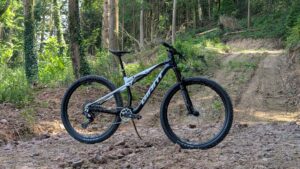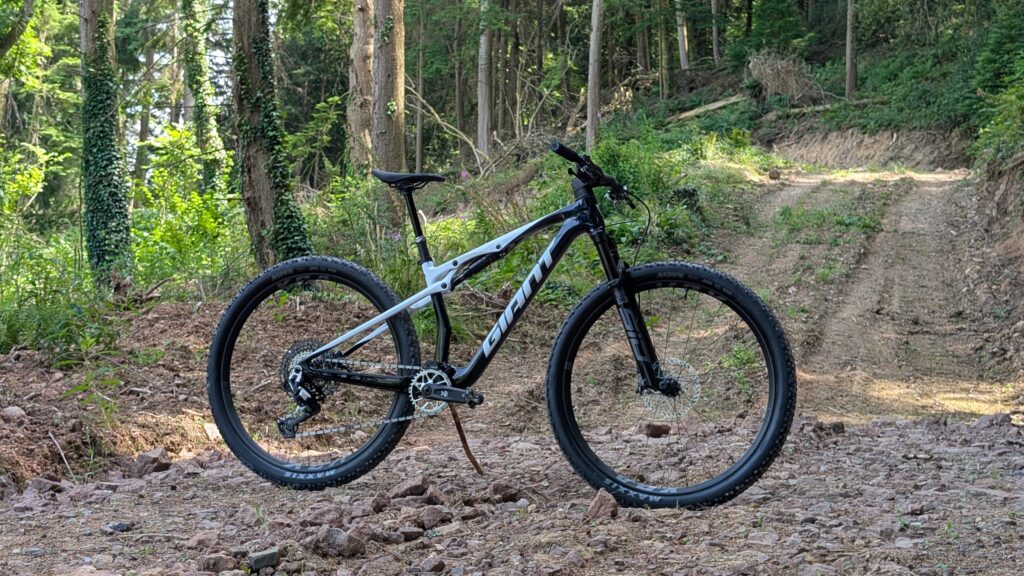

The updated Giant Anthem Advanced SL 2 is aimed squarely at racers, with modern, technical courses at the heart of its design. It is a classy frameset, with modern geometry that climbs and descends confidently, but this model has some issues with key component choices that considerably limit its potential.
Giant Anthem Advanced SL 2 – Technical Details
The new Anthem SL frameset uses the same carbon layup throughout the range, from the top-tier £10,499 SL SE version to the SL 2 I’ve had on test. With 120mm of travel front and rear, the rear triangle features a flip chip that allows the bike’s geometry to be adjusted between high and low modes to suit different courses or riding preferences.
With a whole new design comes Giant’s ‘Low-Latency Speed Concept’. Essentially, it’s the way that the brand describes its focus in developing and balancing the Anthem’s stiffness and weight. Giant reckons that this means more than just climbing speed; rather, it also addresses torsional stiffness and pedalling stiffness, resulting in ‘snappy’ handling. Speaking of that stiffness-to-weight ratio, we’re told that it’s 16.66% greater than competing bikes… if that means much to you.
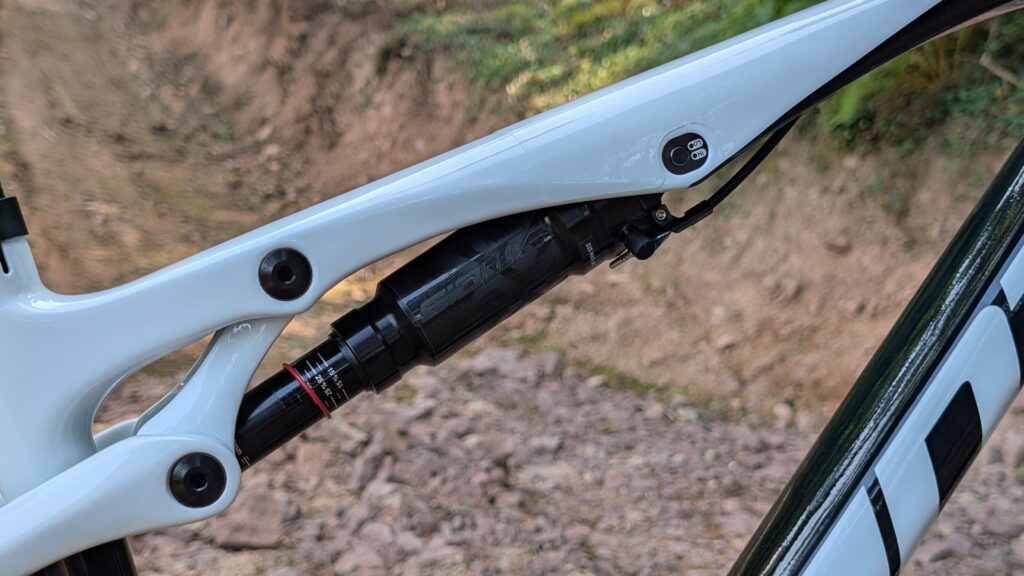
Also fresh for the Anthem platform is that it uses a single-pivot suspension layout combined with a flex stay that Giant dubs FlexPoint Pro. Though, compared to other bikes with similar suspension layouts, the brand says that it introduces less flex and deformation. Apparently, this means less resistance in the suspension, so it should be both sensitive to small bumps and more efficient on the pedals.
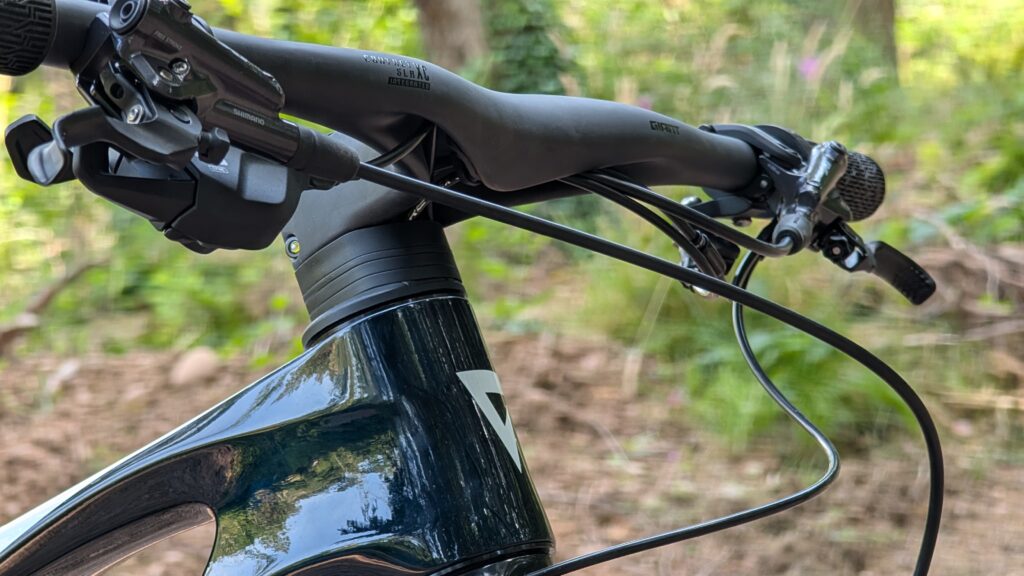
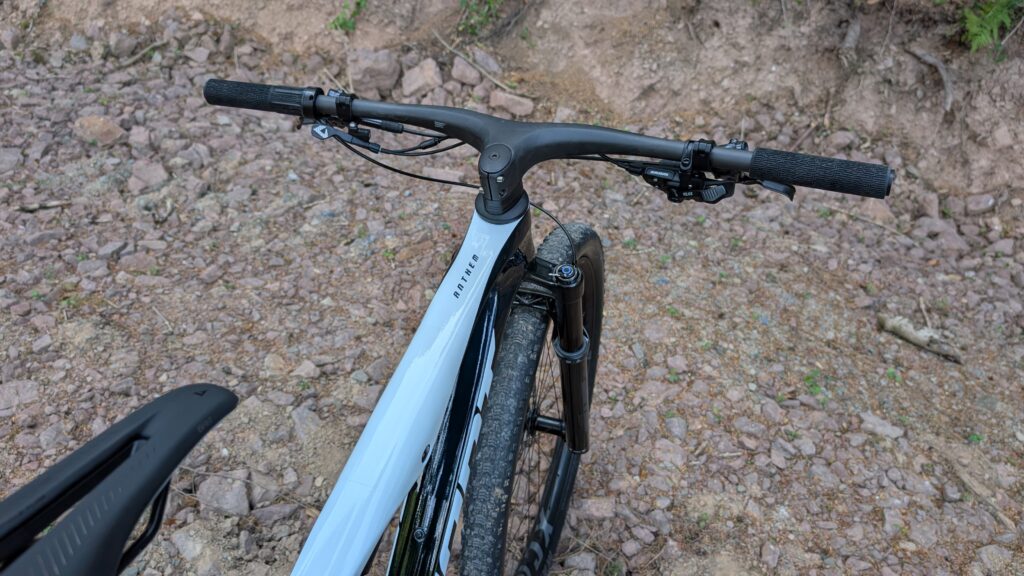
That new suspension platform adds to Giant’s theme of overall integration. As you can see, the shock is now sat under the top tube, a common modern XC bike trait. Other neat frame features include space for two bottles in the front triangle, and an interesting one-piece cockpit boosts that integration by hiding the headset-routed cables underneath it.
Key figures for the new frameset in a size medium are a head angle that can be set at 66.5 or 67.0 degrees (depending on how the flip chip is set), a seat tube angle of 75.5 or 76.0 degrees, a stack of 607mm or 603mm, and a reach of 445mm in the low and 450mm in the high position. The figures are very similar to other key brands in the XC cross-country race market, such as the Specialized Epic and Orbea Oiz.
Available in four sizes, the recommended rider height range is from 163cm to 198cm. There is also a Liv-branded Pique version aimed towards women, which adds smaller sizes for riders from 150cm.
Giant Anthem Advanced SL 2 – Componentry
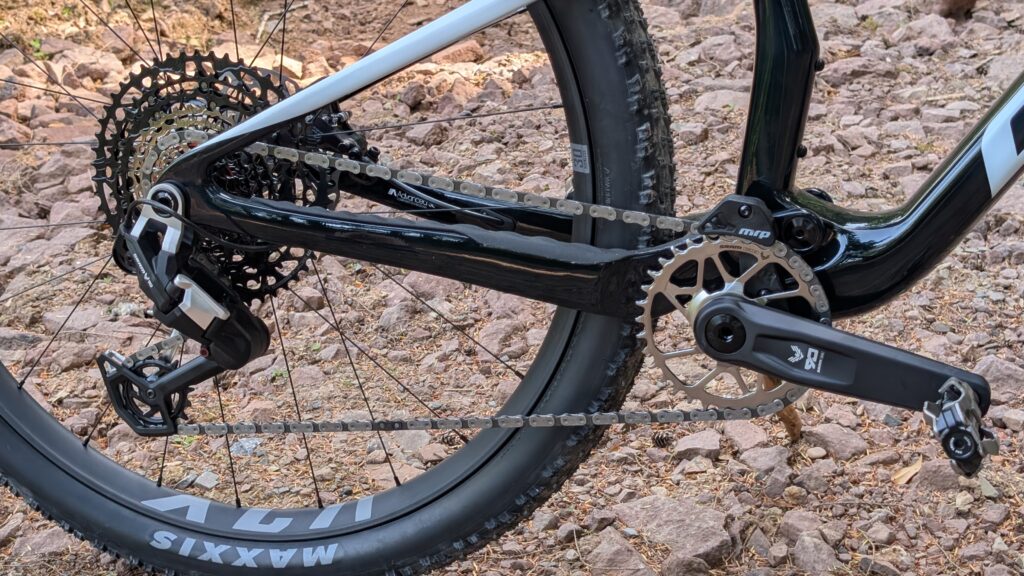
The drivetrain uses a mix of SRAM and Shimano kit, with SRAM Eagle 70 and 90 12-speed mechanical components combined with a 10-52 cassette and Single Click shifter, which was initially created for use on e-MTBs. The brakes are Shimano two-piston SLX calipers with 180mm front and 160mm rear rotors.
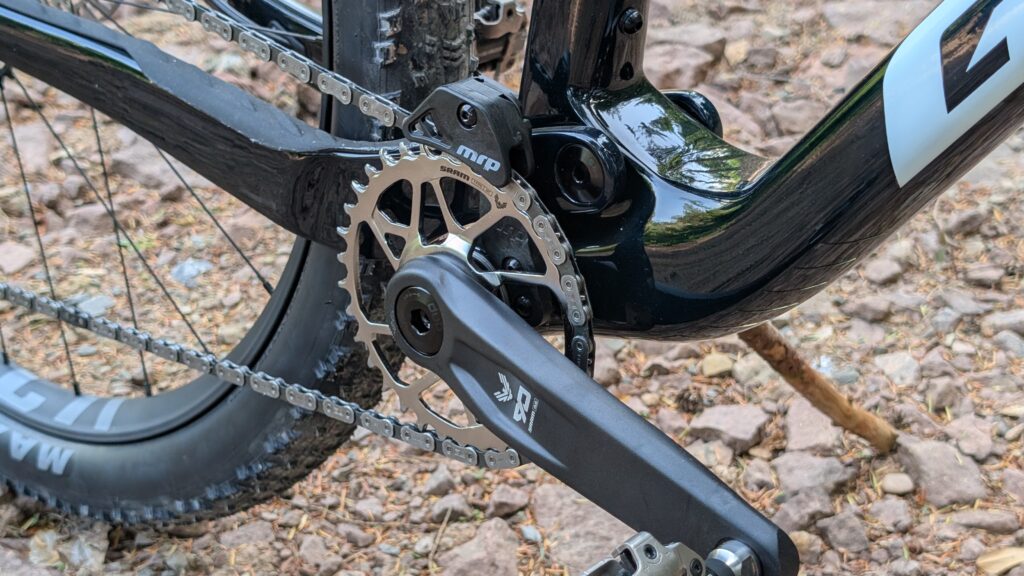
The Anthem employs a SRAM 90 chainset with a 34-tooth chainring fitted. This is the largest chainring the bike can officially take, which shows that Giant is pushing the bike towards genuine racing. What is disappointing, however, is Giant’s choice of crank lengths, with 170mm fitted to the small and medium sizes and 175mm on large and XL. With the amount of research and testing showing the benefits of shorter crank arms, many major brands are now switching to shorter sizes, particularly on smaller frame sizes. SRAM produces a 165mm version of this chainset, and I believe Giant is behind the curve by not using it.
Suspension is handled by a RockShox SID Select+ 3P fork and a RockShox SIDLuxe Select+ RL shock, with a TwistLoc Ultimate three-way lockout offering open, pedal, and lock modes.
The cockpit is an integrated carbon stem/bar, Giant-branded with fixed lengths for each frame size, and a 780mm bar width. The cockpit has external cable routing, but the bar is shaped to partly conceal the cables, with internal routing beginning as they enter the frame above the headset.
The dropper seatpost is also Giant-branded, with a Contact Switch SL offering different drop lengths depending on frame size. It is operated by a remote lever under the left-hand side of the handlebar. The SL version is a lightweight and simpler design that can only be run either fully extended or fully dropped. On this medium frame, the dropper offers 140mm of travel.
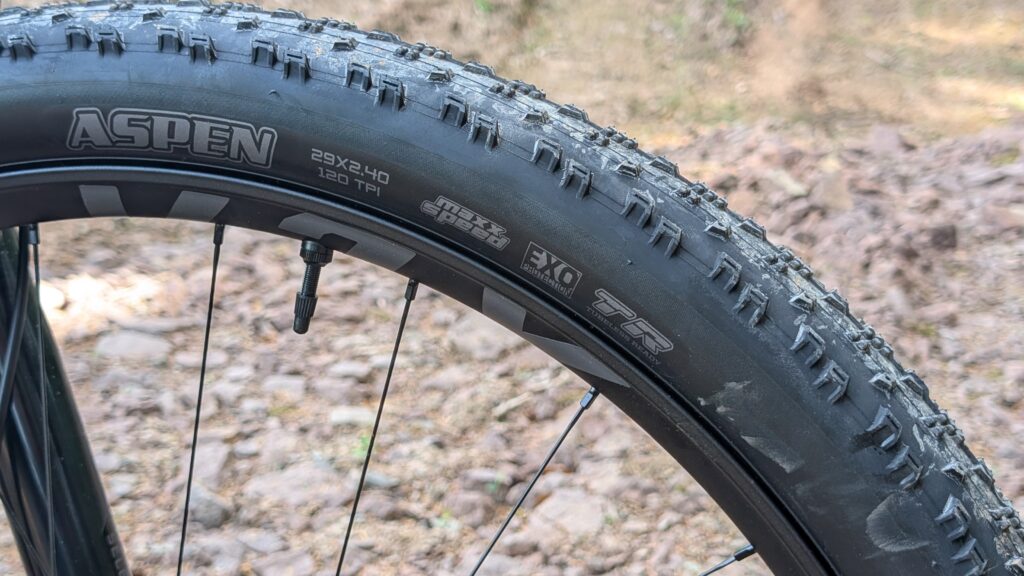
The Giant XCA wheelset uses alloy rims with a 30mm internal width that use a broad, hookless shape designed to reduce the risk of punctures. The rear hub has a 120-tooth helical ratchet, giving very fast three-degree engagement. The claimed system weight for the wheels is 1705g. Maxxis Aspen 2.4in tyres are fitted, using the 120 TPI EXO construction with MaxxSpeed compound.
Giant Anthem Advanced SL 2 – Performance
Changing the orientation of the flip chip is quick and easy, taking a few minutes and requiring just a single 5mm Allen key. Although it isn’t something you would likely do while riding, it gives you the option to change the geometry depending on the course or planned ride. A single bolt is undone and removed, two alloy holders are flipped, and everything is tightened back up. The shock can remain in place, and there is no need to change the air pressure.
I chose to use the bike in the High setting most of the time, as this suited both my riding and the locations where I tested it.
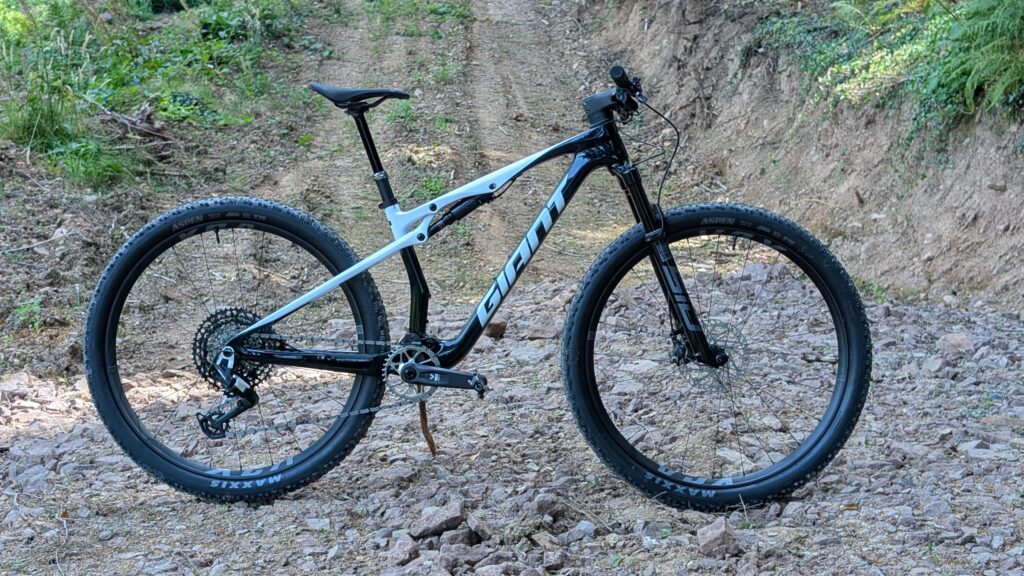
During the initial riding and setup of the bike, I couldn’t help but feel cramped by the short reach, and I was initially unsure how it would perform downhill. This is despite the geometry being very similar to other bikes, such as the Orbea Oiz I have tested recently. This feeling did change as riding progressed, however.
The Anthem rolls reasonably well, although considering it is designed for racing, in this specification it doesn’t feel as quick as I would hope or expect from a race bike. The overall weight may hold it back at times on climbs, while the tyres surprisingly felt slower on firmer surfaces, which is where I would have expected them to excel.
Despite my initial thoughts, the updated geometry really comes into its own when things begin to point downhill. Even from the first ride, I found I had more confidence and speed on tracks that I have been riding regularly for more than 10 years. On technical sections, it’s very capable, and in the dry conditions during our hot summer, the tyres and rear suspension worked well to deliver some big smiles and a great balance of traction and efficiency. On rides where I would usually pick a loop and stick with it, I found myself repeatedly riding the steeper, more technical sections simply because of how much fun the bike was giving back.
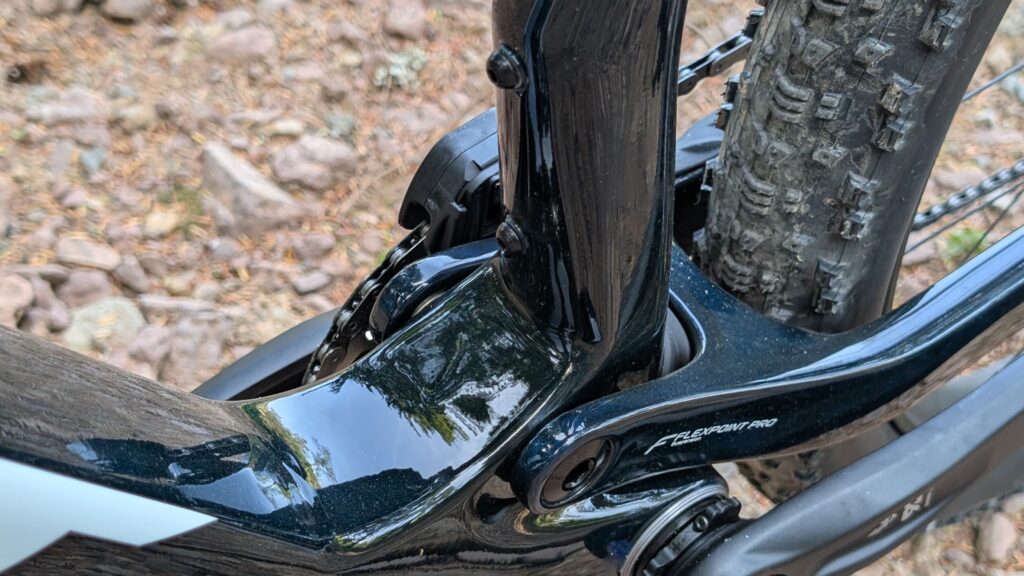
Even the uphills were tolerable, and while it isn’t particularly light and is heavier than I would hope for a bike at this price point, it was at least manageable. When in the saddle, the steep 76-degree seat tube angle in High mode makes it very effective on steep or technical climbs, improving rear wheel traction. This is helped by the short-nose Giant Grit saddle, which I found very comfortable, the Giant XCA wheels, and the quick-engaging rear hub, which helps when tackling technical climbs requiring repeated bursts of power.
There are, however, several component choices that impact the overall ride and really dent the performance.
The Giant Contact SL seatpost is one. It can only be set fully up or fully down. This is fine for steeper tracks, but on faster, twisting descents, or even some climbs, I find it beneficial to drop the post by a few centimetres. This post doesn’t allow that. It may also contribute to the feeling of being cramped, as I was running the saddle forwards but still had to keep it fully raised on any descent where I might need to pedal, and multiple times I had the saddle hit me while riding, throwing my weight forwards. While the lever functions well, the post also requires a significant level of effort to lock it into the down position.
Another component that I found underperformed was the RockShox SID Select+ fork, with its Charger Race Day 2 damper. Despite, or perhaps because of, the multiple adjustment options available, I found it difficult to get the setup to a point where I was completely happy. I wanted to retain good small-bump comfort while still having enough support for bigger hits, but struggled to find that balance.
With more time spent adjusting the fork and testing different settings, I may have been able to improve the feel, but over multiple test rides and different setups, I wasn’t able to make the changes I wanted.
The rear end of the bike is almost the opposite, and this perhaps makes the limitations of the front even more noticeable. It was easy to set up, and the standard tune feels excellent. With the three-position TwistLoc fitted, there is a noticeable difference between each setting, making it easy to select the level of support required.
The only small gripe here is with the standard grips matched to the TwistLoc, which feel quite rough on the hands. Of all the changes I would make to the bike, this is at least a quick and cheap one.
Another frustrating element was the single-click shifter, with slow and frustrating shifting. While the shifting is accurate, for a race bike and on faster rides, I found myself in situations where I was having to click multiple times to get into the right gear following a climb or descent. For a race bike, this would impact the speed and potentially impact climbing performance as a result.
I have my issues with headset-routed cables. When new, everything’s fine, but I believe it is a recipe for problems in the future. In total, there are two mechanical cables and one hydraulic brake hose running internally through the headset bearing. While this might not be quite as problematic as on some road bikes, it will still make changing a rear derailleur or seatpost cable a much longer and more expensive job. If the headset bearing needs to be replaced, all the cables will also need to be dealt with.
The only model in the range where this is likely to have little negative impact is the most expensive SL SE (£10,499), as this features wireless transmission, a wireless Reverb AXS dropper and Flight Attendant lockouts, removing everything except the rear brake hose from the equation.
Giant Anthem Advanced SL 2 – Verdict
Although I have some qualms over its specification, I believe Giant has successfully designed this updated Anthem Advanced SL as a World Cup competitor for riders at the very top of the sport and, given the ability to run the very best components, it has enormous potential.
The geometry works brilliantly, making technical descents enjoyable while also producing a superb bike on steep climbs, which is exactly what you want from a modern cross-country race bike. Unfortunately, in this specification, the component choices create issues that spoil the overall ride and introduce potential problems further down the line.
Serious contenders at this price point include the Specialized Epic 9 Comp at £4,299, which might not have the same top-spec carbon frameset as the S-Works model, but does have a SRAM AXS drivetrain, similar components, and a similar overall weight.
The closest Orbea Oiz model, the M10, has a Shimano Di2 XT drivetrain, which will solve some of the potential issues I found when I tested the 2025 M21 version, which had a mechanical drivetrain.
With its fairly sizeable updates to its cross-country platform, Giant has created a serious contender on the XC circuit with the Anthem Advanced SL 2. Although there are areas in its specification where changes will definitely unlock its full potential, the Anthem is confident, capable and efficient on the pedals. With that, it’s no surprise that it’s seen as a force to be reckoned with in top-level XC; this model is just hindered by some component choices.
Test Report
What does the manufacturer say about this product?:
Giant says:
Developed to help Giant pro Alan Hatherly win the 2025 Elite Men’s XCO World Championship, this superlight XC composite flyer is engineered with a semi-integrated 120mm FlexPoint Pro rear suspension system and a flip chip to adjust geometry for any racecourse or XC terrain.
Tell us some more about the technical aspects of this product:
Giant mentions:
TOTAL CONTROL
The new FlexPoint Pro suspension delivers 120mm of smooth, active rear travel paired with a 120mm fork—helping you fly down rough descents and power up technical climbs. A flip chip lets you fine tune handling for all types of XC terrain. Superlight composite or alloy Giant WheelSystems (depending on model) with a next-generation 120-tooth helical ratchet drive system for immediate power and robust 5mm rim sidewalls for greater protection against impacts and punctures.
LOW-LATENCY SPEED CONCEPT
A fully reengineered composite frameset is 89 grams lighter than it predecessor, with 7.95 percent greater stiffness-to-weight ratio (efficiency) to help you power up climbs and make every watt count. The WheelSystems and integrated handlebar/stem units are designed for maximum efficiency and instantaneous response to rider input. The rear shock is repositioned and semi-integrated with the top tube, shaving weight and creating space for a second water bottle cage.
SYSTEM INTEGRATION
A new one-piece integrated handlebar/stem unit adds compliance to reduce shocks and vibrations, improving control and hand comfort. It’s available in two models—the Contact SLR XC Integrated composite and Contact SL XC Integrated alloy. Both feature the same seamless cable routing and versatile sizing with a 780mm standard width and stem lengths ranging from 50-90mm.
Any further comments on quality?:
The frame is very good, with a clean finish, and all the Giant-branded components have all performed well.
Any further comments on performance?:
Key areas underperform, although the base frameset feels good.
How does the price compare to that of similar products in the market, including ones recently tested?:
The Orbea Oiz M10 is £5299, and features Shimano XT di2 drivetrain, and customisable options, such as the cockpit type and sizes. Specialized Epic 9 Comp is the cheapest model in the range but still features a wireless SRAM drivetrain for £4299.
List the components used to build up the bike:
Giant specification:
Sizes: S, M, L, XL
Colours: Mariana Blue/Icicle White
Frame: Advanced SL-grade composite front and rear triangles, 120mm FlexPoint Pro suspension, flip chip, 12x148mm thru-axle
Fork: RockShox Sid Select+ 3P, 120mm, Charger Race Day 2 damper, Boost 15×110, 44mm offset, remote lockout
Shock: RockShox SidLuxe Select+, RL damper, Solo Air, 210/50, TwistLoc Ultimate
Handlebar: Giant Integrated XC, composite, 780mm, 9-degree upsweep
Grips: SRAM TwistLoc Ultimate
Stem: Giant Integrated XC Carbon S:60mm, M:70mm, L:70mm, XL:80mm
Seatpost: Giant Contact Switch SL dropper, remote S: 110mm travel / 30.9 x 395mm M: 140mm travel / 30.9 x 395mm L: 140mm travel /
Saddle: Giant Grit
Shifter: SRAM Eagle 90 mechanical, 1×12
Rear Derailleur: SRAM Eagle 90 Transmission
Brakes: Shimano SLX BR-M6220, hydraulic, Giant RT66 rotors [F]180mm, [R]160mm
Brake Levers: Shimano SLX BL-M6200
Cassette: SRAM 70 1270, 10×52
Chain: SRAM 70 Transmission
Crankset: SRAM 90 Transmission, 34t, 55mm chainline S:170mm, M:170mm, L:175mm, XL:175mm
Bottom Bracket: SRAM DUB, press fit
Rims: Giant XCA WheelSystem
Hubs: [F] Giant MTB alloy, 6-bolt, [R] Giant MTB alloy, 6-bolt
Spokes: Sapim
Tyres: Maxxis Aspen 29×2.4, foldable, 120tpi, MaxxSpeed, EXO, tubeless
Extras: Tubeless prepared, 2.4″ max tire size, 34t max chainring size, MRP 1x CS chain guide
Tell us what the bike is for and who it’s aimed at. What do the manufacturers say about it?:
Designed as a modern cross-country race bike, with adjustable geometry and slacker angles to tackle more technical XC courses.
Where does this model sit in the range? Tell us briefly about the cheaper options and the more expensive options:
The Anthem Advanced SL 2 is the lowest price with the new frameset, with three models above priced at £6499, £8999 and £10,499.
Tell us about the build quality and finish of the frame:
Very good all-around on the frameset, but the fork is frustrating and I struggled to get the settings to a point I was happy.
Tell us about the materials used in the frame:
Full carbon frameset, using the Advanced SL in the front and rear triangles.
Tell us about the geometry of the frame:
Key numbers (medium):
Figures provided with the Flip Chip in low and high modes.
Seat tube angle: 75.5° low | 76.0° high
Top tube length (mm): 602 low | 600 high
Head tube angle: 66.5° low | 67.0° high
Trail 607 | 603: 115.9 low | 112.2 high
Wheelbase 607 | 603: 1168 low | 1167 high
BB drop 607 | 603: 51 low | 45 high
Stack (mm): 607 low | 603 high
Reach (mm): 445 low | 450 high
Standover (mm): 764 low | 771 high
Handlebar width (mm): 780 (all sizes)
Crank length (mm): Small 170, Medium 170, Large 175, XL 175
Stem length (mm): Small 60, Medium 70, Large 70, XL 80
How was the bike in terms of sizing and angles? How did it compare to other bikes of the same stated size and intent?:
Epic 9 (medium)
Stack: 604mm
Reach (low): 450mm
Reach (high): 455mm
Orbea Oiz M10 (medium)
Stack: 595.5mm
Reach: 450mm
Giant Anthem Advanced SL (medium)
Stack (low): 607mm
Stack (high): 603mm
Reach (low): 445mm
Reach (high): 450mm
How much suspension travel does the fork have?:
120mm
How much suspension travel does the rear end have?:
120mm
Was the bike comfortable to ride? Tell us how you felt about the ride quality:
Comfortable at the rear, but the front fork was hard to set up. While there are plenty of adjustments available, I found it difficult to balance comfort and control on smaller bumps while retaining bigger impact control.
Did the bike feel stiff in the right places? Did any part of the bike feel too stiff or too flexible?:
No problems with the overall stiffness from the frame or components.
How did the bike transfer power? Did it feel efficient?:
No problems with the overall stiffness from the frame or components.
How would you describe the steering? Was it lively, neutral or unresponsive?:
Faster than I expected, especially at slower speeds, but at higher speeds it was more neutral and confident, even on steeper tracks.
Tell us some more about the handling. How did the bike feel overall? Did it do particular things well or badly?:
Overall, it makes for a good race bike with geometry suited to more modern tracks, able to ride steeper downhills while still climbing well on even the steepest tracks.
Which components had the most effect (good or bad) on the bike’s performance? Would you recommend any changes?:
The poor small-bump performance on the fork affected the ride, and the integrated cockpit will limit riders’ adjustment options. The seatpost is also basic, with the SL design and a fully up-or-down action, which I found limited performance on technical pedal sections.
Any comments on sprinting?:
It feels excellent when pedalling harder, through the frameset, fork and the wheels.
Any comments on high speed descending?:
Different front suspension and a fully adjustable dropper seatpost would improve the descending ability.
Any comments on technical descending?:
For a XC race bike it descends really well.
Any comments on cornering?:
The low-profile tyres limit grip on anything but the driest conditions, and even in the dry there is a distinct lean-over change between the different-shaped tyre knobs.
Any comments on technical climbing?:
Superb, both on steep and more technical climbs.
Any comments on climbing efficiency?:
The is a noticeable difference between the open, pedal and lock settings and I found myself using them to my advantage
Any comments on agility?:
Reasonable, and fairly quick at lower speeds.
Any comments on fork performance?:
I found it hard to get a setup I was happy with for all riding; with multiple adjustments, it could be time-consuming to get a good setup.
Any issues with fork durability?:
No
Any comments on fork efficiency?:
TwistLock works well, with 3 modes that have a noticeable difference on the front and rear.
Tell us some more about the fork. Anything you particularly did or didn’t like? Any features which didn’t work well together?:
The biggest issues I found were around smaller bump sensitivity, which impacted general comfort.
Any comments on rear suspension performance?:
Easy setup, and the simple Flip Chip works well, although I doubt it is something that riders will change frequently.
Any issues with rear suspension durability?:
No
Any comments on rear suspension efficiency?:
The 3-mode TwistLoc works well, and the standard shock is very effective.
Tell us some more about the rear suspension. Anything you particularly did or didn’t like?:
No problems.
Any comments on the balance and performance of the suspension overall?:
The rear is far more compliant, while still handling bigger hits well compared to the front fork.
Any comments on drivetrain performance?:
Sharp and precise shifting, and a wide range, but Single Click can be frustrating. The mechanical cables and thru-headset cable routing it is a recipe for disaster for the future.
Any issues with drivetrain durability?:
No problems while I was riding, but worries about long-term use if used through all weather.
Tell us some more about the drivetrain. Anything you particularly did or didn’t like?:
I would prefer to have a multi-click shifter for when you hit a steep climb, and especially for race scenarios. The crank arms are long, especially on the small and medium sizes, and there is no option to customise.
Any comments on wheel performance?:
Very good, although not as light or as stiff as a carbon wheelset, they ride nicely and have a broad rim to help give a stable tyre base for 2.4” tyres.
Any issues with wheel durability?:
No
Any comments on wheel weight?:
Claimed 1705g, which is OK for an alloy wheelset, although at this price, perhaps a lighter carbon set would be expected.
Tell us some more about the wheels. Did they work well in the conditions you encountered? Would you change the wheels? If so, why?:
For the price, some might expect a carbon wheelset, but they have a wide internal rim and ride nicely, so no fault with the actual performance.
Any comments on tyre performance?:
OK for trail centre tracks, or in perfectly dry conditions, but slippery in the mud. On looser surfaces, you can feel the grip changing as you lean over with them. They wouldn’t be my go-to option for dry or damp weather racing, so in almost all cases I would be looking to get a new pair of tyres.
Any comments on tyre durability? How much did the tyres wear during testing?:
There is a little wear after testing, suggesting a softer compound.
Any comments on tyre weight?:
768g claimed weight for this tyre. Reasonable, but not among the lightest tyres given the tread depth and speed offered.
Any comments on tyre comfort?:
Wide 2.4 and running at a typical low pressure gives good comfort.
Tell us some more about the tyres. Did they work well in the conditions you encountered? Would you change the tyres? If so, why?:
They are fine for the summer, but not good in the mud. For use in races, I would change the tyres for any condition or trail surface.
Any comments on brake performance?:
Excellent power, but not great modulation. Strong initial bite, but very on/off feel.
Any issues with brake durability?:
No
Tell us some more about the brakes. Did they work well in the conditions you encountered? Would you change anything? If so, why?:
I’d prefer to see a 180mm rotor front and rear. The weight increase would be marginal but should improve braking control and power.
Any comments on controls performance?:
If the size works, it’s nice. Although no ability to use anything like a GoPro mount or lights.
Any issues with controls durability?:
No
Any comments on controls comfort?:
9-degree back-sweep might not be enough for everyone, and a single stem length on each bike size will make it expensive to try other sizes, as the cockpit retails for £399. The grips are also cheap, and quite rough.
Tell us some more about the controls. Any particularly good or bad components?:
The grips are basic SRAM options, and they feel cheap and rough on the hands.
Anything else you want to say about the componentry? Comment on any other components (good or bad):
The dropper seatpost is basic, with either up or down and a real clunky lockout feel.
Did you enjoy using the product? Not really
Would you consider buying the product? No
Would you recommend the product to a friend?
Not this model.
Use this box to explain your overall score
The Anthem Advanced SL 2 has an excellent foundation, with a capable, modern frameset that performs particularly well on technical descents and steep climbs. However, the limited dropper post and difficult fork setup hold back the overall performance, while the partially internal cable routing through the headset is a significant concern for long-term maintenance. It is a bike with plenty of potential, but this specification doesn’t make the most of what is otherwise an impressive frameset.
About the tester
Age: 42Height: 168cmWeight: 61kg
I usually ride: Road / Gravel / MTBMy best bike is: Cannondale SystemSix (road)
I’ve been riding for: Over 20 yearsI ride: Every dayI would class myself as: Semi-pro or ex-pro
I regularly do the following types of riding: Cyclocross, Gravel riding, Indoor riding, Bikepacking, Audax, Mountain bike XC