
From my vantage point near the summit of the Col du Tourmalet, I could just about make out Tadej Pogačar a few kilometres away, a distant white ant emerging at a dizzyingly fast rate from the horrid, decaying shoe boxes that comprise the ski resort of La Mongie, blighting one of the most beautiful vistas in France.
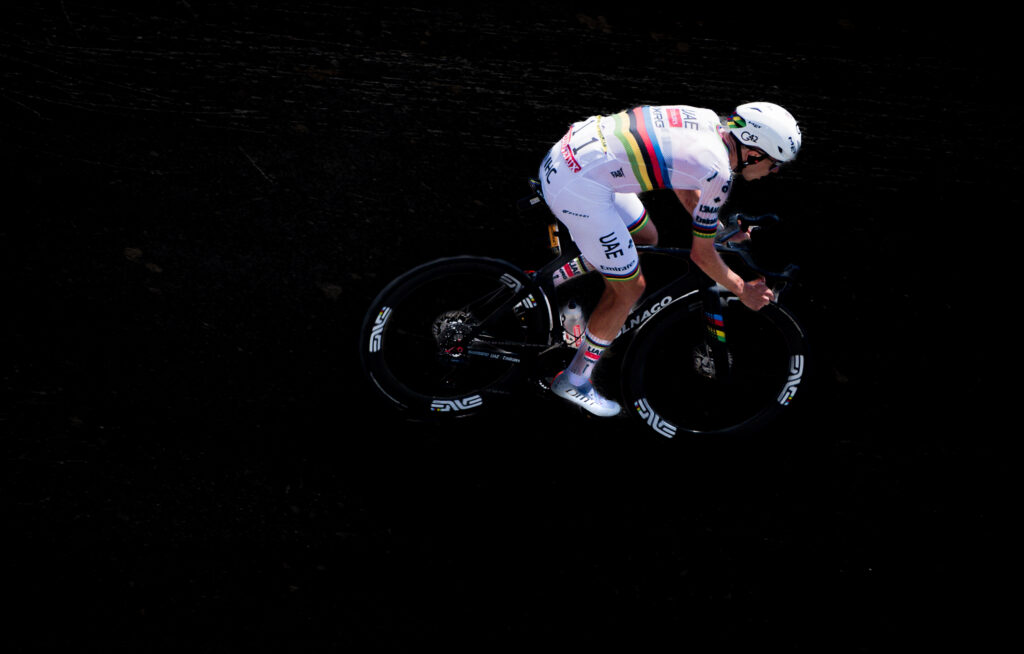
A few minutes later, a full-sized version of the world champion turns left and speeds towards me. Within seconds he’s gone, a picture of power and concentration, of effort, yes, but not suffering, backed by a raucous orchestra of roaring bike racing fans.
Half a minute later, Jonas Vingegaard appears. The Dane doesn’t look panicked, he’s seen this movie before, lived it. He’s accepted his fate and ploughs on.
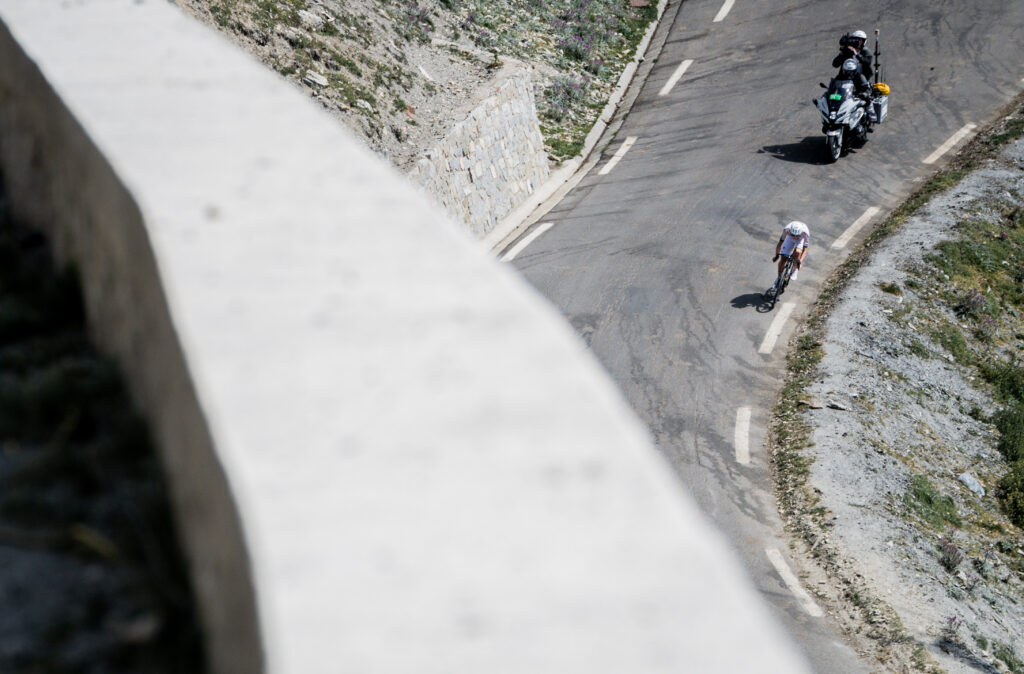
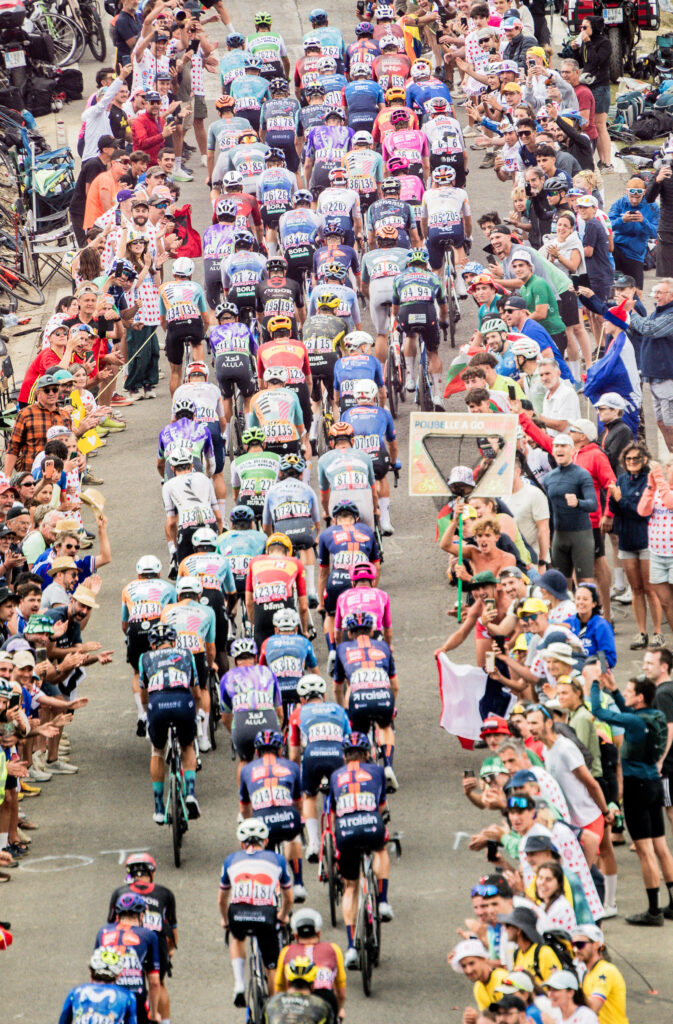
One by one, and two by two, the vanquished march past. I peer through the narrow corridor engineered by the fans around me, just long enough to catch a glimpse of their faces, before stepping back in time to avoid a close encounter with a rogue handlebar or a team car wheel to the foot.
I witnessed dozens of faces up there on the Tourmalet: faces marked by pain, by desperation, by defeat, by excitement, anger, hope, and even joy. Faces I would have missed, expressions I would have failed to ascertain, if I’d been watching the race unfold on television.
After almost a week of heading to the start of each stage in the morning and then making our way to the finish, we decided to eschew the normal Tour reporter routine and instead venture up one of the sport’s most mythical climbs for the 2026 race’s one true Pyrenean outing (plus, it was a lot cooler 2,000m up, a welcome development after days of oppressive heat).
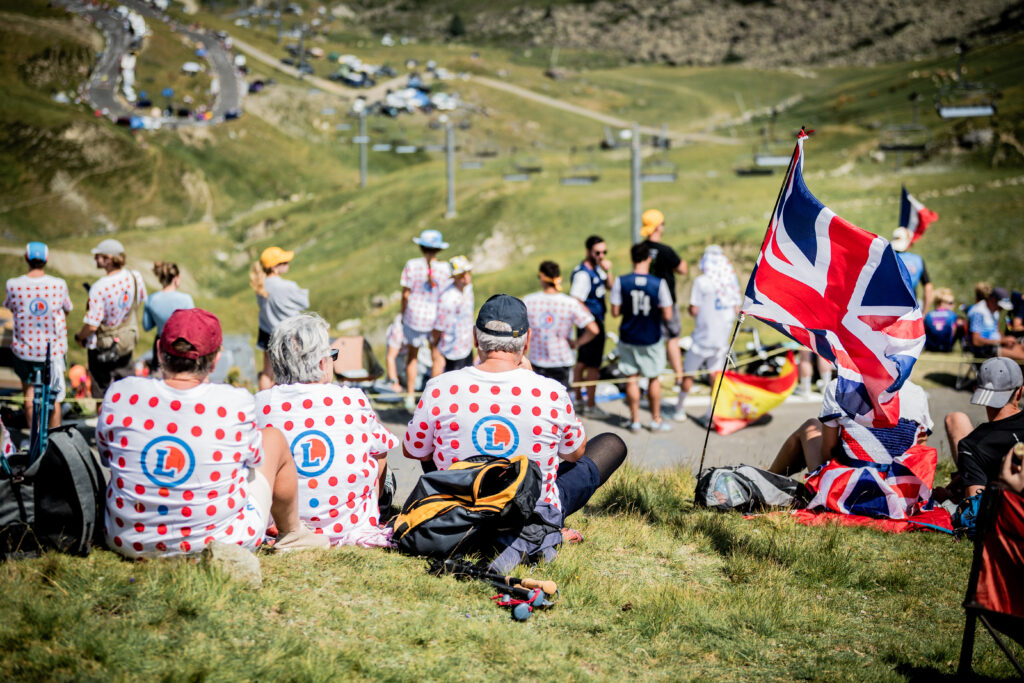
Perched on a grass mound overlooking the road, I watched the Tour’s vast, colourful, hyperactive publicity caravan pass, sparking frenzied delight with every toss of a Haribo bag or packet of Lenor, before making my way down to stand among the crowds for the race. I’m glad I did.
If I’d been in the press room, in a tent somewhere near the top of Gavarnie-Gèdre, I might have succumbed to the sombre, pessimistic mood that gripped much of the cycling world on Thursday.
After all, just six days in, Tadej Pogačar had already killed off the 2026 Tour de France, with the precision and ruthless efficiency of a cold-blooded executioner. Normally, I’d have sighed at the sight of the Slovenian’s fatal blow and spent my evening complaining over a bottle of wine.
But I didn’t. Because on the Tourmalet itself, the biggest bike race in the world was alive and kicking. And my day on the mountain provided a timely reminder that the Tour is about so much more than the battle for the yellow jersey.
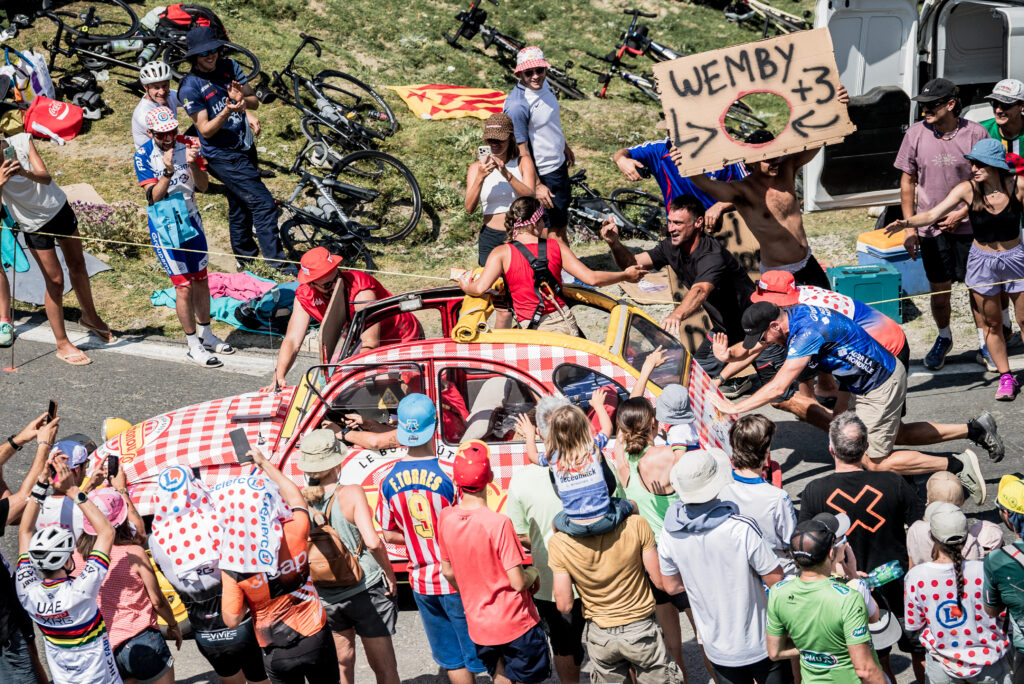
It’s about Alex Baudin, who took great delight in conducting the spectator orchestra in his polka-dot jersey, triggering a Mexican wave which rippled around the next hairpin.
It’s about the fans who ran onto the road to help the stricken driver of the Cochonou cured sausage car, pushing it towards the summit.
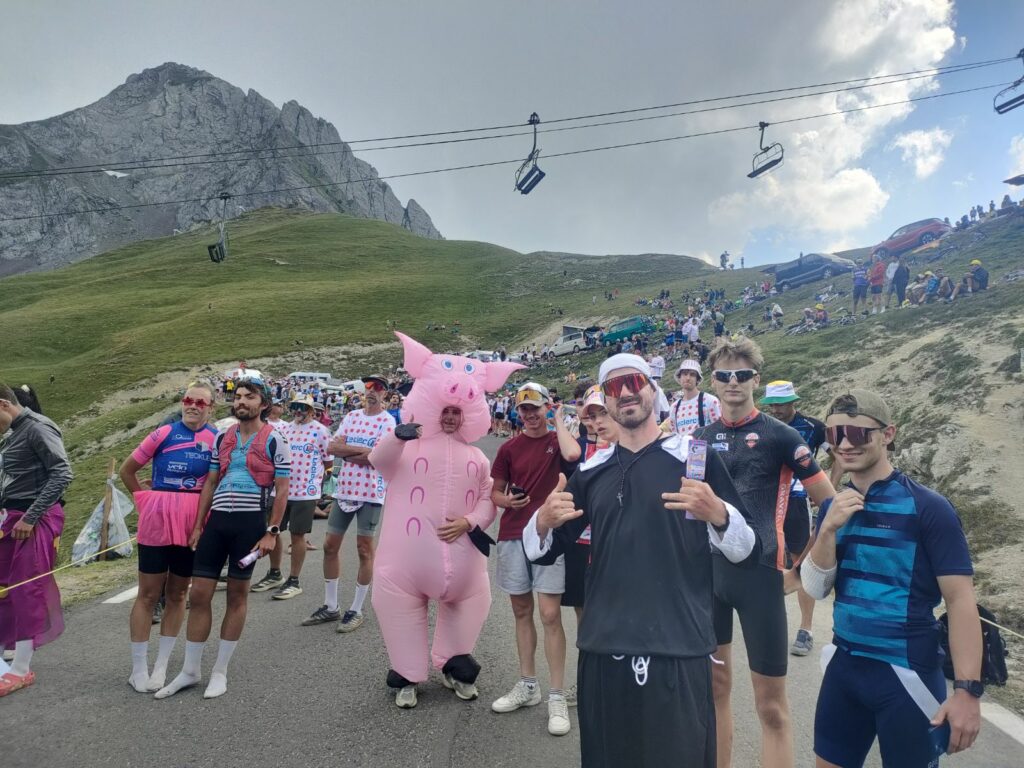
It’s about Bruno Amirail and the inebriated spectator in a blow-up pig suit who chased him halfway up the mountain.
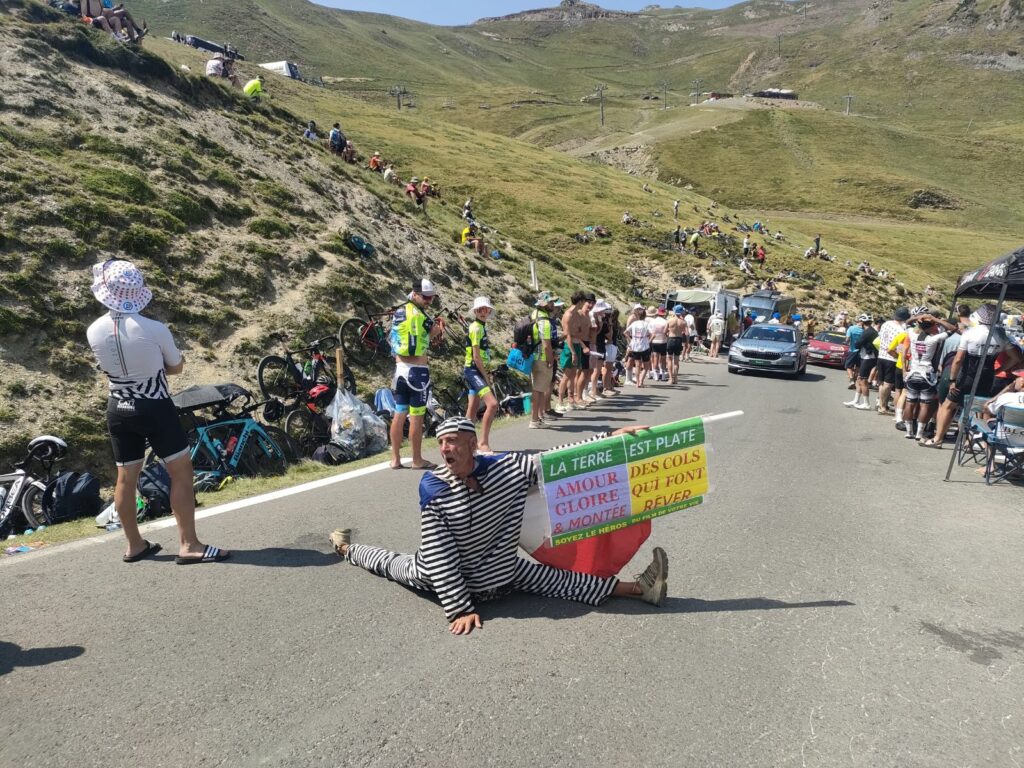
It’s about the old man, dressed as a nineteenth-century convict and holding a sign declaring that the earth is flat, doing the splits in the middle of the road, and only getting up when he was about to be run over by an angry ASO official.
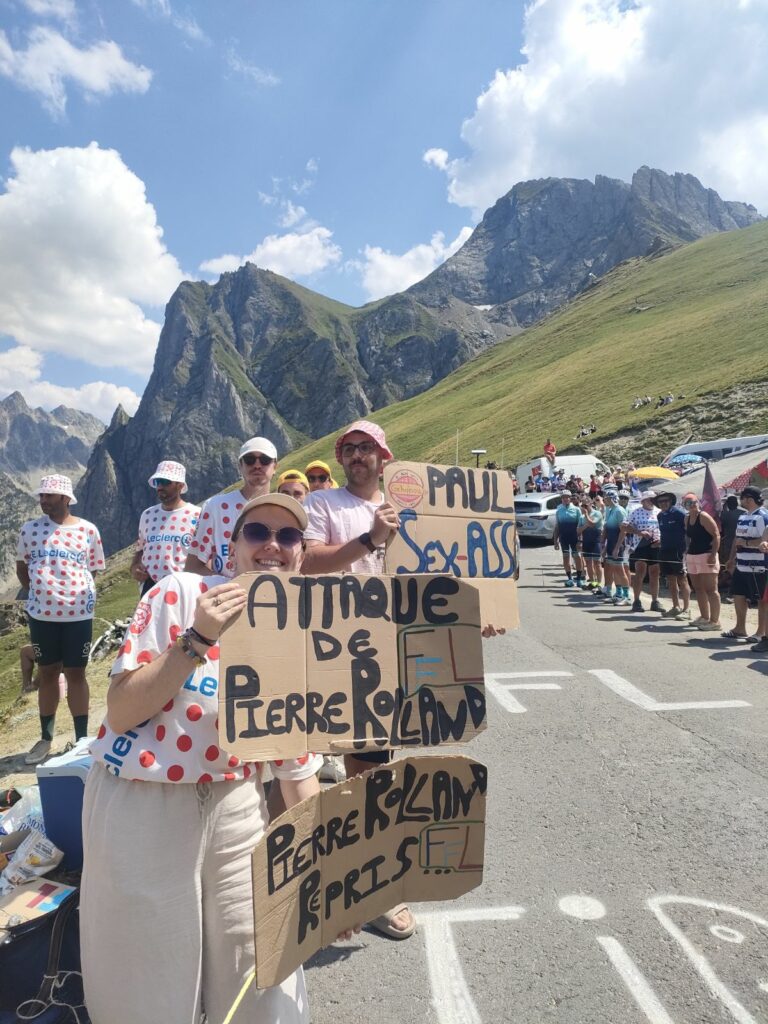
It’s about the Pierre Rolland fan club.
It’s about the family tucking into boeuf bourguignon on the side of the road.
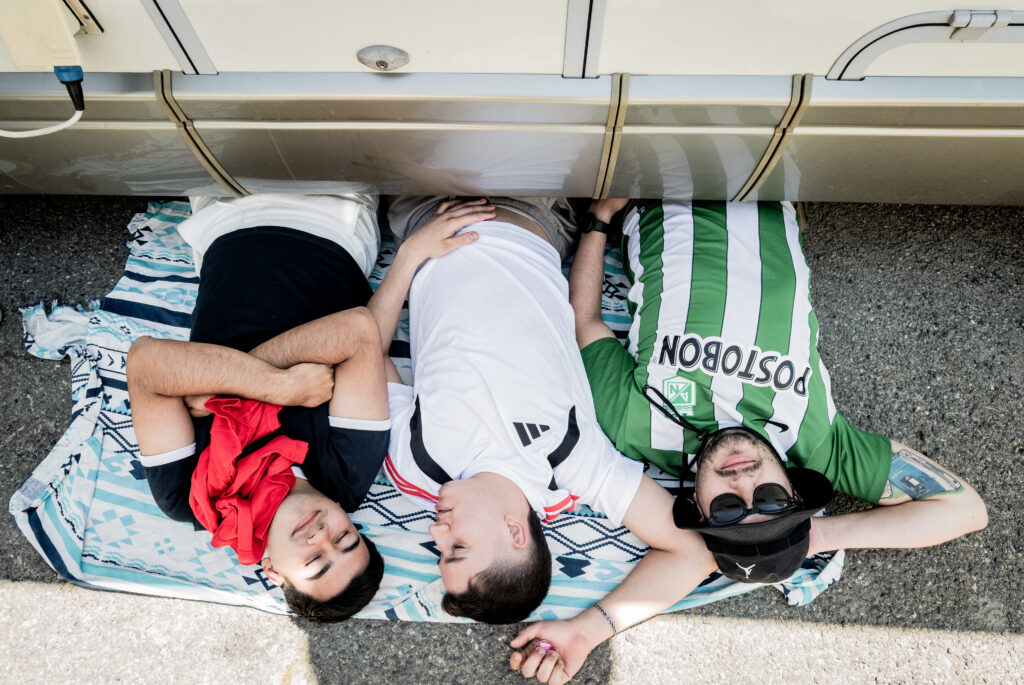
And the group of friends sleeping under their campervan.
It’s about Jordi, the kindly Spaniard who laughed maniacally when Pogačar flew past.
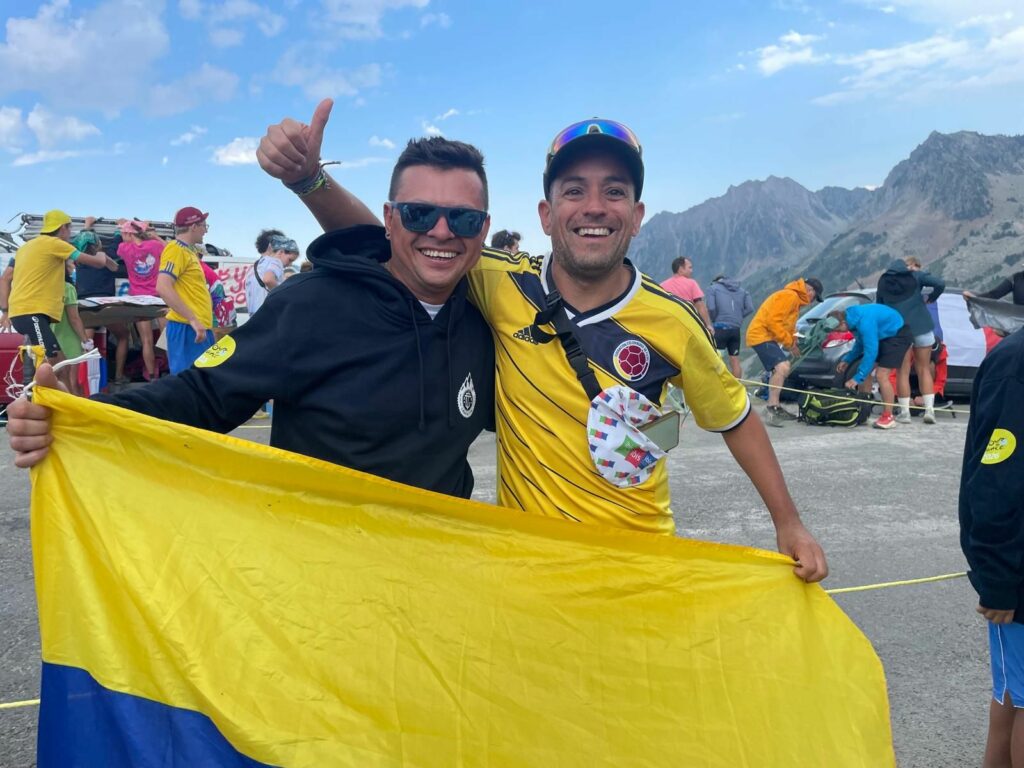
And David and Ferran, the loud speaker-wielding Colombians who love Lenny Martinez.
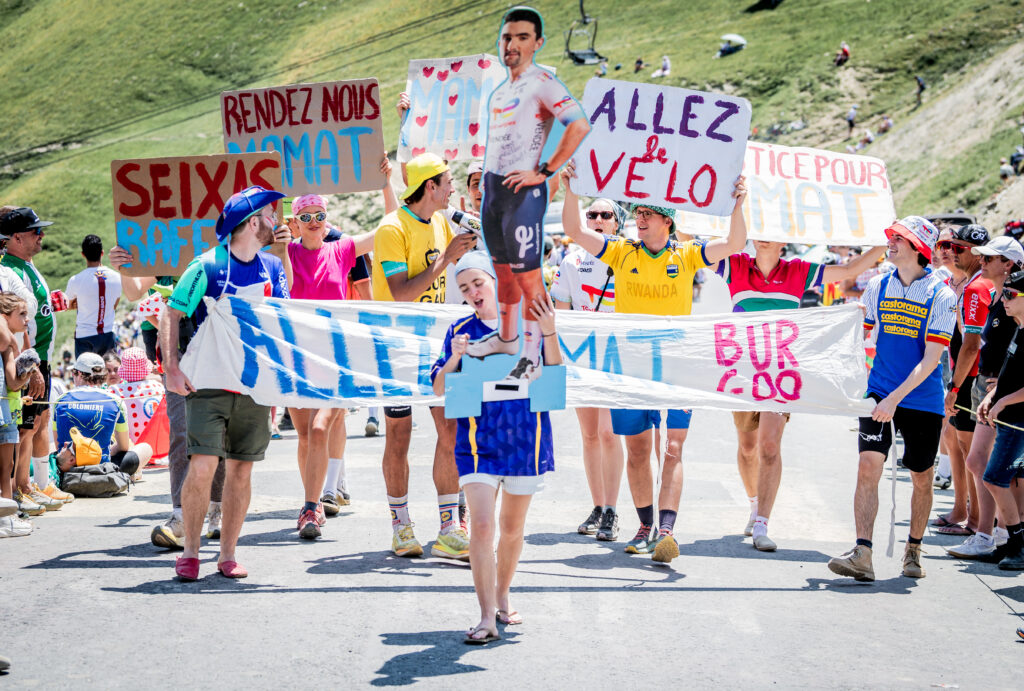
It’s about Matteo Vercher, who popped four wheelies in quick succession, sending a group of fans brandishing a cardboard cut-out of his teammate Mathieu Burgaudeau into raptures.
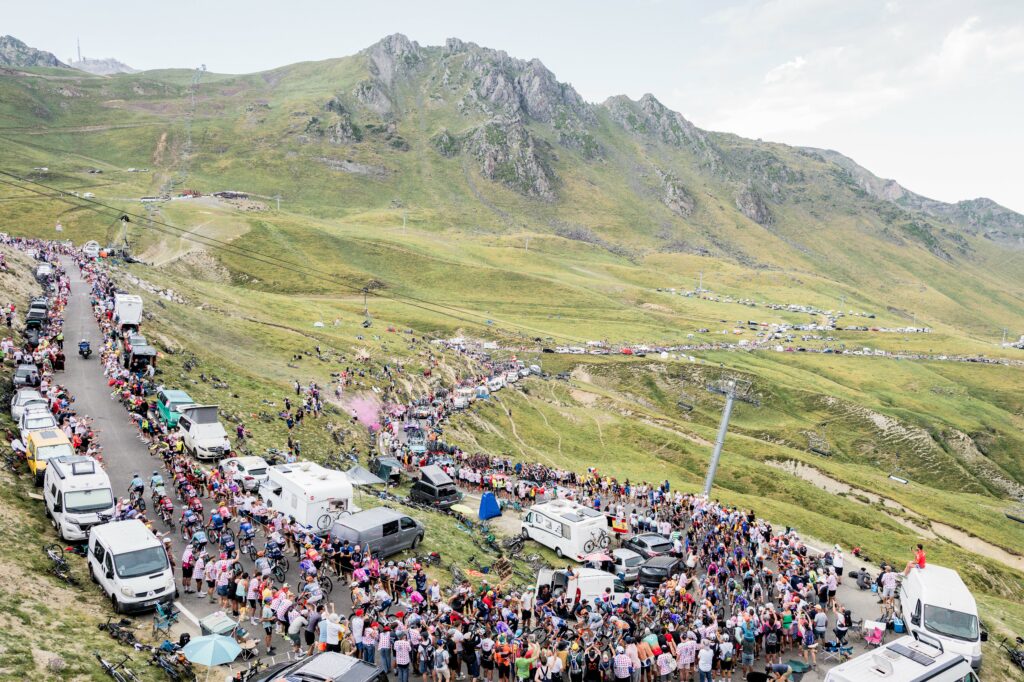
It’s about the Pyrenees and their sinuous roads and breathtaking beauty (La Mongie excepted, of course).
As we descended the wilder western side of the Tourmalet in the wake of the broom wagon, I fired up HBO Max on my phone and watched the world champion drift ever further up the road to yellow.
I could have felt deflated, frustrated at another Tour snuffed out so soon. But it’s not over yet, not really. Not when fans will still be rushing to the side of the road to roar and gasp, and not when riders are still toiling and smiling their way around the roads of France.
On Friday morning, in a shop at Pau’s railway station, I spotted a newsstand belonging to local newspaper La République des Pyrénées, emblazoned with the headline: ‘The public’s fervour for the Tour de France remains intact.’
And it’ll stay that way for the next two weeks, regardless of what Tadej Pogačar does next.