


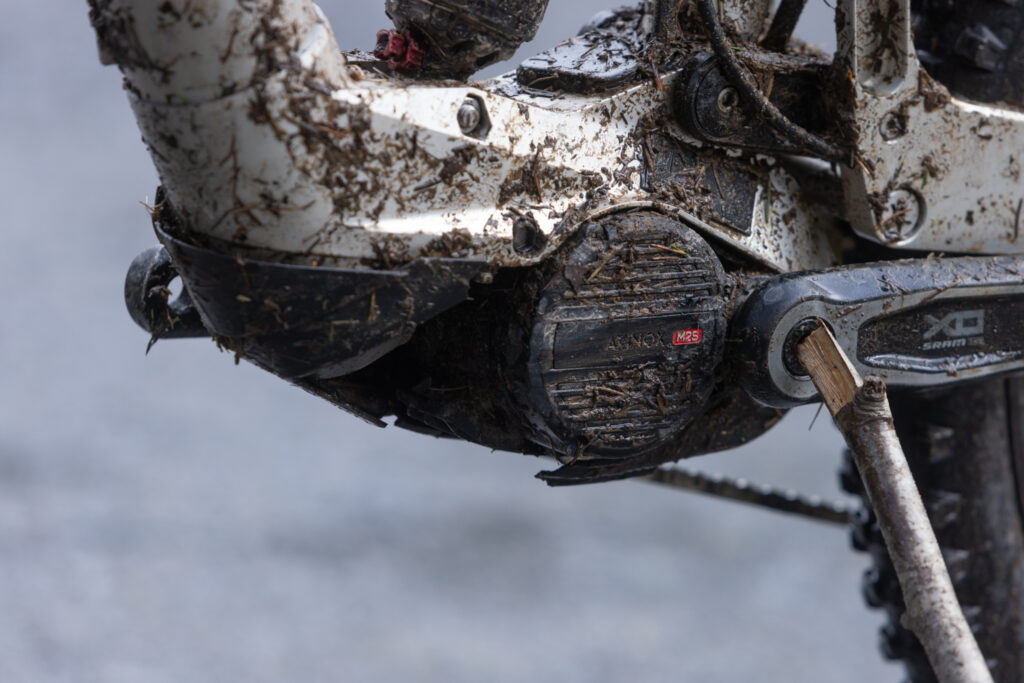

This week, 60 brands from all corners of the cycling industry unveiled their new Avinox M2S, or M2-equipped e-bikes, in what could be the biggest collective launch we’ve seen. Ever. But similarly to the unveiling of the M1, sizey power figures are once again headline features, but I’m hoping that we’ve hit the power ceiling now.
At 2024’s Eurobike, Avinox stole the show with its powerful but lightweight motor bolted onto an Amflow. Since then, Amflow bikes have been lining trail centre carparks, like an odd kind of Crufts, where the dogs are only of the same breed.
But what really happened was a monumental shift in the e-bike market, where after the launch of the M1, nearly every other motor brand chased to up their power numbers in bids to remain relevant and competitive in the market. See Bosch’s shift to 100Nm, and Specialized’s 111Nm S-Works Turbo Levo.
Now, with the M2S being found on bikes from 60 brands, most of which were released on Thursday, there’s an absolute flood, and perhaps market dominance, being shown by the Chinese tech company. Is this the new world order of e-bikes? Probably…
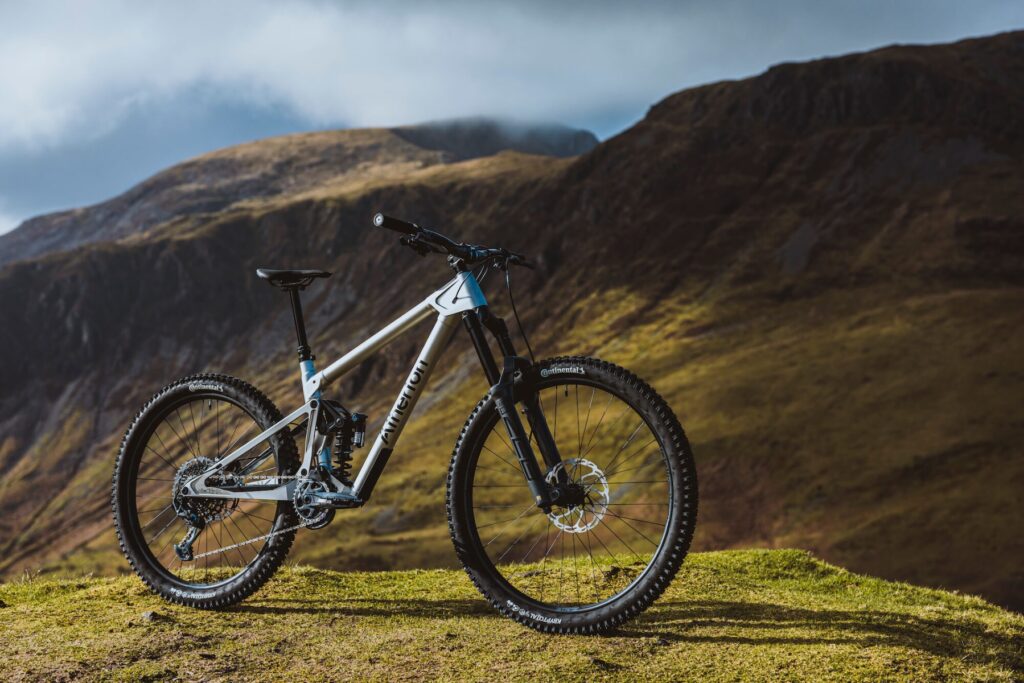
This influx of new Avinox bikes makes for interesting marketing tactics, too. There are around 60 of them, and at least 18 e-MTBs that we know about, so it’s going to be a little too easy to sink under the ocean of new. But props to Mondraker, which sent out a press release about its new Zendit some weeks ago, complete with a long list of instructions telling us which parts of the bike we could and couldn’t show, only to send another a week or so later with the full details. Double bang for Mondraker’s free coverage buck.
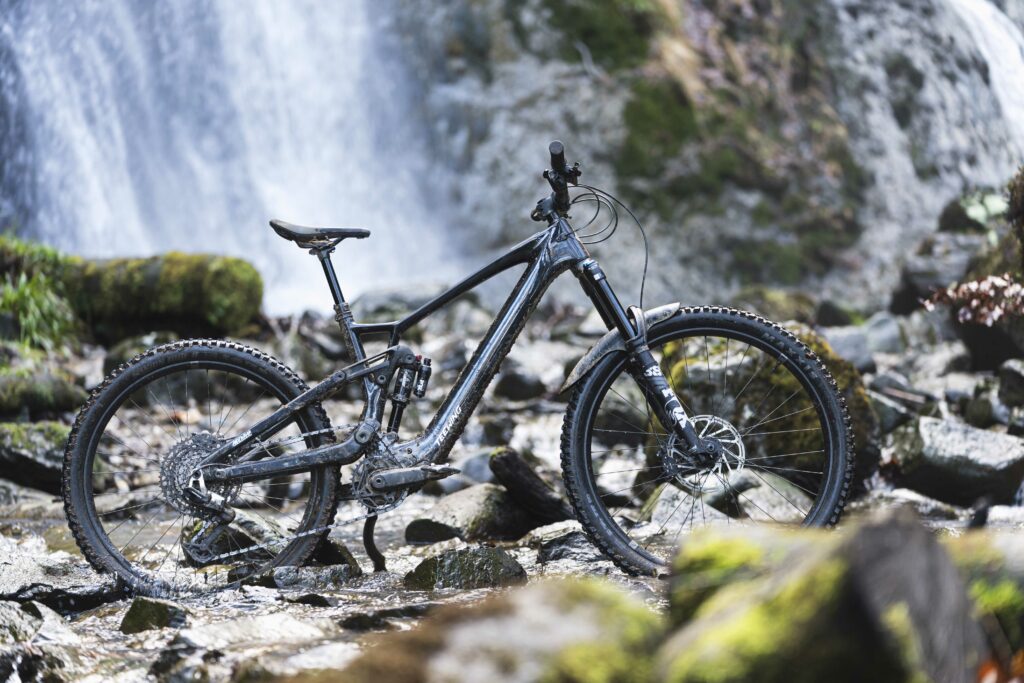
Also, nice one, Teewing. That brand pretty much unveiled the new Flux late last year and continued to drip-feed us details on its socials, which got a lot of people excited for what’s to come. Of course, its official release was on Thursday, with an Avinox M2S. Teewing’s approach resulted in what could be one of the best-known M2S-equipped e-MTBs.
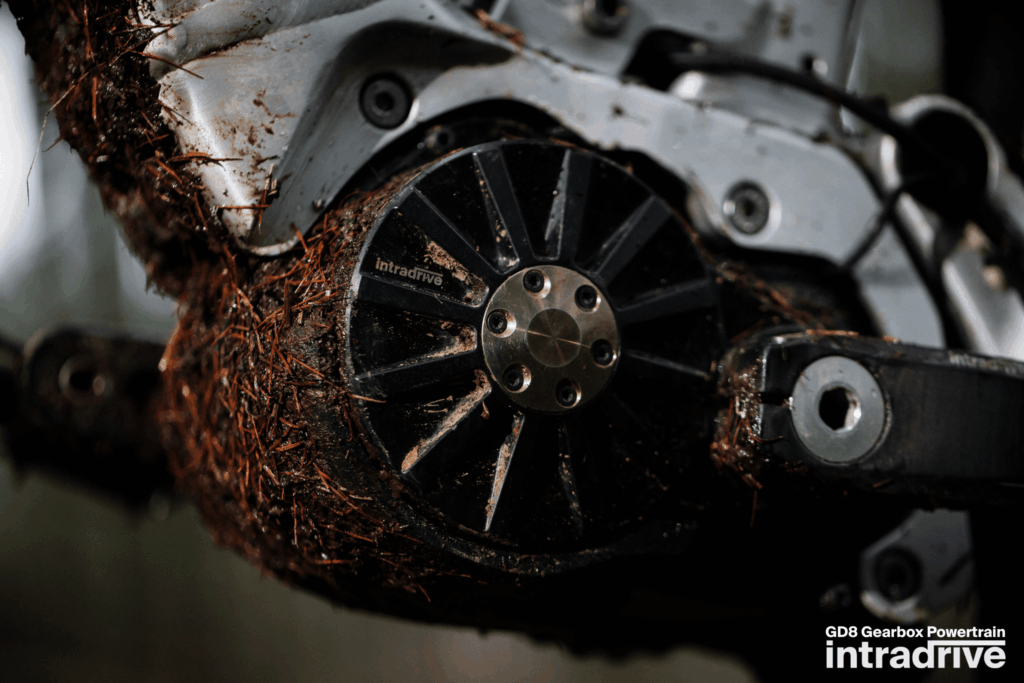
The headline figures here are 150Nm of torque and 1,500W at peak power. Before now, we only saw such torque figures on Pinion’s MGU, which promises to output 160Nm, and there weren’t many bikes around that were equipped with that motor.
Let’s face it, power figures get an awful lot of people foaming at the mouths and I get it. More power means an easier time flying up the hills and more time riding down them, but there’s a lot more to an e-bike than power alone.
I’ve ridden the M2S on a couple of bikes now, and it’s an impressive bit of kit. Obviously, it’s powerful, and when slapped into its Trail mode (one up from its least punchy Eco mode), the motor takes the reins, needing just the turning of the pedals to output a great heft of its power. That power does make things fun, but in a very different way. Spending my bank holiday afternoon firing myself up Tidworth Freeride’s rather awful climb, lapping those on regular bikes once or twice a run, and really getting my value from my entry fee did leave me feeling a little smug. And that power does open up new opportunities to climb more interesting ascents that perhaps may not have been accessible before.
The motor had me feeling like an overexcited spaniel. So, where the lack of effort definitely watered down most of the joy I get from climbing a bike, it had me lapping tracks like nobody’s business. Finish a descent, whizz up to the top, go back down, rinse and repeat. A lot. Only calling it a day once I got bored.
I’ll concede that I am a bit ‘old man shouts at clouds’ in this rant. Of course, you can turn the power down and give yourself a bit more to do. But when you’ve got so much power at your disposal, why would you? And being honest, the motor’s (standard) eco-mode feels very, very underwhelming, compared to the next step up – Trail.

Importantly, the new motor increases the gap between regular mountain bikes and this new wave of e-MTB. With M2Ss about, the riding style is vastly different, even compared to more ‘normal’ e-MTBs, and after my time on bikes with that motor, it’s got me hankering for long, slow and rich rides on my exercise bike. Perhaps that’s where things are really at now, where folk will have a regular bike and an Avinox machine. One for lengthier adventures, the other for lazier ‘let’s knock out loads of laps’ kind of rides. But I guess with e-MTBs in general, people have been doing that anyway.
While writing this, I do feel as if I’m moaning over nothing. To be honest, I’m all for the progression of technology, but the real concern with these new high-power motors is wear and tear on everything.
The extra power that any e-bike puts through its drivetrain noticeably increases wear. But with 1500W going through the system, you’re going to have to replace all of the drivetrain components and tyres much more often. Some products on the market, like Race Face’s Era e-MTB-specific wheels aren’t even rated to cope with such large torque demands.
But then there’s wear on the trail. Some friends and I who managed to get some time in on the new motor ahead of launch have noticed the bike’s tyres churning up trails a little easier than we’d expect. With more power comes more opportunity for the rear wheel to spin, adding further wear and tear to the trails we love. Trail builders will have an even greater challenge on their hands, no doubt, and might we see more rear tyres built to maintain traction under just wild torque?
Have we hit the power ceiling? Probably not. I thought that 85Nm was plenty before the days of the Avinox M1, and to be honest, it still is, having proven such to myself after riding the Shimano EP8-equipped Cilo Kyano, it’s just not as fast. But I reckon that with such a vast array of M2 and M2S bikes on the market, and with some being very affordable, we’re going to see Avinox absolutely dominate the e-MTB motor market. And if the brand has learned that increased power gets people all excited, I’ll eat my filthy socks if its next release isn’t even more powerful.
Do we need the extra power? Absolutely not. The Avinox kit still does the very same as its lesser-powered rivals – it makes the most physically demanding parts of mountain biking easier. And to be brutally honest, I don’t believe that the extra Newton metres and watts elevate a bike’s ride all that much. They’re nice to have, don’t get me wrong, but if I already owned an e-bike that I was very happy with, I wouldn’t go rushing out for an MS2 bike straight away.
That leads me to take Hans Rey’s and Bosch’s side. While I can’t say that what might be the new standard of power isn’t useful in some applications (cargo bikes and such), it does make me worry a bit about non-bikers’ perception of e-bikers riding these motors. Though it just firms up the need for proper e-MTB trail etiquette.














1 thought on “Alright Avinox, we’ve got enough power now”
I was a bit bemused re some of your comments in your article on the Amflow motors, firstly you said the jump from eco to trail was huge which is correct, however you did not have the modes in the correct order which you have to set up manually eco, auto, trail, turbo and finally boost, also you contradicted your self by saying power delivery is smooth then mentioning that the trails are getting ripped up? again incorrect the M1 motor has 42 point pickups per revolution( M2 has more) compared to all the other motor manufacturers single point single magnet per revolution ,those bikes can be jerky with power output, (I am a previous owner of Bosch and TQ eebs) whereas the Amflow constantly adjusts power output almost like a traction control, well mine does anyway, reducing power if the wheels spins or starts to slip.