



Barcelona-based bike brand Felt has released what it is calling its “fastest and lightest aero road bike”, supposedly 5% faster than the outgoing Felt AR. The Nexar has a fully integrated front end, clearance for up to 32mm tyres, and the top-tier build weighs a UCI-busting 6.48kg according to Felt – a couple of grams lighter still than Giant’s new Propel that launched just a couple of weeks ago. There are four Nexar models available, with prices starting at £4,675 and going up to £9,899. Here are all the details…
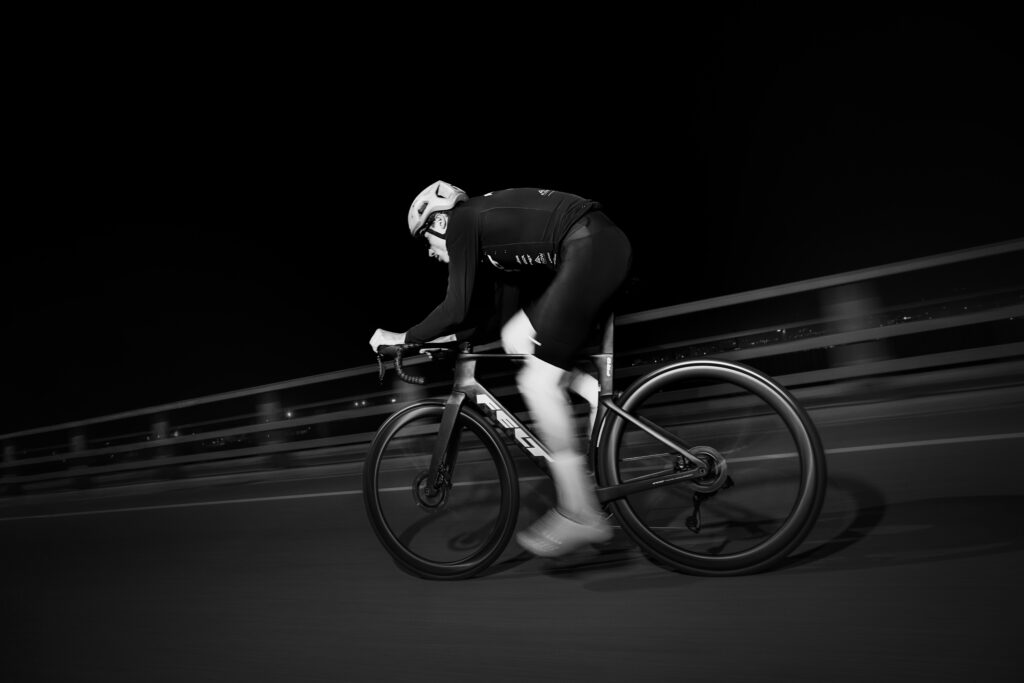
Felt Bicycles enters 2026 under new full ownership, and with that, the brand says it is returning to its roots by focusing on high-performance drop-bar bikes for road, gravel, triathlon, and track. We are told that the strategy emphasises aerodynamics, carbon engineering, and race performance, while simplifying the product range.
Aerodynamics has long shaped Felt’s bike designs, with the original AR (Aero Road) launching in 2008 and last updated six years ago. Its successor is the new Nexar – a name that blends ‘Next’ and ‘AR’ – and is described as being “focused on marginal gains, cleaner transitions, optimised shaping and tighter system integration”. It’s built around three core principles: aero, weight and fit.
Despite not currently sponsoring a WorldTour team, Felt says that the Nexar “…applies the same expertise proven in elite competition and performs at the level of the fastest WorldTour bikes. Independent third-party data places it in the top tier of aero performance, less than 4 watts away from the leading competitor bike.”

Here’s the new Nexar in a nutshell (according to Felt’s claims):
- 5% faster than the previous Felt AR
- Top-tier model weighs a claimed 6.48kg
- Clearance for 32mm-wide tyres
- New fully integrated front end
Aerodynamics
Aerodynamics sits at the core of the Nexar, with Felt claiming it is “one of the fastest full-aero bikes on the market”, reducing drag by 5% at 40km/h compared to the previous generation AR.

The bike’s aerodynamic performance is built around two key principles. The first is reducing frontal area, which the brand says has been achieved through slimmer tube profiles, fully internal cable routing, and rider positioning designed to present a smaller shape to the wind. The second is optimising airflow, with teardrop-inspired tube shapes and smoother transitions between components.
Felt points to its long-standing focus on aero development, from early adoption of wind tunnel testing and Computational Fluid Dynamics to advances in carbon layup and integrated front-end design. According to the brand, the Nexar represents a shift towards creating an aero bike that doesn’t require compromise, “where an aero bike is designed not just for the strongest 1 percent of racers but engineered to work for the 99 percent of the performers on the market.”
Weight

Alongside claiming to be the fastest aero road bike they’ve ever made, Felt also says the Nexar is the lightest. The top-tier FRD frame (size 54 cm) weighs 800g, matching the recently released Giant Propel Advanced SL frame.
In its lightest configuration, the complete Nexar FRD bike is claimed to weigh just 6.48 kg (size 54 cm) – 320 g below the UCI minimum weight limit. The Nexar Expert and Race models are said to be around 300 g heavier, making them “ideal for riders prioritising resilience over minimum weight.”
“The goal was to hit in production a unique 800-gram frame and 6.48 kg overall FRD build. Essentially the lightest full-aero bike on the market. Therefore, we engineered NEXAR’s carbon structure to keep mass low while maintaining stiffness and precision, choosing the right materials, the right carbon layups and the right structural priorities”, says Felt.
The new one-piece cockpit is also claimed to contribute to weight reduction while enhancing stiffness, integration, and aerodynamic cleanliness.
Fit
The third area Felt focused on with the Nexar is fit, recognising that outright speed only matters if the rider can hold the position.
“A higher frame stack and shorter reach improve posture while a steeper seat tube angle supports efficient power position over the bottom bracket”, according to the brand.
To achieve this, the Nexar is offered in seven frame sizes, and Felt says “each size has been engineered to look and perform coherently, with correct proportions, consistent handling”.
Crank length is also size-specific, which is designed to optimise pedalling efficiency for different rider proportions. XXS and XS frames come with 165mm cranks, while S and M frames use 167.5mm cranks on the FRD build. On the Pro, Expert and Race builds, the S size uses 165mm cranks, while M moves to 170mm. Larger L, XL and XXL frames all feature 170mm cranks.
Felt says the geometry was developed using data from thousands of rider positions and input from international bike fitters, with the goal of creating a bike that works not only in the wind tunnel but for the vast majority of real-world riders.
Frame updates

The frame has been updated across key areas which is said to improve both performance and ride quality. Around the bottom bracket, the structure has been reinforced to maximise power transfer and deliver sharper acceleration under load, according to Felt.
The brand also says the rear triangle has been re-engineered to improve comfort over longer rides, while the seat stays have been lowered to increase vertical compliance. Tyre clearance has also been increased by 2mm compared to the previous AR, allowing for tyres up to 32mm wide.
That matches the latest Giant Propel Advanced SL, but many recently launched aero road bikes can take wider tyres; the latest Cervelo S5 can handle tyres up to 34mm, for example.
Pricing, availability, and a little history
It would be a rather large understatement to say that Felt – officially founded in the USA by Jim Felt in the early 1990s – has had some turbulent times, particularly in the last decade. According to Bicycle Retailer and Industry News, the French sports equipment giant Rossignol bought the brand from Jim Felt in 2017, then KTM acquired it from Rossignol in 2021. In late 2025, Florian Burguet and Cesar Rojo – Felt’s managers and minority shareholders – agreed a purchase agreement with KTM, meaning the brand is now based in Barcelona.
There are no direct sales, Felt instead operating through a “global network of expert shops”. In the UK, Felt bikes are available online through the likes of Merlin Cycles and Speedhub.
We’re told the Nexar will be available from the end of March in seven frame sizes. It comes in four complete builds as well as a frameset option, with the top-tier Shimano Dura-Ace Di2 model priced at £9,899. For comparison, Giant’s recently released Propel Advanced SL 0, also equipped with Dura-Ace Di2, comes in £100 more at £9,999.
Felt Nexar FRD (£9,899)
Groupset Shimano Dura-Ace Di2 + 4iiii dual-sided power meter
Wheels Metron 45 RS
Weight 6.48kg

2026 Felt Nexar Pro aero bike (Image Credit: Felt)
Felt Nexar Pro (£7,013)
Groupset Shimano Ultegra Di2 + 4iiii single-sided power meter
Wheels Metron 45 SL
Weight 7.04kg
Felt Nexar Expert (£5,454)
Groupset Shimano Ultegra Di2
Wheels Metron SC45 I23
Weight 7.53kg

Felt Nexar Race (£4,675)
Groupset Shimano 105 Di2
Wheels Metron SC45 I23
Weight 7.96kg
Felt Nexar FRD frameset (£4,069)

For more information and to find a local Felt dealer, head over to Felt’s website.
What are your thoughts on Felt’s new aero bike? Let us know in the comments section below.












2 thoughts on “Felt ups the lightweight aero stakes again with all new Nexar, claiming a bike weight of just 6.48kg”
Brilliant work – you highlight Felt saying higher stack, shorter reach but fail to provide any geometry figures apart from crank length. So it’s a cut and paste of a press release.
‘recognising that outright speed only matters IF the rider can hold the position.’
SERIOUSLY… 🙄🤦