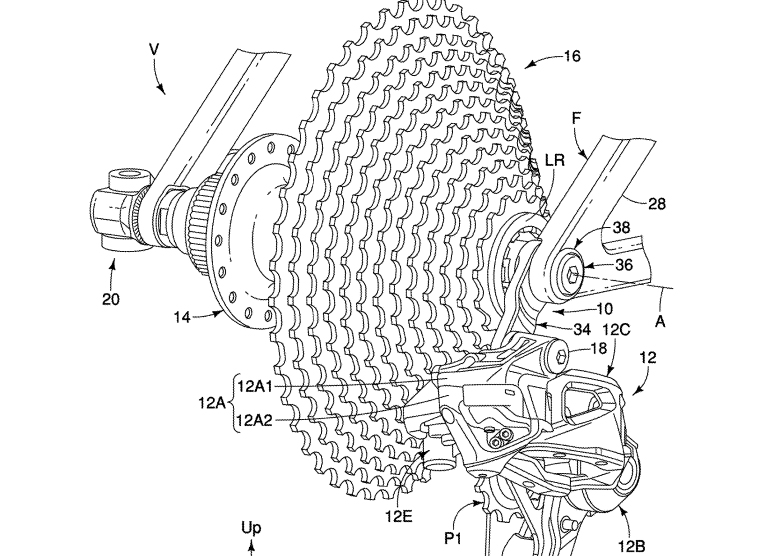

With SRAM unveiling its Full Mount mech throughout electronic and mechanical T-Type drivetrains, it came as something of a surprise that Shimano’s latest XTR, XT, and Deore Di2 drivetrains didn’t do anything to imitate that design. Perhaps, thanks to Shimano’s Automatic Impact Recovery System, it was deemed unnecessary, but a patent published on the sixth of November shows that Shimano isn’t ignoring the mech hanger. Oh, and that patent includes a design for a 13-speed electronic drivetrain.
- Confused by Shimano’s huge range of mountain bike drivetrains? From CUES to XTR, here’s everything you need to know about Shimano MTB components
- Shimano introduces new mechanical 12-speed GRX
- Fast shifting, increased durability and no wires: Shimano unveils first fully wireless drivetrain, Shimano XTR 12spd Di2
First spotted by our friends over at Pinkbike, a new patent filed by Shimano shows a number of interesting things, but perhaps the most interesting is its design for a new mech hanger, so we decided to take a glance at the patent ourselves. Lo and behold, there it is, along with another mech hanger design that we expect may be intended for road and gravel purposes.
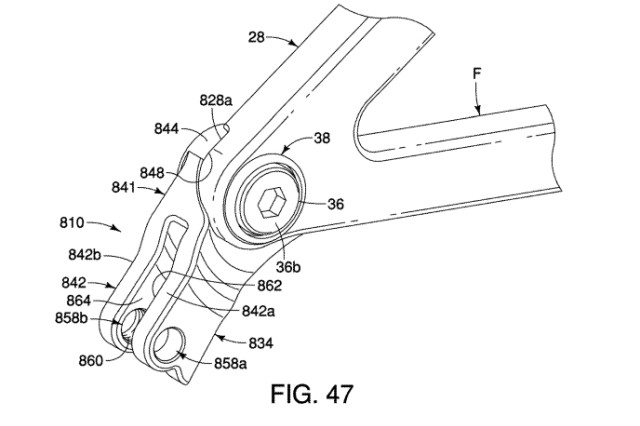
To use Pinkbike’s words, it’s a two-pronged mech hanger that looks kind of like SRAM’s Full Mount system, but upside down. And rather than the two ‘prongs’ attaching to the frame, they sandwich the mech’s mount with a ‘tubular member’ (hey now!), which features a pair of threads for opposing bolts to screw into each other, as per my understanding of the sometimes Davinci Code-esque patent speak.
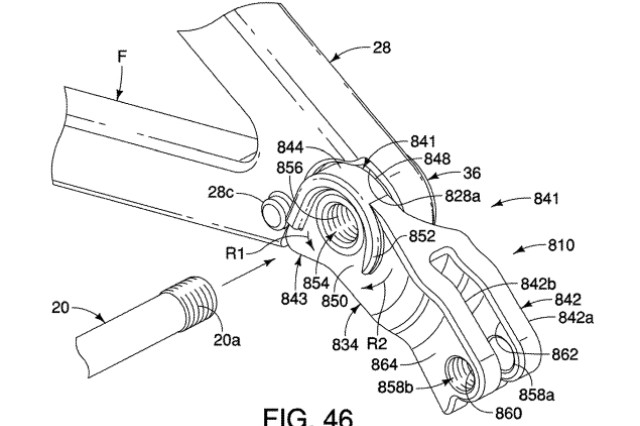
So why might Shimano be chasing this design? Well, SRAM’s Full Mount system is pretty good. It works as it’s stiffer and stronger than regular UDH hangers, which can, and will, bend under impact. I’m not saying that this dual-prong hanger won’t, as there’s still a potential weak spot sat just under the frame. But Full Mount does help SRAM’s T-Type system deliver slicker and more direct shifting. Perhaps more bracing is simply a belt-and-braces type approach from Shimano.
But this patent isn’t just about a dual-pronged mech hanger as it opens with another hanger design…
Is there a 13-speed drivetrain on the way?
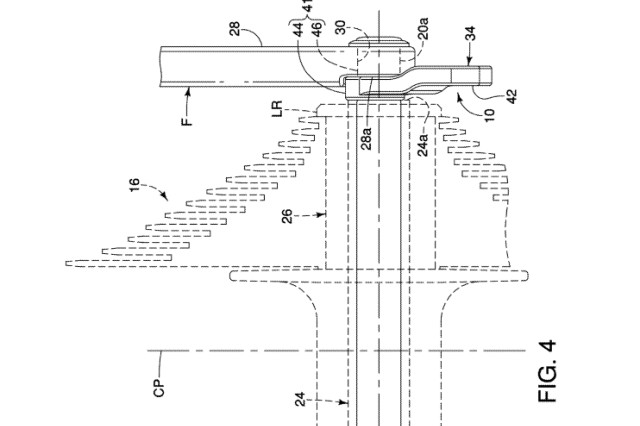
And that second hanger design looks to open up Shimano’s modern drivetrains to 13-speed shifting; it looks like it’ll be electronic too. That’s because the patent states that the derailleur will house a motor unit, which strongly suggests that it’s an electronic drivetrain.
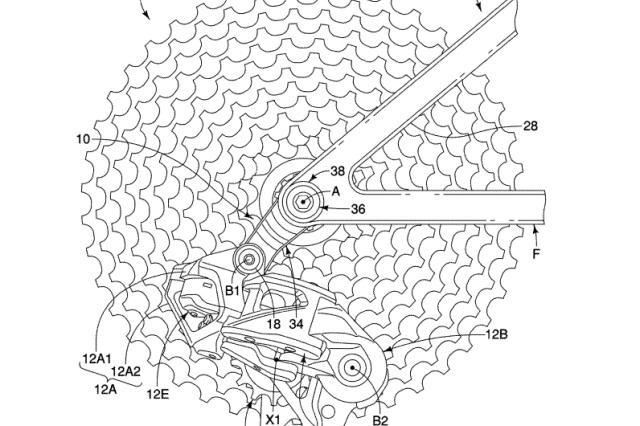
The patent then goes on to state, “thus the derailleur hanger assembly (10) is particularly useful for supporting a derailleur when a rear sprocket assembly is provided with a large number of sprockets, such as thirteen sprockets in the case of the rear sprocket assembly.”
So it’s clear that Shimano has intentions of producing a 13-speed, electronic drivetrain in some capacity. What we don’t know, and what’s not covered in the patent, is whether or not 13-speed shifting will come as an upgrade and update for existing drivetrains or as a whole new drivetrain altogether.
But 13-speed drivetrains are becoming increasingly common, especially as SRAM followed the likes of Rotor, bringing 13 gears to its top-end T-Type gravel groupsets. The benefits of doing such for gravel specifically are to provide a wide range and smaller gaps between the gears. With that, I reckon that it makes sense that Shimano’s hopefully incoming 13-speed groupset is intended for gravel use. However, with a new derailleur design, there’s every chance we might see 13-speed mountain bike updates coming in the near future.