
Pedal kickback has been the subject on every mountain biker’s lips recently, with claims that it can harm your performance on the trails. But it’s a rather complicated phenomenon, with brands taking big steps in developing products to eliminate its negative effects. Some groups don’t even think it’s a thing altogether. Either way, let’s explain what pedal kickback is and the different ways of reducing it.
- Is this the ultimate solution to pedal kickback?
- Flat or clipless pedals – which is right for you?
- Best mountain bike pedals
What is pedal kickback?
Before Aaron Gwin’s chainless win in Leogang in 2015, pedal kickback definitely existed, but wasn’t the large and heavily spoken about subject it was thereafter. It’s a race run that’s well worth watching, too, as Gwin snaps his chain out of the gate and still manages to win (I’ll forgive you for taking a break from reading this to have a quick watch). Gwin’s historic effort got a lot of people thinking about how a bicycle chain can influence and hinder suspension performance; thus, a number of brands began to develop components to combat its harsh effects.
Pedal kickback is caused by a few things, but mostly, it’s a natural occurrence in the design of full suspension mountain bikes, and, namely, the rear wheel’s axle path. This is the term used to describe how the rear axle moves as the bike’s suspension is compressed. As the rear axle rotates around a pivot, axle paths are typically circular (picture an imaginary circle around your bike’s main pivot that crosses your rear axle), although some brands design their bikes to be straighter through pivot trickery. As such, some bikes suffer from it more than others.
This rounded rearward movement is mainly what’s to blame for pedal kickback, but it’s something of a domino effect. Importantly, the rearward movement of the rear axle causes the chainstay length to lengthen as a bike moves through its travel, and that tips the first domino.
When a drivetrain is thrown into the mix, the chainstay stretch can cause the freehub to engage unwantedly, which then the chain pulls on your crank, causing your leading pedal to kick back.
There are a lot of factors at play here, but there are three key ones that can influence how clear pedal kickback becomes. If you’re riding a longer-travel mountain bike, the axle path will be longer, so it’s prone to more chainstay growth. If you’re riding with a high-engagement freehub, it’ll pick up pedal kickback faster (keep this in mind for later), and with some single-pivot mountain bikes, pedal kickback can be more noticeable as there aren’t any other pivots or linkages to straighten the axle path out.
While the most direct effect caused by pedal kickback is harshness through the pedals, it can hinder suspension performance by stopping the suspension from compressing as freely as possible. That may well be why Gwin managed to win without a chain.
How can pedal kickback be solved?
Whether or not you believe pedal kickback can be solved, there are technically three ways in which it can be minimised. But none of them are perfect solutions, with each coming with its own downsides. However, if pedal kickback is something you’re concerned about, if you have the means to, each is worth experimenting with, especially if you’re a serious racer.
There are three ways of reducing pedal kickback: high pivot mountain bikes, crank/spider-based dampers, and freehub systems. Let’s dive into each.
High pivot mountain bikes
A whole new mountain bike is the most expensive way of minimising pedal kickback, and really, that’s not what high-pivot mountain bikes are all about. Instead, they capitalise on a more pronounced rearward axle path for better suspension performance. Of course, building a more rearward axle path into your bike will exaggerate pedal kickback, but this is solved by equipping such bikes with idler pulleys.
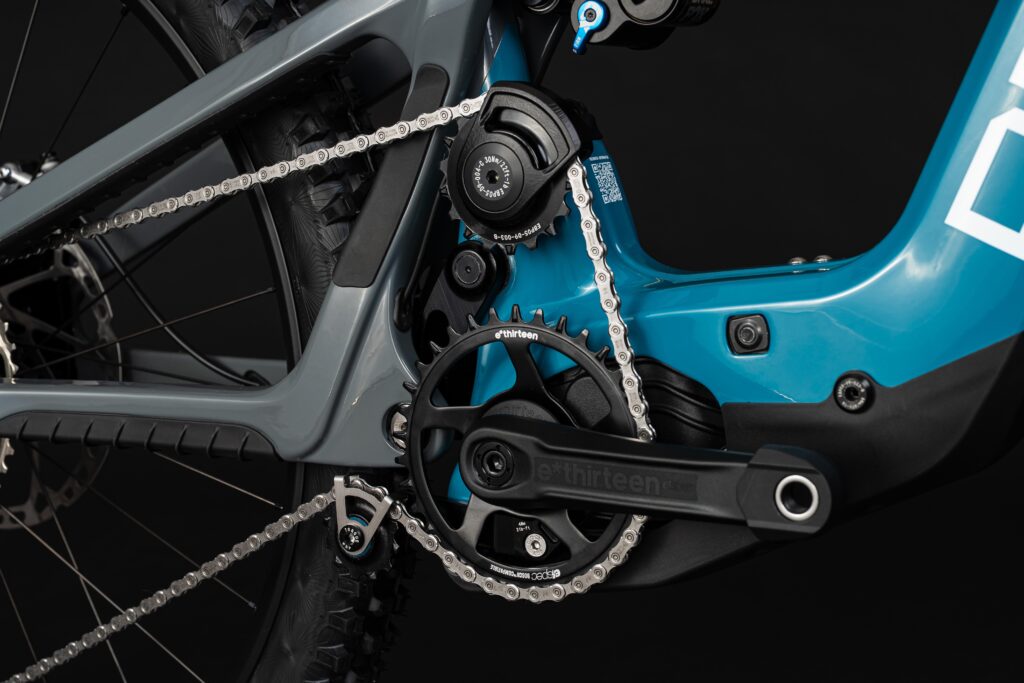
While it sounds a little mad to purposely build a bike with a more rearward axle path, high-pivot mountain bikes are designed to cope with square-edged hits better, resulting in a smoother and potentially faster ride.
They’re not without some downsides, however. They require longer chains, and sometimes two to stretch around the chainring, idler, cassette, and derailleur. Additionally, the most important factor to consider is that their ride character is rather unique, because their chainstays typically grow more than those of traditional designs. This can come as something to get used to when cornering and in other instances of compression, as when the bike dives into its suspension, its wheelbase grows more than you would expect if you’re used to regular mountain bikes.
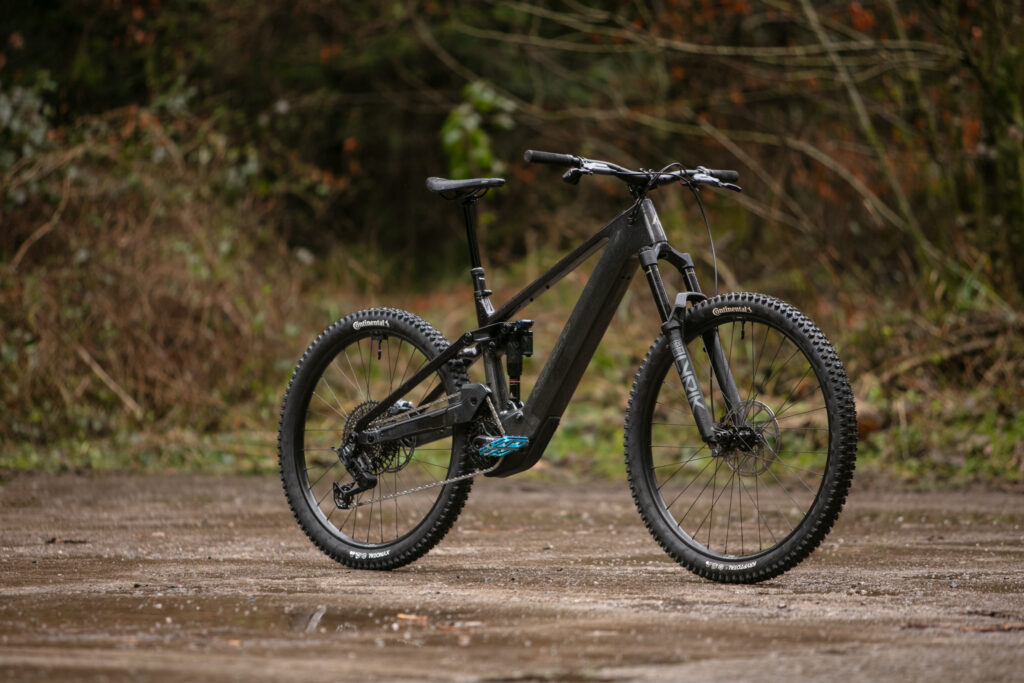
High or mid-pivot mountain bikes are growing in popularity, and they can be found throughout the downhill and enduro market. However, there are a few trail offerings too. A few examples of these bikes are Canyon’s Sender, Trek’s Slash, as well as the whole of Deviate’s range, and most of Norco’s lineup.
Chainring-based dampers or Active Spiders
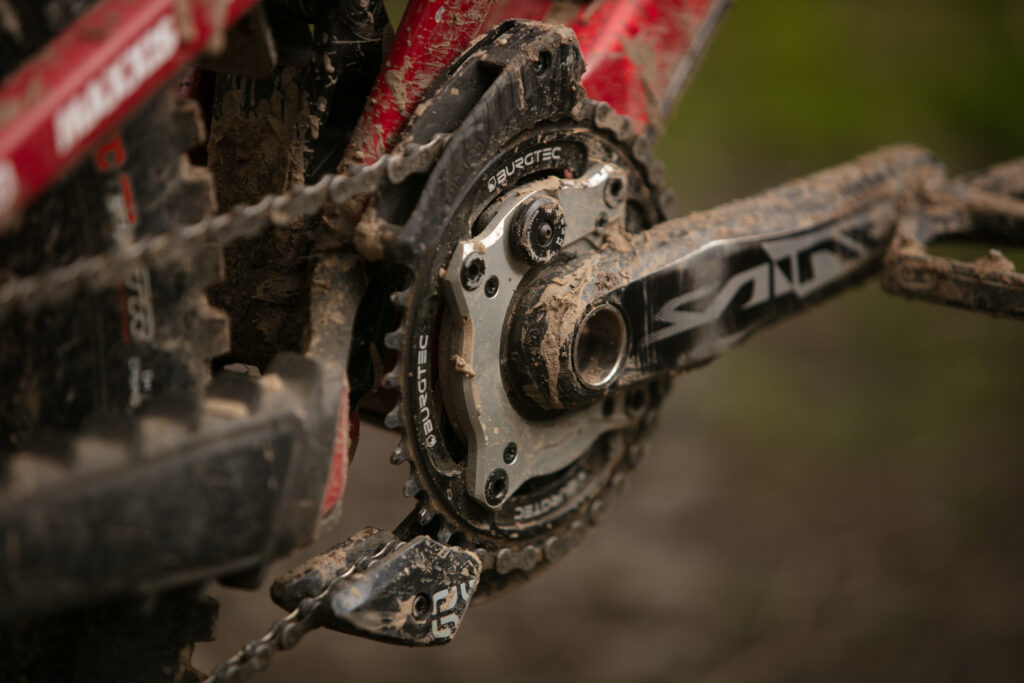
If we look away from high-pivot mountain bikes, chainring-based dampers were among the first devices to combat pedal kickback. Namely, that’s the O-Chain, but there’s another on the market from Rimpact, dubbed the Chain Damper. We’ll get onto that one in a bit.
The whole idea of both of these products is that they allow the chainring to move independently of the crankset. This isolates the crank and pedals from any forces that pedal kickback can cause. This then helps the suspension move more freely.
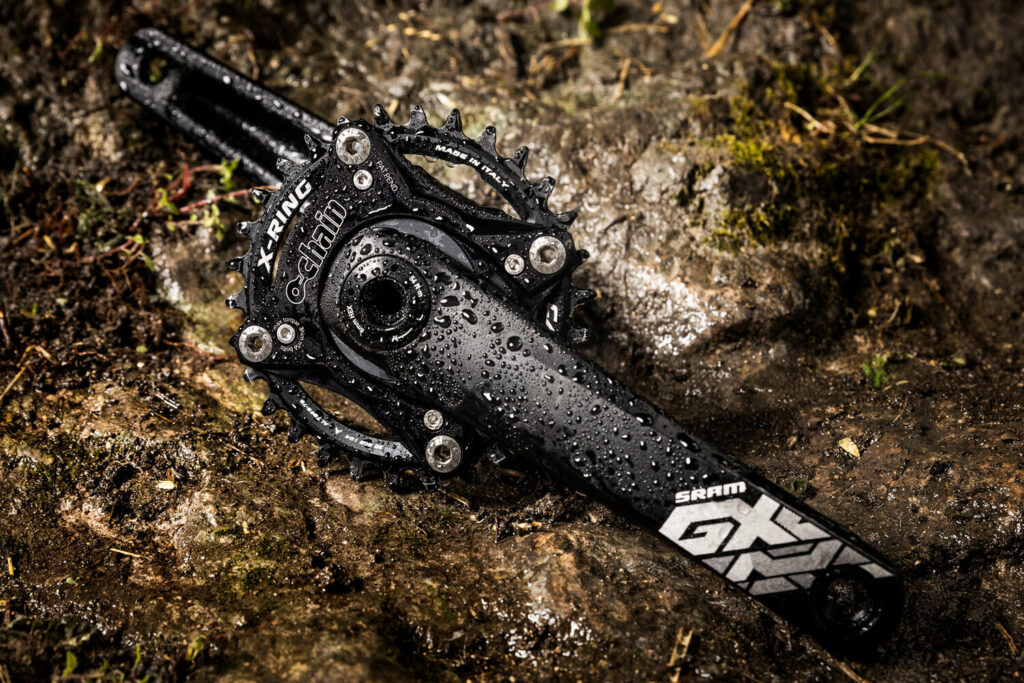
What makes these products so appealing is that they can be attached to nearly any mountain bike, provided there’s enough clearance. However, some may run into clearance issues; they add weight, and they require special chainrings. Plus, they’re not exactly cheap, and they’re another component to maintain.
Rimpact’s Chain Damper, as its name suggests, goes around the pedal kickback subject differently. Instead, it addresses forces that occur when the upper portion of the chain moves up and down, causing chain slap and perhaps some forced movement at the crank. By damping that chain movement, it creates a smoother ride downhill, with any benefits to pedal kickback being secondary.

However, the big downside of these chainring-based products is that they have a knock-on effect on pedalling. As the device is built to isolate itself from the pedals, it engages and disengages while you’re pedalling, which can feel super weird and may not be the most efficient.
Freehub systems
More recently, the likes of e*thirteen and DT Swiss have thrown their hats into the ring with their freehub-based systems. Sidekick and Degrees of Freedom, respectively, work in a similar way to chainring-based dampers but whittle the tech down to fit inside a freehub. As a result, they don’t pose clearance issues, and they don’t look all that different from regular freehubs.
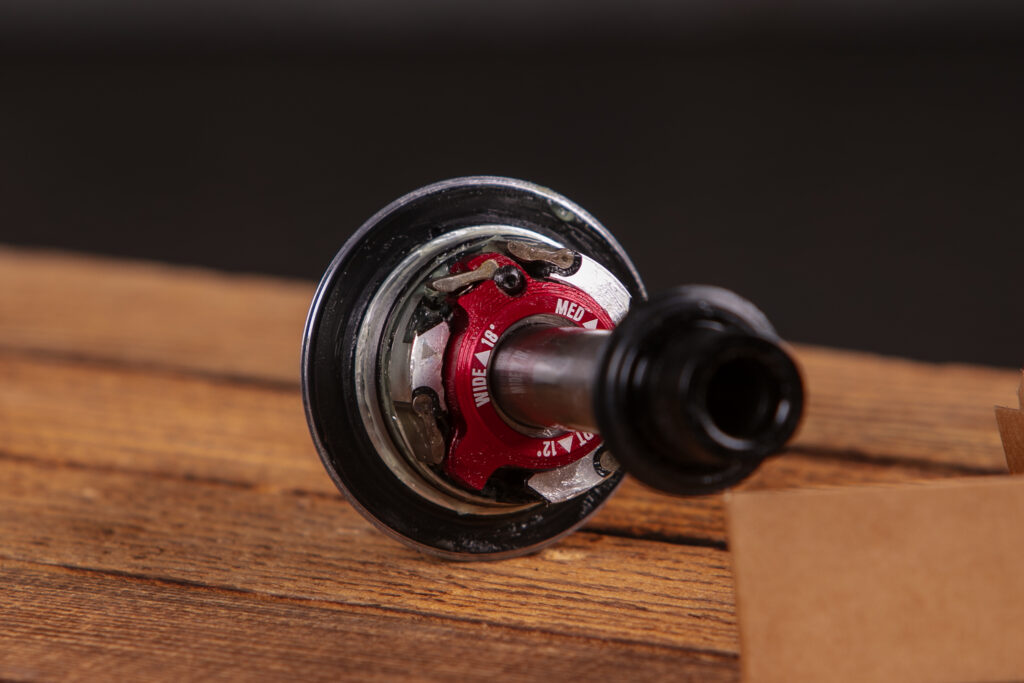
Both systems introduce degrees of free movement, ‘deadband’, or to put it harshly, lag. This free movement then isolates the drivetrain as a whole from the rear wheel’s axle path.
Though, as there’s a clear level of lag before each system engages, they can feel very much like riding a very slow engaging freehub because that’s technically what they are. You’ll notice that when pedalling up technical climbs and hard sprints. However, once they’re engaged, they shouldn’t pedal all that differently from regular freehubs. It’s just those ratcheting, stop/start sections where you’ll notice it. However, both systems are adjustable, so you can reduce the amount of lag.

The downside with these is that you’ll need specific rear hubs. For e*thirteen, you’ll need a Sidekick hub, and DT Swiss’s Degrees of Freedom can only be installed into a DEG freehub. This either means buying a whole wheel from either brand, or buying the hub and having it laced to a rim of your choice. However, DT Swiss DEG owners just need to buy the Degrees of Freedom upgrade kit.
Do you need an anti-pedal kickback system?
You don’t need any of these systems to have a great time on your bike, but they can improve how your bike feels to ride. Whether you go for a high-pivot mountain bike or a fancy freehub, each will bring greater smoothness to how your bike feels when descending and better suspension sensitivity. This can lead to improved confidence when descending, and if you’re racing, it could lop a few seconds off your times, which is why we’re seeing such systems becoming common on the downhill and enduro circuits.
However, all of these products are rather expensive, and they’re not without their downsides. Some come with weight penalties and compatibility issues, others just introduce a weird feeling under pedalling loads.