


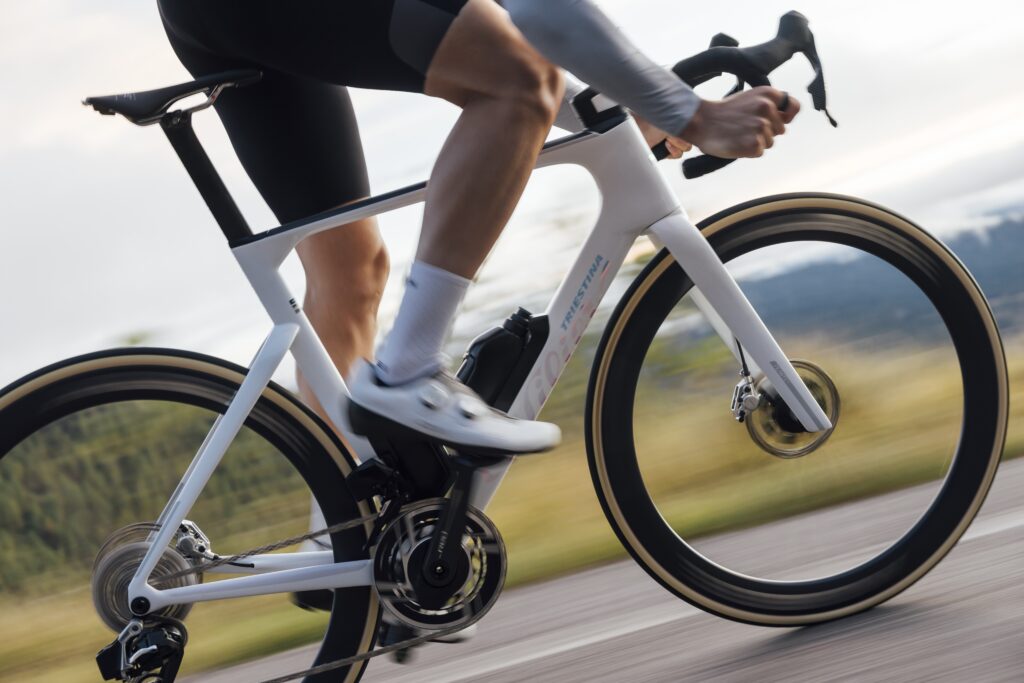

Italy’s Wilier says it has reduced the drag of its top-level Filante SLR road bike by 13.6%, the Filante SLR ID2 coming with tweaks all round, including a redesigned frame and fork, an updated bar/stem, and a new bottle and mount system that “functions as a veritable spoiler”.

We’re all used to bike brands making big statistical claims for their new models – aerodynamics, weight, stiffness, you name it – but the Filante has long been one of our favourite high-end models, so let’s hear Wilier out.
Overall, Wilier says that testing in the Silverstone wind tunnel has shown a 13.6% reduction in drag compared with the existing Filante SLR.
“In the complete bike-rider system, we recorded a 4.5% improvement in aerodynamic resistance,” says Wilier (the rider is always responsible for significantly more drag than the bike).
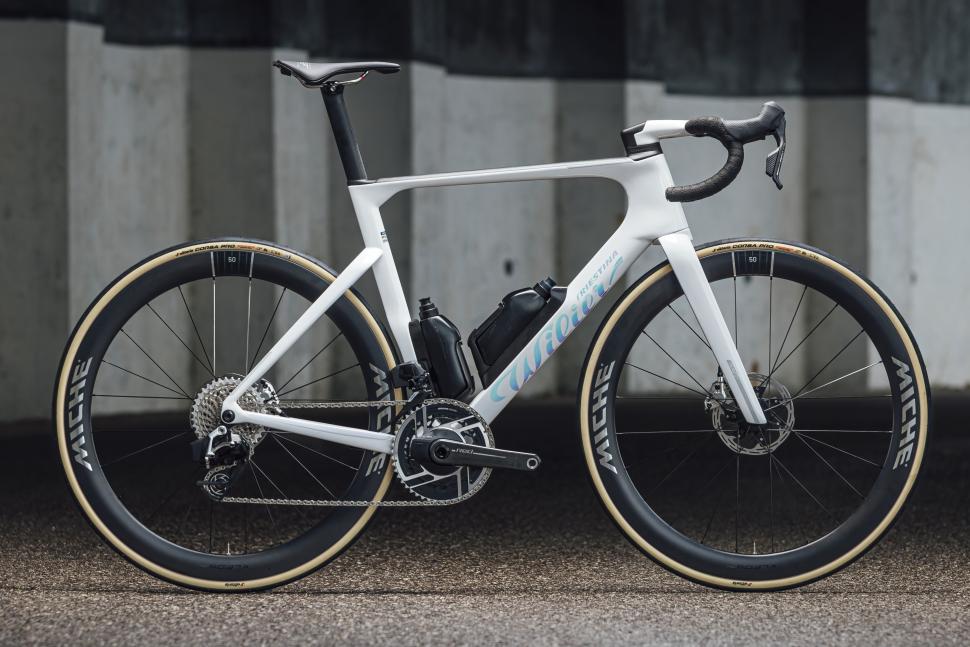
“The comparison with the Filante SLR ID1 [the previous generation] highlights tangible and significant advantages: maintaining the same speed of 40km/h [24.9mph], a substantial 14.15 watts of power is saved. Even more impressive are the data over distance: by applying the same power of 290W over a 70km [43.5 miles] route, a gain of 1:45 minutes is achieved, a margin that truly makes a difference in a competitive environment.”
In its white paper supporting the launch, Wilier says, “We put our bike in direct comparison with five top-of-the-range models from the main WorldTour competitors. Only one managed to come close: compared to the others, the Filante SLR ID2 registered an average CDA [drag coefficient x area] that was 2.42% better.”
We all love a head-to-head, but Wilier doesn’t name names.
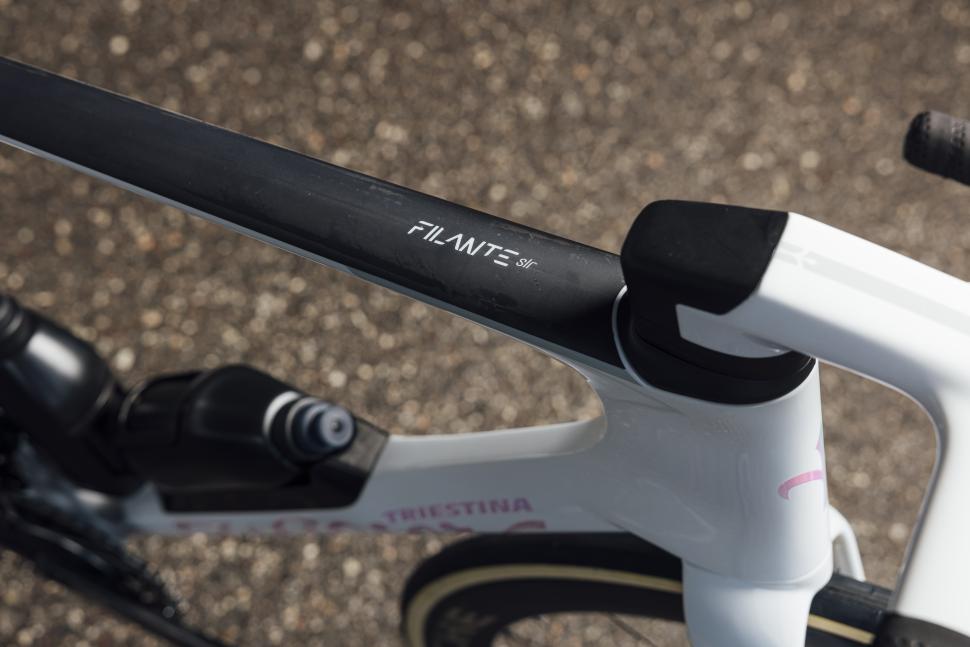
How has Wilier made these gains? First up, it has done a lot of work around the down tube.

“The upper part, very thin and shaped according to a NACA airfoil, works near the head tube to ensure maximum aerodynamic penetration,” says Wilier. “The lower part, however, is wider and more enveloping, designed to incorporate and shield the water bottles, reducing the turbulence traditionally generated in this area.”
This is where Wilier’s Aerokit system comes in – custom aero bottles and mounts that are designed to integrate with the frame. Developed with Elite Cycling, the Aerokit system can carry 1,100ml “with a minimal aerodynamic impact”.
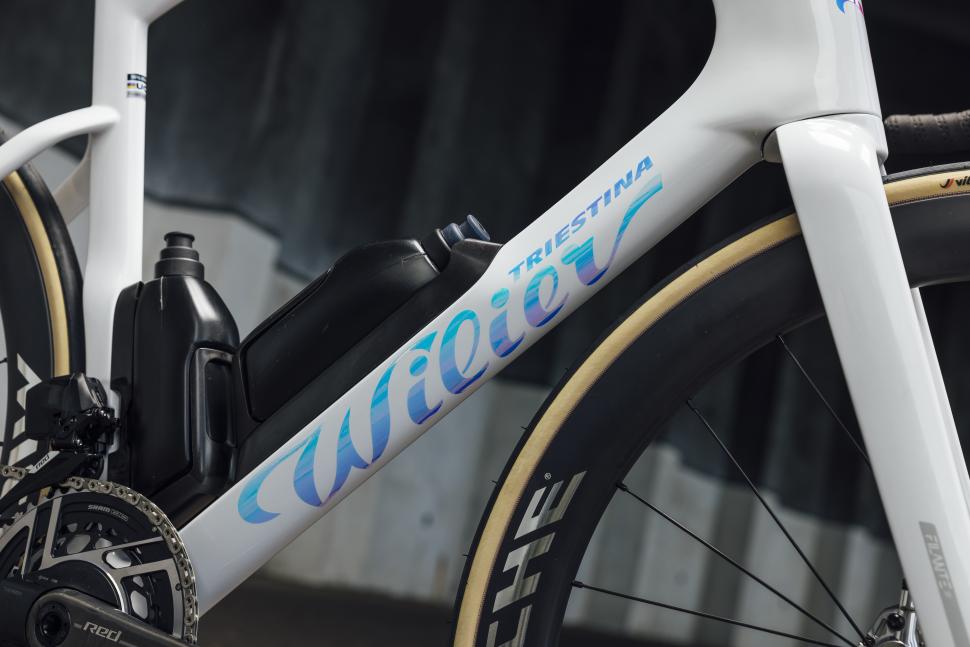
“From a technical perspective, the Aerokit functions as a veritable spoiler, capable of keeping the air more stable and less turbulent around the frame,” says Wilier. “Compared to traditional systems, aerodynamic drag is reduced by over two-thirds.”
As well as its own tapered aero water bottles, Aerokit is compatible with traditional round water bottles: 550ml on the down tube and up to 750ml on the seat tube.
How much of the Filante SLR ID2’s aero efficiency is down to the Aerokit?
“In tests conducted on the bike alone, at 40km/h [24.9mph] there is a saving of 8.9 watts with standard water bottles and bottle holders, and 9.47 watts with the Aerokit; values that increase at 50km/h [31.1mph] to 19.13 watts and 21.20 watts respectively,” says Wilier in its white paper.
“The effectiveness becomes even more evident when considering the combined bike-and-rider system: at 40km/h [24.9mph], the advantage for the rider is 11.51 watts with standard bottles and 14.15 watts with the Aerokit, while at 50km/h [31.1mph], the savings climb to 24.55 watts and 28.80 watts.”
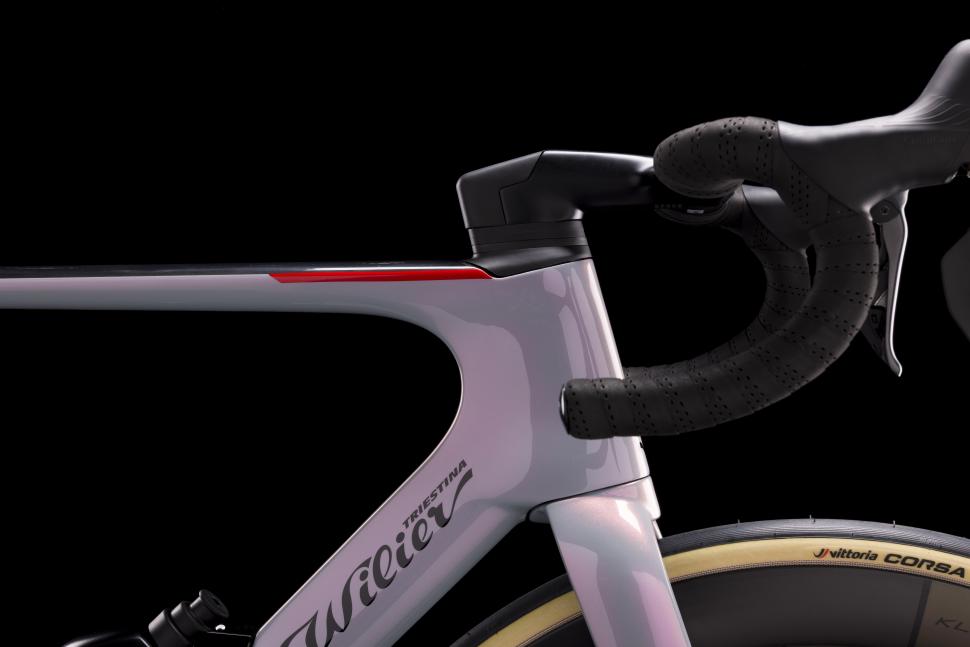
The leading edge of the head tube is the same as previously, but the profile becomes more tapered to reduce drag. The rear stays are still very wide – among the most noticeable features of the Filante SLR ID1 – but Wilier says they have been completely redesigned.
“Analyses of the dynamic interactions between the stays and leg movement during pedalling guided us towards a counter-intuitive solution: inclining the stays inward by 2.5°,” says Wilier.
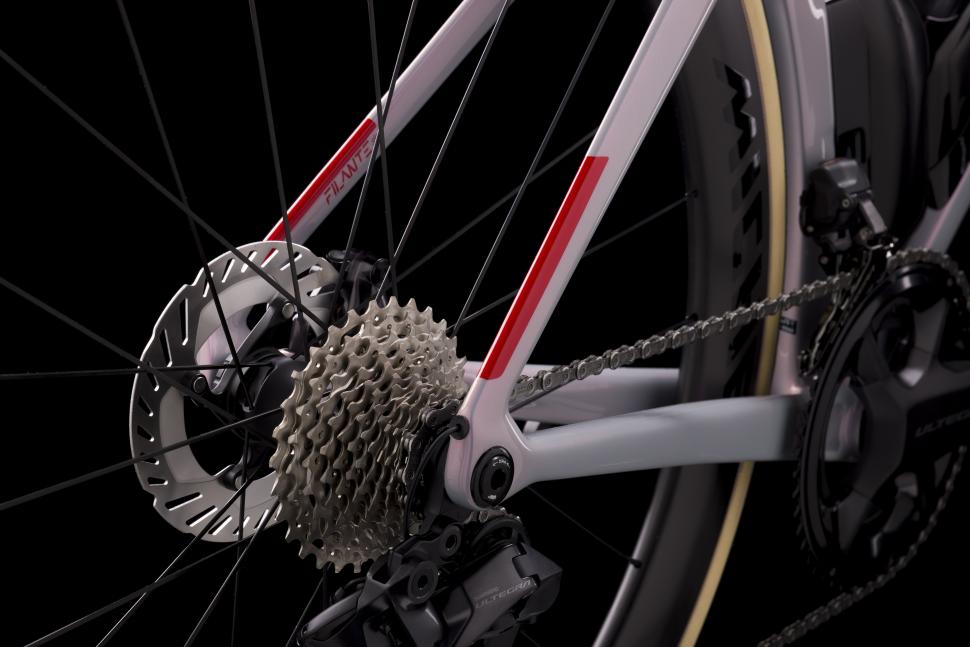
The rear triangle has also been slightly lengthened, increasing space for tyres up to 34mm.
Wilier has also been tinkering with the fork.
“For the design of the fork, we analysed numerous NACA airfoils – aerodynamic shapes derived from aeronautics and mathematically defined to ensure maximum efficiency in the airflow,” says Wilier. “Every airfoil was tested in combination with the wheel and tyre through CFD [computational fluid dynamics] simulations, considering different wind incidence angles to reproduce real-world usage conditions.
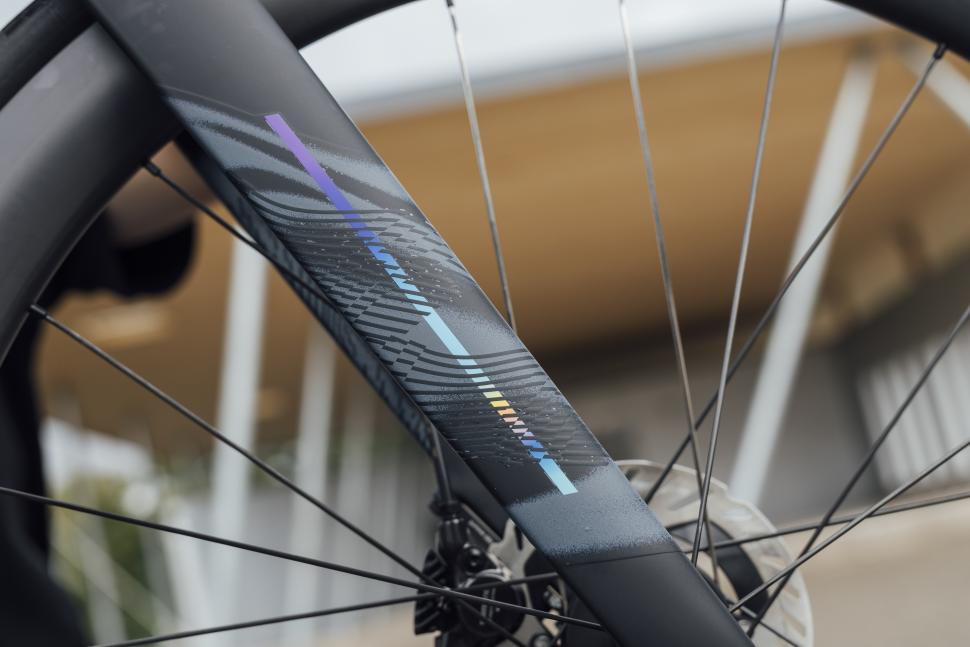
“The result is a fork whose legs combine an external NACA airfoil with a flat inner profile.”
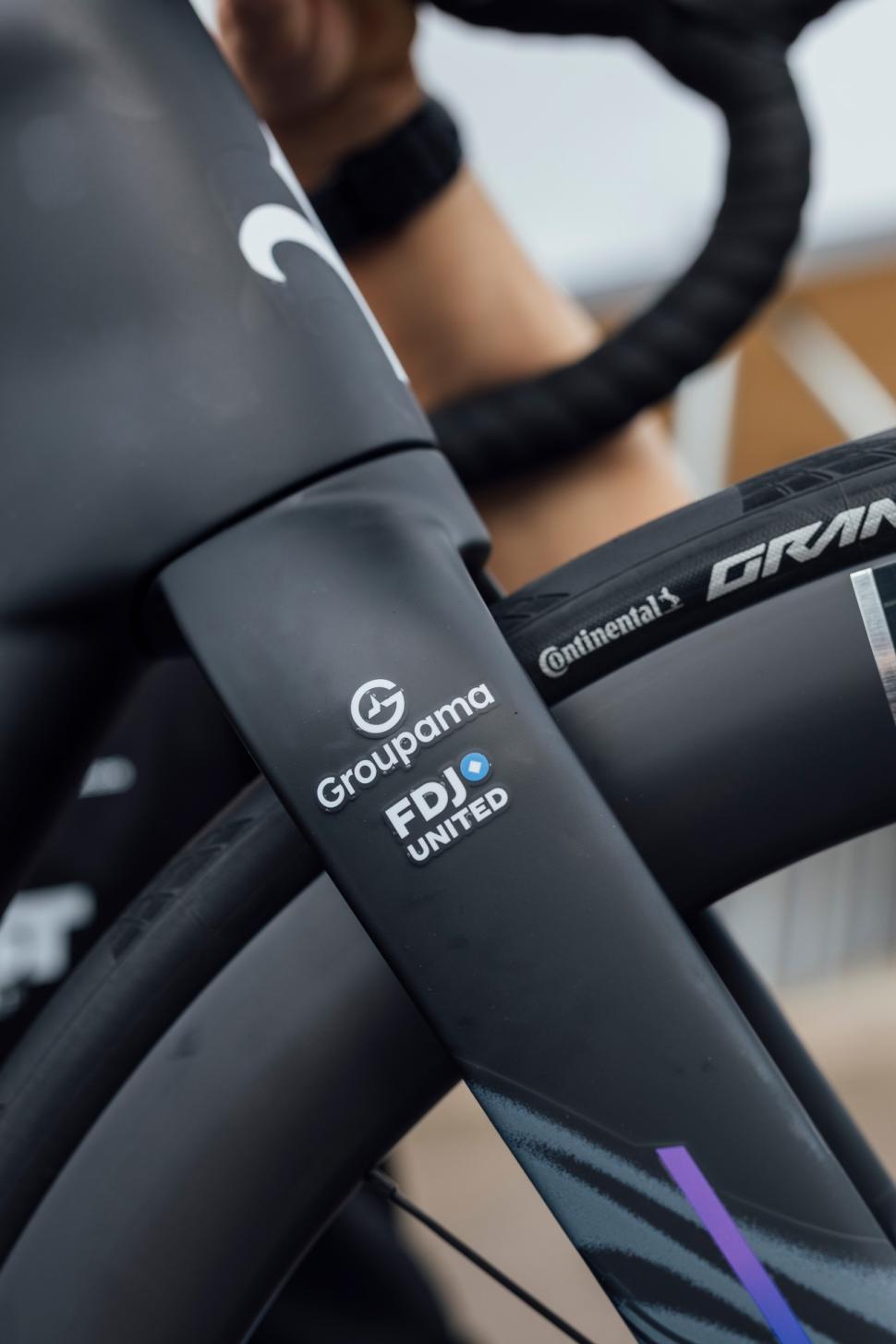
The fork crown cone is more pronounced now – providing greater torsional stiffness and a high level of stress resistance, according to Wilier – and there’s a “thin aerodynamic fin that skims the disc and envelops the brake calliper” on the left leg. Wilier calls this “a partial fairing”, which is a refinement of the design used on its Supersonica SLR time trial and triathlon bike.
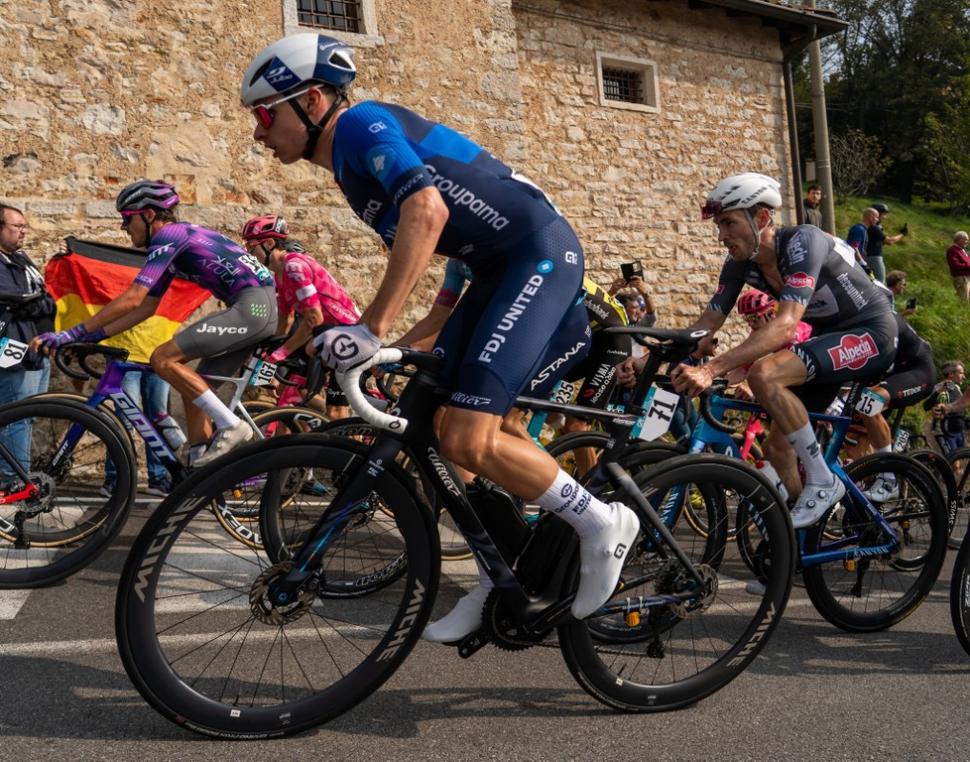
Doesn’t the UCI disapprove of fairings? You’re not allowed to add a fairing in UCI races but the rules are different when it comes to shaping that’s structural, and all frames and forks have needed to be approved in advance for years now. This bike has already been raced in the WorldTour by the Groupama – FDJ team.
> Find out what the UCI-accredited sticker on your bike means
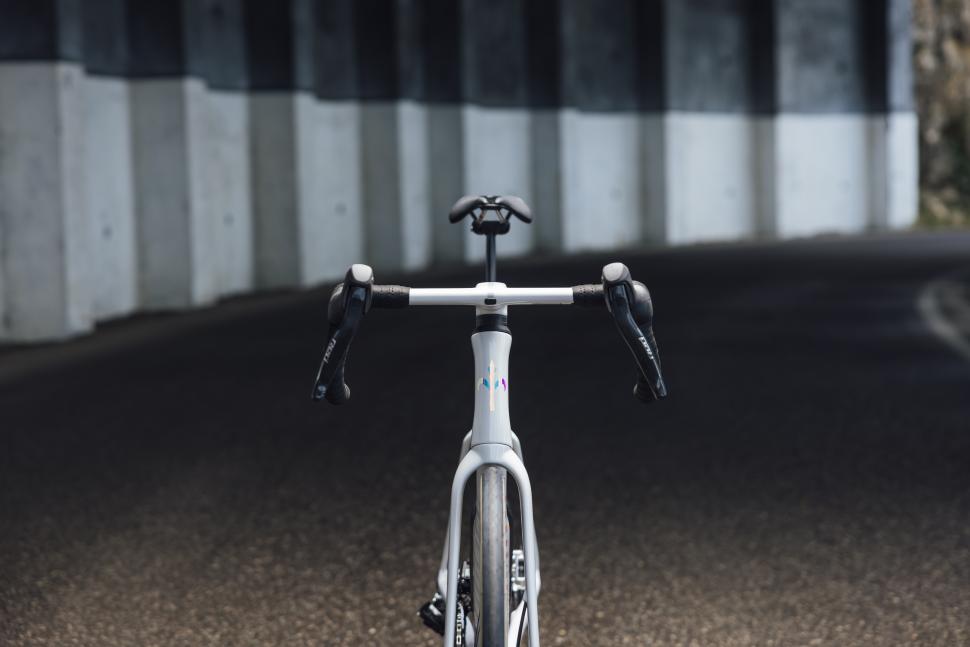
The F-Bar ID2 cockpit is a development of Wilier’s previous F-Bar integrated handlebar and stem.
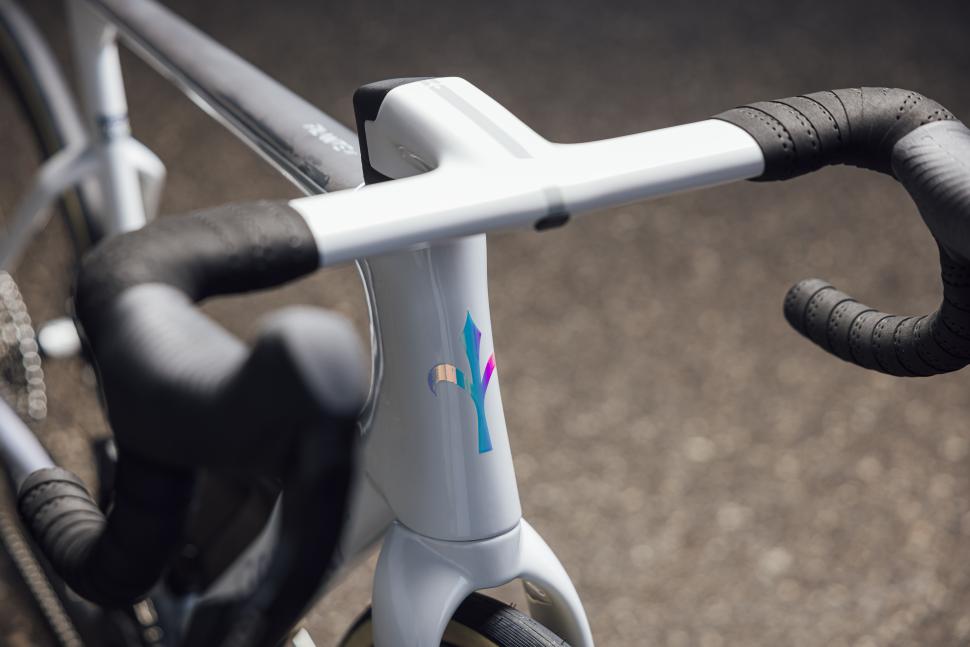
“The handlebar clamping hardware is completely hidden, benefiting aesthetics, protection from dirt and sweat, and aerodynamic performance – all while fully complying with the latest UCI regulations,” says Wilier.
The bar is still flared so that it’s 3cm wider at the ends than at the points where the levers attach. As well as 37/40cm and 39/42cm options, there’s now a 35/38 cm size for those who want to go narrower.
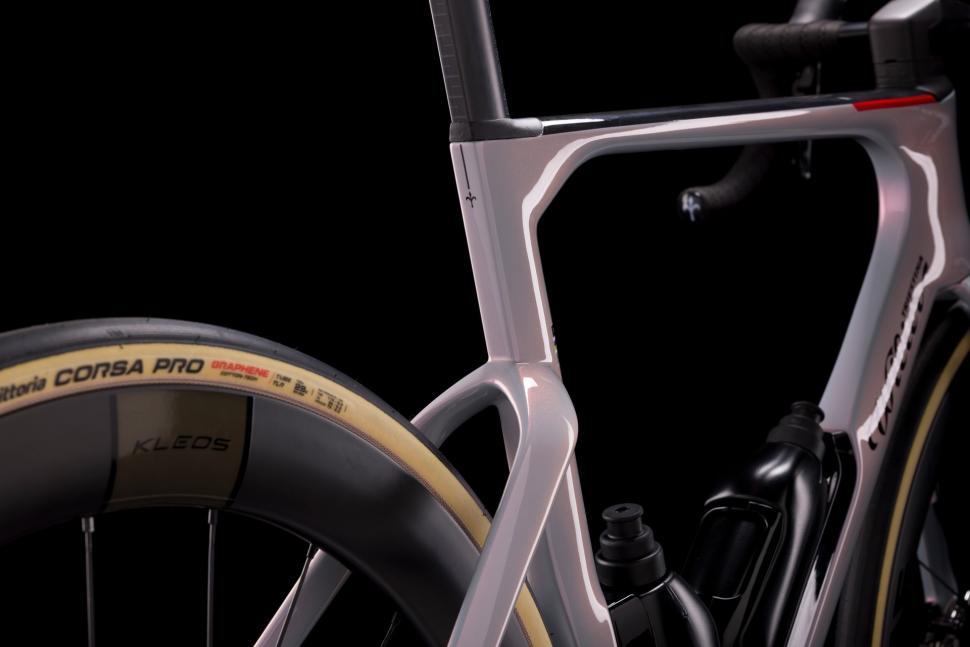
Wilier has also given the Filante SLR ID2 a new seatpost that features “a slender and sharp profile that optimises aerodynamic penetration without compromising stiffness and while guaranteeing good vertical vibration absorption”.
With such a slim seatpost, the Shimano Di2 battery needed to be repositioned, and Wilier has moved it behind the bottom bracket, saying that this makes it more accessible while lowering the bike’s centre of gravity for more stability.
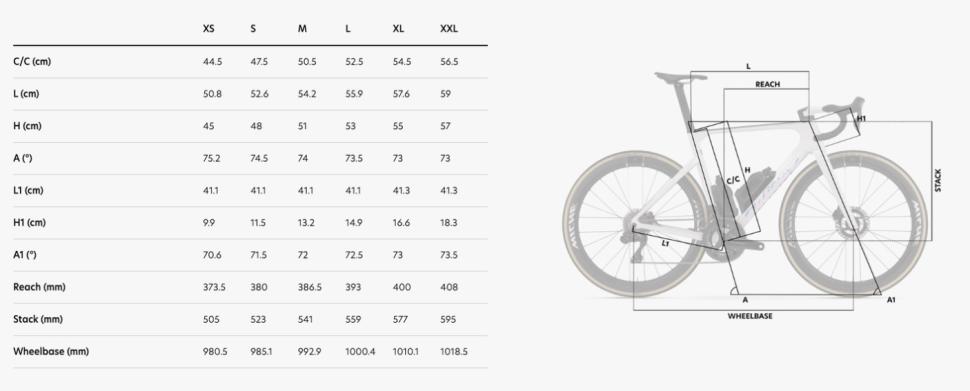
What about weight? The Filante SLR ID2 is an aero bike so the priority with this update hasn’t been to shave off the grams, but Wilier says the frame (painted black, size M) is 860g +/-5% – the same as the previous incarnation – and builds are possible slightly above the UCI’s 6.8kg minimum weight limit.
“Three types of [Toray] fibres are used – T800, T1100, and M46JB – selected and mixed better to combine responsiveness, stiffness, and light weight, resulting in an overall weight, in the Dura-Ace Di2 specification, of 7.1kg,” says Wilier.
Prices
Frameset (with F Bar ID2, Aerokit, GPS mount) £5,500
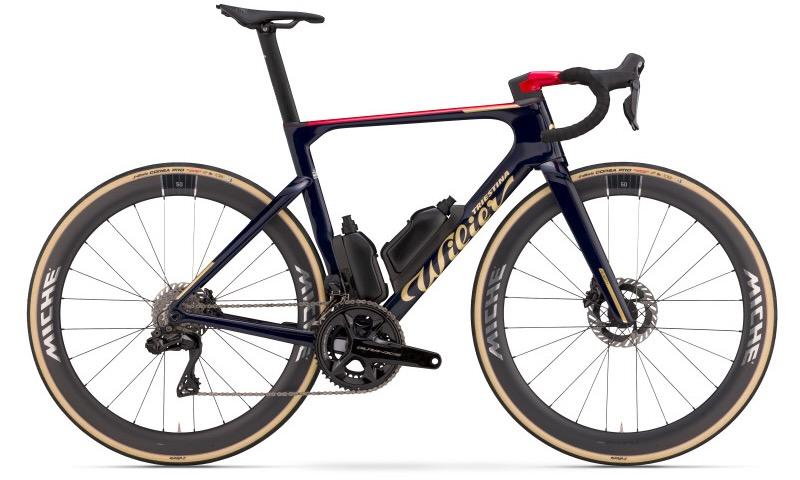
The complete bikes are these:
Groupset SRAM Red AXS E1 2×12 + powermeter
Wheels Miche Kleos Rd 50
Price £11,650
Groupset Shimano Dura-Ace Di2 R9270 + powermeter
Wheels Miche Kleos Rd 50
Price £11,450
Groupset Shimano Dura-Ace Di2 R9270
Wheels Miche Kleos Rd 50
Price £10,750
Groupset Shimano Ultegra Di2 R8170
Wheels Miche Kleos 50
Price £8,750
Groupset SRAM Force AXS E1 2×12 + powermeter
Wheels Miche Kleos 50
Price £9,300
Groupset SRAM Force AXS E1 2×12
Wheels Miche Kleos 50
Price £8,950















5 thoughts on “Wilier ups the aero with Filante SLR ID2: “It’s a new benchmark””
It’s a new benchmark, we have
It’s a new benchmark, we have finally managed to produce a bike that looks like every other bike.
How I feel about most of the
How I feel about most of the new product articles here…
TBF that’s good – because few of us want genuinely “experimental” machines (“25% faster than normal bikes until it suddenly disassembles mid-descent!”). Cycle design is at the very “marginal gains” / slight tweaks to suit different tastes stage *. And 99% of the benefits are there whichever one you pick, and reaching down towards my budget!
* (If you ignore the wide and indeed wild world of recumbents, adapted cycles, utility bikes, folders…)
Except for those proprietary
Except for those proprietary and really ugly water bottles
It’s a new benchmark in price
It’s a new benchmark in price ramping! Prices ‘starting’ at GBP 9,000!! …Oh the poor bike industry! Seriously?
GravelIsNothingNew wrote:
Regarding pricing, the bike industry’s lost the plot.