



‘Cycling should be more like Formula One!’
That sentence – uttered, I imagine, by no-one who’s ever been forced to endure the mind-numbing tedium that is F1 (sorry, petrol heads!) – has proved a stubbornly prevalent mantra throughout the last two decades in professional cycling, chanted into the abyss whenever our sport engages in its cyclical, never-ending debates about reform.
Listen to the road.cc Podcast on Apple Podcasts
Listen to the road.cc Podcast on Spotify
Listen to the road.cc Podcast on Amazon Music
We’ve heard it from World Series Cycling, we’ve heard it from the Hammer Series (remember that?), and most recently we’ve heard it from OneCycling.
Essentially, we’ve heard it every time an enterprising team boss or external entrepreneur, euro signs flashing in their eyes, comes up with a bright new idea that they reckon will rip up the old model and revolutionise cycling – whether it’s an attempt to streamline the sport’s archaic, anarchic calendar into something newbie fans can better understand, introduce new racing formats, change how racing is presented to fans, or, most importantly, to refashion how cycling’s wealth is distributed.
‘Cycling’s clearly not working guys, let’s see what these other sports are doing! What, they’re nothing like bike racing? Sure, that doesn’t matter!’
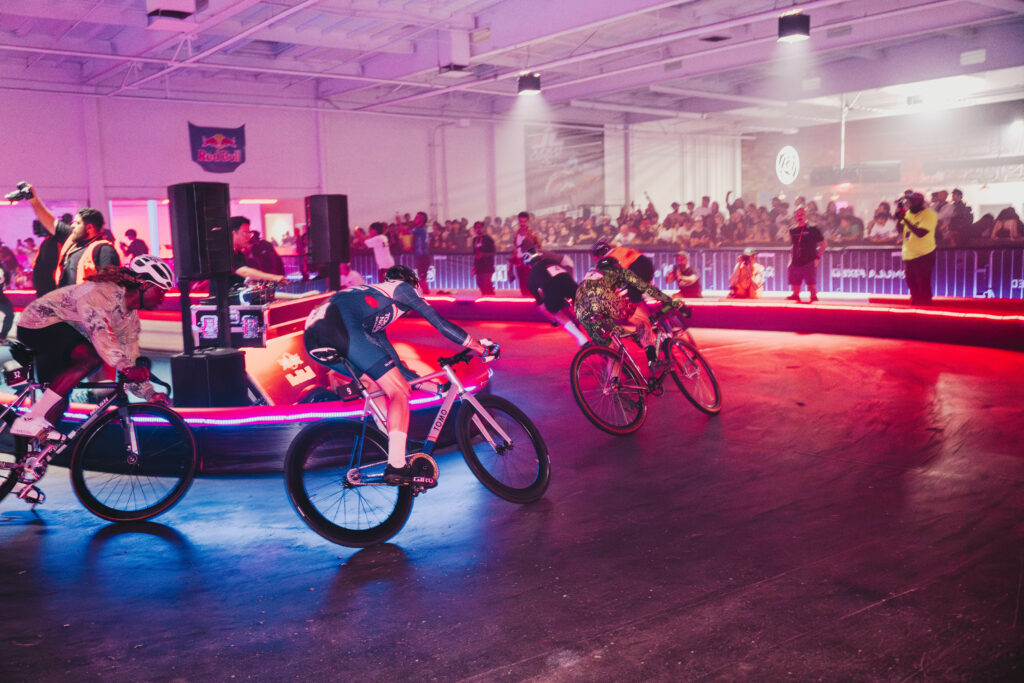
With all that it in mind, this month has seen the official launch of the latest attempt to, ahem, reinvent the wheel and revolutionise bike racing: Formula Fixed.
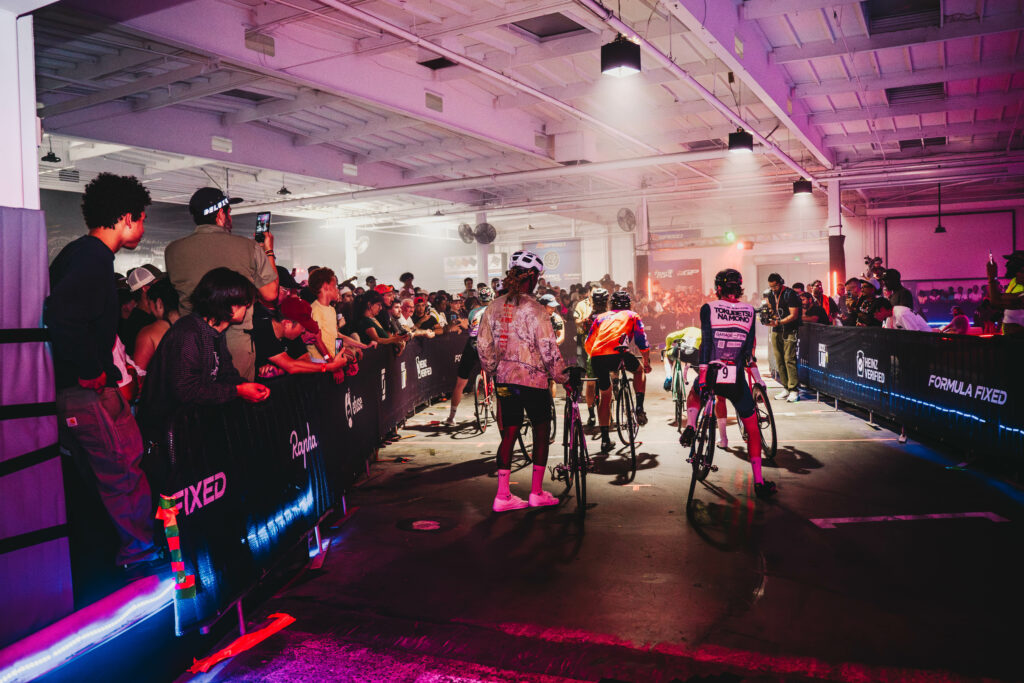
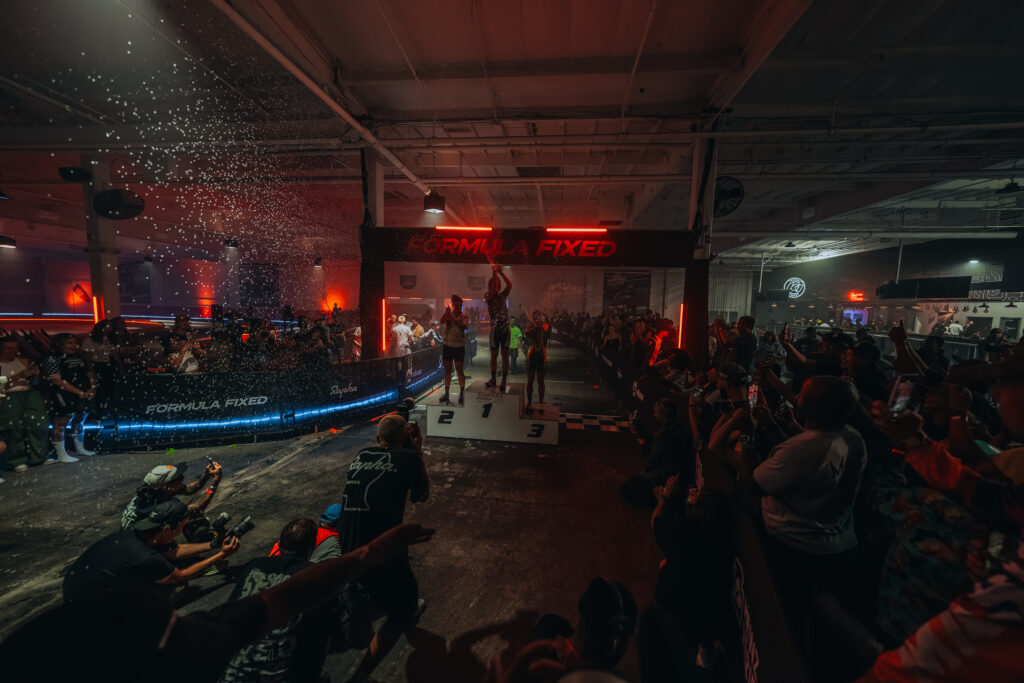
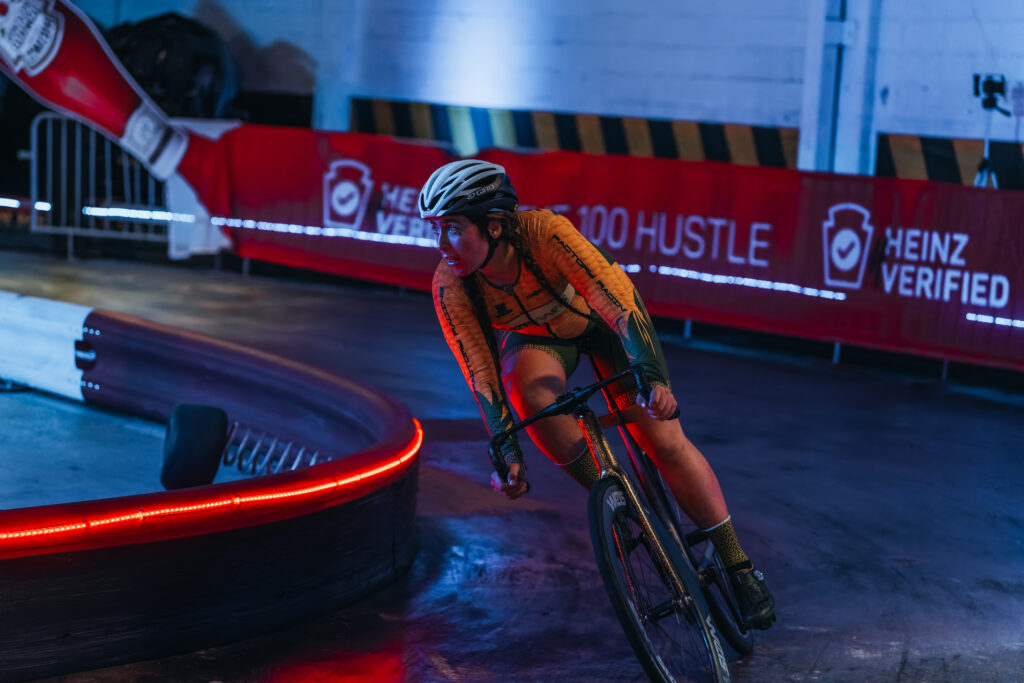
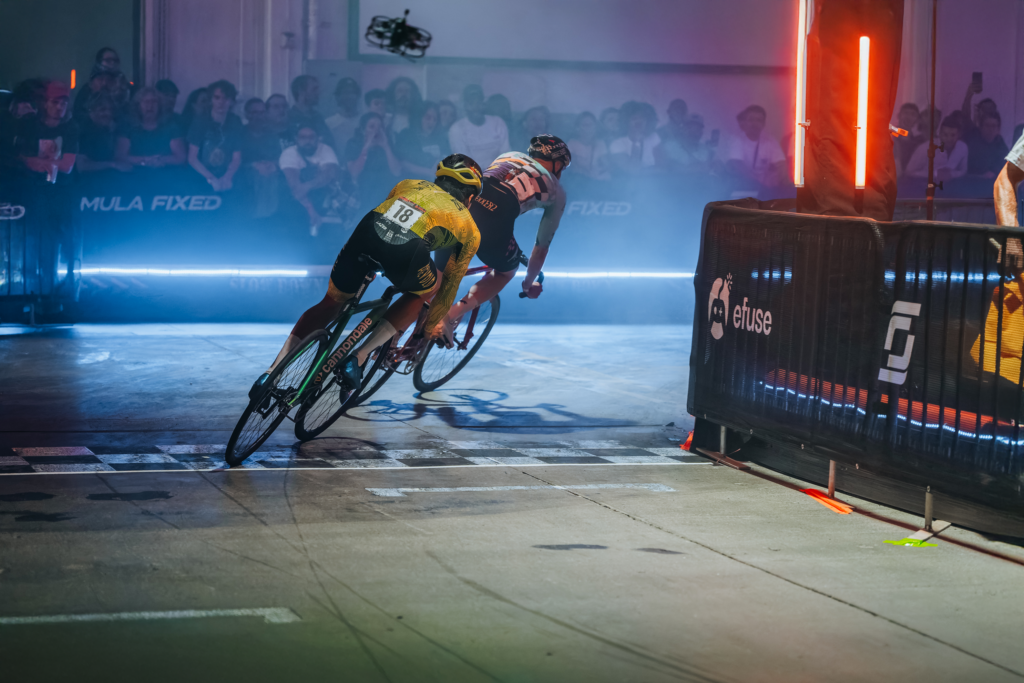
Described by co-founders James and Clare Grady as a “bold new cycling format at the crossroads of sports, gaming, and entertainment”, Formula Fixed is a new US-based indoor racing series, featuring riders from all backgrounds – road, track, crits, BMX, mountain-bike, cyclocross, you name it – racing on bikes with fixed gears and no brakes on tight, twisting, go-kart style circuits in a ticketed arena setting.
So, basically like if six-day racing married BMX and gave their kid a fixie – or as Formula Fixed itself says, “think Mario Kart meets messenger culture”.
It also promises to be “culture-driven and broadcast friendly, with the potential to create viral moments” – and, here’s the important part, reinvent cycling from the ground up.
This week, the new start-up announced the details of its first-ever qualifying races, which will take place in August and September, before the first full series of events takes place over the winter.
The series is set to include elimination-style races, there’ll be crowds close to the action, funky lighting, and the atmosphere at the test event was said to be “electric”. There are also tentative plans for Madison-style team events and to eventually, if popularity permits, move it into stadiums and tour it around the US.
In any case, Formula Fixed promises to be a move away from the traditional domestic bike racing scene in the US, currently in the midst of an ongoing crisis, and will blend entertainment with racing, putting the fans, not the riders, first.
“Formula fixed is a new idea for cycling,” co-founder James Grady tells the road.cc Podcast during a wide-ranging interview.
“We’re trying to turn this sport that we all love from a participant-focused sport into a fan-focused sport. Here in America, in particular, cycling as a spectator sport is not really a thing. It’s built to serve racers, not fans.
“We want to change that. We’re creating a season-based pro league that’s easy to watch. And thanks to those viral moments and big personalities, it’s hard to forget – because we feel that a sport isn’t a sport until it has fans.”
In some ways, Formula Fixed is very different than the likes of OneCycling, given that it isn’t trying to shake up the pro calendar, but instead aims to create a new fan-focused form of racing altogether, based in arenas and packaged for the internet.
In other ways, however, it’s very similar – especially when it comes to turning to other sports for inspiration.
In fact, Formula Fixed (the clue’s in the name) doesn’t stop at F1. Its press releases have promised to blend cycling’s fixed-gear culture with not just the world’s most popular motorsport, but also speed-skating and snowboardcross, while drawing inspiration from other radical attempts to reimagine traditional sports, such the TGL golf league and the three-on-three basketball league Unrivalled.
And that’s where Formula Fixed diverges further from the old world of road racing. Instead of espousing the virtues of marginal gains – pro cycling’s gospel for the past decade and a half – Grady is more a fan of “big swings”.
And that could end up proving useful, as Grady and Formula Fixed may have the ambition and vision to reshape the American cycling landscape, but they aren’t the first US-based brainwave to attempt to shake things up.
Back in 2023, the National Cycling League – a spectator-friendly crit-style format based on city franchises, big-name investors, and a big prize pot – collapsed just as quick as it started, undermined by poor organisation and in-fighting.
Not that Grady views the NCL as that revolutionary to begin with.
“I feel like a lot of the efforts that have come before, like the NCL, they didn’t do anything significantly different, right?” he suggests. “Like they had this idea of a marginal gain, right? Where they’re just gonna tweak these little things and somehow that’s going to fix everything.
“But it’s going to take a big swing to fix this thing. And when I say fix – I love cycling and I participate in cycling. I love the community. I love the people. But I think there’s an opportunity for cycling to get much more popular.
“But we’re not going to get there through making small incremental gains. We need a big swing.”
“The business model of cycling is absolutely wrong”
So, how does Formula Fixed go about making bike racing popular and attracting a whole new generation of fans? Simply by, Grady says, going outside cycling’s traditional base and blurring the lines between sport, entertainment, and gaming.
And there’s where those other sports, like skateboarding for example, come in.
“In terms of spectators, the way I describe it is, if you’re looking at cycling as sort of a funnel, with the Tour de France at the very bottom at the pointy end, we have the potential to be very broadly appealing to not just cycling fans, but sports fans, motorsports fans, action sport fans, people who like full contact things.
“I think a large part of that is due to the culture, right? Like Formula Fixed is where cycling meets skateboarding, e-sports meets TikTok. We’ve got a lot of people who come to spectate this who have never been to a bike race before and they bring a lot of energy and a lot of culture.
“Our audience tends to be a lot younger than traditional cycling fans for kind of pretty obvious reasons. And so, I think that yes, we are going to get those cycling fans who watch the Tour de France and who spend hours a day for 21 days straight watching that.
“But this has the potential to cast a much wider net, and that’s particularly important here in the United States, where 400,000 people watch the Tour de France, which is by far the largest spectated bike race here in America. On TV, 400,000 is nothing.”
With audiences dwindling, why does Grady think traditional cycling – particularly on the road – is struggling to capture the imagination of the younger generation, both in the US and worldwide? Well, as we’ve heard ad nauseum over the past 15 years, it’s all about that pesky business model. And power, naturally.
“It’s not in the interest of the people who are in charge to have anything change, right,” he says. “They don’t want to cede any power. For instance, One Cycling is trying to wrest control of the broadcast revenue from ASO and the UCI, right? Because the teams don’t have any.
“It’s because the business model of cycling is absolutely wrong. It’s all sponsor-driven and that is not a sustainable way to run anything, and so I understand why they’re going through these efforts to get that broadcasting revenue.
“But again, they’re not changing anything fundamentally about it. They’re not changing their product to meet the modern consumer. I feel like they’ve painted themselves into a corner and they’re fighting over scraps at this point.”
“Our goal is to get people on bikes”
Reflecting on other recent attempts to breathe some new life into the US racing scene, such as the wine-based cash injection to Levi Leipheimer’s Gran Fondo, Grady is scathing.
“You to make and cycling bigger and better and attracting more people to watch it rather than Leipheimer’s method, which seems to be about investing more money back into road racing, into those traditional elements of cycling – that’s evidence of what you call the marginal gain approach rather than the big swing,” he says, repeating his favourite mantra.
“And I want to be perfectly clear. We’re not trying to replace anything that currently exists. I love cycling. I want to see it succeed.
“Our goal is to get more people on bikes. I think that’s going to improve the sport. I think that’s going to improve society, that’s our goal. And we can do that by creating a popular entertainment product to get more attention on cycling.
“We’re still riding the coattails of Lance Armstrong’s success. And a lot of people I talk to wring their hands and they say, why isn’t cycling more popular? But they’re not trying anything. A lot of these folks who run these events were handed something that made money. And it was popular at the time, and it worked. And they saw a lot of success.
“But now you know, 20 to 30 years later, people just aren’t showing up in the same way. They haven’t changed their product and they don’t know why people aren’t showing up.”
But it’s all well and good arguing that cycling needs to be transformed, but does Grady recognise that he could be ruffling feathers by criticising cycling’s century-old model and pointing to other sports as the way forward?
“The examples that we use, we use them because they’re what are called insurgent leagues,” he points out, when asked about Formula Fixed’s emphasis on other sports in their press releases. “So the Kings League, Unrivalled, the three-on-three basketball tournament. These are variations of an existing legacy league. The Snow League is its own thing entirely.
“But these are new versions of existing legacy sports and they help frame the narrative about making a sports entertainment product rather than making some derivative product or something that is just a marginal gain, that’s marginally different.
“We’re trying to set ourselves firmly apart. A lot of the feedback we get is from people who still seem to be struggling with the idea that cycling could be a spectator sport and so they’re seeing everything through a participant lens.
“And this is no shade. This is just an observation, but there does seem to be a really pretty firm divide that tends to be age-based. People who have been participating in the sport for a very long time, it seems that their ideas on what the sport could be or should be have crystallised. And they don’t like anything new, so why bother trying, this violates the spirit of cycling.
“And it’s kind of silly and reductive – why not try something new or different? The opportunity is there. Clearly it’s not working, because participation numbers are going down, but why not try something new to attract a new audience?
“Like I said, we’re at the top of the funnel, I think we can capture those fans who might not even be into cycling and get them into Formula Fixed. And then hopefully they’ll explore what else cycling has to offer, whether that’s other things to spectate or participate in.
“And if somebody in France is upset that we’re trampling on tradition, I don’t really give a shit.”
The road.cc Podcast is available on Apple Podcasts, Spotify, and Amazon Music, and if you have an Alexa you can just tell it to play the road.cc Podcast. It’s also embedded further up the page, so you can just press play.
At the time of broadcast, our listeners can also get a free Hammerhead Heart Rate Monitor with the purchase of a Hammerhead Karoo 2. Visit hammerhead.io right now and use promo code ROADCC at checkout to get yours.














8 thoughts on “Why do we keep trying to turn cycling into other sports? Formula Fixed founder on reinventing bike racing for the TikTok generation, “trampling on tradition”, and why “big swings” are better than marginal gains”
It’s all bollocks. Just ride
It’s all bollocks. Just ride where you want.
Cycling is simple. If you’re using thousands of words to explain the simplicity of cycling idea then your cycling idea isn’t simple.
Quote:
A fixed gear is a brake, so much so that it’s even recognised in law as allowable as one of the required two working brakes. Racing with no braking mechanism at all would be quite interesting, but extremely shortlived.
Rendel Harris wrote:
I’ve seen (motorcycle) Speedway a few times – 70mph, no brakes, quite exciting.
A fixed wheel may count as a
A fixed wheel may count as a brake in law but the bigger the gear the less effective the brake and you’re not allowed brakes on track bikes because it would be dangerous for anyone to brake in a bunch. It’s relatively safe for no one to have brakes and take a lap or 2 to stop after the event.
Here’s a suggestion to revive
Here’s a suggestion to revive cycling TV audiences. Remove the recently installed TNT paywall.
But the beauty of watching a
But the beauty of watching a live 7 hour grand tour stage is that you can dip in and out of it. It is not unlike televised test or one day cricket.
When I had Eurosport, I would watch a bit, go and do something else (such as cut the grass, go for a bike ride), watch a bit more.
Lasting for several hours does not mean that it is a long boring watch.
And the scenery is often stunning.
Sure this can be exiting to
Sure this can be exiting to watch and participate in, but I hate this ( often american) manner of labelling things new when they clearly are not – Red hook crits and other Red bull crits etc were exactly raced on fixies and also on circuits years ago. Also the “our goal is to get people on bikes” is lame as f*ck – yeah, right, you are 15 years behind the fixed gear boom and there is no way you motivating masses of average joes and janes into getting into cycling via one of the most demanding forms of riding. Like Dana White would say the he’s trying to get people into the gym with the UFC. Good luck with business but please stop trying to claim this is something that will revolutionize the entire sport,because it won’t do that even in the US.
That’s not new, Rad Race been
That’s not new, Rad Race been doing that for years in Germany.