



French startup Aeroscale will soon be launching a commercial version of its “world‑first sensors and patented analysis technology,” designed to measure aerodynamic drag, rolling resistance and drivetrain efficiency in real-world conditions across all cycling disciplines. A pro version of the system is already in use at WorldTour level, and a more user-friendly device called Wasted Watts is now expected to be made available for the public to buy in November.
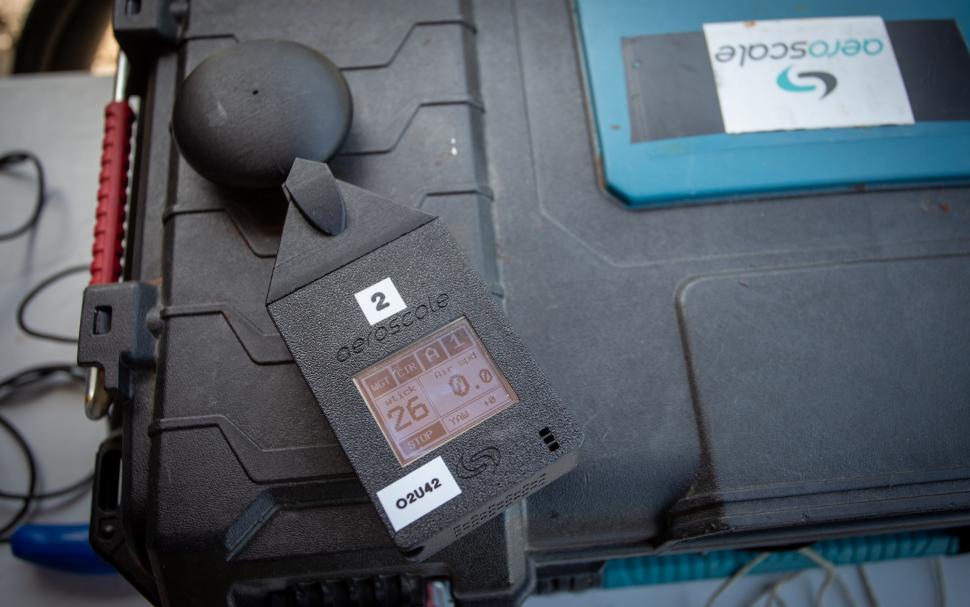
Over the past few decades, the abundance of power meters and cycling computers has transformed both professional and amateur cycling, but the quest for data doesn’t stop there.
Last year, several companies experimented with live drag measuring devices, such as the Body Rocket System which is a device that fits onto your bike and streams real-time aerodynamic drag data directly to a Garmin head unit. Now, French startup Aeroscale is stepping into the arena, promising to “revolutionise cyclists’ performance by tracking the slightest waste of watts.”
Like Body Rocket, Aeroscale’s technology aims to measure aerodynamic drag (CdA) and rolling resistance (Crr) without the need to spend a fortune on wind tunnel sessions.
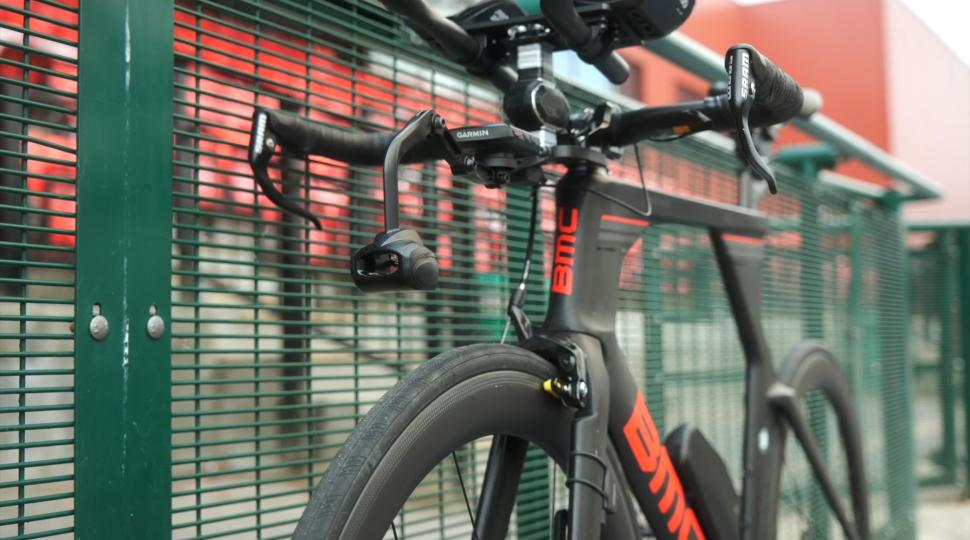
“Thanks to world-unique sensors and patented analysis technology, Aeroscale evaluates in just a few minutes all the friction forces acting on the cyclist: aerodynamics, rolling resistance, drivetrain efficiency”, the company says. “Unlike lab-based solutions (wind tunnels, drum benches, etc.), Aeroscale’s technology quantifies energy losses directly on open roads, under real race conditions, and in record time.”
Manuel Sellier, founder and CEO of Aeroscale, also told road.cc: “By combining data from the rider’s power meter with a suite of proprietary sensors, our system precisely calculates Wasted Watts – the total power lost to aerodynamic drag, rolling resistance, drivetrain inefficiencies, and braking.”
Currently, Aeroscale has only released images of the pro-level version of its product, called ‘BikeSpeedLab’. It says that the system is being used by “most” French World Tour teams, the French women’s national road team, and numerous para-athletes. We got in touch with some of those teams to confirm if this was the case, and received swift replies from both Decathlon AG2R La Mondiale and Groupama-FDJ. The former simply confirmed they are working with Aeroscale, and Groupama’s press officer said they worked with them last year, and potentially will again later in 2025: “They are serious people that work very well”, he added.
Later this year, the company plans to release Wasted Watts, a consumer version designed to provide real-time tracking, making the technology more accessible to non-professional cyclists.
“Our mission is to make the invisible visible: the hidden losses that cost you performance. We want to give every cyclist access to optimisation tools that were once reserved for the elite”, explains Sellier.
How does Aeroscale calculate its figures?
BikeSpeedLab (the pro version of Aeroscale’s technology, to clarify) combines proprietary sensors with advanced modelling algorithms to measure energy losses in real time, delivering live feedback on watts lost to friction within just a few seconds, according to Aeroscale.
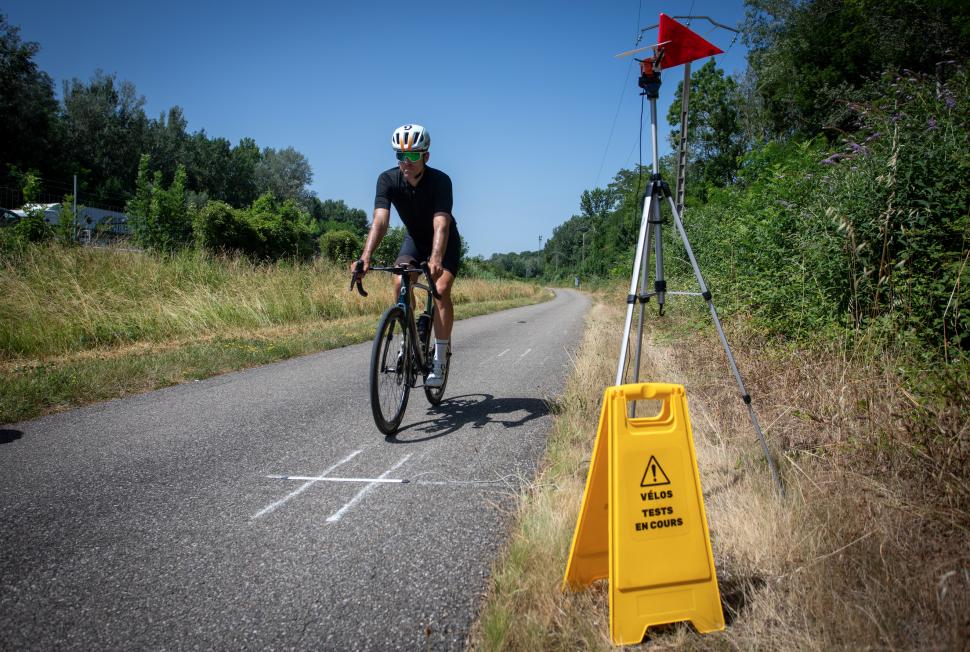
However, unlike Body Rocket’s system, which you attach, ride, and leave to gather data as you go, BikeSpeedLab appears to require a dedicated testing setup. Images of the system show riders passing through a start zone to trigger measurements.
The system uses:
- A proprietary Pitot tube to measure air speed
- A high-precision speed sensor
- An “innovative” cyclist detection system
These sensors then work together to quantify two resistance forces – rolling resistance and aerodynamic drag – under real-world riding conditions. The data is then processed by patented algorithms that also account for other performance factors, such as drivetrain efficiency.
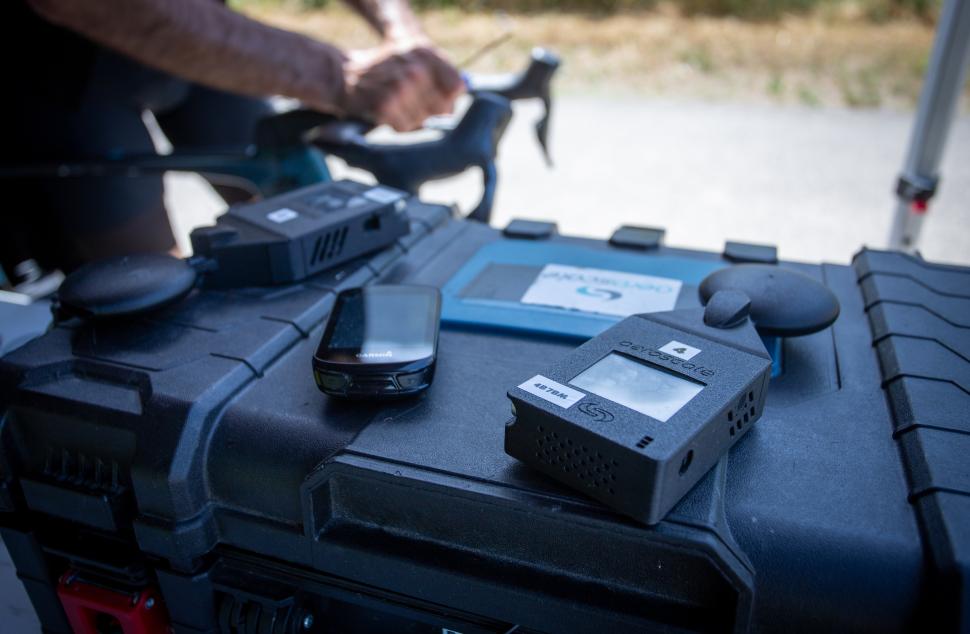
This approach is said to achieve accuracy within +/-0.5 watts on a velodrome and 1–3 watts accuracy outdoors, regardless of weather or road surface.
For further details on the system’s reliability and sensitivity, a research paper is available here.
How does Aeroscale technology differ from other products out there?
Aeroscale says it was “frustrated by existing solutions due to their cumbersome implementation and their lack of precision”, and claims its technology sets itself apart from other testing systems thanks to proprietary hardware and validation methods.
“Unlike conventional solutions, Aeroscale delivers accurate, fast, and reliable measurements in real-world conditions, across all types of terrain”, according to the brand.
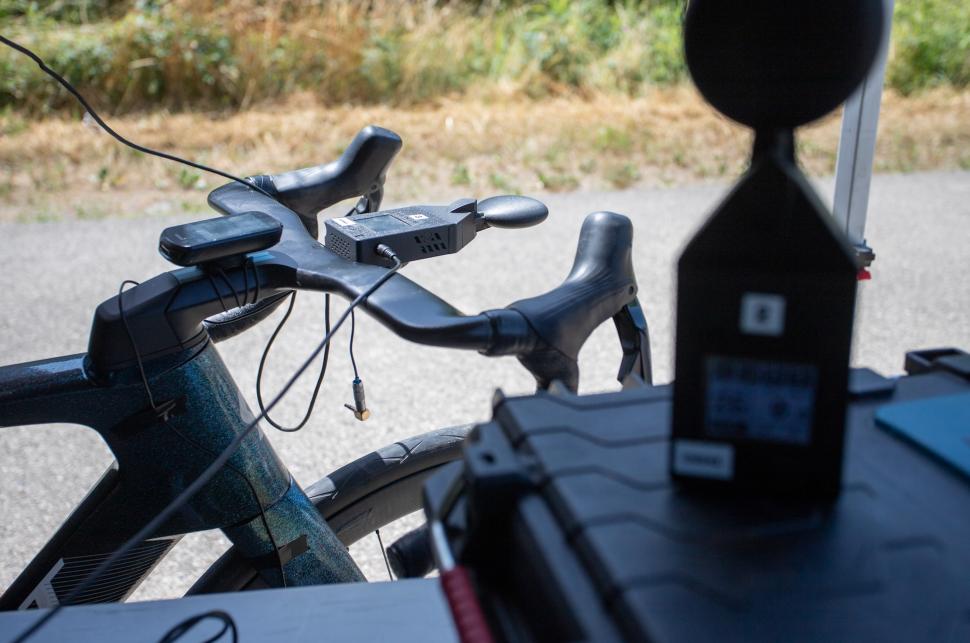
According to the company, tests can achieve 1% single-run accuracy in under two minutes, while multi-run protocols deliver “watt level accuracy” within five minutes.
From BikeSpeedLab to Wasted Watts
Everything we’ve mentioned above – and the photos – are from Aeroscale’s BikeSpeedLab pro-level product. The consumer version, Wasted Watts, we’re told will be much more user-friendly, and won’t involve lots of wires, and riding through a start and finish zone to get your measurements.
The “fully autonomous” Wasted Watts product will just require a short auto-calibration to get going, and Aeroscale claim it will provide feedback in real-time within 7 seconds – very similar to a power meter or heart rate monitor.
Getting Wasted Watts
Very serious bike racers and pro team representatives contact Aeroscale for a quote on its BikeSpeedLab testing set-up, while Wasted Watts is expected to launch in November 2025. Pricing has not yet been announced, but we’ll update this article as soon as more details are available.
For more information visit www.aeroscale.bike and wastedwatts.com
An earlier version of this article suggested the pro version of Aeroscale’s product was called the F-Explorer field test device. Aeroscale has now clarified that this product is actually called BikeSpeedLab.
It was also suggested that the Wasted Watts product – going on sale to the public in November – would involve a dedicated testing set-up, however Aeroscale clarified that Wasted Watts is “a ready-to-use, fully autonomous system: no cones, no start zones, no complex setup.”















5 thoughts on “Is Aeroscale’s Wasted Watts system – already in use on cycling’s WorldTour – the future of refining your aero position in real time?”
There are so many sources of
There are so many sources of innacuracy in an outdoor cycling setup I’m unconvinced this can be at all real.
Quote:
Seems like overkill – if there’s no cyclist there, how would the test be performed in the first place? 🤔
From my experience of trying
From my experience of trying a similar product a few years ago: Regular cyclists are not going to be able to benefit much from this because to get any meaningful results you need to do strict experimental protocols that eliminate as many sources of noise as possible. Otherwise, the noise created by real-world conditions is FAR stronger than the very weak signal (i.e., actual differences between test conditions). This is something that will remain true regardless of how fancy or accurate the measurement device is.
Experienced operators using it in the most controlled conditions possible may see some benefits, but it’s not something for regular consumers. However, I’m sure many YouTube channels and cycling media would love using it to present their noisy findings and make grand, unjustified conclusions.
Probably a great way of
Probably a great way of maintaining ‘aero discipline’ – the rider will see the number get worse and will (presumably) be able to realise when it’s due to a sloppy position on the bike or ‘noise’ from road surface/passing cars/gradient etc etc.
Two types of user will find this useless:
– stupid ones that can’t understand the concept. Or numbers.
– stupid ones that think they’re clever, and disregard it because it’s not an infallible system, requires suitable conditions and insight from the user (see some of the other comments…)
nb the number doesn’t need to be accurate to be useful. It just needs to be consistent in the same conditions.
I can see users going up and down the same ‘ideal’ stretch of road, experimenting with their position on the bike and then using it to provide feedback when they’ve not maintained good form, and perhaps also helping them understand the impact of tyre pressures on different road surfaces, poor chainlines etc.
Edit: my comments on users that will find it useless don’t include ‘regular cyclists’ on the understanding that the context of this product is clearly experienced competitive cyclists happy to spend £££ and time to get small gains.
I appreciate my comment may come across as rude. It’s not… I just thought the other comments were extremely dismissive and facile… but the product will be beyond many people and Chris’s prediction of people using “noisy findings [to] make grand, unjustified conclusions” is likely spot on!
Mark Thompson wrote:
Why thank you – I do try my best. It’s nice to know it’s appreciated. 😉