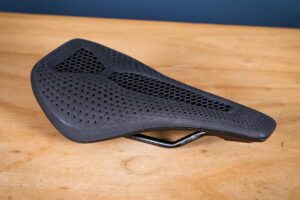


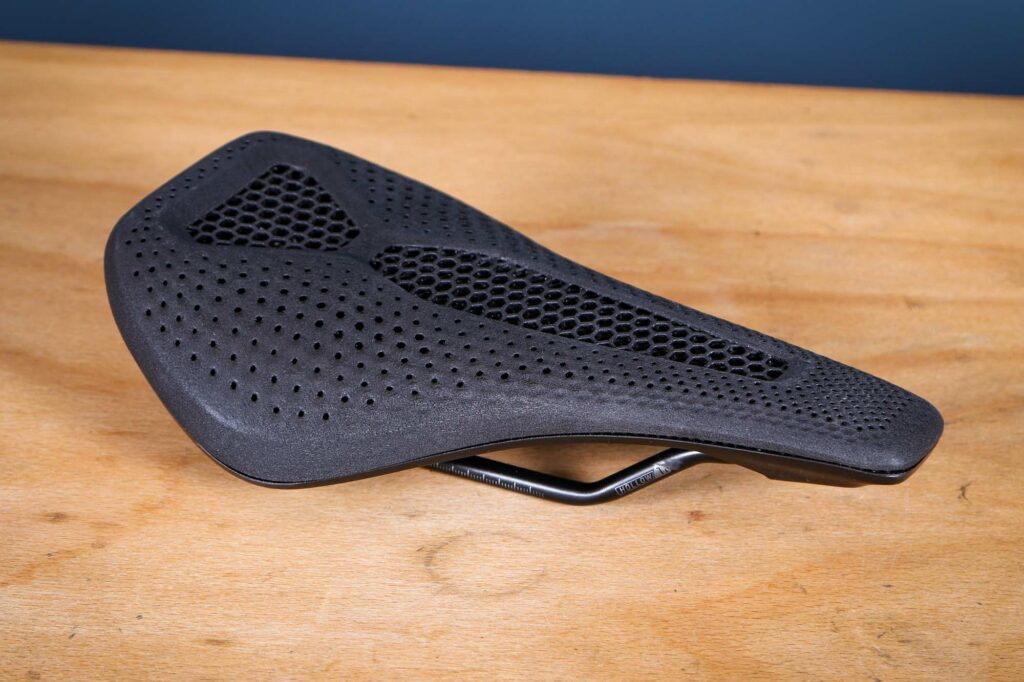

The Specialized Power EVO Pro with Mirror is a very solidly 3D-printed saddle with interesting looks and a very effective pressure-relieving channel. It’s firmer and rounder in profile than it might look, however, which might not work for everyone, and it’s a bit of a chonk on the scales.
In case you’re unfamiliar with Specialized’s jargon, the ‘with Mirror’ part of the name means it’s 3D printed, a construction that allows the firm to tune the effective density all across the saddle.
The central channel is noticeably soft, for instance, and I found it worked very well for avoiding pressure where it’s not wanted. The all-important top edges bounding the channel were never uncomfortable, or even noticeable, either.
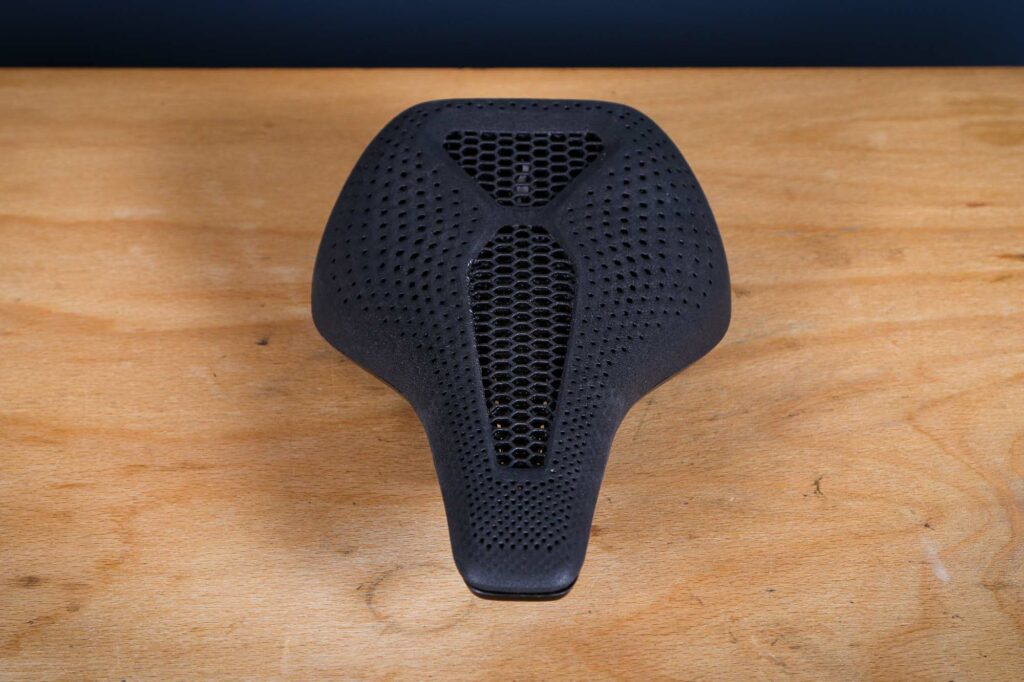
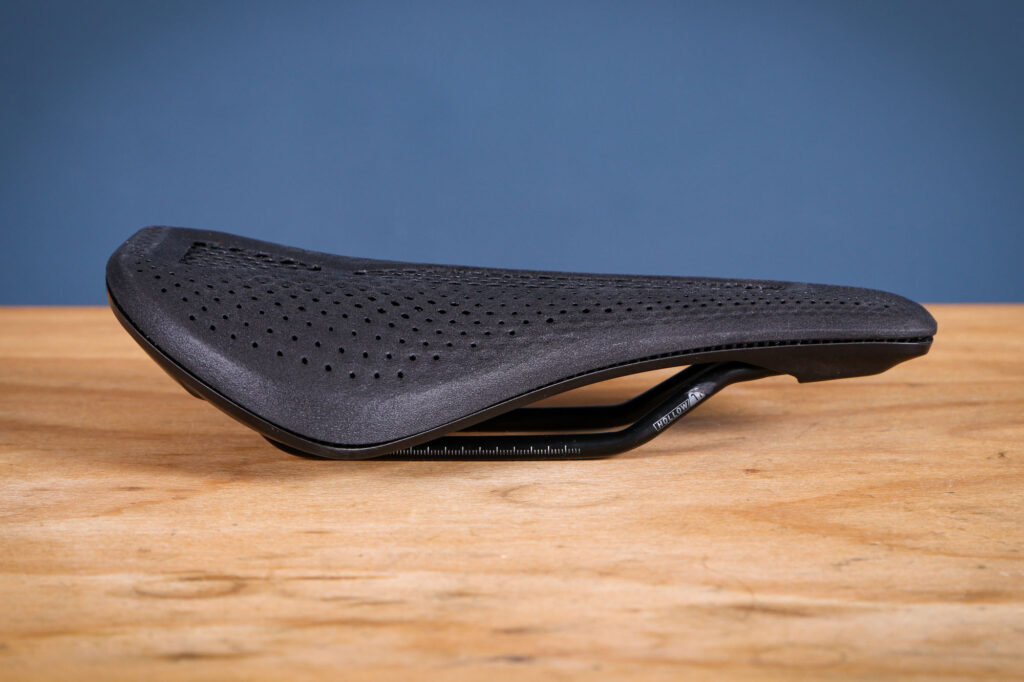
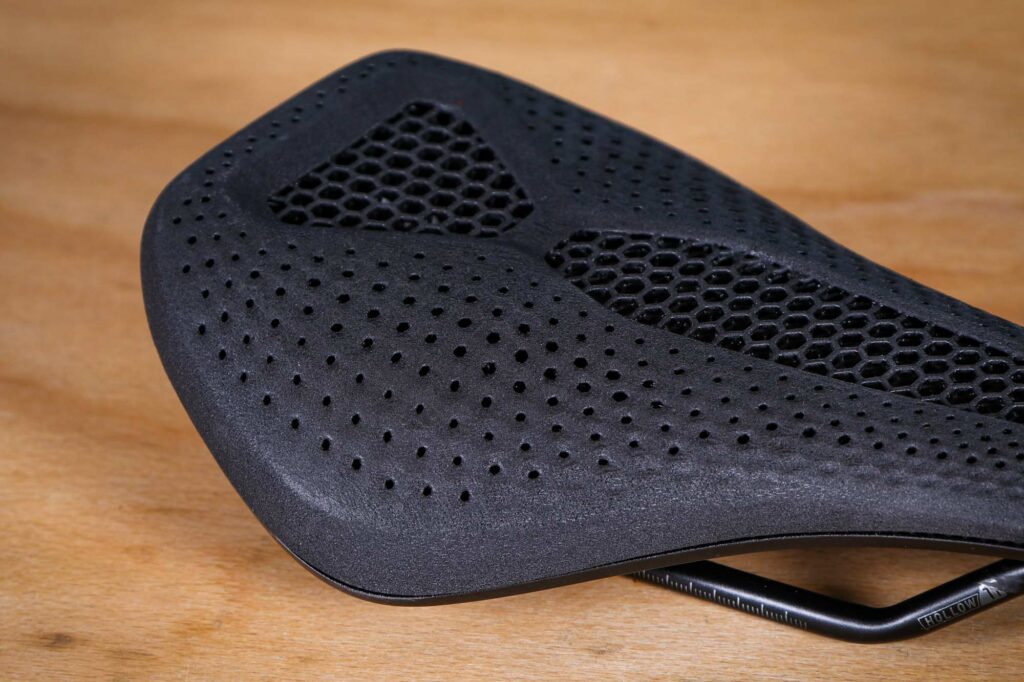
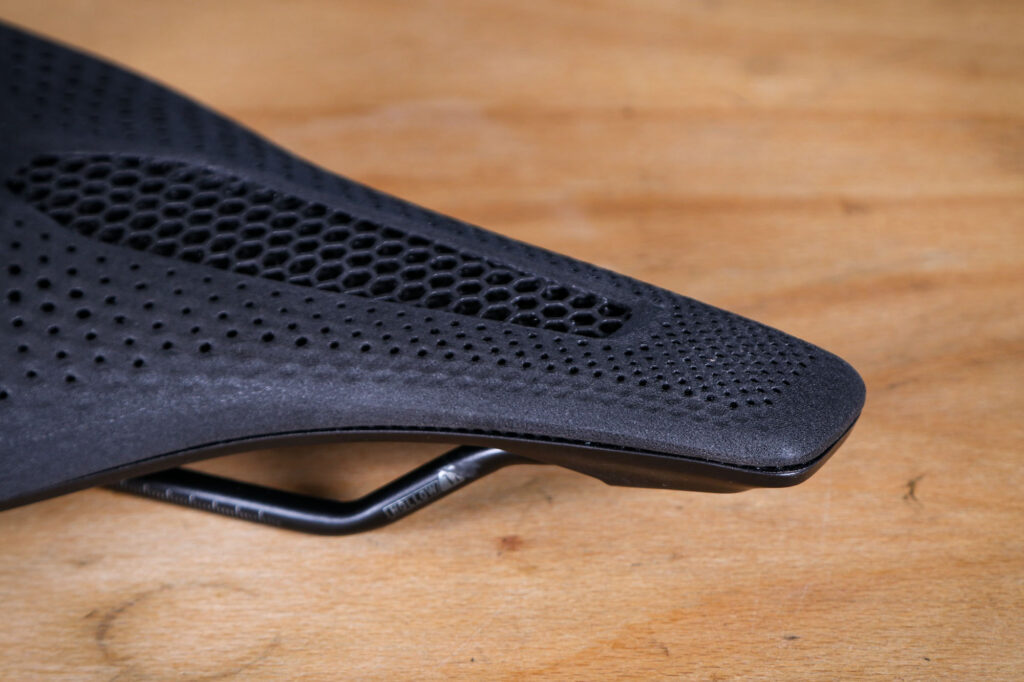
The main section under the sit bones is pretty firm; firmer than I was expecting, and firmer than I like. I found this saddle pretty comfortable whenever I first got on, but decreasingly so after around an hour.
On frequently quite poor Welsh road surfaces, it could start to get a little unforgiving, which surprised me. I think I was expecting a clever progressive springiness to the 3D printing rather than just a ‘soft here, hard there’ layout.
The lack of give means this wouldn’t be my first choice for gravel, though Specialized lists it for road, gravel and even XC.
Pressure drop
Specialized also claims it features “47,000 struts of adaptive support,” and while I didn’t count them, I feel that’s a little misleading. There’s nothing adaptive about 3D printing beyond the design stage. Sure, densities vary across the surface, but they don’t change or adapt.
The company makes quite a few specific yet vague claims, in fact, including, “34.1% less nose pressure, 28.8% less at sitbones.” Those are very particular numbers, but what they’re in comparison to is not disclosed, and nor is how they appear to describe an antigravitational force.
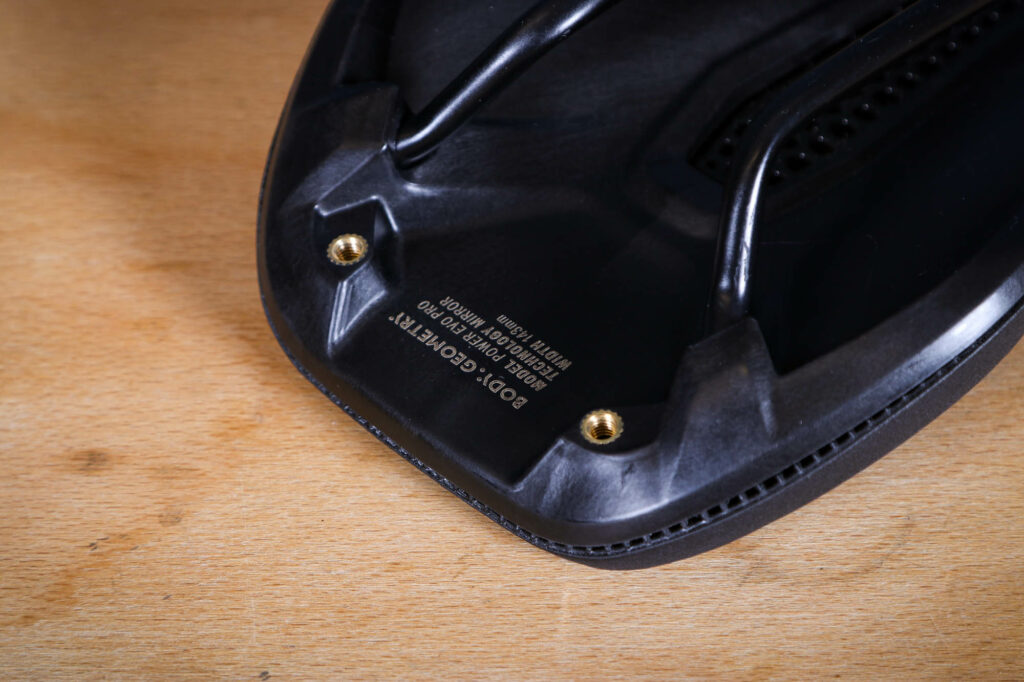
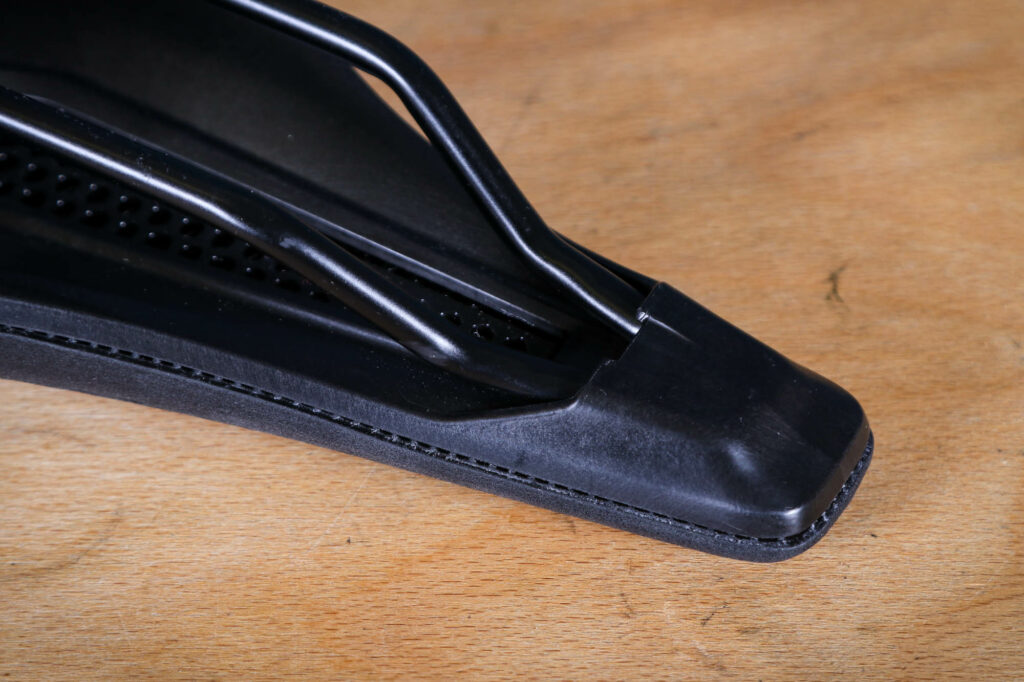
Leaving 89.3% of these claims aside, I found I sat most comfortably quite centrally on this, further ahead of the wings than usual, whereas I’m usually happiest positioned well back. It’s slightly stubbier than many (just over 24cm in this 143mm width), but the flattish, broad nose is comfortable and works well. There are also 130mm, 155mm and 168mm widths available.
Obviously what’s comfortable is very much personal preference, and the firmness may well work for you, as might the quite rounded wings. That wide, springy central section somehow tricks my eye into thinking this is quite a flat saddle, but it actually curves quite a bit under your sitbones.
For me, sloping sides just seem to focus pressure in small spots on that hard padding, but again this is entirely subjective – firmer, rounder saddles might be perfect for you.
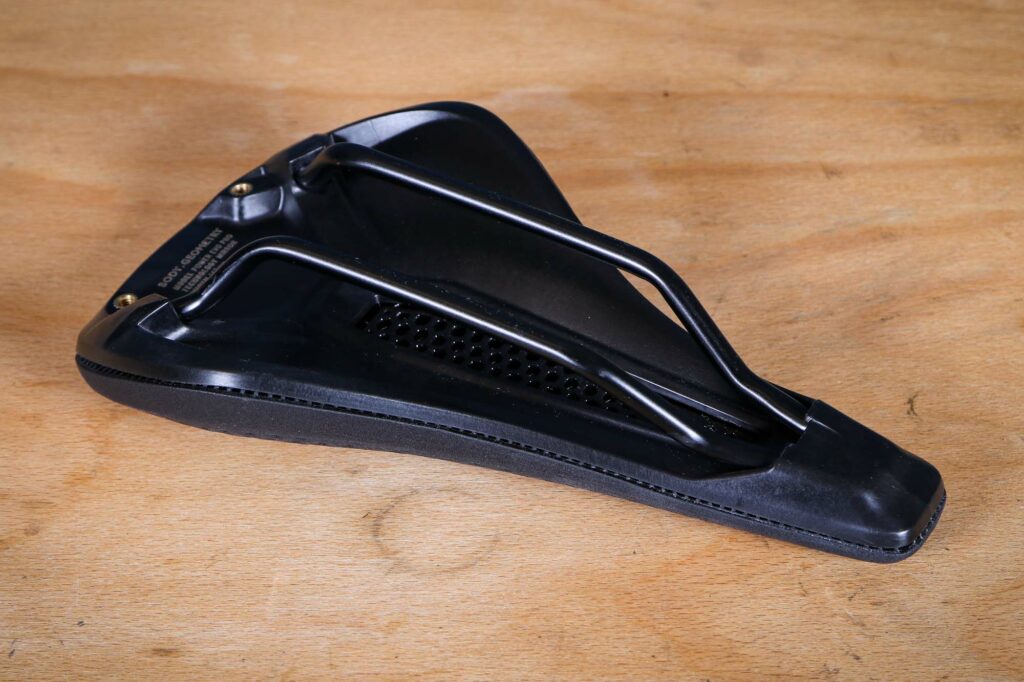
The 3D-printed padding sits on a regular plastic base of carbon-reinforced nylon, and that in turn sits on hollow rails of black-painted titanium.
It’s not the lightest construction – I actually wondered on first picking it up if those rails were steel. At 250g, this is around 100g heavier than the lightweights out there (both 3D printed and traditional construction), and only 10g lighter than, for instance, the £109.99 Ergon SRS Comp Men saddle.
Value
At £275, this is not cheap, but it’s still a long way from what you can pay if you try. The Posedla Joyseat 3.0 Pro custom 3D-printed saddle is £399, for instance, while the Fizik One-to-One custom 3D-printed saddle was £499 when we tested it. It’s unlikely to have got cheaper in the 18 months since then. Both these options are full custom, however – off the shelf ones are cheaper.
The Specialized still does well against those on price. The Selle Italia SLR 3D Carbon is £409.99, for example, but it’s also a full 104g lighter at 146g.
The Cadex Amp 3D saddle is more than the Specialized at £349.99, but again considerably lighter at 149g.
The Fizik Vento Antares Adaptive R3 saddle beats it at £259.99, however, and while it’s not that light it’s still lighter than the Specialized at 228g.
> Choose the right saddle for you and your riding — our top picks for every type of cyclist
Overall
Perhaps my expectations were too high, but I expected some unique benefits from 3D printing. Yet nothing about this saddle feels unachievable with traditional materials and techniques. Certainly the supportive yet unintrusive transition into the cutout is well judged – and perhaps the highly tuneable construction allows that – but otherwise this just felt like a normal, rather heavy saddle.
Even if the shaping and firmness had worked for me, I don’t think the novelty of 3D printing would justify either the price premium or the weight penalty. It’s a good, impressively-built and fairly high-tech saddle that somehow feels like a pretty basic and ordinary one to use.
Test Report
What does the manufacturer say about this product?:
Since ‘97, Body Geometry has delivered on the promise to be one with your bike, through our promise for ergonomically designed and scientifically proven products that improve performance and comfort to unlock human potential. Every saddle we create starts with data, through pressure mapping, anatomical measurement, and real-world testing with pro athletes and everyday riders. Body Geometry shapes are engineered to support the body where it needs it and relieve it where it doesn’t.
Tell us some more about the technical aspects of this product:
Use
Road, Gravel & XC Racing and Riding
Body Geometry
Ergonomically Designed, Scientifically Proven
Comfort is a Weapon
34.1% less nose pressure, 28.8% less at sitbones
Mirror Technology
47,000 Struts of Adaptive Support
The Shape of Power, Evolved
Improved position versatility due to wider nose and longer rails
Carbon reinforced nylon shell & Hollow titanium rails
248g (143mm)
Any further comments on performance?:
Good if you like firm saddles – this was firmer than I like for road, let alone gravel or XC.
How does the price compare to that of similar products in the market, including ones recently tested?:
With full-custom 3D printed options at £350-£500, this matches other off-the-shelf ones like the Fizik Vento Antares Adaptive R3 saddle pretty closely.
Did you enjoy using the product?
No, it didn’t work for me
Would you consider buying the product? No
Would you recommend the product to a friend?
Yes, with caveats
Use this box to explain your overall score
This is very solidly made and looks great, and if the firm side padding and rounded shape suits you, it’ll work well – the pressure relieving central design is great. Its firm nature doesn’t suit gravel or XC to my mind, however, and the weight is a drawback. Unlike more expensive 3D printed saddles, it doesn’t really offer anything a traditional saddle can’t for less money and/or less weight. It’s a good saddle, but nothing special.
About the tester
Age: 48Height: 183cmWeight: 78kg
I usually ride: Temple Adventure Disc gravel bike
I’ve been riding for: 10-20 yearsI ride: A few times a weekI would class myself as: Experienced
I regularly do the following types of riding: Fitness riding, Mountain bike XC, Mountain bike Enduro, Mountain bike downhill/freeride