


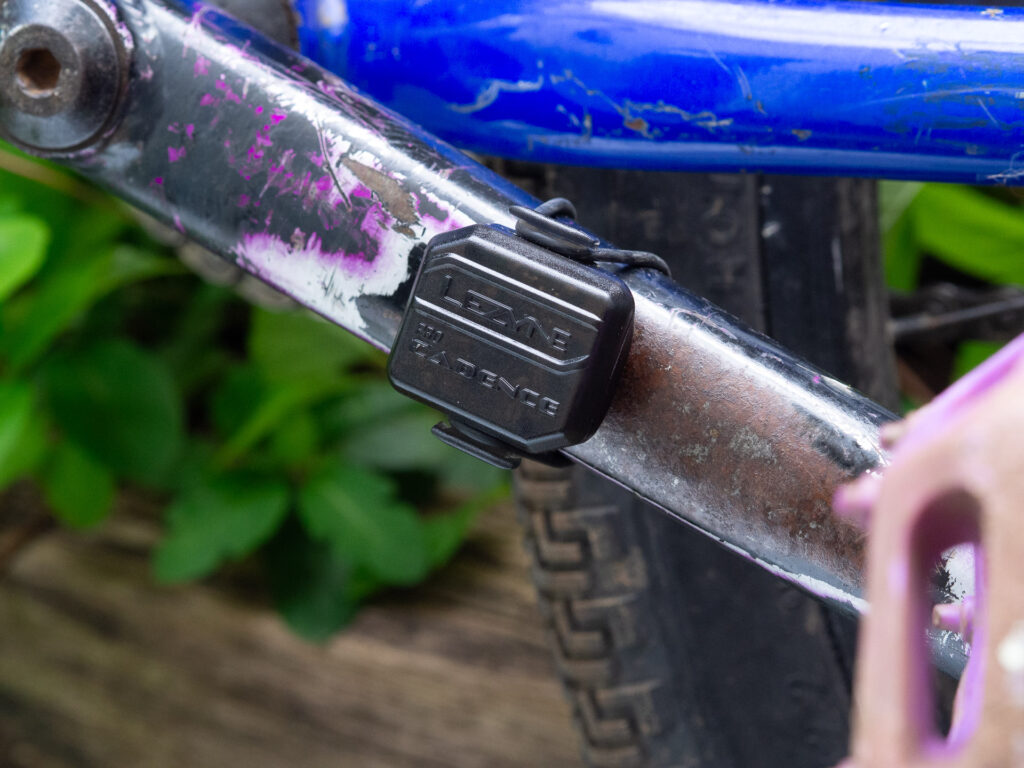

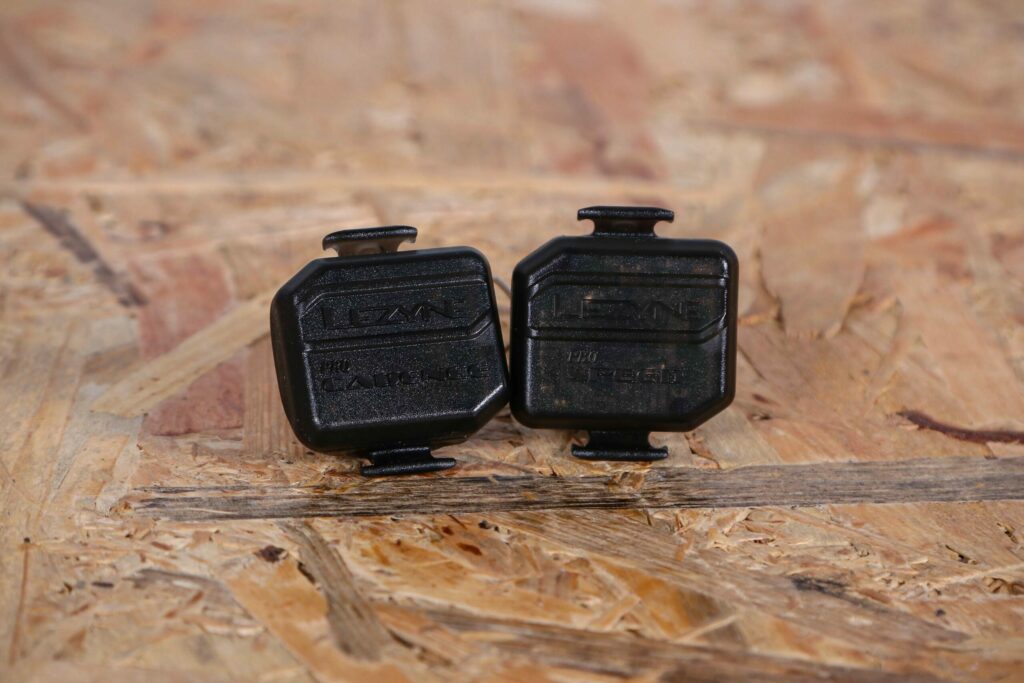
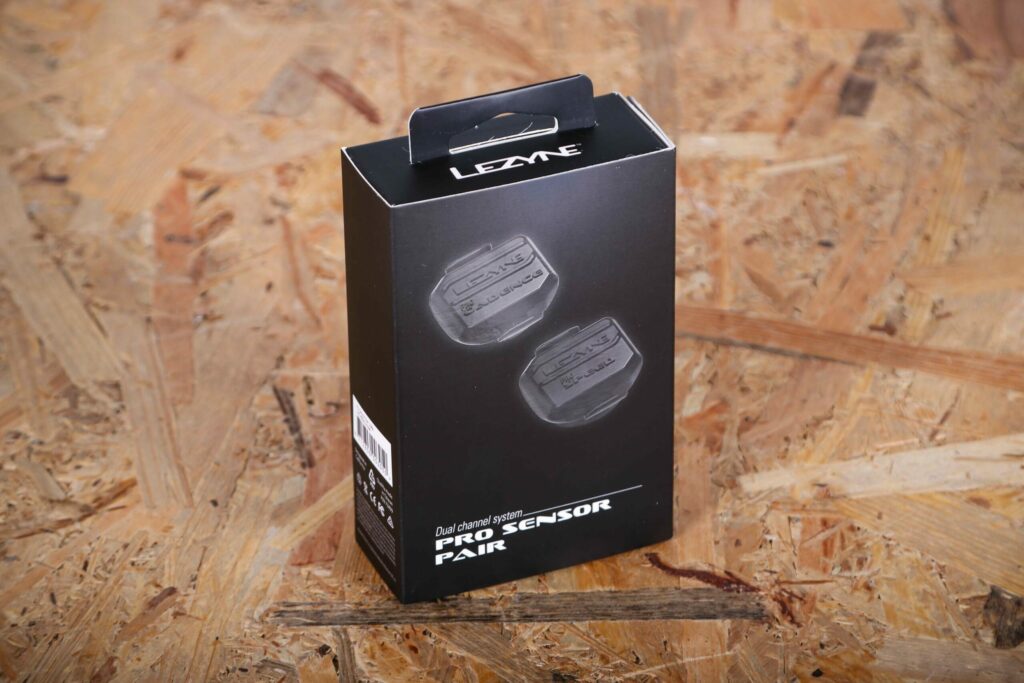
The Pro Sensor Pair feels like it’s become a niche product, but there are still obviously enough people out there who want speed and cadence that Lezyne is still manufacturing and marketing them. These are a solid and dependable way to add speed and RPM metrics to your training, but there are even cheaper versions.
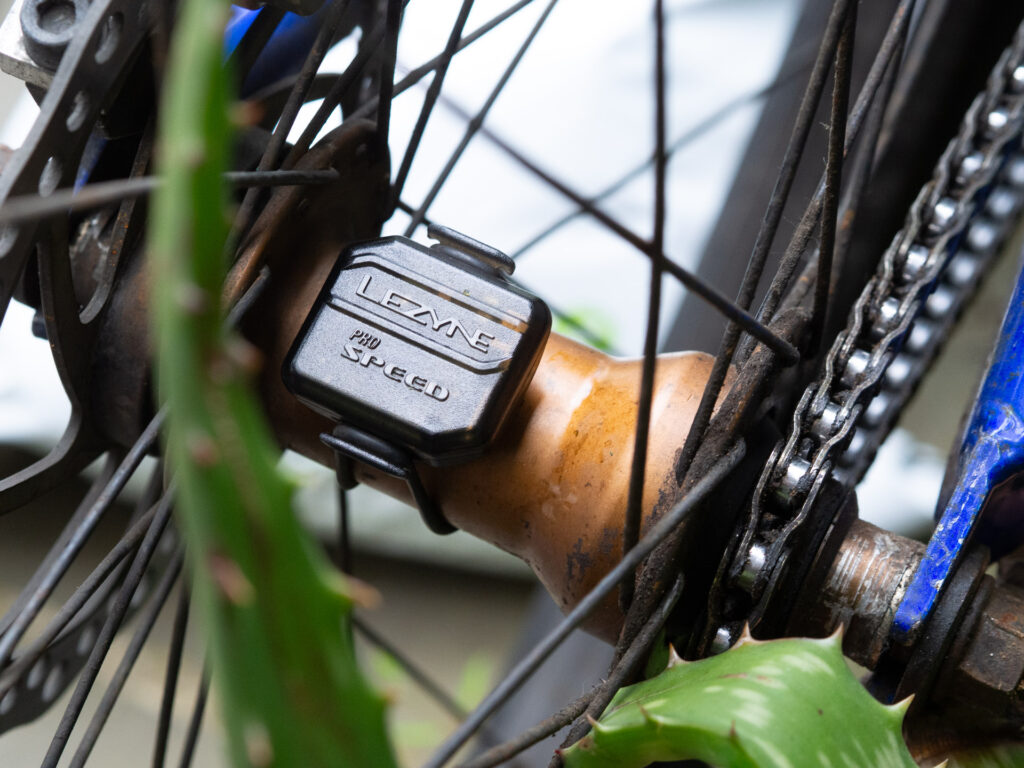
The pack consists of a couple of small, lightweight sensors that attach to your hub (front or rear) and crank arm, where their one job is to count the number of times either thing rotates in a given time.
> The Best Cheap Cycling Computers 2026
These numbers are broadcast via Bluetooth to your data receptacle of choice, be it a smartphone, smartwatch, bike computer, tablet, or laptop, and translated into rotations per minute or kilometres/miles per hour. Lezyne says the sensors will connect to two gadgets simultaneously, but strangely there is no support for ANT+, a more universal protocol for fitness devices that’s less prone to dropouts and interference.
The design is minimalist but brutalist; they look like something Robocop would use on his bike, but blend into the black componentry of most bikes without screaming for attention. There are green LEDs embedded in both, which briefly come on when they’re first powered up; handy for troubleshooting connection issues.
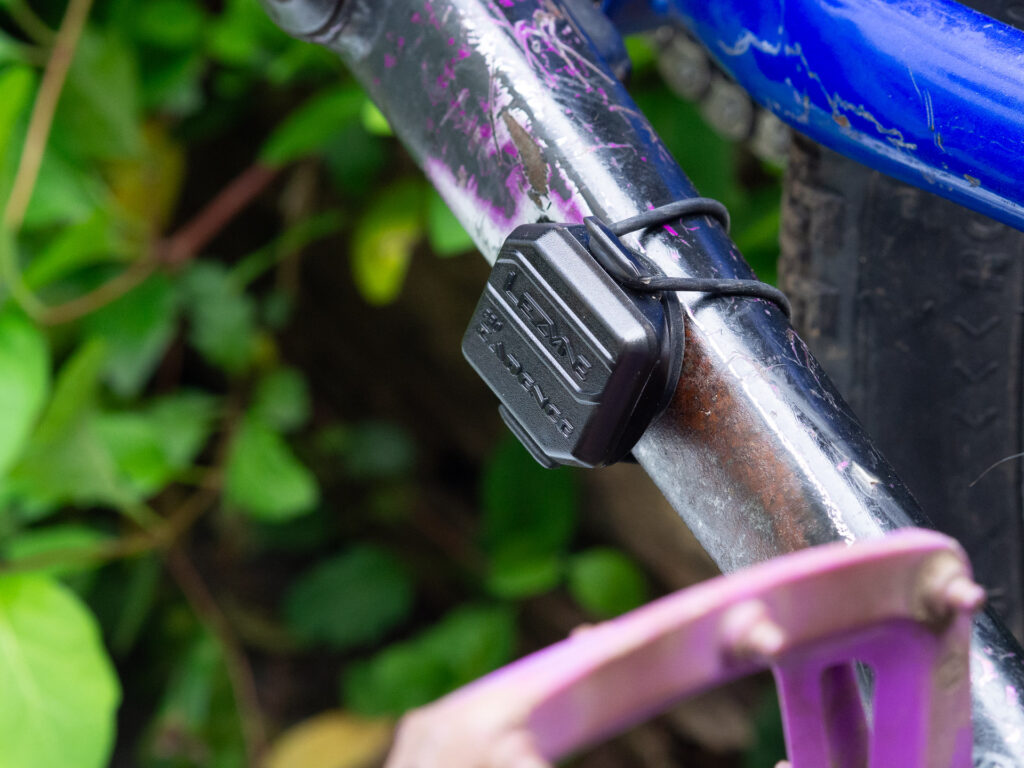
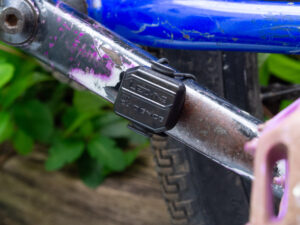
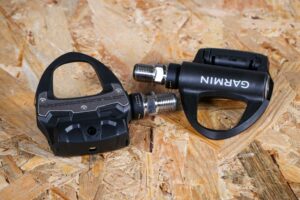
At 12.6mm, the cadence sensor is a beefy unit and one of our other reviewers had major issues with clearance. Similarly, I tested it with SPD pedals on my gravel bike and there was just about enough clearance with it mounted on the outside of the left crank. I also tried it with the SPD-SL pedals on my trainer bike and the clearance was tighter, but it still slipped past.
In use
Both the speed and cadence sensors proved to be as accurate as you’d hope. There are no external magnets here, and all rotations are detected via an internal accelerometer on each unit. I recorded the same ride via GPS and an app connected to the speed sensor and the results were remarkably similar. There’s no way of knowing exactly which was the most accurate because GPS can be thrown out by trees and tall buildings, but the final distance on both was within tens of metres.
Likewise, the cadence sensor matched the RPM estimations from my Wahoo Kickr trainer almost exactly. On paper it’s not something to get wrong, and provided you’ve entered your wheel and tyre size correctly they should give very accurate results. I used both units on my bikes for four weeks and they’re still going strong; I haven’t had to replace the batteries and there’s no sign of water ingress.
Who needs speed and cadence sensors in 2026?
The Pro Sensors are definitely a niche product, but they still have a role in a modern cycling ecosystem – even if it’s a minor one. If you’ve got a “dumb” wheel-on trainer, or love the utterly terrifying sensation of riding on rollers, then these sensors might be the only way to connect to training platforms such as Zwift.
In theory, the speed data (which would be important for Zwift) is more accurate and instantaneous than a GPS computer, although the leaps and strides in that tech mean that gap is closing faster than a satellite ping. It’s also useful to try cadence training at least once just to get used to the various spin speeds, and this is a far cheaper and easier way to try it without getting a whole power meter.
Value
Which brings us to price. At £50 for the set (or about £25 each), the Lezyne option is at the higher end of the sensor price range. You can pick up a pair of more generic sensors from Aliexpress for about £15 that include support for ANT+ (which these don’t). Of course, they might not be as accurate or as long-lived as the Lezyne option, but counting revolutions isn’t rocket science, and the bottom line is that you could pick up three for the price of one Lezyne pair.
Test Report
What does the manufacturer say about this product?:
Super compact and lightweight magnetless cycling sensors. The pair includes the Pro Speed Sensor (hub mounted) and the Pro Cadence Sensor (crank arm mounted). Both feature a translucent Composite Matrix construction with a LED indicator. Each sensor supports dual Bluetooth connection for simultaneous pairing with cycling computers and smart trainers. Features a replaceable CR2032 battery.
Tell us some more about the technical aspects of this product:
Weight:
16g
Dimensions:
36.6mm, 32.6mm, 27.6mm
How does the price compare to that of similar products in the market, including ones recently tested?:
There are far cheaper options out there.
What connection protocols does the power meter support?:
Dual Bluetooth
Any further comments on connectivity?:
No ANT+
Does the power meter have a waterproofing rating? If so, what is it?:
IP54
Any further comments on waterproofing?:
No problems riding in the rain
What type of battery does the power meter use?:
CR2032
How easy is the power meter to swap between bikes?:
Very easy
Did you enjoy using the product? Yes
Would you consider buying the product? No
Would you recommend the product to a friend? No
Use this box to explain your overall score
These feel well-made, look great, and perform well, but the lack of ANT+ and the high price tag make them hard to recommend.
About the tester
Age: 46Height: 193cmWeight: 88kg
I usually ride: Tritao GroontMy best bike is:
I’ve been riding for: Over 20 yearsI ride: Every dayI would class myself as: Expert
I regularly do the following types of riding: Road racing, Gravel riding, Indoor riding, Indoor racing, Bikepacking, Commuting, Audax, Fitness riding, Leisure riding


3 thoughts on “Lezyne Pro Sensor Pair”
I can’t find these on Lezyne’s site, not even in among the legacy/discontinued products.
He did say niche…
Errr.. did you really install them on the *outside* of the cranks? How did that last? Sheesh.