



Since publishing this review, the recommended retailed price of the Garmin Rally RS210 Dual-Sensing Power Meter pedals has changed to £699.99. The reviewer scored based on the original RRP (£929.99).
The new Garmin Rally RS210 power meter pedals are significantly more user-friendly than before, while retaining their reputation for reliably accurate measurements and a quality ride feel. However, their price remains high relative to the best power meter pedals, and for little real benefit.
I have the dual-sided RS210 on test here, and the ‘S’ refers their compatibility with Shimano SPD-SL cleats (the Rally RK210s work with Look Keo-style cleats). Both versions cost £929.99, as do the off-road versions (Rally XC210) which attach to SPD cleats. Single-sided power measurement starts at £549.99.
For £1,129.99, Garmin sells the Rally RS/XC210 power meter pedal bundle, which gets you both kinds of pedal body and the power-measuring spindle, which is interchangeable between them.


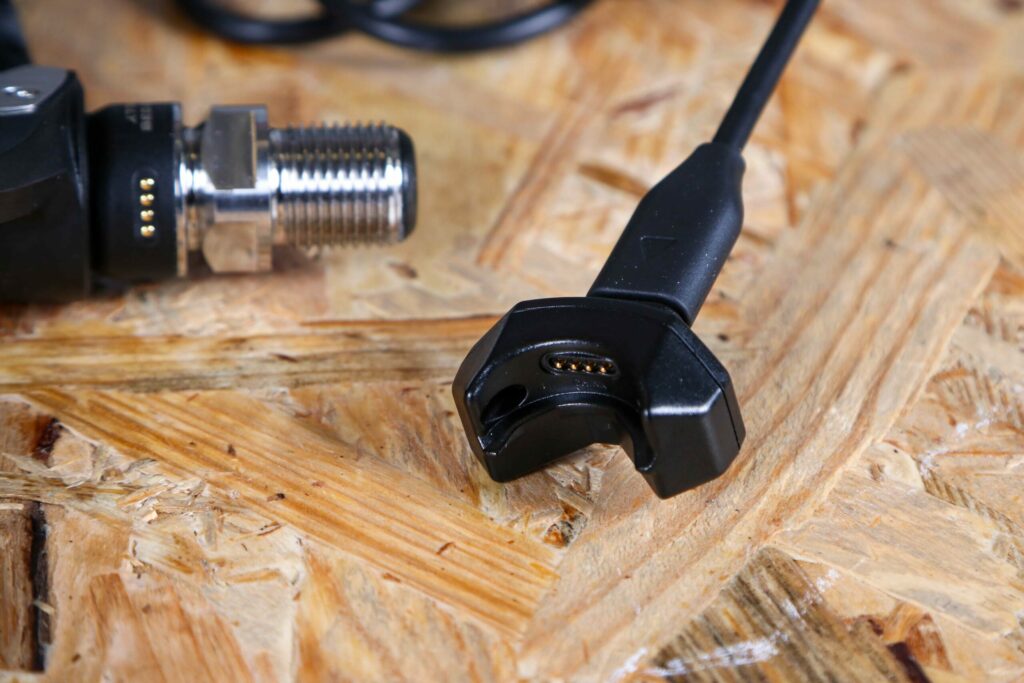

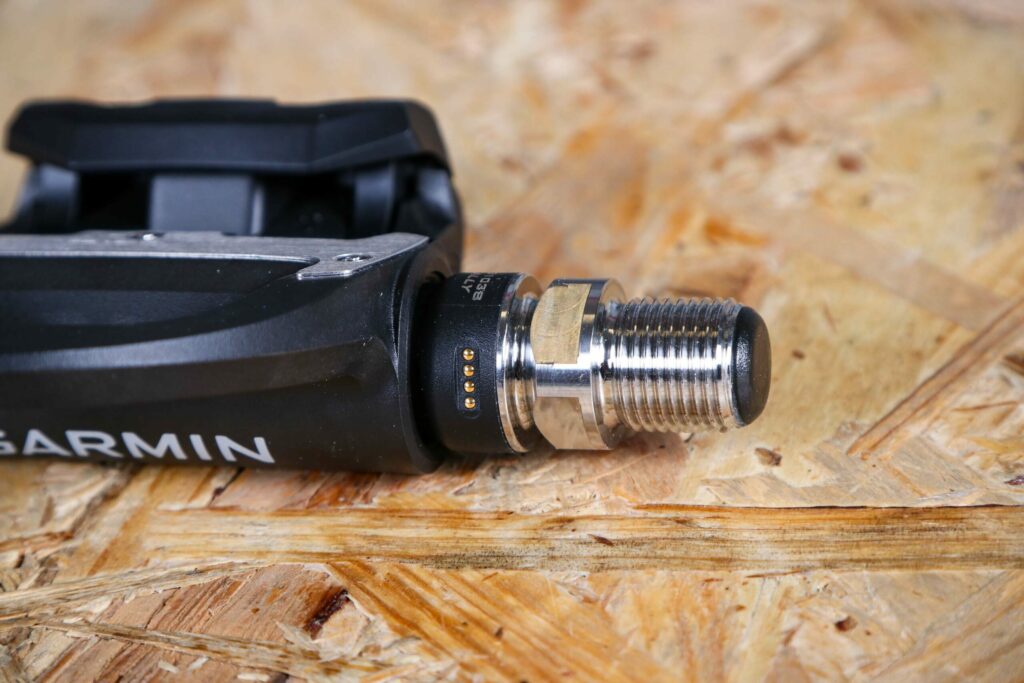
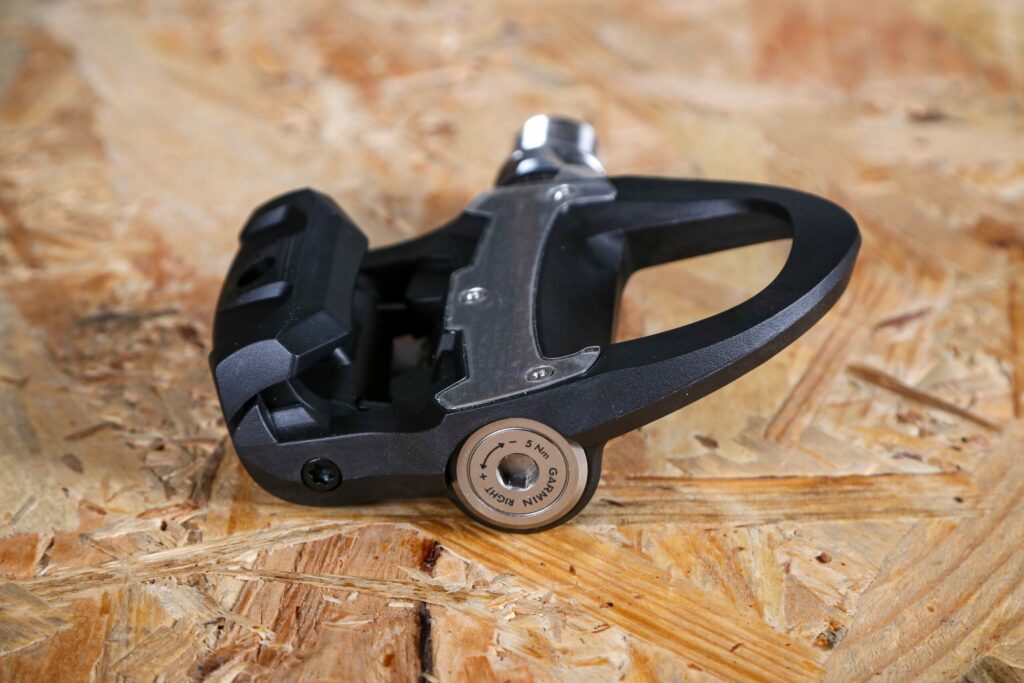

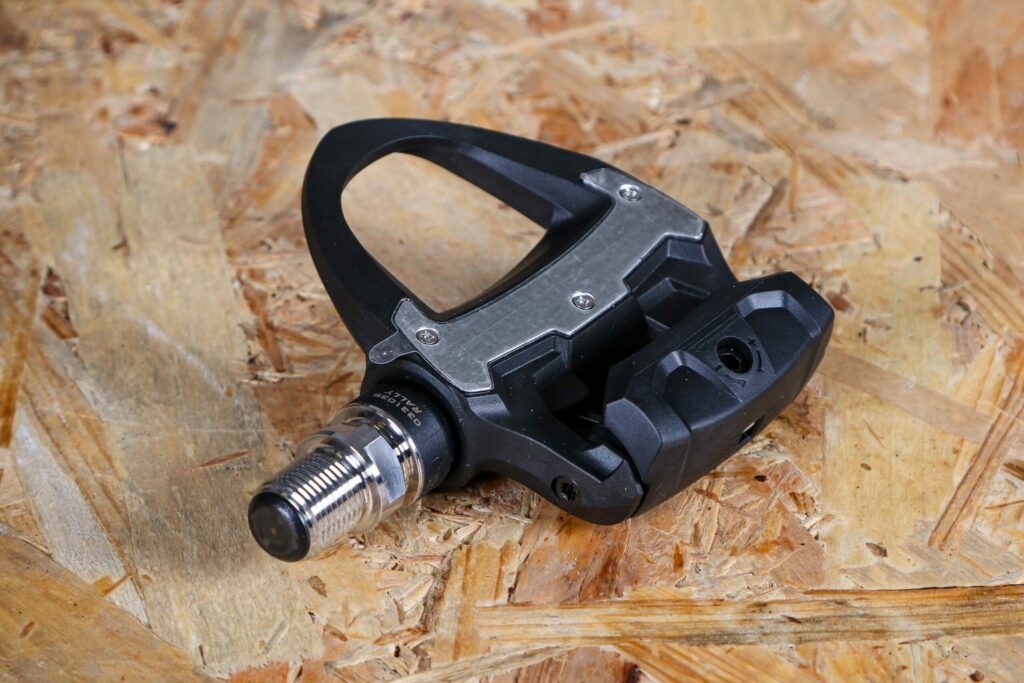
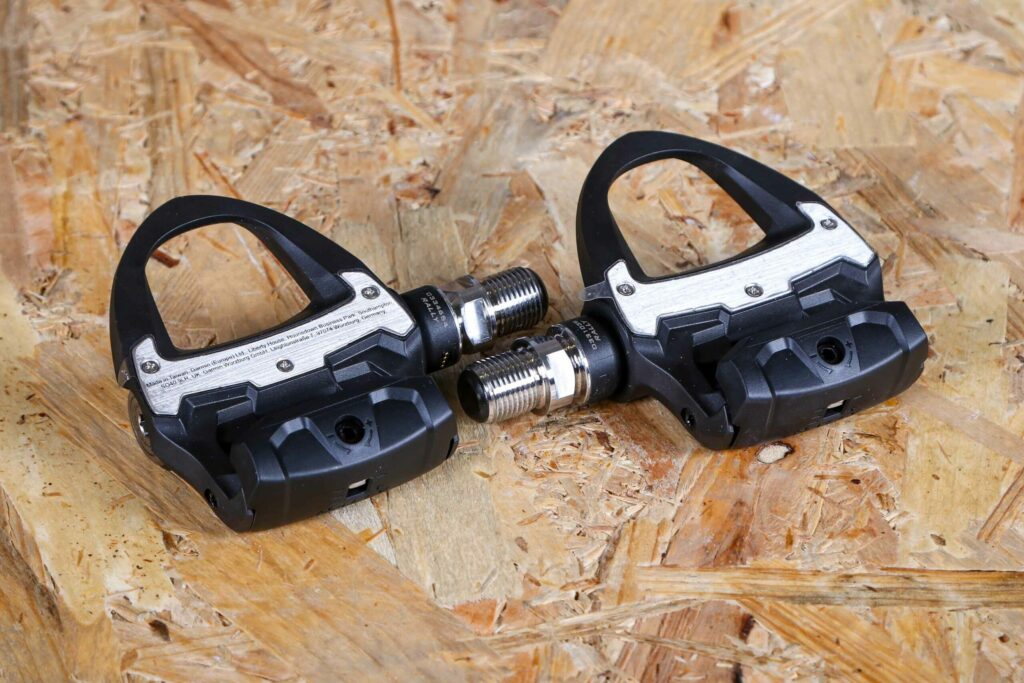
The outgoing Garmin Rally 200 ran off a coin-cell battery. This provided a long run time (up to 120 hours of riding, according to Garmin) but generated e-waste when it needed replacing, while the necessary battery door was a potential weak spot for water ingress.
The new internal battery should make these less vulnerable as the body is sealed, and is easily rechargeable via the supplied USB-C cables. Their magnetic clips attach to magnetic charging pins on the pedals.
Garmin claims the battery will last for an impressive 90 hours – although that’s now significantly less than the Favero Assioma Pro RS, which have recently gone from 60 hours to 160 hours, negating a flaw Dave identified in his review.
Although these last 30 hours less than the old versions, I’m sure I speak for most riders in preferring a rechargeable system. Once your bike computer indicates the battery is low, you can top it up at the mains instead of potentially prematurely replacing a single-life battery.
If you run out of charge just before a ride, Garmin’s quick-charge mode will net you 12 hours of juice in just 15 minutes of charging.
The spindles are easier to remove from the pedal bodies for servicing now, requiring just a 15mm wrench and 5mm hex/torque wrench. You can also swap the spindles into XC210 pedal bodies to record power off-road.
This pretty simple process will be convenient if you split road and gravel riding into distinct parts of the year, for example road in the winter and gravel in summer. It’s also a viable swap if you want it for specific events, but any more often than that would be a drag. A power meter for each bike might be more practical.
It wouldn’t be hard to find two power meters for the same price as the Rally bundle, frankly, so long as you don’t mind one being single-sided.
Spec and tech
Because they have Bluetooth and ANT+, the Rallys can connect to any smart bike computer. Users of the latest Garmin computers benefit from the smart calibration feature, though. This tells you when to carry out a zero-offset calibration; for example if it detects a drop in temperature, a swap to a different bike or just generally thinks it’s been too long.
Don’t worry if your head unit lacks this tech, because the pedals automatically calibrate themselves pretty regularly anyway. The Smart feature just notifies you if it thinks an extra, manual one might be necessary.
The Garmin Connect app is also where you can view your Cycling Dynamics, which is data about how and where you produce power. Of these, left/right balance is the most useful, and that’s displayed on third-party bike computers as well.
Installation requires a pedal wrench, because the battery cover is in the location a hex socket would normally be. Incidentally, the Rally’s high IPX7 waterproof rating (capable of withstanding a 1m deep exposure for 30 minutes) is very reassuring.
They have a standard-for-the-road 53mm Q-factor – the distance between the outside of each crank arm – which you can broaden to 55mm with the provided washers. Their stack height of 12.2mm is on the low side (in theory, the lower the better for pedalling efficiency). You can adjust the release tension by turning the dial on the back of the pedal body.
These are heavier than the 247g Favero Assioma Pro RS 2 pedals at 312g. But that’s still not too weighty even for regular pedals, and they’re still among of the lightest options.
Aesthetically, they look just like normal road pedals, because the working are in the spindle, just as in most modern models.
Importantly, the RS210s are very nice pedals to ride. Like high-end Shimano road pedals, they are weighted to hang the right way up for clipping in, and you clearly hear and feel when your cleats engage. What’s more, the wide contact area and carbon-reinforced plastic body feels stable, supportive and stiff under foot.
Accuracy
As before, Garmin says the Rally 210 series is accurate to +/-1%, which is as high as you’ll see anywhere. In her review of the old model, Anna found no issues with accuracy.
Since the internals of the pedals are unchanged, their accuracy and consistency will be just as good. Certainly I have no reason to doubt it, having tested them against my Quarq DZero power meter crankset (rated to +/-1.5%) and Wahoo Kickr Core, whose integrated power measurement is claimed to be +/-2% accuracy.
I used Zwift Power’s analyser to plot the numbers from the RS210 and the Quarq, and they tally closely, both second by second and for the overall workout. If anything, the RS210 are quicker to detect changes in power, and they consistently read a little higher; just what you’d expect when comparing pedal data to crank measurements. Even when using a waxed chain, as I did, drivetrain losses bring down the latter’s numbers.
It probably also explains why the RS210’s numbers are about 1% higher through the Critical Power curve for the same session. Out on the road with the RS210 as my sole meter, I noticed nothing iffy – no dropouts, unexplained spikes or apparent under-reading.
Value
The Garmin Rally RS210s are brilliant, and I’m happy they’re now rechargeable and simpler to work with too.
The price is a big sticking point for me, however, even considering these are dual-sided. They’re nearly £300 more than the excellent, and similarly specced, Favero Assioma Pro RS-2s with no obvious advantages, unless you’re resolutely wedded to the Garmin ecosystem.
While the RS210s do undercut the SRM X-Power road pedals, that’s not a high bar in light of SRM’s notoriously premium pricing – the officially imported dual-sided version is now £1,865.
Crank-based and spindle-based power meters are harder to switch between bikes than pedals. But if you don’t intend to do so, you can measure Watts for much less money, especially if you’re happy with single-sided measurement.
The 4iiii Precision 3+ Powermeter is £324.99, for instance, while the SRAM Rival AXS power meter is £230.
Overall
Garmin has improved the Rally RS210s’ usability with its tweaks, while maintaining their benchmark accuracy. The road/off-road swappable bodies are potentially very useful, and it’s nice not to have to fiddle around with coin cell batteries (or worry about the battery door). It’s also good to have the choice between Shimano and Look bodies.
For me, however, none of it justifies the roughly £300 premium over very similar offerings, particularly those from Favero.
Test Report
What does the manufacturer say about this product?:
Garmin says: “Track your performance with Rally RS210, the dual-sensing power meter pedals that provide accurate power data and can be easily swapped between our road and off-road pedal bodies.”
Tell us some more about the technical aspects of this product:
They weigh 312g, have a 12.2mm stack height, a 53mm Q-factor and a carbon/plastic pedal body. Claimed accuracy is +/-1% and battery life from full is 90 hours.
How does the price compare to that of similar products in the market, including ones recently tested?:
They’re a chunk more expensive than the good-value Favero Assioma Pro RS-2s, but a lot cheaper than the SRM X-Powers.
Is the power meter single-sided or double-sided?:
Double sided
What connection protocols does the power meter support?:
ANT+, Bluetooth.
Does the power meter have a waterproofing rating? If so, what is it?:
IPX7.
What type of battery does the power meter use?:
Internal rechargeable.
How easy is the power meter to swap between bikes?:
It’s pretty simple and easy.
Did you enjoy using the product? Yes
Would you consider buying the product? No
Would you recommend the product to a friend? No
Use this box to explain your overall score
These are nearly faultless in action, but they would be more competitive overall – and score higher – if they were both a bit lighter and a fair bit less expensive. They’re still very good, though.
About the tester
Age: 31Height: 190cmWeight: 76kg
I usually ride: Fairlight Strael 3.0My best bike is: Canyon Ultimate CF SLX (2016, rim brake)
I’ve been riding for: 10-20 yearsI ride: Most daysI would class myself as: Experienced
I regularly do the following types of riding: Time trialling, Cyclocross, Gravel riding, Touring, Club riding


12 thoughts on “Garmin Rally RS210 Dual-Sensing Power Meter pedals”
The Favero Assioma Pro pedals now have 160 hours of battery life. As reported https://road.cc/feature/faveros-market-leading-assioma-pro-power-meter-pedals-just-became-even-more-popular-with-all-new-look-cleat-compatibility
We spotted this earlier and amended, thanks. There was a bit of a gap between the review being written and publishing, enough time for Favero to launch Keo-compatible pedals with longer battery life in fact!
Or buy them through a Cycle to work scheme.
I believe most of the major C2W providers specifically exclude power meters as an allowable upgrade/accessory, which makes sense really; it’s pretty hard to argue that you really need a power meter on your commute, which is what the bikes purchased through the scheme are for.
Whilst I agree you don’t need a power meter to commute, the rules and the way they are implemented do seem pretty arbitrary.
You may not need a power meter, but many new bikes ship without pedals, and so you do need to buy pedals. There’s no rule on how fancy those pedals can be – it would be just as hard to argue you need the SRM X-Power Direct pedals (£550 at Sigma Sports) but those would be allowable (plus another >£400 for the compatible shoes – cycle specific clothing is also allowable).
Some new bikes come with power meters as standard, and would be allowable under the scheme. You can reasonably question whether the sorts of bikes that come with power meters are the sorts of bikes that people are likely to ride to work, but the fact is neither the scheme provider nor retailer would bat an eyelid.
There are some other things that the scheme says are exempt but would actually be useful. E.g. CycleScheme say you can’t get “GPS ride trackers and navigation devices” on the scheme. Whilst I no longer use one for my regular commute, the first few times I cycled to the office I did use a GPS to navigate there (the direct route is along a horrible A road). In addition, I occasionally attend meetings held elsewhere in the city, and again use a GPS to navigate to unfamiliar locations. Plus there are countless delivery riders who use devices to navigate almost constantly – I think most of them use phones, and they probably don’t have access to Cycle-to-Work schemes anyway (a separate issue) but it does highlight that it’s perfectly reasonable to find an electronic navigation device pretty integral to using a bike for work purposes.
Every bike must have a pair of pedals, that is required by all international standards.
If a bike is physically sold without pedals, it means the shop took them, not that it was produced or delivered to the shop without them.
Therefore a pair of pedals is an upgrade to the existing set, not a piece of necessary equipment.
I’m no expert on CtW, but your argument as presented is simply not true.
You’re either trolling or ignorant; I’m going to give you the benefit of the doubt and assume it’s the latter. It is *very* normal for a bike to be produced and delivered without pedals.
“PEDALS NOT SUPPLIED” https://www.rmcycles.co.uk/bikes/road-bikes/giant-tcr-advanced-pro-0-di2-ocean-twilight-2025__28069
“Bicycles do not come with pedals unless otherwise specified.” https://www.edinburghbicycle.com/bikes/road-bikes/merida-reacto-9000-road-bike-in-effect-silverud-bronze__12990
“Pedals are not included” https://fairlightcycles.com/frequently-asked-questions/?v=7885444af42e
“Pedals: Not included” https://www.merlincycles.com/cervelo-r5-ultegra-di2-carbon-road-bike-2025-338367.html
“Sold without pedals” https://www.decathlon.co.uk/p/rcr-r-pro-team-dura-ace-di2-signature/348368/c425c382m8901934
I could go on pretty much indefinitely. Sure, there are countless bikes that do include basic pedals, but more often than not, mid-range and above road bikes will not include them.
I would have thought that even low end bikes, when supplied to the shop in the rather narrow bike boxes, would be supplied with the pedals unattached.
And as for the higher end, as pedals are a very particular choice, would not be supplied with the bike.
“Not attached” and “not supplied” are two different things 🙂 BTW the handlebar is also typically taken off for ease of shipping, but it clearly is part of the bike.
Pedals are within the scope of delivery (they just have to be, they are a necessary part of every adult bike and they come with their own set of standards), so you can’t claim you had to buy pedals to complete the bike and make it useable.
As I said, I don’t know the formalities around gov subsidies, but it’s impossible a bike came with no pedals – this I know for sure.
BTW you may be surprised, but even bikes like top-end 10k gems come with a set of crappy plastic which and red reflectors! That’s just a requirement.
Nobody would put them on a display bike, but they are always in the box.
Regulations are actually quite bizarre on this: the Pedal Bicycles (Safety) Regulations 2010 do mandate that when you sell a bicycle it must come with pedals with reflectors fitted. However, it has the exemption “This regulation does not apply to the supply of a bicycle with unassembled parts (whether wholly or partially)” so a bike in a box partially disassembled for shipping doesn’t have to have pedals. Basically, if you sell a bike from a physical shop that’s fully assembled so that people can just wheel it out, it must have pedals, but if you’re having it delivered not fully assembled (I assume this can mean even such minor disassembly as not having the front wheel attached) then pedals can be left out.
True, but in practical terms no manufacturer stores a separate SKU for the full bike and the pedalless version. That’s just too much hassle for such a trivial difference.
So while I was technically wrong about the requirement for *all* bikes (sorry!), in reality every bike comes with pedals anyway.