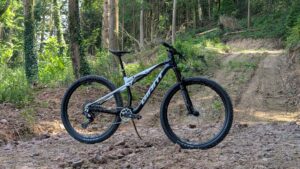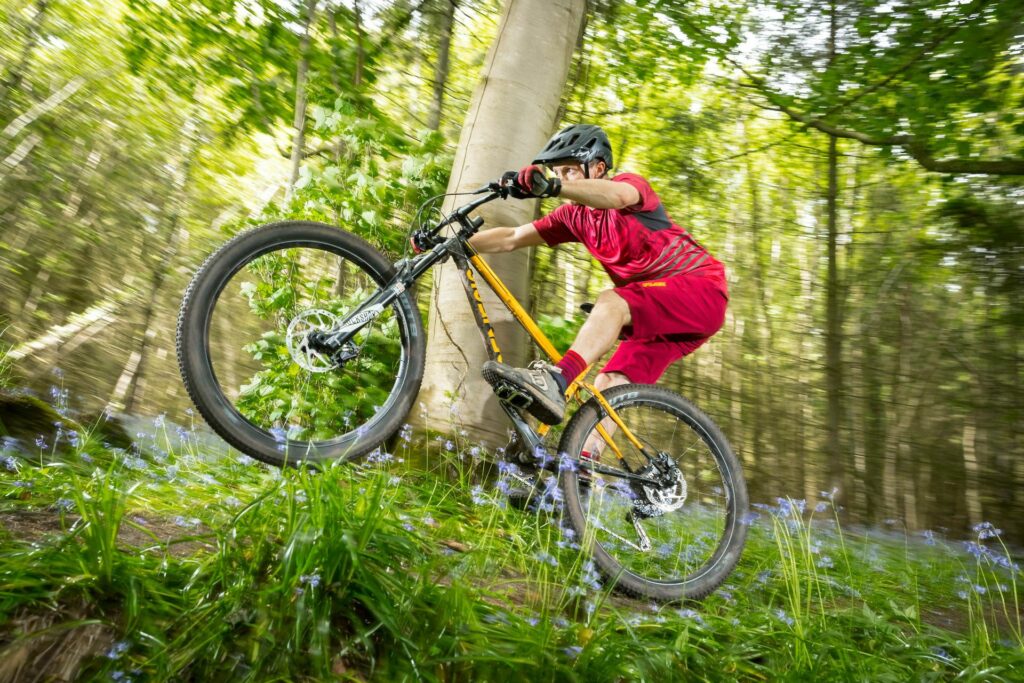

The Genesis Tarn is a refreshingly different take on the UK trail hardtail, with a combination of chubby 2.8” Plus rubber, a zingy steel frame and more stretched out geometry for 2017. If you’re willing to take a punt on something a little out of the ordinary, it’s a highly competent and entertaining ride, but do budget for some more aggressive tyres for soft conditions.
- What frame material is best? Check out our guide
- Looking for your first mountain bike? Here’s everything you need to know
At the heart of the Tarn is a frame made from seamless double butted cromoly steel. Genesis call the blend ‘Mjölnir’ which fans of Viking legend will know was the name of Thor’s hammer, though the frame definitely isn’t a relic from times past, using a through axle rear hub with Boost 148 spacing for extra clearance and a stiffer wheel. The geometry is refreshingly modern too, with a reach of 440mm for a medium sized frame. There’s 120mm of travel from a RockShox Yari RL fork up front, but that’s complimented by chubby WTB Ranger 2.8” Plus tyres on 40mm internal width FatLab rims.
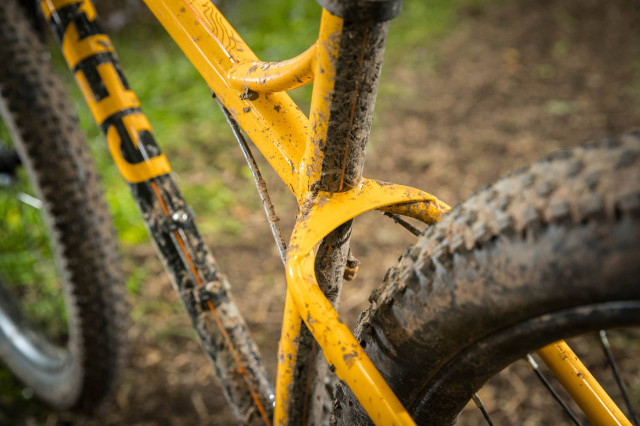
That means that the Tarn has got a bit of a monster truck feeling once you wind it up to speed on singletrack. It’s hard to tell whether it’s down to the frame material or just the tyre volume, but it’s a surprisingly comfortable ride despite the hardcore intentions. In common with most Plus tyres machines, it also rolls impressively quickly, cutting out much of the trail buzz you’d expect to be transmitted back to your hands and feet.
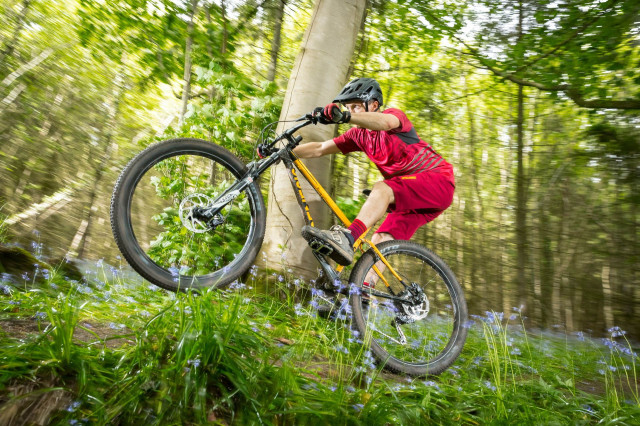
That extra squidge also helps to hide the fairly basic damping of the Yari fork. In fact, the only drawback to this setup is that the fitted Ranger tyres have an extremely low profile tread which is fine on hardpacked or dry trails but is utterly useless in sloppy mud. Obviously, a switch to more aggressive rubber will fix that and I’d suggest looking at a Maxxis Minion DHF 2.8” up front paired with a similarly sized Rekon+ at the back. It’s also worth noting that you can run conventionally tyred 29” wheels in the Tarn if you so wish. It’s also possible to run the FatLab rims without tubes and I’d suggest you do that as soon as possible to drop a serious bit of rotating weight from the bike.
The frame also has loads of standover clearance, so it’s perfectly easy to size up should you prefer a longer frame, but there’s plenty of space on the Tarn as standard. That means the bike is nice and stable on descents as well as not feeling cramped on the climbs. For my preference, I think a seat angle steeper than the relatively relaxed 72º of the Tarn would help you stay seated longer on steep climbs however.
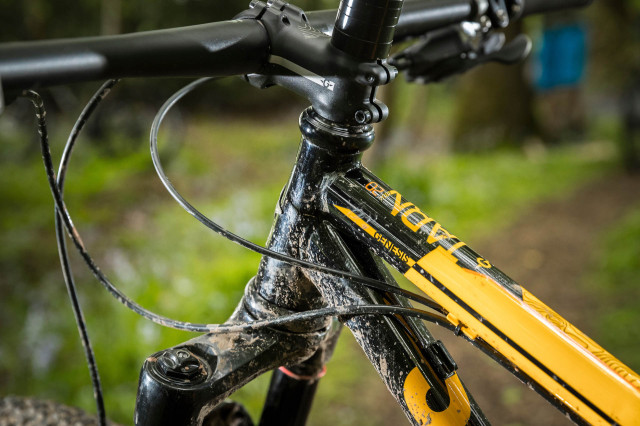
At 68º, the head angle is pretty much in the ballpark for a bike like this, though the Tarn is so entertaining on technical descents I’d like to see it a bit more relaxed and paired with a stem shorter than the own-brand 60mm item fitted. There are no such grumbles about the handlebar however. At 760mm wide with a minimal 5mm rise, there’s plenty of leverage and as the fork steerer is cut fairly long there’s plenty of scope to adjust bar height to suit. I left it slammed as low as possible to help weight the front wheel and thanks to the dinky tapered head tube that’s perfectly possible.
Monster trucking trails
Those grumbles aside, it’s entertaining as it thunders over and along trail obstacles with just the occasional growl of fat rubber slipping traction or zesty ping of a rock striking the frame. At 13.9kg the bike doesn’t demolish climbs with the vigour of a freshly doped racer but it’s not so leaden that it becomes hard work on more drawn-out slogs.
One of the Tarn’s strengths is that it’ll gladly turn it’s hand to pretty much any form of riding, though I found myself forgoing long distance rides and mostly concentrating on messing about on winding singletrack and short, sharp steeps in the local woods. It excels at that sort of mixed trail riding, with a nice balance between a lively feel for darting between trees and hopping and popping over logs and rocks without getting too far out of its depth when you fancy plummeting down something. The rigid chassis of the Yari fork helps here, while the FatLab wheels can certainly take a beating. In common with all Plus bikes, setting tyre pressure accurately makes all the difference between a bouncy, traction free ride and lazy and inaccurate handling, so I’d suggest you buy a digital pressure gauge and experiment until you find the
Solid Shimano spec
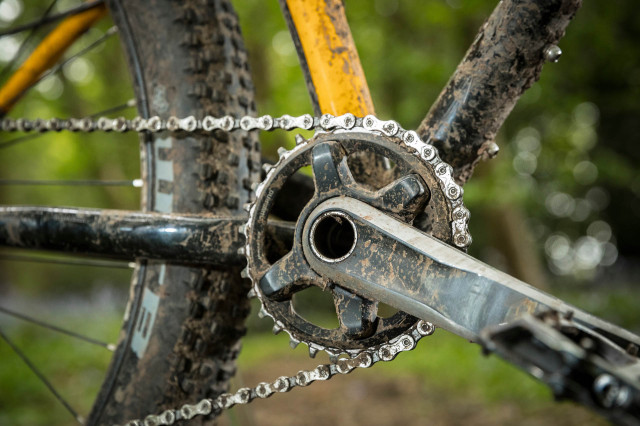
As Genesis is the house brand of UK Shimano distributor Madison, it’s no surprise to see a full Shimano SLX drivetrain setup. That’s no bad thing as the single front chainring equipped 11spd SLX group is smooth, durable and hardwearing. Okay, the 11-42T cassette is slightly down on overall range compared to SRAM’s rival single ring offerings, but that wasn’t very noticeable in use. The non-series M506 disc brakes provide more than respectable stopping power thanks to a 180mm rotor up front and 160mm at the rear, while the lever apes the shape and feel of the more expensive items in the Shimano range. The only drawback is that you’re limited to using faster wearing resin pads rather than longer lasting and less fade prone sintered items and the lever doesn’t get the clever Servo Wave gubbins that increases power as you pull.
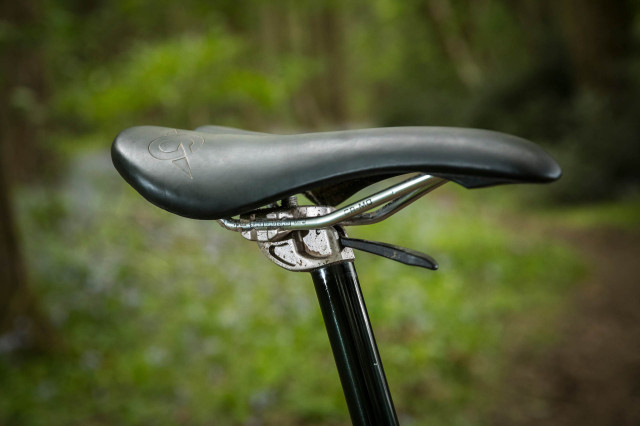
The inclusion of a KS DropZone dropper post is excellent news, however. Okay, it requires you to take a hand off the bar to operate the under-saddle lever in a move that looks rather like a Michael Jackson-esque crotch grab and with only 125mm of drop it’s not as convenient as a longer travel, remote equipped item but it’s certainly a huge improvement over faffing with a fixed post. I’ve not had any reliability issues with it during my test period, but there have been some historical issues with soggy and leaky versions. Hopefully, those are behind KS, but it’d be easy enough to upgrade in future.
About the bike
Tell us what the bike is for, and who it’s aimed at. What do the manufacturers say about it? How does that compare to your own :
State the frame material and method of construction. List the components used to build up the bike.:
Frame Genesis Mjölnir Seamless Double-Butted Cromoly
Fork Rockshox Yari RL, Solo Air, 120mm, Tapered Steerer, 110mm x 15mm
Headset PRESTINE PT-F17A, ID:34/ID:44
Shifters Shimano SLX SL-M7000
Rear Derailleur Shimano SLX RD-M7000-11
Front Derailleur N/A
Chainset Shimano SLX FC-M7000-B 32T
Bottom Bracket Shimano BB52
Chain KMX X11
Cassette Shimano SLX CS-M7000 / 11-42T
Rims FATlab 40mm Tubeless-Ready, 32h
Hubs Shimano HB-M618 / FH-M618 32h
Spokes Stainless steel 14g
Tyres WTB Ranger 27.5+x2.8″
Brakes Shimano M506 180/160mm
Levers Shimano M506
Handlebars Genesis alloy / 760mm x 5mm rise
Grips Genesis Loc On
Stem Genesis 60mm /+0deg
Saddle Genesis MTB
Seatpost KS DropZone 31.6mm / 125mm drop
Frame & Fork
How much suspension travel does the fork have?:
Was the bike comfortable to ride? Tell us how you felt about the ride quality.:
Overall rating for frame
Riding
How would you describe the steering? Was it lively, neutral or unresponsive?:
Rate the bike for sprinting:
Rate the bike for high speed descending
Rate the bike for technical descending:
Rate the bike for flat cornering:
Rate the bike for technical climbing:
Rate the bike for climbing efficiency:
Rate the bike for agility:
Suspension
Rate the fork for performance:
Rate the fork for durability:
Rate the fork for efficiency:
Rate the fork for value:
Drivetrain
Rate the drivetrain for performance:
Rate the drivetrain for durability:
Rate the drivetrain for weight:
Rate the drivetrain for value:
Wheels & tyres
Rate the wheels for performance:
Rate the wheels for durability:
Rate the wheels for weight:
Rate the wheels for comfort:
Rate the wheels for value:
Rate the tyres for performance:
Rate the tyres for durability:
Rate the tyres for weight:
Rate the tyres for value:
Controls
Rate the controls for performance:
Rate the controls for durability:
Rate the controls for weight:
Summary
Did you enjoy riding the bike?:
Would you consider buying the bike?:
Would you recommend the bike to a friend?:
Rate the bike overall for performance:
Rate the bike overall for value:
All the deals displayed on our review pages are pulled from a constantly updating database feed of the best affiliate deals available. The criteria for deciding on what are the best deals is who is offering the lowest, delivered price. In most cases we will be showing the very best deal available online, but sometimes you may be able to find an item cheaper. If you can please feel free to post a link in the comments box below. To find out more about affiliate links on road.cc click here.