



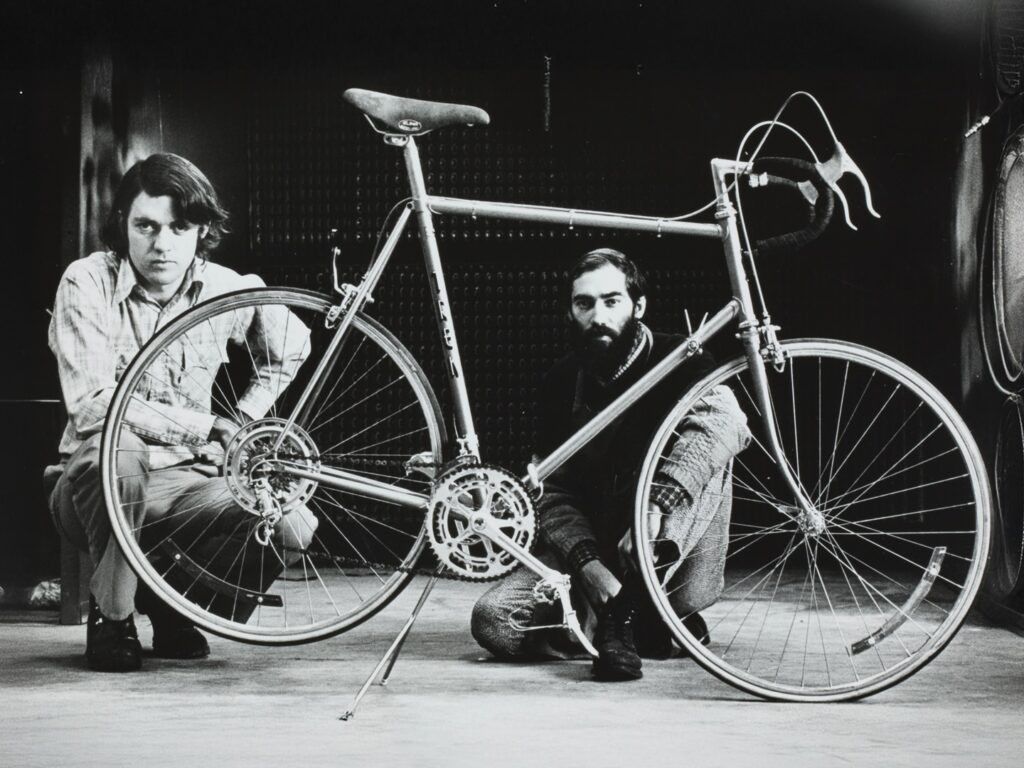
US bike brand Trek marks its 50th anniversary this year, so let’s take a look back at one of its first bikes: the TX200 from 1976.
These days, Trek is a major international player with US$1 billion in revenue. You see its bikes everywhere, from outside local supermarkets to the WorldTour. Back in 1976, not so much.
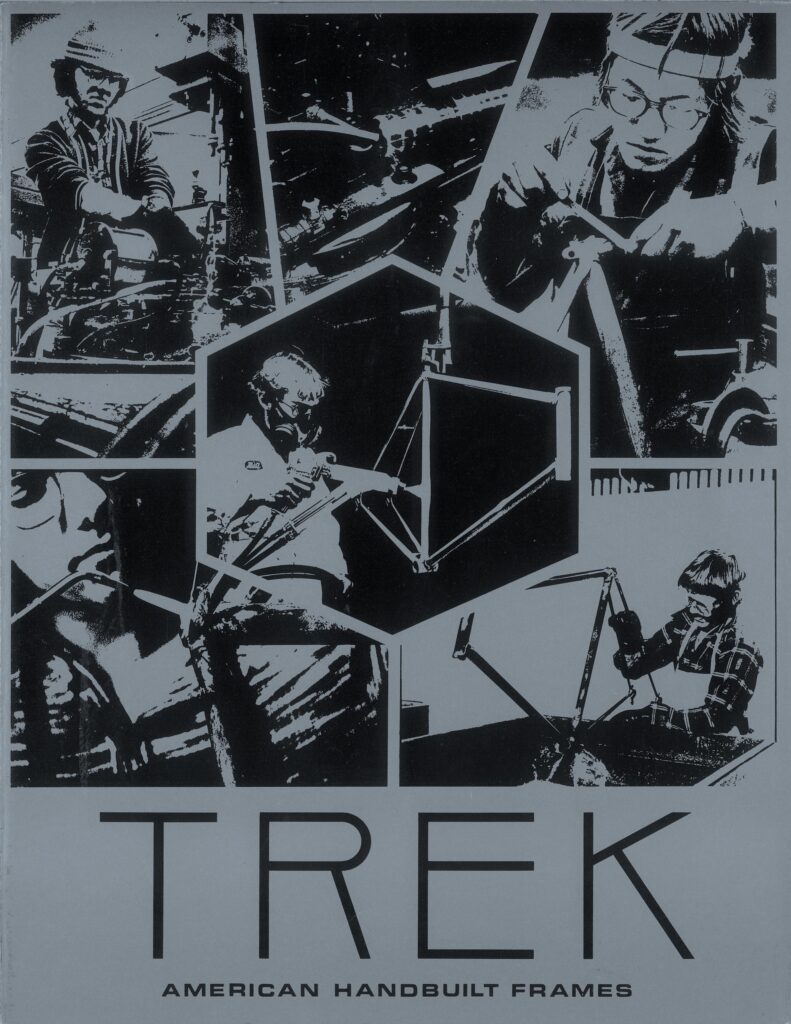
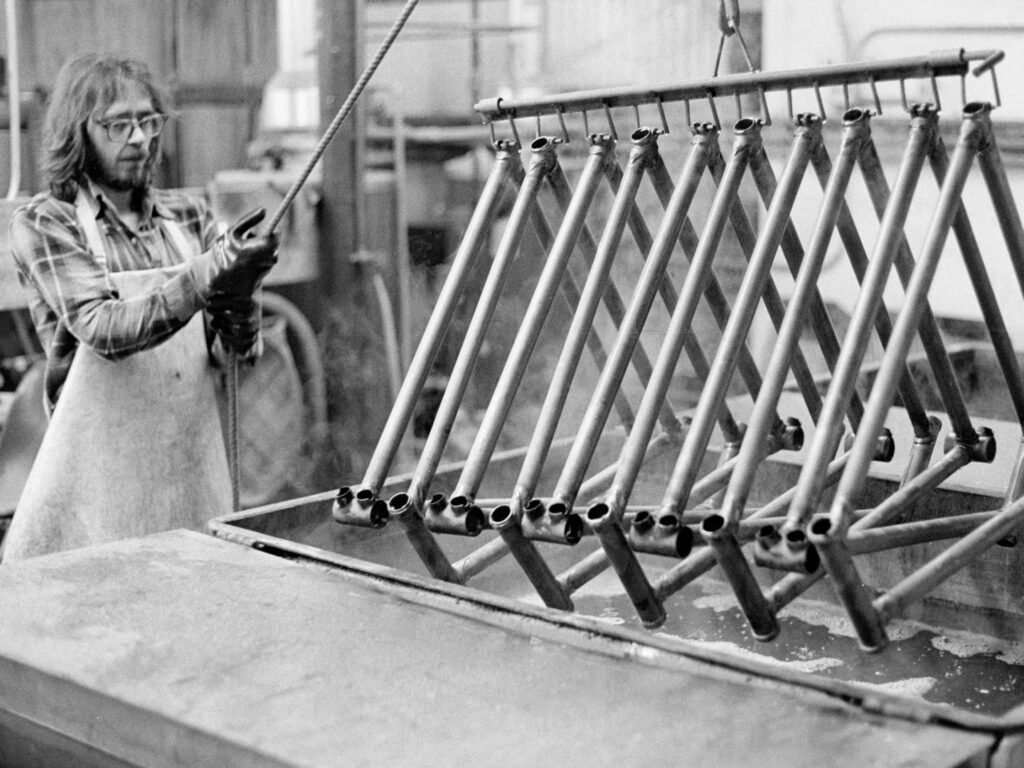
Trek was founded in Waterloo, Wisconsin – where it is still based today – and production began in a red barn. The founders brought together a bunch of bike builders who cut, filed, and silver-brazed each frame by hand from Reynolds, Columbus, and Ishiwata steel.
The TX200 was one of Trek’s first bikes, built in that Wisconsin barn. It used Ishiwata steel tubing – Ishiwata being a premier Japanese manufacturer of lightweight steel tubing for bike frames, although it’s no longer in business – and Nikko Sangyo lugs. Nikko Sangyo is another Japanese brand, and it still exists today.
The TX200 was the most affordable Trek and, like all of the others in the lineup at the time, it was a touring model. Trek focused on the mid-to-high-end market, although prices were very, very different from those of today. Trek made under 900 framesets in 1976, each selling for under US$200.
Later that same year, Trek Bicycle was incorporated. Within three years, its sales approached US$2 million.
The creation of Trek stemmed from the vision of Dick Burke, an accountant with Milwaukee’s Roth Corporation, and Bevil Hogg, a bicycle shop owner. They identified a gap in the market – high-quality lightweight steel bicycles made in the United States. At a time when Japanese and Italian bikes dominated the mid-to-high-end sector, Trek set out to prove that American craftsmanship could compete on equal footing.

The TX200 emerged from this ambition. Every frame was silver-brazed using traditional European techniques, a process that emphasised precision and strength, and a defining characteristic of the brand’s early builds.
The TX200 wasn’t simply a frame sold to custom builders; it was part of Trek’s earliest efforts to offer complete bikes. While TX300, TX500, and other frames appear in early brochures, the TX200 was notable for being included as a complete build in those first catalogues.
In its era, the TX200 was marketed as a sport touring bicycle – robust, reliable, and capable of handling long distances. Touring bikes like the TX200 were designed to offer comfortable geometry and reliable performance, traits that appealed to riders seeking adventure beyond short urban rides or competitive racing. This is the era of down tube shifters – friction, not indexed – quill stems and five sprockets at the back, and a long time before carbon fibre, disc brakes, and internal cable routing became common.
There has been a whole lot of Trek history since 1976. Steel road racing bikes were introduced in 1981, mountain bikes in 1983, aftermarket parts and accessories in 1984, OCLV Carbon frames from 1992, then there were the Lance Armstrong years from 1997 onwards, Project One, IsoSpeed, IsoFlow… way more than we can touch on here.
It has been an eventful half-century. Along with Giant and Specialized, Trek has long been one of the “Big Three” bike brands that dominate the global market in terms of scale, innovation, and popularity. These days, it has about 1,800 employees and the company president is John Burke, son of one of the founders.
The TX200 is a classic piece of cycling history. Retro enthusiasts prize early Trek bikes for their craftsmanship and historical importance, and the TX200 represent the origins of a brand that has gone on to influence bicycle design for decades.









4 thoughts on “Trek is 50: let’s look back at its first bike”
The TX200 had a five speed freewheel in 1976, not a cassette. Big blokes and heavy touring loads were just asking for bent rear axles.
I’m sorry, where did the article say cassette? “…and five sprockets at the back…”
Every bike had the potential problem of bent (or broken axles, held together by the force of the quick release) not just Trek. We had to fix them!
Enjoyed the story, thanks.
In 1976 I bought a TX900 from Open Air Bicycles in Santa Barbara CA, the TX900 was a model the article failed to mention, it was Trek’s top of the line frame/fork, it could only be bought as a frame/fork, I had it equipped with Campy Nuova Record because it was open box sale, can’t recall the other stuff, but I think I had Zues hubs on Mavic tubular rims. Had the bike for about a year and sold it because girls thought there was something wrong with me because the bike was worth more than my car! So, I sold both and got a better car.
Later, after I got out of the military, I went back to Trek and that same bike shop and bought an 81 515, and a few years later an 84 Trek 660 after the 515 got twisted in an accident, that one was a replacement frame so it was just a frame/fork which I put the entire Suntour Superbe group on it, I still have this bike in storage because I ride a newer bike.