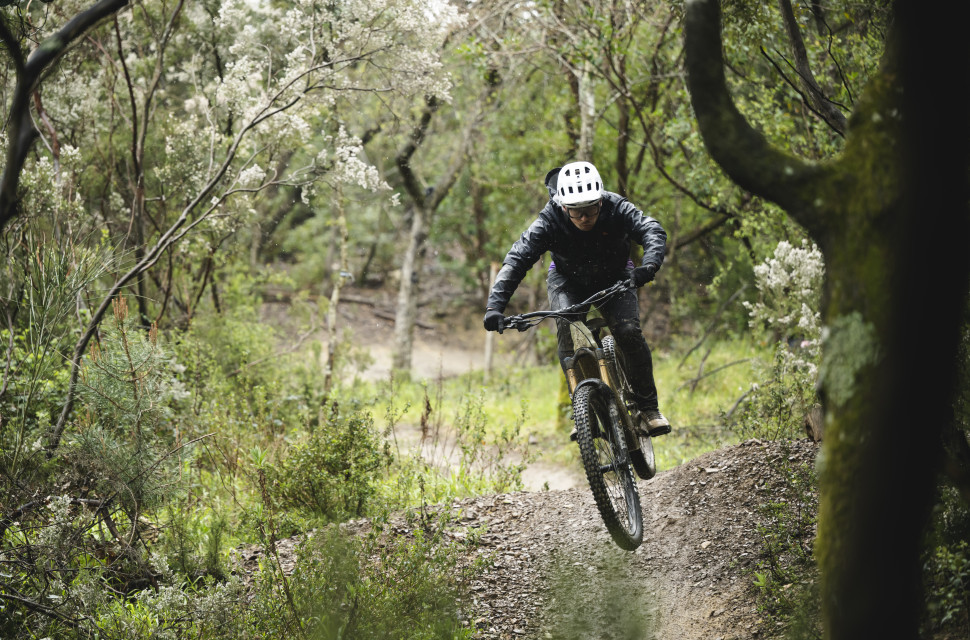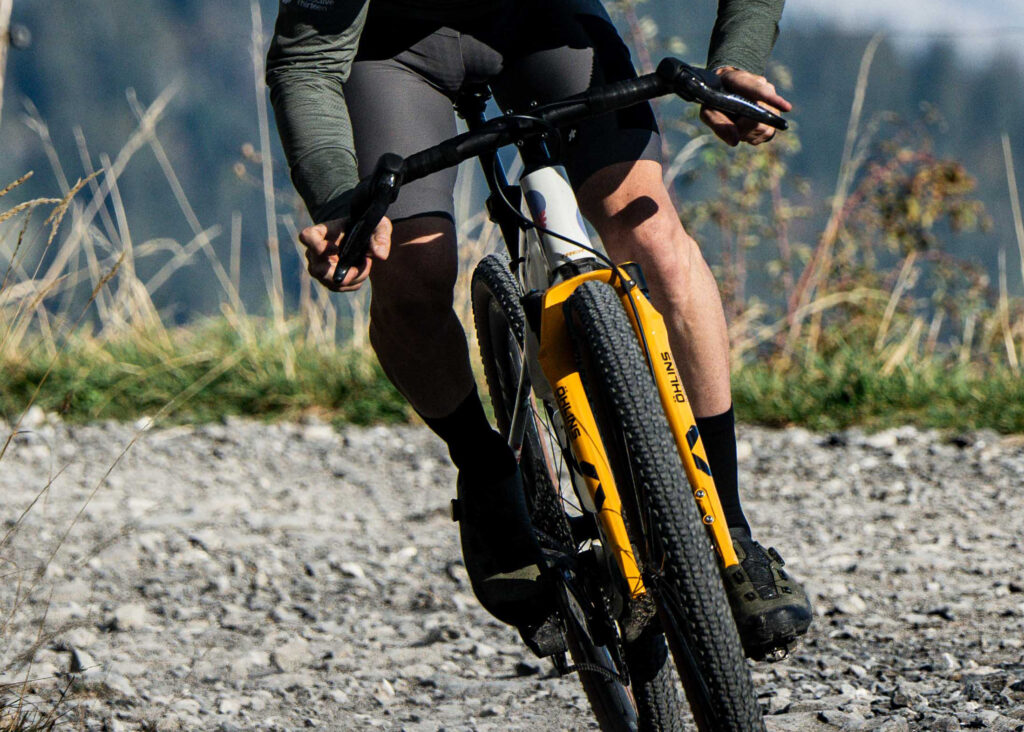


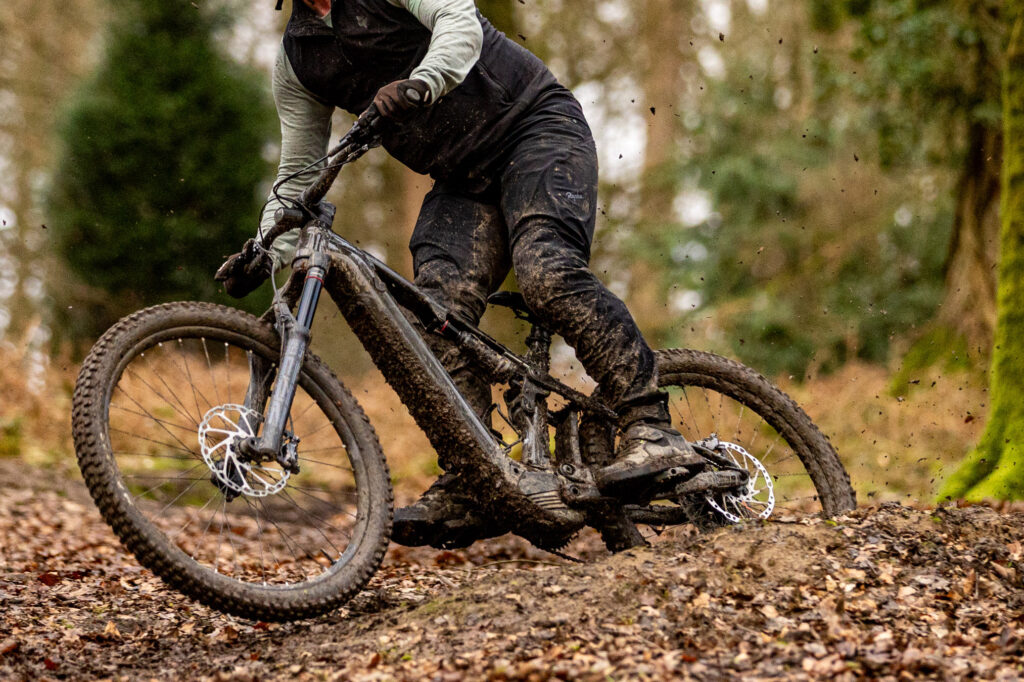

While we can universally agree that the warm sun and dry trails of summer provide the best riding conditions, that doesn’t mean the riding season should end as soon as the mercury drops and the rain falls. In fact, riding through the cold temperatures and wet trails of winter can make for some of the most liberating rides of the year, all the while quietly working on key bike skills. Wintery conditions do pose their own challenges, however, and many can be solved through the right bike setup.
Get mudguards
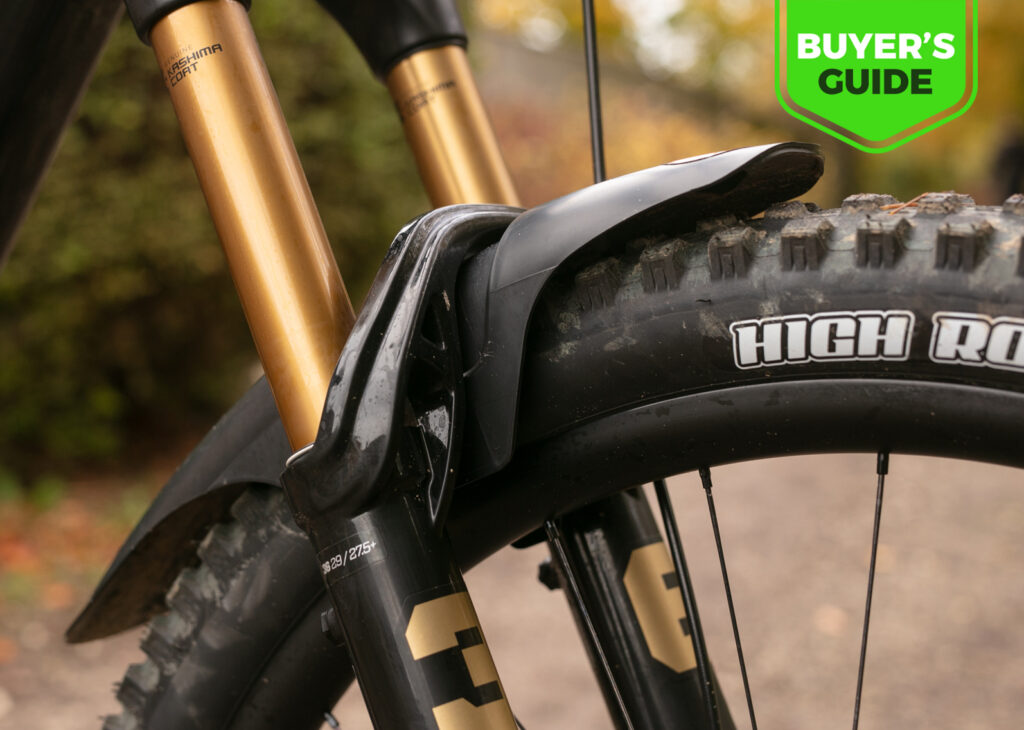
If you’re only going to make one change to your bike ahead of winter, install mudguards. As trails get wetter and softer, mud and water cling to your tyre and fling off with the rotation of the wheels. More often than not, whatever is launched into the air will land in your face or, even worse, your eyes. As such, the humble mudguard is an important safety feature that’ll help you see the trail ahead while keeping your vision in good nick.

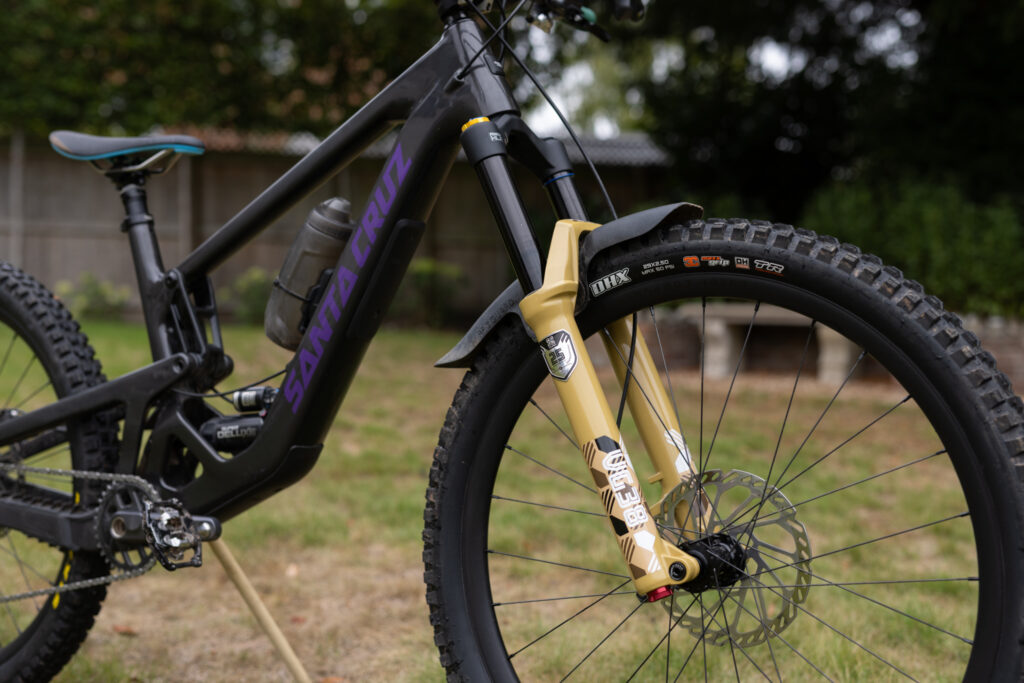
Mudguards come in all shapes and sizes to offer different levels of protection. Some are very small and light while looking better (arguably) and are designed to keep mud and spray out of a rider’s face, and not much more. Others are larger, reaching further around the wheel to keep the rider as dry and clean as possible. These are especially handy if you like to chest mount an action camera to film your rides, as you can ensure the lens stays free of splashes, or if you just want to get home without having to peel off muddy clothes.
Nowadays, mudguards can be fitted to your fork using zip ties and Velcro, or they can be bolted onto your fork crown. Each of these comes with its own pros and cons; cable ties are easy to come by and stable, whereas hook-and-loop straps make a mudguard easy to remove and reinstall whenever you like. Bolt-on mudguards provide the tidiest look and often the best stability (so they won’t rattle around), but bolt-on mudguards use interfaces that are specific to your fork.
Although not nearly as popular as front mudguards, rear mudguards also exist. Rear mudguards also come in a variety of sizes, with larger options designed to keep the rider’s back clean, whereas smaller mudguards are shaped to fit within a bike’s seat stays to protect pivot bearings. Rear mudguards aren’t common because many riders don’t mind getting a muddy back, and they can look rather unsightly while limiting space over the rear wheel for weight distribution.
Choose more aggressively treaded tyres and a softer compound
Your tyres are two of the most important components of your bike when it comes to traction, and their tread pattern massively influences how your bike interacts with the trail.
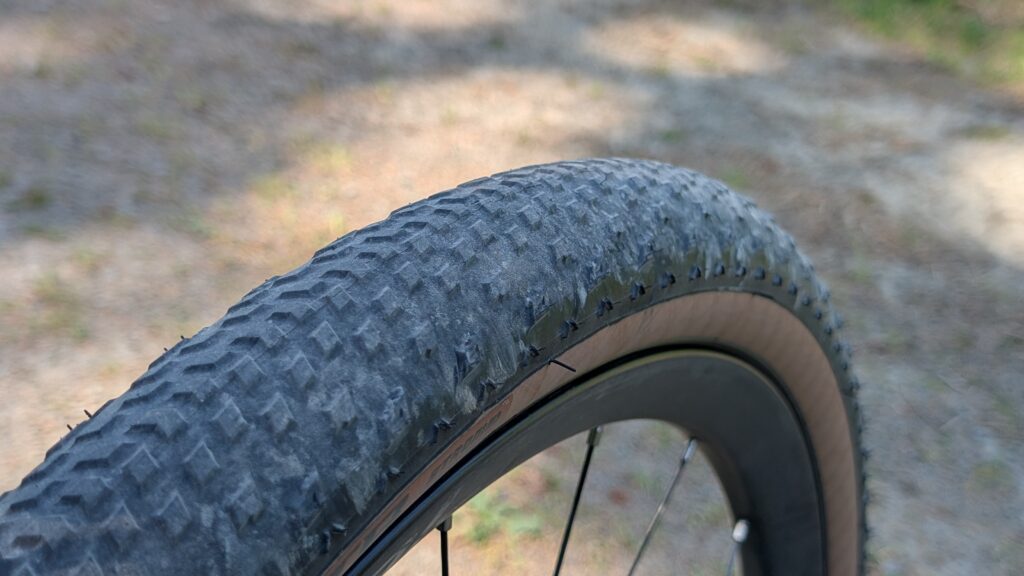
It goes without saying that when conditions get wet, the trails get softer and tyres with low-profile tread patterns will struggle to bite into the ground. While fantastic in the dry, they don’t have the tread depth required to dig deep into wet mud and grip. Lower profile tyres will make your bike feel like it’s skating over or through mud rather than gripping the trail.
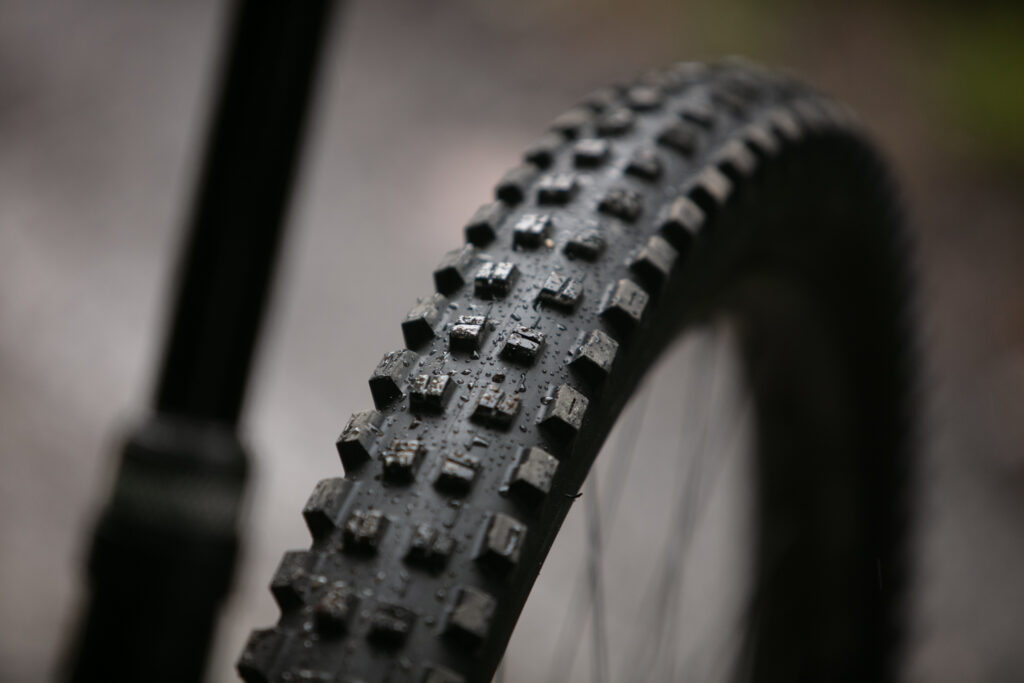
When transitioning into the wetter months, consider choosing an intermediate tyre with a more aggressive tread pattern or taller and wider-spaced knobs. Taller knobs dig through the squishy wet dirt and find the firmer ground underneath, where the grip is. A widely spaced tread compound will allow the tyre to fling mud off the carcass when riding, stopping it from clogging and reducing the grip available. It’s also a great idea to pick a tyre with a squarer profile on the rim, as more pronounced shoulder knobs will pay back in loads of grip when tackling wet off-camber.
Mud-specific tyres dial the aggression up even more. These are designed to provide all of the grip possible when the trail is nothing but all-out slop. However, this usually happens on natural, high-traffic trails where riders churn up the ground frequently over a small span of time. While these are great for the most horrific conditions, they may not be totally suitable for conditions that are a little more mixed, with firm patches lining the track. With such tall knobs, your bike will ride on the top of them over firmer terrain, which can result in a nervous or skittish feeling ride. As always, it’s worth considering your terrain before committing the cash on fresh rubber.
It’s wise to look towards softer rubber compounds too, as the softer the rubber, the more chemical grip you’ll get. While all of this will increase the overall grip your bike can offer, it does come with a sacrifice of more rolling resistance, as do aggressive tread patterns, so your bike will be a little harder to pedal.
Lower tyre pressures
On the subject of tyres, in the wetter months, you can get away with dropping the psi of your tyres a notch or two. When grip is scarce, you’re not going to be riding as quickly, and of course, the trail isn’t as hard as it is in the summer. With this in mind, you don’t have to worry quite as much about pinch flats.

In the winter, you can take full advantage of this and soften your tyres a little bit, which will allow your tyre set-up to conform to the trail even more and eke out even more grip. But as always, don’t go too soft or you’ll end up fixing flats on the trailside.
Keep your light mounts on your bike
Winter is prime time for a spot of night riding. It’s an excellent way of packing in more miles when the nights draw in, but with lights thrown into the mix, there’s even more to prepare before heading out the door. Of course, make sure your lights are charged, but install your light mounts onto your bike and leave them there until the season’s wrapped up.
Even the best light mounts can be super fiddly to bolt into place, so by keeping them there semi-permanently throughout the winter, you’ve got one less thing to do before your ride.
Consider flat pedals
This isn’t a case of ‘flat pedals win medals,’ but as mentioned before, wet trails offer far less grip, which poses an excellent case for flat pedals. When grip is hard to come by, lifting a foot from the pedal, or dabbing mid-corner, is imperative to keeping you upright. Being able to do this without having to clip out and back in to a pedal is incredibly freeing and could be a make-or-break in tricky trail situations.

In the most horrific of mud and snow, even the best clipless pedals can also clog up, which makes engaging with the pedal an absolute nightmare. So in the winter, choosing a pair of decent flat pedal shoes and flat pedals can up your riding game to no end. They’re also great for brushing up on your riding technique, but as with most things, pedal choice is a personal preference.
Swap your brake pads
When it’s dry, many choose to ride with organic brake pads to benefit from their stronger bite and fast bed-in, but when it’s wet, organic pads very quickly lose their power as excess moisture and dirt can form a film between the pad and the rotor that reduces the pad’s effectiveness. With that, they can also wear pretty quickly when grit gets involved.
Even though organic (or resin) pads offer better braking in cooler conditions, it’s wise to move to sintered, or metallic pads as we move into winter, as they’re much more resilient and won’t wear nearly as quickly. They may require a bit of heat to work at their best, but even when cool, sintered pads do a better job of slowing you down than wet organic pads. It’s a relatively cheap change to make, too.
Check over your bearings
If you’re anything like the rest of us, you’ll have given your bike an absolute hammering throughout summer, in which case, it’s great to take the shock out of your frame and check the smoothness of your pivot bearings. The same goes for your headset and wheels, too. This also makes for a great opportunity to perform a light service to give everything a clean and reapply a liberal film of grease. If everything’s still running smoothly, a grease refresh will provide extra protection against water and dirt ingress, helping your bearings last longer.
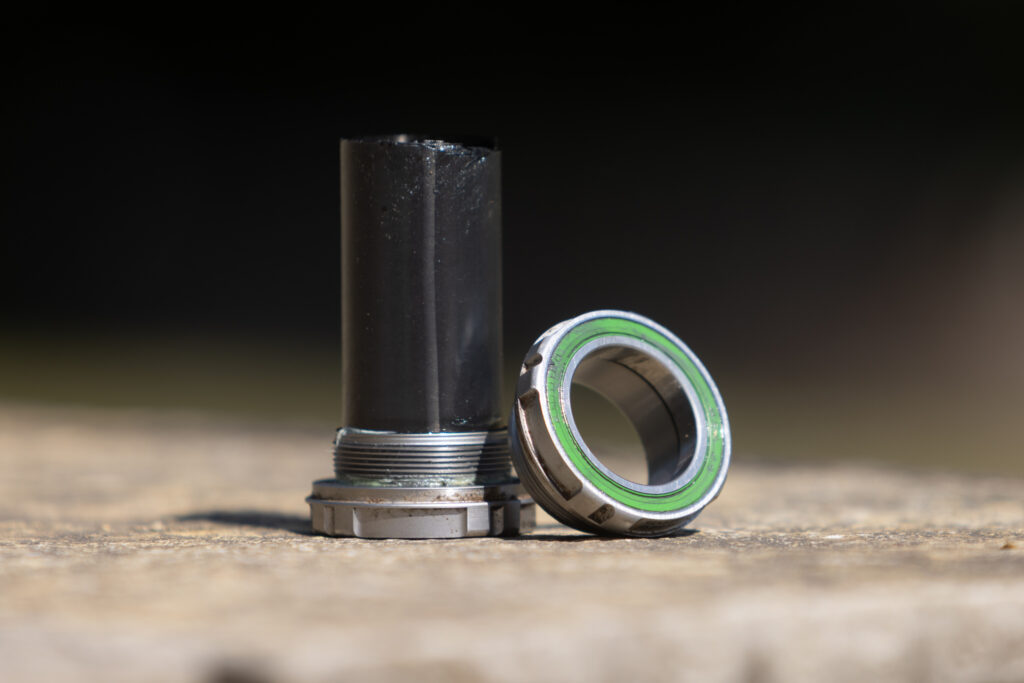
If there’s any play in any of these bearings, get them replaced as it’ll only worsen as water ingresses, and worn bearings could cause frame damage further down the line.
If all is well, check again in the dryer months.
Tweak your suspension
In the summer, you’ll be riding faster and hitting terrain harder, and you’ll likely be running your rebound faster to cope with that. You might even have an extra bottomless token or volume spacer. Come winter, you might want to think about tweaking your suspension setup again.
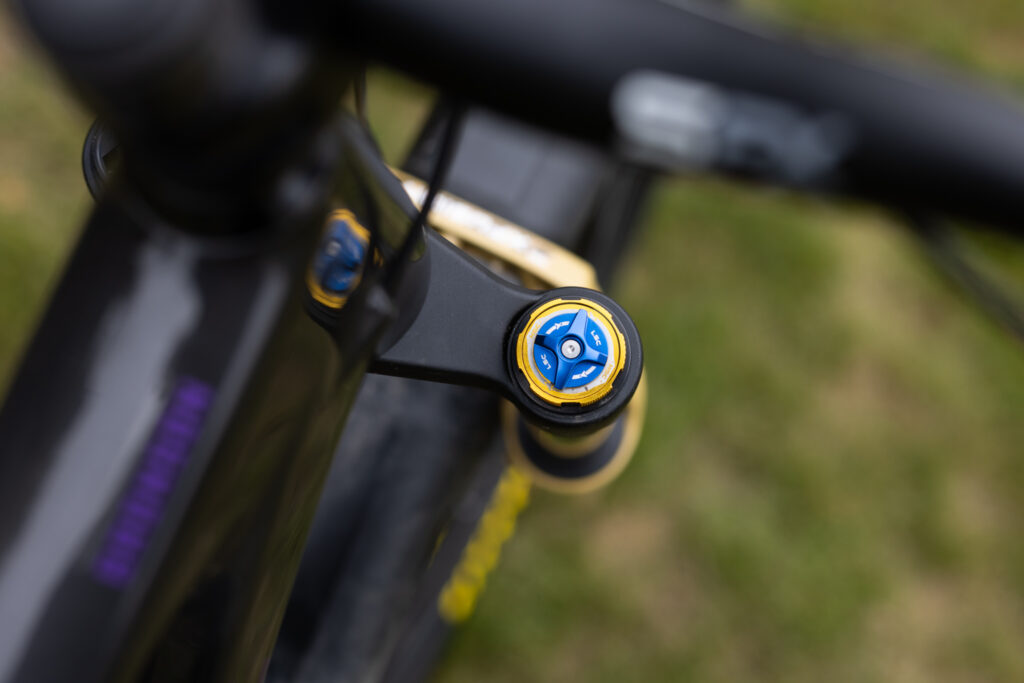
But there’s one thing that doesn’t get talked about enough – ambient temperature. When the mercury drops, the oils in your suspension will become more viscous, so consider opening up your compression settings a click or two to counteract this. And although it might make sense to slow down your rebound a bit, as you won’t be riding as quickly, speeding it up could be equally as useful, as again, thicker oil caused by the cold makes it move slower.
Then, as the temperature drops, so will the pressure in your air spring; with that, winter makes an excellent time to revisit and refresh the air in your suspension.
Consider ceramic frame coatings
The bit that nobody likes about winter riding is the mass of cleaning that comes post-ride. However, over the past couple of years, brands have been creating ceramic coatings that apply a film over a frame or any other component you rub it onto. The result is a hydrophobic surface that mud and water struggle to cling to.

A few brands offer ceramic coatings like Gtechniq, which has developed its coating around cars, and has since moved it to bikes. Muc-Off also offers its own ceramic protection. But both work in similar ways and they’re applied almost identically. Simply rub your bike down with isopropyl alcohol to remove grease, apply the coating onto the frame, and lightly buff it.
Just remember to leave it to cure before taking it for a ride, and top it up every once in a while with the appropriate stuff. When it’s all done, water will simply fall off of your bike frame, which is pretty satisfying to watch.
Switch to wet chain lubricant
Chain lube keeps a chain’s links and rollers moving freely. A properly lubed chain keeps gear changes slick and the whole drivetrain quiet – it’s a must-have regardless of the conditions. Throughout the summer, it makes sense to use a dry chain lube which is formulated to be less sticky, so it won’t attract as much dirt, which can exacerbate chain wear. However, in the winter, as the trail gets wet, dry chain lubes will wash away very quickly. This will make your chain noisy, and it’ll wear faster.
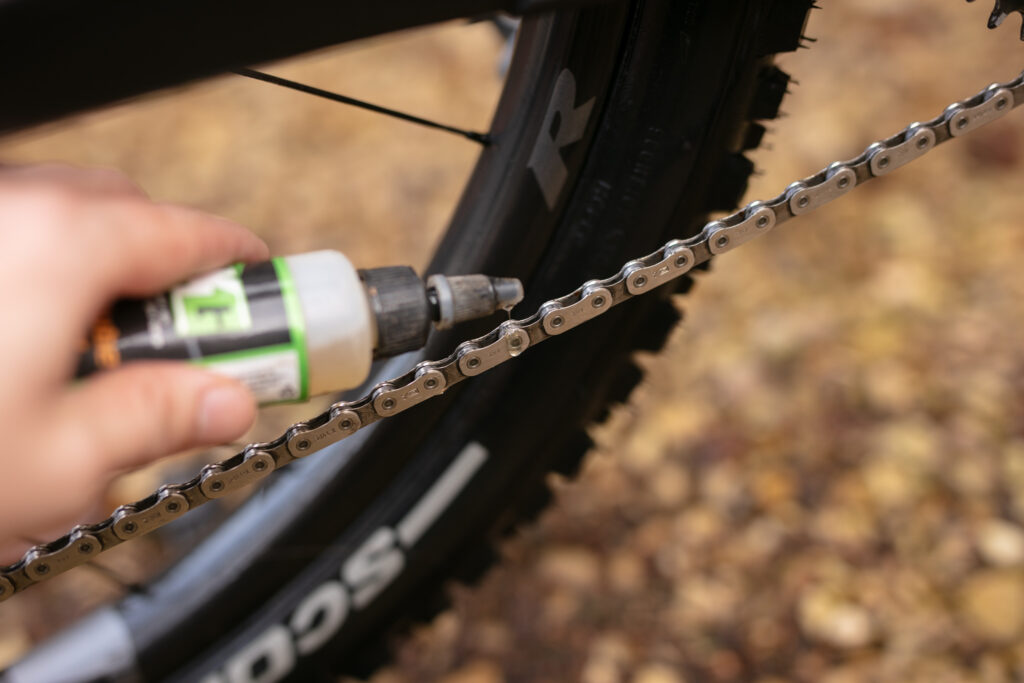
Wet chain lubricants are thicker and stickier, but with that, they’re formulated to stay on the chain, even after splashes through streams. As such, they’ll provide better and longer-lasting protection. Just be prepared to clean your chain more frequently.