



Sunday’s Paris-Roubaix Femmes promises to be an open, unpredictable race, aided by a reshuffled, cobble-heavy start and a wide variety of contenders – ranging from defending champion Pauline Ferrand-Prévot to Lotte Kopecky, Lorena Wiebes, and British hopeful Zoe Bäckstedt – all entering the Queen of the Classics with a realistic shot at victory.
However, despite the clear potential for another thriller on the pavé, much of the discourse surrounding the sixth edition of the women’s Paris-Roubaix has centred on the decision to move it from Saturday to Sunday, the same day as the men’s race, and cut the television coverage in the process.
In February, ASO announced that both races would be moved to the same day for the first time in 2026, a decision the race organisers claimed would lead to “better TV visibility, with viewers benefiting from two finishes on the same day, just a few hours apart”.
However, earlier this week, it was revealed that the television broadcast of the women’s race – set to finish in the Roubaix velodrome an hour after the men – would begin at 4pm UK time. That means, at most, an hour and a half of live TV, around half of last year’s broadcast and missing over two hours of potentially decisive racing. The entire men’s race, meanwhile, will be shown live on television.
The move has prompted a furious reaction online, with fans accusing ASO of paying “lip service” to women’s cycling.
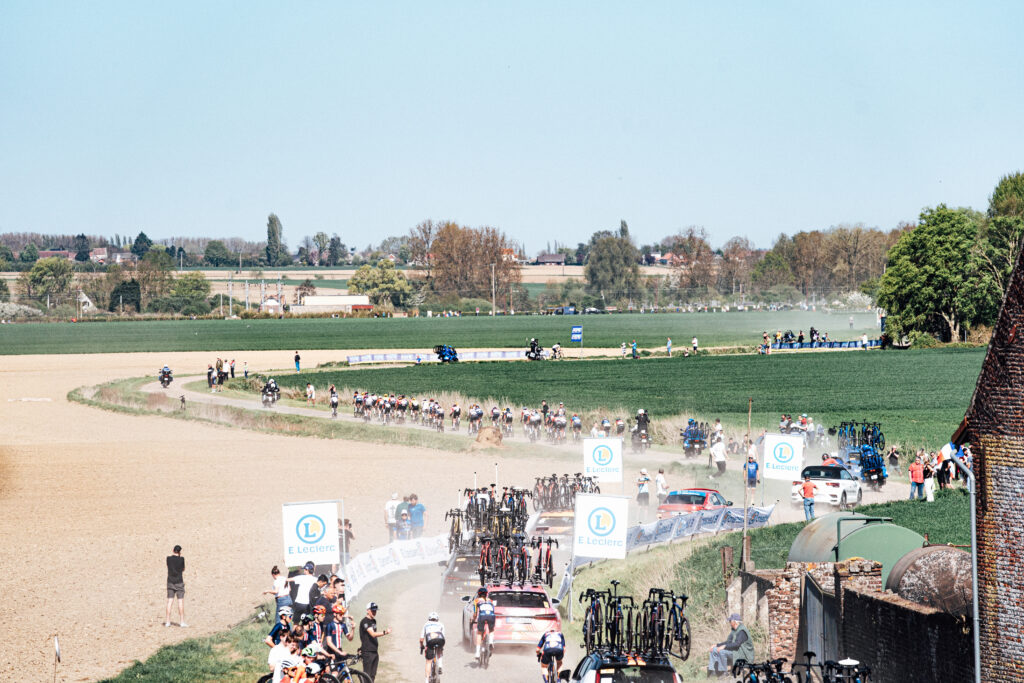
However, speaking to members of the Picnic PostNL team, it is clear that the women’s peloton is in two minds over the switch to Sunday – a decision that highlights the distinction between watching a race on the roadside and on TV, and where cycling’s priorities lie when it comes to growing the sport.
“Being on the same day as the men, there are going to be massive crowds. So it feels like a big deal,” Picnic’s 22-year-old British rider Robyn Clay, making her Roubaix debut this year, told road.cc on Saturday.
“I see both sides. Last year, the crowds weren’t so big, so I’m really excited,” adds her teammate Lucie Fityus.
“And with a race like the Tour of Flanders, where both races are held on the same day, you see the women get a lot of the same crowd as the men. It’s a really awesome atmosphere and it’s one of the best I’ve been in as a rider,” the 25-year-old Australian said.
“But, on the other hand, you get the reduce TV coverage, which is really disappointing to see. I think women’s cycling has developed such a unique fanbase that people really are interested in this sport and watch our race. Not everyone wants to watch the women’s race as a second place.
“So to only have an hour, an hour-and-a-half of TV coverage – when a lot of the work, a lot of the important parts of Roubaix come quite early – is really disappointing.”
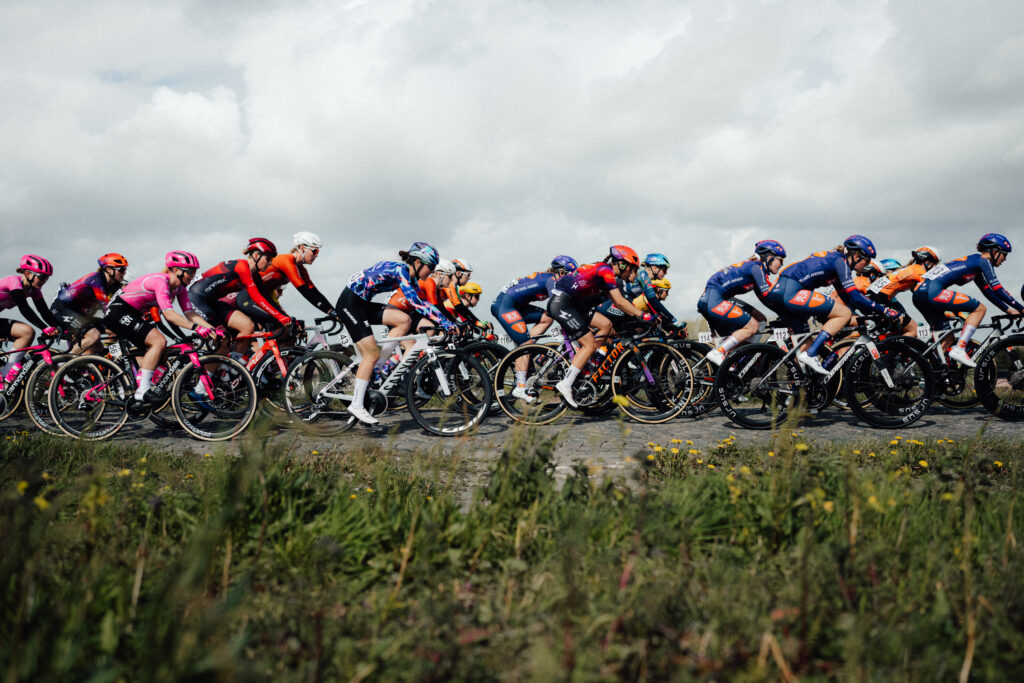
Asked whether healthier crowds would help boost the sport’s profile over television coverage, Irish champion Mia Griffin, set to take on Roubaix for the second time, said: “It’s hard to say whether TV coverage or in-person viewing helps grow the sport more. Lucie made a good point that in the early part of the women’s race, a lot of things are going to happen, and the action of the race will be missed with 90 minutes of coverage.
“But I also think a lot of people will want to watch the women’s race, because it will be a lot more dynamic than the men’s race, there’ll be more surprises. If you were making a rough prediction of the top 10 for the men, you’d probably be fairly accurate.
“Whereas for the women, it’s more open and there can be a few surprises, which I think is exciting. So seeing how the whole race will play out is interesting and I think, for viewers in general, and bringing more people into the sport, TV coverage outweighs having more people watching the race in-person.”
Meanwhile, Picnic’s sports director Callum Ferguson noted that the switch to Sunday – which sees the Dutch team compete in three races on the same day, including the U23 event – has led to a logistical headache for the squad, especially when it comes to putting helpers in position at the end of cobbled sectors.
“It definitely makes it challenging having all the races on the same day,” he tells road.cc. “However, I think for the fans, it’s going to be amazing. And for women’s cycling, it’s going to be really good. Last year, I did both the women’s race and then the men on the Sunday.
“And to see how many more people were out on the Sunday, I wouldn’t say disappointing, but you see how many millions are out on Sunday, and on Saturday there wasn’t anywhere near the amount of people.
“So, for sure, it’ll be exciting for the girls, as they’ll have ten times the number of people they had last year. Whether that’s right or wrong, that’s just the situation. And it’ll be nice for the girls to feel that atmosphere.
“Logistically, it’s easier when they’re on different days. At the same time, when it comes to fans and the organisers, I can see why it’s easier to have them on the same day, so I see the pros and cons.”
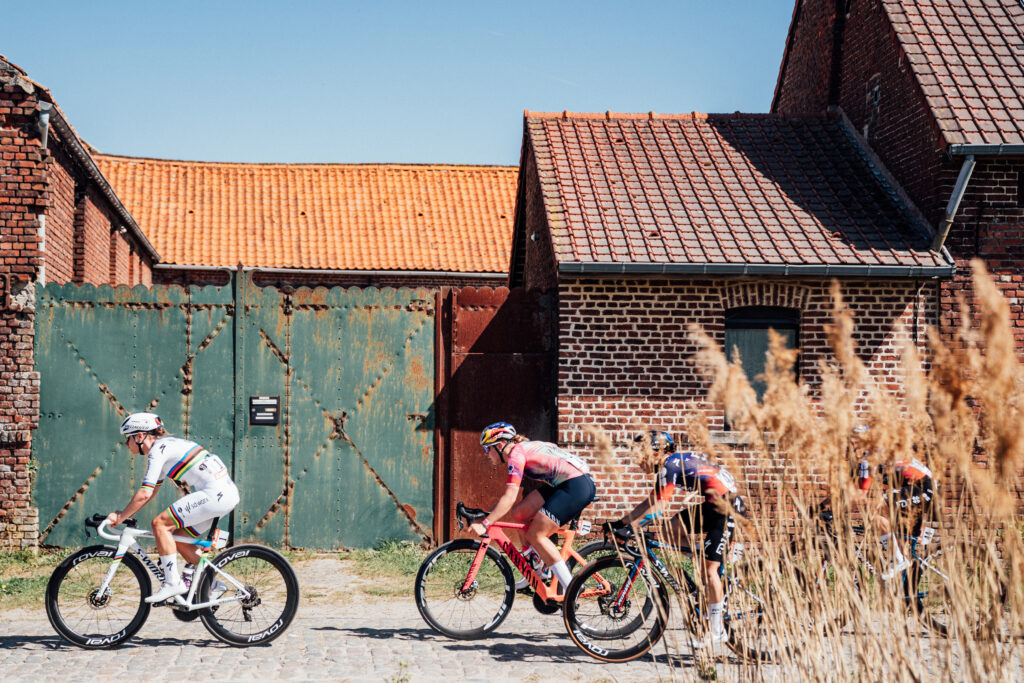
But what would the riders prefer – a combined Sunday in Hell with the men, or the old Paris-Roubaix weekend?
“I’d say same day, but with better TV coverage,” says Fityus.
Clay agrees: “Yeah, I personally love massive crowds, it makes me go so much faster somehow.”
“In Flanders, going up the Kwaremont, I’ll never forget that feeling,” adds Fityus. “All the people, so many deep, shouting, screaming at you. You’re at the end of the race, the end of your tether, going so deep, and that’s the main thing that gets you going, the emotion, the roar of the crowds.
“Last year, at Roubaix, the crowds were pretty good and that was a really nice thing to experience. But to have the men’s crowds – men’s and women’s, I should say, because people are coming for both, and for the U23 men as well – I think it’s a great thing.
“But it’s disappointing when it cuts out TV time, though it’s good with the crowds.”
And if the head honchos at ASO are reading this, Clay has a simple solution to their Roubaix quandary.
“Having it on the same day doesn’t mean we have to have reduced TV coverage, which is why it’s so disappointing. Just get some more cameras!” she says.
“I’d also propose to not put three races on the same day, don’t put the U23s on the Sunday,” adds Fityus.
“Maybe put the men’s and women’s races on the same day and space them out a little bit better, so people can watch both races. Flanders seems to manage it somehow. We don’t go from the exact beginning of Flanders, but people get more than an hour-and-a-half. And if they can do it, why can’t Roubaix do it?
“But in terms of growing the sport, the people that are maybe there for the men’s race will watch the women’s race as well, and go, ‘this is great’. We’re much less formulaic in our style of racing than the men. It’s exciting, and I think that’ll help grow it as well, bringing fans to the sport. And I think that’s what’s helped get women’s cycling to the place it is now, and I think it’ll only get better.”






















3 thoughts on ““I’d like to race on the same day – but with better coverage”: Women’s peloton in two minds over Paris-Roubaix date switch and reduced TV time”
Somewhat ironically there’s no mention on this site yet (10pm Sunday) of who won the women’s race, despite a detailed lead story about the men’s race which only finished an hour earlier. So it would appear ASO aren’t the only ones “paying lip service to women’s cycling”.
I’m sure there’s meant to be – there’s just been a bit of a Koch up somewhere.
Very disapointing. Don;t know what happened on the unaffordableTNT stream, but all the “live streams” I could find on Uchoob, including the one that showed the U19 and U23 men in full as well as the men’s racewent dead as soon as the men’s race finished. Had to make do with live txt commentary on Cycling News. Either all the stream thieves are mysogonists or they all screwed up. The women’s races have been far better watching than the men’s all year, tille we get to potentially the most interesting race of the yeear, then nothing…. Very poor