



New guidance issued by the government this week, designed to help local councils make streets safer for women and girls, should focus on cycling and bike-related infrastructure, as well as walking, campaigners say.
This week, Active Travel England announced that new guidance will be published and sent to councils later this spring, and training sessions carried out, outlining how local authorities can design and “revamp” their streets to make them safer for women and girls.
The guidance, Active Travel England says, will encourage councils to look at active travel through the lens of gender, helping to create safer and more inclusive places, and forms part of the government’s Safer Streets ambition to halve violence against women and girls within a decade.
It will also explain the importance of implementing better-designed street lighting, ensuring improved visibility, along with “established walking routes” on roads that tend to be busy and are overlooked by other people and CCTV.
According to new polling by YouGov released to coincide with the launch of the guidance, almost nine in 10 women say they have felt unsafe while walking at night, while 71 per cent stated that they have changed their route to avoid walking in the dark during winter or darker months.
Inadequate lighting, poorly maintained routes, personal safety fears, and anti-social behaviour were identified as key safety barriers in the survey, the majority of respondents saying they would feel safer walking near their homes if key issues were addressed.
“No one should worry about getting to their destination safely after dark, and these stats show just how much work there is to be done,” local transport minister Lilian Greenwood said in a statement.
“This programme is turning conversations into real change by working directly with the councils who design our streets to ensure women and girls in our communities feel safe to walk, wheel, and cycle whenever they want to.”
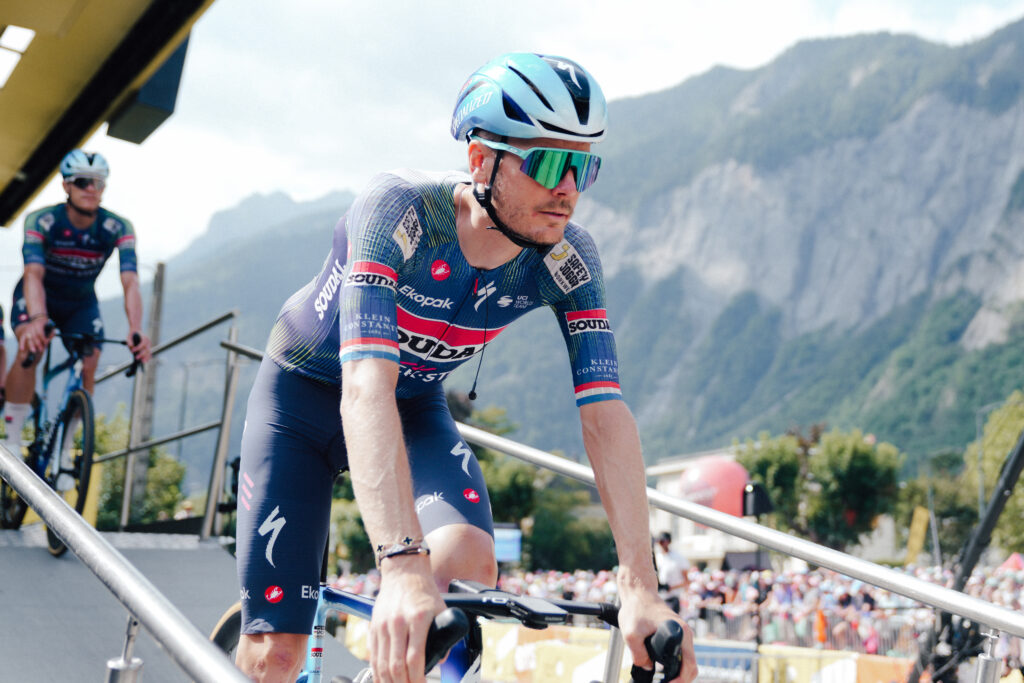
National Active Travel Commissioner, and former Tour de France stage winner, Chris Boardman also said: “That almost nine out of 10 women say they feel unsafe walking after dark is an appalling finding we should be ashamed of.
“For too long, we have designed streets that don’t work for women and girls. We want to help councils remove the barriers that are stopping women and girls from choosing to walk and wheel – whether that’s by providing better lighting, surface crossings over underpasses, CCTV or simply by listening to and acting on lived experiences.
“It’s a terrible thing that women and girls don’t feel they have the same freedoms to simply walk in their neighbourhood as men and boys. Everyone should feel safe getting around, and our job is to help make that happen.”
“Busy isn’t itself a good thing: busy with people rather than cars is”
However, while cycling campaigners have welcomed Active Travel England’s bid to make streets safer for women, they have also noted the apparent focus on walking in the government’s statement.
According to Cycling UK, providing women with “real freedom to travel” means creating safe, protected cycling infrastructure and routes, along with improvements to pedestrian areas.
“Across the country, fears around personal safety leave women restricted in terms of their everyday travel choices,” Sarah McMonagle, the director of external affairs at Cycling UK, said on Thursday.
“That’s why we launched our ‘My ride. Our right’ campaign – to address the gender gap in cycling. It’s unacceptable that 59 per cent of women say their cycle journeys are limited by safety concerns, with women making half as many trips by bike as men.
“After sustained campaigning from Cycling UK that led to a recent debate on the issue of women’s safety in parliament, it’s fantastic to see this announcement from the UK Government and Active Travel England.
“But if we want women to have real freedom to travel, it’s important that the guidance issued covers cycling as well as walking. Separated cycling paths, better lit cycle routes and accessible, well-lit bike parking can drastically improve women’s confidence.
“Women deserve the same freedom to move as men, and we’ll keep pushing for action – because when we make cycling safer for women, we make it safer for everyone.”
That sentiment was echoed by the London Cycling Campaign, whose Women’s Network has highlighted the barriers in place – from poor infrastructure to abuse – that currently discourage or prevent more women from riding their bikes.
“The release suggests the guidance will emphasise the importance of ‘walking routes along roads that are generally busy and overlooked by other people and CCTV’. This rather misses the point that roads that are just busy with traffic aren’t safer,” the group said on social media.
“Studies show LTNs drop crime. Motor traffic goes down, but footfall goes up. So ‘busy’ isn’t itself a good thing: busy with people rather than cars is.
“Similarly, women’s freedom to walk, cycle, without fear of crime or abuse shouldn’t be tied to sticking to main roads with lots of CCTV. Most women don’t live on main roads.
“What’s needed for inclusive safety design is door to door treatments so entire journeys are well lit, high footfall, feel safe, and there’s less opportunity in general for abuse, crime etc.
“This means not just main road treatments, but also neighbourhood ones, increasing walking, cycling, reducing motor traffic.”


















15 thoughts on “Make streets safer and give women “real freedom to travel” by focusing on cycling as well as walking, campaigners tell government”
Why should females find cycling anymore intimidating than males? We have gender equality and should not discriminate. Apart from the poor quality of the UK roads and stupid cycle lane designs such as a white line next to the gutter, it is a social/cultural problem that governments exacerbate by their agendas and will not address nor attempt to rectify.
If this is an exhortation I agree, but it’s not descriptive. It’s still mostly “should” out there. The difference between a generation or so back and now is a shift in the balance point and the existence of lots of written “shoulds” rather than this no longer being a difference.
As with “if only drivers drive according to the law there would be no problems” it turns out that we seem to need to change the landscape (infra / planning) to change the minds. (And the infra is often non- existent or rubbish as you note).
And on the flip side where this has been done this can significantly reduce these kind of disparities:
… without necessarily having to first shift the whole of a very pervasive social / cultural complex:
‘We have gender equality’ – who is this ‘we’? That is not my experience, and besides, equity is what’s needed. Apart from the type of harassment mentioned by Rendel, there’s also the cultural/social thing that women in general are conditioned to be more safety-conscious, and hence more easily put off. Improving safety for female cyclists should improve safety for all cyclists. The only thing that puts me off cycling is driver behaviour, and improving that would improve safety for all road-users.
Females may not not feel safe cycling alone on secluded cycle paths after dark.
Probably more so than males.
We may aspire for equality, but we are far from it.
“Females”. Incel has entered the comments.
Do you really have to ask that question? How many male equivalents of Sarah Everard can you remember? How many times when cycling as a man (I assume you’re a man) have you had people in cars or on foot shouting sexual abuse at you, reaching out of cars trying to touch you, jumping into the street trying to stop you? The simple fact that anybody can even ask that question demonstrates just how severe the problem is.
Rather than rely on anecdotes and prejudice, this question needs evidence. Male cyclists, no doubt, will relate horror stories of rage-filled drivers cutting them off dangerously, getting out of their vehicles to assault them and many other tales of the dangers of riding a bike. Part of this seems to be what another commenter stated: “women in general are conditioned to be more safety-conscious, and hence more easily put off”.
A few years ago, the Green Party in my town in north-east England, who were keen to improve cycling infrastructure in the belief that such a change would encourage more female cyclists, showed a documentary film made by local schoolgirls about why so few of them cycle to school. The conclusion, clearly shown in the film, was that they were sorely afraid of looking silly in front of boys or the ‘cool girls’. Not by poor infrastructure which had been vastly improved since my 1970s childhood when, oddly, far more children of both sexes rode bikes routinely all around the town.
Yes they will. And women get exactly the same thing and on top of that the ever present threat of sex-based abuse, rape and in extreme cases murder. That’s real and no amount of calling it “anecdotes and prejudice” or claiming, as you appear to be, that females aren’t cycling because they’re scared of looking uncool in front of boys changes that. Many friends I know who have young daughters won’t let them cycle after dark in the winter not for fear of drivers but fear of malicious men. That’s not because of anecdotes and prejudice but because of well-founded fears based on lived experience. I’m going to guess that you’re a man and haven’t had that experience; so am I and I haven’t either. That doesn’t give us the right to dismiss women’s very real and sadly justifiable fears and make patronising statements that maybe they’re more risk averse or scared of not being cool.
To give @This Wreckage a more sympathetic reading – it is clearly a fact that a major motivating factor (*the* motivating factor?) for humans is what other humans are doing and how we think they will view us.
And “social safety” is a major component (and one of the key things missing in much UK cycle infra, along with “convenience”).
I might question their “vastly” in “infrastructure … vastly improved”. But more children were cycling, likely because their parents were doing what all the other parents did and not driving them to school. And the kids obviously realised that cycling to school was easier than walking – and also perhaps “cooler” then?
For them I’d also note that surveys can be tricky – because people often miss the underlying conditions which facilitate things.
Example: quiz Dutch people about why *they* cycle and you don’t hear talk about cycle infra, urban planning or motor vehicle restriction. They say it’s convenient, or they go with their friends – not even that many say they like cycling!
Just querying this “vastly improved” infra you describe – is it easier to use than driving?
Having recently done an extended cycle along some of the UK’s “recommended” routes (NCN routes, mix of the more “recreational” as well as urban “getting from A to B” stuff) I was again struck by how much this was “safety OR convenience”. (Eventually I mostly abandoned it for the roads).
The good parts – where you could keep momentum – were “shared paths” and mostly lacked “social safety” eg. they were isolated / not overlooked / were places where shady types clearly hung out (judging by refuse / burnt-out stolen stuff). As a man, in daylight, I felt OK using them … mostly. Others might not.
The parts which had “social safety” – ran along streets and roads – were utterly inconvenient. Even allowing for the UK putting pedestrians and cyclists behind motor traffic flow at junctions * they were consistently inconsistent. Sometimes sending you off the direct route and round the houses, asking you to dismount and cross the road, only to be sent back again shortly, now sending you on the (shared) footway (frequently narrow), now back on the road, over curbs that hadn’t been dropped, around barriers and bollards…
And of course any “cycle infra” is used for parking in, or putting signs for motor traffic, or just storing stuff.
* Better ways to do this exist – you don’t even need to go to NL, there are some in the UK…
I would say that dedicated cycling infrastructure has vastly improved over what was available when I started cycling, however the vast majority of shared infrastructure (ie the roads we share with motorists) has vastly deteriorated both in the quality of the surface and the quality and quantity of the motorists we share it with.
Have I missed part of the article? At no time does it say why women feel less safe than men or what they feel less safe doing.
If it is personal assault, which I assume then the fault is in the individual committing the crime which is not a cycling issue but a fault of a system that doesn’t punish infractions of the law. Multiply each punishment but a factor of 10 maybe and make sure of public humiliation
Well yes, you seem to have missed the whole of the article as the whole thing is about the fact that many women don’t feel safe on the streets and how councils should do more about that if they want to encourage cycling. Example:
Would love to hear what Alex Phillips has to say on this article, and especially some of the comments here.