



Cycling UK has criticised the government’s plans to extend the fuel duty freeze as “short term relief” that doesn’t invest in “protecting people’s freedom when prices rise”.
The government announced earlier today it had extended its fuel duty freeze until the end of the year. The 5p reduction was due to expire in September, having been introduced by the previous Conservative government in 2022 following increased prices due to the Russian invasion of Ukraine and the subsequent sanctions imposed on Russia, a major oil-supplier. Separately, the government has also watered down its plans to sanction imports of diesel and jet fuel made from Russian oil due to the ongoing US-Iran War, and the resultant blockade of the Strait of Hormuz.
A Downing Street spokesperson said the extension to the fuel duty freeze would cost £455 million. The Prime Minister announced the pro-motorist policy alongside a 12-month ‘holiday’ on Vehicle Excise Duty for HGVs, and cuts to fuel duty on ‘red diesel’, used for trains, boats and tractors.
But the extension of the fuel duty freeze has been criticised by the national cycling charity as “short-term relief [that] “kicks the problem further down the road.”
“Having more transport alternatives that don’t solely rely on the petrol pump is one of the best ways we can protect people’s freedom when prices rise,” Associate Director Duncan Dollimore said.
“Freezes to fuel duty have already cost the public finances over £130 billion, with projected losses set to rise to over £200 billion by 2028. That’s why investing in greater transport choice makes sense. Increasing support to give more people access to a bike, e-bike or e-cargo bike would save people money and keep communities connected, without leaving public finances exposed every time there’s a fuel price spike.”
Cycling UK has persistently criticised the fuel duty freeze, with External Affairs Director Sarah McMonagle writing in response to Chancellor Rachel Reeves’ first budget, “Research suggests that in the past, savings from the fuel duty freeze have not been passed down to consumers.”
“Revenue raised from an increase in fuel duty could make public transport more affordable, and cycling and walking much safer through more investment in active travel.”
Today’s announcement has also been criticised by environmental psychologist and active travel researcher Ian Walker who wrote on Bluesky, “if we cared about poorer people we’d give them money to meet their needs, not subsidise one very specific, very harmful, activity.”
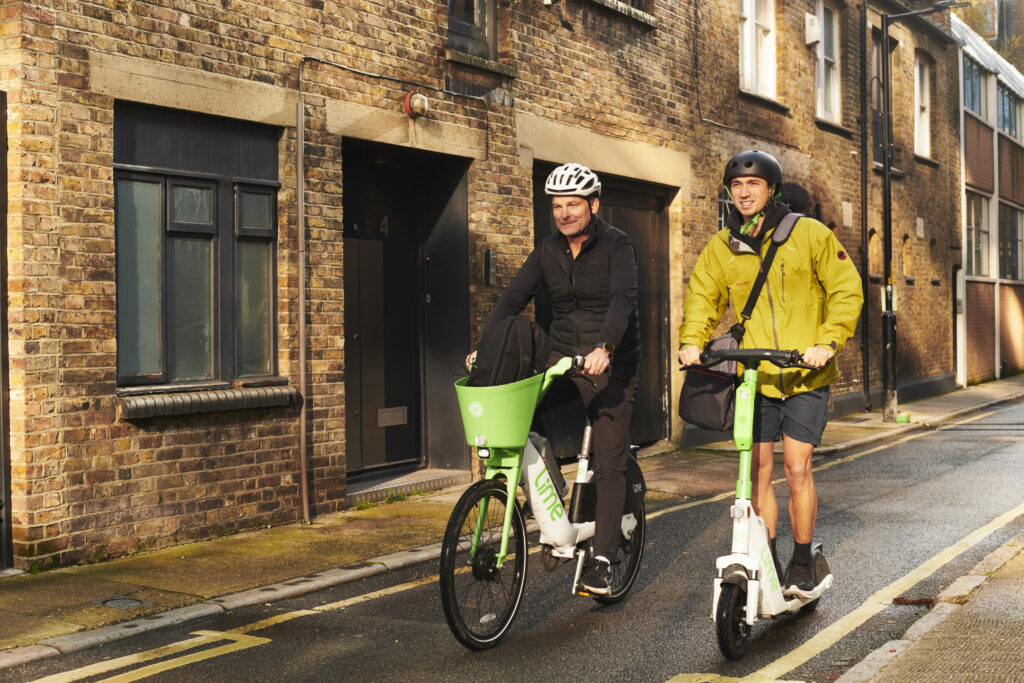
Rising fuel prices encourage drivers to cycle, Lime research shows
Despite the government initiatives aimed at tackling fuel prices, new research published by electric hire bike provider Lime has shown drivers in London are more motivated to cycle by rising fuel prices.
29 percent of surveyed drivers said they are either cycling more or seriously considering it. That increase is driven by 44 percent of young people aged 18-35 making the switch. Meanwhile a further 15 percent of those surveyed said further increases in fuel prices would make them switch from driving to cycling.
> Lime bike boss proposes adjusting traffic lights “to reward safe cyclists”
The London Cycling Campaign has welcomed the findings, CEO Tom Fyans saying, “Cycling more is an ideal way to beat surging prices at the pump, it’s not only cheap and will stay cheap – it’s also healthy, very safe in London and helps us do our bit in not feeding global instability and reducing climate emissions, pollution and more.”
Lime has also used the rising fuel prices to promote their new subscription service LimePrime, costing £6.99 a month and offering lower and flatter rates on bike hire, and the option to reserve a bicycle.
Lime’s Senior Public Affairs Manager, Alice Pleasant said, “Rising petrol prices are the latest in a number of factors prompting a shift in how Londoners travel, with many drivers actively rethinking their reliance on cars.
“More people are starting to look for alternatives that are affordable and flexible – cycling being the obvious choice. Of course, cycling won’t replace every journey, but for many trips it’s becoming a practical, low-cost way to get to where they need to go in light of petrol prices.”

Lime’s latest report, compiled by Opinium is not the first time the American company has used issues affecting another mode of public transport to promote their service.
Following strikes on the London Underground last autumn, Lime reported that customer demand during the strike week had increased by 74 percent, with 28 percent of Londoners subsequently surveyed saying they were more likely to cycle in the city in the future. Similar increases in demand were reported by rival hire bike providers Forest and Santander Cycles – better known as Boris bikes.



















27 thoughts on “Fuel duty freeze criticised by Cycling UK for “kicking the problem down the road”, as research shows soaring prices encourage more drivers to cycle”
Switching from driving to Lime bike?
Even better use the Santander ones or get a cheap bike if you’ve a place to put it (which *is* an issue in London). The first is putting something back into the place, the second at least avoids backing a public-space-grabbing operation.
Seems like a London centric article to me . ‘Seriously considering it ‘ is doing a lot of heavy lifting if you ask me. What the procycling lobby , and I am procycling , fail to mention is that it is the distribution of goods across the UK that is having a negative effect on the economy. I would suggest that the real reason for a duty freeze is to try and slow price rises and at the same time keep business afloat. It is true that average Jo also benefits from being able to fill their fuel tanks a little cheaper but that’s not where the benefit of this freeze is focused.
@VIPcyclist No, its the difference between giving 40 million motorists an average of £10 between September and the end of the year and using the same money to give £400 to the poorest 1 million people in the country, I know which I think would be the best use of the money.
@Backladder 5p might not sound alot and as you point out, for the average driver it saves them little over the year. But for long haul transporting of goods that 5p is magnified many times over which then ends up making pretty much everything go up.
Its the biggest driver of inflation. Food, goods, services, anything that relies on someone using a motor vehicle to transport cargo of any variety is hit, in many cases multiple times before the end of its journey.
Where the average driver being a few quid more out of pocket at the pump seems like a reasonable argument its far bigger than that.
@Smoggysteve So why not give the reduction to transportation firms but not the private motorist? HGVs generally fill up at different pumps to private cars so it wouldn’t be too difficult to organise, one would have thought, and it would help keep the price of food and goods down without such a big hit to the exchequer.
@Rendel Harris 1 out tax system doesn’t have an instrument to do that as it stands 2. it would be open to abuse if we did, think red diesel for agriculture
@Rendel Harris Or even better, use the money to raise the basic rate income tax threshold in line with food inflation so those who spend a large percentage of their income on food can still afford it and the rest of us can pay nearer the true cost of what our food and transport systems are really costing in terms of climate change.
It would seem that from many of the decisions our goverment is making at the moment that there is no climate crisis and Russia wasn’t wrong to invade Ukraine. (we are buying Russian aviation fuel again to reduce the cost of air travel, the second most damaging thing you can do to the planet.)
PS Can any one work out what the real reduction is on fuel duty if inflation is taken into account since the “temporary” freeze was intruced in 2022?
@Smoggysteve There are actually plenty of examples in our tax system of people being taxed at different rates depending on use cases, for example company cars, rebates on heating and other running costs for those working from home et cetera. Haulage firms have to account for every mile their vehicles do via their tacographs so not too difficult to give them an easily checkable rebate on fuel costs.
@Bungle_52 According to the Bank of England inflation calculator there has been a 16.5% rise in inflation between 2022 and today, so today’s price per litre of 157.8p would be 187.3p without the freeze.
@Bungle_52
The real test is what should it have been if it had continued rising with inflation after it was last changed in March 2011, I calculate that it would now be 103.15p/litre or 98.15p/litre with the 5p reduction that was applied in 2022. Instead it is currently 52.95p/litre. I don’t think fuel has been so cheap in real terms in my driving career!
@Backladder
Figures above are for duty only, not the full price of fuel as Rendel has given.
@Smoggysteve Most people can afford a little inflation, they might not like it but they can manage, the people at the bottom of the heap and their children are the ones going cold or hungry and those are the ones that help should be targeted at. The problem is that the government is already unpopular despite the improvements they have made to the country so they are doing the populist thing rather than the right thing.
@Backladder But the very people at the bottom would suffer just as much if that 5p pushes up food prices. The very poorest in society have 3 main issues eating , heating and somewhere to sleep. fuel inflation effects at least 2 of them
@Smoggysteve
“But the very people at the bottom would suffer just as much if that 5p pushes up food prices. The very poorest in society have 3 main issues eating , heating and somewhere to sleep. fuel inflation effects at least 2 of them”
You’re not doing the maths properly if you believe that.
@Backladder “You’re not doing the maths properly if you believe that.”
Maybe your in denial and cant see the bigger picture cos you’re fixated on car drivers
@Smoggysteve
It’s almost like the freight and haulage industry could do with a short sharp shock to diversify and wean off of motor-normativity, as well as Joe public.
Sadly, the transport industry also needs some carrots as well as the stick. Say, maybe if instead of the HS2 folly, half of the money had been put into a dedicated rail freight infrastructure to free up passenger capacity on the existing rail network, and removing freight from long haul road networks.
There wouldn’t be the short-termist penny-pinching that dropped the cycle infra bonus, more sympathetic routing would have avoided SSSIs and NIMBY hotspots, allowed fewer and cheaper CPOs, could be built further and more quickly connecting more freight hubs across the country.
@ROOTminus1 But they dont pay, you and I do. the costs are passed on and they keep on rolling because we are too dependant on them to move our stuff around.
When we allowed the highstreets to die we became a slave to large companies like Tesco, Sainsburys , amazon etc etc to bring you your stuff. Now we will always be the ones to pick up the tab.
@Smoggysteve
I think we’re in agreement from different perspectives.
I’m lamenting that we had an opportunity to give them a carrot to do the right thing, and fumbled it, and now it’s the opportunity for the stick, they won’t feel it, they’ll pass the punishment on to the customer, which affects us all.
FTFY
@Backladder Agreed. Just think of the difference that would make . All of the money would be spent into the economy, through a variety of businesses and the multiplier effect would amplify that money by 1.5 to 2 times. The truth is that won’t be happening, at least not until a new glorious revolution.
@mdavidford Thanks for the ‘to’ correction I appreciate that. I did write ‘business ‘ and you seem to have made a slight slip and quoted me as writing ‘goverment’. They’ll be afloat until at least the day after they call the next general election in a few years . Despite what the Haters say. Have a nice day .
Messrs Burnham and Streeting might have something to say about them lasting a few years.
I don’t think you need to be a ‘Hater’ (I haven’t contacted the official Haters press office to see what their position is) to see that they’re panicking somewhat and (a) starting to tear each other apart and (b) reaching for ‘populist’ measures in an attempt to shore up their position.
What gets me about the holding down of fuel prices is that we seem to have decided that this is the one thing that should not be subject to inflation like everything else is.
8 years ago, my daughter was studying in York, about 40 miles from where we live, and we would drive her in to her lodgings each week, making sure to fill up the tank while we were there as the nearby Morrisons was selling Unleaded at around 6p/l cheaper than at home. The price was around the same as we are paying now … after the recent increases.
Makes no sense in a world where we are supposed to be making people less dependent on fossil fuel transport.
I think what irks is that we repeatedly say we need more resilience, we want to do something about emissions, and also (often) that we should save public money / get efficiencies.
But we then specifically dodge addressing one huge issue which runs counter to all those goals. Indeed, sometimes it looks like we’re still encouraging it.
We’ve a spotty history with stuff like smoking but (aside from back when it was “cigarettes help you cough!”) I don’t think we have been saying “but they help working people get through the day!” or “but tobacco use contributes to the economy!”
(Alright smart Alecs with the argument of “smoking saves us tons in pension costs by helping people to die more quickly after retirement”…)
Calling for increased fuel prices at a time when fuel prices are already at a high and transport costs are pushing up prices is tone-deaf and unlikely to fall on sympathetic ears. There is already a lot of tax on fuel, both bringing in tax revenue and encouraging alternative forms of transport.
@tom98784 But they are not at a high in real terms (see the figures above) and the government is desperate for additional revenue to do “good” things with.
Obviously not as significant as cheaper fuel but hauliers and farmers also got a tax holiday from VED, so there are more benefits to them:
https://www.bbc.co.uk/news/live/cqxpq975l10t?page=2