


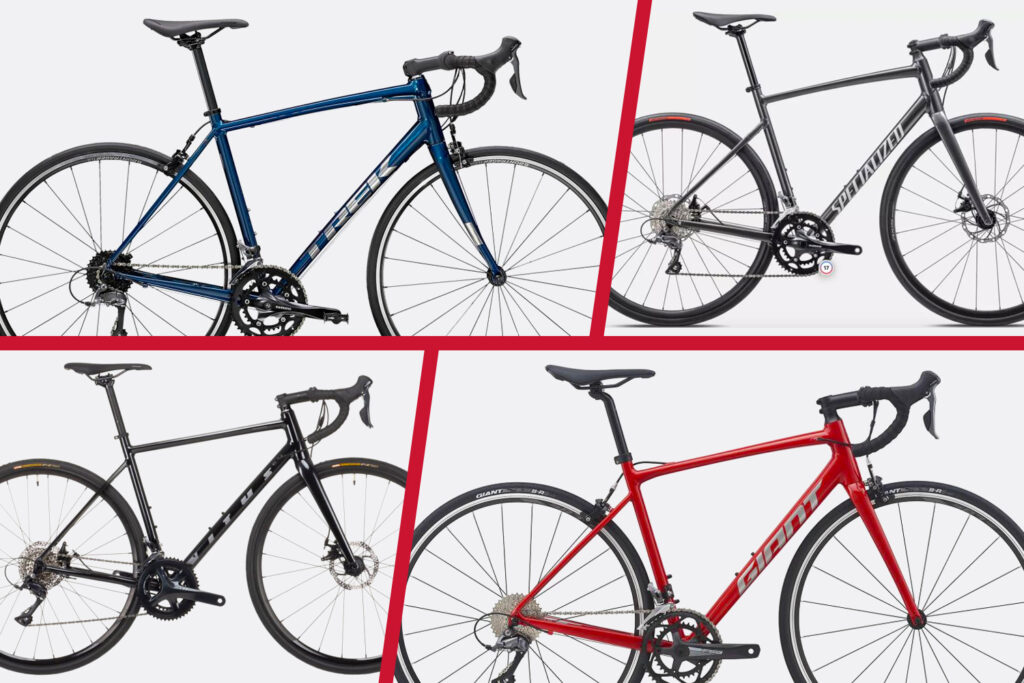

Cycling has always been a relatively costly sport. Even though it’s possible to spend well into five figures on a top-end road bike nowadays, entry-level bikes can offer a lot of the benefits at a fraction of the cost. We’ve previously looked at how the price of bikes and other cycling-related products has risen sharply in recent years, outstripping the rate of inflation in some instances – so does this mean even lower end bikes are in danger of becoming luxury items for those of us on a tight budget? Let’s take a look at just how much it would cost to get into road cycling now compared to ten years ago.
Lately, some of the big brands have been pushing the boundaries of top-end pricing, getting people used to the idea of five-figure price tags for some of the best road bikes on the market. This trend in rising prices isn’t just with brand’s flagship models, either. Prices of entry-level bikes that were once seemingly set in stone appear to have increased considerably in the 2020s, and don’t appear to be coming back down any time soon.
Is cycling pricing itself out of its own market? These are, after all, the bikes being bought by people new to the sport, and perhaps more reluctant to drop the big bucks. Many people in many parts of the world are also still being negatively impacted by inflation and the cost of living crisis that has emerged off the back of this, making large purchases like bikes harder to justify.
In an attempt to break down roughly how much cash a wannabe road cyclist would have to put down to get started vs the previous decade, we’ve taken some popular bike models, clothing and accessories and looked at how the prices have changed over the last ten years in the UK.
According to the Bank of England’s inflation calculator, goods and services should be just over 31% more expensive now than they were ten years ago, so we’ve also adjusted the prices of our older bikes for inflation to see how they stack up against the equivalent models today. There are many more factors at play here, such as wages, world events and the impact of the pandemic, plus some of the entry-level bikes from the previous decade may have been discontinued, or replaced with more advanced models – but this gives us some basic figures with which to compare.
We’re sticking to new bikes and equipment you can buy off the shelf in this article, but of course, you don’t have to buy new. If you’re confident you know what you want, or have a mate who knows their bikes and can help, you can make considerable savings by buying a bike secondhand.
Let’s take a look at our example bikes, clothing and accessories…
Specialized Allez
> Staff bikes: Specialized Allez Sprint dream build
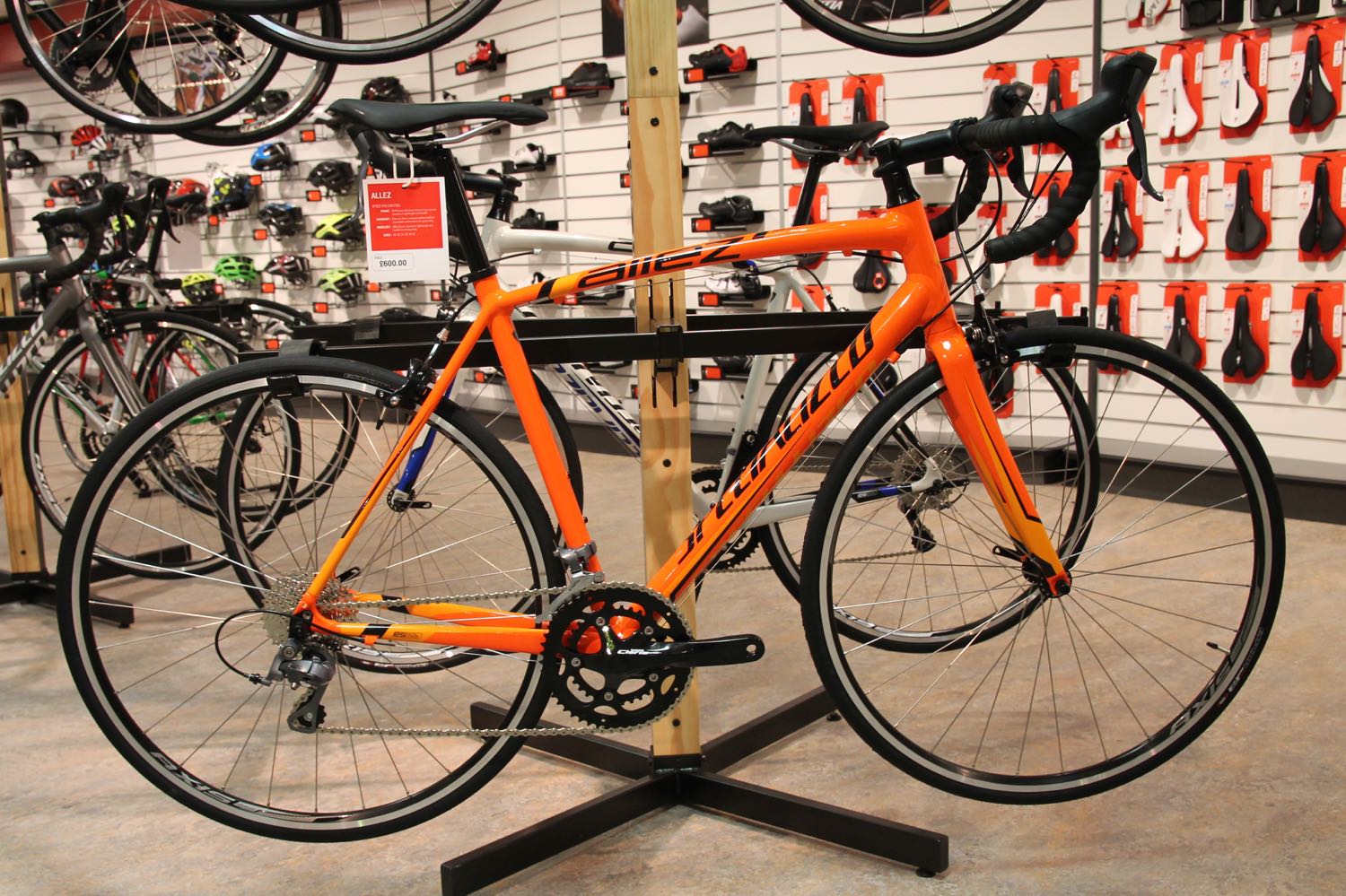
The Allez is the bedrock of the Specialized range, and not that long ago an entry-level Allez was priced from around £600. In some model years, that £600 would get you better equipment than others, but it always more or less hit that price point.
The cheapest Allez in 2014 was £600. For this you got an E5 Premium aluminium frame with smooth welds and an A1 Premium aluminium fork, with an 8-speed Shimano Claris 2400 groupset and AXIS Classic wheelset.
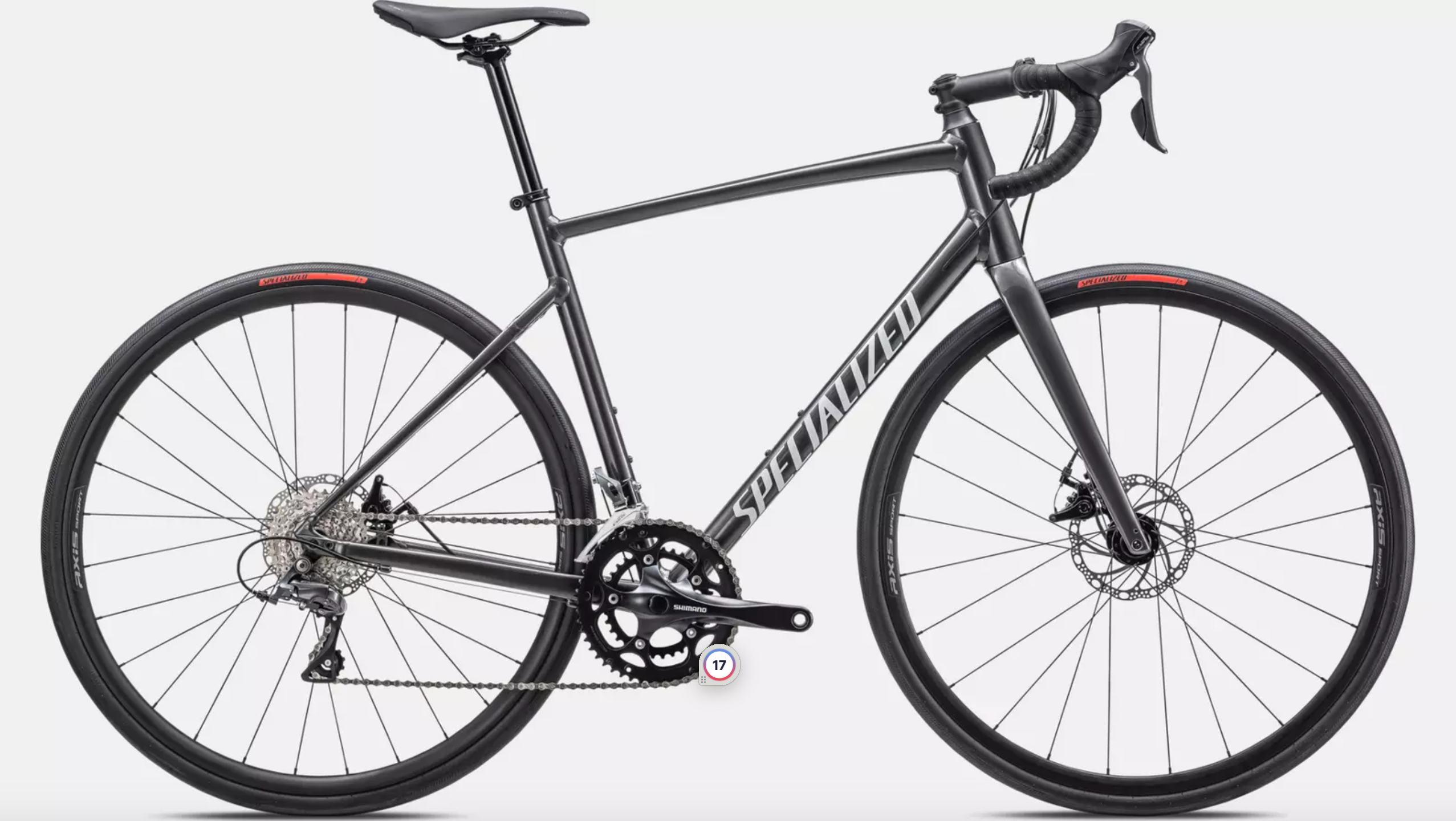
Entry-level bikes have evolved massively, often with price tags to match. At the time of writing, the Specialized Allez is only available with disc brakes and the entry-level model costs £1,100 – that’s around an 80% increase.
The E5 Premium aluminium frame with smooth welds remains pretty much the same, the groupset is still Shimano Claris and the AXIS wheelset remains. The fork is upgraded, as it’s now Specialized’s FACT full carbon fork.
Price of 2014 Specialized Allez adjusted for inflation: £789.15
2023 Specialized Allez E5 percentage increase vs 2014 equivalent: 83%
Giant Contend
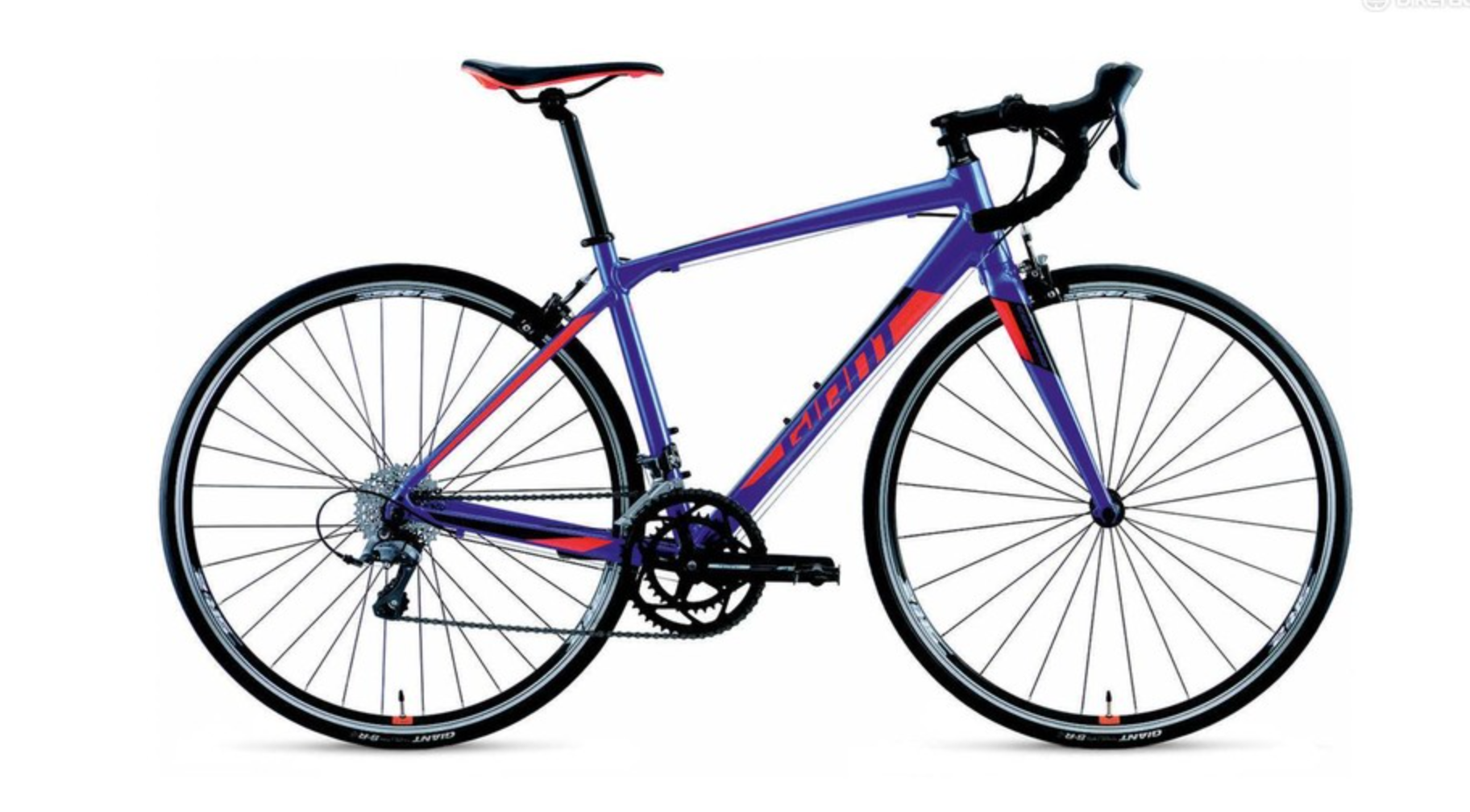
In 2016 Giant released its new entry-level road bike, the Contend, taking over from the Defy. The Contend has virtually identical geometry to the Defy, and the Contend 2 cost £525 at the time, coming in at under 10kg in weight.
As with most entry-level bikes, it had an aluminium frame, carbon fork and an aluminium steerer, with a Shimano Claris groupset.
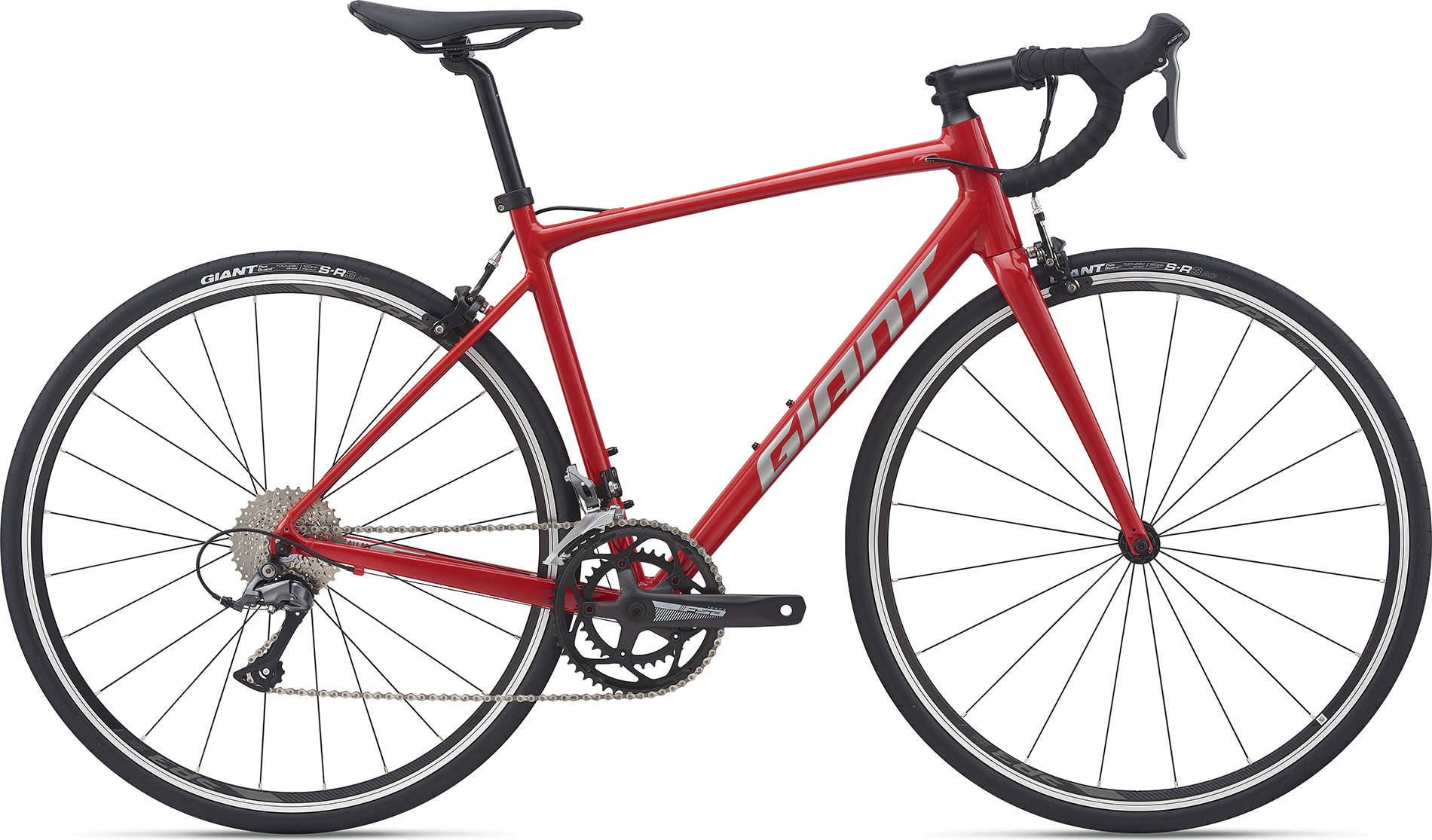
The Giant Contend 2 has seen around a 40% increase in price since then, as it’s now £749. It still features an aluminium frame, carbon fork and Shimano Claris groupset, and still weighs just under 10kg.
Price of 2016 Giant Contend 2 adjusted for inflation: £685.71
2023 Giant Contend 2 percentage increase vs 2016 equivalent: 42%
Trek
> Your complete guide to Shimano road bike groupsets
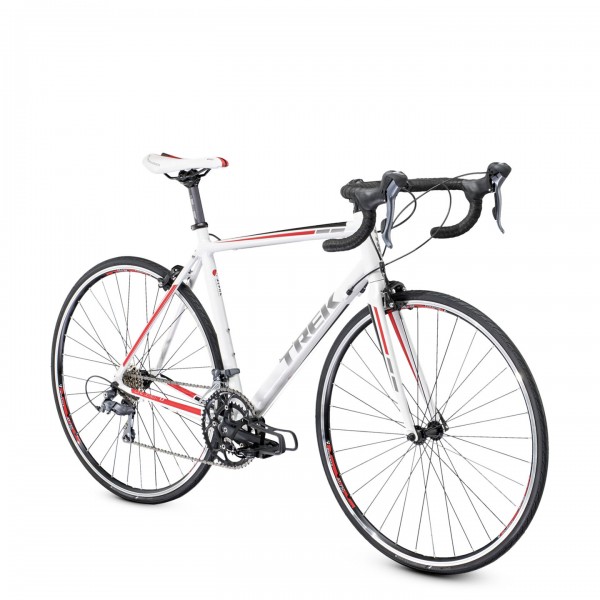
In 2013, the base model of Trek’s range was the Trek 1.1, costing £550 at RRP. It featured the same geometry as Trek’s higher-end road bikes and a Shimano Claris groupset, with Bontrager finishing kit and wheels.
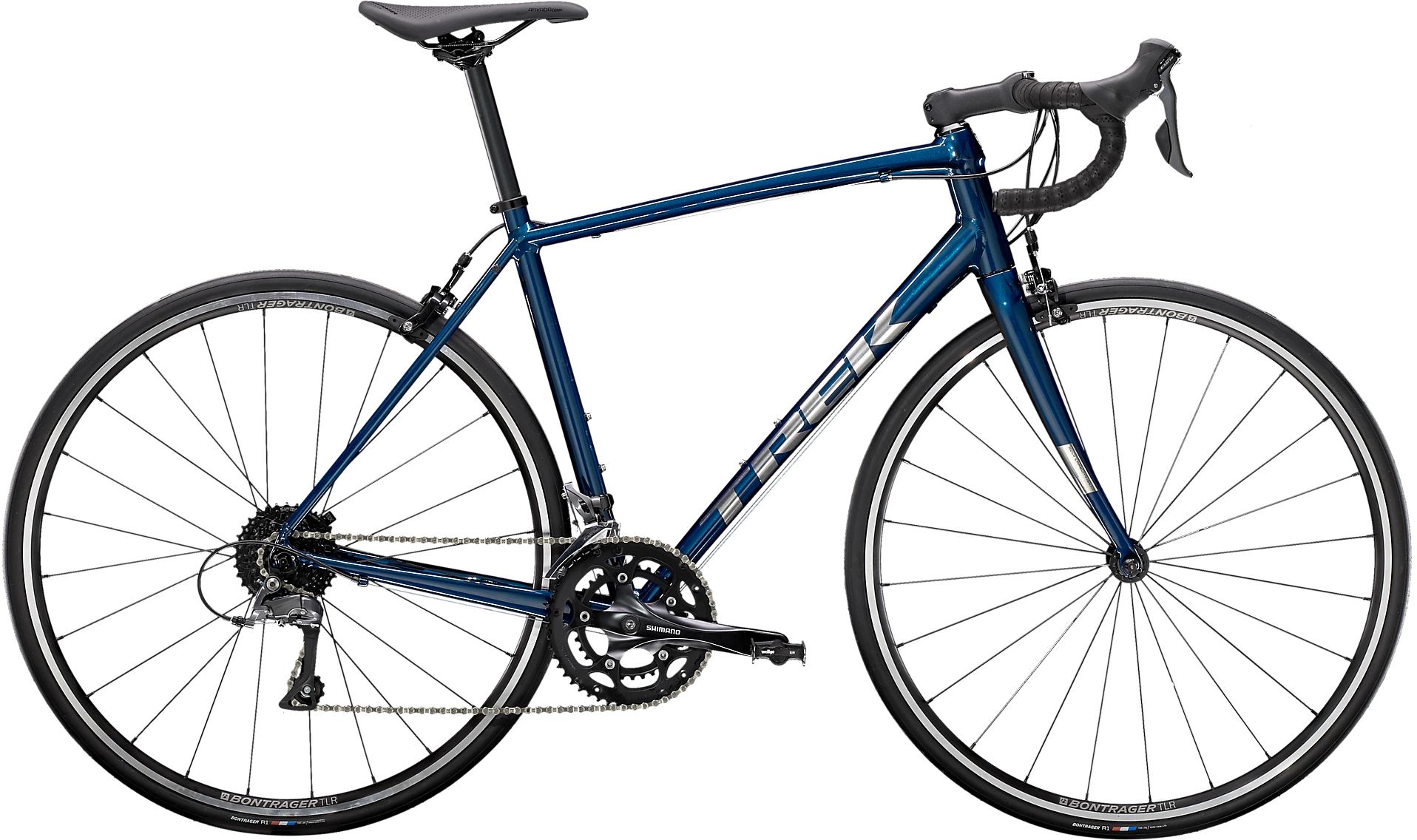
The Trek Domane AL2 is now the entry-level road bike in Trek’s range, and also the most affordable Trek road bike priced at £850.
It’s Trek’s lowest grade of aluminium tubing, which you’d expect on an entry-level road bike, but it’s welded neatly throughout. To further keep the costs low it has a Shimano Claris groupset, and is finished off with Bontrager wheels, tyres, handlebar and stem.
Price of 2013 Trek 1.1 adjusted for inflation: £733.96
2023 Trek Domane AL2 percentage increase vs 2013 equivalent: 55%
Decathlon
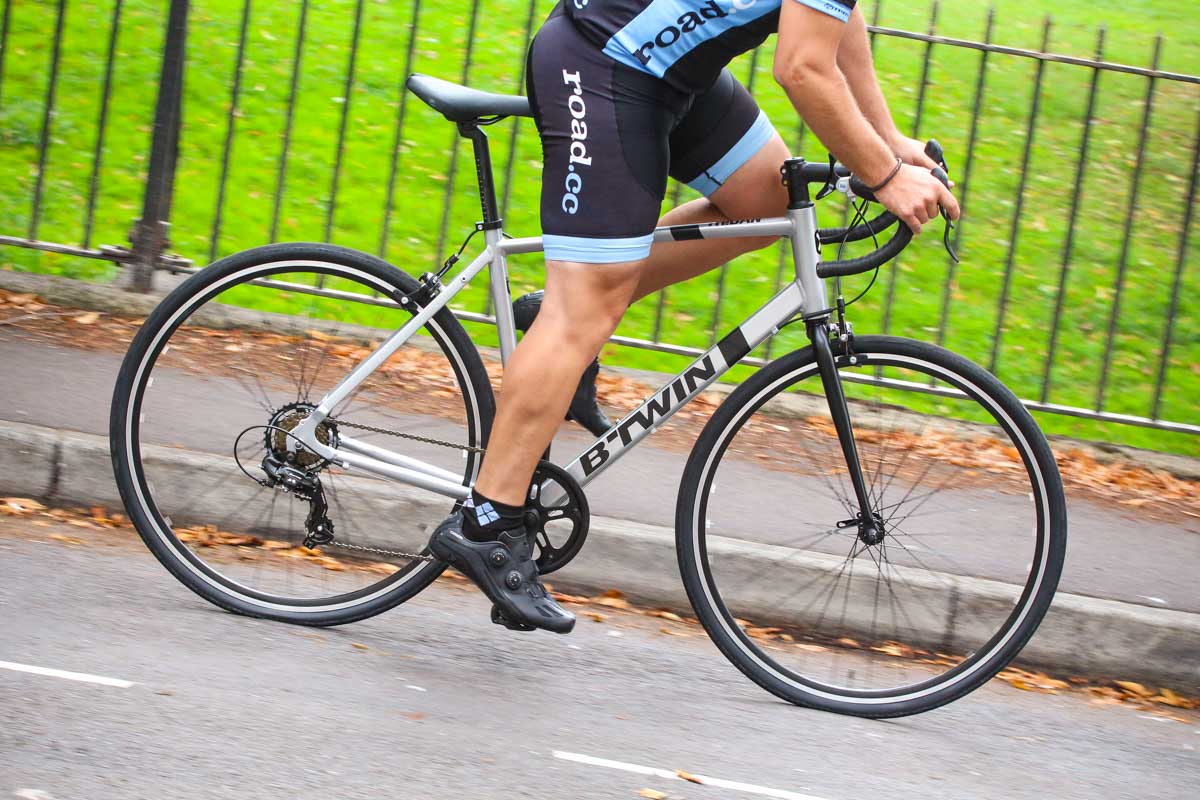
Decathlon’s road bikes, now under the Triban and Van Rysel names, have built up a very solid reputation for low prices and high quality in recent years. In 2018 we reviewed what was then known as the B’Twin Triban 100 road bike, priced at a very wallet-friendly £249. It came with compromises as you’d expect for a bike priced this low, such as a steel fork and index thumb shifter with just seven gears, but impressed us with its easy handling and functional kit that is ideal for a beginner.
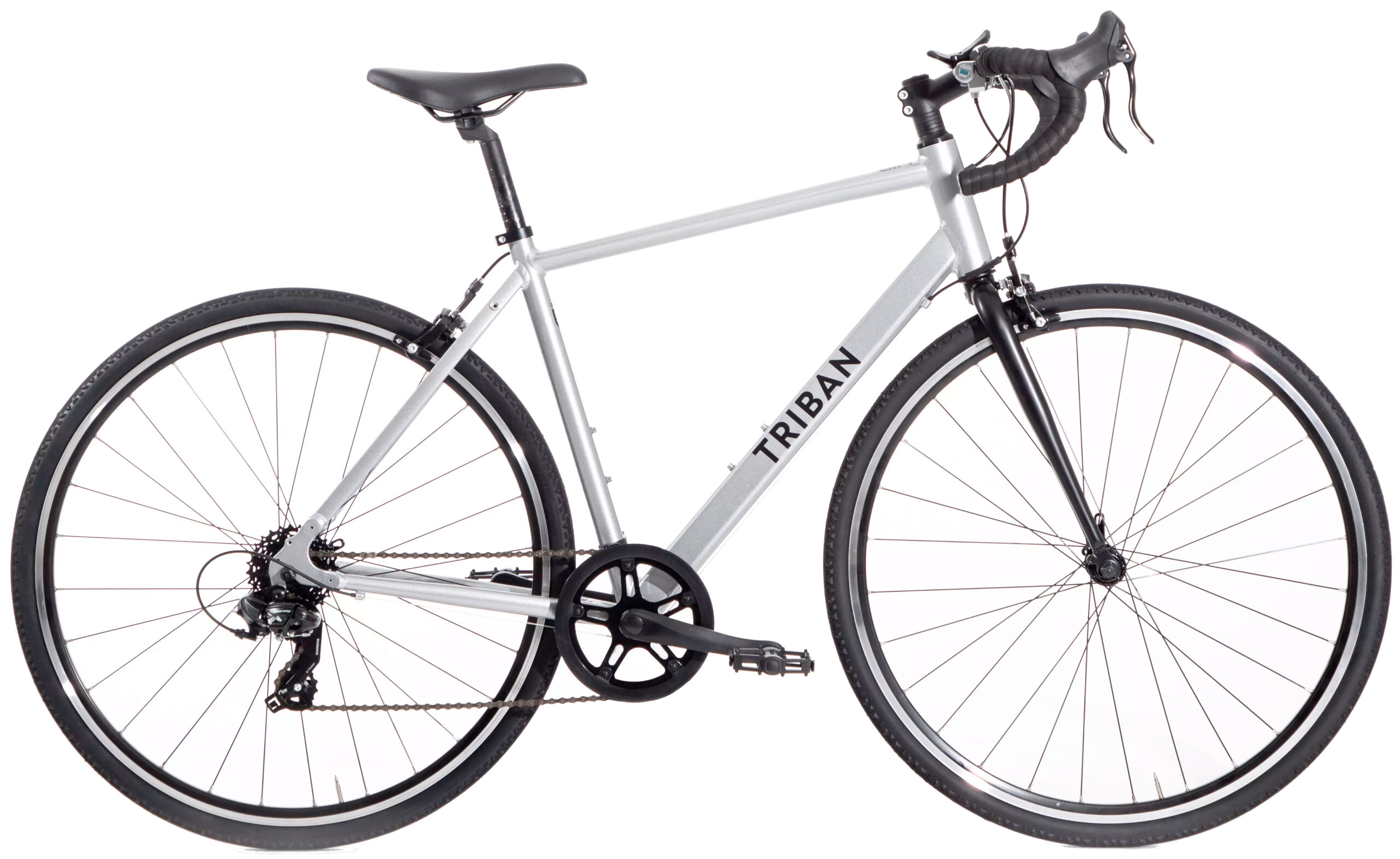
Fast forward to 2023 and the Triban RC 100 is still exactly the same bike, it’s lost the B’Twin brand name and is now priced at £299.99. 1x shifting means simplicity and less maintenance, chunky 32mm tyres should eat up dodgy road surfaces and the sturdy 6061 aluminium frame is very durable.
Price of 2018 B’Twin Triban 100 adjusted for inflation: £309.07
2023 Triban RC 100 percentage increase vs 2018 equivalent: 20%
Boardman
> Check out Chris Boardman’s Olympic-winning Lotus Type 108
Boardman bikes are known for their affordability, and you can walk into most Halfords stores and pick one up. Boardman bikes have gained popularity for providing good quality bikes at various price points, making cycling more accessible to riders of all levels.
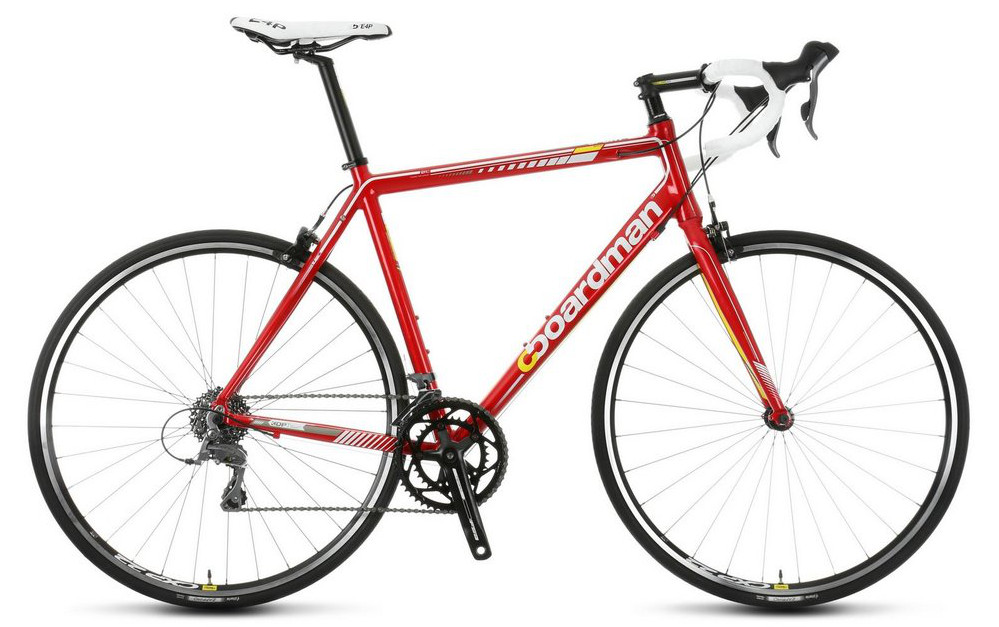
We reviewed the Boardman Road Sport in 2015 and at the time, the bike with a 7005 aluminium alloy double-butted frame was priced at £499.99. For a sub-£500 bike it didn’t look or ride like something really cheap, and shared some of the same design features as Boardman’s more expensive bikes, such as the rear stays.
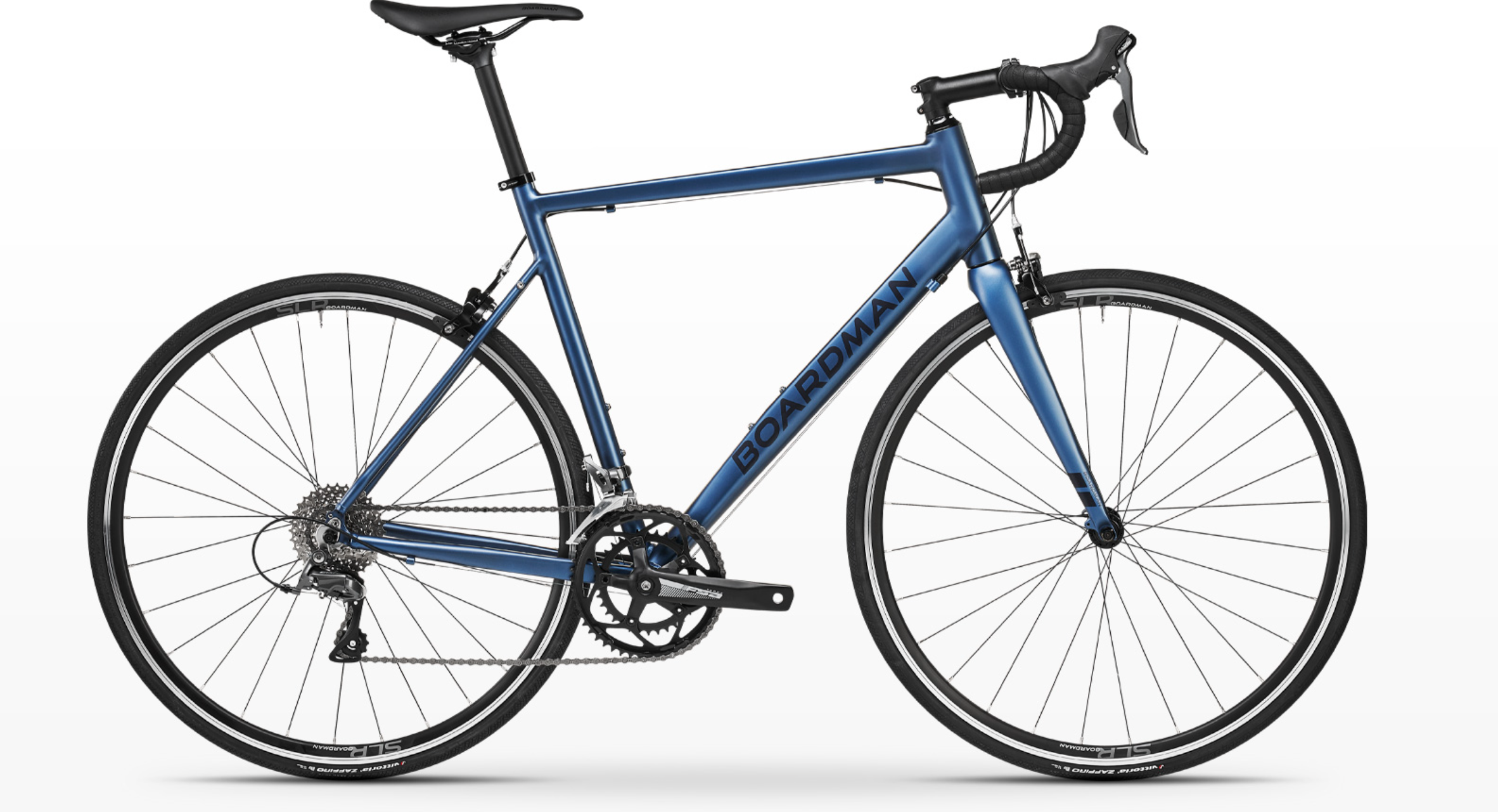
The Boardman SLR 8.6 (standing for Super Light Road) is now the brand’s entry-level road bike. It’s priced at £650, around a 30% increase from the price of the Boardman Road Sport in 2015.
It features a 6061 alloy triple-butted frame, a full carbon fork and Shimano Claris groupset. Like the Road Sport, it features mudguard and pannier rack mounts, making it ideal for commuting.
Price of 2015 Boardman Road Sport adjusted for inflation: £657.36
2023 Boardman SLR 8.6 percentage increase vs 2015 equivalent: 30%
Vitus Razor VR
> Vitus launches versatile new Venon EVO RS & GR bikes
Vitus is a brand from the past that slipped away, but it relaunched in 2011 and is now owned by the WiggleCRC group. The Vitus name is now known for bringing decent bikes to the marketplace at very sensible prices.
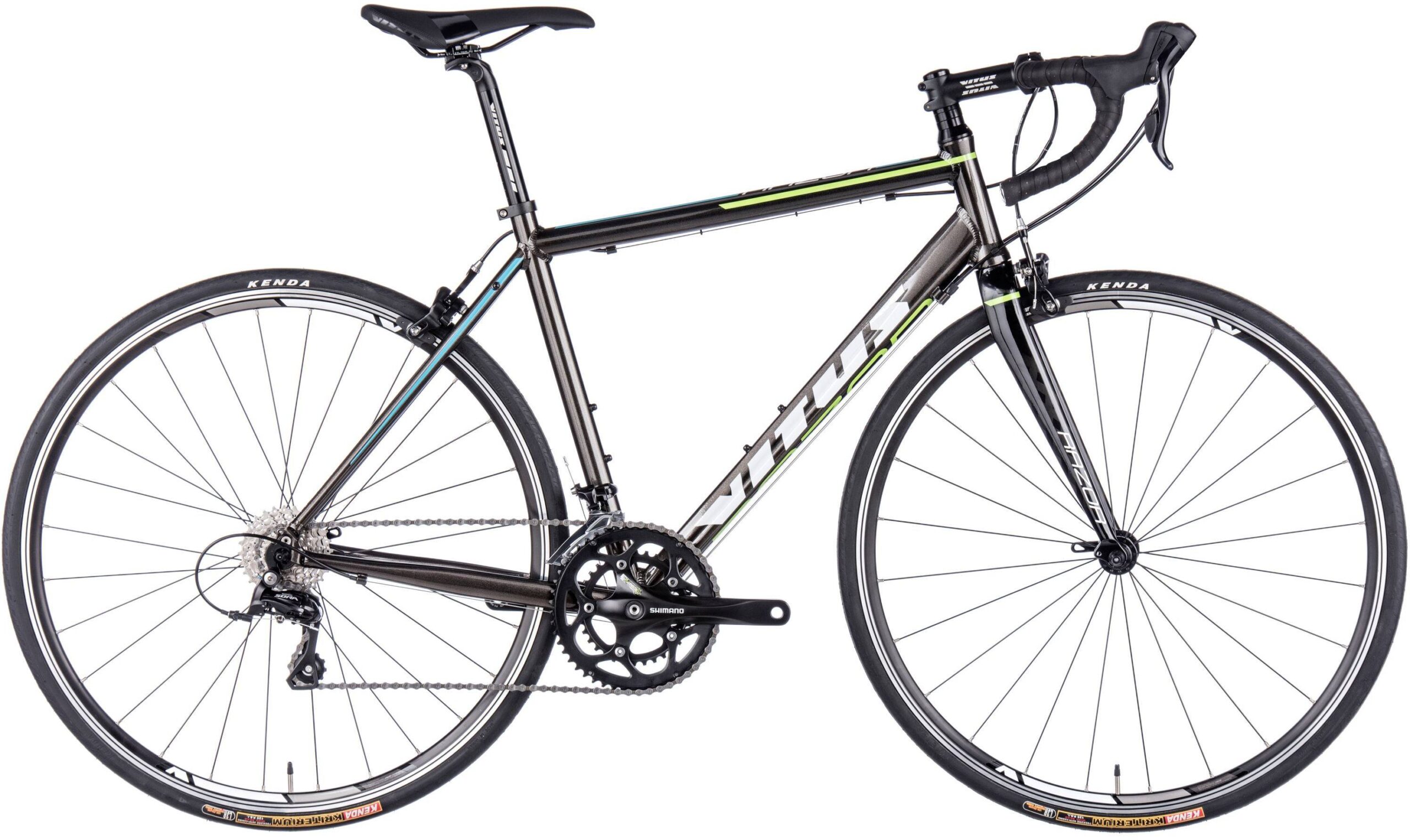
We reviewed the Vitus Razor VR road bike in 2015 when it cost £599.99, and found that it was very capable for the price tag. It featured an alloy frame, carbon fork and Shimano Sora 9-speed groupset, an upgrade on the 8-speed Claris we often see at entry-level.
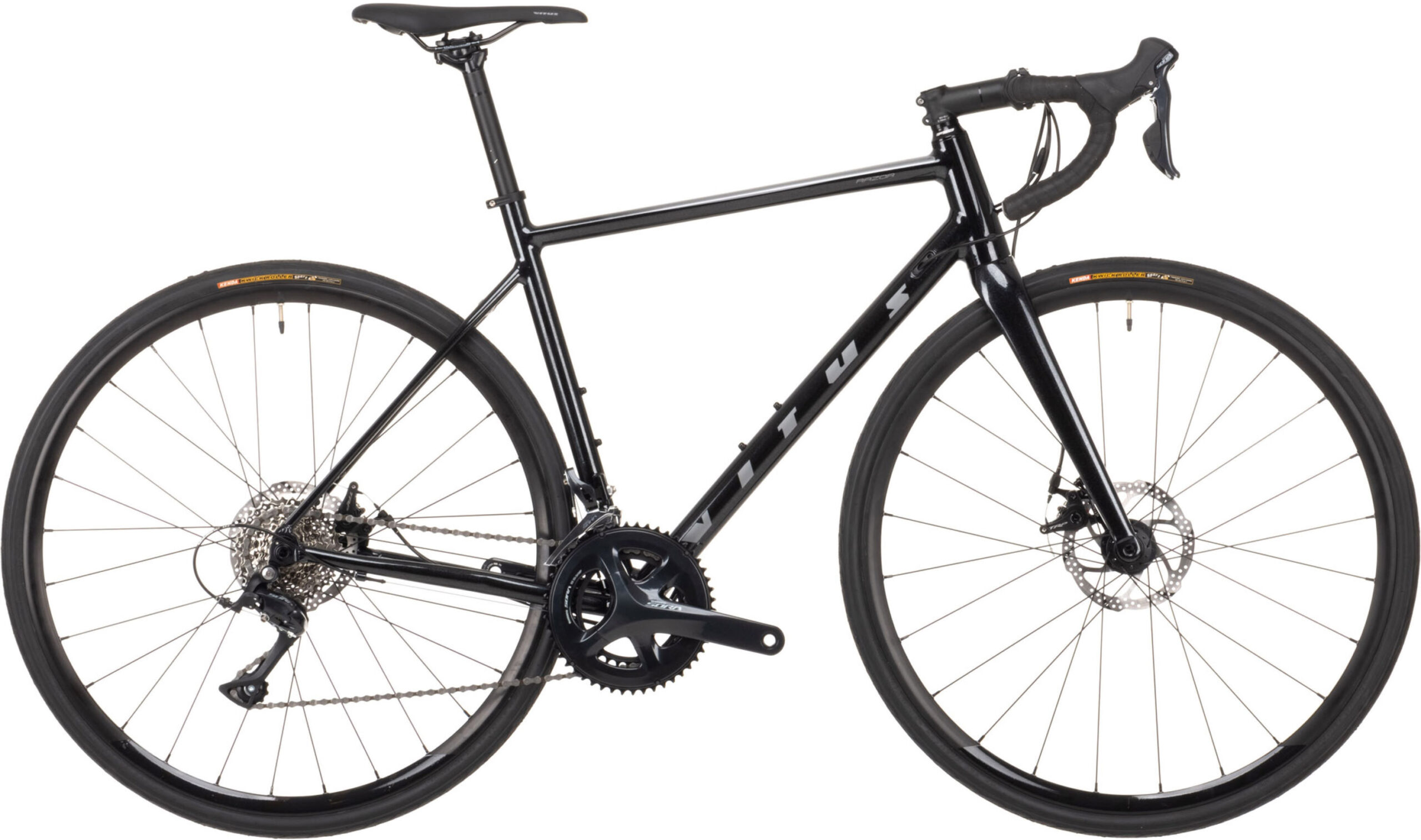
The Razor VR model is now only available with disc brakes and costs £799.99. It’s a double-butted aluminium frame paired with a carbon fork, featuring mudguard mounts and internal cable routing. It retains the Shimano Sora groupset and has Vitus-branded wheels.
We’ve done our direct comparison with the Razor VR, but there is actually still a road bike in the Vitus range priced at £599.99 – the Vitus Razor W has rim brakes, a Shimano Claris groupset and a carbon fork, so apart from the groupset downgrade, it’s largely the same amount of bike for the same money you’d have spent on the Razor VR in 2014.
Price of 2015 Vitus Razor VR adjusted for inflation: £788.84
2023 Vitus Razor VR percentage increase vs 2015 equivalent: 33% (or 0%, if you consider the Vitus Razor W as the comparison bike)
Clothing
> road.cc Recommends Cycle Clothing of the Year
If you’re thinking about getting into cycling, your biggest expense is going to be the bike itself. There are other costs to consider, though, such as cycling-specific clothing, accessories such as a bike lock, bike pump, lights and a saddlebag and a helmet.
While you don’t need specialist cycling clothing to start, comfortable clothing can make your rides more enjoyable. Brands rarely keep a range going for over a decade without doing something drastically different, so it’s much harder to find prices to compare here. Even so, let’s take a quick look and try to find 2023 equivalents to the bike clothing from a decade ago…
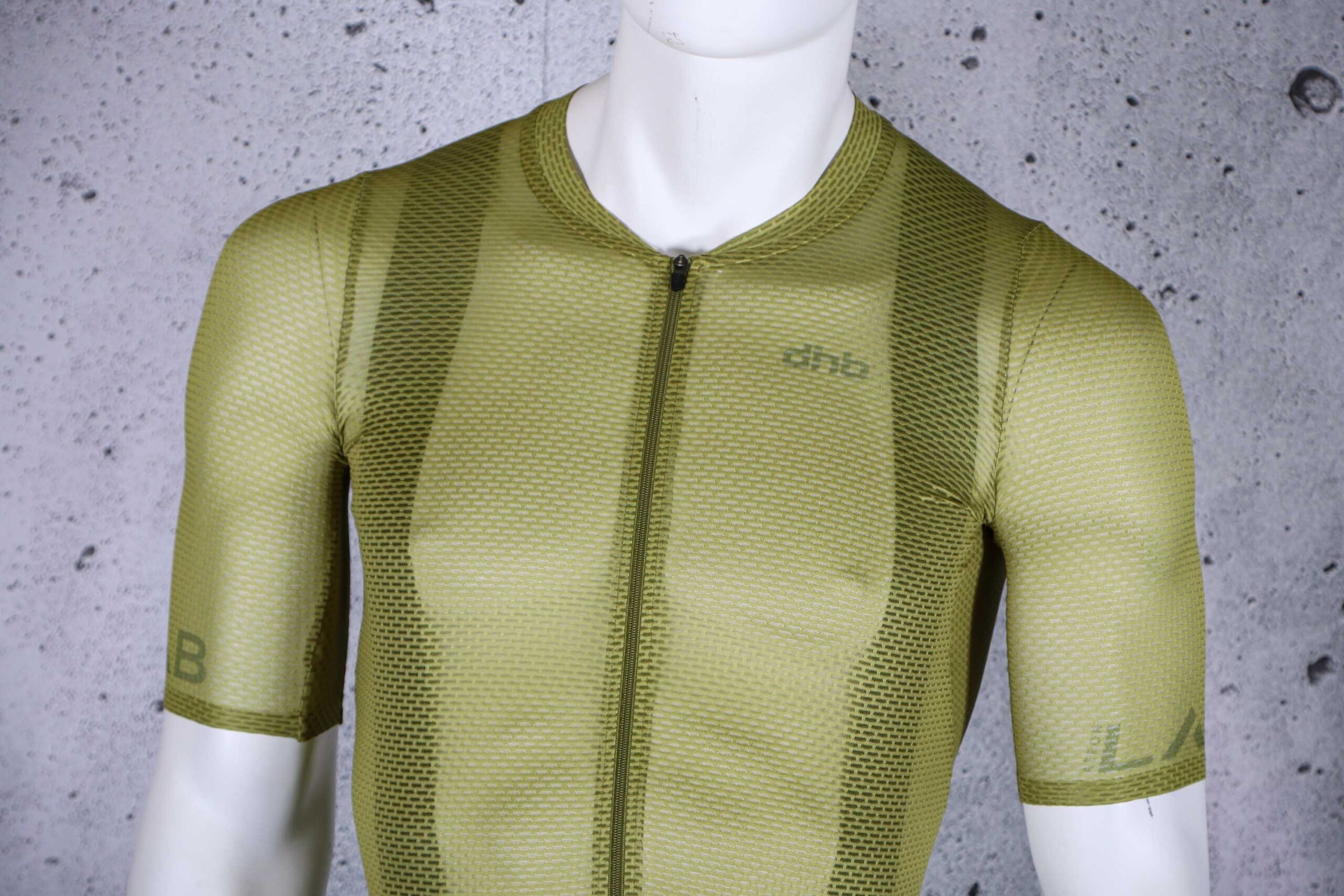
dhb is a prime example of excellent value cycle clothing, but I remember paying around £30 for my thermal bib tights not so long ago. A quick gander on the Wiggle website indicates that a set of thermal longs are now more likely to cost you in the region of £80 at RRP, more than double what they were a decade ago.
You can also get an entry-level dhb jersey for £30 and bib shorts for £40 at RRP, so you’re potentially looking at an additional £50-£100 for cycling kit after purchasing a bike.
Accessories
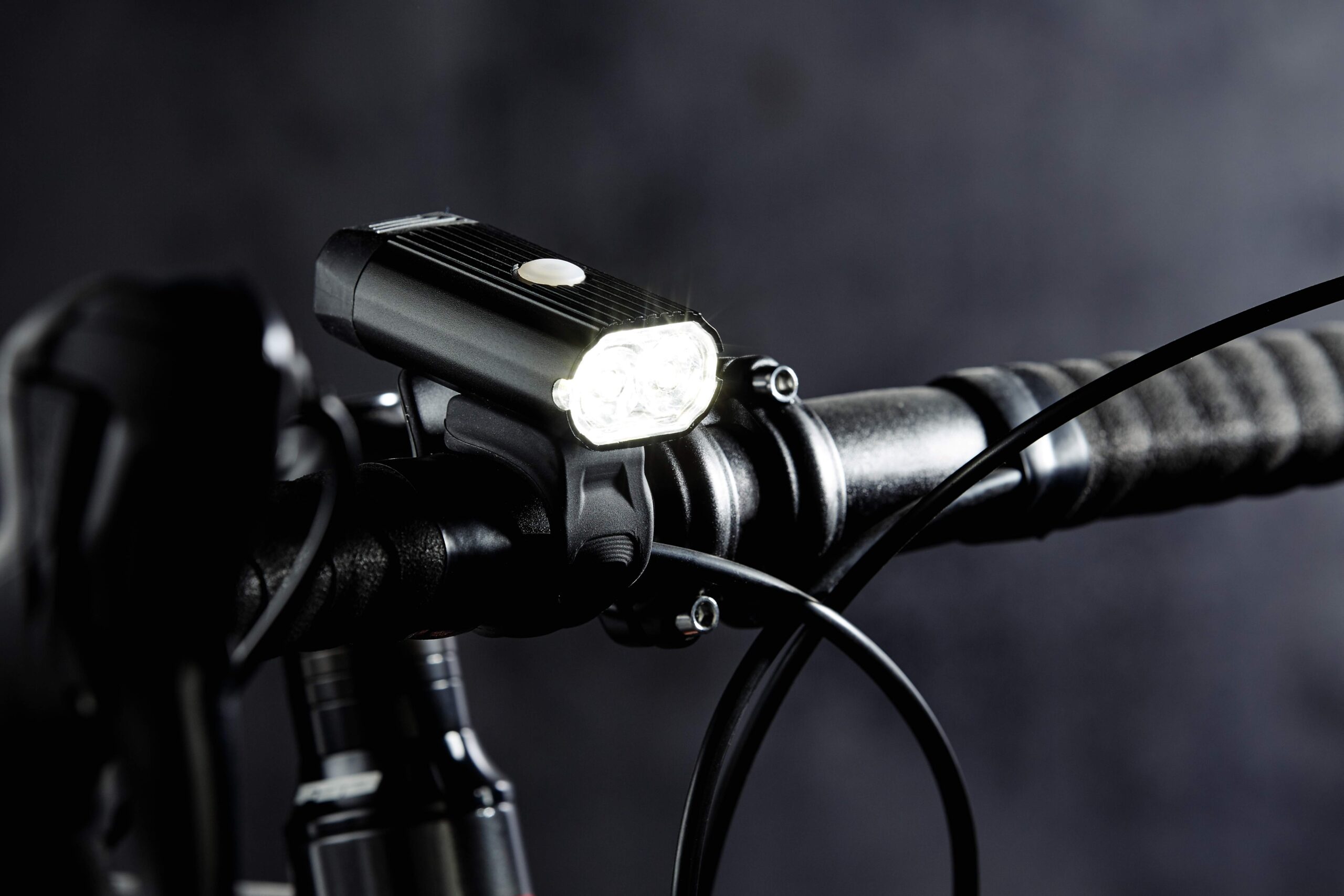
Even if you almost never ride when it’s dark, a set of some of the best bike lights are essential for all cyclists.
The price will depend on which ones you decide are best for you. We found the best cheap front bike light to be the Cateye AMPP 400 Front Light, which is £20.99 on Amazon at the time of writing. Our pick for the best cheap back light would be something like the Prime 360 Super Bright Rear Light, which is currently £17.99 from Chain Reaction Cycles at the time of writing. That’s just under £40 for a pair.
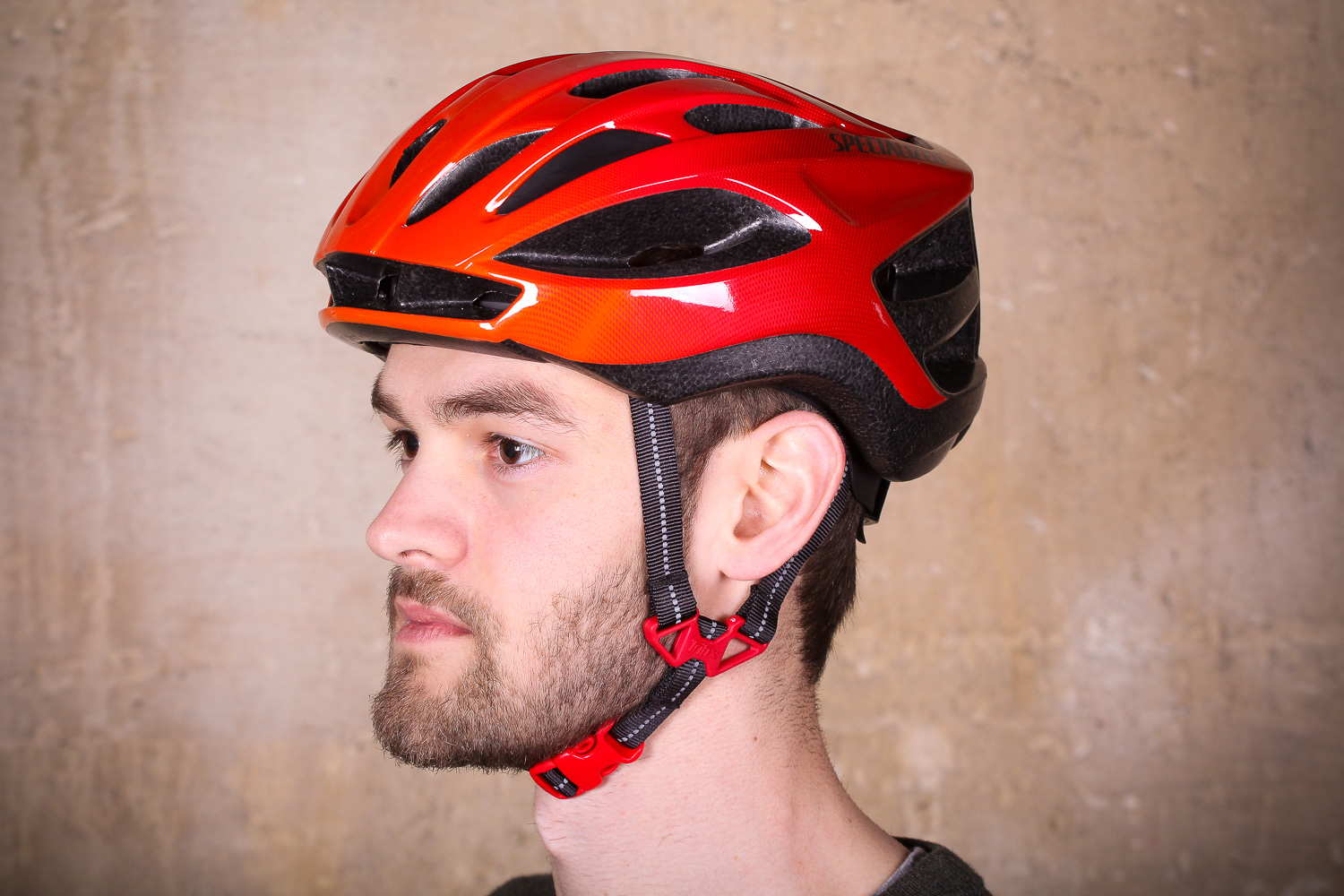
If you’re a helmet wearer, you can get a cheap cycling helmet for around £30-£50. Since all helmets sold in the UK have to conform to European standards, we take it as a given that they provide that minimum level of impact absorption and look for comfort, ventilation and ease of adjustment.
> Cycling emergency essentials: 10 things you should take with you on every ride
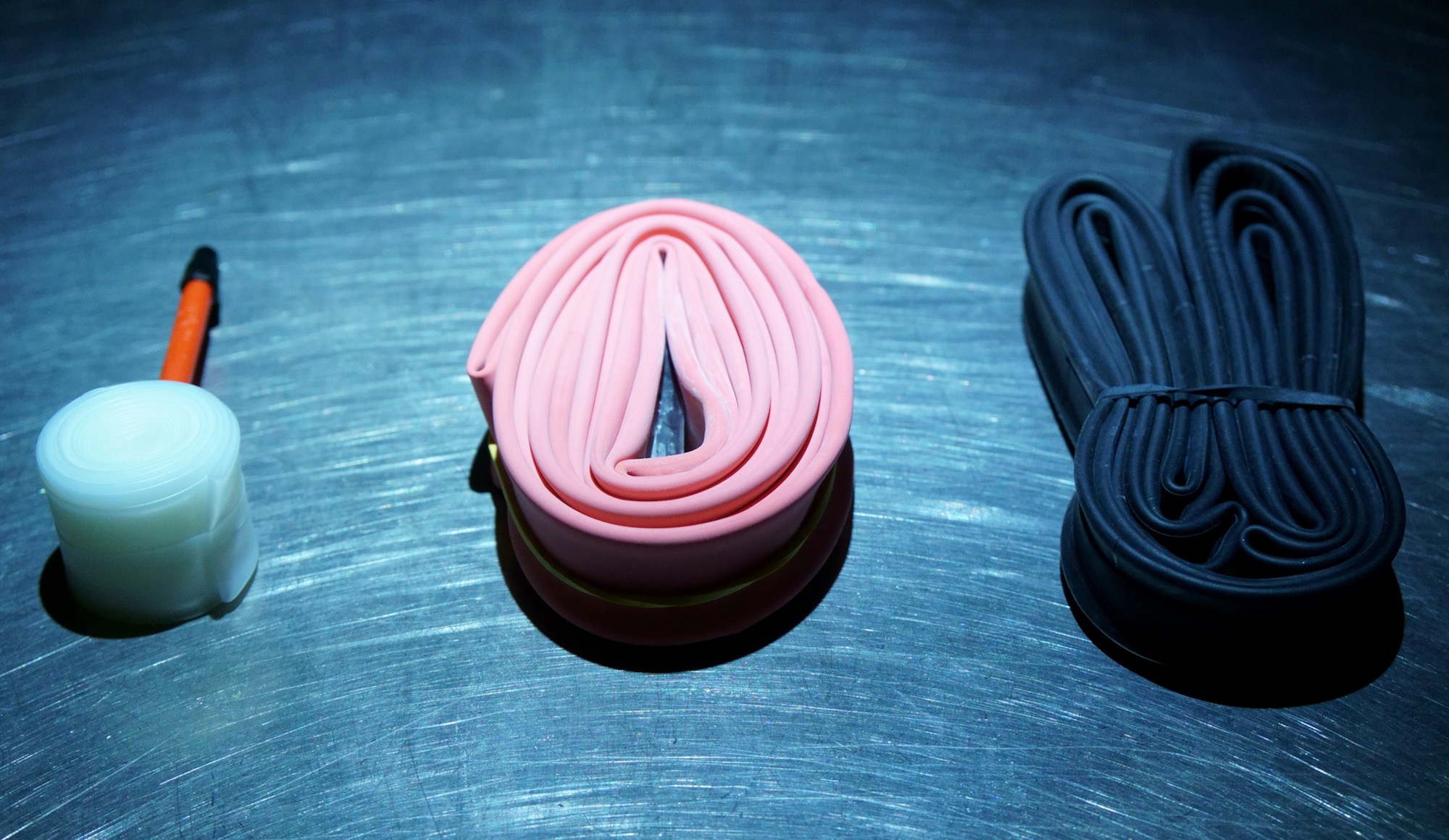
If you’re new to cycling, there are a few essentials we’d advise you to carry on every ride. These are a spare inner tube, tyre levers and a pump/CO2 inflator, since a puncture is the most common bike problem you’re likely to face out on the road.
LifeLine offers affordable parts and accessories, with inner tubes costing as little as £3.99, tyre levers costing £2.99 and mini-pumps from £7.99.
Costing up all of our budget clothing and equipment suggestions, you’re looking at around £150-£200 minimum on top of the price of your bike.
Summary
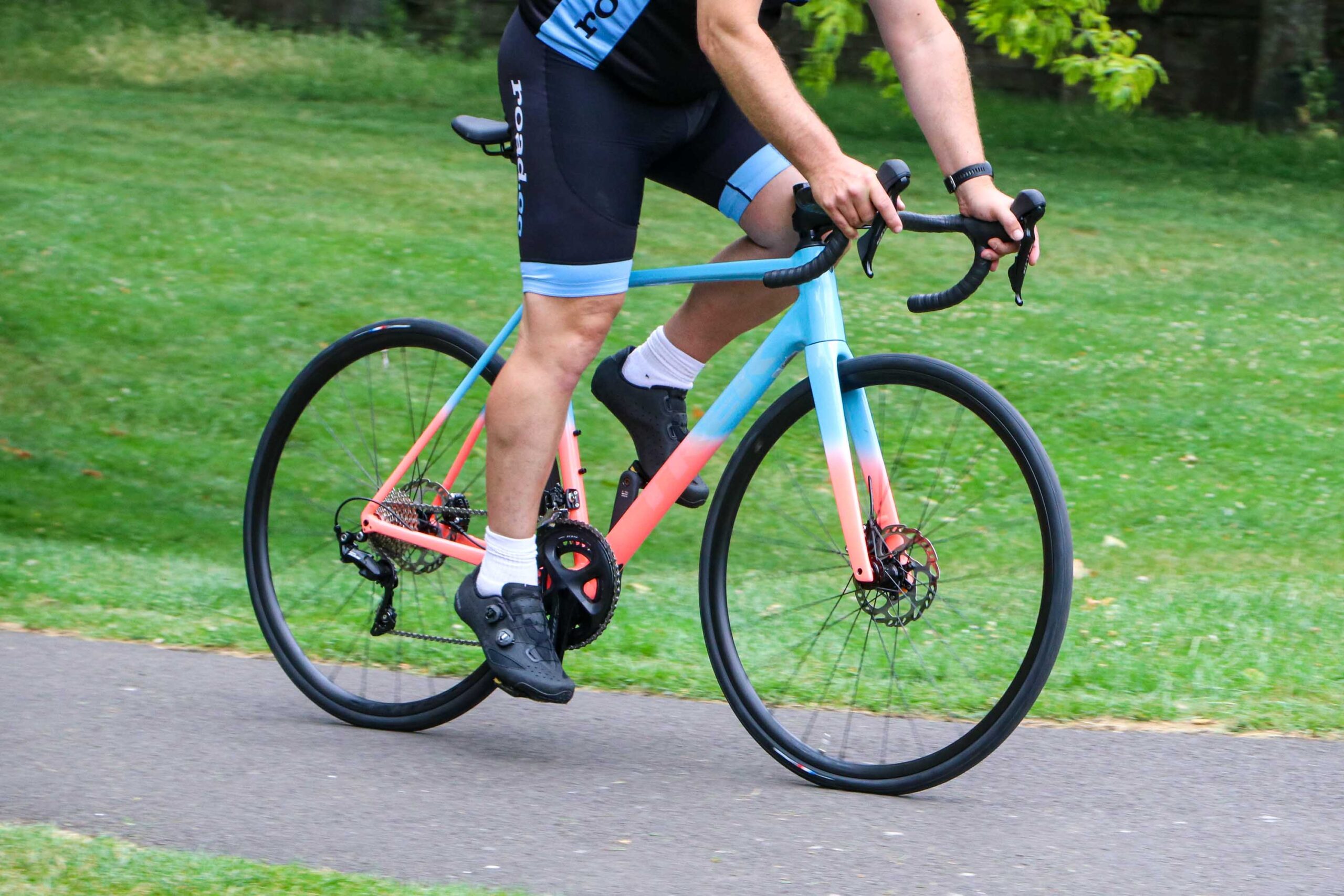
Other than our Decathlon selection, it’s now looking like you need around a grand to get into road cycling, with entry-level bikes seeing around a 30-50% price increase. As we’ve already mentioned, if you know your stuff then you can always look for secondhand bikes, clothing and accessories to save some money and bring your spend down closer to 2010s-prices.
In the UK there’s also the Cycle to Work scheme (other territories have their own version of it) which is a government initiative designed to promote healthier journeys to and from work and reduce pollution, offering the most cost-effective way to get new cycling equipment. As you don’t pay income tax or national insurance on the scheme payments, you can save between 32% and 42% (depending on your tax band) on the overall cost of your new bike and accessories, and pay in instalments.
While it’s impossible to weigh up all the economic factors to determine if a budding cyclist would truly have to spend a much greater proportion of their income on a bike now compared to ten years ago, it’s safe to say that most of the most popular entry-level road bikes are at least 30% more than they were in around 2013-2014. An increase of 30% does roughly tally with inflation, but unless you’re lucky enough to have seen your pay packet grow by over a third in ten years, the evidence here suggests that popular entry-level bikes bought new are generally more expensive for most of us in the 2020s.
Taking only inflation into account, our winners were Decathlon, Boardman and Vitus. Decathlon’s Triban 100 is just £299.99 today and 20% more than it was when we reviewed the bike in 2018, which is actually £9 less than the Bank of England’s inflation calculator suggests the bike should now cost. It does come with some big compromises and might not be suitable for cyclists with ambitions beyond cycling to work or the occasional jaunt, but realistically you could be out on the road with all the bike and kit you need for £500 or less with this bike. Decathlon’s most affordable bike with STI-style gear shifters and disc brakes is the Triban RC 120, priced at £499.99 – £100 more than when we reviewed it in 2019.
Our Boardman Road Sport that cost £500 in 2015 should have cost £657.36 in June 2023, meaning the Boardman SLR 8.6 at £650 is arguably better value than its equivalent was eight years ago. Vitus also performs well within these parameters, as the Razor VR – arguably a superior bike compared to the 2015 Razor W – is 33% more, and the latest Razor W is actually the same price as it was eight years ago with just a small groupset downgrade.
The Specialized Allez has seen the biggest percentage increase compared to its older equivalent, with the price of its entry-level road bike now 83% more than the 2014 Allez. Again, this might not tell the whole story, because the entry-level Allez of today is a more advanced bike than it was ten years ago with disc brakes, improved cable routing and a carbon fork.
Whether entry-level bikes are truly more expensive now is open to debate, but incentives like the Cycle to Work Scheme, the secondhand market, plus the money you can save by choosing cycling over other methods of transport means entry-level bikes are certainly not unobtainable to those of us with modest budgets.
What was the price of your first road bike? Let us know in the comments section below…





65 thoughts on “The rising price of entry-level road bikes — how much does it cost to get into road cycling now vs 10 years ago?”
Work in front line health
Work in front line health care NHS, over the past 10 years have seen my real wages srink and the cost of all things rise, bikes and kit inclulded. Bikes and kit are now at prices that are just silly, over a £100 for bib tights, at what cost are they made for in some sweat shop in the far east!!!! I have owned a Decathlon Triban 3 and now own a Tifosi CK3 claris £400 new old stock form ebay that I have had since 2019. MY kit is mostly DHB – decathlon stuff and anything else I find in a sale online, I am now in my 50s so am not fast or need all the bling, just need somthing I can push out the door and ride for a few hours a week to help with my general fitness and mental health. I am just waiting for the market to crash (if it does?) as I have read that many bike brands have over suplied and may have to discount soon, I could be wrong, but if that this is true, then a new cheap bike could be coming my way.
While obviously wages haven’t
While obviously wages haven’t gone up that much, broader inflation totals about 45% over the last 10 years so cycling isn’t out of line with that. And some things, like lights and relatively low-end bike clothing, are much better than they used to be at a given price point.
It’s very unfair not to take
It’s very unfair not to take inflation into account. £500 in 2015 is equivalent to about £660 now (according to the Bank of England’s inflation calculator). That means that, at £650, today’s Boardman SLR 8.6 is cheaper in real terms than 2015’s Boardman Road Sport. But you say it’s 30% more expensive.
Wages haven’t gone up at the same rate, but that’s another story.
Thanks for pointing that out,
Thanks for pointing that out, we’ve now added some info about inflation to the closing paragraphs for context. As you’ve alluded to, whether an entry-level bike will truly cost you more now than it did in the 2010s will depend on personal circumstances.
Wages have gone up more than
Wages have gone up more than inflation since 2015.
Real wages up about 6% over that period so for the average person some of these bikes are both cheaper in real terms and in terms of hours worked to afford one.
Don’t disagree, I earned less
Don’t disagree, I earned less than £150 a week in 2013 so an entry-level bike is relatively much more affordable for me nowadays than it was then. The idea of the article was to present the prices and allow readers to decide what it means for you, it’s very difficult to say definitively whether bikes are more expensive now compared to ten years ago and there are a lot of factors at play.
Rich_cb wrote:
You’re lucky flother chose that year!
Most of that picture’s ‘thousand words’ are telling a much sadder story. And for younger workers, it’s worse still.
That’s what a global
That’s what a global financial crisis will do.
We essentially traded wage/productivity growth for employment.
Wages/productivity stagnated but there was not mass unemployment as was seen in previous severe recessions
Or to put it another way,
Or to put it another way, real wages have finally just recovered to their 2007 level. The only reason they have risen over the last eight years is because they fell so low in the first place. This is akin to saying “We’ve introduced 18,000 new police officers” whilst ignoring the fact that 22,000 have been abolished. Additionally, average wages rising does not necessarily mean the average person is better off, if 90 people earn £500 a week and 10 earn £1000 a week, when the top 10 get a rise to £2000 a week the average wage goes up but 90% are no better off.
The article focussed on the
The article focussed on the last ten years.
Over that time real wages have risen and, as a consequence, some of the bikes are actually cheaper for the average wage earner than they were then.
You’re correct that mean average wages can be distorted by a large increase in top earners, median averages are less affected by this.
The wages of lower earners have actually risen faster than the overall average too. Low pay is now at its lowest level since records began.
From your own source:
From your own source:
Yes, low paid jobs have fallen from 27.2% in 2018 to 24.8% in 2022, according to the graph in your source. Leaving aside the fact that, in my opinion, it’s a national scandal that in one of the world’s wealthiest countries around a quarter of workers are on low wages, how much of that fall is due to the fact that low wage jobs simply disappeared during the pandemic, for example in pubs and restaurants that closed and never reopened? If the number of low paid jobs has fallen because the number of jobs available has fallen that’s hardly cause for celebration.
If we were discussing the
If we were discussing the 2020 or 2021 data you’d have a point.
We’re not.
The 2022 data is not subject to those caveats.
The low pay rate is the lowest ever recorded. That timescale includes 13 years of Labour governments.
Pubs and restaurants etc are desperate for staff, hospitality wage increases are hugely above average. It’s not lack of jobs that’s driving down the number of people on low wages it’s, unsurprisingly, rising wages.
If the jobs disappeared in
If the jobs disappeared in 2020 and 2021 and haven’t come back then clearly that affects the 2022 data. Yes hospitality wage increases have been usually above average between 2012 and 2022, that is primarily because the minimum wage has risen from £6.19 to £9.50 per hour. So wages have risen from totally derisory to very derisory, gain no cause for celebration.
If the jobs have disappeared
If the jobs have disappeared then why are there staff shortages?
If what you’ve suggested, without any evidence whatsoever, was true then there would be a glut of freshly laid off staff competing for jobs rather than a huge number of jobs available (vacancies at near record highs) and huge competition for workers.
Hospitality wages are up over 50% in the past decade while inflation was just over 30%.
It’s a strange world where increasing the living standards of the poorest paid in our society is “No cause for celebration”.
You’re right that a lot of the rise in pay rates is directly due to government policy.
That doesn’t change the fact that the rise is real and has driven low pay to the lowest levels ever recorded.
Rich_cb wrote:
No, I don’t think it’s a cause for celebration that we live in a country where employers are permitted to pay full-time workers £10.42 per hour, and £7.49 per hour if they are aged 20 or younger. I think that’s a cause to be scandalised.
I’ve accepted your claim that the number of low paid jobs is at the lowest ever figure as a percentage of total jobs (although as previously, are you comfortable with the fact that one quarter of people in this country are working jobs that are classified as low paid?), you have failed to answer my question as to whether that is because wages have risen, moving more jobs from low paid to average pay, or whether low paid jobs have simply disappeared.
The reason there are staff shortages in the hospitality industry, as any person working in that industry will tell you, is because your beloved Brexit has driven away a huge number of the temporary foreign workers who were willing to accept extremely low pay rates, long hours, poor working conditions and prospects and zero hours contracts.
That last paragraph is a
That last paragraph is a tacit admission that EU membership drove down wages and working conditions. Nice of you to acknowledge that.
The low pay rate per hour is actually 10.5%.
The 24.5% figure is per job. So a person with 2 part time jobs may be counted twice but not actually be low paid overall.
Not all jobs can be full time so I think it’s better to focus on the hourly figure and benefit reform to make it easier to transition from part time work to full time.
You’ve questioned the source of the data and now you’re demanding more data. It sounds a lot like the description of sealioning which you like to bandy about.
I’ve explained why the current jobs market does not support your little hypothesis. If you want to dig around in the stats to try and prove me wrong you’re welcome to do so.
But soon the India deal and
But soon the India deal and all will be well.
where are my brexit benefits?
https://www.express.co.uk/news/uk/1633336/boris-johnson-brexit-promises-has-brexit-happened-spt
Yeah, another post from
Yeah, another post from someone bleating on about bloody Brexit. For me it is getting like Godwin’s rule, for every long debate in an article someone on the tinternet will get to mention Brexit. Hoo bloody rah!
Don’t forget to also mention that anyone who voted for it was a) racist, b) thick or c) both. That always helps to convey the approriate sense of superiority.
bobbinogs wrote:
I don’t believe everyone who voted for it was thick and/or racist by any means. I do think that every thick racist (who could be bothered to vote/possessed the mental acuity to draw an X) voted for it though.
It doesn’t give me a sense of
It doesn’t give me a sense of superiority, just a sense of overwhelming sadness.
bobbinogs wrote:
You don’t say “on the tinternet”.
That initial “t” is a contraction of “the”, so “on t’internet”.
Just saying…
Tintern Abbey? Tis.
Tintern Abbey? Tis.
I really hope if Tintern
I really hope if Tintern Abbey has a wifi network, they’ve called it “Tinternet”. (Yes, I’m aware it’s a ruin)
it does seem like a missed
it does seem like a missed opportunity
https://www.tinternvillage.co.uk/?fbclid=IwAR1KW_xvzoRr_9vC0VySbbpIfi-iFUQ5Jb8TzPJPEOdQX1-u1YHLstKj95I
* Rushes to register domain *
* Rushes to register domain *
“can U bring dogs?” the first
“can U bring dogs?” the first ever internet post – a good place to start?
“Harry Kane has been sold to
“Harry Kane has been sold to German giants Bayern Munich for £100m, in a deal that Brexiters are hailing as definitive proof that they need us more than we need them.
The prolonged transfer saga has been completed this morning, with the deal providing a huge £100m boost to EU exports.”
Rich_cb wrote:
Please point me to where I’ve questioned your data source or asked for more data? I’ve questioned your interpretation of the data but that’s not the same thing. The last thing I or anyone else wants is yet another cherrypicked C&P graph from you.
In any case, as you’ve now drifted into the realms of the ridiculous – someone working a low paid part time job might not actually be low paid because they might also have a well paid part time job elsewhere, yep bet there are loads of those people – I shall leave it there.
Requests data:
Requests data:
“You have failed to answer my question as to whether that is because wages have risen, moving more jobs from low paid to average pay, or whether low paid jobs have simply disappeared.”
Questions source:
Highlighting that the 2020/21 data should be treated with caution even though that was irrelevant.
Only 10.5% of jobs are low paid on an hourly rate but 25% of jobs are low paid on a per job rate. That obviously means that the issue is hours worked rather than hourly rate of pay.
You don’t think some people have more than one part time job?
They obviously do and if neither job was low paid per hour and total hours worked was equivalent to full time then clearly they wouldn’t be low paid overall.
Rendel Harris wrote:
The minimum wage is now £10.42/hour (about 62% of median earnings). It’s no fortune but it is pretty high by international standards and has helped a lot of people be better off.
There’s obviously a lot more to how well off the lowest earners are – not least recent inflation eroding almost everyone’s position (particularly the poorest), the UK’s particularly poor wage growth and access to in-work benefits – but I think the minimum wage has been relatively successful.
Hate to say it, but the
Hate to say it, but the Tories’ raising of the personal allowance and NI threshold has greatly increased the spending power of people at or near minimum wage levels. The rest of their policies have decreased it again of course, but however grudgingly they should be given some credit for that.
Personal allowance hasn’t
Personal allowance hasn’t changed in the last 4 years.
I didn’t say it had. But the
I didn’t say it had. But the income tax personal allowance has almost doubled since the Tories came in in 2010, so that alone is way ahead of inflation. National Insurance is a bit more complex, but the lowest earners are paying less of their income on that than they were in 2010 too.
I’m fervently hoping for the Tories to lose the next election heavily. But those policies have been good for low-paid workers’ take-home pay, and there’s no reason not to acknowledge that. I’m less happy about fiscal drag pulling more people into the higher brackets, but that affects people on £50k+ a year who are in no way low-paid workers.
The minimum wage has also
The minimum wage has also increased hugely since 2010.
The Conservatives can be criticised for many things but on minimum wage, tax reform for the lowest paid and pension enrollment reform they’ve made really meaningful changes that will benefit millions of people.
Rich_cb wrote:
The minimum wage has had a largely unseen knock on effect too; I work in a social enterprise and the founder/MD has always* paid £1.50-2.00 p/h above that for the staff at the lower end, his thinking is that “if we only pay minimum wage, it tells the employee that if the government allowed it, you’d be paid even less and you’re not valued” therefore increasing the minimum and the tax threshold has been good.
* long before “living wage” became a thing.
All this praise for
All this praise for Conservative policies is making me feel uneasy, so I should point out that pensions automatic enrollment was introduced by Labour under the Pensions Act 2008. It just didn’t come into force until 2012.
That’s a fair comment but
That’s a fair comment but much like with ‘Boris Bikes’ I do feel that the lion’s share of the credit has to go to those who actually implement the scheme.
Rich_cb wrote:
The Lib Dems can be criticised for shoring up a Conservative government, but they introduced tax reform for the lowest paid.
In coalition. They relied on
In coalition. They relied on Conservative agreement to get the first tranche of reform through.
It was then adopted as Conservative policy and carried on post coalition.
Rich_cb wrote:
Had the Conservatives won the 2010 election outright they would not have done it. Had they refused to include it in the programme of government, them the Lib Dems would not have gone into coalition with them. It was a Lib Dem policy and it happened because of the Lib Dems.
The Conservatives saw it was popular and continued with it (which was good) and tried to take credit for it (which wasn’t good, but you’ve fallen for it).
The Conservatives adopted the
The Conservatives adopted the policy post coalition and included it in their manifesto.
They then won a majority (2015) and implemented the manifesto promise.
It’s perfectly fine to insist on giving the Liberal Democrats credit for devising the policy and delivering the initial phase as part of the coalition but you cannot deny the Conservatives credit for the policies that came post coalition.
You also can’t deny the Conservatives any credit for the coalition policies on tax thesholds, they still voted for those policies and controlled the ministries which implemented them.
It’s true, they didn’t do a
It’s true, they didn’t do a number on it like with the AV (itself a dilution / change from AV+).
Of course on that one you could argue that was as much political naivety by the Lib Dems. Or alternatively not – perhaps they realised it would be torpedoed but either thought it worth a gamble or were far more interested in being a member of government than any particular policy. Clegg did seem surprised and disappointed though.
Credit for lots of things is difficult to assign – I didn’t know but just found out that the AV (plus) “started” from the the 1998 Jenkins Commission under a Labour government – though then blocked by lots of senior Labour types and not supported by Labour when it came to a vote.
Brauchsel wrote:
The raising of personal tax allowances happened because of the Lib Dems, not the Tories. It was one of their coalition demands. Don’t give the Tories the credit.
You could also mention the
You could also mention the difference in price from the entry level to the ‘pro’ level compared to a decade ago. in 2013 you could get a carbon bike with DA di2 and a deep section carbon rims for around £8k-9k https://www.bikeradar.com/reviews/bikes/road-bikes/specialized-s-works-tarmac-sl4-di2-review/ compared to today the like for like is around £12k RRP for the SL8. So an increase of around 30-40% over the years.
Most of that has been a sharp rise post Covid and Brexit. I know my bike (Trek Emonda SLR) went from costing £5500 to nearly £7000 over night due to supply chains and red tape etc caused by these 2 issues. Had we not had this double whammy I think most bikes would be much closer to the prices of 10 years ago.
The biggest change for entry level bikes has got to be much better finishing kit. I bought my partners son a Triban 500 Claris bike from Decathlon at xmas and that cost around £450 and has a far superior quality groupset on it than the Bianchi Via Nirone I used to ride about on in 2013. Thats quite impressive and probably worth the increase alone. The Bianchi btw cost me just under a grand. Sure, I was probably paying for the name over many other brands at the time but there wasnt much of a better bargain in that price range at the time. If you are prepared to shop around and wait there are much cheaper prices available for the out-dated stock.
Overall inflation has been 31
Overall inflation has been 31.5% since 2014 according to the BoE inflation checker.
In that context most of the bikes which have unchanged spec haven’t really changed price very much in real terms.
Exactly this. The article,
Exactly this. The article, while vaguely interesting, is badly flawed. It should have looked at price rises over and above inflation over a decade (not to mention other factors like Brexit, Ukraine war). The Spesh is the one that stands out there but I haven’t looked closely at how the specs compare – they may well be better now.
Indeed, it would probably
Indeed, it would probably have been good to underline the stats in each section by stating the inflation-adjusted % increase. So Boardman, zero, etc. But otherwise not a bad article. Shows that entry level bikes haven’t gone up so much. Its really obvious that high end bikes have though. Could we have an equivalent article for those, maybe? Having bought high end in 2013 and 2021, the increase is way beyond 31%. My personal opinion? Bike companies seeing what the market will bear plus richer consumers (or lower interest rates and generous cycle to work schemes – but that’s a different story ?)
Interesting article, thanks.
Interesting article, thanks.
My sense is that general inflation has caught up with cycling, which seemed to surge during the pandemic before subsiding latterly. Prices on some Claris-equipped models were approaching £1000… I hope they didn’t sell many!
Also as others note, few incomes have kept pace with recent inflation, so cycling really has become more expensive in real terms – just like much else.
Lastly, a minor quible with whether “Entry-level bikes have evolved massively”. Even the following para notes that the Allez’s frame, groupset and wheels are unchanged! I think it’s more accurate to say many entry-level bikes now have cable discs…
The evolution is nuanced. The
The evolution is nuanced. The 2023 Allez has dropped seatstays and other layout configuration changes, in addition to a full carbon (instead of the alloy steerer) fork. The Claris groupset of 10 years ago is also different in many ways to that of the current genration, with wider gear ratios, bar-aligned cable routing as opposed to out the side of the shifters, and a silhouette that matches the recently superceded performance 11 speed groupsets. Some of the frames have had tweaked geometry. The move to cable actuated disc brakes also adds a small expense from the hardware changes for the frame building, and from the callipers themselves. I’ve used all 3 of the 9 speed iterations of Shimano Sora and the latest, R3000 is by far the most premium feeling and reliable of the three.
Wheel tech trends have also changed, with rims and tyres becoming wider for increased grip and comfort. This is also prevalent on entry level bikes and on aftermarket products. I have a set of modern handbuilt wheels with alloy rims for my winter bike that are 19mm wide internally, that was unheard of 10 years ago. The most popular rim for handbuilts were Mavic Open Pros, which were 15mm wide.
Whilst all three of the aforementioned components of the Allez are of the same level of specification, there has been product development from trickle down technology that is present in the newer model.
Agree with all that, and it’s
Agree with all that, and it’s all good.
I just don’t think it’s “massive”.
I think it’s difficult to
I think it’s difficult to compare current models against old models, as the specs will have changed.
My first road bike was a Decathlon Triban. 10-speed 105 with rim brakes for £600. The closest current model is 11-speed 105 with disc brakes for £850. So it’s about 40% more expensive, but it’s a better spec. For £600 you can get the next model down which has 9-speed Sora with disc brakes.
They don’t make ’em like this
They don’t make ’em like this any more
https://www.ebay.co.uk/itm/354731626754?_trkparms=amclksrc%3DITM%26aid%3D1110006%26algo%3DHOMESPLICE.SIM%26ao%3D1%26asc%3D253008%26meid%3D2ac2903817ea427ea6e6377a71afe356%26pid%3D101195%26rk%3D2%26rkt%3D12%26sd%3D134687206206%26itm%3D354731626754%26pmt%3D1%26noa%3D0%26pg%3D4429486%26algv%3DSimplAMLv11WebTrimmedV3MskuWithLambda85KnnRecallV1V2V4ItemNrtInQueryAndCassiniVisualRankerAndBertRecallWithVMEV3&_trksid=p4429486.c101195.m1851&amdata=cksum%3A3547316267542ac2903817ea427ea6e6377a71afe356%7Cenc%3AAQAIAAABUPqB0EgCndAssfMWNy0AT0GytGzF9%252By0G%252BlcW69DgBK3Qlz4BjwJQqPkN4K8I7qz9GoVciN1QNWqyS8EeqYS8rZRsDvyvw34m3N%252FyJKokwCTIIc3RNym2SNW8ARudP72DyiwgIY0dfUnIr5%252BMZDTaotLdQN%252FD0gGHkSUC1gqFnoFK5VaqDkQYnpqILWGiMaXXSSJkb8%252BYBBb%252F6v5raXHCYNlyAscTGRzzRzT5VWuYYrS89OqjfaLF1H3z5Afy9L6UU5GkXm8uSvY%252BVC%252Fjc7eqMe7sH%252FwQR%252ByFmmS0VtmOESm%252Fa9SvFoc8dILQviaD6A9cOj1nIRboZy84xYSiqfoRhkQoNYWLb88zVdtV2SfZZULK%252B8LMM7R6EkVqbKhXJ%252Bd8HdrGFv3gF86p3IjzK8QvYtL6JGEqVuEXITo8yidTj%252BQ%252ByOZUU7DoE37vrhNPKMCag%253D%253D%7Campid%3APL_CLK%7Cclp%3A4429486
Can confirm the 11-speed 105
Can confirm the 11-speed 105 model is terrific. I got mine at £720ish when it launched in 2018, but even at the current price it’s exceptional value. It’s not a “racing” bike, but clips along at a perfectly decent rate (by my standards) even when pretty heavily loaded.
“it’s complicated” seems to
“it’s complicated” seems to be the verdict on this.
But what constitutes an entry level road bike? One that won’t end up in the trash would be good start. As I look at Halfords today, their cheapest is an Apollo for £285 – it looks pretty terrible, replete with thumb / twist shifters on the bars.
If that’s your budget, then I would suggest something like this:
https://www.ebay.co.uk/itm/334981039190?hash=item4dfe6d0456:g:RswAAOSwMMNkfgr~&amdata=enc%3AAQAIAAAAwGjF62dQSF5r9jUqug%2F%2BVS4%2F%2F4P7%2Bu%2BJw9%2B5qcLBXG5YhtgbNMZo5y0C6BtPr91WthqfZi1d9Ty7PMB2YgPAOoHL00VwiosFNVo0cxbjCrNilf1NHkYGso62UHZPWqwb7R%2BVv7RQvdT5SNIvAXDkPiOyskcu7Bs%2BMflPZCEhKFKdc7uEaidA5niKKrcKjgFy8gv4xo8cv1b0nqD5m9axALjON3tOw2J9FHv22%2FzXt0CxK2q1wkWFmX6Wm1vpr%2B0jnw%3D%3D%7Ctkp%3ABk9SR6yY6Ou7Yg
(I’d want to understand why the chrome forks – pretty sure that’s not original.)
The cheapest Boardman, which looks reasonably decent, starts at £650 + pedals. This is the least in my view someome starting out should spend on a new-new bike; they then need to budget for some kit, accessories.
https://www.halfords.com/bikes/road-bikes/boardman-slr-8.6-mens-road-bike-2021—s-m-l-xl-frames-364926.html?stockInventory=undefined
I still sense a significant gap in the market when it comes to helping people who have decided “I want to cycle” and ask “where do I start?”
1980s Richard’s Bicycle Book canters through the main bike models around at the time and their ascending prices, gets to something like the Raleigh Clubman and drops in “just about the quality I feel is appropriate for regular riding.”
When I was with Halfords around that same time, £99 was the entry level price for say a Peugeot racer, a Raleigh Wisp or Medale (I had one), a little less for the Raleigh Winner.
The other issue is how well does a bike hold its value – as an anecdote/example, someone is trying to get £160 on Ebay for “my” Raleigh Medale – a pretty decent looking bike. Someone else trying for £100 for the ubiquitous Winner – there’s quite a few on of this one at different price-points:
https://www.ebay.co.uk/itm/125982506133?hash=item1d55247c95:g:j6QAAOSwHohkkGvo&amdata=enc%3AAQAIAAAAwAR64uIFGmjh4kEhPZ4BZZl5S%2BEBCPmOaQ4YB2QPr%2BHy8xH6bcSgq988T3zXHM7%2FBjA9RNR4NvsCjlwYTmp%2BPqsbJcTVXGYywN7jQUQfIF1FSLZYsK3gx%2BUE7MNUTGy7X7XtW8m8xNrhPQFAeXQIiS0%2F5kiHSPbKxbyjnG11eZTJEc5SO7N%2BW7N1mT3Vc2Tj9yaLExhLBlw2g2feGo7fX6Vry0qALlGveB%2FT1gEWoER4cDBtF5YgoGWHa4uJA6ajfw%3D%3D%7Ctkp%3ABk9SR6yvweu7Yg
The repair cafe sometimes ask me what price to put on donated bikes we’ve refurbed – I have very little idea at that level. I just try to keep the spend down on needed replacement parts.
The 1979 Richard’s Bicycle
The 1979 Richard’s Bicycle Book
The bicycles recommended … are grouped in arbitrary price ranges of £80-100, £100-140, and £140-200. Prices will change; the idea is more to indicate what to expect in basic, medium, and high quality grades of bicycle [respectively].
Dawes Galaxy Deluxe and Claud Butler Competition are given as examples of high.
David9694 wrote:
Not sure you have to go that high, Decathlon currently have the Triban RC 120 discounted to £399: carbon fork, disc brakes and Microshift gears which in my (limited) experience more than hold their own against the lower-end Shimano equivalents.
https://www.decathlon.co.uk/p/road-bike-triban-rc-120-disc-brake/_/R-p-308064?mc=8554265
Always lots to like at
Always lots to like at Decathlon, especially if you’re lucky enough to have one near you. I’d swerve the swaged Tourney chainset and go for the Triban RC 500 at £600.
Shame about all the disc brakes – I guess you can’t have everything.
David9694 wrote:
They do have the women’s RC 500 in a rim brake version but oddly not a male/unisex model, and the RC 120 rim brake version is currently discounted to £350 which has got to be one of the best bargains available at the moment.
There are things you can buy
There are things you can buy that are cheap or haven’t gone up in price, at least in America.
But you don’t need a cycling-specific jersey with the rear pockets, I never use them anyways, so I go to Costco and buy a 4-pack of 32-degree Air mesh jersey for $20, and they’re cooler in hot weather than my expensive jerseys! I will never go back to expensive jerseys after my experiences with the two.
Socks are another thing you don’t need to spend a lot of money on, Champion makes a 12-pack of polyester ankle socks for $17, and they work just as good as cycling ones.
You can’t buy cheap padded shorts, I never found a cheap pair that worked well, but some might be able to make a cheap pair work; the crazy thing is, if you practice you can get used to cycling without a padded short! Most people who go touring do not wear padded shorts due to the bulk and weight of the shorts. Most of my riding is now done without shorts, but it took about 6 months to get used to it on long rides.
Even seat bags have gone up, but on Amazon, there is a bag made by BV, it’s made out of the exact same materials as a Topeak Aero Wedge expandable bag; I have both and they both have lasted more than 5 years now, but the Topeak will cost just over twice as much. The BV largest bag is the size of the Topeak medium size.
I also watch for close-out sales, or if possible, and depending on the item, you can find refurbished stuff. I bought a $120 Nite Rider headlight that was refurbished for just $40 from Nite Rider not from some outside source. The other good thing about Nite Rider headlights is that they’re one of the very few lights on the market that the internal battery can be replaced by the company, which means in the long run that light will cost less money than buying a new light every time the battery no longer takes a charge. I find tires all the time that normally sells for around $70 for around half the cost on closeout. Even bikes go on closeout.
Cyclists just need to be smarter today than they use to have to be if they want to keep their expenses down.
froze wrote:
One imagines it takes passers-by a fair bit of time to get used to as well…
Rendel Harris wrote:
Rendel Harris wrote:
Be careful in case a passer-by has a stroke
Chance’d be a fine thing.
Chance’d be a fine thing.
Unfortunately, the BV size M
Unfortunately, the BV size M bag is £23 and the Topeak M (both c. 1 litre) is £19.30 on UK Amazon – but it’s the sort of off-brand stuff we should all be aware of.
It might be worth our having a thread on the wider subject.
Cycle magazine did a feature on cheap stuff in the spring – no super-cheap padded shorts, just DHB and Galibier to avoid mega-premium prices. On a quick Google, there appears to be a decent example from a decent range here:
https://www.houseoffraser.co.uk/brand/muddyfox/padded-cycling-shorts-mens-636560#colcode=63656003
https://www.cyclinguk.org/publication/cycle-magazine-aprilmay-2023
against all this, the
against all this, the Boardman SLR 8.9 available at £1080 currently is an absolute steal. Carbon frame and shimano 105 groupset. For less than I paid for carbon and 105 in 2016
Only downside is the FSA gossamer chainset.