


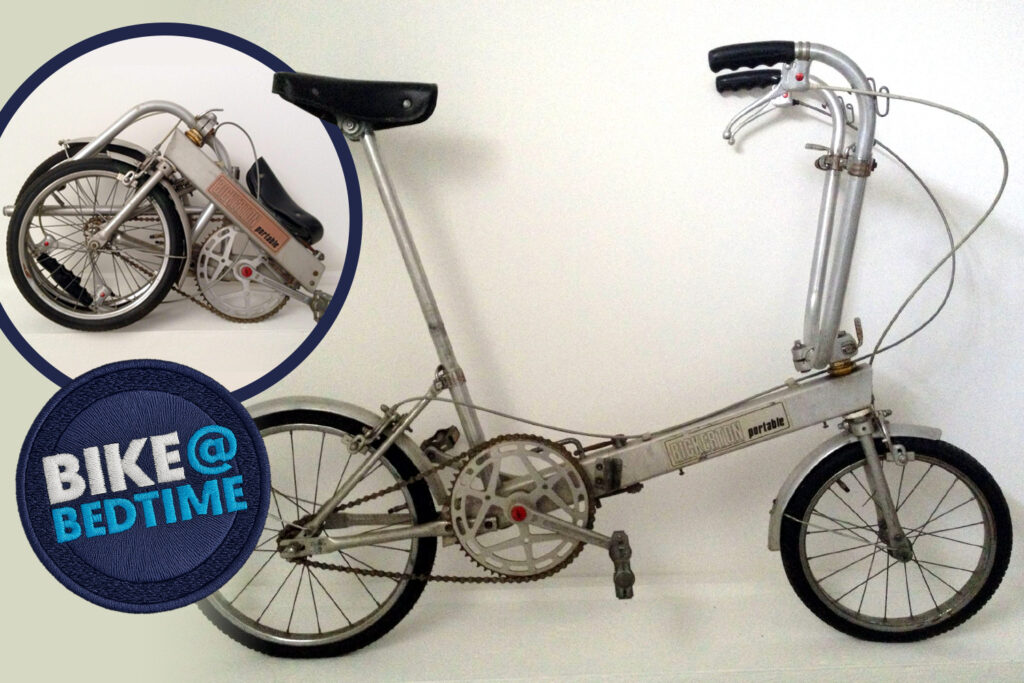

What do you get if you cross an aircraft engineer, some aluminium tubing, some truck tyre levers and your family’s Aga? The world’s first genuinely portable folding bicycle.
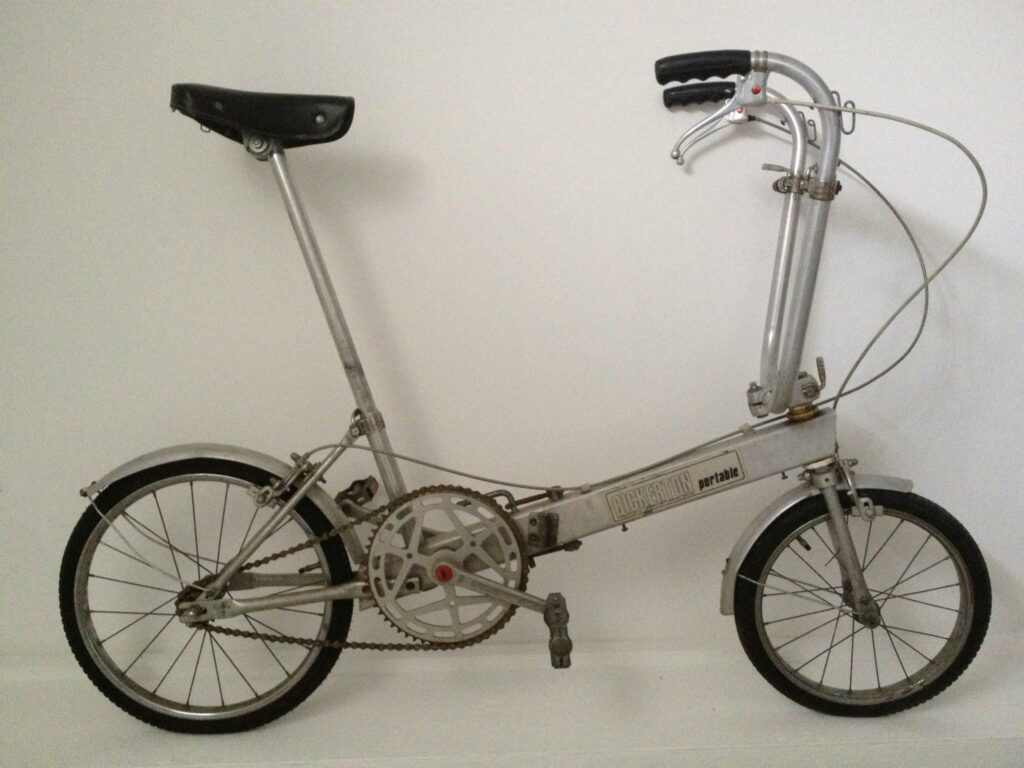
This is the story of the original Bickerton Portable, the light bike that appeared in the early 1970s and helped establish the idea that a folding bike shouldn’t merely fold – it should actually be portable too.
Harry Bickerton was an aircraft engineer. When he started thinking about folding bikes, plenty already existed. The trouble was that they were “pretty heavy and pretty ghastly to ride”, according to his son, Mark, who runs Bickerton Portables today and, through his company Cyclemotion, supports the Tern brand in the UK.
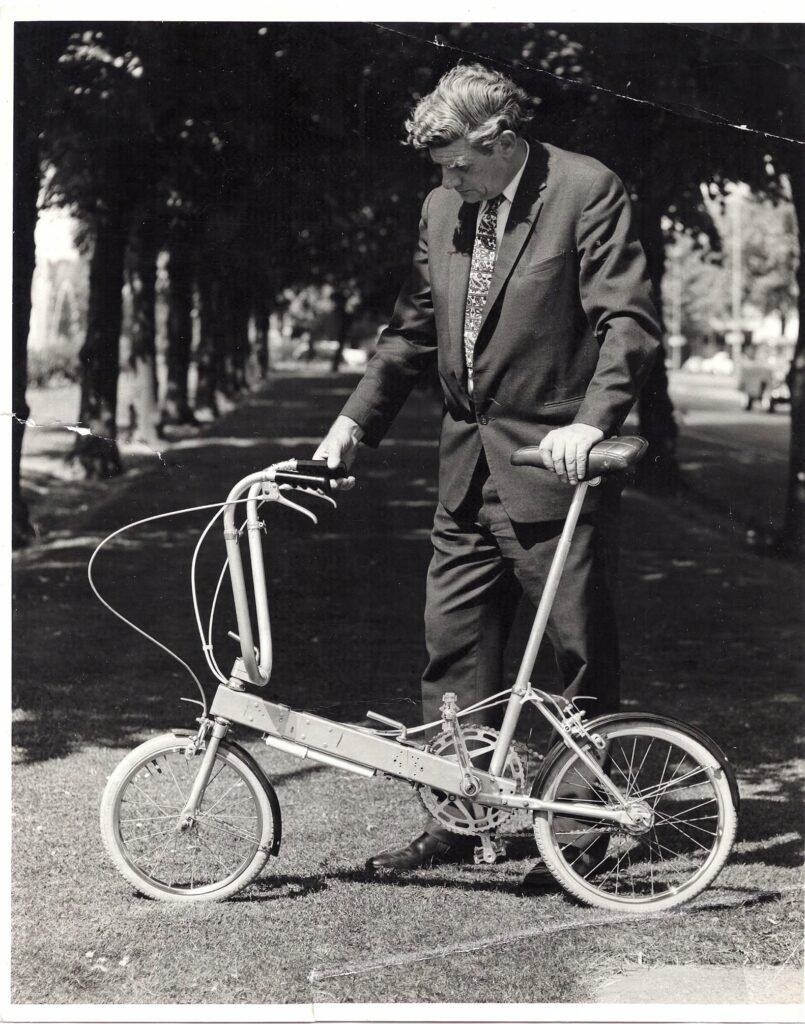
Harry had another problem: he’d been banned from driving. His solution was to design something light enough to carry. The single-speed prototypes weighed just 17lb (7.7kg). That was extraordinary, as was the fact that Harry was working with aluminium.
Aluminium, but make it difficult
Steel was the default material for bikes at the time, but Harry knew something about aluminium alloys from his aircraft-industry work and realised they offered a route to the lightweight bike he wanted.
There was just one small problem. Welding thin aluminium tubing wasn’t particularly practical.
“You could weld things like truck bodies,” Mark Bickerton explains, “but if you were trying to weld thin gauge tubing, the welding technology just wasn’t there.
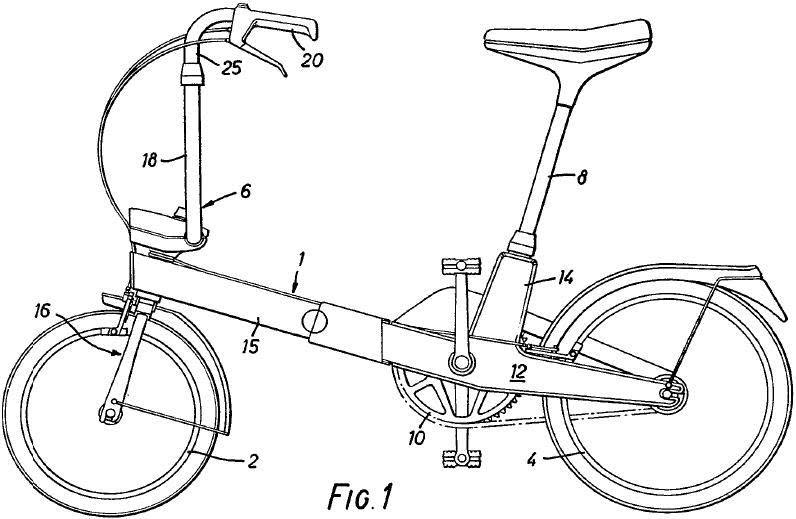
“1971 was when the first patent was filed,” says Mark. “The design process started a bit earlier than that, and production of the first 20 or 30 in my mother’s stable followed quite soon after that, probably in ’72. And then by about ’73 my father had moved to a workshop in Codicote in Hertfordshire, where the first 300 semi-production bikes were made, mostly with knives and forks and truck tyre levers and things like that, heat treating in my parents’ Aga oven, rather than a commercial operation.
“That was probably about ’74 that started, and then it developed on from there. [The licence] was then sold to a commercial organisation that put it into mass production, and from then on, it got quite big, and we ended up manufacturing them in a variety of places around the world.”
Fold it. Then fold it again
The clever bit of the original Bickerton Portable design wasn’t simply the hinge in the middle of the frame. Folding bikes already existed, after all. Harry wanted the whole thing to be small and portable.
“The U-shaped handlebars were telescopic so you could adjust them, and you folded the two tops of the handlebars in, and then the whole of the U-section folded down next to the front wheel,” Mark explains.
“That was probably the most radical part of the folding because the hinge in the main frame was fairly standard on all folding bikes, even at that time. But having the handlebars folding down as well as they did, and the saddle and stem removed and then slotted along the chain, it made for a really compact folded package. You could actually get one into the boot of an old-fashioned Mini, which was pretty impressive.”
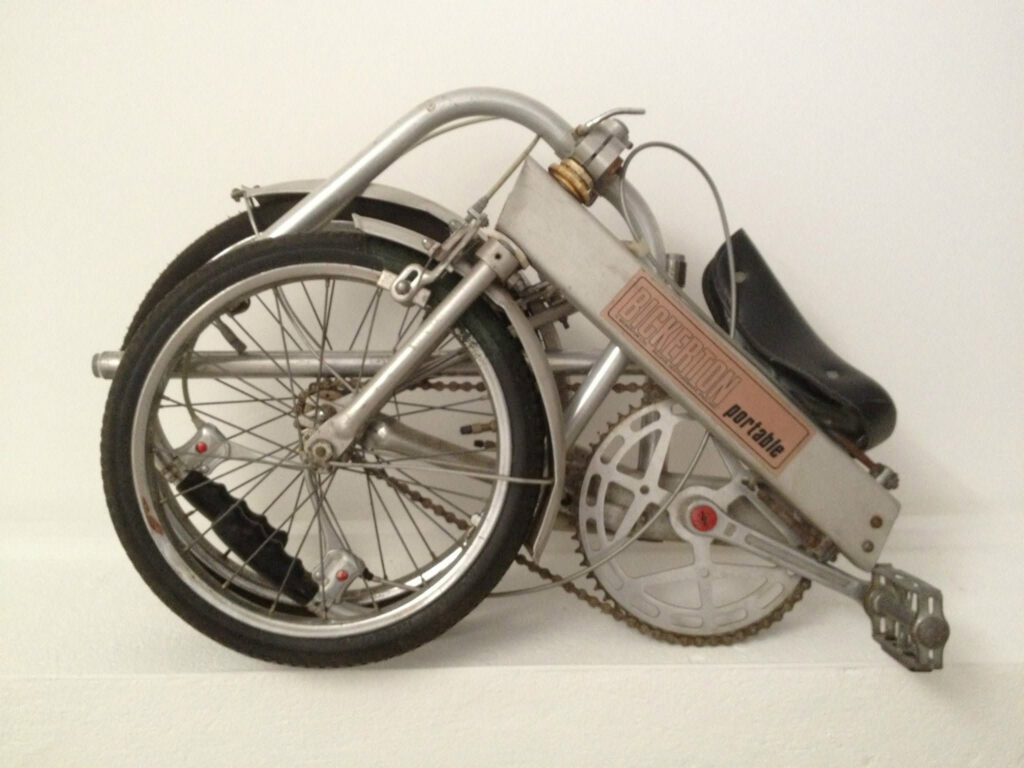
There were no strong modern magnets to hold the bike together in its folded state, either. The early versions used a threaded arrangement with a locknut before the design evolved into a little hook attached to the front axle that clipped under the chainstay.
It was, Mark admits, somewhat precarious, but it worked. And that rather sums up the first Bickertons.
“The first 300 buyers bought direct from my father, and I was helping him, although I was only a small boy at the time, and we practically knew each of our customers. They came to collect the bikes personally, and the whole thing was very joyous and great fun, and all of these people just loved being involved.
“We really enjoyed meeting all these people, and they were our advocates. They went out there and talked about it to all their friends, so word of mouth, as well as the press stuff that we were doing, generated the initial sales of 300.”
The horse effect
There was another consequence of making a lightweight folding bike in the 1970s. It flexed.
Mark says, “A lot of the criticism that the original Bickerton design had was that it was a very flexible ride. It felt a bit like riding a horse rather than riding a bike, which took a little bit of getting used to, and we were the butt of quite a lot of jokes about it at the time. But once you did get used to it, it was almost like it was trying to help you ride along.”
A lot of people were willing to forgive that unusual ride feel in return for a reasonable weight and a compact fold.
“Cycling one was actually a pleasure once you got over the fact that it didn’t ride like a normal bike,” says Mark.
“The extraordinary thing was that the people who bought these bikes were all early adopters, and they just loved the fact that they were practically helping to design the bike by using it. And so they forgave us all sorts of travesties in design until we got it right, which we did… eventually.”
From the Aga to the world
All kinds of people bought the Bickerton Portable, including celebrities and film stars. Sir Kenneth Cork, Lord Mayor of London, had two – one for each of his Rolls-Royces. Bickerton became a well-known cycling brand in the 1970s and 1980s, selling over 600,000 folding bikes.
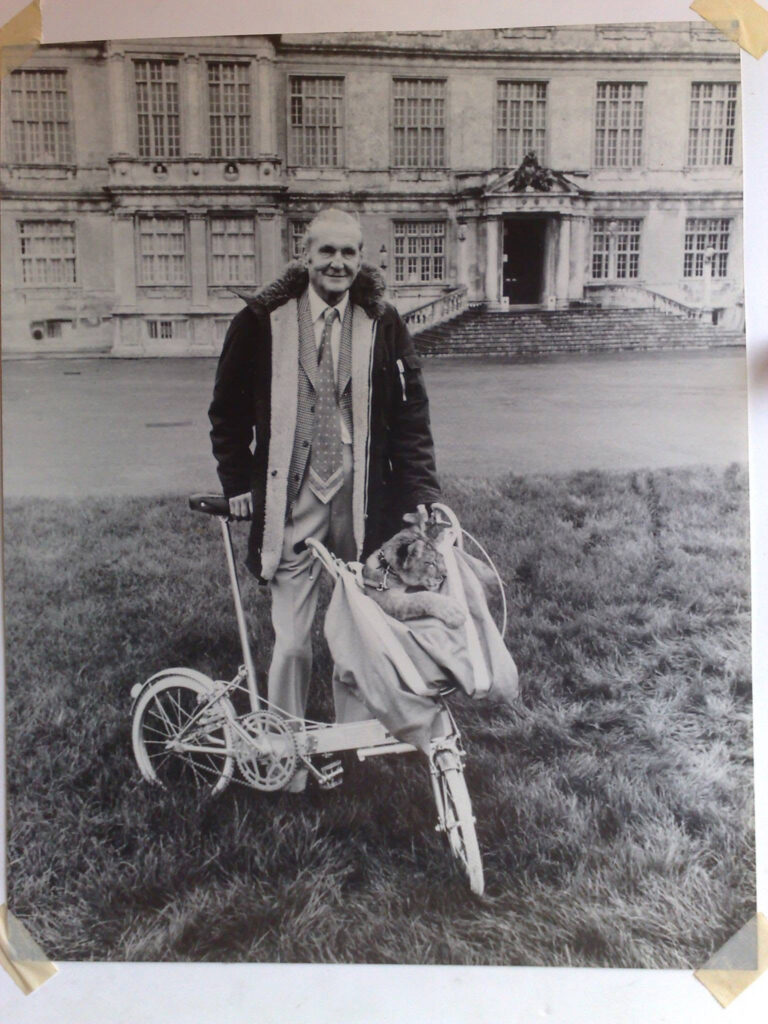
Long before folding bikes became sophisticated urban vehicles, Harry Bickerton was simply trying to make a bicycle that you could carry easily using private and public transport. He used aircraft knowledge, unconventional materials and a willingness to improvise. He made it in a stable. He heat-treated it in an Aga. And somehow, he ended up with a folding bike that could fit in a Mini.
Bickerton Portables were originally made between 1971 and 1991, and the brand was relaunched in 2011. It still exists today. These days, the name sits alongside Tern, with Mark Bickerton involved in both.
> Listen to Mark Bickerton explaining the origins of the Bickerton Portable
Although times have changed, the current range carries plenty of that original DNA: lightweight construction, small wheels, clever folding and, above all, portability. Over 55 years on from Harry’s first Bickerton Portable, it turns out that making a bicycle small enough to take anywhere is still a pretty good idea.



















2 thoughts on “Bickerton Portable: The folding bike built in a stable and heat-treated in an Aga”
I find that the two main two weaknesses of the original Bickerton are the main hinge and the plastic headset which means when riding it your body has to function as the top tube. Best for emergencies and entertainment only, although it is pretty good for the latter.
@Pub bike I can confirm that main hinge was a weak point, having it collapse on me in busy Edinburgh traffic. I think it was the cobbles that finally did it.
A very unsettling experience & despite me replacing the hinge mechanism, thereafter I never trusted the Bickerton and ended up giving it away.