
Whilst the world of performance e-bikes is being shaken up by the arrival of the Avinox mid-drive, there is – perhaps – the start of a revolution in electric cargo bikes that has been much less hyped. Thanks to my time with a pre-production sample of the longtail Tarran L1s, I believe this is a bike that could herald the arrival of a new wave of tech that could have a similar effect on the e-cargo bike world. It’s a revolution not based on higher peak power, but about using design and technology to make carrying stuff by bike as easy as possible.
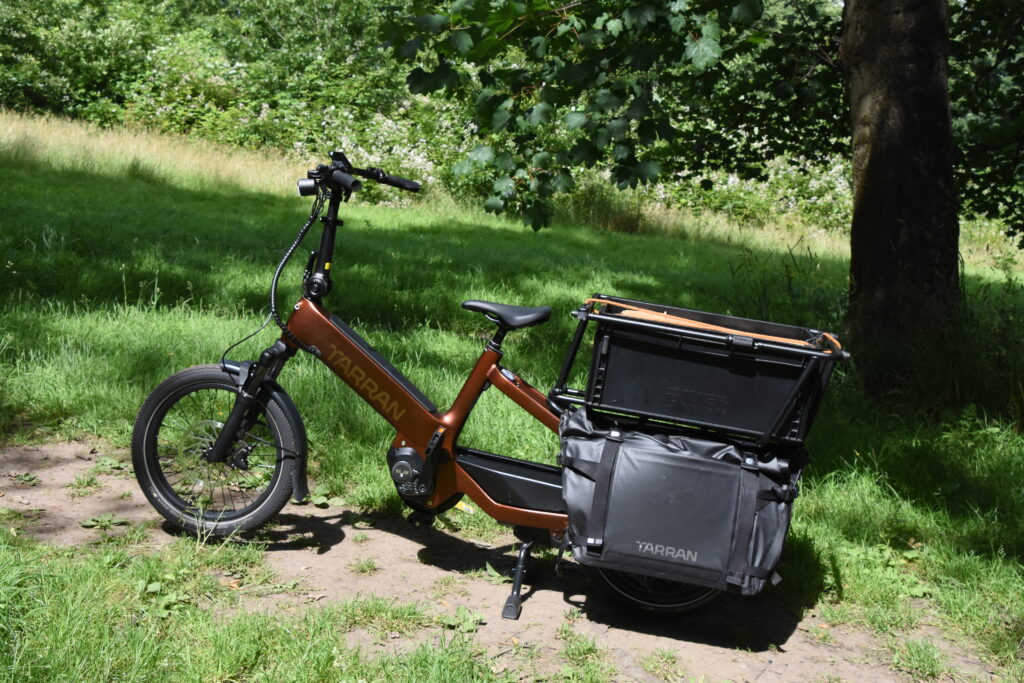
So what tech is that exactly? At first glance the Tarran’s chunky mid-drive motor and in-frame battery with the usual array of carrying attachments at the longtail’s tail end looks conventional enough. But beneath the surface there is all sorts of electronic wizardry going on.
Let’s break down just what is new about the Tarran’s L1S and how I got on with it during my test riding. I’ve started with the tech-heavy features I found most enhanced my own e-cargo experience, with the ones I felt less useful (or at least in need of some improvement) further down.
Truly automatic gearing paired with a super high torque mid-drive
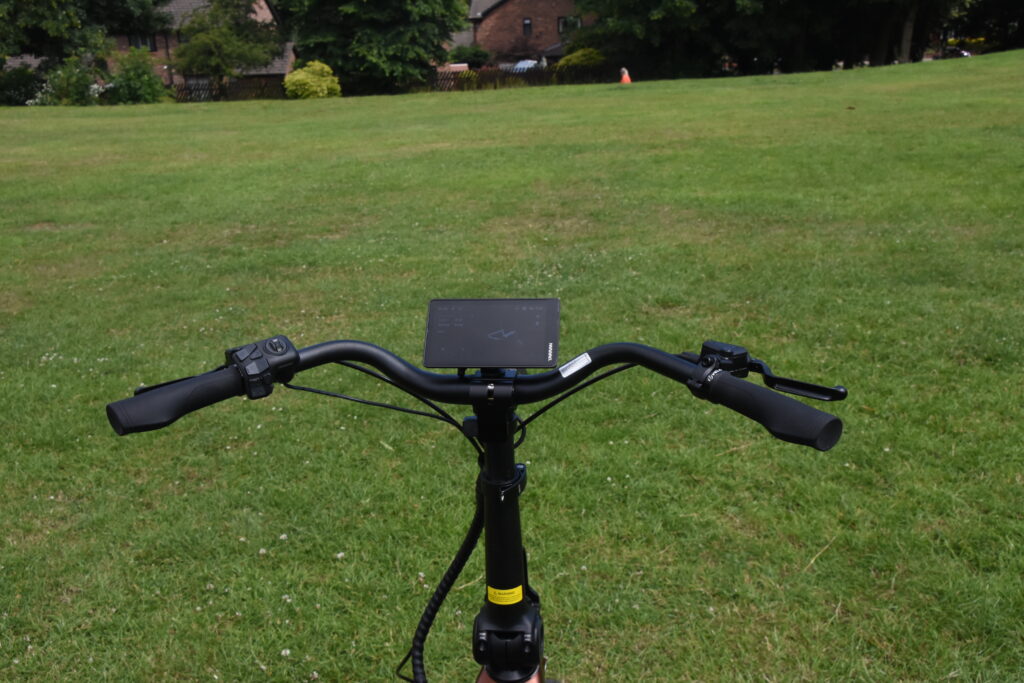
Whilst rear view screens and radar warnings might be headline grabbers, the real star of the show for me on this e-cargo bike was the combination of a cargo-tuned mid-drive and hands-down the best automatic gearing I’ve tried – which is stepless into the bargain.
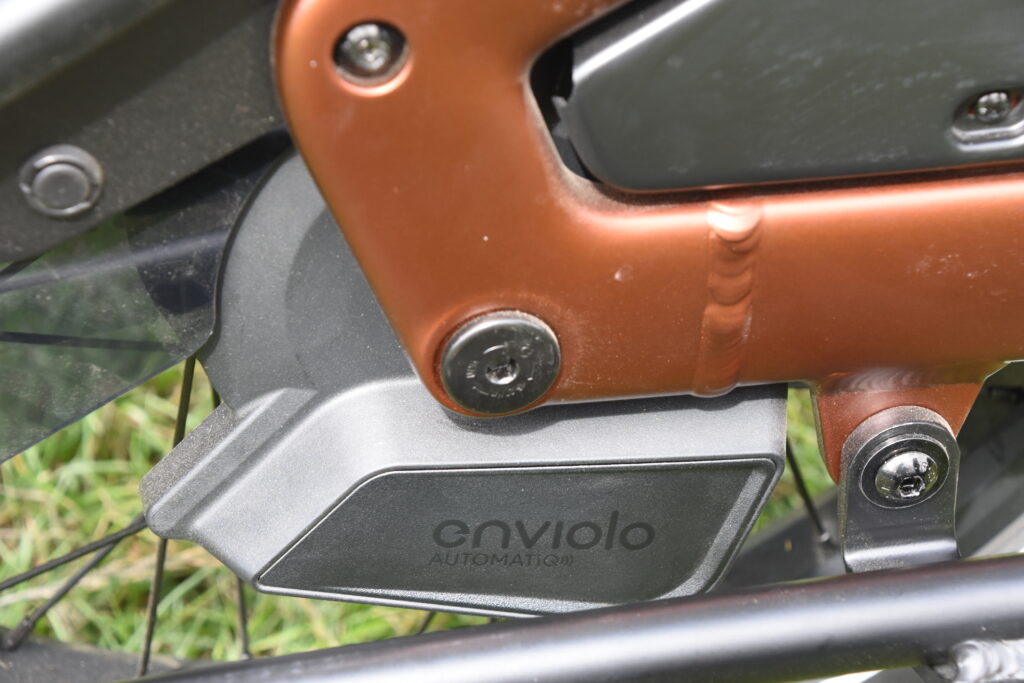
Both hardware elements here – a 100Nm torque rated mid-drive (Tarran’s ‘own brand’ they say) and Enviolo’s Heavy Duty stepless rear hub motor in its automatic form – are premium albeit conventional elements found on quite a number of other e-bikes.
However, it’s Tarran’s own control and monitoring electronics, called Tarran OS, that is the really clever part. The mid-drive itself has ‘a high-precision 40Hz torque & speed sensor’ – but it seems the real box of tricks is how the inbuilt gradient, cadence and altitude sensors monitor real-time riding data, and adjusts the Enviolo AUTOMATIQ Pro electronic shifting system on the fly.
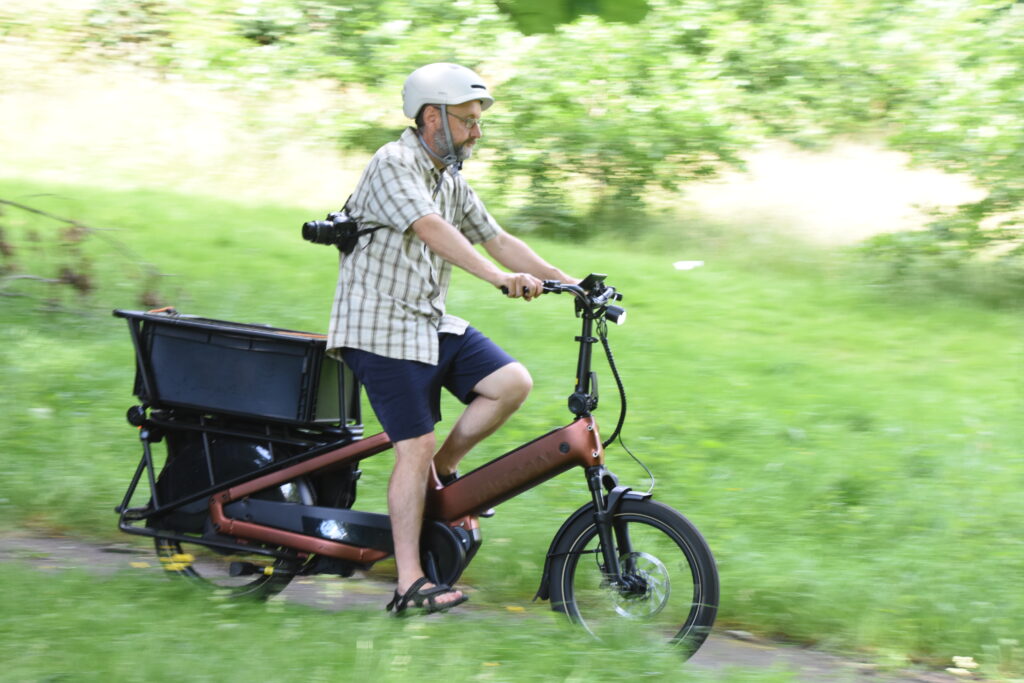
You might get a better idea of what I mean if I describe the way the L1s tacked my ultra-steep (up to 30% gradient) standard hill climb – which is actually a narrow and bumpy tarmac path with a poor surface. I loaded up the rear with over 40kg of dead weight, as this is a cargo bike after all.
Whilst the time posted up was amongst the slowest of the motors I’ve tried, it was possibly the easiest climb up here ever – I’m usually out of breath on all but the most powerful of Bosch motors with ‘performance’ e-bikes like e-mtbs and SUV-style models, but for this mid-drive it was a walk in the park.
I often think many bikes I test are overgeared, but not with the Tarran. The gear changing was buttery smooth even under load, and dropped down to a nice low gear automatically and almost undetectably on the steepest sections.
Whilst the motor is rated at 750 watts, it felt like a more powerful motor thanks to Tarran’s low speed but high torque tuning. You can alter the pre-set cadence the system is always looking to achieve via the software, but the factory setting felt about right for me. If you want a car analogy I think it’s akin to driving an automatic car; and many automatic drivers one they’ve tried automatic don’t want to go back to manual (I’m one of them).
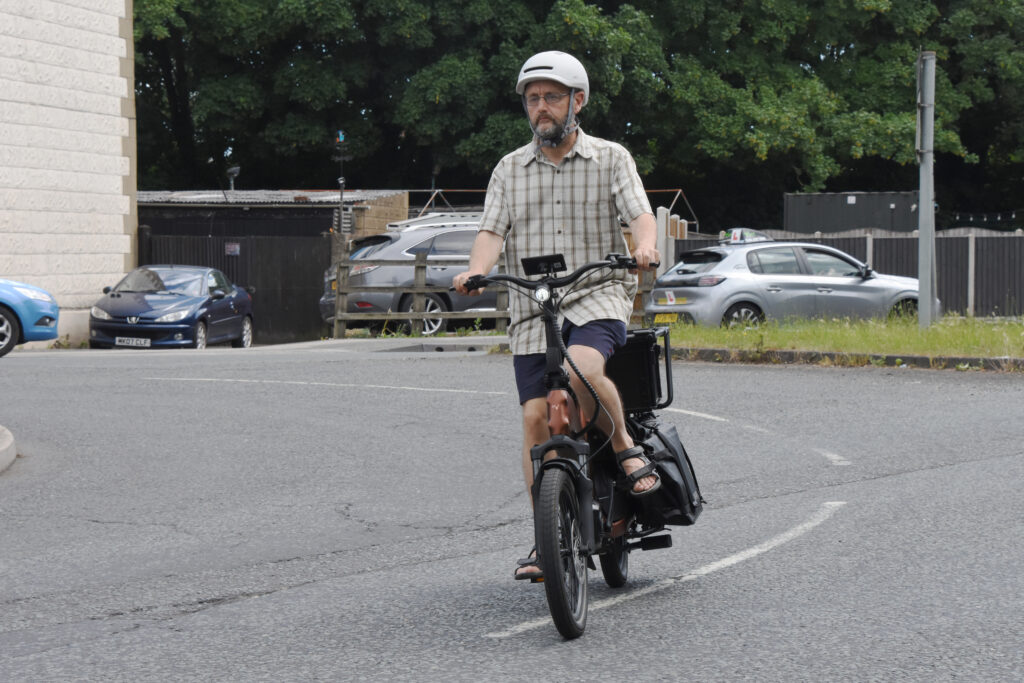
The rest of the motor performance is more conventional but highly effective – the motor itself is quiet and smooth there are push buttons on the handlebars for nicely graduated power levels. There is a walk assist button which is handy but a nicely modulated low speed throttle would have been far more practical in my opinion. In fact for me it’s in the category of ‘must have’ on any e-cargo bike, where a quick get away means the ability to balance a heavy load easily and safely.
Talking of loads, the Tarran’s on paper load capacities are about what you would expect from a premium, super strong cargo bike with gross capacity at 215kg, rider weight at 125kg and rear rack load at 105kg. It’s also rated to pull 60kg on a trailer, though it seems to be a thru-axle and these can be tricky to find compatible trailer mounts for.
In summary the super high torque mid-drive and auto- gearing combination pioneered by Tarran is just what is needed on a heavy duty cargo bike; it gets the load shifted up just about any gradient and leaves you free concentrate on controlling the bike which requires a little more care and attention than on a more lightweight and lightly loaded two wheel design.
Automatic centre kickstand and an electronic dropper post
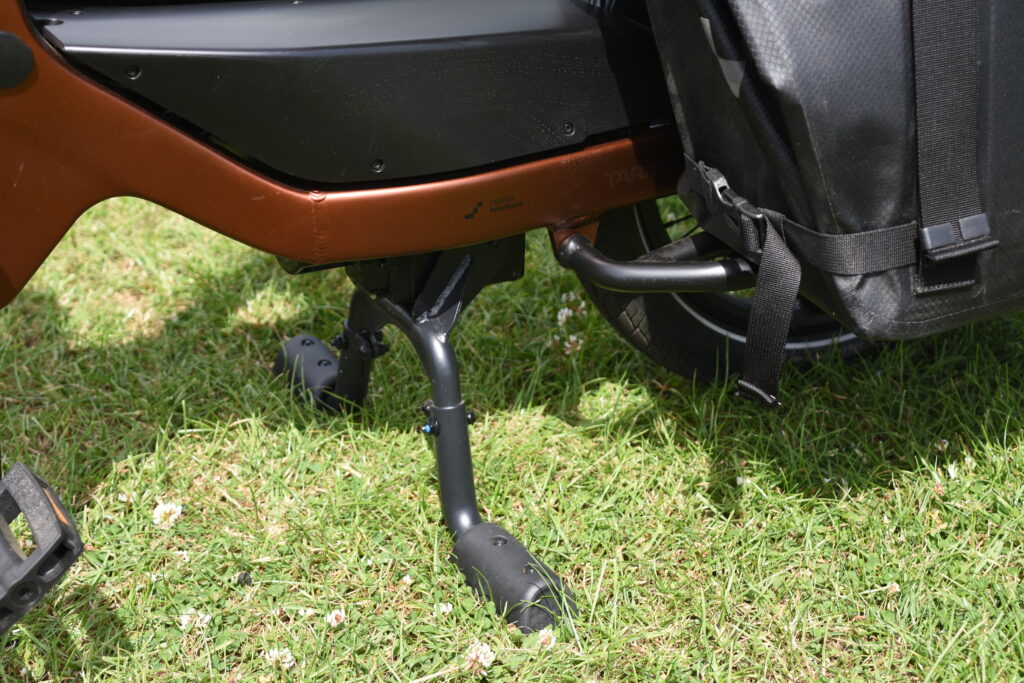
I’ve put these two features together as they seem to go hand in hand in allowing for smooth stops and starts, especially if you have a big load on the rear. A heavy load is most of a handful at very low speeds and can lead to wobbles or worst during low speed manoeuvres which is where these two features come in.
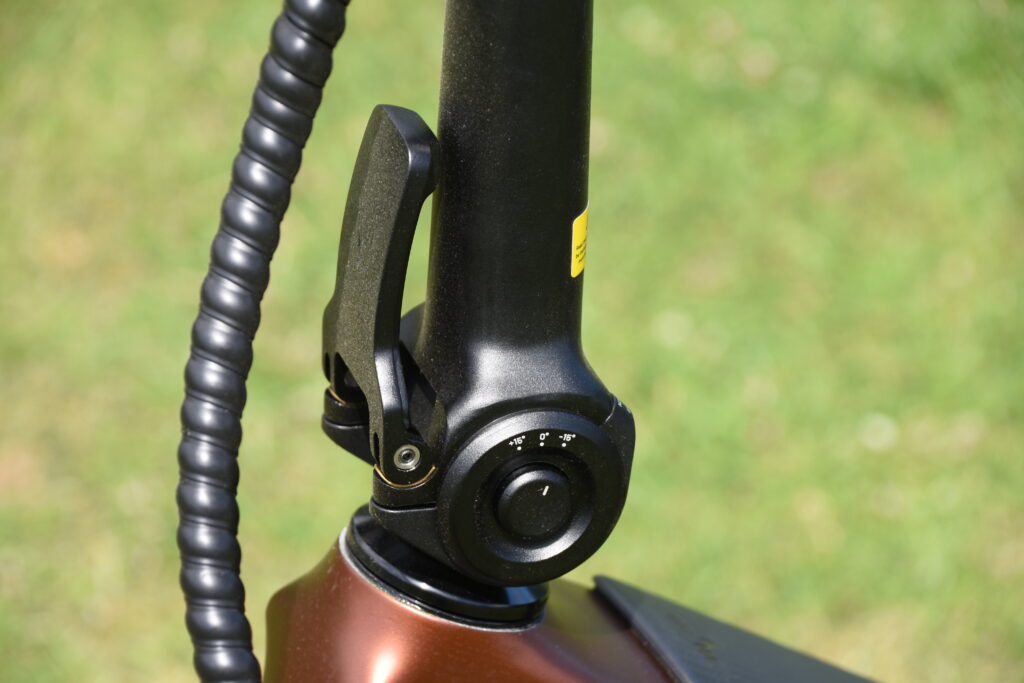
Gliding to a stop you can lower the seatpost at the touch of a button so you can quickly and easily get your feet on the ground to stabilise the load and at another touch of a button the sturdy central kickstand drops down for total stability, allowing you to dismount in safety. Taking off is the same process in reverse of course.
I would have liked the dropper post to have raised itself a little more smoothly to avoid ‘slap on the bottom’ syndrome. But that’s a minor quibble and I found this feature to be a genuine safety improvement over conventional designs where sometimes you have to dismount whilst balancing a heavy weight on the bike itself and some kickstand designs involve a struggle to muscle the load up and onto it.
Visible indicators that can be synced with a smart helmet
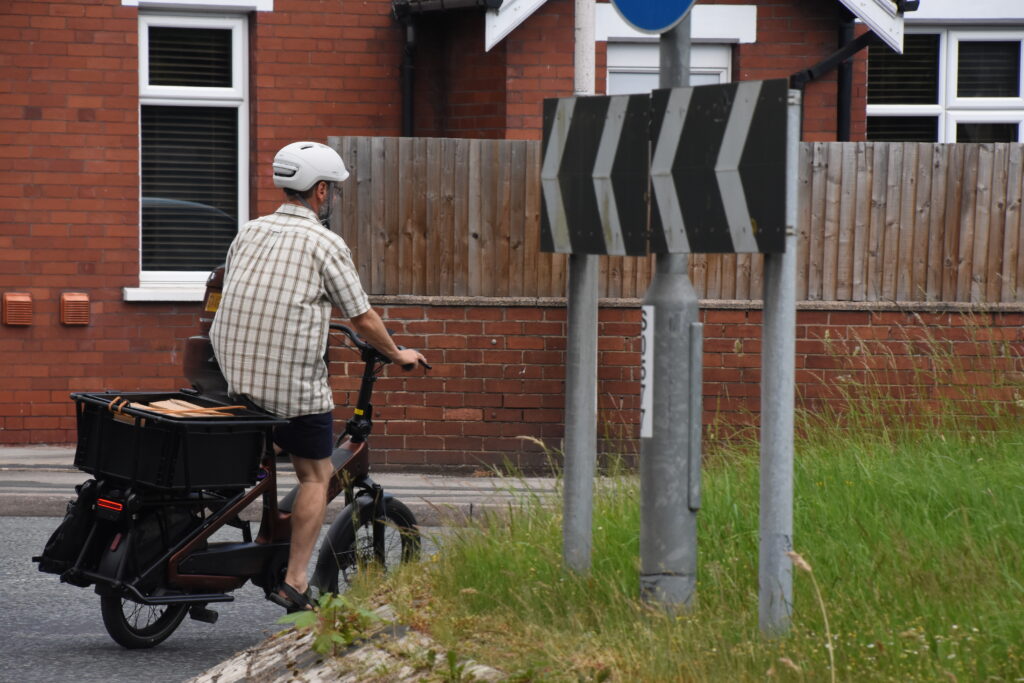
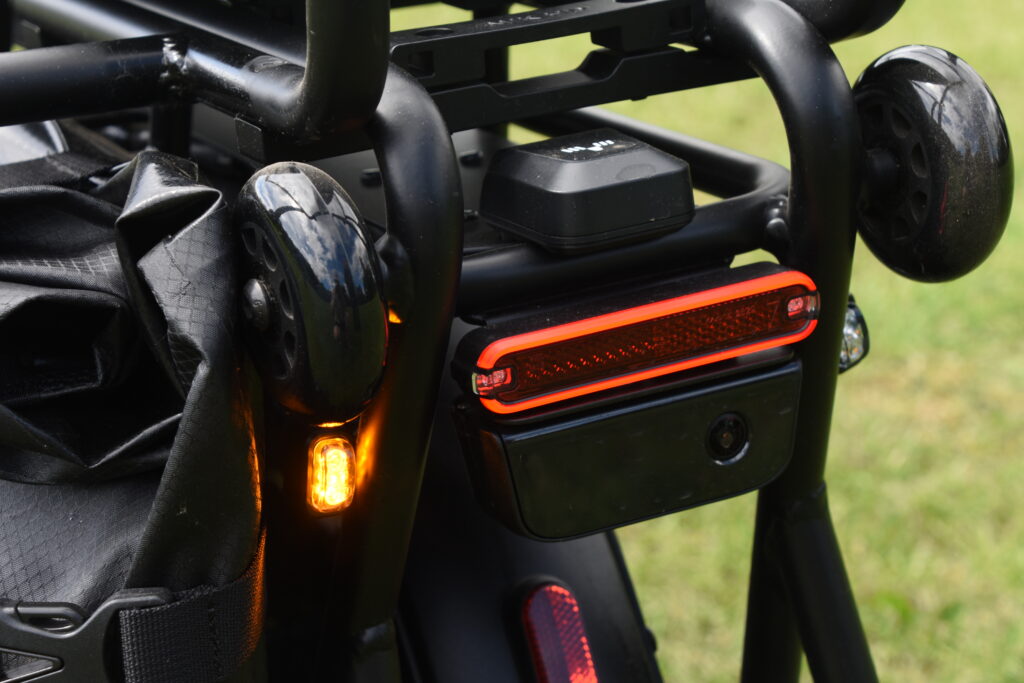
Bike indicators have often appeared in the form of third party ‘add-on’ products with their own inbuilt batteries. But on the L1s I tried there were rear indicators powered by the main battery. They proved pretty effective too as observers noticed them despite the fact they didn’t know beforehand the bike actually had indicators. Apparently the indicators will even pair with compatible ‘smart helmets’ from the likes of Unit 1 and Lumos.
I would like to have seen them a little bigger and even stronger. Turn signals on bikes don’t seem to be covered by any of the bike construction standards as far as I know, but if a standard was developed – in the same way that StVZO lights in Germany have been thoughtfully and very practically developed – this would help bike firms like Tarran who are keen to use them tremendously. If they were deployed more widely too motorists would start to look for them on bikes.
Note that turn signals are standard on the L1s though as a pre-production model my loan bike was missing the front turn signals. There is also a rear brake light and the powerful front light has ‘dipped’ and ‘full’ beam settings.
GAN fast charging and fast USB output
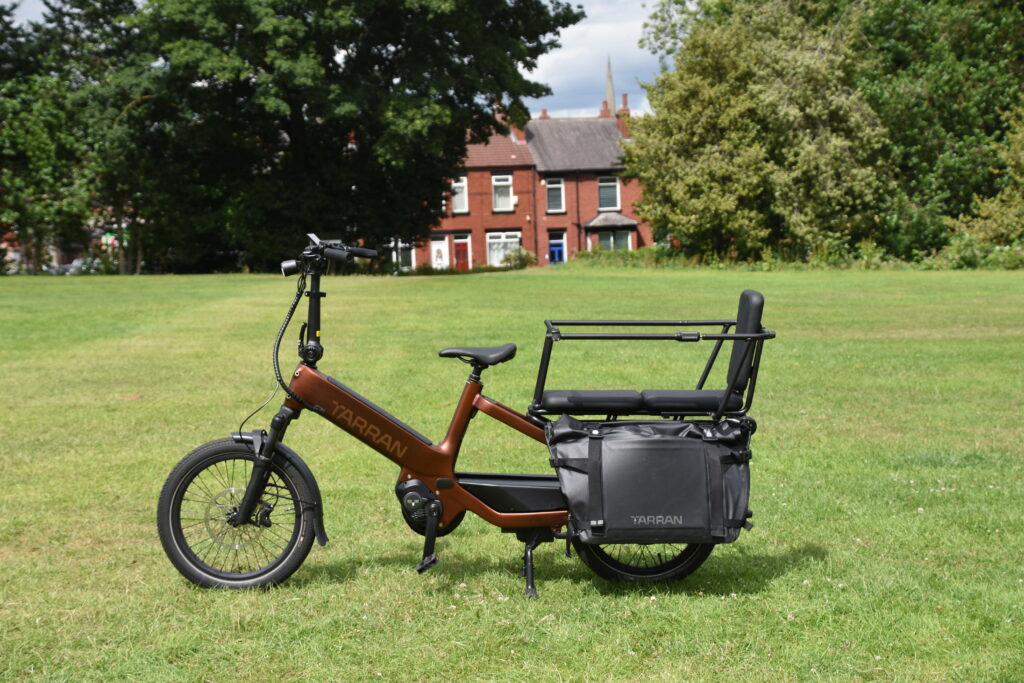
The Tarran comes with a sizeable 693Wh battery. The optional 436W fast charger uses the latest Gallium Nitride (GaN) technology that allows for large currents to safely pass through the charger itself. It means a substantially full charge from empty in little over two hours. That’s good news when load hauling on a heavy e-bike like the Tarran (my loan bike itself was in excess of 50kg) will gobble up battery capacity.
There’s also USB C fast charging up to 65 watts which was able to fast charge my modern smartphone or even my HP Elitebook laptop. Whilst I’d have like to have seen a more weatherproof rubber cover than the one provided this kind of up to date electronic feature is something e-bikes have been crying out for but few provide, so full marks to Tarran here.
Rear view camera and mmWave radar
I was really looking forward to using the 5.2 inch touch display, as it features what Tarran call ‘Real-time Rear-view Assist’. A rear facing camera lets you see what is coming up behind. It’s always nice to know if you about to be overtaken by an HGV, and also good to confirm that the road space you are moving into is clear – though I’d always still check behind me by looking over my shoulder.
Whilst I’d rather have this feature than not, I was a bit disappointed with the amount of reflection on the screen, especially on a sunny day, and also with the wide angle nature of the camera which in effect meant I didn’t see passing vehicles until they were actually quite close. Having said that, it was super useful at night as you could see things approaching a long way off.
There is also the ability record film on the unit, which sounds very useful in the unfortunate event of any incidents, though it’s only on the backward facing camera. Ideally 360 degree footage would be the most reassuring approach.
The mmWave radar indicated passing vehicles with a colour at the bottom of the display – yellow for passing at a reasonable distance and red for a close pass. Again this suffered from making me aware of passing traffic only at the last minute, so I felt it was of limited use. A competing system that looks potentially more useful is the Garmin Varia, and Tarran could surely come up with a similar system.
Security features
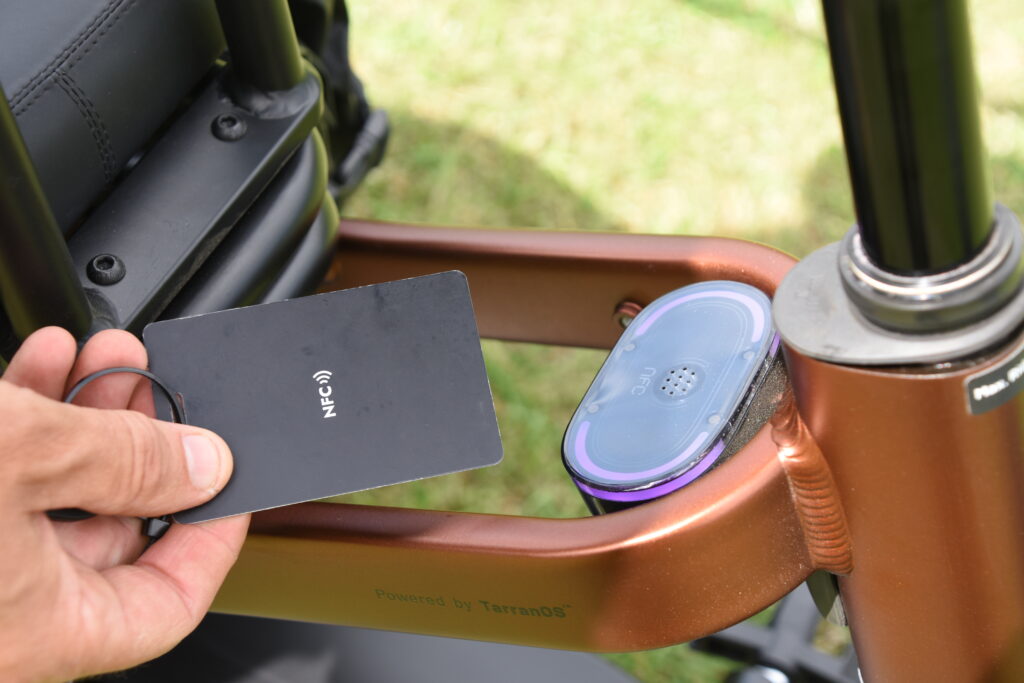
The Tarran L1s features a lockable battery cover and battery, keyless unlocking and ‘Sentry Mode’, alarms, and GPS tracking.
As I tend to not leave my bike in busy city centres and it’s locked away in a very strong security shed at night, I never properly explored these features. I used the keyless unlocking to start the bike up and it worked reliably, but that was the extent of my security research. I find it’s difficult to test these things without actually having someone attempt to steal your bike….
Whilst I can see the attractions of these various security features, I favour an effective first line of defence: don’t leave a bike in a vulnerable spot and always use a super strong lock. This goes doubly for such an expensive and attractive bike as the Tarran and I suspect many will be used for shorter local trips like the school run and the big shop and locked away safely at home the rest of the time.
Sound fundamentals
It’s also worth stressing that the less innovative aspects of the Tarran are still impressive. The build quality and finish are second to none, and it is super low maintenance with the belt drive being fully shielded from the weather. It does ‘vertical storage’ as it will stand on the back end of the rear rack, Tern style.
The handlebar stem is adjustable for and aft, and the bars themselves have a quick release so you can alter the angle. I found the bars can randomly swing around when the centre stand is down and the front wheel not in contact with the ground, and a simple mechanical spring or ‘stopper’ system would surely cure this.
It was a comfortable and assured ride too – I just wish I’d had the 20kg front rack to balance out the loading a little and also the front indicators to make my intentions on the road even clearer.
I’ve a few specific quibbles; all the controls are lumped together on a grey plastic push button unit on the bars, so you have to effectively remember which of the many buttons does what. Self explanatory signs or lettering picked out in high-vis colours would have been much easier and quicker to use.
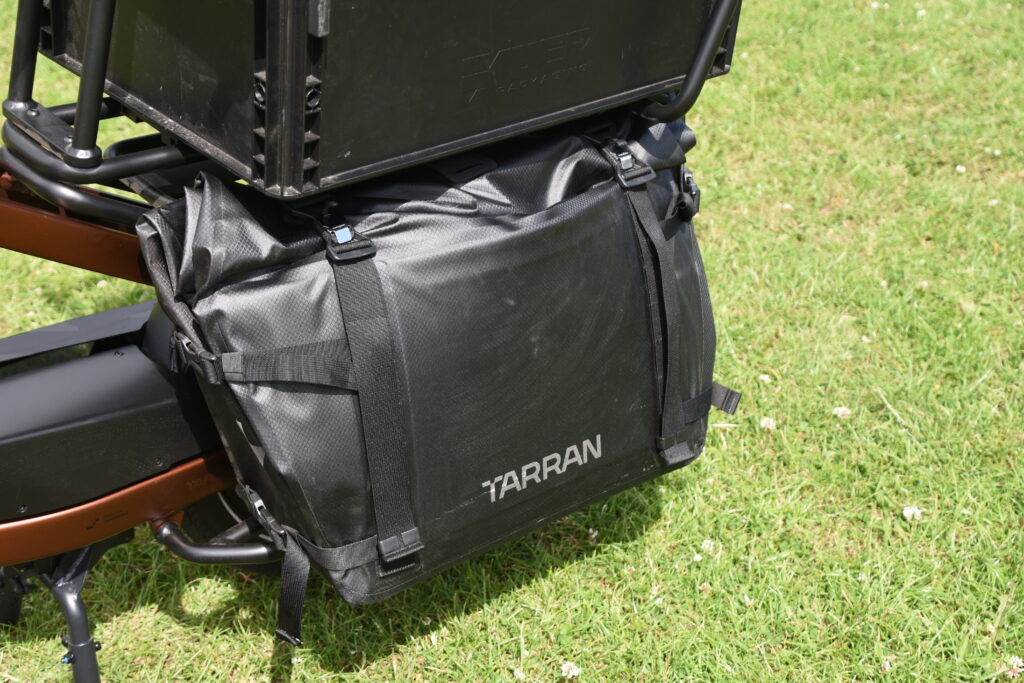
he bike came without a bell, but Tarran say they are looking at developing an electronic one. There were also no internal pockets in the Tarran pannier they supplied. It would also be nice to see a wider version of the footrests that gave more support to large loads in the pannier areas just like Tern’s Sidekick Doublewide Decks do.
E-cargo use for things like the school run and shopping is underpinned by safety; witness the legions of e-cargo bikes in areas of London that have better developed cycle networks. My time with the Tarran confirmed that high tech also has a role to play.
Price may be the main hurdle for most potential buyers. The L1s starts at £5499 + shipping, and there may well be bespoke carrying optional extras you feel you need to make the most of the bike (such as the safety rail system and pannier that came with my test bike), costs that mount up quickly. There is a derailleur equipped stripped back version, the L1M, which starts at £3799 + shipping.
Tarran’s founders have experience working at senior level for the likes of DJI and Insta-360 (Avinox, referenced at the start of this article, is a DJI spin-off) and the super-reactive digital tech in which these companies are deserved leaders is echoed in the Tarran L1s.
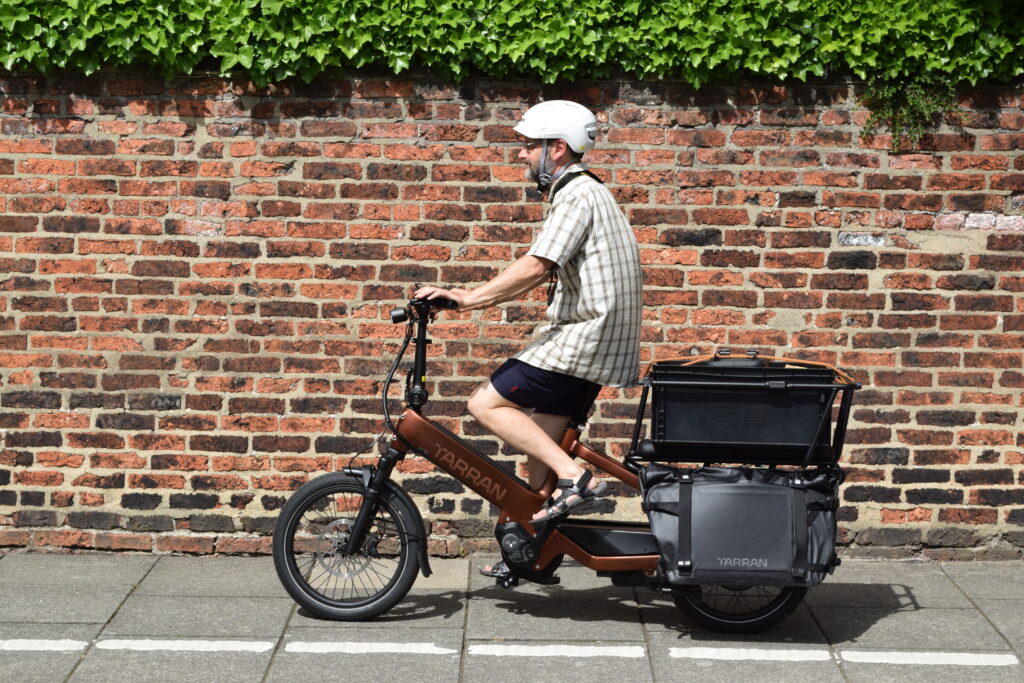
“Technology is never the end destination”, say Tarran, as they strive to use robotics for “better riding experiences, inviting more people to start cycling, and to cycle better.” The L1s is a good first step in developing this philosophy, and I look forward to seeing what further developments they come up with.