


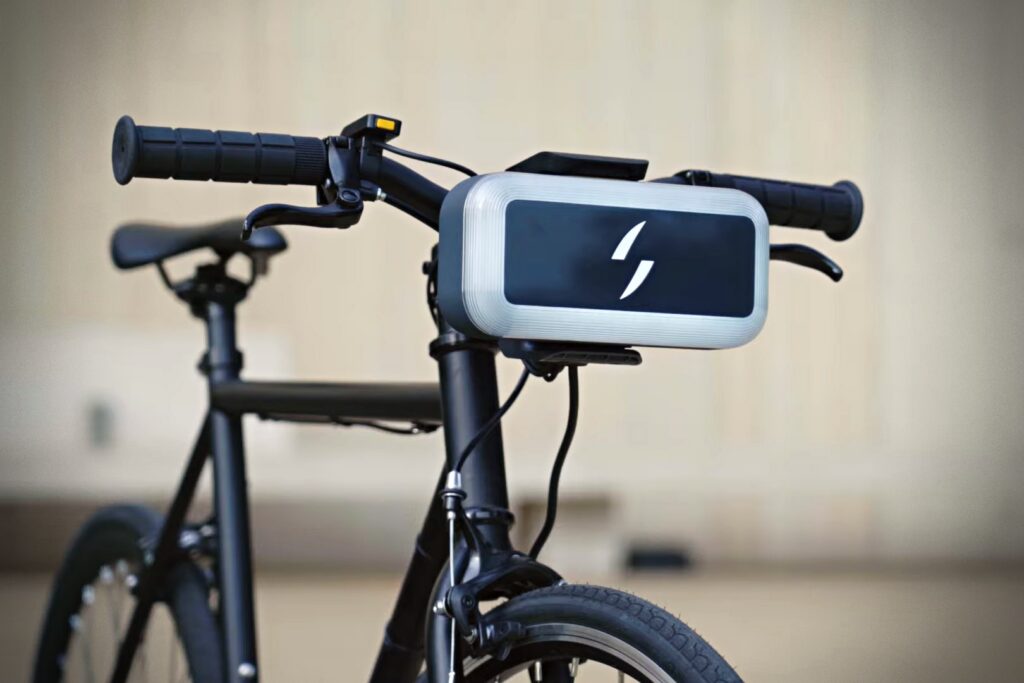

It’s crunch time for Swytch. The innovative company started strong, with its much-lauded and heavily marketed e-bike conversion kit attracting over 90,000 customers since it launched in 2017.
But the company has faced increasingly hostile (and very sweary) criticism via online communities such as Trustpilot, Facebook, and Reddit, with customers complaining of order delays of up to a year.
Now, Swytch is picking up the pieces and trying to make things right. It secured new funding from its current shareholders and appointed a new CEO, Paul Reeves, who has a background in scaling sporting goods businesses.
“At the start of December, Swytch raised a substantial amount of new funding from its current shareholders,” says Reeves. “The capital injection is already being used to accelerate fulfilment and provides the resources to restore service levels, which we fully recognise has been unsatisfactory in recent months.”
The big question for Swytch customers is when they’ll receive their kits. According to Reeves, 1,875 units were shipped in November, with another 1,000 due to go out this month. Fulfillment of its budget GO range should commence from December onwards, while MAX orders up until August should have already completed. The company believes it will have caught up completely by April 2026.
While this sounds promising, it’s not ideal for customers who have been waiting for their Swytch for up to a year. To add insult to injury, online complaints mention frequent problems finding out where their orders are. Swytch says customers will receive real-time updates via tracking links and additional email notifications.
Swytch’s issues stem from its beginnings as a crowdfunded venture. The company was launched by engineers Oliver Montague (who was also CEO until Reeves took over) and Dmitro Khroma on crowdfunding platform Indiegogo in November 2017, and proved to be an instant hit, overreaching its initial $50,000 goal in just 24 hours and eventually raising over $500,000.
However, Swytch has kept this pre-order model up until now: customers who wish to buy one would receive a substantial discount with the caveat that they would have to wait three months for delivery, but this increased to three-to-six months last year, and even more this year.

Swytch pointed to “extended global shipping times and supply chain pressures” as contributing to the delays, but the problem at the heart is that even a tiny hiccup with a single component can ruin a pre-order-based model.
To alleviate these problems in the future, Swytch is changing to an in-stock business plan in 2026, where they will manufacture kits before they sell them, with the new funding going towards buying these units.
When, exactly, in 2026 Swytch will start selling the units is yet to be confirmed–at the time of writing, Swytch is still accepting pre-orders. But there will inevitably be a gap between filling back orders and switching on the in-stock model.
And this is where a competitor could easily creep in. Skarper’s e-bike kits work a little differently to Swytch’s, and it’s more expensive, but they both do much the same thing: offer a convenient, easy, and safe way to upgrade your favourite acoustic bike to electric.
Skarper, however, works on an in-stock model, and its recent partnership with Alpkit’s Sonder bike brand suggests that it’s finding a foothold in this particular niche market.
Whether or not Swytch will get back on track in 2026 remains to be seen. In its favour is the fact that Swytch kits are tried-and-tested technology, and the brand has established itself as a big name in the category. However, it will have to work hard to shake off negative publicity and nosediving Trustpilot scores if it wants to carry on giving conventional bike riders electric power.
















2 thoughts on ““Unsatisfactory”: new Swytch CEO apologises for delays as brand revises business model”
“The company believes it will have caught up completely by April 2026.” This is incorrect, and demonstrates out of touch management. I have been waiting 7 months to receive my full order. Swytch does NOT inform customers of delivery delays nor that they will ship in installments. This prevents customer from cancelling their orders with a refund. Swytch violates UK Consumer Act 2015. by shipping in “installments without agreement from the customer. Nothing but regrets from the US and distrust of this company.
I’ve been waiting over a year. Ordered March 2025. Just checked online and they pushed it out another couple weeks. You can check your status at swytchbike.com/order-tracker
Mine now says: 9th May 2026 – 16th May 2026