


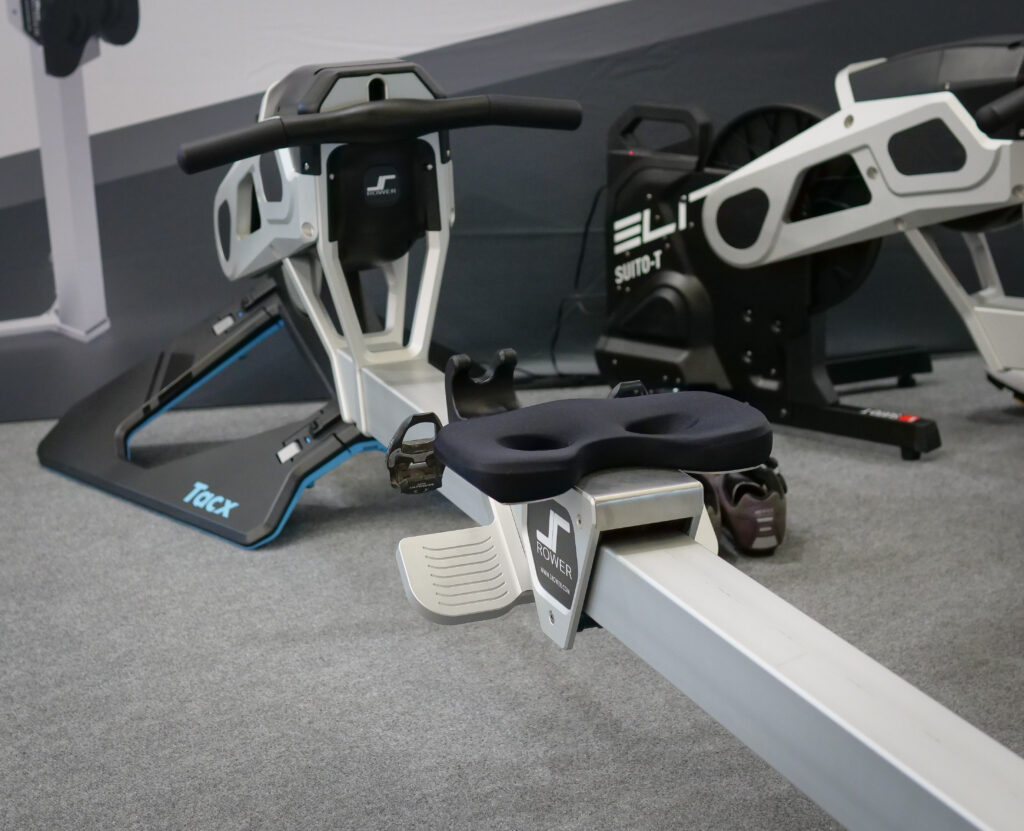

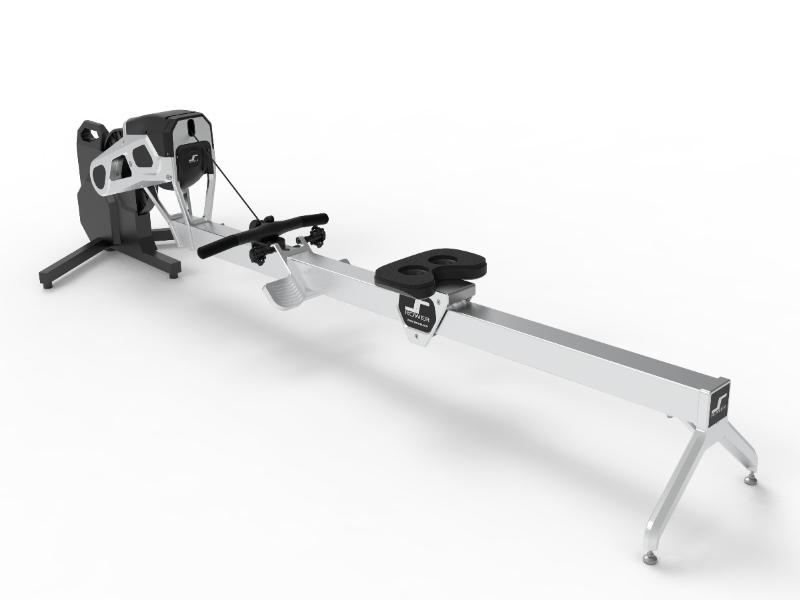
Another thing that caught our eye this week at Eurobike was this, the “world’s first rowing extension for smart bicycle trainers”, a training product that gives the cycling phrase ‘take a pull’ a whole new meaning.
The S-Rower as it’s known is now available for pre-order, having displayed at the industry show in Frankfurt this week, the product expected to be shipped in the second quarter of 2026. Interested buyers are asked to put forward a $49 deposit before paying another $471 before shipping, taking the total price to $520.
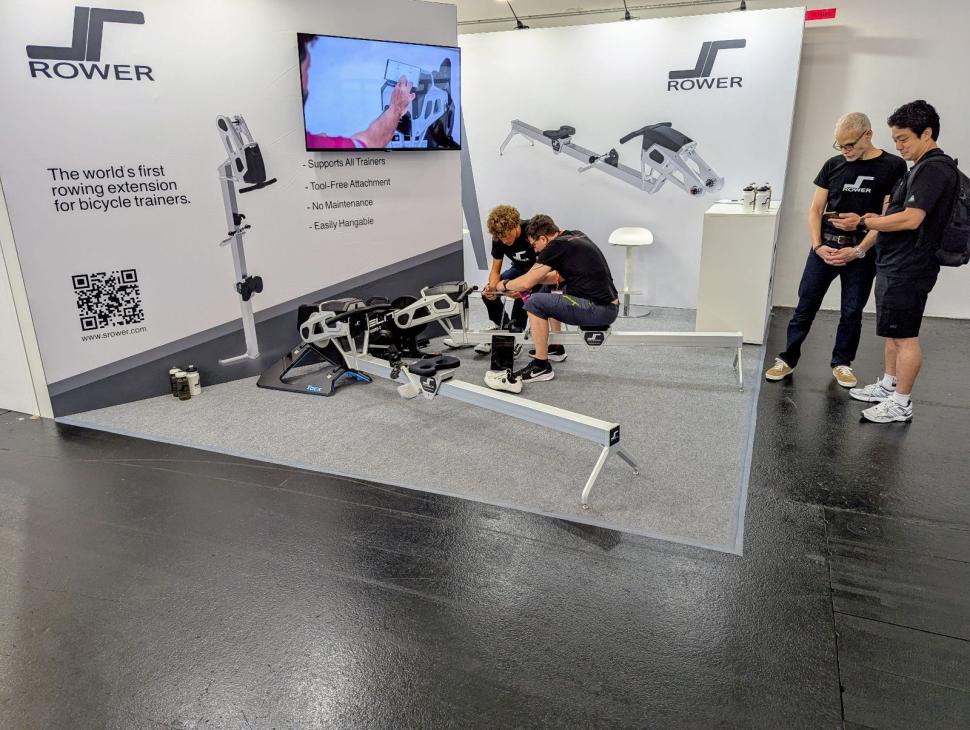
While that’s quite a significant figure, the industry-leading Concept 2 rowing machine is a tenner shy of £1,000 new, so this is a fair bit cheaper, providing it works and can compete with the best products already out there. That, of course, is without considering the price you will have already paid for a turbo trainer, the S-Rower specifically designed to “seamlessly integrate with your existing smart trainer”. $520 is just a “special launch price” too, the S-Rower website suggesting it will cost $695 afterwards.
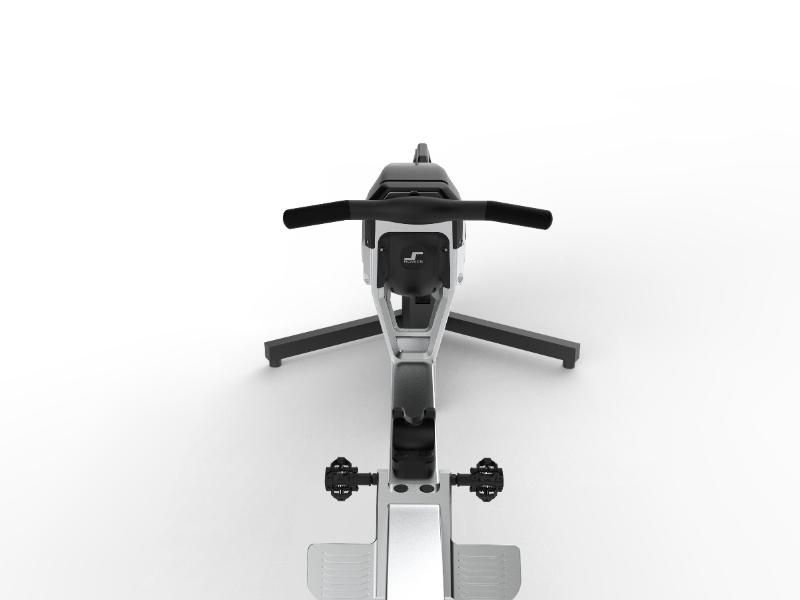
Whether it will deliver on the rowing-experience front remains to be seen. As the representatives were working to get it usable during our visit to the stand, we didn’t get a go unfortunately, although there is a video on the company’s Vimeo of it in action, riders clipped in with road shoes, cleats and pedals while rowing away, of course.
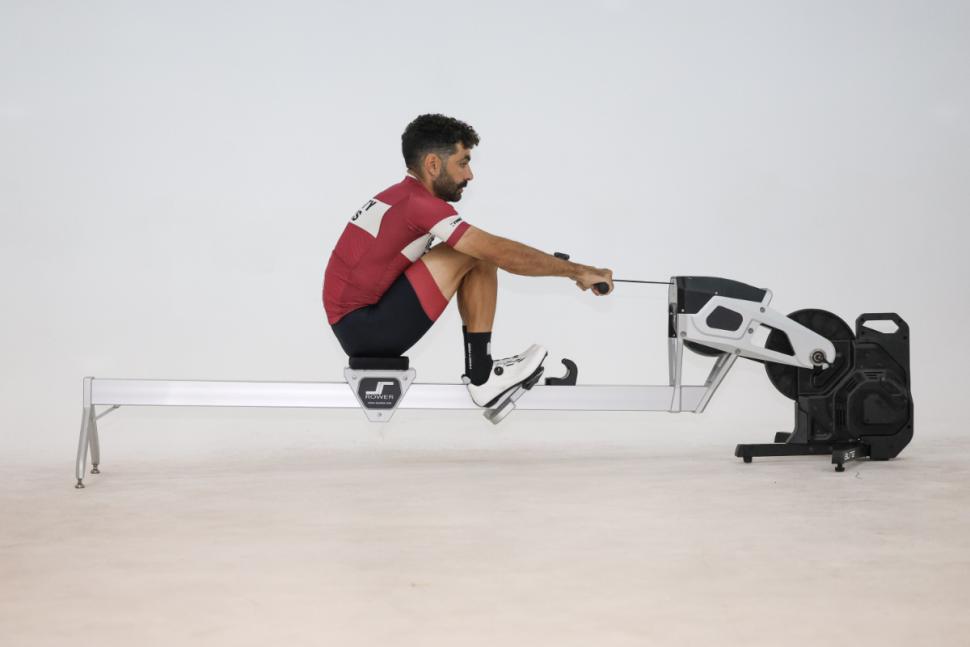
Footwear choice aside, maybe the cycling x rowing crossover shouldn’t be that surprising. After all, we’ve seen plenty of examples in the professional ranks, not least from Sir Bradley Wiggins in the immediate aftermath of his cycling career.
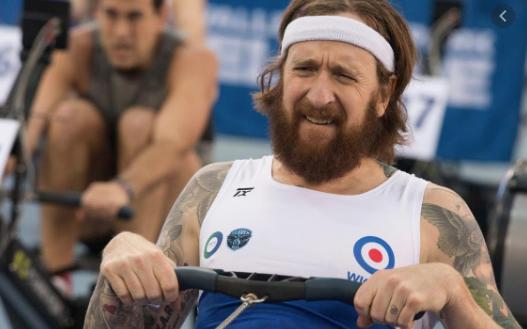
> Bradley Wiggins and crew make podium in his first race on water following switch to rowing
More successfully, and moving the opposite way, was Jason Osborne, the German rower who won silver at the Tokyo Olympics before switching sports and becoming a two-time UCI Cycling E-sports world champion and earning a pro contract to ride alongside Mathieu van der Poel and Jasper Philipsen at Alpecin-Deceuninck.
British athlete Rebecca Romero won silver at the 2004 Olympics and was a world championship-winning rower before winning gold on the track at the 2008 Games. Likewise, Kiwi athlete Hamish Bond won three Olympic golds on the water between 2012 and 2020, but still found the time to win a Commonwealth Games medal on the bike.
So, at the elite level, cycling and rowing are more closely related than many sports, even if the S-Rower is more likely to be used by space-conscious home trainers, rather than elite athletes with access to all the space and best, specialist equipment out there.
It is the idea of Raz Malchi, a lifelong cyclist who also created Twenty Peaks, a platform for outdoor event organisers.
“It was my son Elia’s competitive rowing career in Italy that unexpectedly sparked the idea for S-Rower,” he explained. “In early 2024, during one of our many drives to his training sessions, we discussed the indoor workouts his team performed.
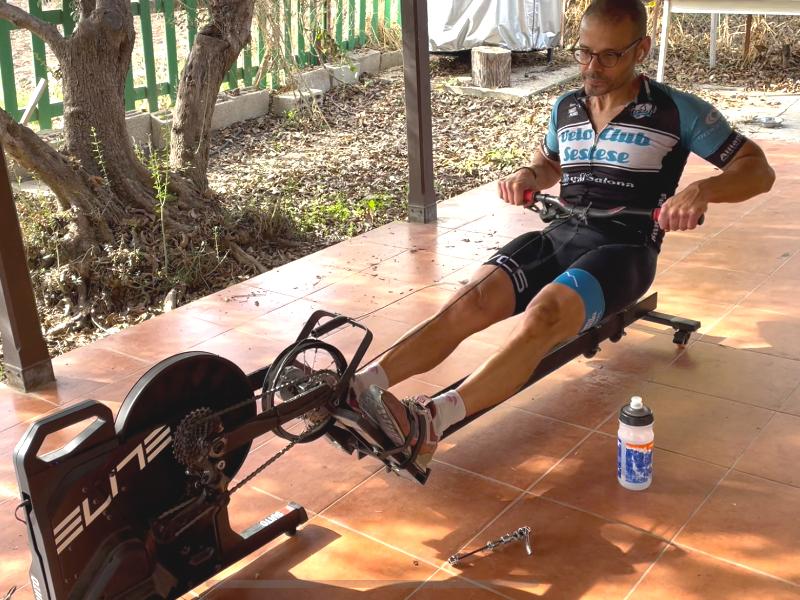
“That’s when inspiration struck: why couldn’t my interactive smart trainer at home be used for rowing sessions as well? The possibility of a dual-purpose training system that could serve both sports felt like an opportunity too good to ignore. The journey from concept to working prototype unfolded in just a few short months.
“Following that pivotal conversation with Elia, I spent the next couple of months bringing the S-Rower concept to life in my home workshop. I welded steel profiles, ordered parts online, and gradually assembled a functional prototype that could transform my smart trainer into a rowing machine.
“The early tests were promising – the resistance systems designed for cycling could be effectively adapted for rowing motions. With each iteration, the prototype became more refined, and the potential of the idea more evident. Convinced of the concept’s viability, I took the next critical steps: filing a patent request with a leading firm and contacting an engineering studio specialised in prototyping and small-series production to develop the first two official S-Rower units.”
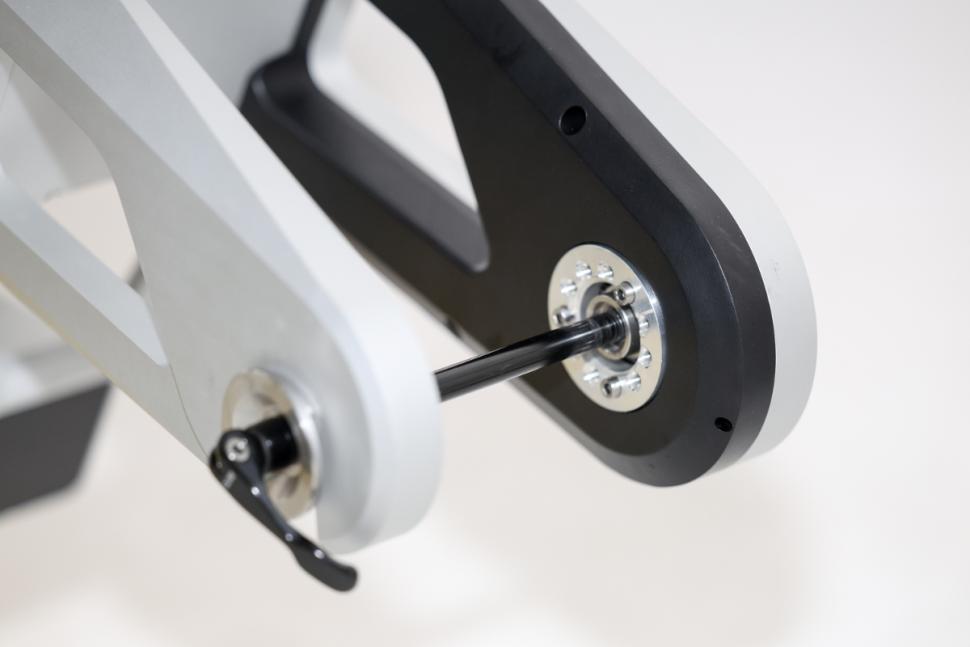
It “seamlessly integrates with your existing smart trainer, providing authentic rowing resistance and comprehensive metrics in one revolutionary package”. The integration process is apparently tool-free via a quick release and it can be hung vertically as with traditional rowing machines to save space when not being used.
It’s compatible “with all smart trainer brands” and harnesses their resistance system to deliver “a realistic rowing experience” and variable resistance. Power readings from the trainer are converted to rowing-relevant data, such as stroke rate, power output per stroke, split times, distance tracking, energy expenditure and “stroke efficiency analysis”, all delivered to the display.
All the info is on S-Rower’s website.















6 thoughts on “Turn your turbo trainer into a rowing machine (no, really… and you can even clip in with cycling shoes)”
As long as it mimmicks rowing
As long as it mimmicks rowing, it seems like a good idea. We all know rowing is a good all round work out and I was at my strongest during my time rowing.
Whatever next? Turning your
Whatever next? Turning your rowing machine into a bike?!
https://en.m.wikipedia.org/wiki/Rowing_cycle
I think you have the seat
I think you have the seat facing in the wrong direction.
Why yes I do … but also don
Why yes I do … but also don’t! (e.g. here)
Makes sense if it doesn’t
Makes sense if it doesn’t void any turbo warranty.
If S-rower manage to maintain
If S-rower manage to maintain their prices, and the purchaser already has a turbo, there will be a cash saving and a small space saving over getting a C2 model D, but I can see two main issues:
– compatibility with other indoor rowers for testing e.g. 2k
– the faff of removing the bike from the turbo and installating the S-rower and vise versa every time you want to use it. This will be a particular problem if the training programme involves alternate indoor bike and indoor rowing sessions.