


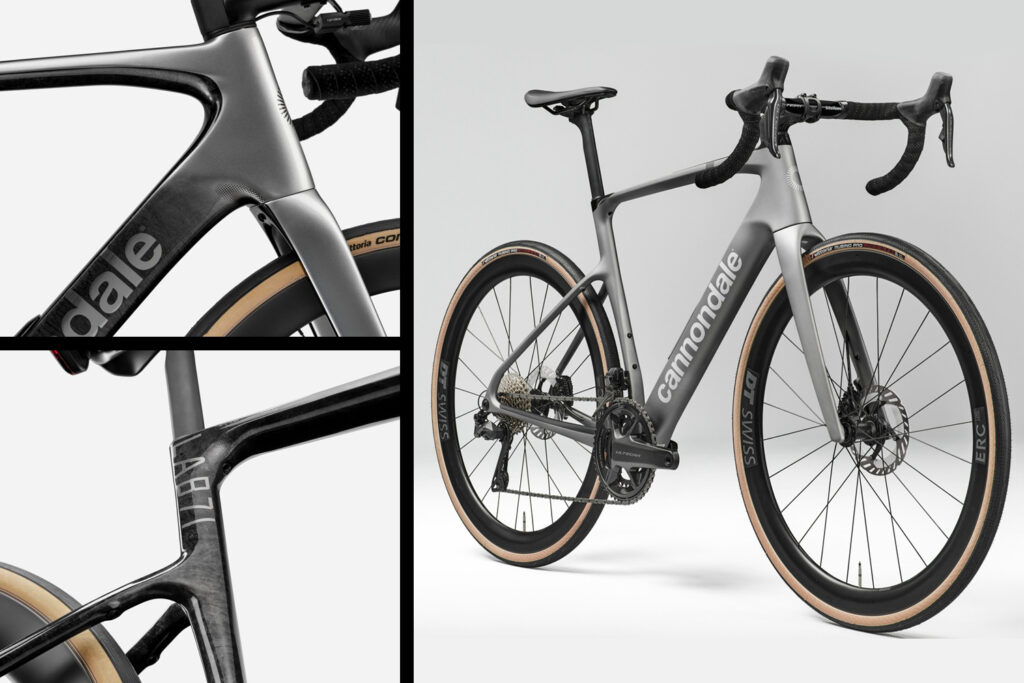

Cannondale has unveiled its new Synapse range – still very much an endurance road bike platform, but the US brand says that it’s bringing back “desirability and performance” with this iteration, along with practical features like a stash bag inside the down tube and clearance for tyres up to 42mm wide. Cannondale sees the Synapse as on the same level as its SuperSix Evo, it’s just that this platform isn’t designed with racing in mind.
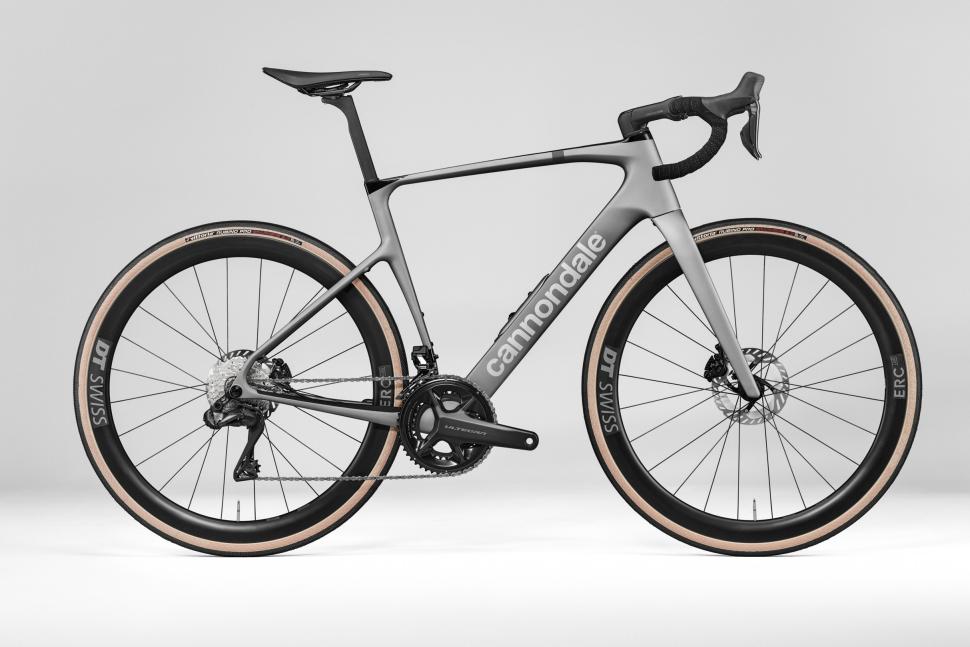
SmartSense, Cannondale’s light and rear-facing radar system, has been updated for 2025, although only one bike currently features it, with two more a few weeks away from launch. Cannondale says that SmartSense has been “wildly improved” to become smaller, lighter, and more powerful.
Nathan Barry, Cannondale’s senior design engineer (aerodynamics), says, “The rider attracted to this endurance category of bike has often had to make sacrifices – whether that is in terms of weight, aerodynamics, speed, or whatever it might be – to get the fit or the compliance that they needed. We wanted to give race bike levels of performance with the accessibility and capability that people have come to enjoy from an endurance bike.”
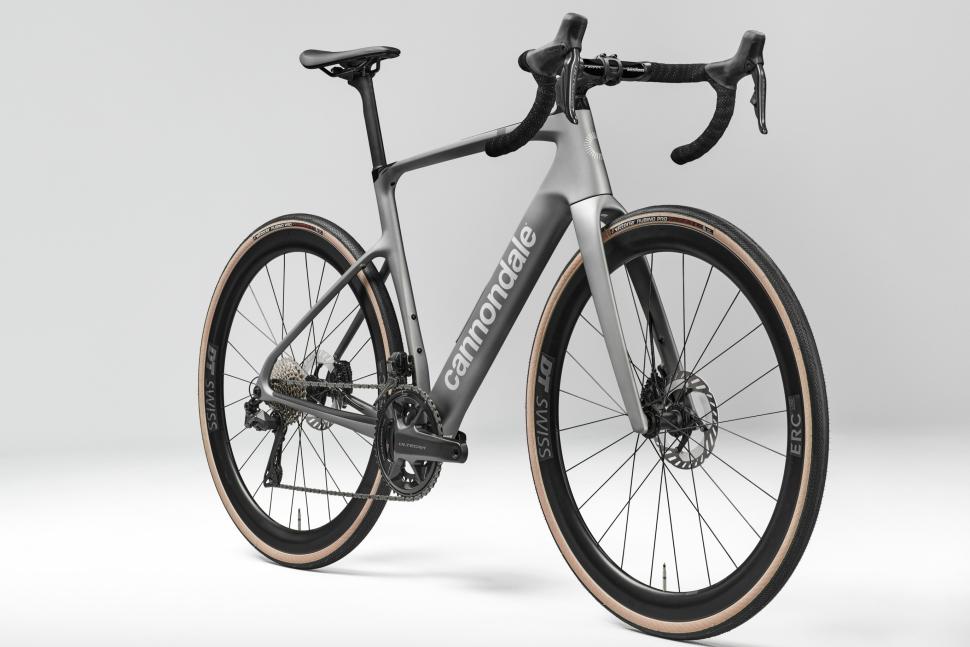
Cannondale project manager Will Gleason says, “We kept all the things that Synapse has always been known for: super-comfortable, super-capable, great endurance geometry. We’ve just sprinkled in a lot of that Cannondale race DNA to give better integration, better aerodynamics, and that trademark Cannondale ride.”
Cannondale says the new Synapse is more comfortable and aero than previously, with sleeker integration. As well as the standard Synapse Carbon with a claimed sub-1,150g frame, the HI-MOD version is back, and Cannondale claims a sub-1,000g frame weight for this one.
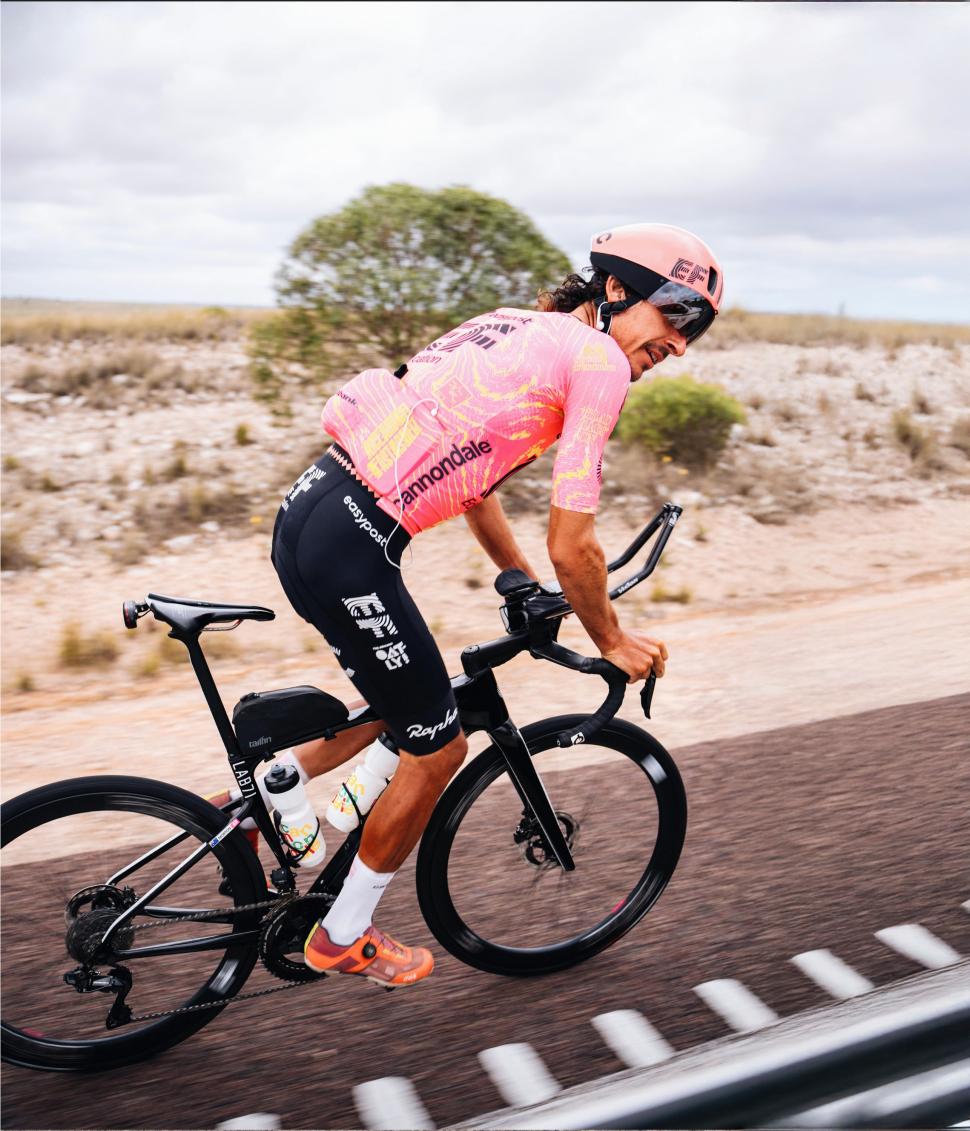
Pic of Lachlan Morton: @kartermachen
Emphasising Synapse’s performance credentials, Cannondale has confirmed what we all suspected: this is the bike that Lachlan Morton rode for his record-breaking lap of Australia last September and October, averaging a staggering 450km (280 miles) a day.
In a nutshell
Synapse has been around in various forms for two decades and Cannondale is keen to point out that this bike has always melded “race-level performance and weight with real rider-friendly comfort and handling”.
Although no one at Cannondale is going to say so, the 2022 update was a slight misstep in that if you wanted a bike with a carbon frame, you had to have SmartSense accessories. SmartSense is updated for 2025 (see below), and there are plenty of non-SmartSense models in the range.
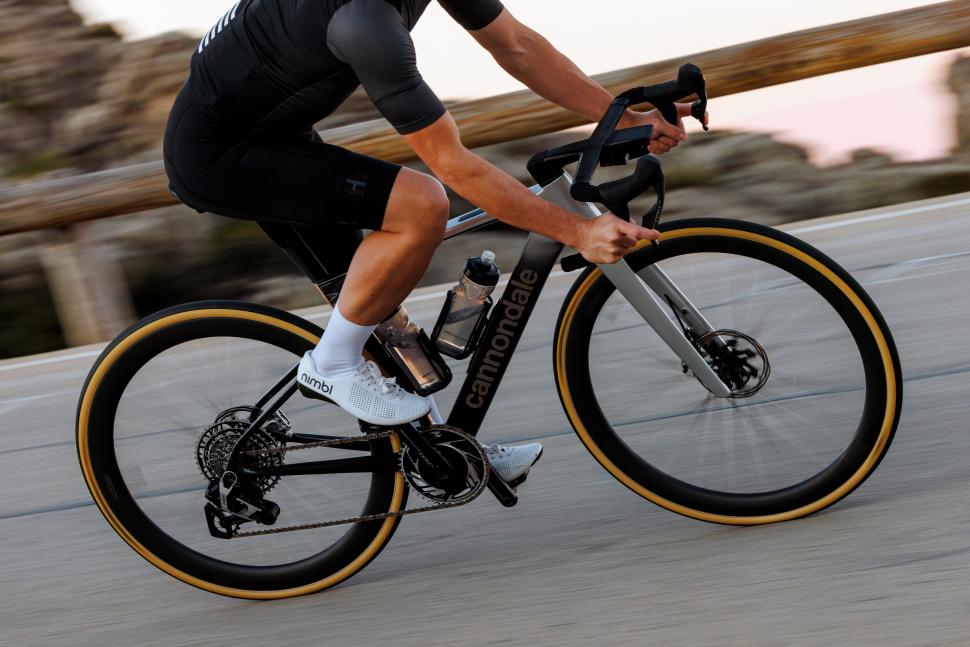
Will Gleason says, “Some brands lean heavily into the comfort side of things with certain design features. Others press into the all-road or the mixed surface space. At Cannondale, we went a different route, bringing in connected features, visibility, safety, security – things that really elevated the rider’s experience and were tailored directly at the enthusiast rider.
“We want to continue down that path while maintaining that performance feel that makes a bike feel snappy and fun. While we are evolving away from just pure cobbled racing, that is always going to be the soul of the bike, and we’re going to meld that with these modern features that we’re bringing in to elevate the experience overall. The overarching goal was to develop a product that brings desirability and performance back to the forefront of Synapse.”
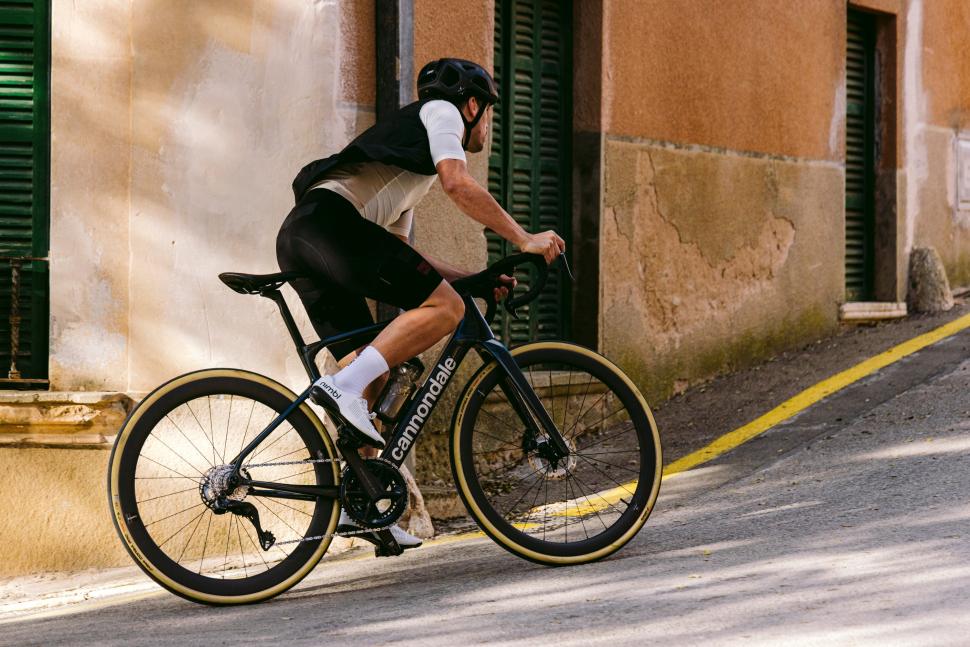
Cannondale says, “It blends WorldTour-level aerodynamics and stiffness-to-weight with top-tier tyre clearance, compliance, and smart features.”
Okay, that’s enough of the marketing talk; what do you actually get here?
Comfort
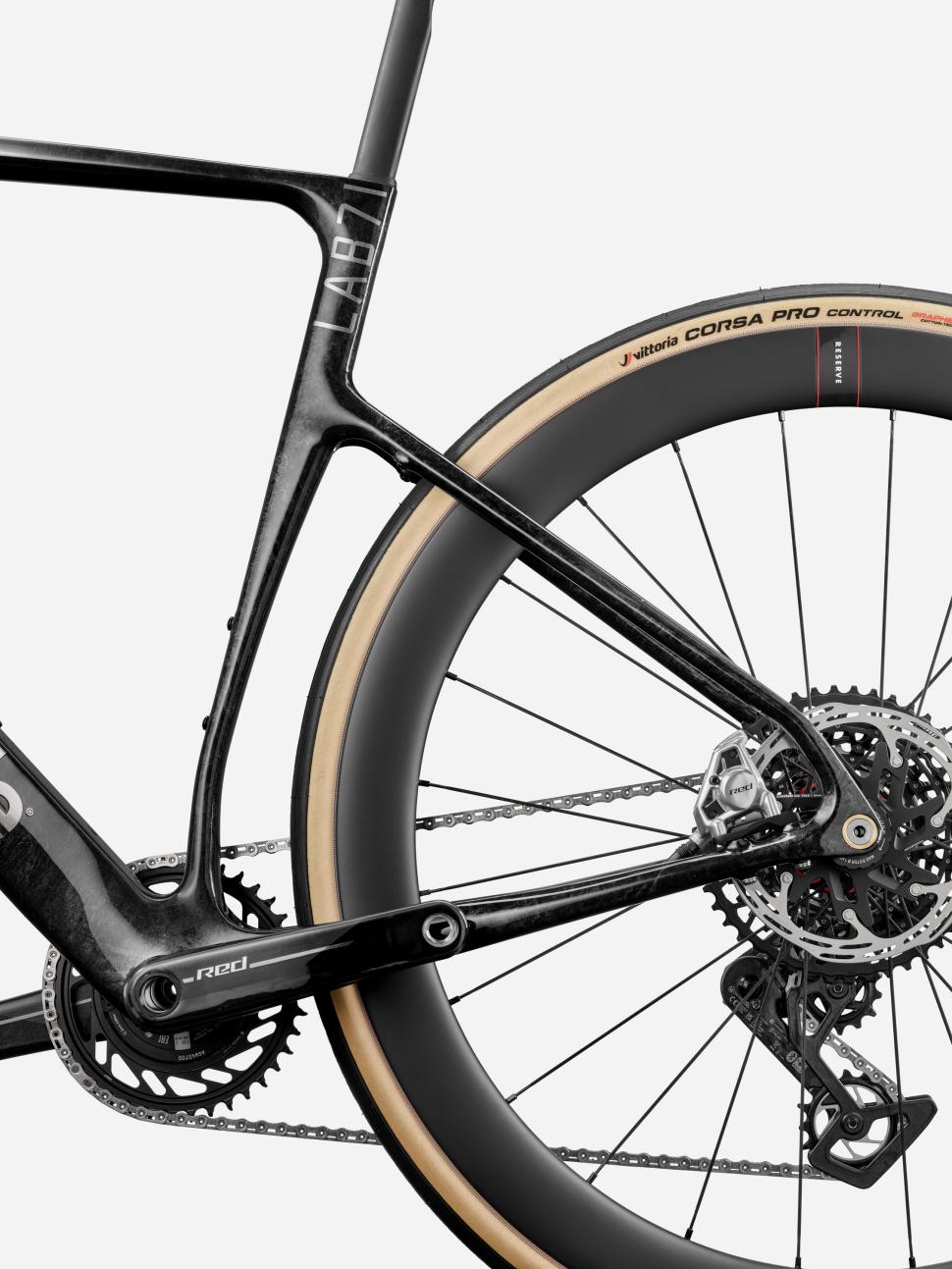
Comfort has always been at the heart of what the Synapse is about – check back to any of the Synapse reviews we’ve published over the years and comfort is always front and centre. This time around, Cannondale says, “With advancements in our carbon layup, our engineers have made the new Synapse 20% more compliant than its already butter-smooth predecessor.”
Do you love a statistic-based claim as much as we do? We’ve not ridden the new Synapse, so we can’t comment on how it feels.
We can tell you, though, that although 32mm tyres come as standard, the new frame will fit 42mm and the fork will take a maximum measured width of 48mm with at least 4mm of clearance on each side. That frame clearance isn’t quite in gravel bike territory, but it’s not far off. There’s certainly plenty of scope there for running wider tyres at relatively low pressures to soak up the bumps on rough roads – all-road, as we’ve come to call it.
Also, the Synapse’s geometry is geared up to be more relaxed than that of a race bike.
Nathan Barry says, “[The new Synapse] effectively carries over our geometry philosophy from the prior generations, so it’s slightly taller and shorter than a SuperSix Evo, for example.”
Size 54 has a 570mm stack height and a 381mm reach. That gives a stack/reach of 1.49.
A SuperSix Evo in a size 54 has a 555mm stack and a 384mm reach, giving a more aggressive stack/reach of 1.45.
That said, the Synapse’s ride position is nowhere near as upright as that of some endurance bikes (a Specialized Roubaix in a comparable size has a stack/reach of 1.55, for instance). As mentioned up top, Cannondale likes to keep an eye on efficiency.
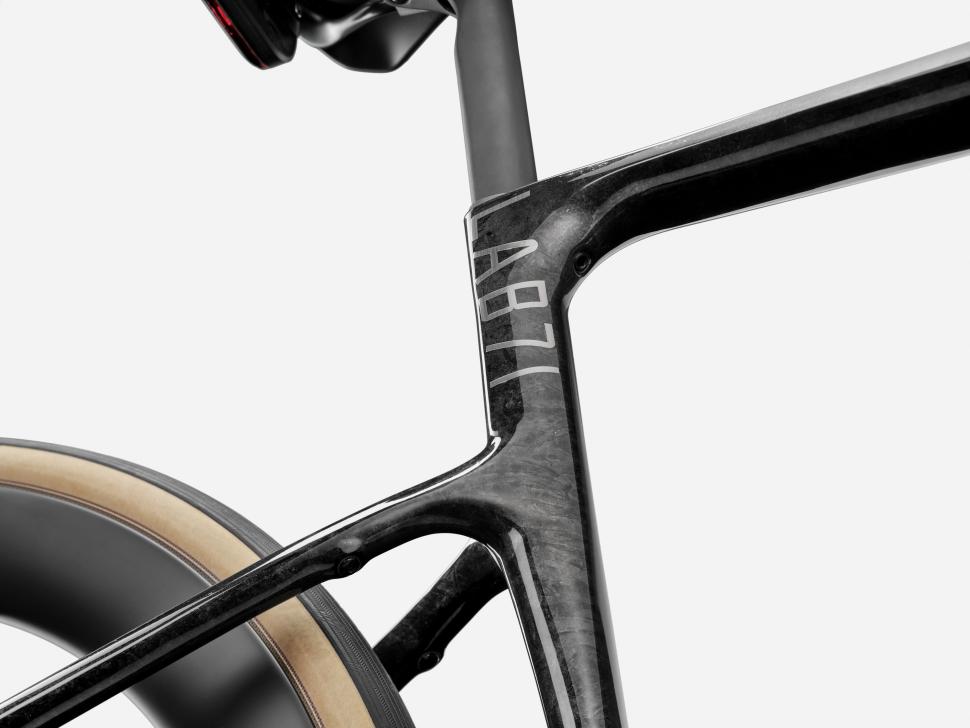
Cannondale’s engineering manager Steve Smith says, “We’ve utilised our D-shaped seatpost, which is shared with the SuperX. We’ve also specially shaped the seat tube and adjusted the carbon layup, and that’s allowed us to achieve the 20% increase in seated compliance compared to the predecessor, which was already a super-comfortable bike.”
> Cannondale’s all new SuperX gravel bikes go aero and stripped back for speed
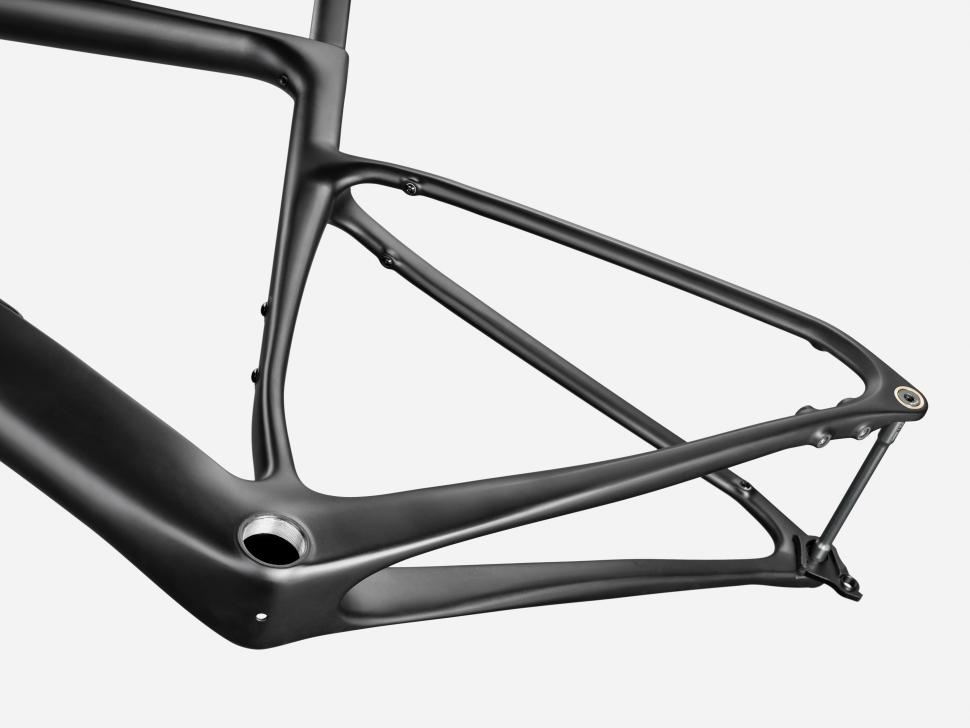
Cannondale says that its size-specific construction means that every frame size offers the same mix of stiffness and compliance.
Aerodynamics
Cannondale says the new Synapse is significantly more aerodynamically efficient than previously. We’ll pass this one over to Cannondale aero guru Dr Nathan Barry.
“If you want to deliver performance to a rider, aerodynamic improvement translates to direct performance improvement on the road, so it’s only logical for us in developing a cousin to SuperSix Evo that we would bring in as much of that Evo-derived performance as possible,” he says.
“There is a balance to be had here. Weight and aerodynamics are typically competing interests, but you’ve also got compliance and stiffness. The real balancing act of design is getting that nuance correct so that all of those factors work together to deliver the blend of performance for the ride quality you want.
“One of the things that unlocked this for us is using heavily truncated airfoils. That’s something we introduced first on the third-generation SuperSix Evo in 2019. Basically, this is taking a very small section of a much deeper airfoil, and if you carefully use a one-to-one section – as wide as it is deep – you can have your cake and eat it too. We’re able to preserve weight, stiffness and compliance while heavily reducing drag.
“In best cases, a simple tube shape reprofiling can reduce drag by about 30%. With the SuperSix Evo, we’ve pushed the technology that we’ve been working on for many years to the next level. That’s a bike that is the continuation of our lightweight race category, but competes on a similar level of aerodynamic performance to many of our competitors’ dedicated aero bikes.
“We’re taking all of that tech and filtering it into Synapse. And you’ll see that not just in the profiles of the frame, but in using Delta, and then on the SystemBar cockpit [used at the high end] to deliver every bit of performance that Cannondale has on hand from the road category.”
Cannondale says that the SuperSix Evo is still ahead in terms of aero performance, but the new Synapse has taken a big step forward.
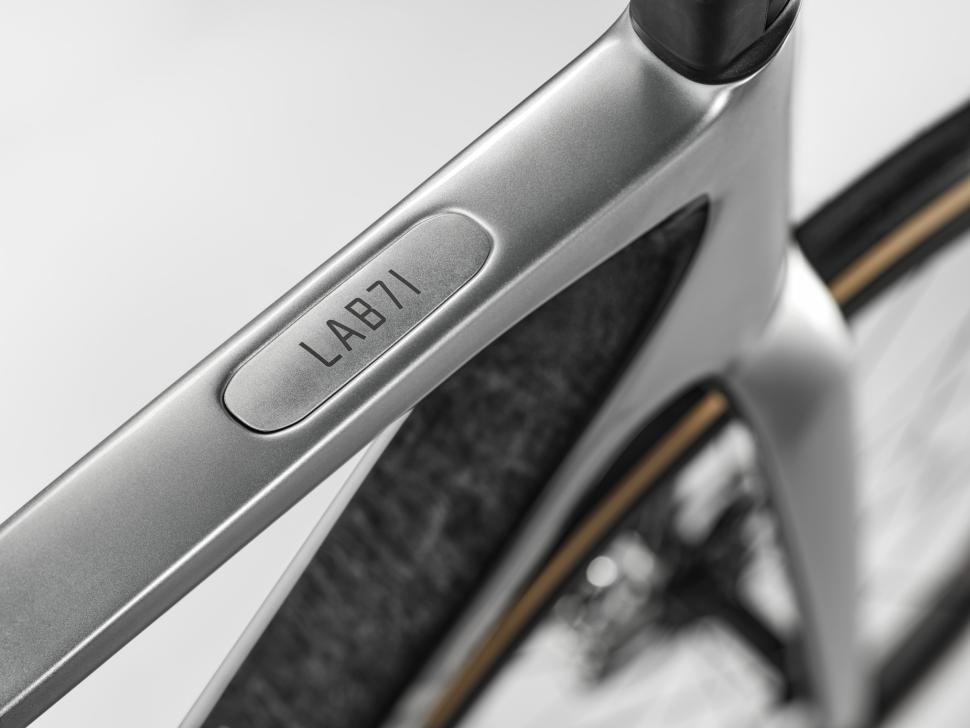
“The Lab71 version has drag that’s on par with the previous third-generation SuperSix Evo which, even today, would be an extremely competitive bike in the pro peloton,” says Nathan Barry. “SuperSix Evo 4 just took that a step further. [With the Synapse] you are hitting WorldTour class aerodynamic levels, wrapped up in this more capable, more accessible, more connected package.”
Practical stuff
As we’ve already said, the Synapse frame now has enough space to fit tyres up to 42mm wide, although Cannondale specs 32mm.
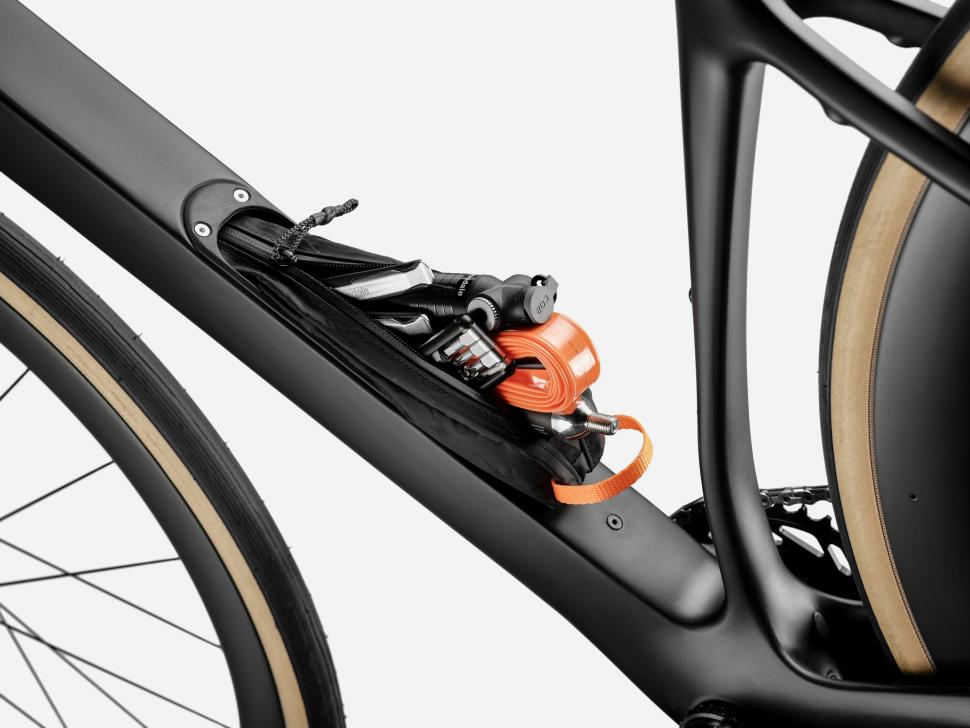
You also get StashPort down tube storage that’s accessed under the bottle cage – the system already used on the Topstone Carbon (many other brands offer down tube storage these days). It’s designed to take tools, snacks, and other bits and pieces you want to carry on a ride. If you go for a SmartSense-equipped bike (see below), the battery lives in there too.
Cannondale says, “Designed to work seamlessly with its StashBag companion [a specially designed bag that fits in there], it keeps your ride essentials secure no matter where the road takes you.”
The StashBag comes with every model. You also get hidden top tube bag mounts and discreet mudguard mounts.
Details, details…
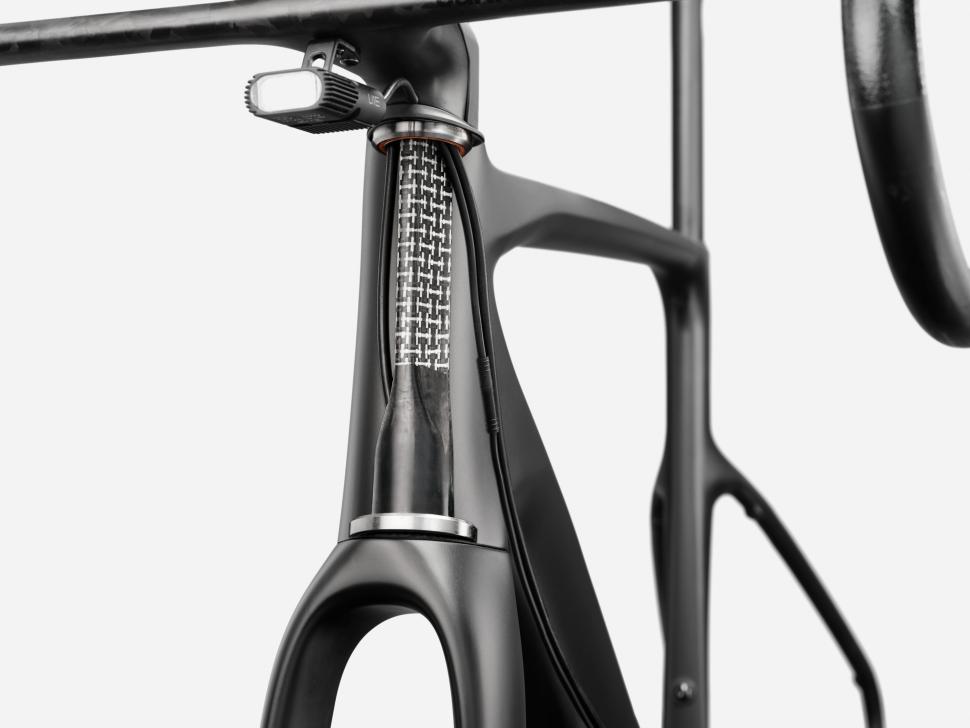
You’ll notice that there’s no external routing to be seen on any of the new Synapses. The brake hoses (and cables in the case of the Shimano 105 mechanical-equipped Synapse Carbon 5) are routed internally using Cannondale’s Delta system.
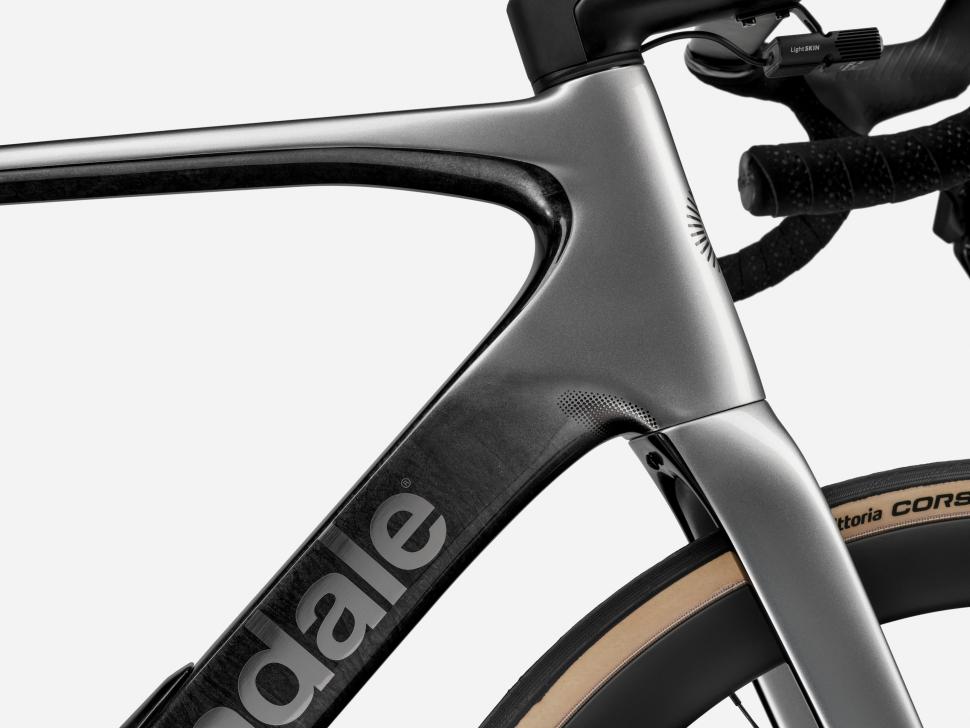
Rather than being round, the Delta steerer is what Cannondale describes as “pizza slice shaped” to give enough space for the routing. Introduced on the SuperSix Evo in 2023, Delta is a tried and tested design.
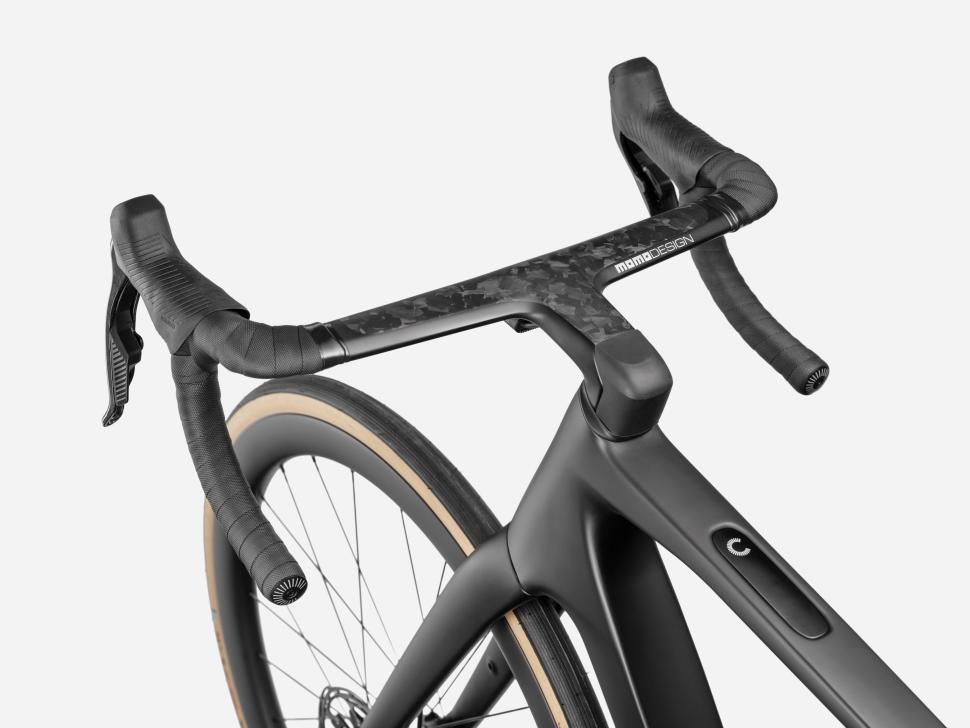
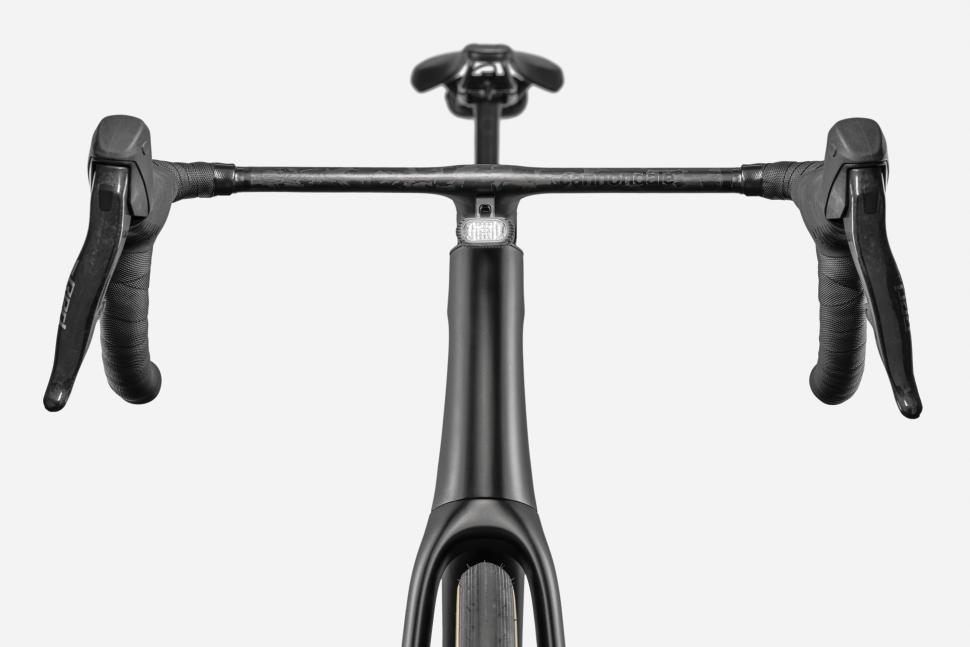
The SystemBar R-One carbon cockpit – found on the high-level Synapse Lab71 and Synapse Carbon 1 – was originally seen on that 2023 SuperSix Evo, too. It’s a full-carbon one-piece bar and stem combo that Cannondale modestly calls “the most evolved cockpit a road bike has ever seen”.
The bottom bracket is threaded BSA and the Synapse is UDH compatible.
> What is UDH and is it the future of all bikes?
SmartSense gets an update
SmartSense was one of the big talking points of the last Synapse update, and it has been revamped for 2025. A couple of bikes that feature second-generation SmartSense are a few weeks from launch but the SRAM Red AXS-equipped Synapse Lab71 has been released into the wild.
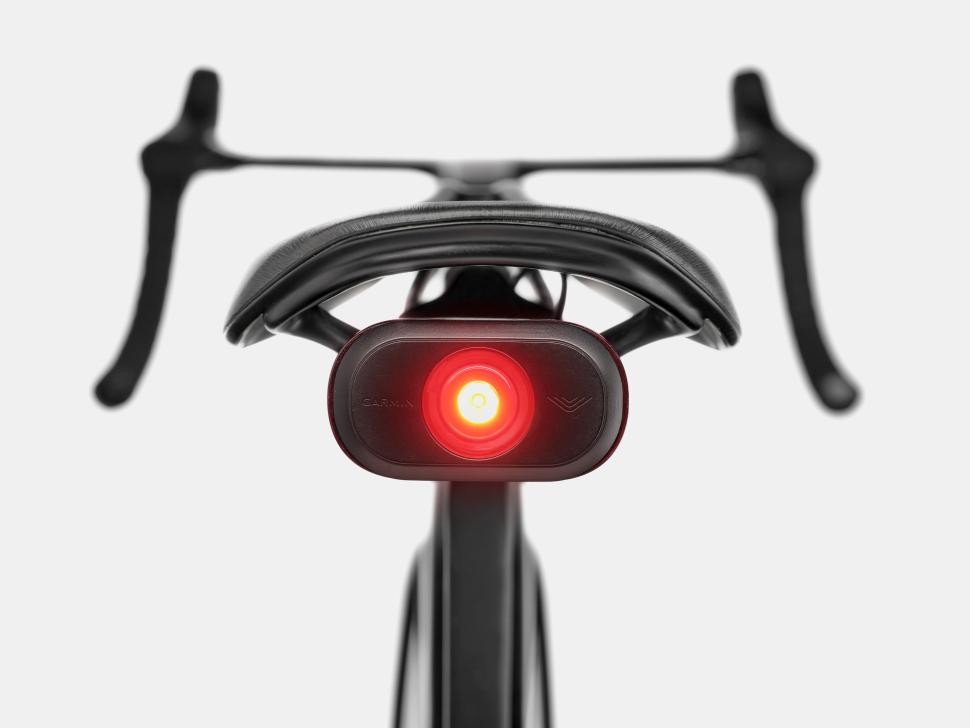
If you’re not fully up to date with the concept, Cannondale sums it up like this: “SmartSense is a system of parts which can all communicate with each other, as well as to a smartphone, and share a single battery. By sharing the same battery and communication language, SmartSense components can be smaller, more integrated, more convenient, and can do more together than what is possible with individual aftermarket pieces.”
Sasha Demitris, Cannondale’s product manager for connected components, says “SmartSense is a system of electronics for the Synapse. It includes a headlight, taillight [including radar], wheel sensor, battery in the down tube and now electronic shifting with SRAM.
“Most of our customers are riding with lights, and a lot of them have electronic shifting and a radar as well, and with that comes batteries to charge and a variety of mounts to put on your bike, and sometimes even a number of different apps to make everything work together.
“By designing the bike and the electronics to work together, we could make the ownership experience a little bit easier, a little bit more convenient with one battery to charge, but also make some of the electronics more integrated. For example, the smaller headlight doesn’t need to have a battery in it. You can move the battery into the down tube so you can have a sleeker, brighter light that has a long battery life, but make it really small.”
The wheel sensor is carried over from the previous version, but everything is new for SmartSense Gen 2. The new battery has over twice the capacity of the original and, as Sasha Demitris mentioned, it’s integrated into the down tube. Battery life depends mostly on the light mode you use. Cannondale claims over 24 hours in flashing modes down to 2.5 hours with the headlight at full brightness. It still has USB-C charging, and you can charge your smartphone on a ride.
“For this version, we added a LED flashlight to it, so when you open the StashPort you get a nice little glovebox light that helps you find everything, even if it’s dark out, or you can use it as a flashlight off the bike,” says Sasha Demitris.
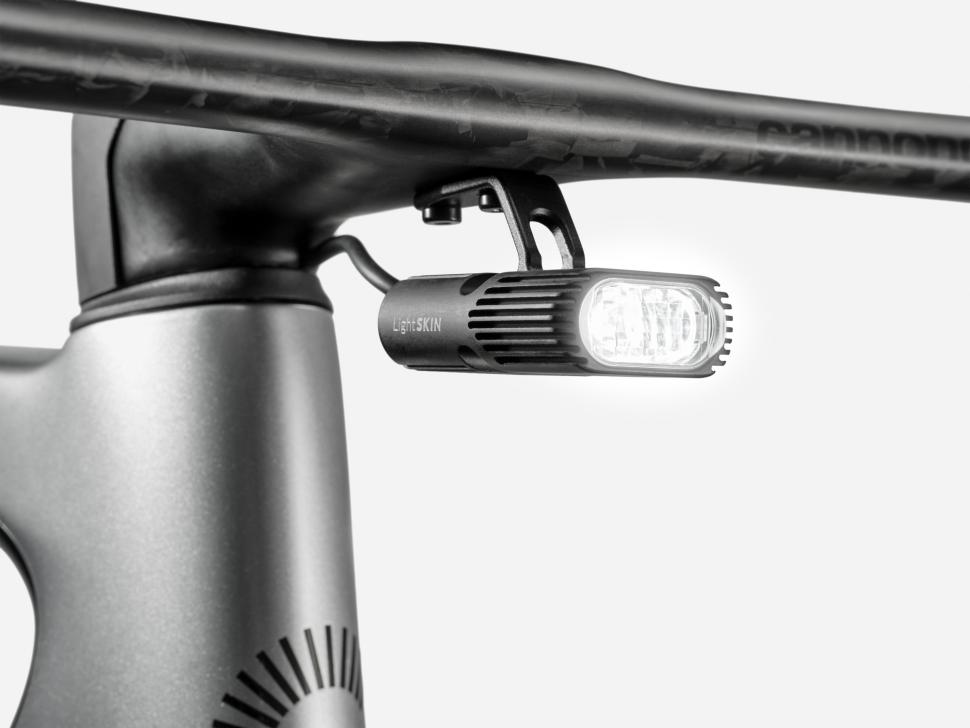
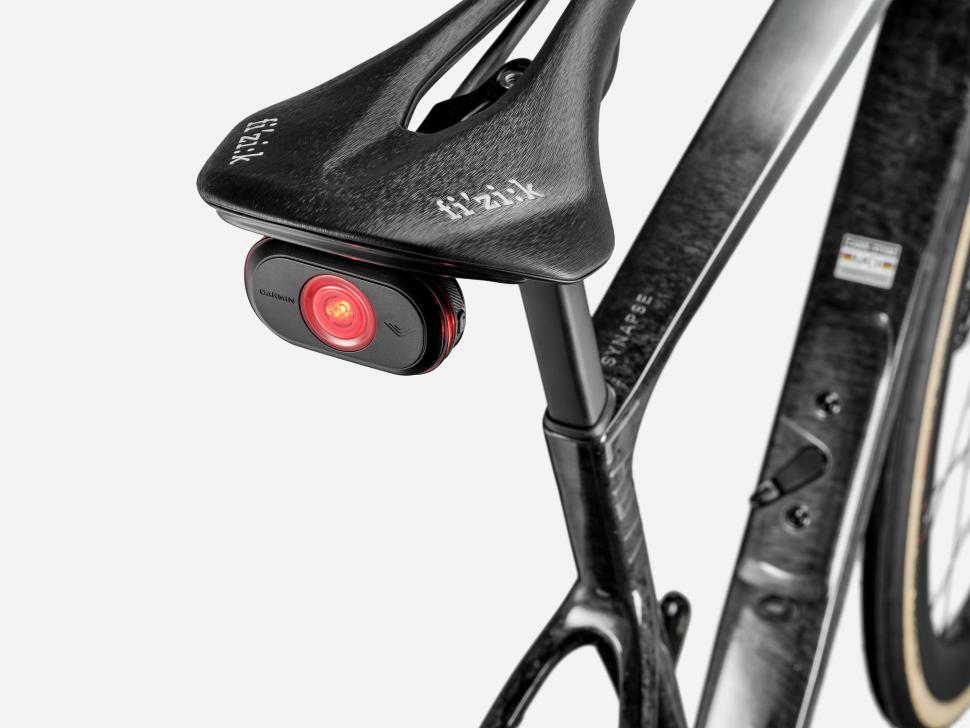
“Every SmartSense bike comes with radar integrated into a single unit with the taillight [it’s a Garmin Varia eRTL]. The headlight [made in collaboration with Lightskin] is new as well. It is both smaller and brighter. For international versions, you can have up to 800 lumens in high beam mode. For STVZO countries [German road traffic regulations] that’s down to 400, and then the last piece is that it now powers your SRAM AXS electronic shifting. All these devices are powered by one battery.”
The radar data can be sent to ANT+ cycling head units and the Cannondale app, the handlebar-mounted radar display having been removed from this updated version.
What if you run low on power?
“The [SRAM] shifting always gets power even when the system is asleep,” says Sasha Demitris. “Unless the battery is completely dead, your shifting will work.
“On top of that, there are two low-power modes that help preserve battery life for shifting. By default, they’re at 10%, where it dims your lights, and then at 5%, it turns your lights off entirely. If you want, you can configure that in the Cannondale app to give yourself more or less battery power in reserve. This battery is a lot bigger than an AXS battery; even 5% is roughly the equivalent of one fully charged AXS battery.
“If you need to turn your lights back on, you can always do that to keep yourself going. Whatever situation you find yourself in, you should be able to make it back home.”
SmartSense isn’t currently compatible with Shimano Di2.
If SmartSense doesn’t float your boat, plenty of bikes in the range come without it (see specs below). In fact, for the time being, all but one of the bikes in the range come without it. Expect a couple more SmartSense-equipped bikes to arrive before the summer.
Weight
We’re always telling you that a bike’s aerodynamic performance is more significant than small weight gains in most circumstances but, all other things being equal, a light weight is never going to hurt.
Cannondale says the standard Synapse frame weight is below 1,150g, and you can get a lower weight if you’re prepared to pay more.
Cannondale says, “The Lab71 and Synapse 1 get a refined, performance-boosting, HI-MOD carbon layup that shaves over 100g off the frame weight, while maintaining Synapse’s stiffness, ride-feel, durability, and lifetime warranty.”
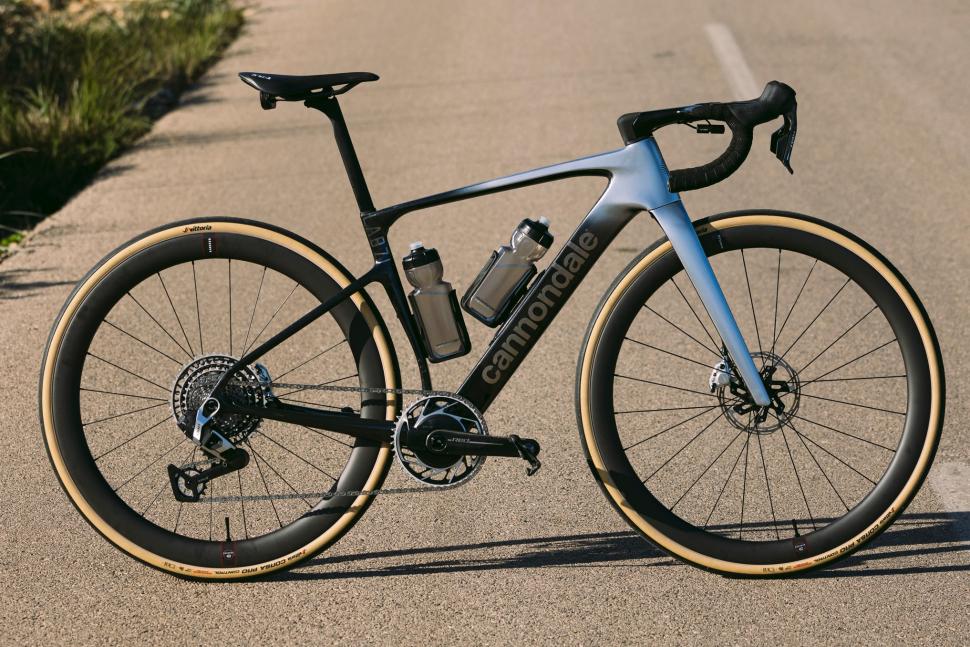
Cannondale claims a sub-1,000g frame weight for the HI-MOD version.
How come?
“When comparing the materials used in our limited-edition Lab71 [and Synapse Carbon 1] models to the rest of the Synapse line-up, the Lab71 complete bike and frameset feature a higher proportion of high-tensile modulus fibres,” says Cannondale.
“These fibres allow us to use fewer overall fibres, as the desired stiffness is achieved more quickly. Additionally, we use higher tensile strength fibres as well, enabling us to use less material while still achieving the necessary strength.”
> Cannondale introduces “ultra-premium” Lab71 tier of bikes
For those of you taking notes, Cannondale claims 445g for the Hi-Mod fork, and 494g for the standard version.
Specs and prices
These are the new Cannondale Synapses launching today. As mentioned, a couple more SmartSense-equipped models are on the way before summer.
Synapse Lab71 £13,000
Frame and fork Lab71 Synapse HI-MOD Carbon
Groupset SRAM Red AXS
Wheels Reserve 42|49 Turbulent rims on DT Swiss 180 hubs
Handlebar Cannondale SystemBar R-One integrated bar/stem
Extras SmartSense Gen 2.0 system
Synapse Carbon 1 £7,500
Frame and fork Synapse HI-MOD Carbon
Groupset Shimano Ultegra Di2
Wheels Reserve 42|49 Turbulent Aero rims on DT Swiss 350
Handlebar Cannondale SystemBar R-One integrated bar/stem
Synapse Carbon 2 £5,995
Frame and fork Synapse Carbon
Groupset Shimano Ultegra Di2
Wheels DT Swiss ERC 45 rims on DT Swiss 370 hubs
Handlebar Vision Trimax Aero Alloy
Synapse Carbon 4 £3,995
Frame and fork Synapse Carbon
Groupset Shimano 105 Di2
Wheels DT Swiss R470 DB rims on Shimano RS470 hubs
Handlebar Vision Trimax Aero Alloy
Synapse Carbon 5 £2,995
Frame and fork Synapse Carbon
Groupset Shimano 105 (mechanical)
Wheels DT Swiss R470 DB rims on Shimano RS470 hubs
Handlebar Vision Compact TT Alloy
Synapse Lab71 frameset £4,950
Frame Lab71 Synapse HI-MOD Carbon
Fork Lab71 Synapse HI-MOD Carbon
Includes headset and seatpost









7 thoughts on “Updated Cannondale Synapse endurance bike offers “desirability and performance”… and space for 42mm tyres”
If they want to focus on
If they want to focus on comfort, then riding position is the number 1 priority, but delivering the bike with an integrated bar-stem makes riding position adjustment VERY limited. It looks like the lower-end models have separate bars and stems, which is a big bonus for adjustability, and I’d definitely recommend to anyone who is considering the higher-end models to ask for the separate bar and stem setup.
That Lab 71: seeing that was
That Lab 71: seeing that was the first time I’ve looked at an endurance bike and gone oh yes! I love the look, the geometry isn’t too upright and the SmartSense sounds great. £12k too much for my budget, though, so I’ll be sticking to my classic steel bikes.
Even the seat tube?
Even the seat tube?
The “aero” seat tube profile
The “aero” seat tube profile with the absolutely huge gap to the tire? Flippin’ awful. Rest of the bike looks great. Minus the integrated lights. I always look at the Ultegra equipped price…and 6 grand feels a bit too spendy to me.
Can’t make my mind up whether
Can’t make my mind up whether the seat tube is fugly or ok – I think I’ll need to see it in the flesh. But it doesn’t strike me as too aerodynamic.
KDee wrote:
Remember it’ll clear a 42mm tyre – be interesting to see the gap then.
If you ride on the open road
If you ride on the open road amongst traffic, then an upright position is a good thing, and not a negative so many ‘wannabe pros’ seem to think. Being aero and low down has it’s place – it’s just not on normal roads in traffic.