



The stem might not be the most eye-catching component but it makes a massive difference to the fit and feel of a bike and there’s a huge number of different types used in the pro peloton. Here are some of the most notable from this year’s Tour de France.
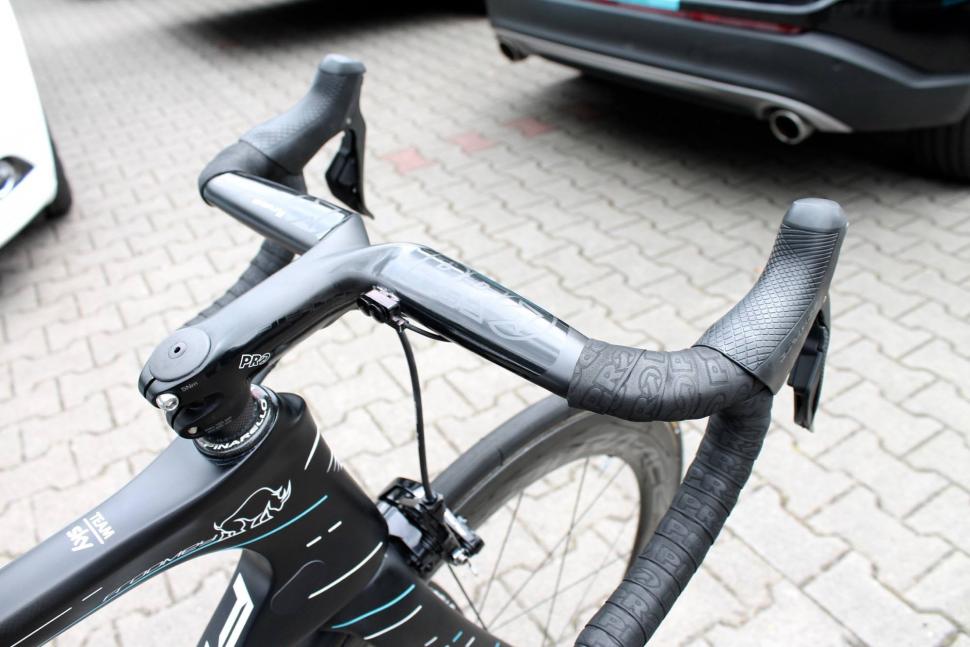
Team Sky’s three-time Tour de France winner Chris Froome uses a one piece Stealth Evo handlebar and stem combo from Shimano’s Pro brand. The stem section is 120mm long and the handlebar width is 400mm.
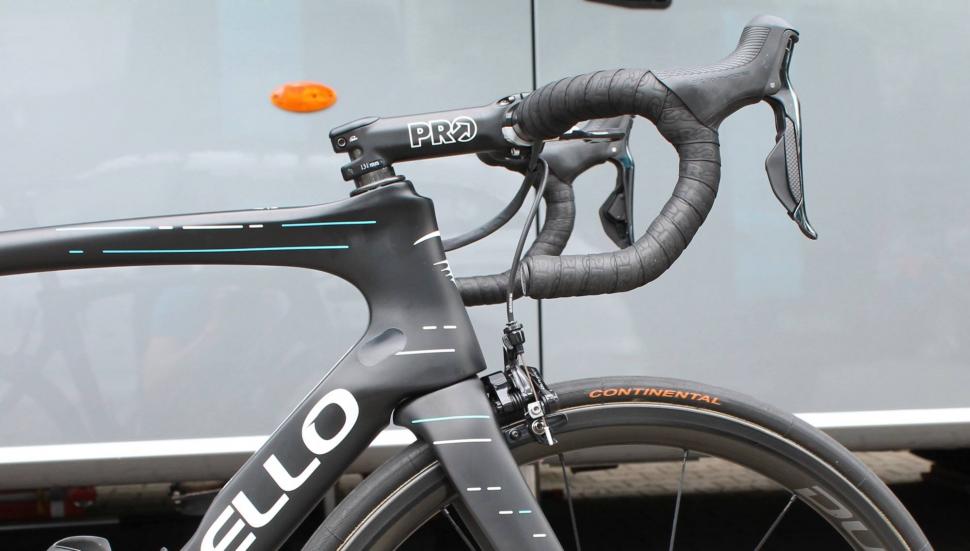
Geraint Thomas uses a 131mm Pro Vibe stem – or he did before he crashed out of the race.
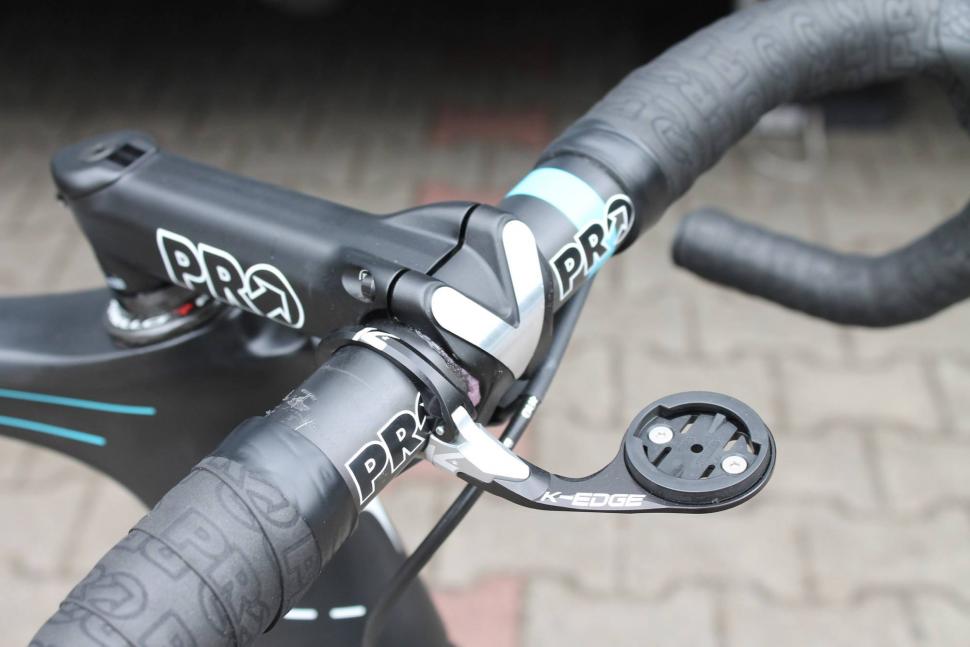
It is designed with cable ports that you can run Shimano Di2 cables through but Team Sky keep them external, taped up with the rear brake cable.
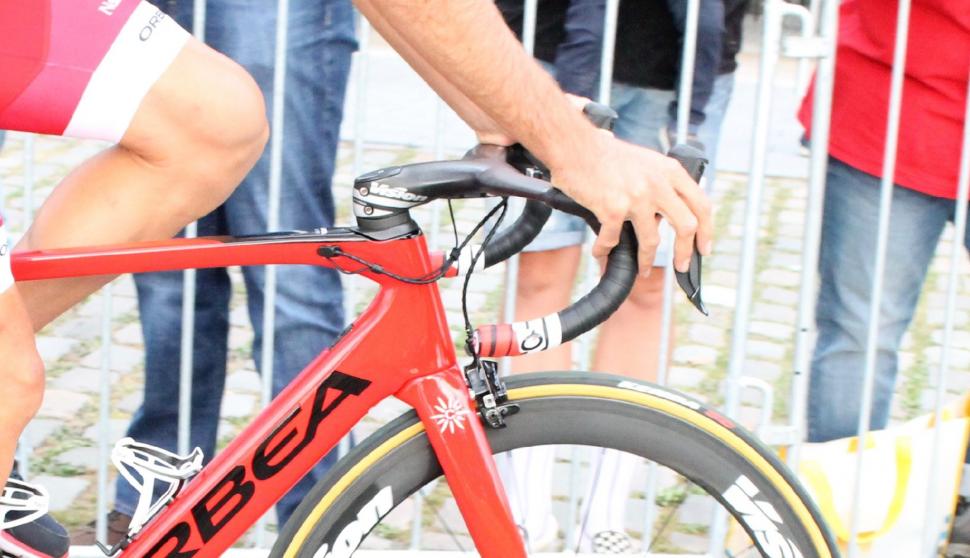
Like Froome, many riders from other teams use one piece cockpits. This Cofidis rider, for example, has a Vision Metron 5D combined handlebar and stem on the front of his bike with a very slight rise from the clamp.
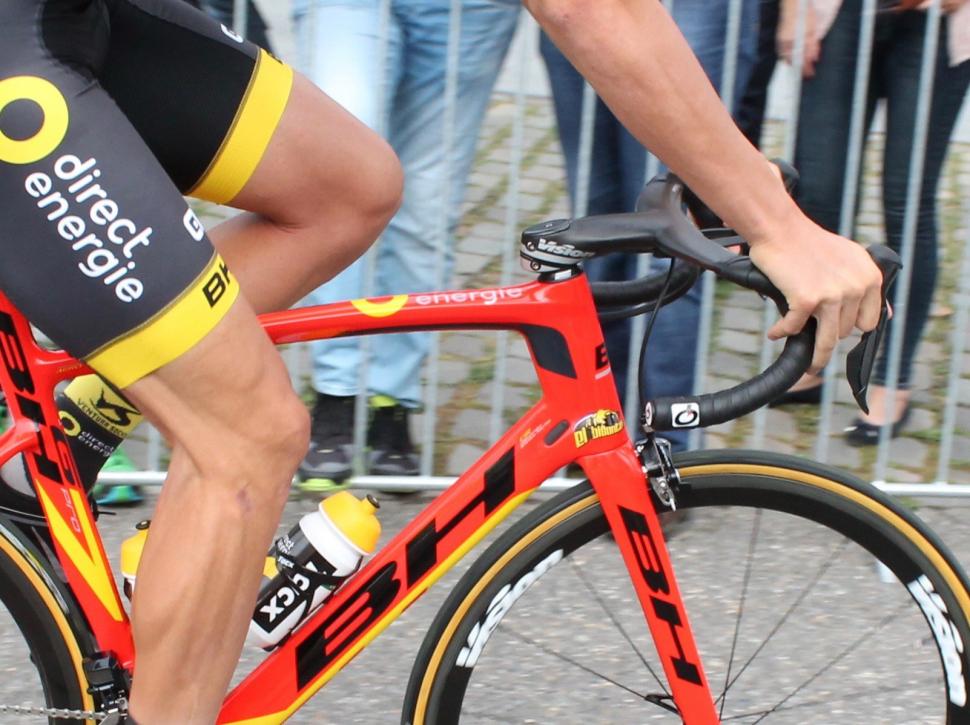
Direct Energie’s Adrien Petit has the same bar but it’s not such a neat fit with the headset and head tube on his BH G7 Pro.
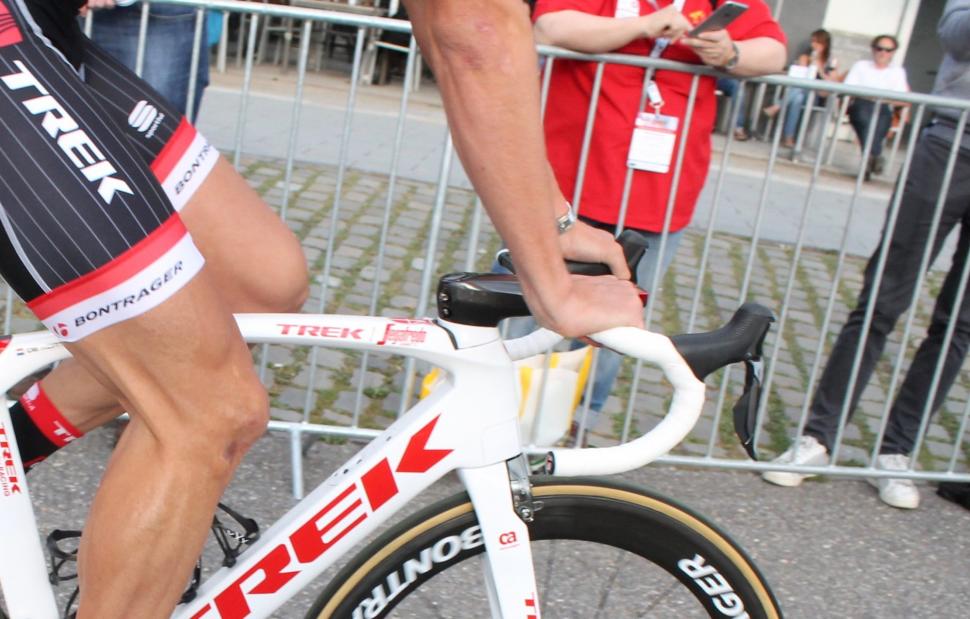
You can’t see the whole of the stem section of the Madone XXX cockpit of Koen de Kort’s Trek Madone in this pic, I’m afraid, but you can see how it integrates with the rest of the bike. It’s a super-neat design that’s intended to reduce drag. The cables run internally through the handlebar/stem and from there into the frame.
Read our review of the Trek Madone here.
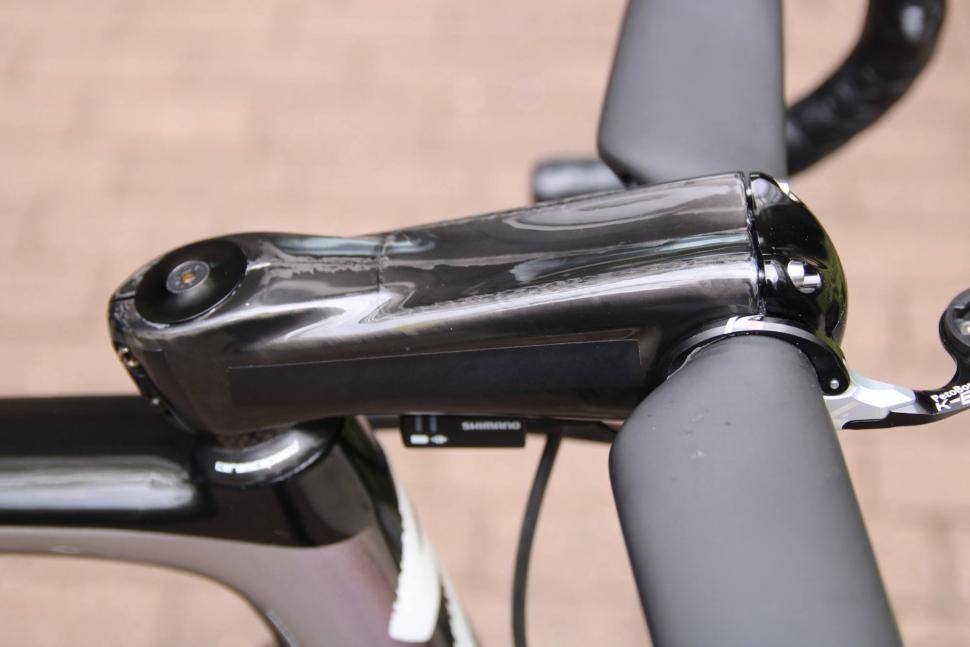
Most riders still use separate handlebars and stems. Peter Sagan – hoofed out of the Tour de France after Stage 4, of course – should by rights be using a stem from team sponsor Pro but this is actually a Zipp SL Sprint stem with the logos covered by black tape.
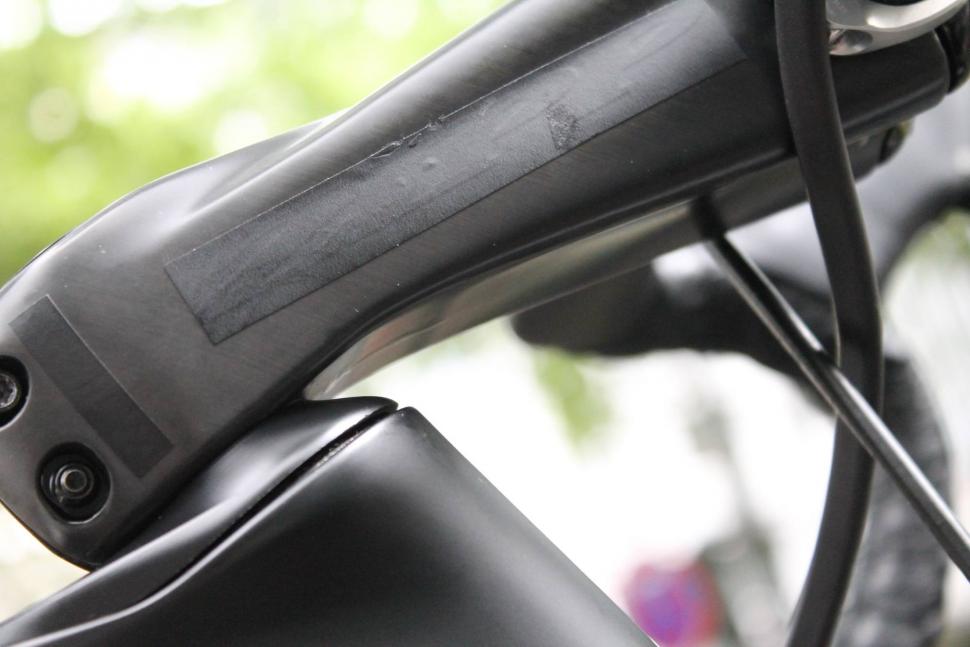
This stem, made from unidirectional carbon, has been around for a few years now and has a reputation for stiffness which is why it is favoured by many sprinters. When it was first introduced, Zipp said that it had been developed especially for Mark Cavendish. Essentially, it was Zipp’s answer to the Pro Vibe Stem that Cav had used previously. Although it’s chunky, the SL Sprint stem in a 100mm length weighs just 165g.

Speaking of Mark Cavendish (who crashed out in that little incident with Pater Sagan; you might have heard about it!), he uses an Enve stem now that he’s with Dimension Data. Unlike most other component manufacturers, Enve makes just two stems, one for mountain biking and one for road cycling (they’re each available in different lengths, of course, but just in +/-6° rise).
The road stem is made from carbon-fibre with a cold forged aluminium faceplate and titanium bolts.
Find out all about Cav’s custom painted Cervelo S5 here.
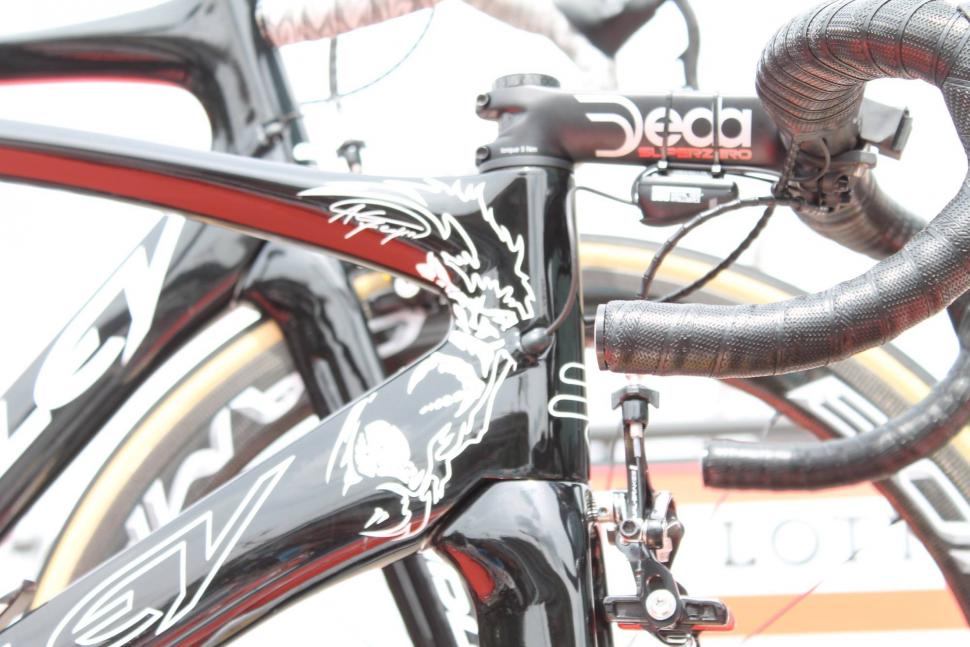
Fellow sprinter Andre Greipel uses a Deda Superzero stem with a black anodised finish.
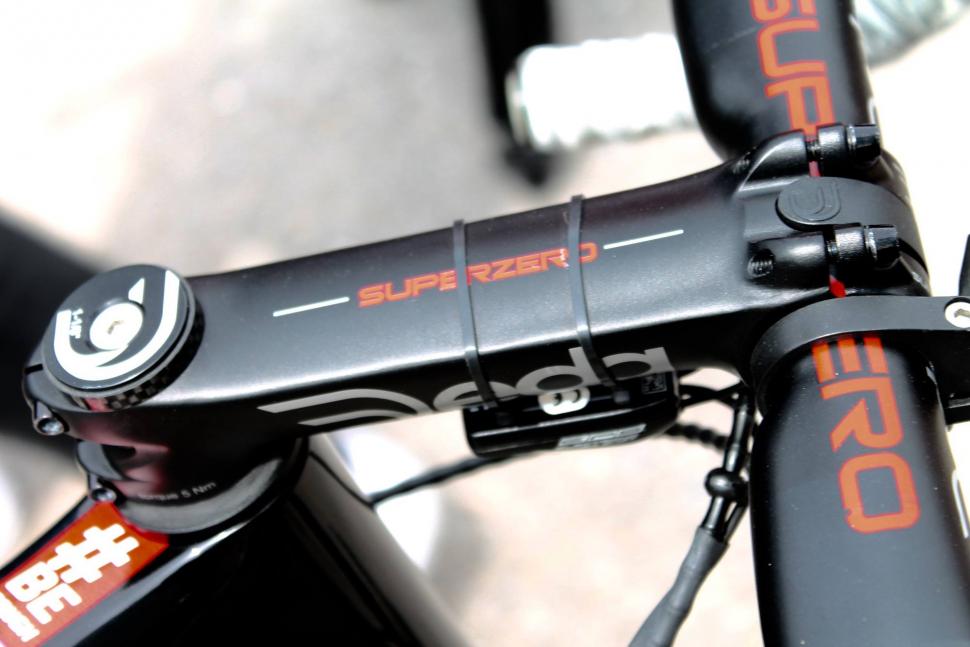
Deda claims that the flat upper section improves aerodynamic efficiency and rigidity. With an RRP of £75.99, it’s not a top of the range component.
Several bikes have their own dedicated stems these days, designed to integrate with the head tube to clean up the appearance of the front end and improve the aerodynamic efficiency.
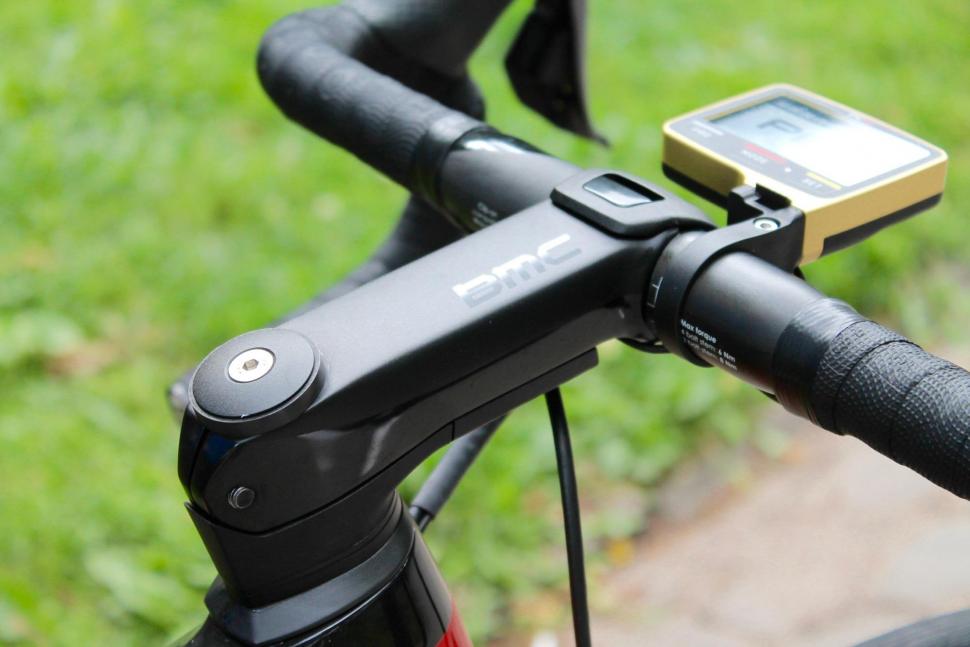
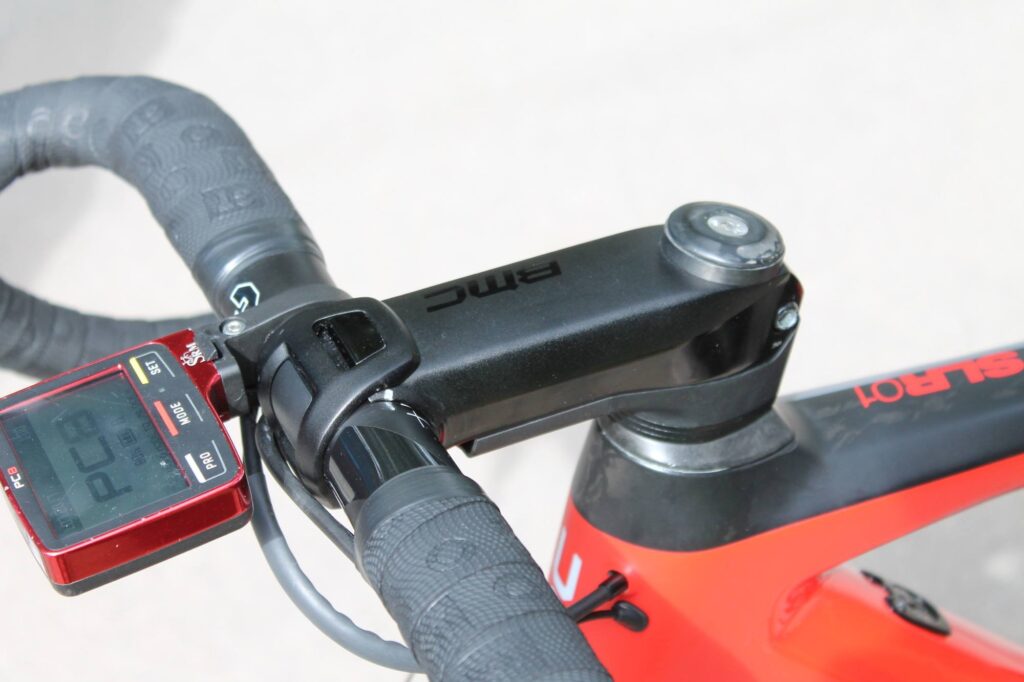
Greg Van Avermaet rides a BMC Teammachine SLR01 with an Integrated Cockpit Stem (ICS). It’s an unusual looking design with a cable clamp and cable cover system on the underside. It’s designed so that there are no exposed hoses when used with BMC’s Integrated Cockpit Fork (with a flat-sided steerer) and hydraulic disc brakes. Mechanical brake cables still have to run externally, though, as they do here.
Find out more about the BMC Teammachine SLR01 here.
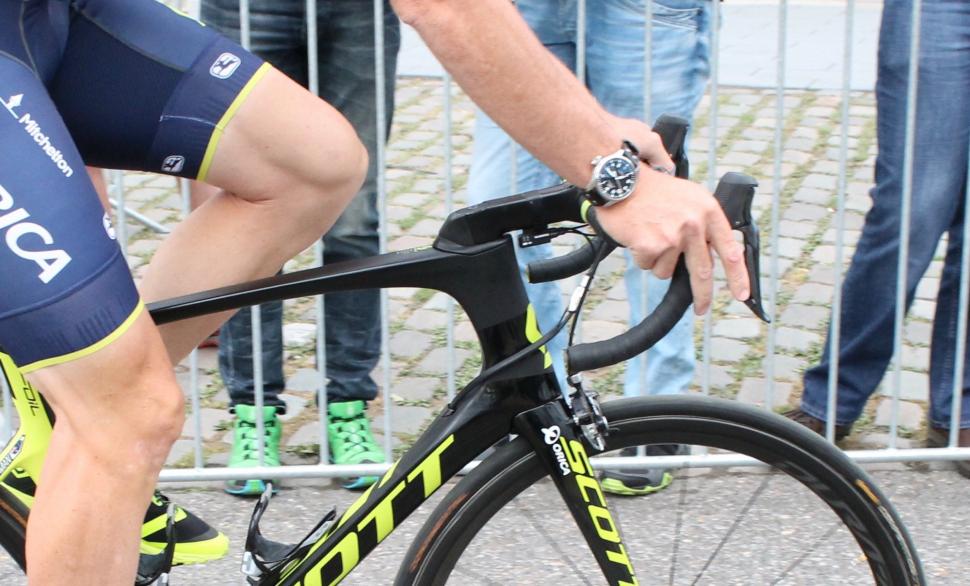
Orica-Scott’s Scott Foils (this is Matt Hayman’s bike) have square-edged Aero Foil stems from Syncros that are made from aluminium and reinforced with carbon fibre. Dedicated parts ensure a smooth transition to the head tube and top tube.

Sunweb’s Michael Matthews has been riding the brand new Giant Propel Disc. Although Giant hasn’t yet released details about this bike, you can see that all the Di2 cables and disc brake hoses are routed inside the stem and straight into the frame/fork.
Find out more about Giant’s Propel Disc here.
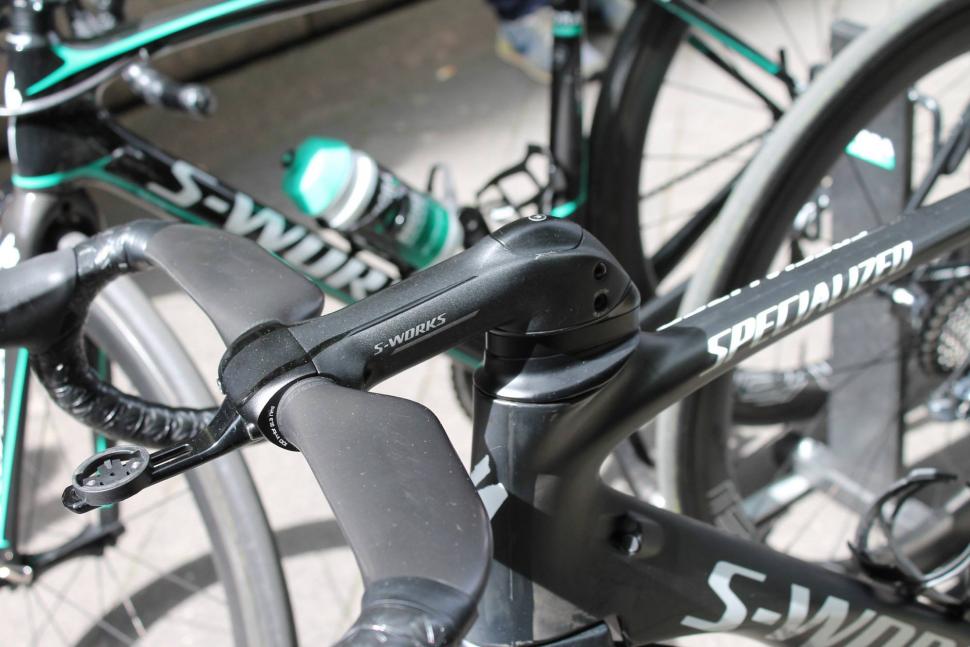
This Bora-Hansgrohe Specialized Venge ViAS has its own dedicated stem that routes cables internally from the handlebar into the frame.
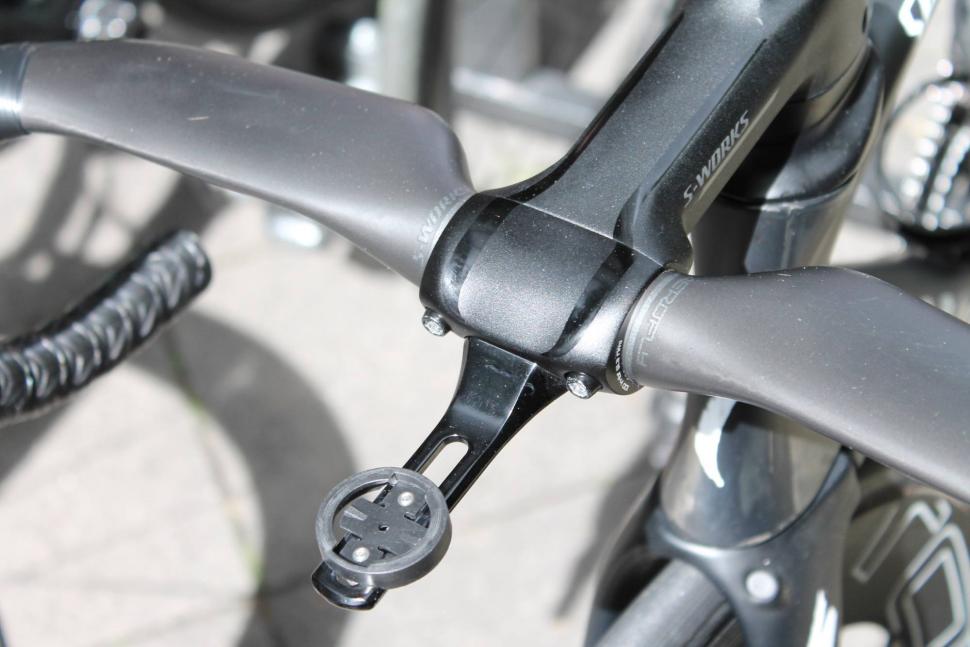
Specialized’s own computer mount blends almost seamlessly with the stem.

Marcel Kittel races the disc brake version of this bike but he uses the popular Vision Metron 5D combined handlebar/stem that we looked at earlier which doesn’t integrate with the frame as neatly.
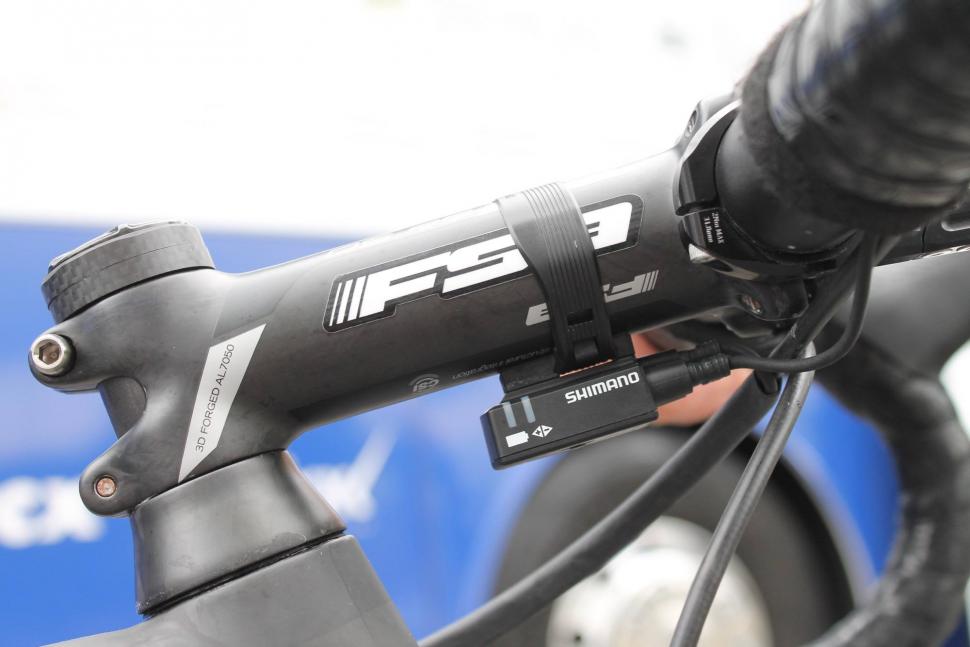
The Specialized Tarmacs used by Bora-Hansgrohe and Quick-Step take standard stems. This is Dan Martin’s bike fitted with an FSA OS-99 CSI stem. CSI stands for Carbon Structural Integration. FSA 3D forges the stem from AL7050 aluminium alloy then applies a carbon weave skin that’s said to increase the overall stiffness.
FSA wants more obvious branding than the stem normally offers so large logo stickers have been added. It’s not the clearest ever branding with the band for the Di2 junction box right over the top, but we get the idea.
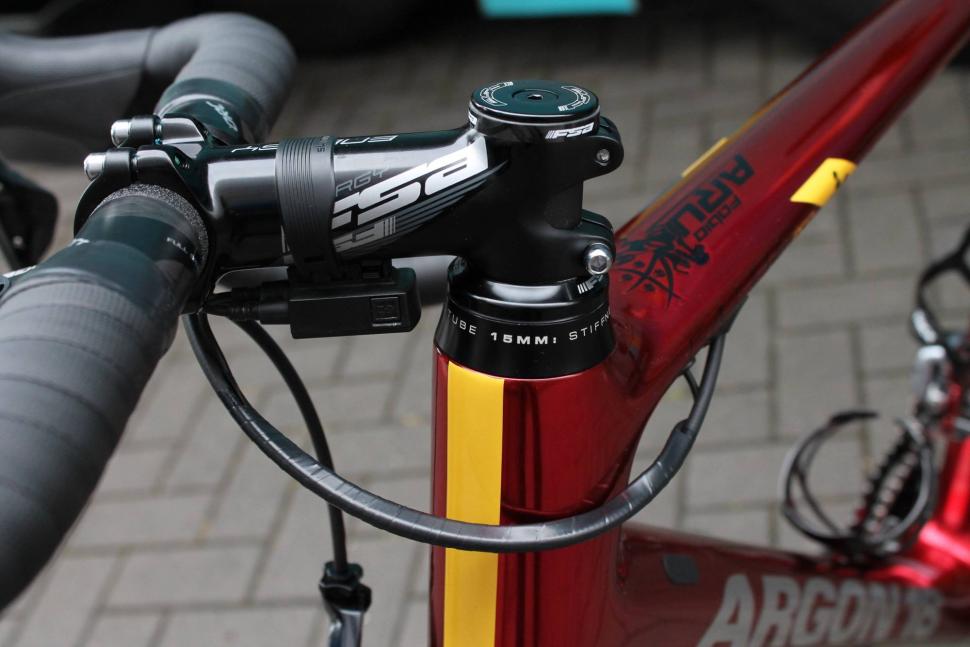
Current race leader Fabio Aru has a stem from FSA too. The Energy is from lower in the range, 3D forged from 2014 aluminium alloy with some CNC machining to finish it off. It’s actually lighter than the more expensive OS-99 CSI stem: 113g versus 126g (100mm versions).
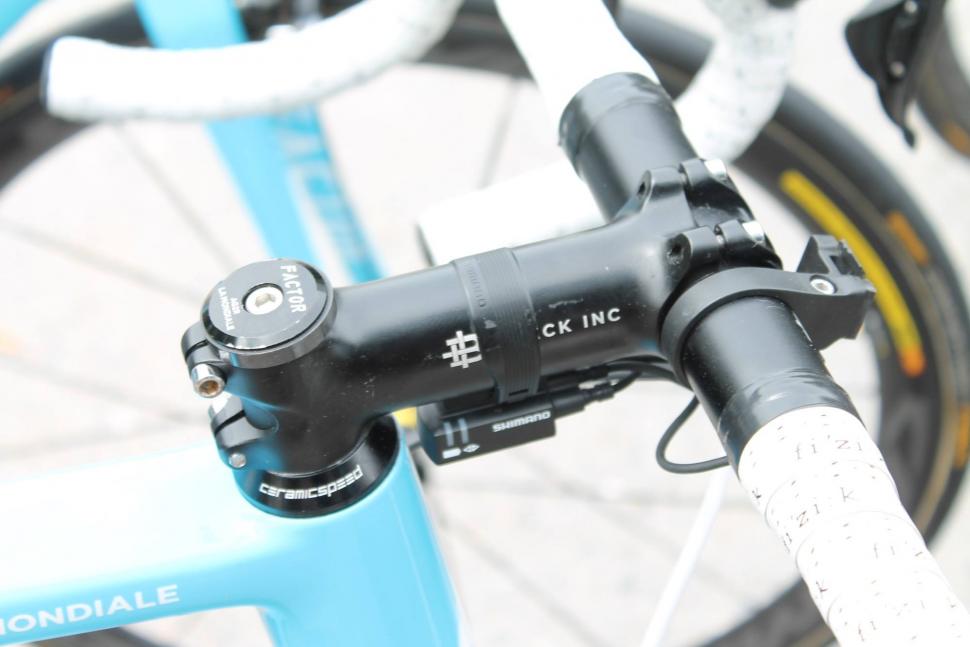
AG2R’s bikes are fitted with stems from Black Inc which is essentially the in-house brand of bike sponsor Factor. This aluminium model looks like it has seen some action!












8 thoughts on “Tour Tech 2017: The stems the pros are using”
They said: “FSA 3D forges
They said: “FSA 3D forges the stem from AL7050 aluminium alloy then applies a carbon weave skin that’s said to increase the overall stiffness.”
They meant: “FSA 3D forges the stem from AL7050 aluminium alloy then applies a carbon weave skin that’s said to increase the overall profit.”
Cav’s bar end plugs get
Cav’s bar end plugs get ChrisB aero approval!
ChrisB200SX wrote:
That is to reduce the drag from the flat surface that will increase the hold-back effect by creating swirl – the reason why the rear of buses and large vans get covered in crap especially on wet/muddy roads.
Tour Tech 2017: The stems the pros are using
All things cycling have/has faster than ever become a target for the “Must Have Mentality” and is being exlpoited by both the retailers and the producers of the various product ranges.
From the must have lighter and lighter frames and kit instead of promoting healthier riding and weigh control of the individuals body – NO,that does not make for instant profit and fat bank accounts and all of the trappings that Profits can/will be entailed.
I am a firm believer of being buying products that show clear signs of ‘Badge Engineering’ or alternatively buying kit and components that some other individual with more money than brains – the complete opposite to me has rushed out to get and then been tempted by the next round of retail and or manufacturers hype.
At pushing 72 years young I have seen it all before but not on the same scale as is the case to-day,’LONG LIVE’ those with overflowing and deep pockets.
Typically,Titanium bolts are an absolute must have and will save untold grams of weight – NO just trim some fat off of the lard on your arses.
TheCyclingRooster wrote:
Also, good not to overlook the cost-saving benefits of a decent PRC. Pre-Ride Crap for the uniniated/over-generously pocketed.
Froome is losing the Tour
Froome is losing the Tour because he has lost focus; no rivals, only stem. Stem to victory.
Stems
Those pictures showing the stem/bars with a rider on the bike demonstrate what nonsense the aero claims for them are. The drag caused by the rider’s body takes effect long before any gains can be reached by the stem/bars
Narrow minded rationale, to
Narrow minded rationale, to judge components just by their price. The Deda Superzero stem is a top of the range component – they’re just not ripping you off.