



The Giant Defy Advanced SL 1 is light, efficient and impressively comfortable. Everything an endurance-cum-allroad bike needs to be. In fact, I’d say it is one of the best all-round packages available for this genre of bikes, especially if carbon fibre is a must.
If you’re interested in the Defy Advanced SL 1, you might want to check out others in our guide to the best endurance road bikes.
Giant Defy Advanced SL 1: Ride
The majority of you will already know this, but in case you don’t I’ll give a little run-down on where the Defy sits in Giant’s road line-up. For flat days the Propel is the aero race machine, while the TCR is its lightweight, aggressive race bike for all kinds of topography. The Defy shares much of the DNA of the TCR but has a slightly more relaxed nature; the geometry isn’t quite as aggressive, it’ll run wider tyres, and it has more compliance in the frameset.
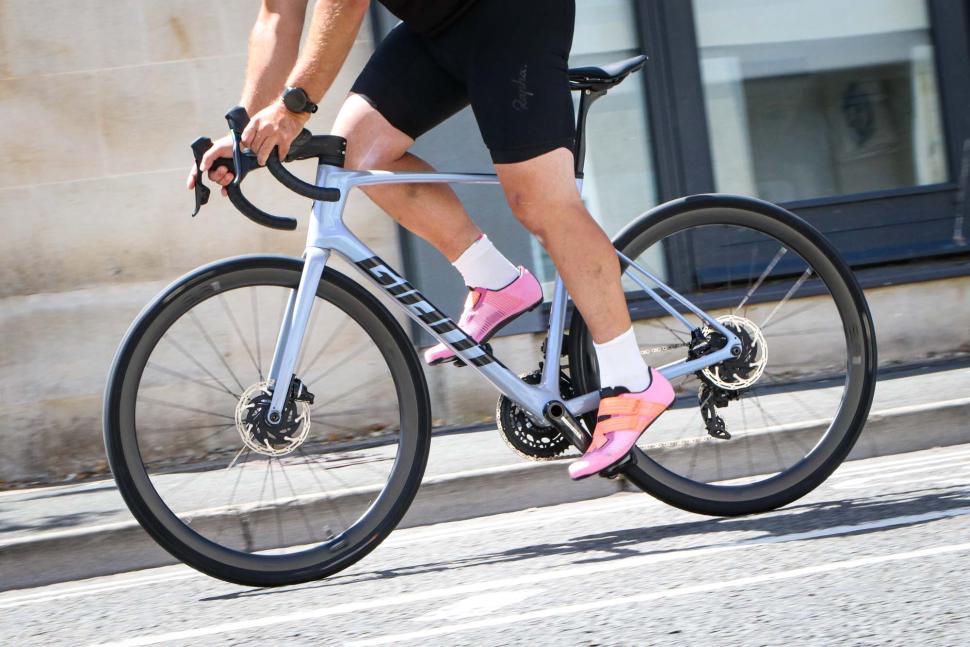
That doesn’t mean the Defy is a soft option when it comes to performance, and to be honest the differences between it and the TCR aren’t massive.
I own a TCR. It’s not one of the bling options, but the 2022 Advanced 2 model I bought last year as new/old stock, and I love the way it rides (as did Mat when he reviewed the TCR Advanced Pro 0 AXS last year). It’s had some upgrades, mind, running the latest SRAM Rival AXS groupset and a set of Hunt’s new Aerodynamicist wheels, so from a spec point of view it’s similar enough to provide a good comparison with the Defy.
The TCR is nimbler, the steering feels more direct, and it has a lower front end for an aggressive aero position, but when riding the two back-to-back I was massively impressed with just how close the Defy is in terms of performance. Especially for someone like me who doesn’t race, but still prioritises speed and quick steering over comfort.
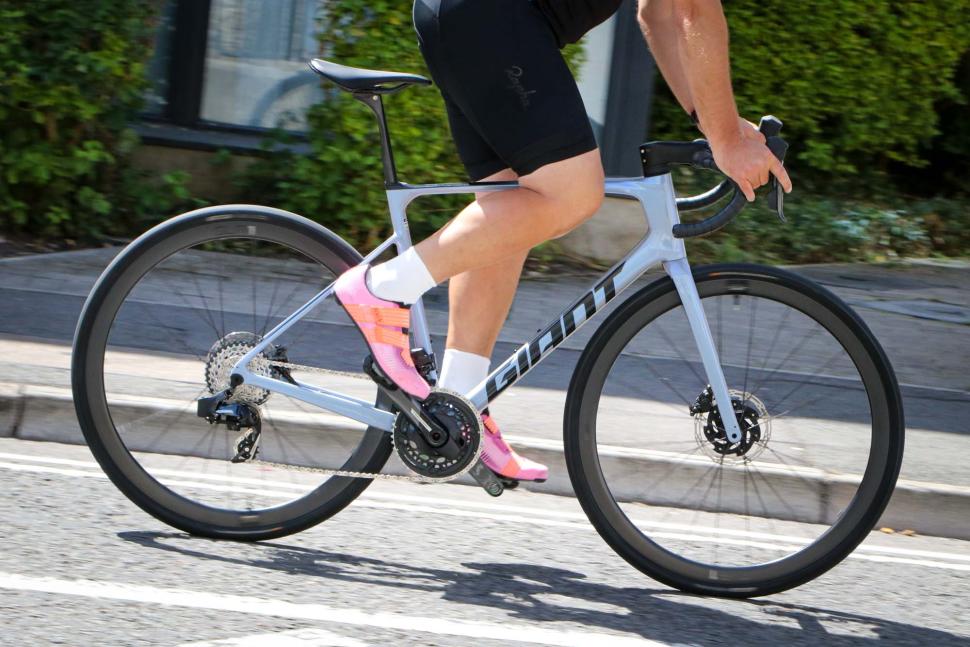
One of the key factors is frame stiffness. The Defy Advanced SL feels incredibly tight around the bottom bracket and head tube areas, so when you add that to the 7.4kg weight it feels lively when you push the pedals whether under acceleration or on the climbs.
I’ll go into the full geometry numbers in a bit, but let’s just say the Defy has a steepish head angle for an endurance bike, which means that it handles well through the corners at speed. A slightly larger fork rake than a race bike and the lengthier wheelbase combine to give an overall feel of stability.
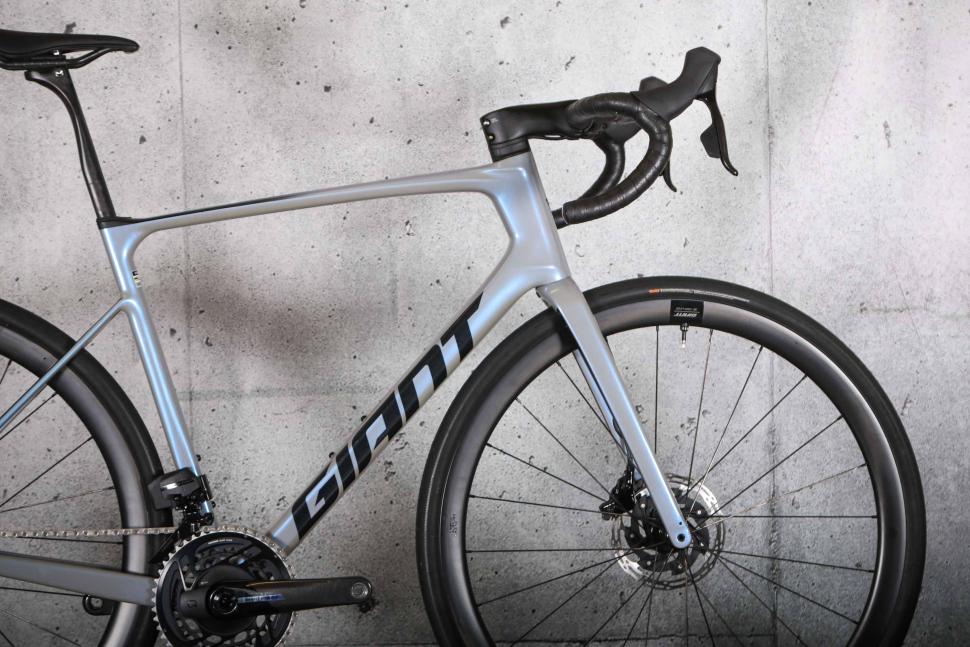
It’s not as razor sharp as a race bike in the tighter, technical sections but it is very close, and that stable nature means the Defy doesn’t present any twitchiness at the front wheel when asking it to change direction quickly, and it isn’t unsettled by rough road surfaces either.
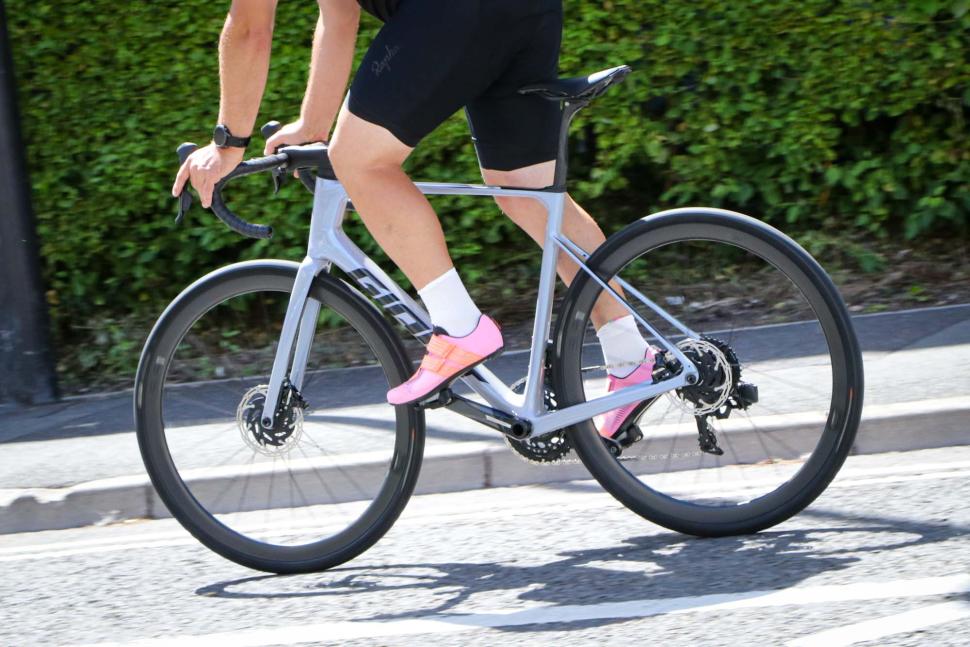
Giant says that the Defy’s frame and fork have been engineered for endurance road riding, focusing on compliance in the carbon layup, helped by the addition of its D-Fuse components to bring extra comfort at your contact points.
It all adds up to a very comfortable ride, front to back, but it’s been done in such a way that it hasn’t compromised a feeling of engagement between rider and bike. The Defy is an involving bike to ride, giving loads of feedback of exactly what the tyres are up to on the road. This is one of the best frames I’ve ridden, from this point of view. The balance between stiffness and comfort is impressive, with each section of the frame and fork doing its specific job while still feeling like a complete package.
Compared with my TCR of the same size, the head tube of the Defy is 10mm taller, with an extra 15mm of stack height, so the riding position is generally more relaxed. It’s certainly still aero enough, though, with plenty of drop achievable between the saddle and the handlebar for you to get low in a headwind or to sprint in the drops.
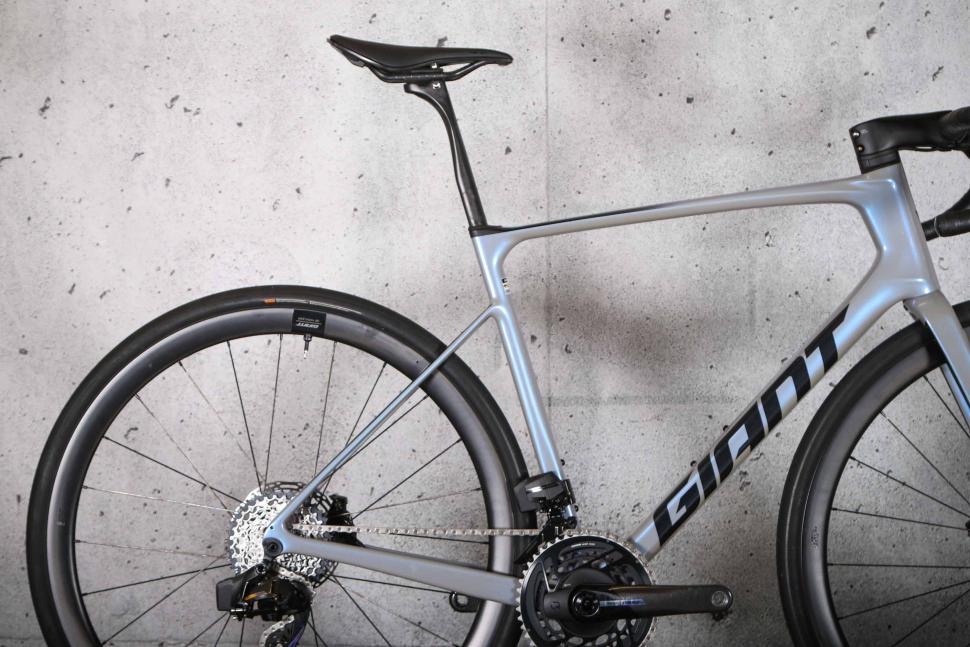
And those few extra millimetres took the edge off my lower back and neck, so rides of three to four hours were more comfortable overall, and arguably more efficient.
With the semi-deep wheels added to the equation, the Defy is a bike that cuts through the wind well and on longer routes the differences in average speed between it and my TCR were negligible, highlighting just how quick this bike is from a real-world perspective.
Giant Defy Advanced SL 1: Frame & fork
Giant is one of the biggest bike manufacturers in the world, so it’ll come as no surprise that it creates its frames in its own factory. As the name suggests, this Defy gets the top-spec Advanced SL frameset which Giant describes as using professional grade raw carbon fibre sheets, with each frame’s lay-up using 132 separate pieces of composite.
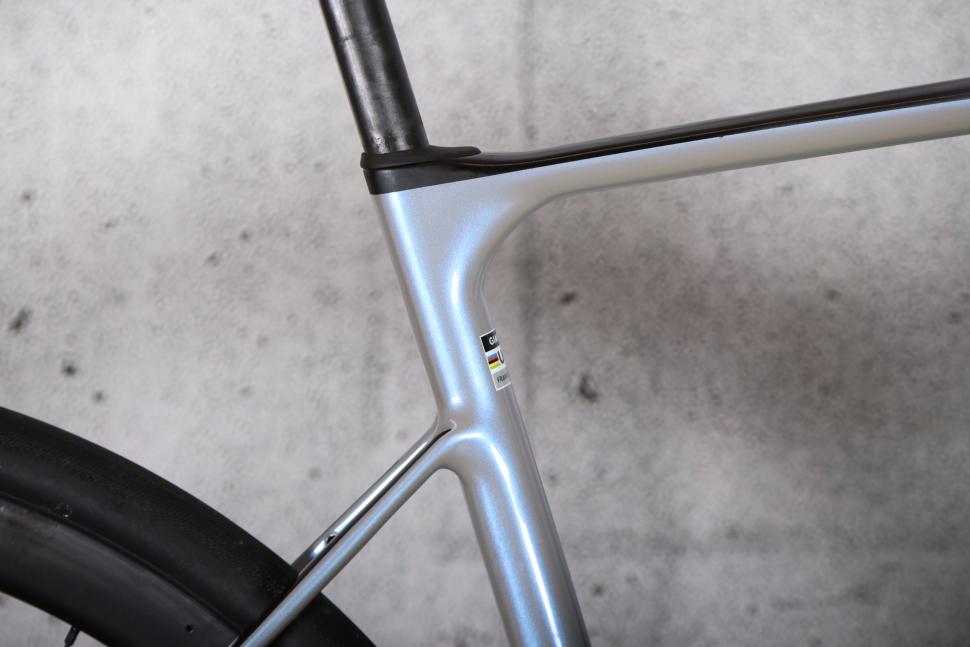
Other than that, it doesn’t give away too many specifics on the carbon composite, which is understandable, but it claims a size medium frame weighs in at around 785g. The Overdrive Aero fork comes with a tapered steerer and weighs a claimed 345g.
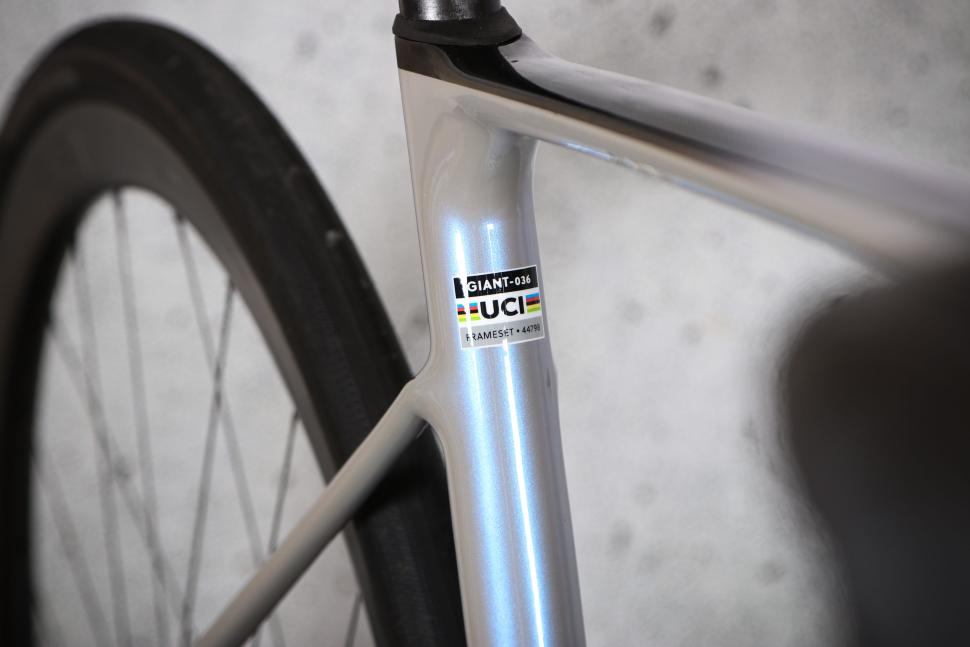
Like most modern frames, the Defy runs its brake hoses fully internally, entering through the top of the head tube, accommodated by the D-section fork steerer. The frame is only compatible with electronic groupsets so there is unlikely to be any faff maintenance-wise, and if you do need to change the brake hoses, I found it relatively easy to do on my TCR, so I’m guessing it’ll be the same here. It certainly gives a clean look to the whole frameset.
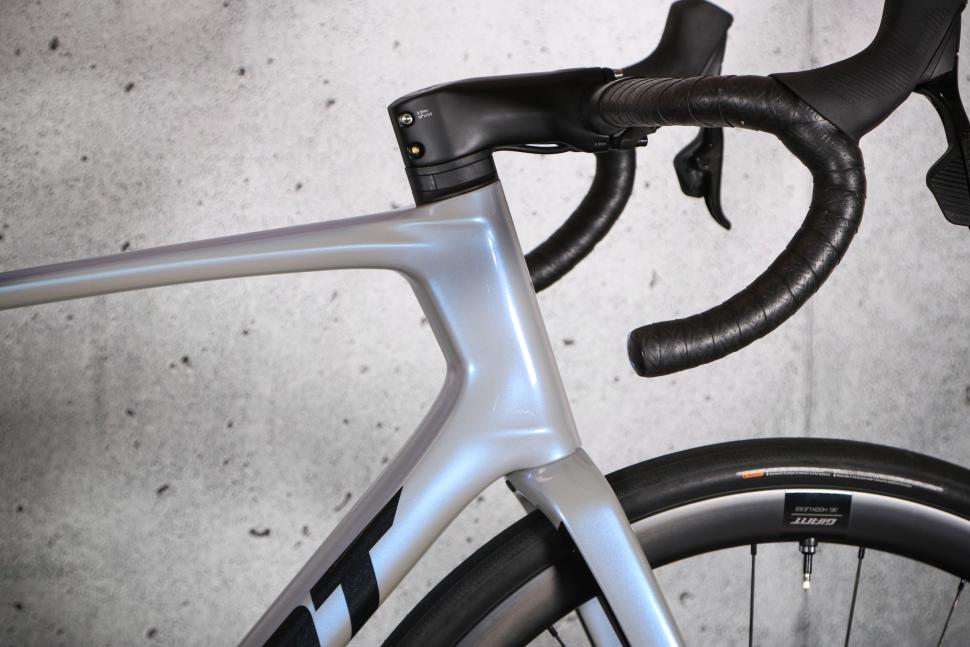
The Defy uses a 41 x 86.5mm press-fit bottom bracket and integrated headset, and if you were to go for the frameset-only option (£3,499) then the D-Fuse SLR seatpost is considered part of the package. It’s designed to flex by up to 7mm, adding extra comfort to the ride. I found it worked well, providing a barrier to harsh vibrations without making the rear end of the bike feel soft or soggy. An adjustable position gives a setback range of -5/+15mm offset.
The Defy also has some slender seatstays to cushion the rider too.
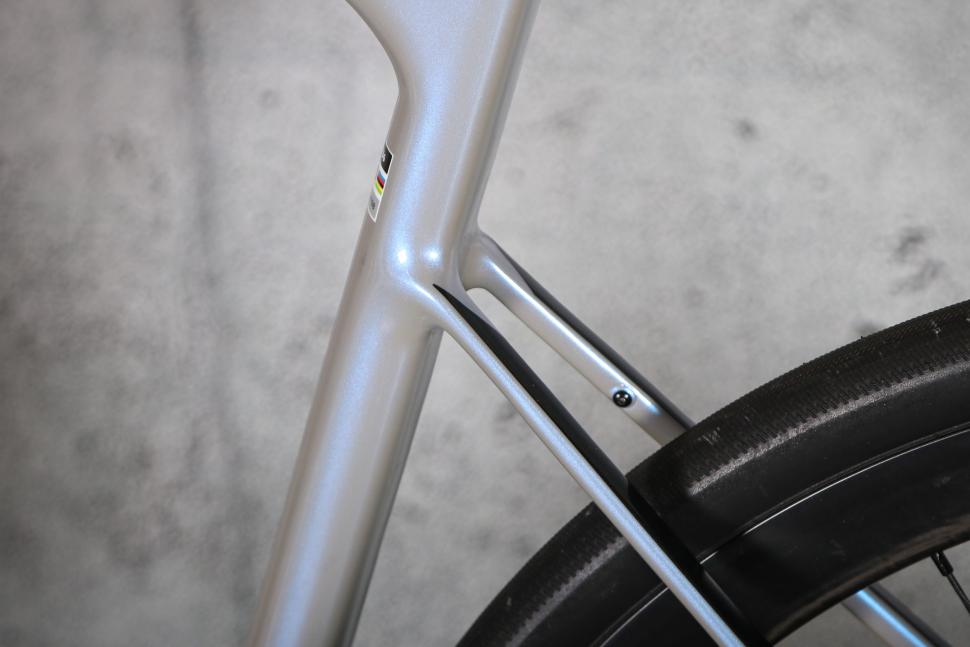
As for mounting points, the Defy has a couple of positions for bottle cages and there are also mounts for mudguards, adding versatility for year-round riding.

A quick look inside the frame showed a clean finish – it’s a well-made bike – and the outside looks pretty impressive too thanks to the pearlescent paintjob for this model.
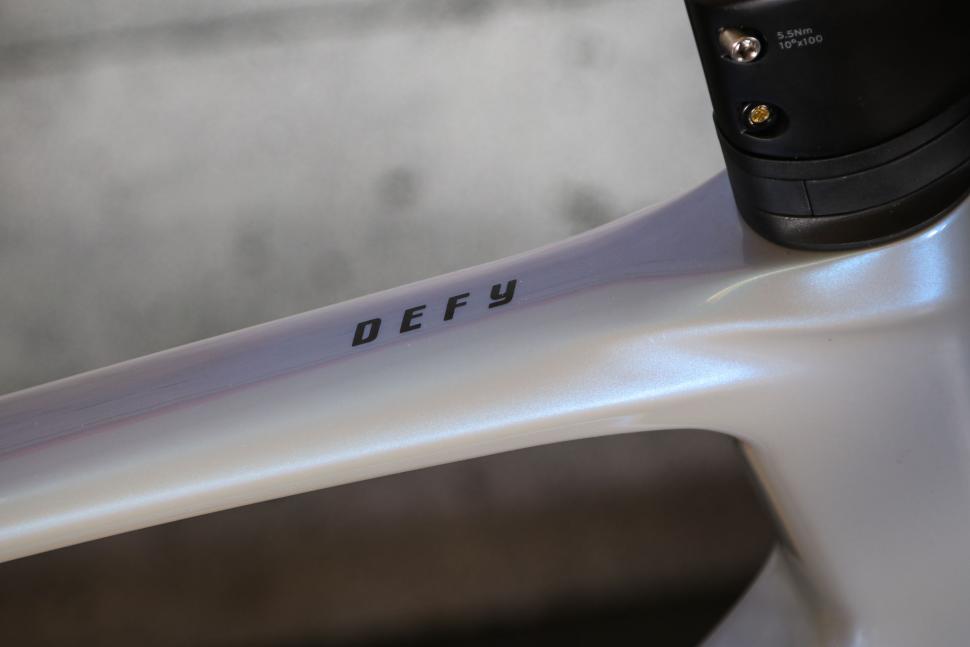
It’s available in four sizes: small, medium, medium/large and large. That covers top tube lengths of 530mm to 575mm.

This model here is the M/L, which has a 560mm top tube, 175mm head tube and a 515mm seat tube.
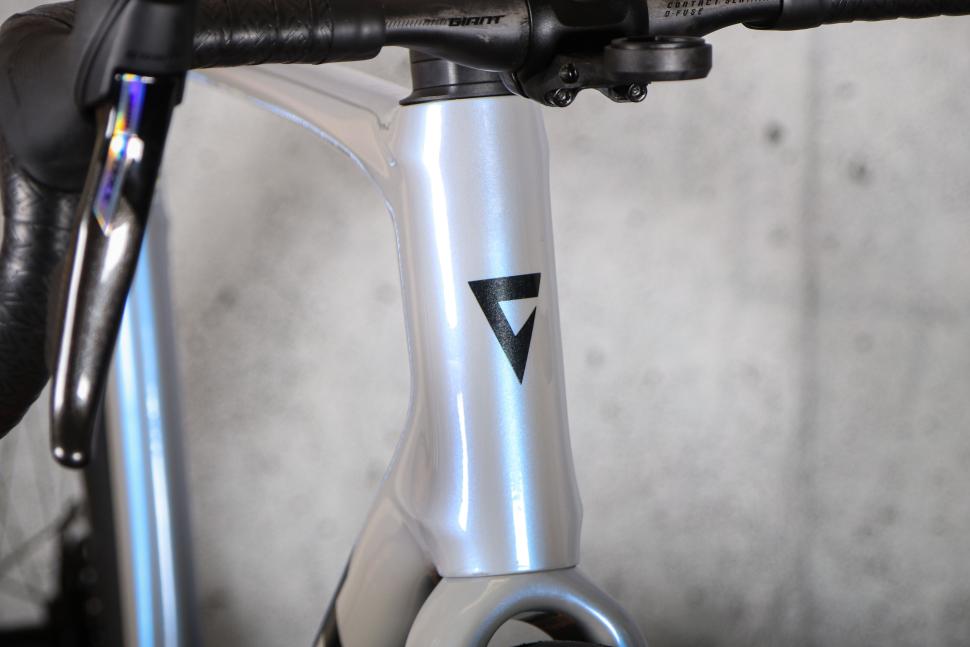
The head angle is 72.5 degrees while the seat tube sits at 73 degrees, and you are getting stack and reach figures of 577mm and 384mm respectively. That gives a ratio of 1.5, squarely where I’d expect it to be for an endurance bike. For comparison the TCR in this size is 1.43.
Other measurements include a 50mm fork rake, 70mm BB drop, and a wheelbase of 1,010mm, including chainstays of 420mm.
Giant Defy Advanced SL 1: Groupset
The Defy models are broken down into three tiers with the Advanced (£2,699-£3,699) at the lower end, Advanced Pro making up the middle ground (£2,799-£4,499) and these Advanced SL models claiming the top of the pack at £8,499 for this SL 1 and £11,499 for the SL 0. (Though there is some heavy discounting on Giant’s UK website at the time of writing, with this SL 1 reduced to £6,799.)
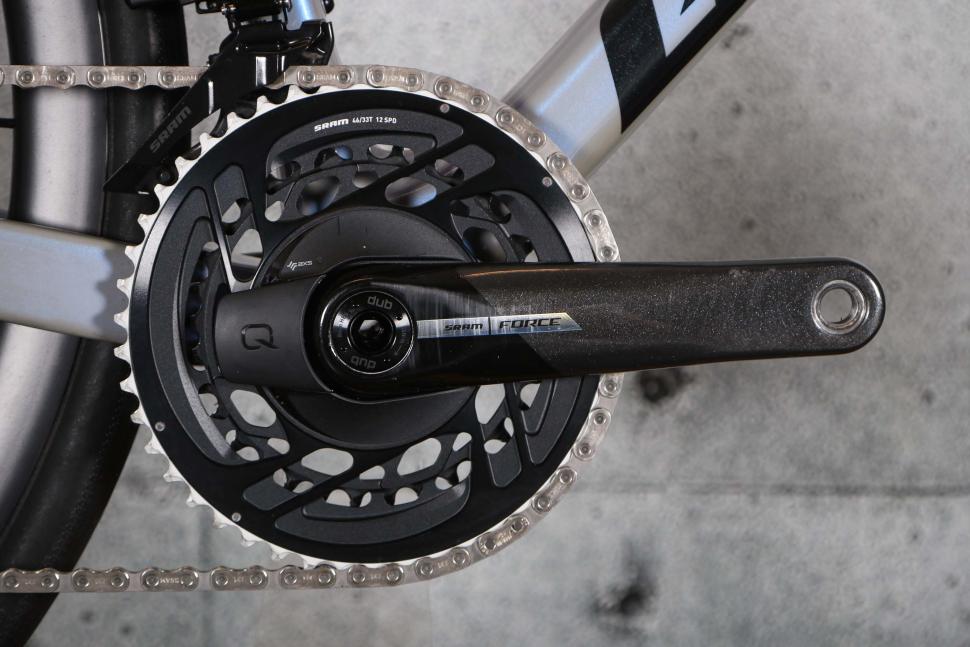
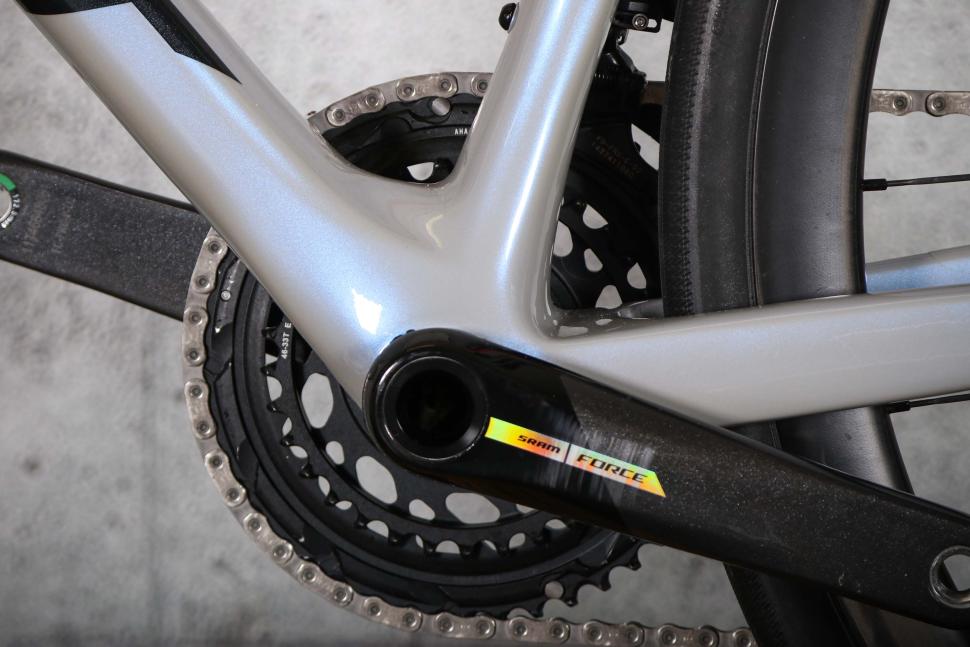
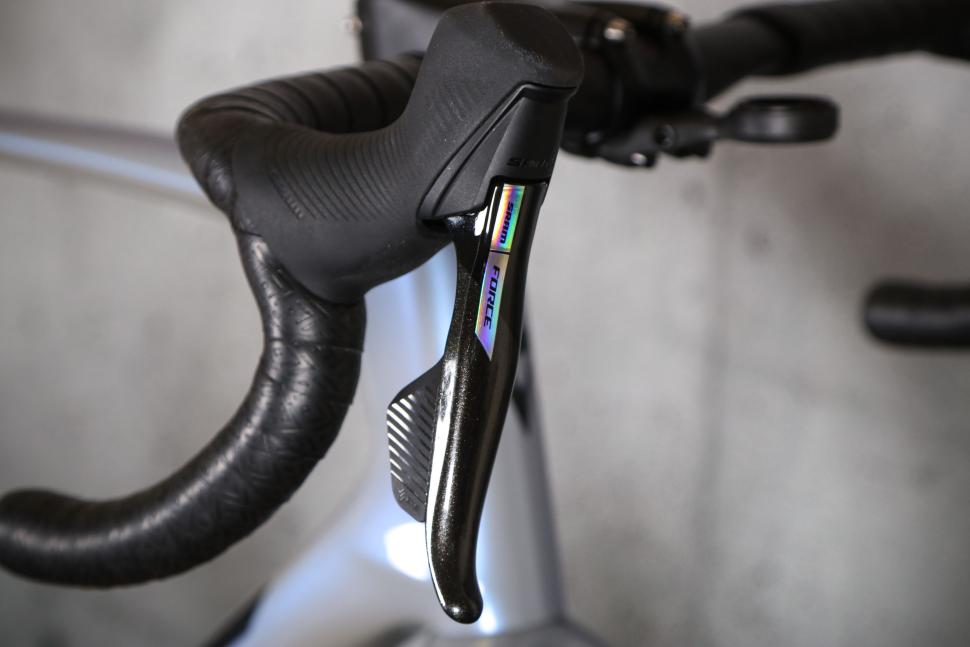
The SL 1 comes with a SRAM Force AXS groupset, albeit the previous generation, which we reviewed last year. No doubt new builds will incorporate the latest version of Force, which launched a couple of months back, with the key area being the updated lever shape that gives much more comfortable ergonomics and improved braking power, like that found on Red. We have a full review coming very soon.
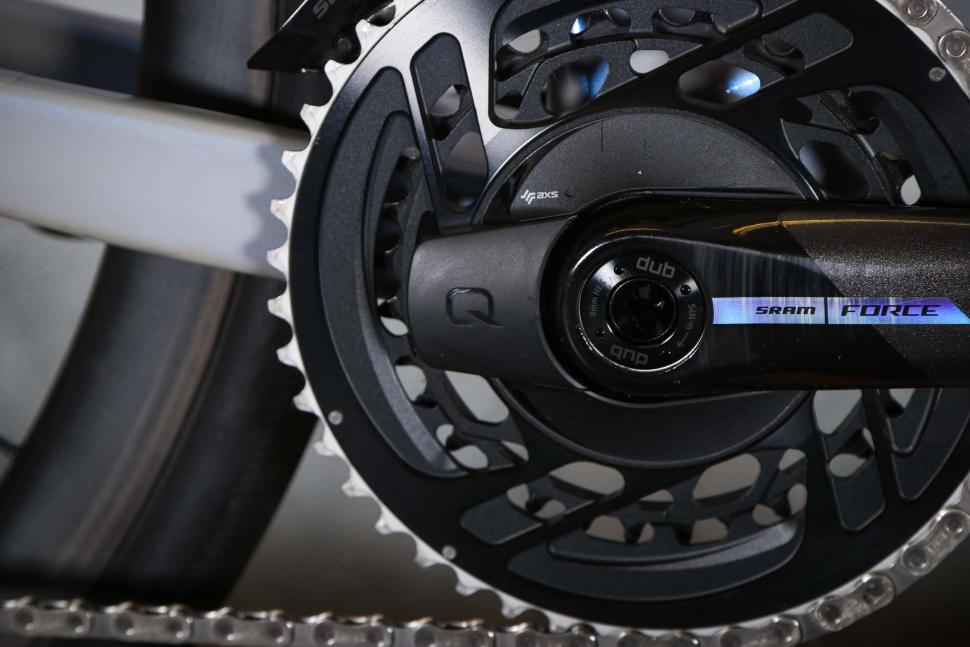
As it stands, though, this bike uses a 2x Force crankset with 33/46-tooth chainrings mated to a 12-speed 10×36 cassette.
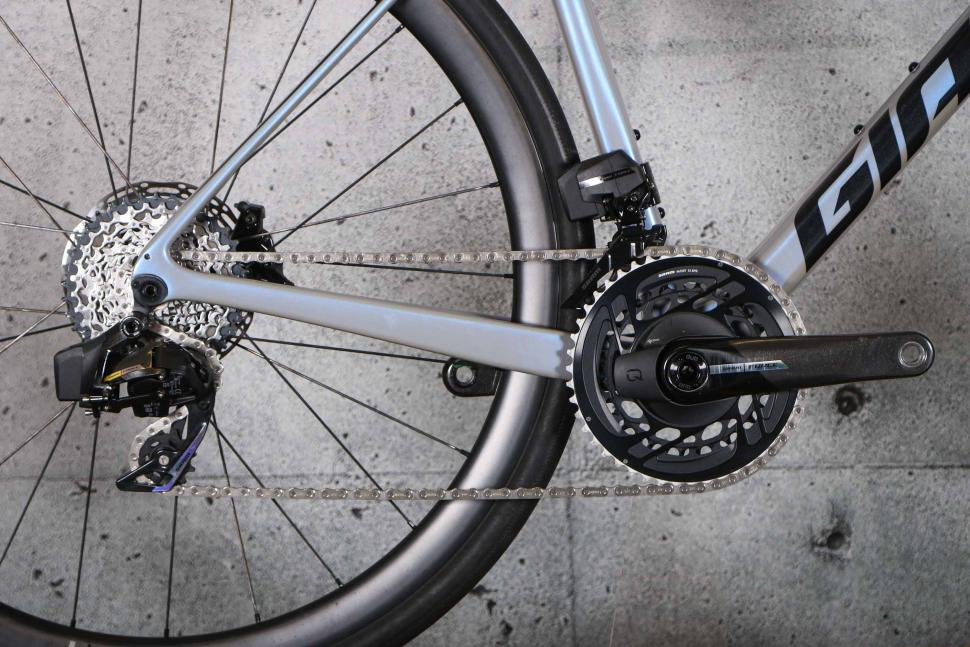
I like the smaller-ring setup of SRAM’s road groupsets as I find it efficient, using it more like a 1x system, with smaller jumps between the sprockets. The small chainring gives plenty of bailout gears, and the 10T sprocket keeps the highest gear large enough that I don’t run out of anything to push at high speed.
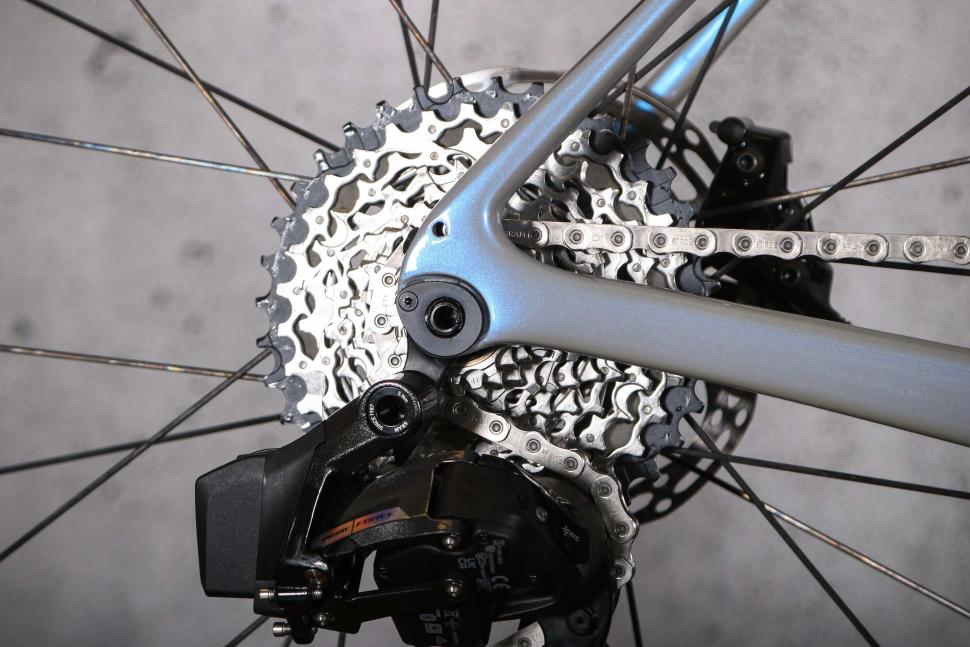
The battery range is excellent on both derailleurs and the shifters, and with the entire setup being wireless, adding a new component to the groupset is incredibly simple. You also get a power meter included and our previous testing has found SRAM’s offerings to be very accurate.
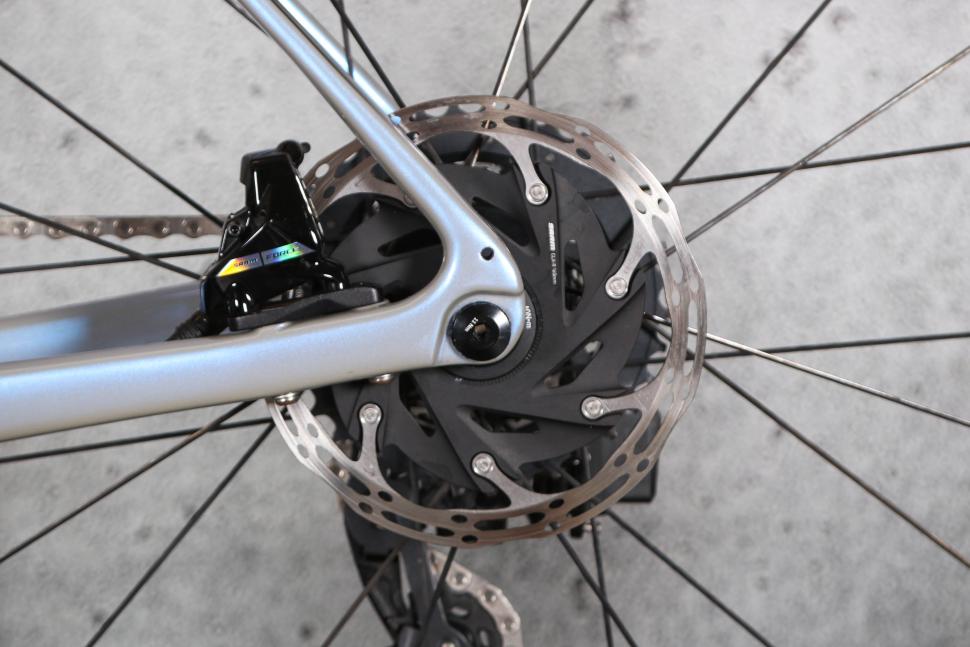
For stopping purposes Giant specs a 160mm rotor on the front wheel and a 140mm on the rear. That, to my mind, is the perfect setup for a road bike like this and has all of the power required, plus the modulation on offer is something that SRAM has improved over each version of its groupsets.
Giant Defy Advanced SL 1: Finishing kit
The rest of the components come from Giant’s own catalogue, like the seatpost I mentioned earlier.
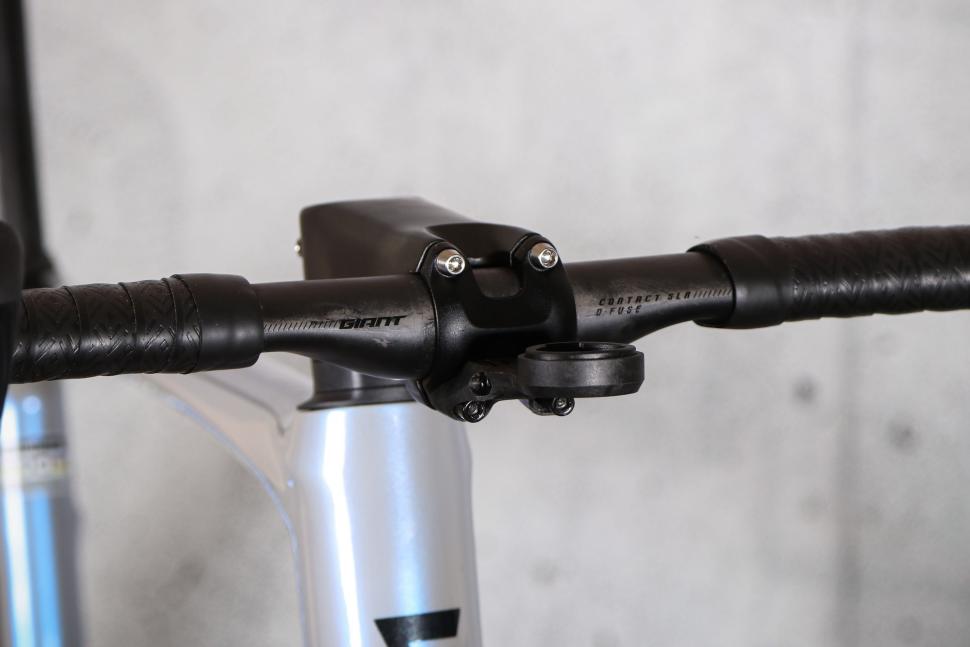
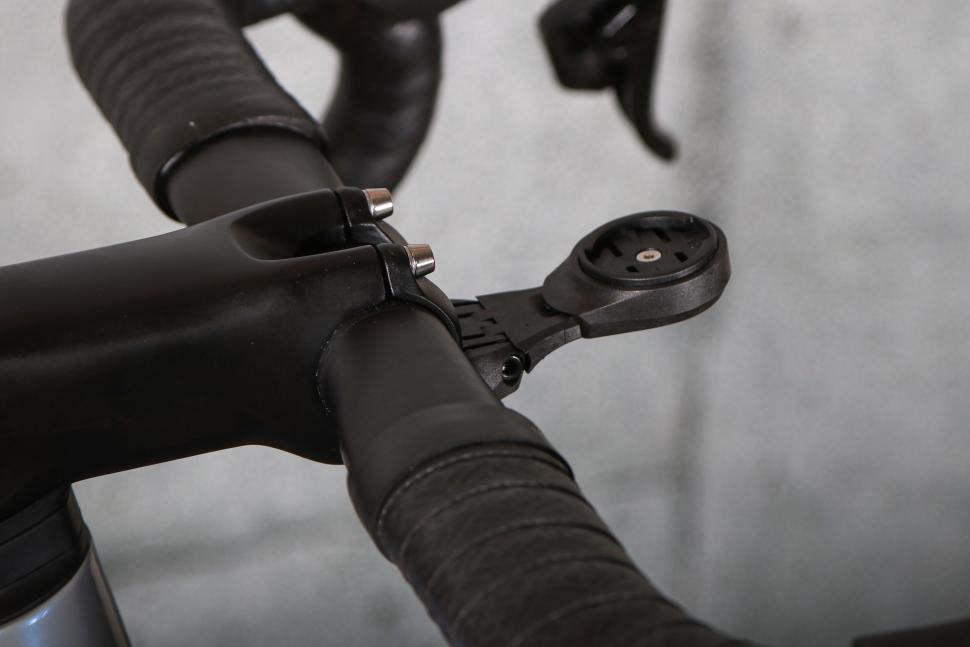
The Contact SLR Aerolight stem runs the brake hoses internally so they can pass into the head tube. It keeps things looking neat, comes with an integrated computer mount and does the basic job that a stem needs to do, the main one being keeping the Contact SLR D-Fuse handlebar in place.
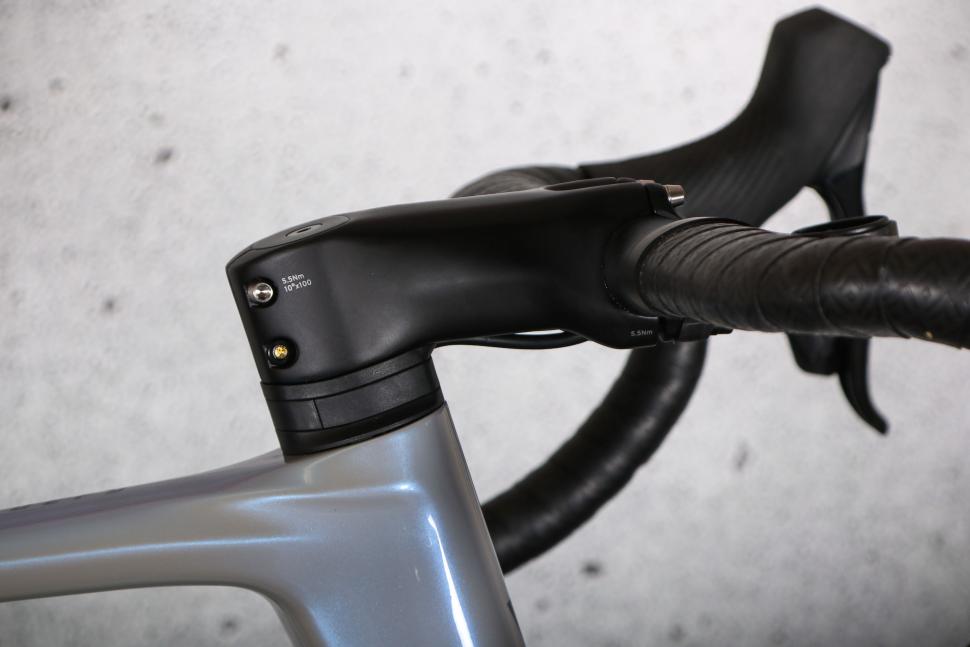
This bar is made from carbon fibre and weighs around 185g in a 420mm width. At £349 separately on Giant’s website, it’s not cheap either.
It has a drop of 125mm and 72mm of reach, so nothing out of the ordinary, but it does get 8 degrees of flare at the drops, something normally reserved for gravel bars.
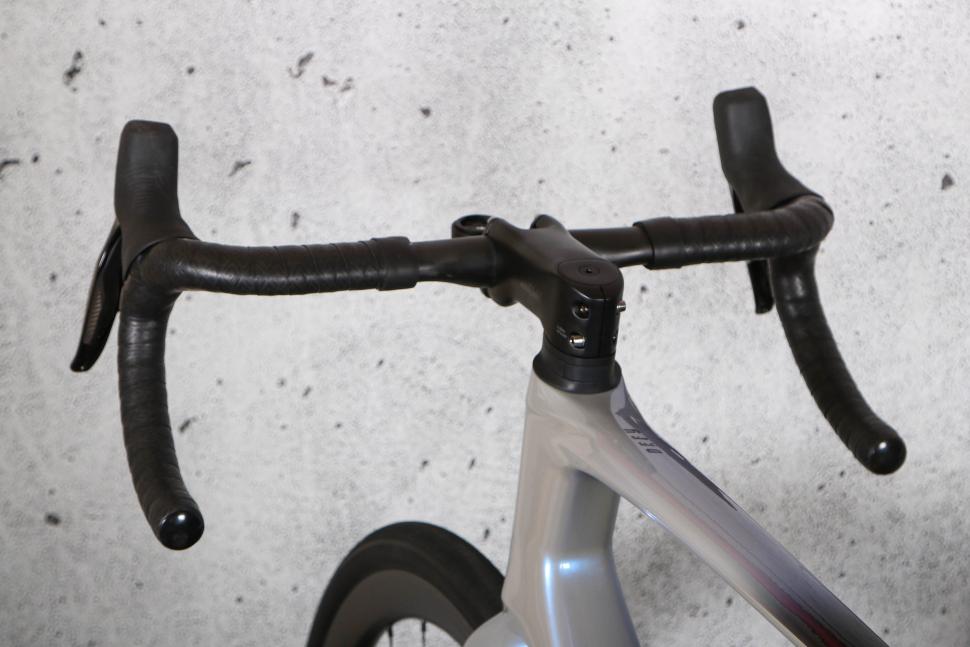
A couple of years back I started using flared bars on any bike that I use for long rides, especially if I’m likely to be riding on poor surfaces or in wet conditions. I like the added stability the wider stance offers in the drops without affecting aerodynamics when riding on the hoods.

Bar width changes with frame size, starting at 400mm for the small, 420mm for the medium and medium/large, and 440mm for the large. Stems range from 90mm to 110mm.
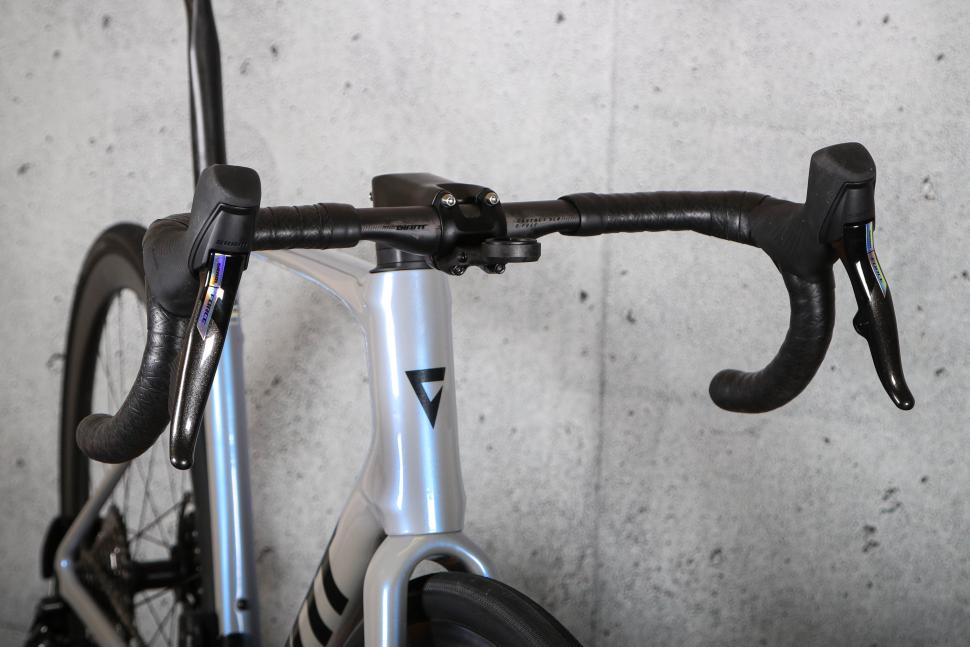
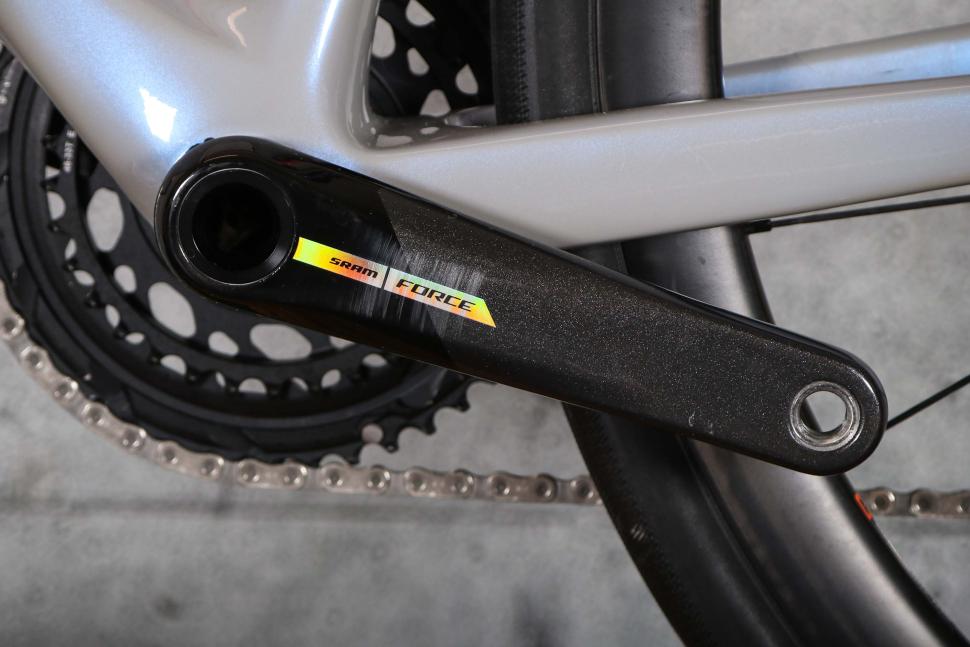

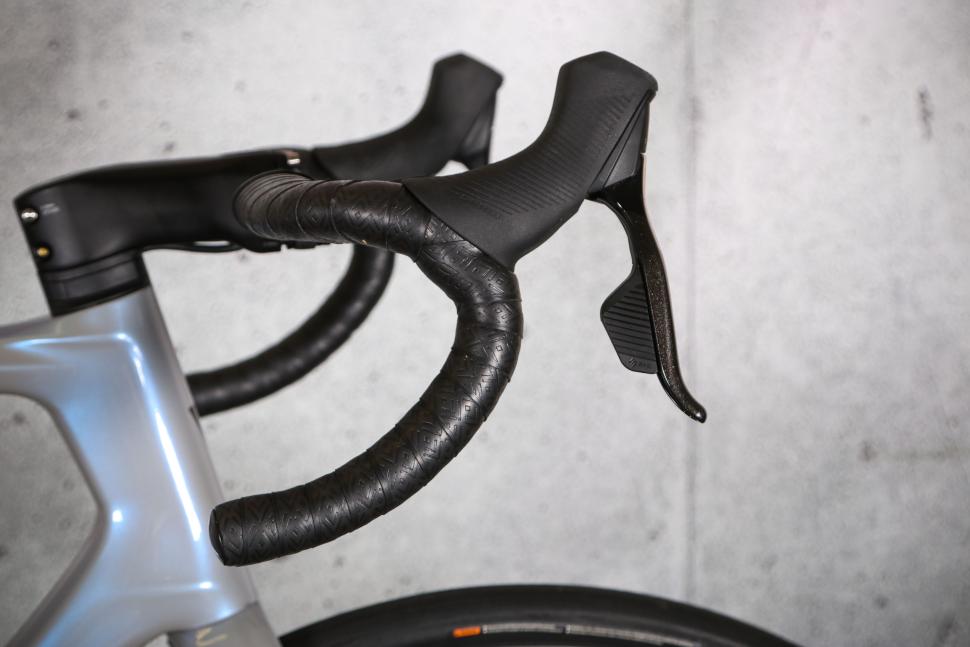
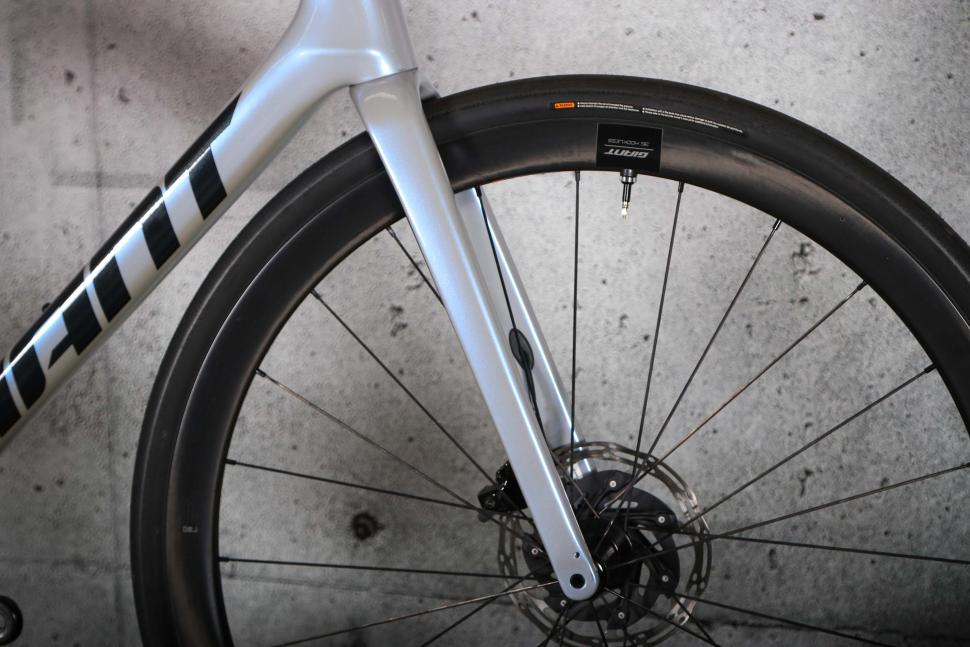
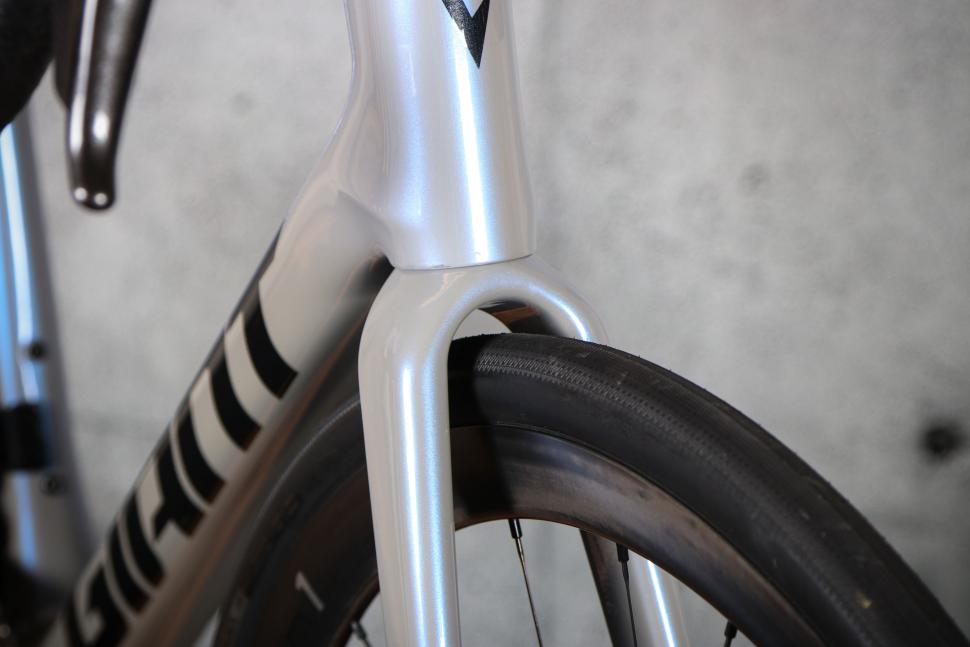
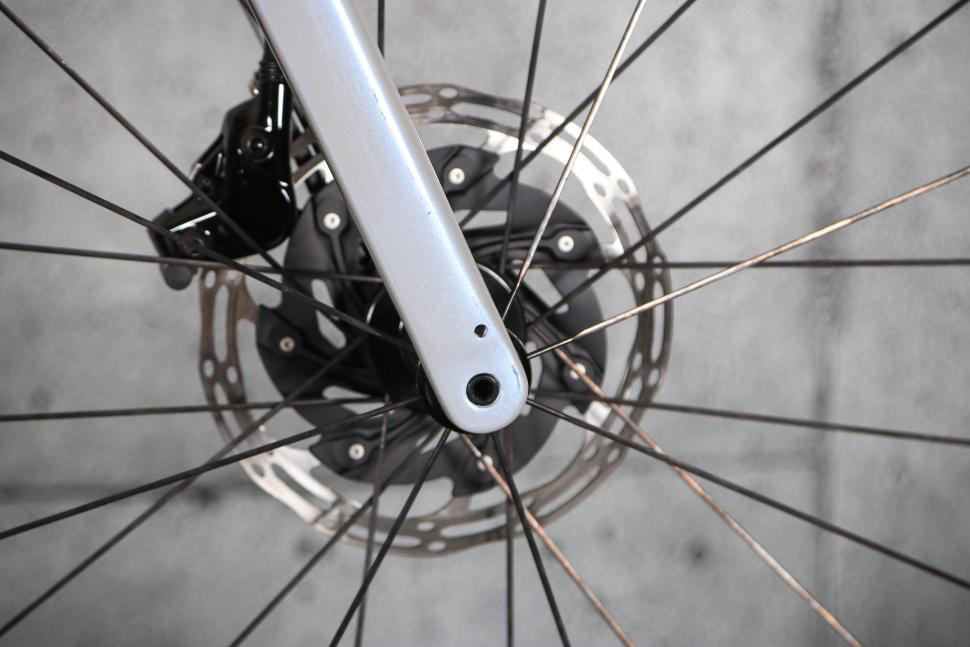
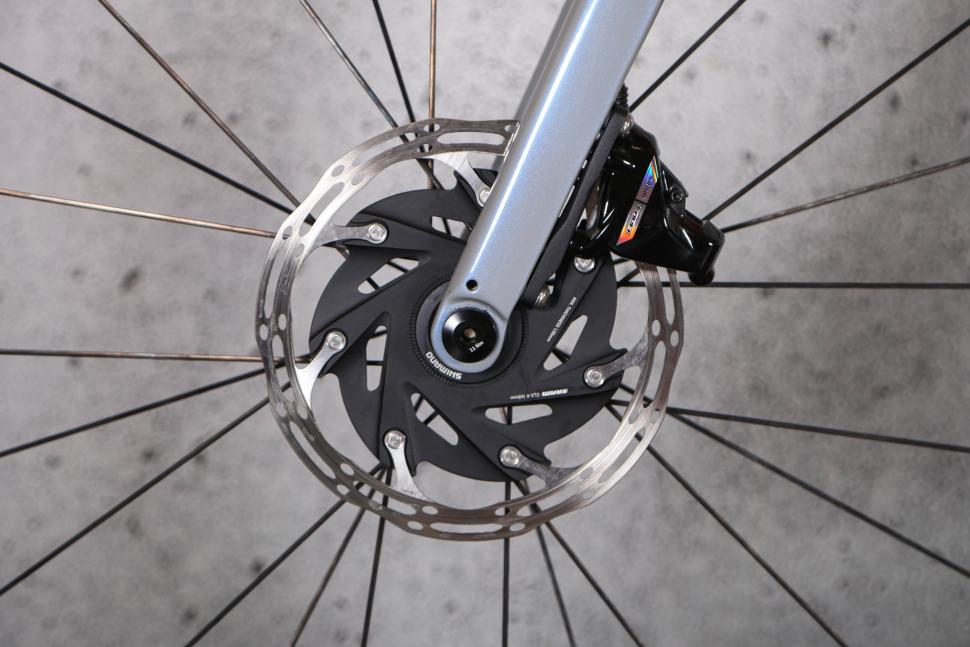
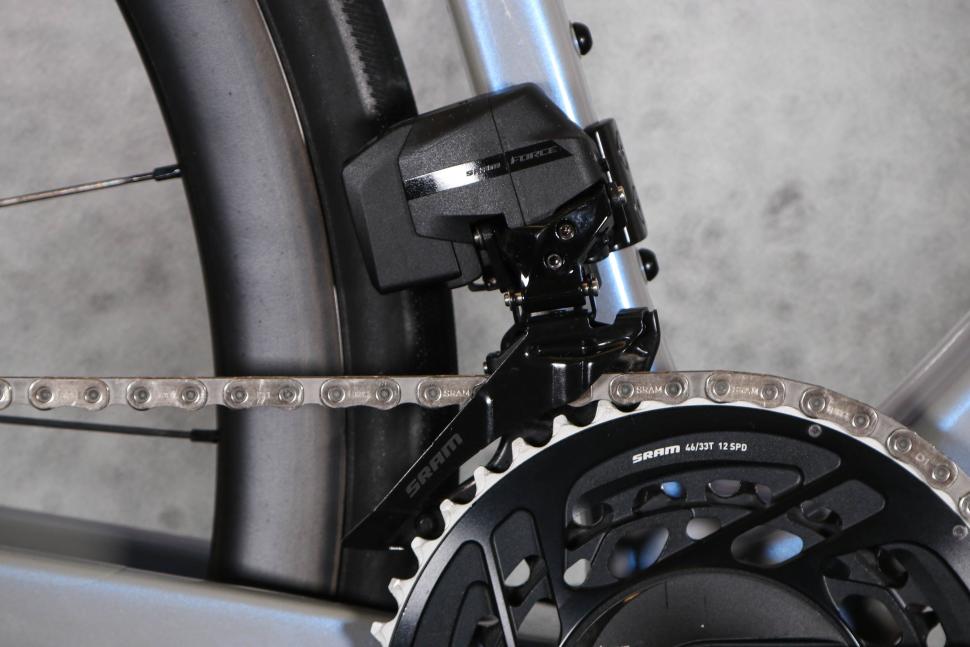
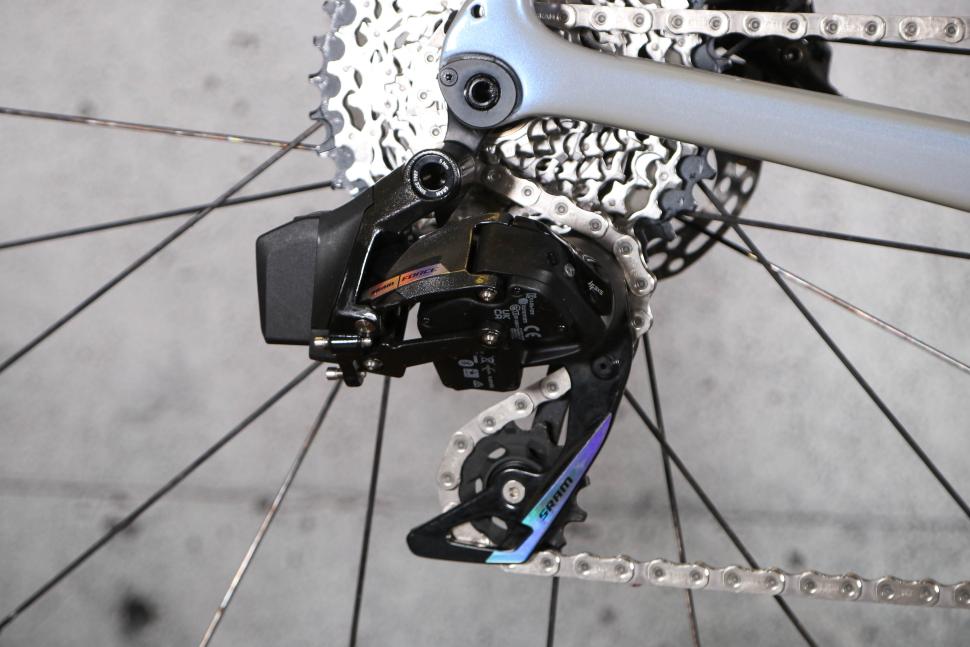
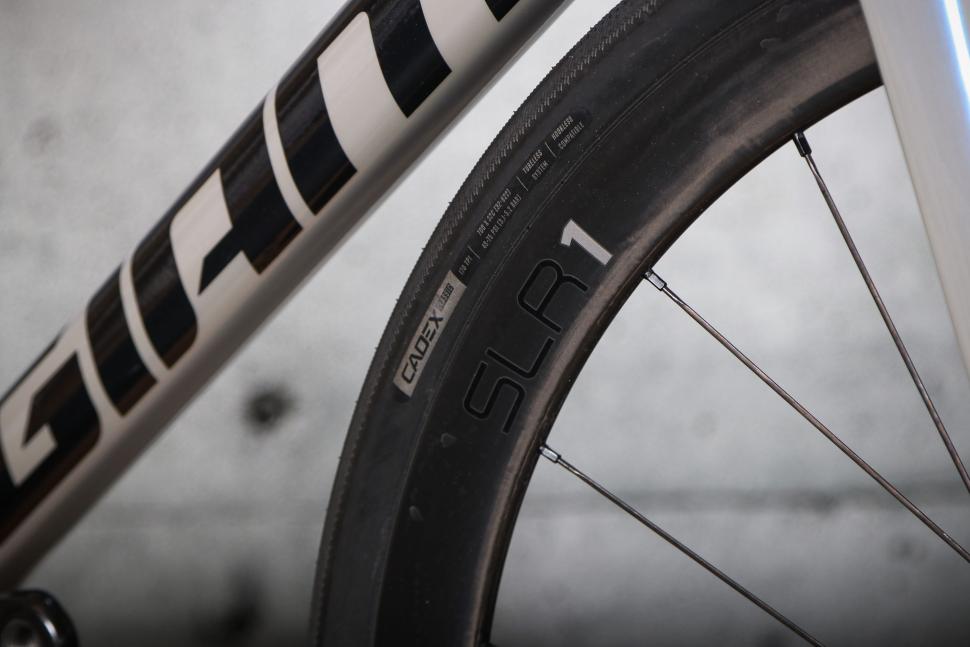
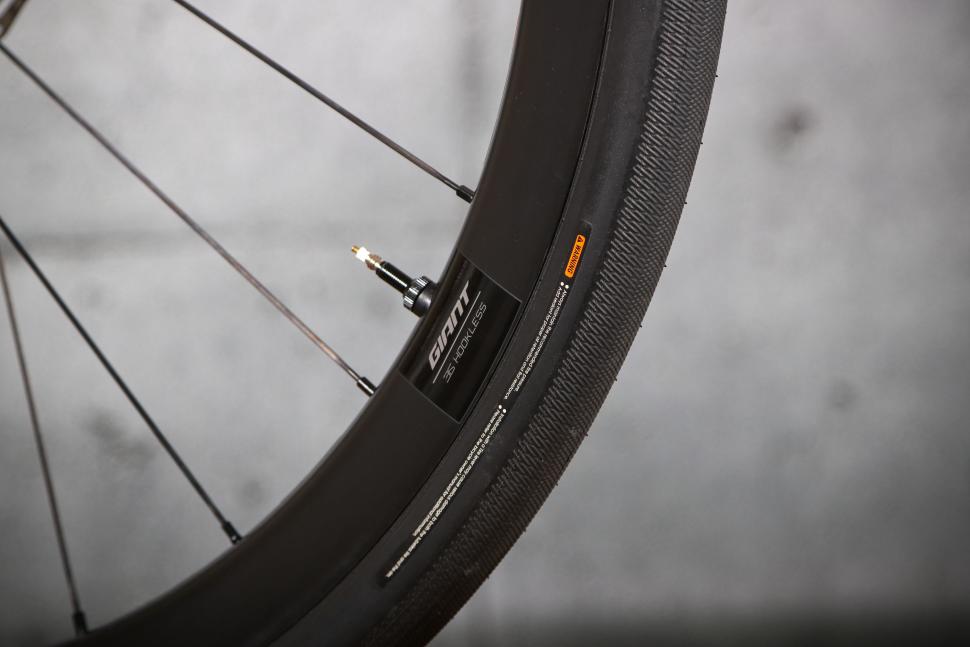
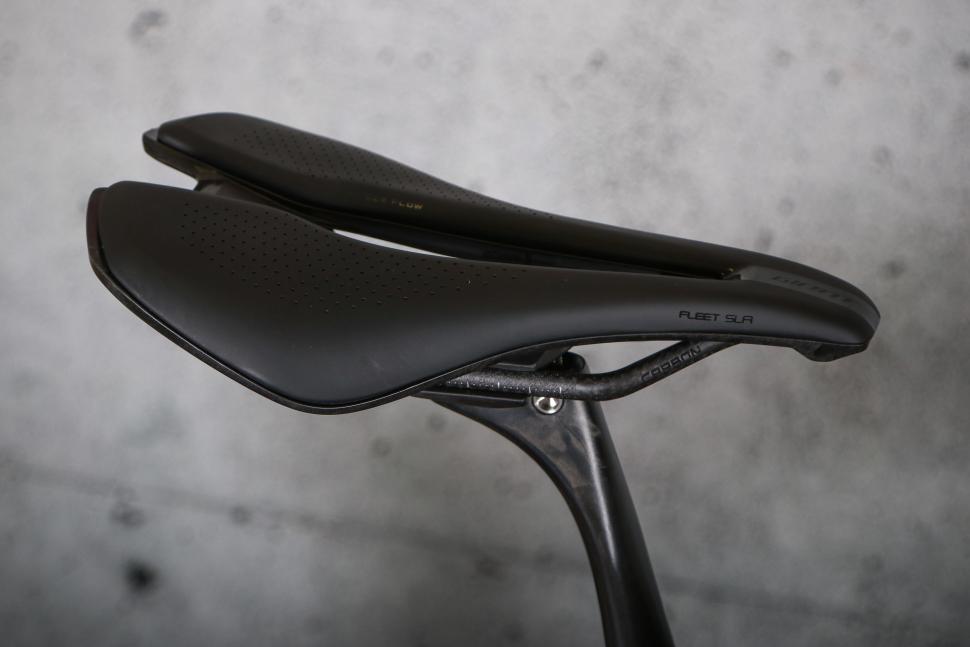
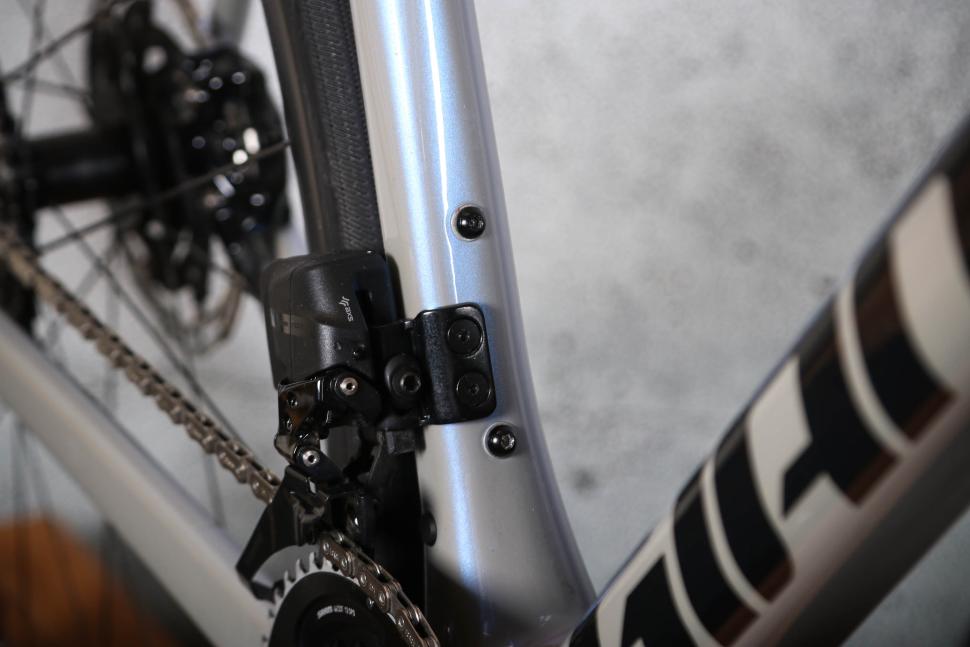

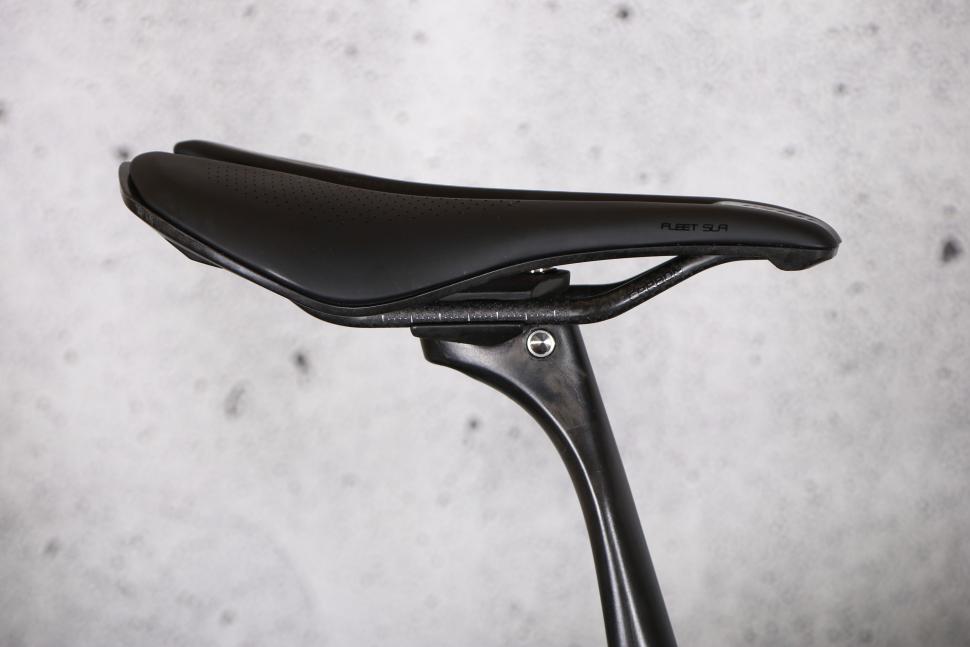
The saddle is the Giant Fleet SLR and I got on with it well. It wouldn’t take the place of my favourites, but if I bought this Defy I wouldn’t be in a hurry to change it. Its slender shape makes it ideal for fast riding and the padding did a good job of providing comfort.
Giant Defy Advanced SL 1: Wheels & tyres
Giant also supplies its own wheels, in the shape of SLR 1 carbon rims with a depth of 36mm mated to Giant’s own hubs and 24 Sapim CX-Ray spokes front and rear. Individually priced at £1,200, this wheelset weighs a claimed 1,442g and has a weight limit of 129kg (285lb) to include the rider, bike and kit.
The rims have a 22.4mm inner width (26mm external), and being hookless in design means they are only compatible with tubeless tyres, regardless of whether you run them with sealant or inner tubes.
They seem to be decent wheels with no issues in terms of reliability or trueness, and with a relatively low weight they accelerate well and aid climbing too.
The Defy will accept up to 40mm tyres but comes with 32mm Cadex Classics fitted as standard, which measure up slightly larger when fitted, to just over 33mm.
I could tell they have been designed as an endurance tyre as opposed to all-out performance – the compound and carcass give a ride feel that only a tough tyre designed for robustness can, as in it’s not the most supple, which affects ride quality and rolling resistance.
If that’s what you’re after and you’d happily swap feedback and grip over the ability to run a single tyre year-round then the Classics will suit you. I think that they do this Advanced SL a slight disservice, though, in terms of what the bike is capable of. They are a bit dead feeling and take the shine off the performance of the bike – something I could easily tell when running the bike with a new set of Zipp 303 SW wheels with 32mm Goodyear Vector tyres fitted.
If you want to get the best performance out of your Defy, I’d definitely recommend changing out the tyres.
Giant Defy Advanced SL 1: Value
Most of the big bike brands have endurance-specific models in their range, so how does the Defy compare?
I’ve ridden quite a few of Merida’s Scultura Endurance models over the last few years, which are slightly more relaxed versions of its Scultura race bike. The Rival Edition is the most recent, and there are a lot of similarities to the Giant – mainly, the impressive ride comfort achieved by a frame that is big on feedback, and it being a capable machine at speed too. The tyre clearance is less at 35mm, but it will take mudguards, and has similar geometry to the Defy, especially at the front end.
The range tops out with the 9000 model, which comes with a Shimano Ultegra Di2 groupset, full-carbon cockpit, Reynolds ATR carbon wheelset and 32mm Continental GP5000 AllSeason TR tyres, all for a very competitive £4,950. That said, Merida gives a claimed weight of 8kg, so it’s heavier than the Defy, and the CF 3 frameset it uses sits below Merida’s ‘pro’ level CF 5.
Specialized’s take on the endurance theme is the Roubaix, a bike that Suvi was very impressed with when she reviewed it for us back in 2024. She rode the SL8 Expert model, which she praised for its smooth ride quality and the fact that it’s compatible with both electronic and mechanical groupsets (and has no internal headset cable routing). It, too, has 40mm tyre clearance and the ability to run mudguards, although the Future Shock system, which adds some damping comfort to the front end, also adds weight. The 49 size she tested weighed 8.5kg.
The Roubaix isn’t as roadie as the Defy, having much slacker angles and all kinds of mounting points added to the frame. It’s an endurance road bike edging towards allroad and light gravel, if you like. The Roubaix SL8 Pro build is similar to this Defy with a Force (the new E1 version) groupset, carbon own-brand wheels and a carbon handlebar, for £6,999.
Canyon’s endurance model is the Endurace. The latest version was released back in 2023, and I got to review the CFR Di2 model. Overall, I was impressed: it was comfortable to ride, pretty nimble and the Shimano Dura-Ace-equipped option I was riding was light at 7.5kg.
I did think it lacked rider involvement, though – the whole experience just felt a little muted. I put this down to the tall front end created by a 186mm head tube (611mm stack) on a medium, which put me in an upright riding position. It was almost a little too ‘endurance’ for me.
It’s more competitively priced than the Defy. The CFR models use Canyon’s top-end frame and costs £8,349 for both the Dura-Ace Di2 and SRAM Red options, which are both higher-tier groupsets than the SRAM Force on the Giant. Both get DT Swiss carbon wheels and a full-carbon cockpit. Canyon currently has an end of season sale on, with both CFRs reduced to £7,419.
Last year I was impressed by the Argon 18 Krypton Pro. Like the Defy it looks and rides just like a performance road bike thanks to excellent frame stiffness and semi-aggressive geometry. Look closely, though, and you’ll find a bike capable of taking 38mm tyres and with mounts for mudguards. The geometry worked very well both on the road and away from it, if you fancy a bit of ‘allroad’ action.
The Ultegra model I reviewed weighed 7.4kg with the included toolkit hidden in the down tube internal storage section, and cost £7,000 with Hunt Aerodynamicist carbon wheels, while a SRAM Force AXS-equipped option comes in at £8,750 with a power meter and Zipp’s 303 Firecrest wheels.
I said at the start of this review that the Defy is an excellent option ‘if carbon is a must’, but if you are open to other frame materials then don’t discount the Fairlight Strael 4.0. Its steel frame makes it slightly heavier, but its geometry and riding style mean it’s very similar to the Giant out on the road, and it’s also the highest I’ve ever scored a bike.
The Shimano 105 Di2 model I rode weighed 8.8kg, but that was offset by incredible comfort and efficiency. It’ll take up to 39mm tyres and full mudguards, too. It’s a bit of an outlier against the Defy, but with a similar build costing just £4,589, the Strael is worth a mention as a fast-riding option with an endurance setup.
Giant Defy Advanced SL 1: Conclusion
Over the years Giant has proved that it is up there with the best in terms of frame design when it comes to blending comfort, stiffness and performance with seemingly little in the way of compromise. That doesn’t change here.
The Defy is a stunning bike to ride, whether you want something efficient to ride hard or to head out for multiple hours and not get beaten up on rough roads. At full price it’s at the upper end of the market, and there is some really tough competition if you are willing to make a few sacrifices.
If you can get a good deal, though, the Defy is arguably the pick of the bunch in the carbon endurance options.
Verdict
Stunning performance – a great blend of stiffness and comfort without compromising engagement between bike and rider
All the deals displayed on our review pages are pulled from a constantly updating database feed of the best affiliate deals available. The criteria for deciding on what are the best deals is who is offering the lowest, delivered price. In most cases we will be showing the very best deal available online, but sometimes you may be able to find an item cheaper. If you can please feel free to post a link in the comments box below. To find out more about affiliate links on road.cc click here.
road.cc test report
Make and model: Giant Defy Advanced SL 1
Size tested: M/L
About the bike
List the components used to build up the bike.
Handlebar: Giant Contact SLR D-Fuse
Grips: Stratus Lite 3.0
Stem: Giant Contact SLR AeroLight
Seatpost: Giant D-Fuse SLR, composite, -5/+15mm offset
Saddle: Giant Fleet SLR
Shifters: SRAM Force eTap AXS 2×12
Front Derailleur: SRAM Force AXS
Rear Derailleur: SRAM Force AXS
Brakes: SRAM Force hydraulic, SRAM PaceLine X rotors [F]160mm, [R]140mm
Brake Levers: SRAM Force AXS
Cassette: SRAM Force, 12-speed, 10×36
Chain: SRAM Force D1
Crankset: SRAM Force D2 DUB, 33/46 with power meter
Bottom Bracket: SRAM, press fit
Rims: Giant SLR 1 36 Carbon Disc WheelSystem
Hubs: [F] Giant Low Friction Hub, CenterLock, 12mm thru-axle, [R] Giant Low Friction Hub, 30t ratchet driver, CenterLock, 12mm thru-axle
Spokes: Sapim CX Ray
Tyres: CADEX Classics, tubeless, 700x32c (33.5mm), folding
Extras: Out front computer mount, fender mount, water bottle cages, factory tubeless set up
Max Tyre Clearance: 40mm
Tell us what the bike is for and who it’s aimed at. What do the manufacturers say about it? How does that compare to your own feelings about the bike?
Giant says, “Go long. Go fast. Superlight and silky smooth, the flagship series of the new Defy range is back to reclaim its title as the pinnacle of endurance road. It’s the perfect choice for the sportive or gran fondo that’s circled on your calendar.”
It’s an endurance bike with a racy edge, making it a fast bike that is also very comfortable.
Where does this model sit in the range? Tell us briefly about the cheaper options and the more expensive options
The Advanced SL models are the range-toppers, with the Advanced Pro and Advanced models sitting below.
Frame and fork
Tell us about the build quality and finish of the frame and fork?
The Defy Advanced SL is finished to a high standard inside and out.
Tell us about the materials used in the frame and fork?
The frame and fork use Giant’s highest grade of carbon fibre composite.
Tell us about the geometry of the frame and fork?
The geometry is only slightly less aggressive than that of Giant’s race bike, the TCR. It’s still very much on the fast side of things, and more racy than many endurance bikes while keeping the steering smooth and manageable.
How was the bike in terms of height and reach? How did it compare to other bikes of the same stated size?
The stack and reach figures bring no surprises for this kind of bike.
Riding the bike
Was the bike comfortable to ride? Tell us how you felt about the ride quality.
Yes. Ride comfort is very good thanks to the frame compliance and the use of flex-inducing components.
Did the bike feel stiff in the right places? Did any part of the bike feel too stiff or too flexible?
Frame and fork stiffness is great, with a solid feeling bottom bracket area, and at the head tube.
How did the bike transfer power? Did it feel efficient?
Thanks to the stiffness of the frame and a decent weight, the Defy is responsive and efficient.
Was there any toe-clip overlap with the front wheel? If so was it a problem?
No.
How would you describe the steering? Was it lively neutral or unresponsive? Responsive.
Tell us some more about the handling. How did the bike feel overall? Did it do particular things well or badly?
The handling is quick enough to take corners at speed while giving great composure and an easy-to-control front end.
Which components had the most effect (good or bad) on the bike’s comfort? would you recommend any changes?
The seatpost gives added comfort through the designed-in flex and I like the flared handlebar for added comfort in the drops.
Which components had the most effect (good or bad) on the bike’s stiffness? would you recommend any changes?
The wheels showed good lateral stiffness, giving the bike a tight feel in the corners.
Which components had the most effect (good or bad) on the bike’s efficiency? would you recommend any changes?
The SRAM Force groupset gearing range is a setup I find efficient because of the smaller chainrings and wide-spread cassette.
The drivetrain
Tell us some more about the drivetrain. Anything you particularly did or didn’t like? Any components which didn’t work well together?
This version of the Force groupset is very good, but is trumped by the better ergonomics of the new version’s shifters. You should see the new groupset being rolled out on this model in the near future, though.
Wheels and tyres
Tell us some more about the wheels.Did they work well in the conditions you encountered? Would you change the wheels? If so what for?
A good solid set of wheels for all kinds of riding topography.
Tell us some more about the tyres. Did they work well in the conditions you encountered? Would you change the tyres? If so what for?
Good tyres for durability and slow wear, but their compound and carcass take the shine off the ride quality and rolling resistance.
Controls
Tell us some more about the controls. Any particularly good or bad components? How would the controls work for larger or smaller riders?
Some great components used here from Giant’s own catalogue. I found the saddle comfortable enough and I’m a big fan of the handlebar shape.
Your summary
Did you enjoy riding the bike? Yes
Would you consider buying the bike? Yes
Would you recommend the bike to a friend? Yes
How does the price compare to that of similar bikes in the market, including ones recently tested on road.cc?
Canyon’s Endurace CFR is probably the Defy’s main rival, having a range-topping frameset, but you are getting the higher tier groupset options for much the same money as the Giant’s SRAM Force build. The Argon 18 I mention is also adorned with a very high quality frameset too. The other options are cheaper, but there are compromises including more weight, a lower-spec frame and so on.
Use this box to explain your overall score
It’s excellent. At the pricier end of the market, but justifiably so in my opinion. Add that to the excellent ride quality, performance and generally loveable behaviour on the road and this is a bike that at the very least requires a test ride if you are after an endurance bike with a racy edge.
About the tester
Age: 46 Height: 180cm Weight: 76kg
I usually ride: This month’s test bike My best bike is: B’Twin Ultra CF draped in the latest bling test components
I’ve been riding for: Over 20 years I ride: Every day I would class myself as: Expert
I regularly do the following types of riding: time trialling, commuting, club rides, sportives, fixed/singlespeed,

10 thoughts on “Giant Defy Advanced SL 1”
Out of the box this bike has
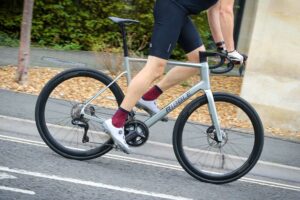
Out of the box this bike has a ridiculous stack of spacers under the stem. I’d be interested to know if the bike was delivered for review as it appears in the pictures (which is the same stack Giant show on their website for the bike, and in all PR photos), or if it was fitted to the reviewer.
Frustratingly the spacers and the top of the stem are shaped, so you can’t simply try out a different stack height by moving the spacers above the stem.
You can stick round spacers
You can stick round spacers under the top cap and it works. It doesn’t look anywhere near as neat as the shaped spacers and flush top cap, but if you just want to try it out for a few weeks it’s fine.
Thanks, I’ll give that a try.
Thanks, I’ll give that a try.
Hi @Thedork. Giant normally
Hi @Thedork. Giant normally asks how many spacers we’d like under the stem before sending a bike out for review and while that wasn’t the case this time the Defy arrived as you see it above, (we always use our own photos) and it fitted me perfectly.
As @OnYerBike says you can fit standard round spacers above the stem to play with position before committing to trimming the steerer tube. This is exactly what I did on my own TCR.
It would be interesting to
It would be interesting to know how this rides compared to the previous generation Defy, which was very comfortable but quite dull.
Is there no choice with the
Is there no choice with the hookless wheels?
Seems a bit of an odd choice to only go hookless as this limits tyre choice – that and I stll don’t fully trust hookless tech!!!
Buy the frameset and get your
Buy the frameset and get your friendly neighbourhood bikeman to build it up with components of your choosing?
Or downgrade to the models with alloy wheels (Defy Advanced 1 or Defy Advanced 2). To be clear, although still carbon, if you did that you wouldn’t be getting the same high end “SL” carbon frame/fork as on the model reviewed, so unclear how much, if any, of the review still stands. But reviews of the Defy Advanced 1 are generally positive in their own right.
This is something that I just
This is something that I just cannot understand from a logical pov 🤷 hookless just doesn’t make sense!
Conti GP5000S TR are
Conti GP5000S TR are compatible with hookless (max 73PSI I believe), so not that limiting.
Fair point but would you ever
Fair point but would you ever go anywhere near that pressure? The instances of tyres blowing off at that pressureare too scary.
Hookless seems okay for MTB and gravel but I am not convinced on road usage.