


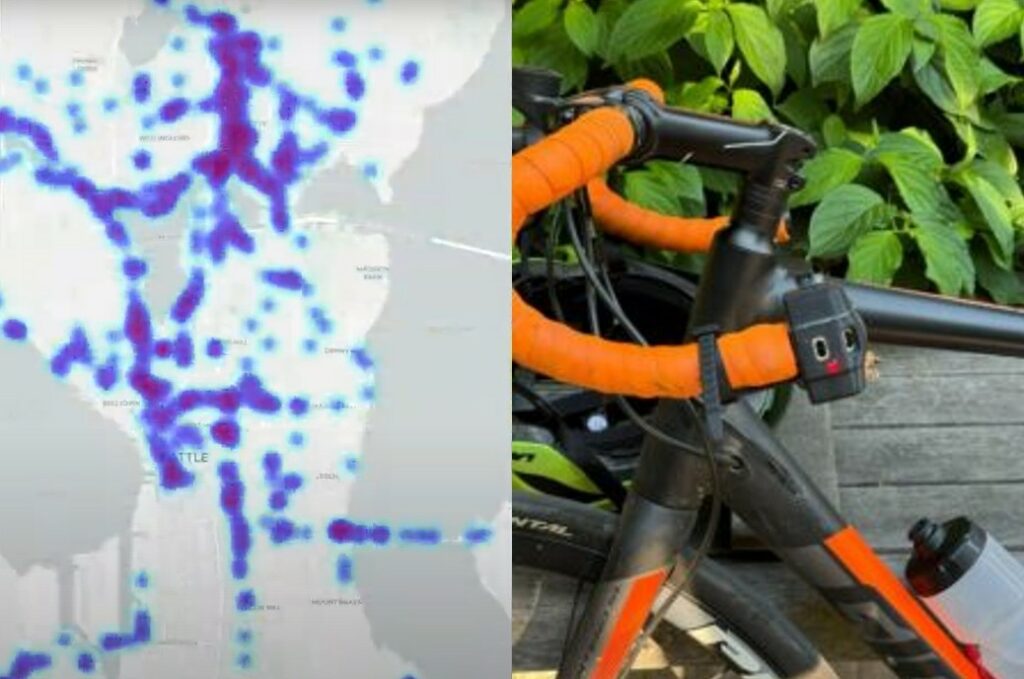

Could a small £20 sensor eventually lead to the creation of safe cycling maps in cities, helping people on bikes avoid risky areas populated by close passing motorists?
That’s what a team of researchers from the University of Washington believe anyway, after they developed the ‘ProxiCycle’ system, a sensor that plugs into a bike’s handlebar and tracks every time a car driver passes within four feet (1.2m), sending it to your phone, and which they reckon could ultimately facilitate the establishment of a close pass risk map for cyclists.
According to the project’s lead author, Jospeh Breda, a University of Washington doctoral student in the Paul G. Allen School of Computer Science and Engineering, the idea for the sensor stemmed from a desire to inform beginner cyclists of the safest routes to ride, encouraging them to cycle without the seemingly constant presence of poor and dangerous driving.
“Experienced cyclists have this mental map of which streets are safe and which are unsafe, and I wanted to find a simple way to pass that knowledge down to novice cyclists,” Breda said.
“It’s hard to identify the safest routes to ride, especially for beginner cyclists, and a key way to flag dicey streets involves time and injury: waiting until cars have hit several cyclists at a given location.”
To counter this cycling catch-22, Breda and his team developed the ProxiCycle sensor to track the number of close passes cyclists experience in any location.
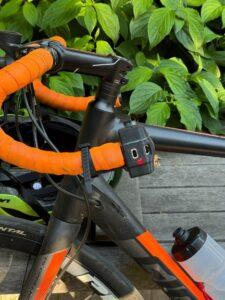
“The point of the project is to create a map of where it’s safe and not safe to bike,” he says. “I was thinking about the things that are correlated with car crashes, or which could indicate that a car crash might happen.
“One of those things is obviously how close cars pass bikes. If a car passes a bike extremely close they might actually hit them.”
Testing the system for two months with 15 cyclists in Seattle, the researchers concluded that they found a “significant correlation” between the location of close passes and those of other indicators of poor safety for people on bikes, particularly collisions with motorists.
According to Breda, if deployed at scale, this information could provide the ability to map out where close passes are mostly likely to take place, while also directing cyclists onto statistically safer routes.
Presenting their research at a conference on ‘Human Factors in Computing Systems’ in Yokohama, Japan, last month, Breda and his team, which includes academics from the Georgia Institute of Technology and a scientist from software company Gridware, said they started by surveying 389 people, of varying degrees of cycling experience, in Seattle.
According to respondents from across the experience range, the threat from drivers was ranked as the biggest factor which discouraged them from cycling. Those surveyed also said that they would be very likely to use a safety-focused navigation map, a concept the researchers noted was currently hindered by limited data on road safety.
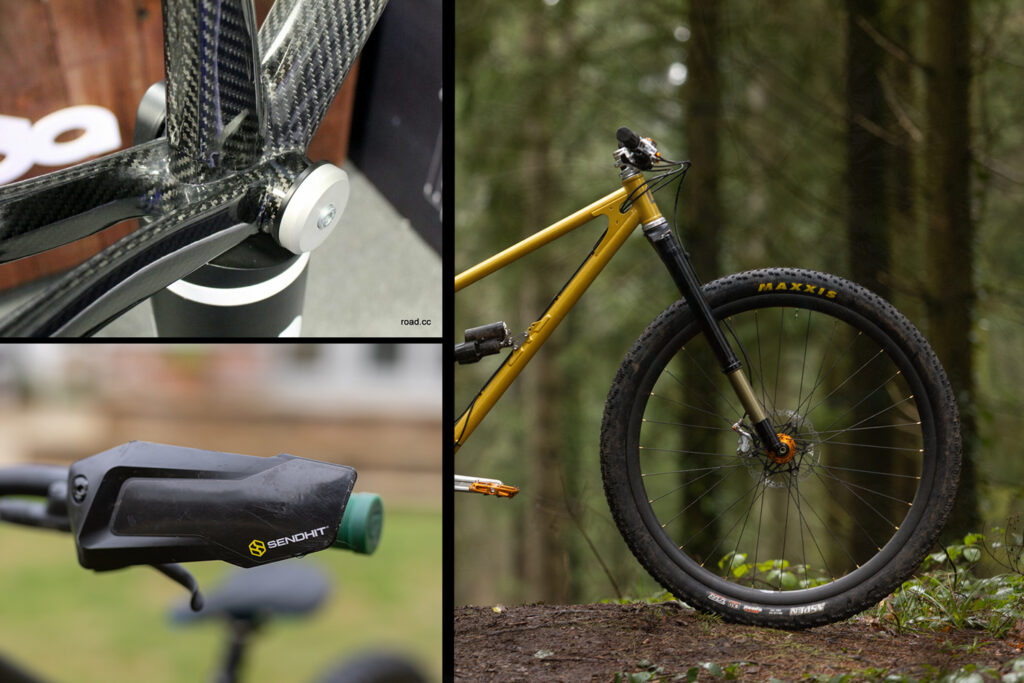
The team then built a small proximity sensor system, which cost around £20 to manufacture, designed to plug into the bar end of the left side of a bike handlebar. The sensor consists of 3D-printed plastic casing housing pair of sensors and a Bluetooth antenna, which transmits to the rider’s phone when an object passes at close proximity.
The algorithm designed by the team then figures out whether the object in question was a passing car – instead of a tree or person, for example – a system validated by a car park test, as well as a thorough review of close pass footage captured on GoPros, which was compared to the sensor output.
Following these initial tests, 15 cyclists were recruited through the newsletter of Seattle Neighbourhood Greenways, a local advocacy group, with each cyclist receiving a sensor, a custom phone app, and instructions.
Over the space of two months, the cyclists rode their bikes 240 times collectively, recording 2,050 close passes in total.
The researchers then compared the locations of these close passes with the cyclists’ “perceived safety” at different locations in the city, which they measured by showing the riders images of locations and having them rate how safe they felt at those particular areas. They then compared the close pass locations with the locations of known collisions involving cyclists and motorists in the last five years.
While the team found a strong correlation between close passes and both risk indicators, they discovered that the location of close passes was more closely linked to the location of collisions than the “perceived safety”, which Breda noted “is the current standard used by policymakers to study safety when collisions aren’t enough”.
“When you overlay the map of these five-year historic collisions and the close passes over two months, there are a lot of places where the signal is pretty much the same,” the doctoral student notes.
Breda says he hopes to potentially “scale up” in the future by taking into account other cycling risk factors, such as the possibility of ‘dooring’ incidents involving drivers or passengers opening car doors into riders’ paths.
He also aims to deploy ProxiCycle in other cities, setting the wheels in motion for existing mapping apps, such as Strava or Google Maps, to include safer route suggestions for cyclists based on his data.
“One study participant, who was living down by Seattle Center, was biking down Mercer all the time,” Breda said, noting the already apparent real-life benefits of his study.
“It’s this busy, multi-lane road. But just before the study, they found out that there’s a great bike lane on a quieter street, just one block north.
“People don’t really feel comfortable getting on a bike, and I want to change that.”








71 thoughts on “£20 bike handlebar sensor could help create close pass risk map for cyclists – as researchers find direct link between near misses and driver collisions”
Or put another way, could a
Or put another way, could a small £20 sensor provide evidence of how close the vehicle actually was to tie in with Strava and helmet cam?
Bring it on!
For the intended purpose..
For the intended purpose.. its not going to work.
On an urban road, you can be passed by the same driver numerous times … and the quality of each pass will be different.
As an evidence gatherer to assist with prosecution… I can’t see it being allowed – and for the same reason that speed data from GPS and rear radar isn’t allowed: it’s not calibrated.
Great idea though … if only it could be entered into the evidence chain.
Does it matter that it’s the
Does it matter that it’s the same driver, or that it couldn’t provide evidence for a prosecution? The intention is simply to create a heat-map of close passes, not to pin point which drivers are responsible.
Seems like a complicated way
Seems like a complicated way to identify roads at the moment, but as you say if it could be used with a camera to confirm close passes it could be a game changer.
Garmin Varia Camera + Radar
Garmin Varia Camera + Radar does the evidence capture already..
lonpfrb wrote:
No it doesn’t. Somebody still has to form an opinion on whether a pass is close or not.
No it doesn’t. Somebody still
No it doesn’t. Somebody still has to form an opinion on whether a pass is close or not
Correct. And when the police (and the ‘legal system’)have decided that there’s no such thing as a close-pass, and the little b*****d cyclists should stop whingeing and get themselves suitably KSI’d, it doesn’t matter how much evidence you supply them, they’re still not going to do anything whatsoever to reduce the not insubstantial risk to cyclists and will still judge every close-pass as ‘not too bad really‘ because nobody was KSI’d and if they were it wasn’t the driver’s fault, meanwhile bashing out the routine monumentally insincere ‘thoughts and prayers’ while ignoring close-passing which even institutionally anti-cyclist and terminally dimwitted police officers can’t dispute
I’d love to see this paired with a camera and used to send warnings/tickets to drivers
This triumph of hope over experience keeps cropping up. We’re up to almost NMotD 1000 and things are still worsening. Nobody gets prosecuted- usually it’s nothing at all, and at worst is an ‘advice’ letter to throw in the bin like all the others. If there was any willingness on the part of the Filth, how difficult is it to decide on this?
https://upride.cc/incident/ku71cuk_montgomery44tonner_closepass/
mark1a wrote:
No it doesn’t. Somebody still has to form an opinion on whether a pass is close or not.— lonpfrb
Two different steps; collecting relevant evidence (auto), traffic specialist assessment of evidence (manual, for now)
Given the strides that machine learning is making, the first pass assessment can be automated, one day.
Because the evidence must stand up in court, a magistrate or Jury will always look at it before any verdict is reached. Just as it should be…
Oldfatgit wrote:
You’re confusing two different road traffic offences:
1. Exceeding the speed limit does require calibrated speed measuring equipment.
2. Driving Carelessly/Dangerously doesn’t require measured speed for the court to decide that the driving standard is well below expectation (Test Fail)
I’ve been successful with video and Radar data in getting a prosecution and conviction so points, fines, and presumably increased insurance costs.
I’d recommend checking your police commissioners stated priorities to see what your police service should care about, before you go to any effort or cost.
My police service is Police
My police service is Police Scotland.
They don’t give a feck.
I’d encourage you to contact
I’d encourage you to contact the traffic division motorcycle officers who have a keen interest in highway safety.
Regular plod, not so much.
I would prefer that the data
I would prefer that the data is passed to public authorities and used to educate motorists and take other steps to reduce the close passing.
I’m sure the researchers have
I’m sure the researchers have the best intentions but imagine if there was a device which could show where in town you were most likely to be mugged or raped, would the data from that to be used to create a map so that people could plan a route to avoid the muggers and rapists or would it be suggested that perhaps now the police knew the most likely place to find muggers and rapists they should get down there and do something about it?
Yeah … going to call
Yeah … going to call “unintended consequences trap” here … if it goes anywhere!
Putting my tinfoil hat on … isn’t this actually generating more data which is likely to find a use other than intended e.g. be pinched by the automated car folks and fed into their models / training?
Mind you given the money being thrown at them conspiracies there are almost beside the point. They’re going to do whatever they do regardless, similar to cars 1.0.
The better automated vehicle
The better automated vehicle folks can train their systems the better for all of us in the long run.
Well yes in one sense (if
Well yes in one sense (if something will happen anyway, why not hope for the best version).
OTOH just as with “cars 1.0” I think there are all kinds of potential unintended (or “not advertised”) consequences of the mass introduction of automated vehicles. They may not happen, or occur in milder or limited versions … but it just makes me leery of them in general (e.g. see here for a “destroying cities as we know them” dystopian vision).
I’m a luddite though; like them all I’m mostly happy with the tech we’ve already got *, and think we could usefully spend more thought and effort on how we employ it.
But it appears that “human interaction” problems are far harder than all the mind-bending technical and logistical challenges developing e.g. AVs. And it appears that “changing people’s habits and routines for the better” without fancy new gizmos is far less profitable / a much harder “sell” to investors and politicians…
* Though modern dynamo/LED combinations are great (compared to), disc brakes are nice… but I was OK with canti brakes or even a drum brake for urban use, and 7 cogs on the rear wheel never felt inadequate.
chrisonabike wrote:
I think the issue with disc brakes was illustrated pefectly yesterday. Too powerful and leads to almost immediate loss of control leading to to many riders going down.
BikingBud wrote:
I think the issue with disc brakes was illustrated pefectly yesterday. Too powerful and leads to almost immediate loss of control leading to to many riders going down.— chrisonabike
Pedantry: I find the issue more like “modulation” rather than “power”. If you’ve set your brakes up properly you can lock your wheels with a hard pull regardless of brake system * (even ye olde drum brakes – though possibly not spoon or elderly side pull ones). It just requires less force to do so with e.g. hydraulic disc.
BUT … the flip side is more control if you don’t instinctively death-grip the brakes (which may require quite a lot of training, true…) And I’ve never (yet) had the horrifying feeling of my disc brakes barely slowing me at all as I have in the slushy weather in Edinburgh with my cantis…
(Currently have bikes with hydraulic discs, cable discs and canti brakes).
Modulation will only work if
Modulation will only work if you get reasonable feedback otherwise it’s just an on-off switch.
Motorbikes all have ABS now as most riders are unable to sense when skids start, especially losing the front wheel and even if progressive application is used.
In the same vein sprrty rear wheel drive cars are too powerful, there is no graceful loss of control, it is immediate and can be vicious.
BikingBud wrote:
Agree – but it’s a question of degree – hence while I’d probably be straight into a bush a fair few people can enjoy rallying.
Cycling at motorbike speeds is really rare. And cyclists are less detached from “feedback” than motorbikers (their machines are much heavier, there’s more ambient noise and extra vibration, more padding, shock absorbers…). Never mind in a car!
In fact most of us will rarely be as fast or as close to others / hard barriers as the pro cyclists. And these proportions drop drastically if we ever get to the situation of “mass cycling”.
Happy mediums? Perhaps we might suggest drums * / cantis for “casual cycling” and discs for those who are more “keen” / understand these may need a bit more care?
Of course this calculus may get changed if an EAPC becomes a common type of “casual bike” (never mind cargo bikes with kids). We may be having a lot of people getting quite a bit of extra mass ** to a greater average speed. I think ABS on a bike is pretty wild upselling … but manufacturers clearly see opportunity and no doubt “but safety…”
* The Dutch seem to have settled on various kinds of hub brakes – presumably for low maintenance (plus few hills). I’ve tried the Shimano roller brakes (briefly) and had a front drum hub brake for a while. I preferred the latter, which I found powerful enough (if properly adjusted…), performance doesn’t change in the wet, doesn’t feel binary etc.
** Above the weight of say an average steel bike. Although again “european city bikes” without power or mod cons can be 20kg plus…
chrisonabike wrote:
In the same way that cyclists are not one homogeneous group just because we use two wheels, motorcyclists vary considerably. So daily commuters probably like ABS, whereas race preparation of production sports bikes involves deleting the unwanted ABS and investing in quality brake master cylinders, reinforced cables and race calipers because braking is a significant area of performance >1g and feel at the lever is critical.
Motorcycle racers and even track day riders have a keen interest in great brakes and the lever feel that lets them carry speed into corners with minimal effort.
No detachment on circuit…
BikingBud wrote:
I think the issue with disc brakes was illustrated pefectly yesterday. Too powerful and leads to almost immediate loss of control leading to to many riders going down.
— chrisonabikeExcept disc brakes give you more control than flakey rim brakes. So in reality you are less likely to have isues with braking. I can’t believe the flat earth types are still denying disc brake advantages.
imajez wrote:
If your rims are flaking I think you’ve got bigger problems than just your braking.
True – if they can train them
True – if they can train them to say ‘you don’t need to make this trip by car’ and refuse to move, that would be great for all of us.
Robert Hardy wrote:
Absolutely, human operators are the weakest link so the sooner they are out of the control loop, the safer humanity will be.
lonpfrb wrote:
I know that this might be a reason for optimism but recall – humans are NOT out of the loop. They’re not directly driving the car, but they’re certainly designing the things and setting the operational parameters (for the moment…).
And if you feel that individual drivers are sometimes not held sufficiently accountable wait ’till you see how effectively the law holds multinational corporations to account!
chrisonabike wrote:
Given the SwastiCar phenomenon that halved the market capital of tesla following blatant fascism of the muskrat, accountability is feasible
Tech-Bros are not guaranteed to win, whatever they imagine…
If it could generate data you
If it could generate data you could include with a police report to support a video it’d be great, or just for police forces to see the data and know where to send police cyclists to ticket close-passing drivers.
Otherwise it would seem that the best use for the data is passing it to local authorities to plan where we need protected bike lanes. Isn’t that what See.Sense claimed their lights/app do?
Quote:
Like that would ever happen…!
brooksby wrote:
Like that would ever happen…!
Depends where you live.
My close pass evidence was sufficient for points, fine and presumably increased insurance costs.
[/quote] Depends where you
[/quote] Depends where you live. My close pass evidence was sufficient for points, fine and presumably increased insurance costs.[/quote]
*Not for viewers in Scotland
My close pass evidence was
My close pass evidence was sufficient for points, fine and presumably increased insurance costs
Brilliant! Points are the Holy Grail, which I have never achieved. So do you have a case where the video is online and the police have officially informed you that the offender has received points and a fine- either this case or a different one?
As the OP, I suspect your
As the OP, I suspect your question is for me.
I called Kent Police to report a crime and sidestepped all the automation to speak to their control room, who took my details and queried my evidence; ride data, video.
Their specialist phoned me back and provided an upload link to share the video with them.
About a week later they called back to confirm that the pass was unsafe and that they would invite the driver for a non caution interview.
He failed to respond so it was passed to CPS.
Much later I got a letter telling me that the magistrate had convicted the driver with points, 2 fines and I presume the insurance costs because points must be declared, and are recorded at DVLA database.
I only post stupid but not criminal clips online because Defence can allege unfair trial in a Jury trial. Of course, I’m not Jeremy Vine..
As the OP, I suspect your
As the OP, I suspect your question is for me
No, it was for IanGlasgow. I’m always looking for videos of an offence against a cyclist which is online, posted either before or after a prosecution (although I think that’s a red-herring and just a police dodge), and a letter from the police or some official body to the victim (anonymised if that’s wanted) which is linked to the video and vehicle which details the punishment of the offender. So far, only Bungle has been able or willing to provide this, leading to my conclusion that there are a lot fewer ‘positive results’ than are claimed on here. Many such claims, I believe, are based on ‘NIP sent’- which are then surreptitiously binned by the police in their ceaseless quest to ‘get drivers off’.
Here is another for you.
Here is another for you.
Excellent. Thanks. I’m
Excellent. Thanks. I’m assuming this was an email from a police officer- like last time, can you provide a photo of the letter which makes it clear it’s from the police, please, with some case reference I hope
My commiserations.. 🏴
My commiserations.. 🏴
The greater the level of
The greater the level of oncoming traffic i.e. the busier the road / time of day would be directly correlated to the number of muppet drivers closing passing people on bikes.
How about a $20 device that
How about a £20 device that plugs into the
vehicle cigarette lighteraccessory charger point and attaches to the drivers genetalia to ‘imform’ them of a close pass?Some might like it though
A fabulous idea. 🤣
A fabulous idea. 🤣
I fear unintended
I fear unintended consequences: “Your honour, I accept it was a close pass, but I only hit them after the involuntary swerve caused by the electric shock to my nads”
Oh, I think this could even
Oh, I think this could even reuse the cigarette lighter to be attached there…
This is a classic case of
This is a classic case of someone coming from outside of the field thinking they can solve a problem that doesnt actually exist in the field.
Local authorities already have the data at hand to plan low traffic routes – they dont need a sensor to tell them where the shite roads are, they already know – its like their job.
So its mostly worthless for its intended purpose. GrumpyCyclist’s suggestion for a close pass distance sensor to add to close pass submissions is much better.
Secret_squirrel wrote:
I’m very pleased for you living where low traffic routes are getting local authority action.
For the rest of us, collecting better map data does have the potential for better route choices.
I don’t think s_s was saying
I don’t think s_s was saying that they are doing it – merely that they already could if they were so minded.
Fair point but after the end
Fair point but after the end of Active Travel they have no funding so no interest, at least not in Kent. With Reform election to control KCC the Highway authority, I’d anticipate apathy turning to hostility.
Petrolhead anti-cyclists will
Petrolhead anti-cyclists will never accept responsibility for dangerous driving. If this device plots routes that are known for close passes, these drivers will blame everything except their piss poor driving skills (vehicle lane has been narrowed by cycle lanes/pavements/vehicle widths) and if any cyclists are hit by a car they will state it is the cyclists fault for using a road ‘known to cause close passes’ (because it’s the road not the driver). The best use of this device would be to inform the police with accompanying video evidence, and have the lazy fuckers actually prosecute drivers with proper penalties that ensure they learn not to be ignorant selfish c”ts
It’s a start!
It’s a start!
Take the sensing element and then use that to trigger the marking element which uses a laser to etch onto the vehicle a suitable phrase such as:
“CLOSE PASS TWAT”
or
“I ENDANGER CYCLISTS!”
Or
“NOT SO CLOSE NEXT TIME MATE!”
I can see the glee on drivers faces as they realise thier action has just cost them many thousands for a respray.
Or trigger an electronic sign
Or trigger an electronic sign on the back of the bike as a guide for the next driver – happy / sad face, or too close / thank you.
Sounds like the OP wants the
Sounds like the OP wants the “shaking an invisible can of beans” option!
Illuminated waistcoats are
Illuminated waistcoats are available but sadly missing the Face Options.
ANT+ integration as a display device would allow consumption of the Varia Radar sensor that already provides RAG values.
I’m not really sure why cars
I’m not really sure why cars don’t have this fitted to them as standard, it could display a warning etc on the dash, it might change the behaviour of some drivers (unfortunately the worst ones are those who likely wouldn’t care anyway)
Maybe cars need a scoreboard on them, showing their current speed, how many times they’ve broken the speed limit that trip, no of close passes etc. If drivers knew that everyone could see how badly they’ve been driving they might think a little more about their actions.
RobD wrote:
I think you’d more likely get people trying to beat the high score…
Change it to “miles since
Change it to “miles since last f*** up”
Miles seems a bit optimistic,
Miles seems a bit optimistic, how about meters.
It’s only an adaptation of
It’s only an adaptation of the already widely available parking sensors and lane keeping technology. Especially on the wankpanzers that frequentl seem to be the vehicle of choice.
If the gap between the object and the current path or centre line or offside edge of the road, where no centre line, is inadeqaute for a safe pass, the vehicle brakes apply automatically.
It works for brake assist and adaptive cruise control.
We’ve had this in the Garmin
We’ve had this in the Garmin ecosystem for years, specifically the Varia Radar and modern Edge head units rhat can run IQ apps, running a specific app to catalog the Radar Alerts for later upload, so collection from all users/locations.
Though it’s possible to evidence distress when close passed with heart rate monitor data, there is a better, less risky, less expletive provoking way.
That is Avoidance of spacial errors by providing visual support to the negligent motorist. Specifically by showing them the 1.5m width separation that is the minimum acceptable.
This is easily achieved with about £2 of plumbing spares; 1.5m of 15mm plastic pipe, four tube fasteners, and two nut&bolt sets to attach two pairs of tube fasteners back to back. Other permutations may suit your bike depending on tube diameters. Thus it’s easy to install the pipe perpendicular to the top tube on the rear A trame or seat post, on the offside.
This visual aid ensures that other road users are able to judge the minimum width and so make a safe pass. No need for personal risk, expensive cameras, time spent reviewing clips, reporting, or court appearance.
I’ve observed about equal positive or negative feedback, including positive feedback from my local police service.
I prefer a white plastic pipe, but it’s up to you..
Love it are they 15mm heating
Love it are they 15mm heating pipe clips around the seat stays?
What do you have on the other end, a large old fashoned bright orange toilet cistern float?
A tulip.
A tulip.
BikingBud wrote:
The pipe is held directly with open ended clips so that they would release the pipe under significant impact, and not transfer force to the bike.
The seat stays have full clips with fillers to account for the not round shape of them.
The 1.5m white 15mm pipe is the optimal balance of noticeable and aerodynamic.
Generally gets a wide pass as drivers value their vehicle condition, so scratched paint doesn’t appeal. Not that it would, but they can’t tell..
lonpfrb wrote:
Does it have appropriate sounds?
Yes, but just Alert beeps on
Yes, but just Alert beeps on Red or Amber and no sonar style repetition, atmospheric though that is.
Multiple vehicles are tracked as dots on the side of the Edge or Varia HUD display so it’s easy to see the big picture for little attention.
lonpfrb wrote:
Not quite… rear facing radar doesn’t detect or indicate indicate close passes, it simply measures vehicles’ distance behind and speed using Doppler effect and exposes that data to a head unit or phone, in Garmin’s case, up to 8 simultaneous vehicles, up to 140m away.
Garmin do provide Red Amber
Garmin do provide Red Amber Green hazard status based on their considerable testing so I find that to be a good metric for the hazard. It’s their intellectual property how exactly they do that. I doubt that only doppler shift is used.
lonpfrb wrote:
Once again, it won’t detect a close pass. It does not do anything with lateral distance. You could be passed at 0.5m or 5m, the data will be the same. The so-called Red Amber Green interpretation is related to closure speed, not proximity.
I’ve been running a radar since 2015 btw.
But won’t you need to add
But won’t you need to add another 1.5m pipe to the end, so they can tell how much clearance to leave so they don’t hit your pipe? And then won’t you need to add…
No, the Highway Code sets out
No, the Highway Code sets out 1.5m from the rider as the minimum separation below 30mph and wider (other lane) above 30mph.
The important thing is to push wide the wankpanzer drivers who focus on their safety first, so disregard the Hierarchy of Responsibility.
The pipe is attritable, I’m not.
I really like this idea, but
I really like this idea, but there’s a busy one-way street in town where the bike lane shifts from the right side to the left for a bit, then back to the right. With a sensor in only one bar end it’s going to mark that stretch of road as very safe, regardless of how close cars pass by.
You realise you can just
You realise you can just attach two sensors right?
I’d love to see this paired
I’d love to see this paired with a camera and used to send warnings/tickets to drivers.
I wouldn’t expect every close pass to be actioned, but if this could highlight repeat offenders and particularly close passes it could be quite effective.
So the solution to close
So the solution to close passes is to get the bikes out of there?
I love the goal of this: to keep people safe. But this approach is lacking something to really solve the issue.