



Transport for London has proudly explained how since 2019, an average of six fewer people have been killed each year and 21 fewer people seriously injured in collisions with Heavy Goods Vehicles (HGVs) being driven on the roads of the capital.
Between 2022 and 2024, the number of pedestrians, cyclists and motorcyclists killed or seriously injured in collisions involving HGVs being driven in London dropped by a third compared with the same data from 2017 and 2019, an eye-catching reduction when considering the reduction across the entire road network was just 4.5 per cent.
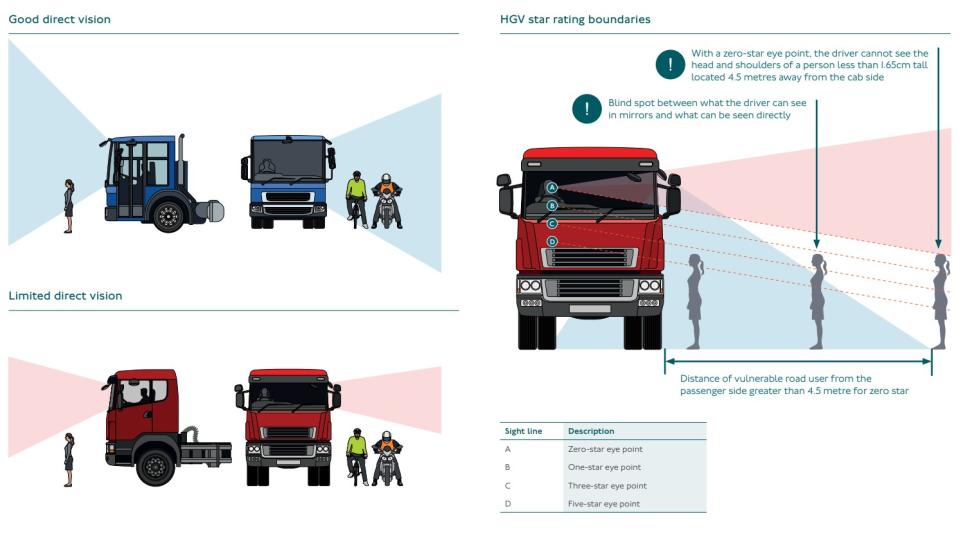
Transport for London puts this road safety success, at least in part, down to Direct Vision Standard (DVS), announced in 2019 and which came into effect two years later, a scheme which measures how much an HGV driver can see directly through their cab windows.
> Cycling fatalities fall by 6% to lowest ever recorded level, new government figures reveal
A star rating from zero to five is then assigned and any vehicles rated zero, one or two are now required to fit a Progressive Safe System (featuring blind spot cameras, audio warnings and other safety features) in order to get an HGV safety permit to legally enable use in most of Greater London.
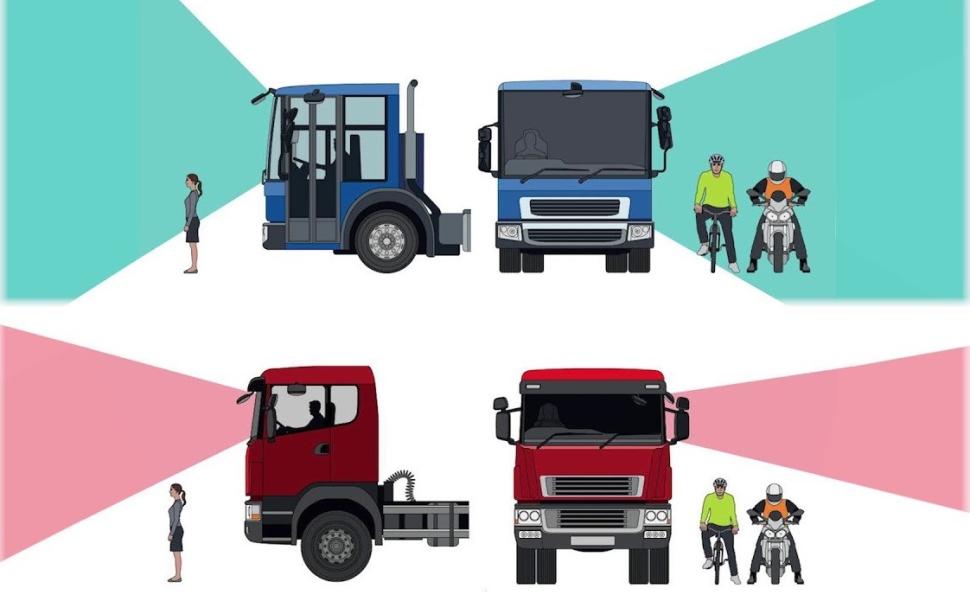
In a further step implemented last year, all HGVs in excess of 12 tonnes are required to have a minimum three-star DVS rating or comply with the additional safety features to operate in London.
In the time since DVS has been enforced, TfL tells us there have been 19 fewer deaths and 62 fewer serious injuries involving HGVs being driven on London’s roads.
TfL says that since DVS was introduced, the number of people walking, cycling or motorcycling killed or seriously injured in a collision with an HGV has fallen from an average of 71 people per year in 2017-2019 to 35 people in 2024.
Thankfully, the data does not include any years when traffic levels were impacted by Covid lockdowns, so we do not need to account for that artificially reducing casualty numbers. In fact, when looking at just the three years after Covid measures (2022-24) the number of pedestrians, cyclists and motorcyclists killed or seriously injured in collisions with HGVs has dropped by more than a third compared with data between 2017-2019.
Elsewhere, across the entire network, the reduction in the same period was 4.5 per cent.
Naturally, our first question was: has HGV traffic reduced in London during that time? The answer, according to official Department for Transport statistics, is no. HGV miles travelled in London each year have largely stayed consistent throughout. It seems likely too that improved active travel routes, safer junctions and the growth of protected cycling infrastructure across the city has also contributed to keeping pedestrians and cyclists safer.
TfL says that despite the promising signs, more work is needed to keep Londoners safe, especially with an ever-growing number of residents and visitors making use of the boom in hire bikes to get around the city.

“The DVS and HGV Safety Permit Scheme is complemented by extensive enforcement activity, working closely with the police and TfL’s own enforcement teams to help organisations make deliveries safely in London,” TfL said. ”Enforcement teams monitor the road network to confirm that safety equipment required as part of the Progressive Safe System has been fitted and is working correctly.
“The capital’s DVS is a world first and is having an impact across the UK and EU. The work TfL has undertaken with manufacturers has already seen the EU incorporate direct vision into safety standards. The European Commission expects that this, along with other safety measures being introduced, will save an estimated 25,000 lives by 2038.”
Ross Moorlock, CEO of Brake, the road safety charity, said: ”Whoever we are and however we travel, the safety of the vehicles we use is critical to road safety. We know that modern vehicle technology has the potential to have a transformative impact on the number of people killed and injured on our roads and we’re delighted to see TfL taking action to make vehicles safer.”




















6 thoughts on “Why have deaths and serious injuries in collisions involving HGVs being driven in London halved since 2019?”
No mention of the massive
No mention of the massive expansion over the last decade of advanced stop zones for cyclists at lights, which in my experience as a daily London cyclist have greatly improved safety at junctions, allowing one to get ahead of HGVs and into the middle of the lane so that they know you are there and can see your signals as appropriate. HGV drivers are much better than others at observing ASZs, I’ve found.
Now if only the Met would actually take action on video submissions of drivers blocking the ASZ we could make it even safer…
Sounds like they are a bit
Sounds like they are a bit better in London and you’ve likely got the critical mass to support them. Elsewhere, ASZ’s are abused big time by all, are poorly squeezed in and just encourage people on bikes to cycle into blind spots of less well regulated HGV’s. Id rather hold back than use any of the ASL’s I’ve seen.
Agree – while a fraction of
Agree – while a fraction of people say they find them helpful (I believe mostly “would cycle anyway”) I put them in the “substandard infra” class.
In Edinburgh they’re filled by motor vehicles a substantial fraction of the time. (Partly understandable since they wear to invisibility quickly on busier roads).
They don’t seem to inspire confidence in non-road-cyclists, and quite rightly. It’s inviting drivers to get triggered (both allowing “cheating” by stopping them but letting cyclists get ahead, AND placing cyclists *in the way*). And unlike other “enhance cyclists visibility” ideas (eg. Dutch junctions which put the cyclists a few metres ahead) this places cyclists where you’re “wheel to bumper”.
It’s just a pity that
It’s just a pity that standards like this are not implemented nationwide. If more local authorities want to copy them, they will have to re-do all the work, which is a horrible waste of resources.
As another consequence, residents of towns where authorities are too lazy or ignorant (not to mention plain stupidity or malevolence) won’t have actual power to demand the same solutions and SAVE LIVES by introducing them.
On the bright side, any HGVs
On the bright side, any HGVs that might have to go into that there London will have to be of standard, so the area will expand, and as London hauliers upgrade their already compliant trucks, these will be sold around the country.
Great initiative that
Great initiative that converts into a lower number of killed people. Figures talk louder than speeches peppered with good intentions. Next, this scheme should be extended to delivery trucks, lorries, vans and SUVs, which are designed for enhanced safety of their drivers while excluding other road users.