


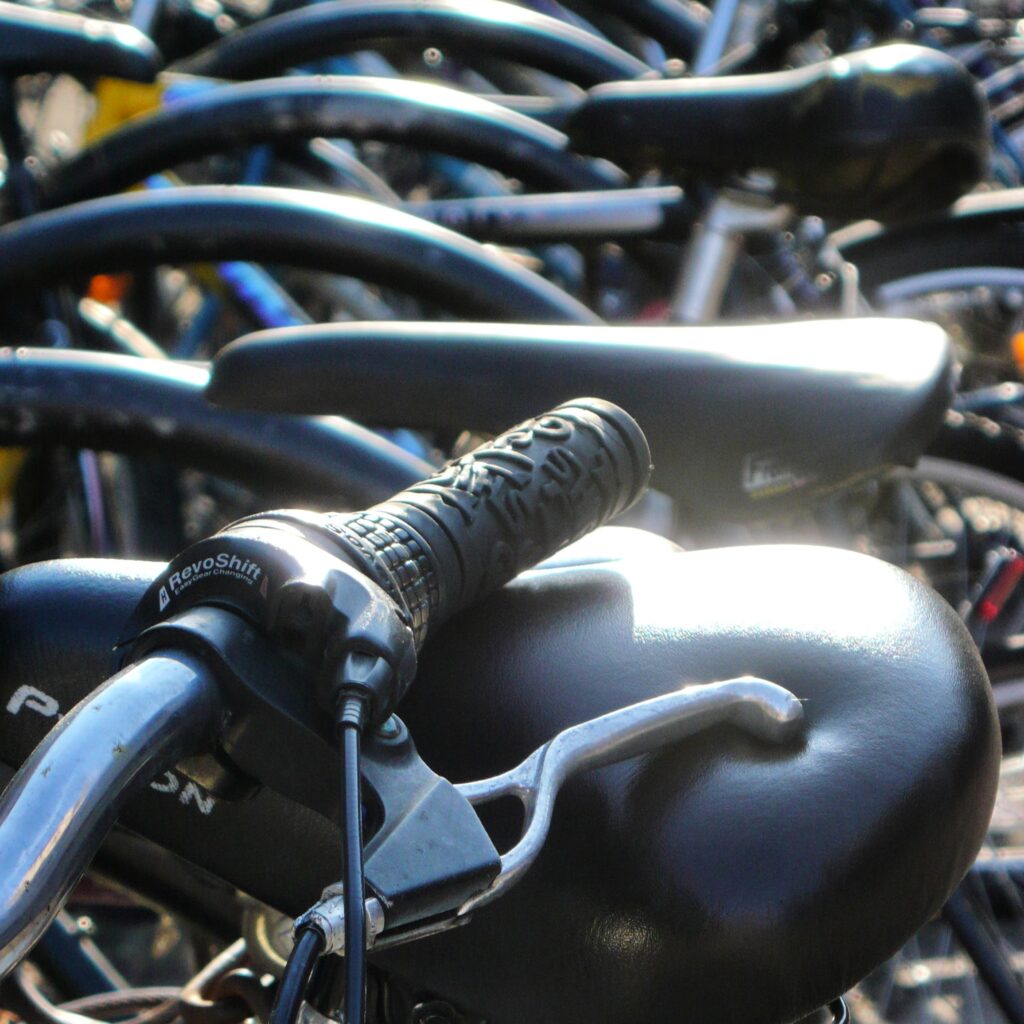

A man in Japan who discovered that the saddle of his bicycle had been stolen had a rather unusual response – unable to find the thief, he amassed a collection of more than 100 saddles he had stolen himself, so that other bike owners could experience the same sense of loss he felt.
Sora News 24 reports that Akio Hatori, aged 61 and a resident of Tokyo’s Ota district, discovered his saddle had been stolen when he was heading out for a bike ride last summer.
He bought a replacement, and for most cyclists, that would have been the end of it – but not Hatori, who a couple of months later rather bizarrely set off on a saddle-stealing spree of his own.
Over the course of the past year, he built up a haul of 159 of them, in the process subjecting the cyclists who were his victims to the same emotions of anger, upset and loss that he himself felt after his bike had been targeted.
He was arrested this week by officers from the Tokyo Metropolitan Police Department’s Kamata Precinct who were investigating the theft of a saddle in late August.
Hatori was identified through CCTV footage which showed him removing a saddle and putting it in the basket of his bike, and police discovered video of him riding around carrying other saddles in the same way.
A search of his home netted 159 saddles which police artfully lined up by colour at a press conference announcing his arrest (sadly, the YouTube video is geo-restricted and won’t play in the UK).
He told police: “I wanted other people to feel what I had gone through, and I stole the seats as a form of revenge.”

















17 thoughts on “Tokyo man responds to saddle theft … by stealing 150+ himself”
150 wrongs don’t make a right
150 wrongs don’t make a right.
Stories about the Japanese
Stories about the Japanese being so honest you could leave an item on the pavement and return hours later to find it untouched are yet another urban myth. I guess petty crime goes on there as it does anywhere else.
I have been hit by multiple
I have been hit by multiple motor vehicles, the driver’s fault, of course, mostly not looking/being bothered, and I don’t drive so that I can never make a cyclist go through the terror and pain that I have gone through.
Now what this bloke has done is like those who close pass me, and then when confronted with criticism of their awful driving, attempt to explain “I know, I’m a cyclist too.”
That’s taking saddle sore to
That’s taking saddle sore to a new level.
Why does he think everybody
Why does he think everybody would feel the same way as he did? Some of them might have thought, great now i can get a decent one on the insurance, or My late grandfather made that saddle by hand from the hide of my pet kangaroo, I will therefore go on a killing spree.
Let’s hope this man never
Let’s hope this man never feels suicidal!
That’s proper unseated
That’s proper unseated behaviour
I always wondered what
I always wondered what happened to all the stolen saddles.
I’m glad they caught him. For
I’m glad they caught him. For a while, the bicycle police said they had nothing to go on.
hawkinspeter wrote:
And they say the perp’s family refused to raise his bail. He had to stump up himself in the end.
Sriracha wrote:
🙂
The victims were over Lee cranky and not well rested.
Loving inefficiency here during windward.
Akio Hatori told police: “I
Actually a more faithful translation reads, “I wanted other people to feel what had gone through me…”
Sriracha wrote:
Depends on your approach to translation – do you translate the words, or the intended meaning. That may be a more accurate direct correspondence in English (I don’t know), but it also sounds odd. If Japanese also has a more direct equivalent of “what I went through” but he deliberately chose to say “what went through me”, then that’s different. On an abstract level though, the idea of an emotion or state of mind passing through you rather than the other way round is quite appealing – like it’s blowing in the wind, rather than our version, which is something to conquer. Sorry, I digress. What sort of saddle was it?
quiff wrote:
Depends on your approach to translation – do you translate the words, or the intended meaning. That may be a more accurate direct correspondence in English (I don’t know), but it also sounds odd. If Japanese also has a more direct equivalent of “what I went through” but he deliberately chose to say “what went through me”, then that’s different. On an abstract level though, the idea of an emotion or state of mind passing through you rather than the other way round is quite appealing – like it’s blowing in the wind, rather than our version, which is something to conquer. Sorry, I digress. What sort of saddle was it? — Sriracha
Um, clearly my attempt at humour has failed. Never mind.
Sriracha wrote:
Depends on your approach to translation – do you translate the words, or the intended meaning. That may be a more accurate direct correspondence in English (I don’t know), but it also sounds odd. If Japanese also has a more direct equivalent of “what I went through” but he deliberately chose to say “what went through me”, then that’s different. On an abstract level though, the idea of an emotion or state of mind passing through you rather than the other way round is quite appealing – like it’s blowing in the wind, rather than our version, which is something to conquer. Sorry, I digress. What sort of saddle was it?
— quiff Um, clearly my attempt at humour has failed. Never mind.— Sriracha
Not completely
Oops, embarrassing.
Oops, embarrassing.
But did he sniff them?
But did he sniff them?